How to Attract Chickadees to a Feeder: Seed and Placement
Attract chickadees to a feeder with black oil sunflower, 5-6 ft hanging height, and a cleaning routine. Here is what the published sources actually say.

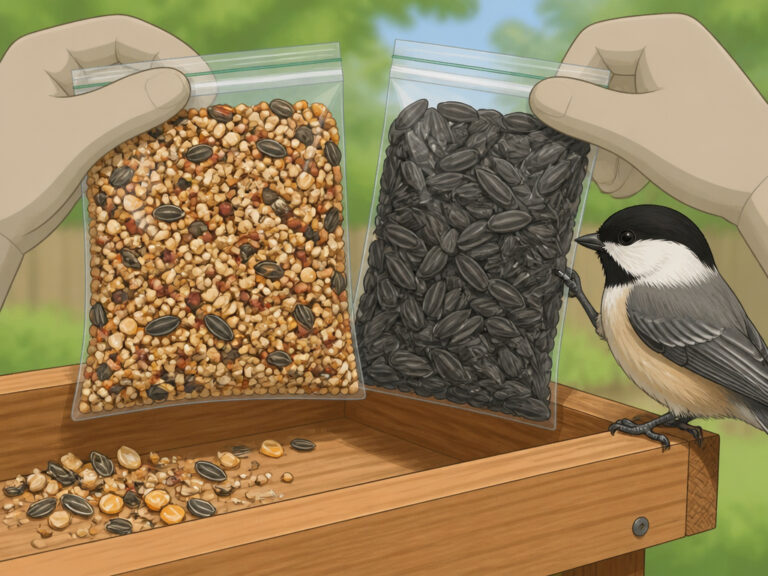
Attract chickadees to a feeder with black oil sunflower, 5-6 ft hanging height, and a cleaning routine. Here is what the published sources actually say.
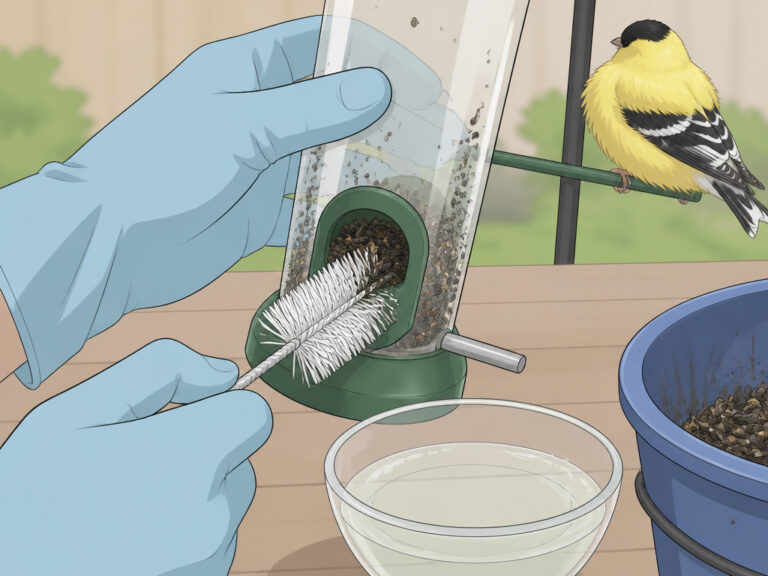
Attract goldfinches to a feeder with nyjer and black oil sunflower, the right height, and a cleaning routine that stops mold before the seed clumps.
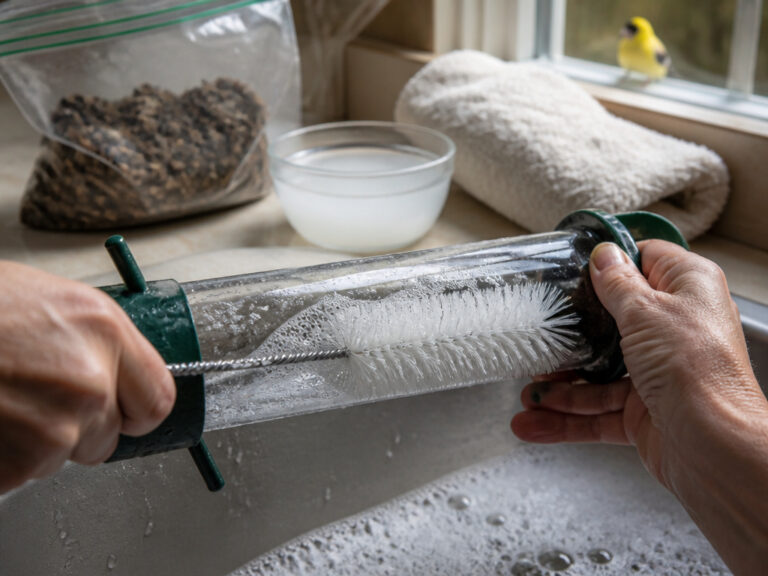
Attract finches with the right seed, placement, and cleaning routine. Here’s what extension research actually says about nyjer, sunflower, and timing.
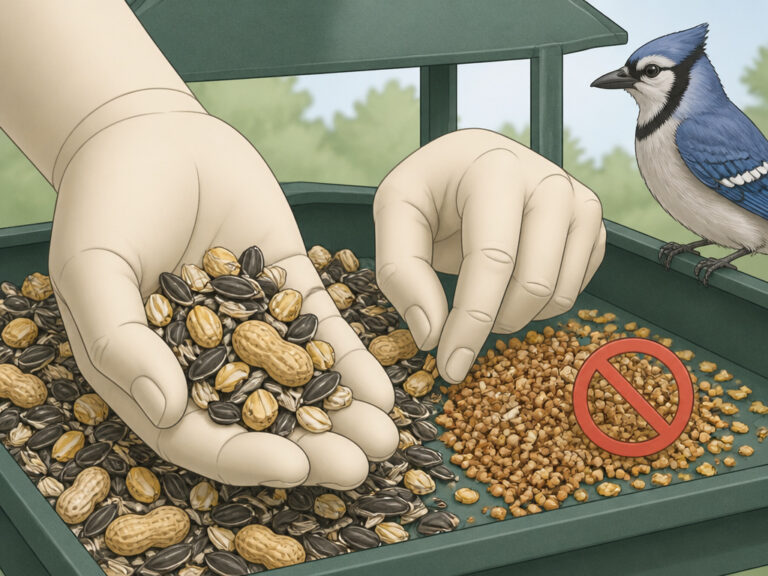
Blue jays want peanuts, sunflower seed, and a feeder they can land on. Here is how to attract blue jays to a feeder and keep the seed worth eating.
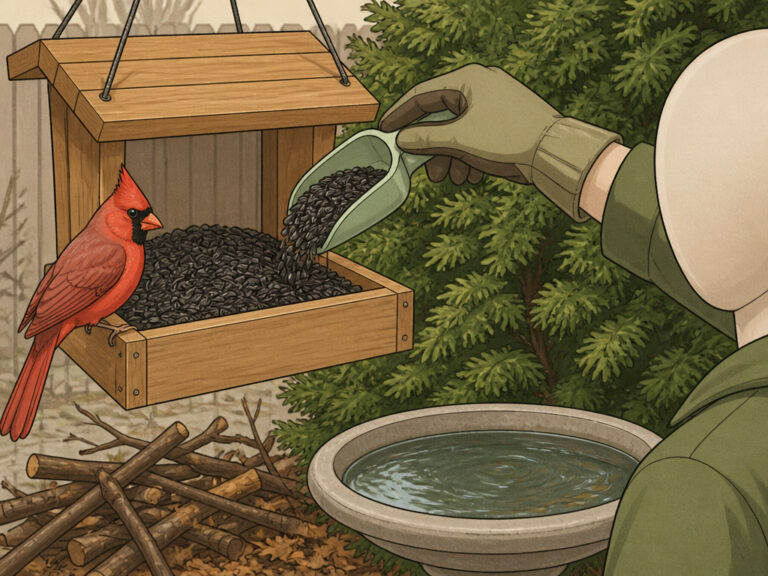
Offer black oil sunflower in a hopper feeder near cover, add water, and clean it every two weeks. Here is what actually brings cardinals in.
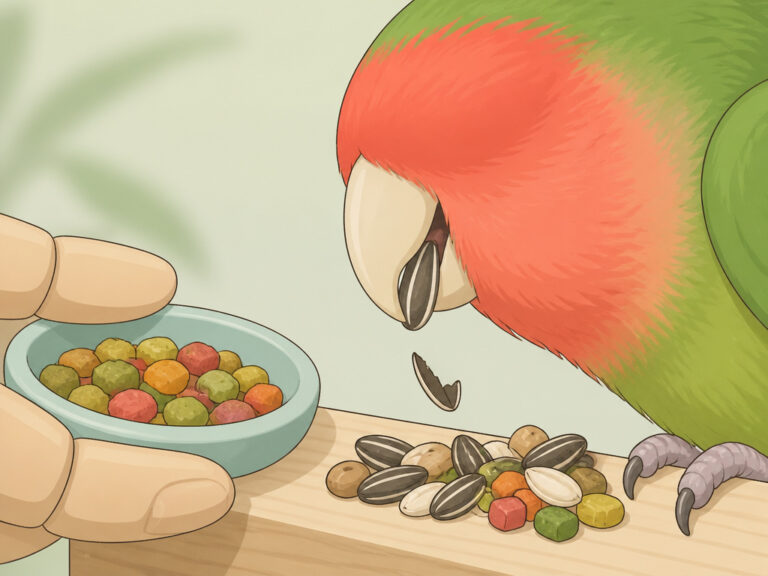
Build a lovebird diet around 75%-80% pellets, 20%-25% fresh produce, and seed as a supplement. See the conversion schedules and where vets disagree.
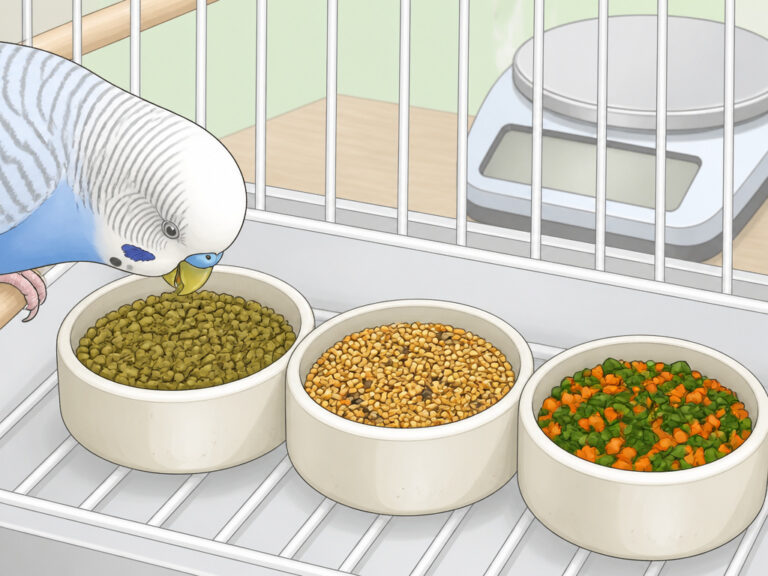
How to feed a budgie: vets put pellets at 60-80% of the diet, produce at 20-40%, and disagree on seed. Here’s how to build the bowl and convert safely.
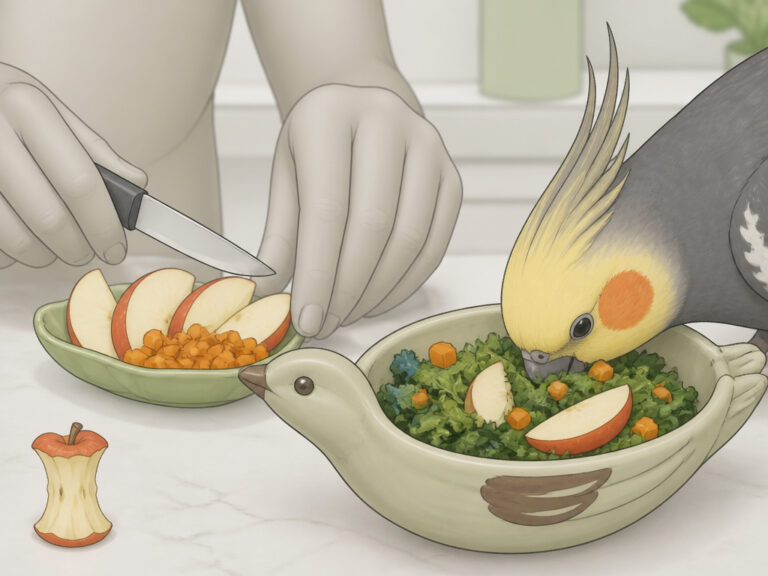
Learn how to feed a cockatiel with a pellet-based diet, safe vegetables, and a slow conversion plan that avoids the seed-only trap vets warn about.
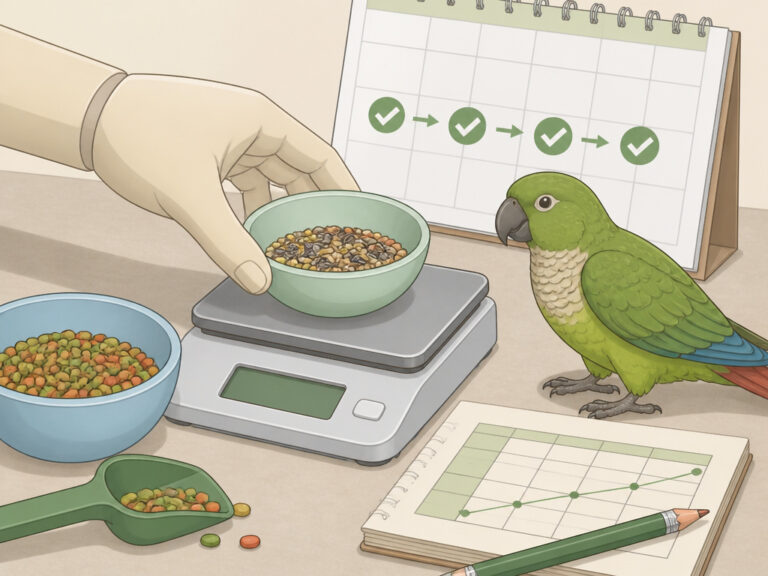
How to feed a pet parrot: pellets at 75 to 80 percent, veg at 15 to 20, and a four-week conversion schedule with a weight check that stops it.
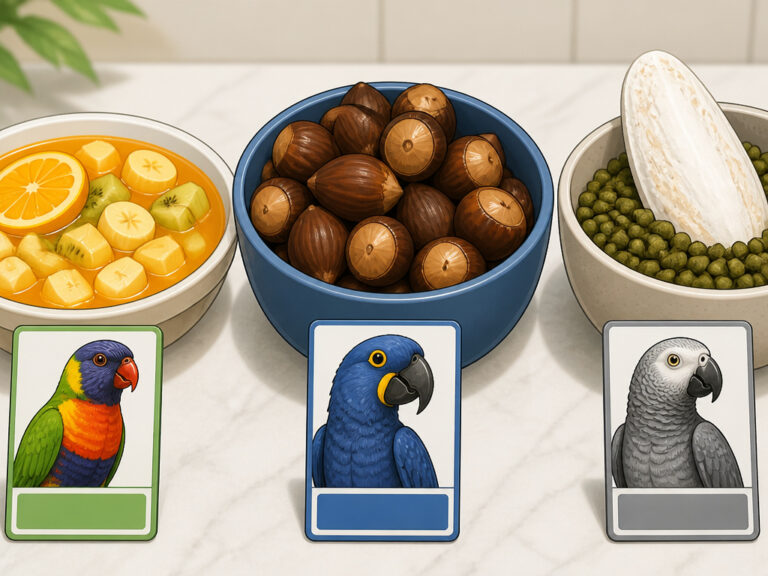
What do parrots eat? Roughly 75-80% pellets and 15-20% produce, with seeds kept minimal. Here are the numbers vets publish, and how to switch safely.