Protein Requirements for Cats: What the Numbers Say
NRC says 2.5 g/kg, a Purina study says 5.2 g/kg, and AAFCO sets a 26% floor. Here’s how the protein requirements for cats actually stack up.

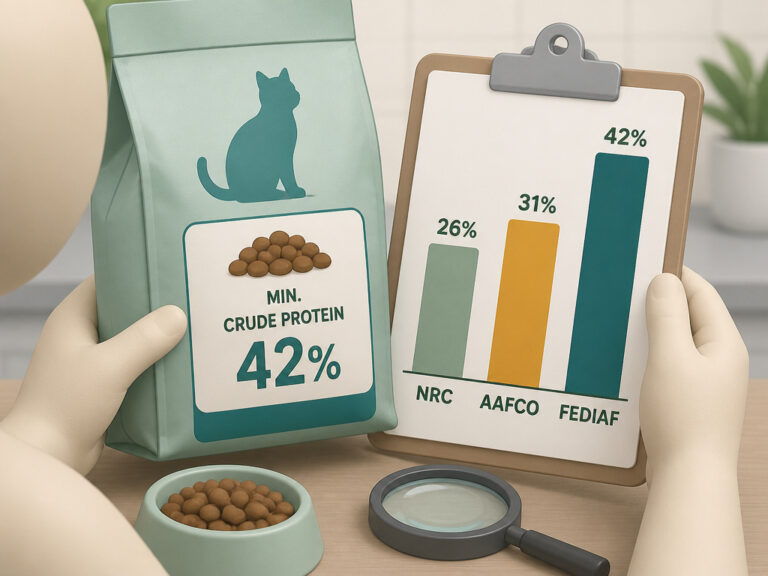
NRC says 2.5 g/kg, a Purina study says 5.2 g/kg, and AAFCO sets a 26% floor. Here’s how the protein requirements for cats actually stack up.
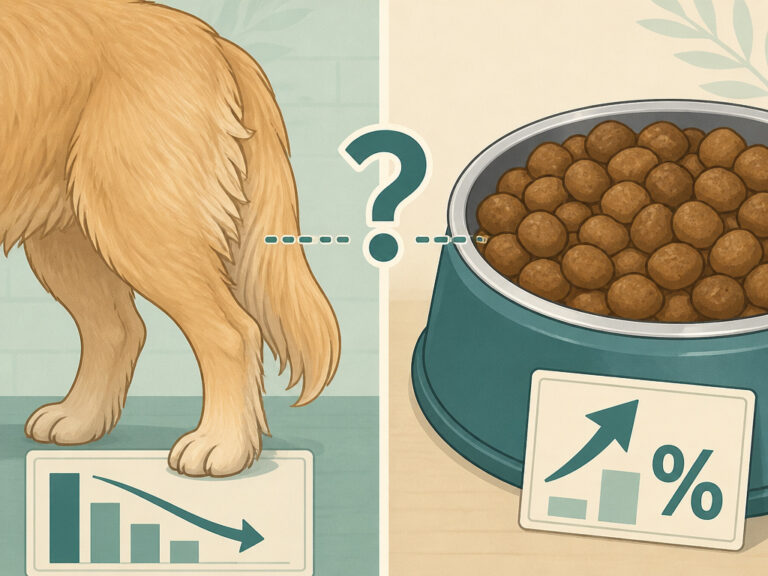
NRC sets 10% dry matter protein for adult dogs; AAFCO sets 18%. Here’s what the research shows about protein requirements for dogs at every stage.
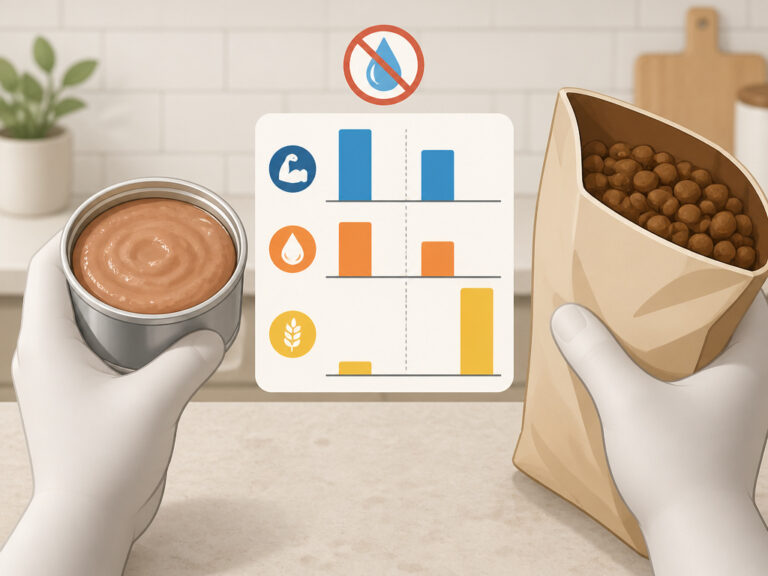
Convert the guaranteed analysis to a dry matter basis before comparing wet and dry cat food. Here is the arithmetic and the cost comparison that matters.
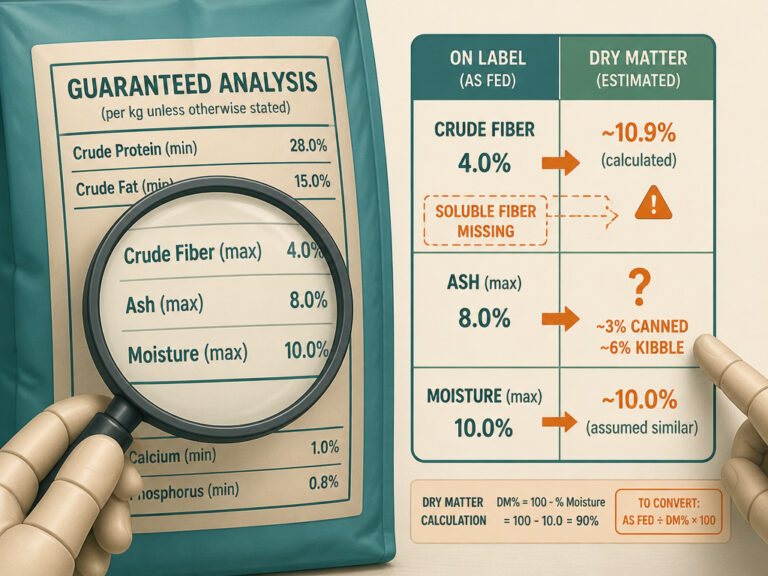
Dry matter basis strips out water so you can compare wet and dry pet food honestly. Here is the math, the caveats, and what the label hides.
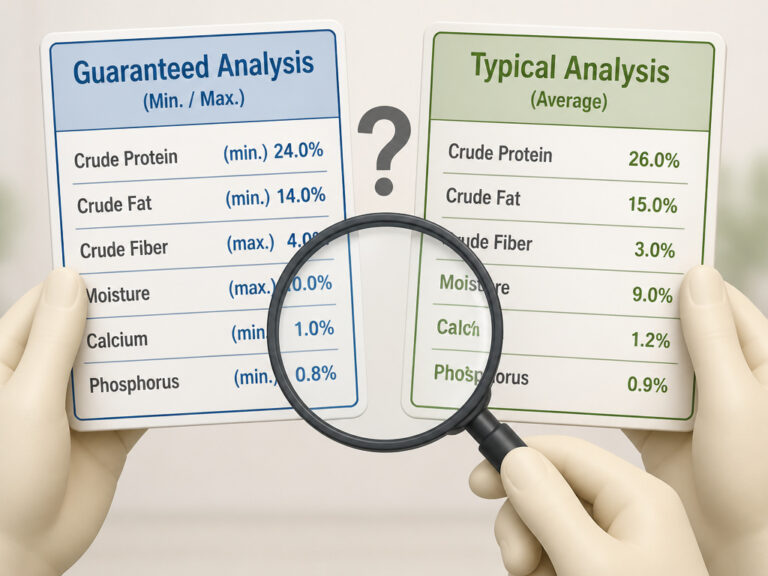
Guaranteed analysis is a legal floor; typical analysis is an unregulated average. Learn which number answers your question and the label math that decides it.
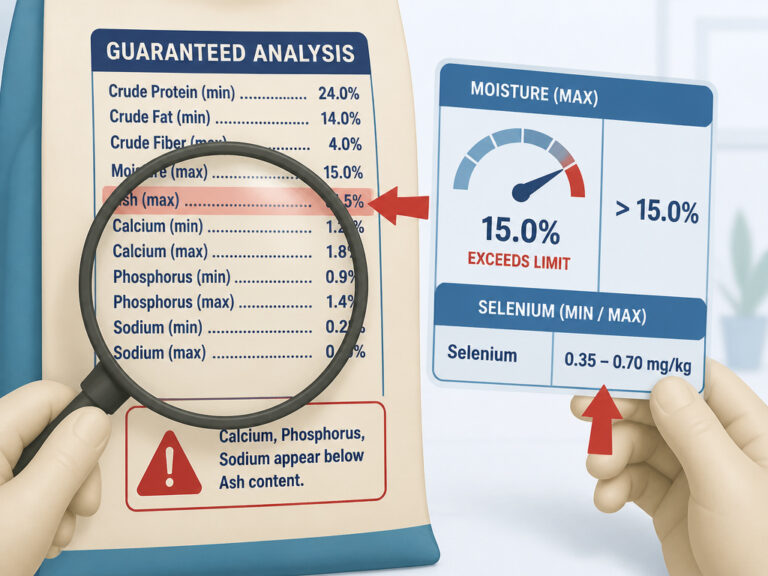
Learn how to read a guaranteed analysis on pet food: the as-fed rule, the ash and moisture triggers, and why the order changes between feed and fertilizer.
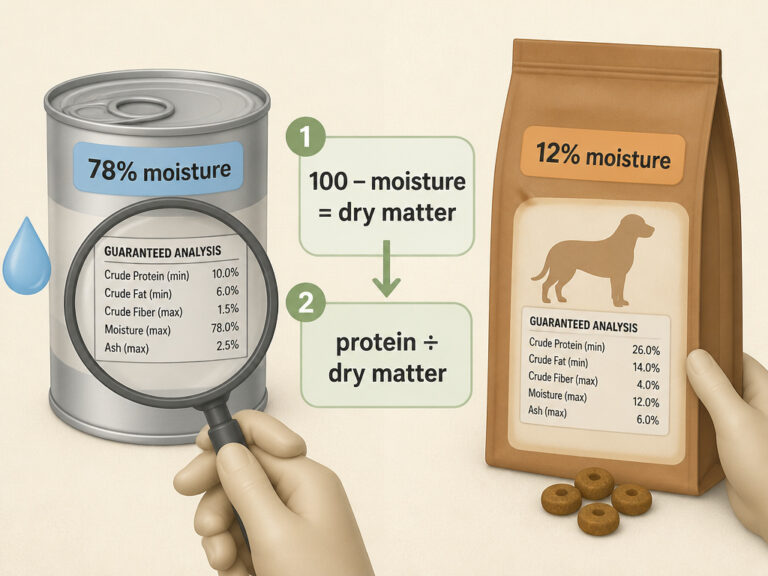
Learn how to read a pet food label the way a nutritionist does: the eight required items, the dry matter math, and the claims that carry almost no weight.
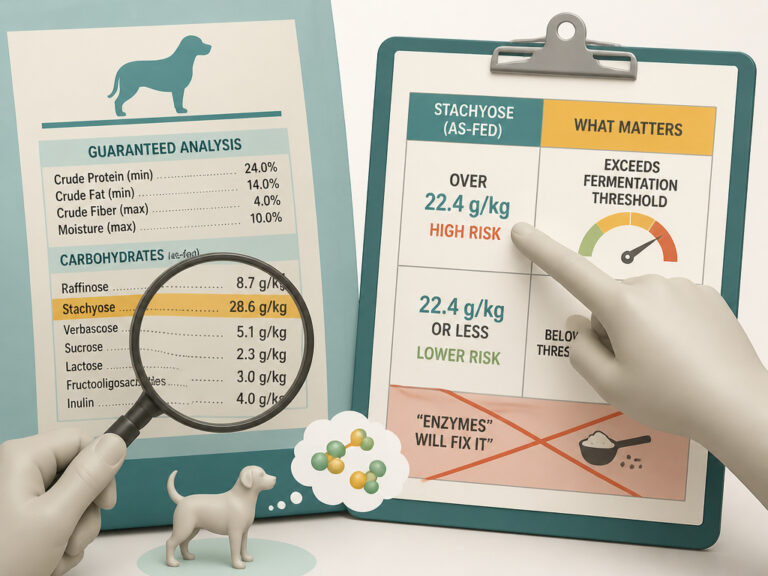
Soy in pet food pros and cons, checked against dog feeding trials: which soy forms digest well, which ones don’t, and how to read the label.
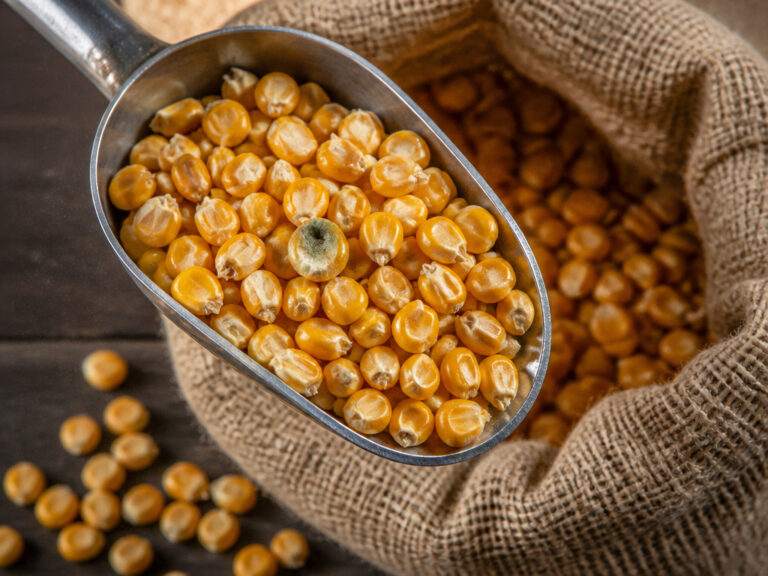
Corn in dog food pros and cons depend on digestibility, processing, and aflatoxin testing. Here is what the feeding trials actually measured.
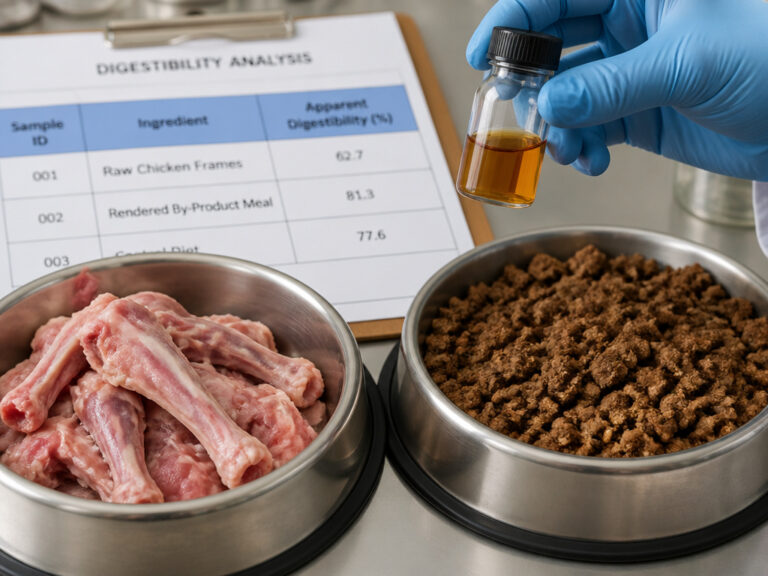
By-products in pet food pros and cons, read from the label up: what AAFCO defines, what the feeding trials measured, and where the safety rules actually stop.