Human-Grade Dog Food Pros and Cons: What the Data Shows
Human-grade dog food pros and cons, weighed against feeding trials: less fecal output, real mineral gaps, and why home-cooked and commercial differ.

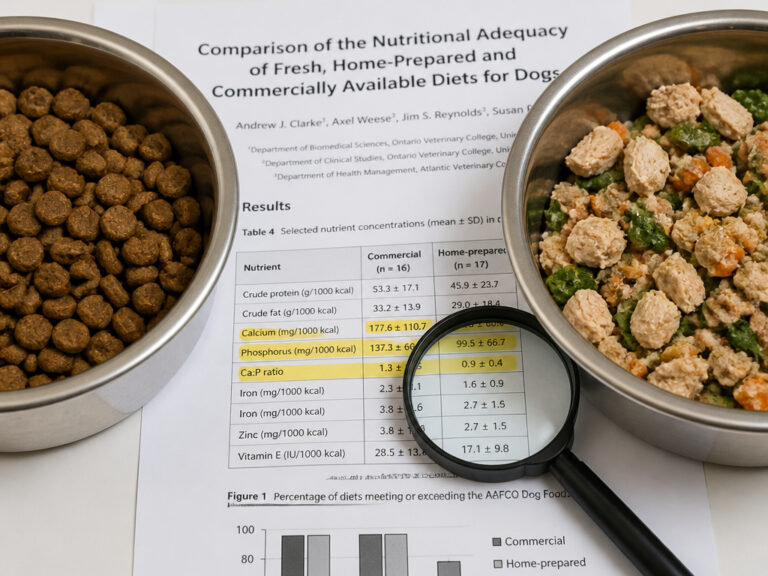
Human-grade dog food pros and cons, weighed against feeding trials: less fecal output, real mineral gaps, and why home-cooked and commercial differ.
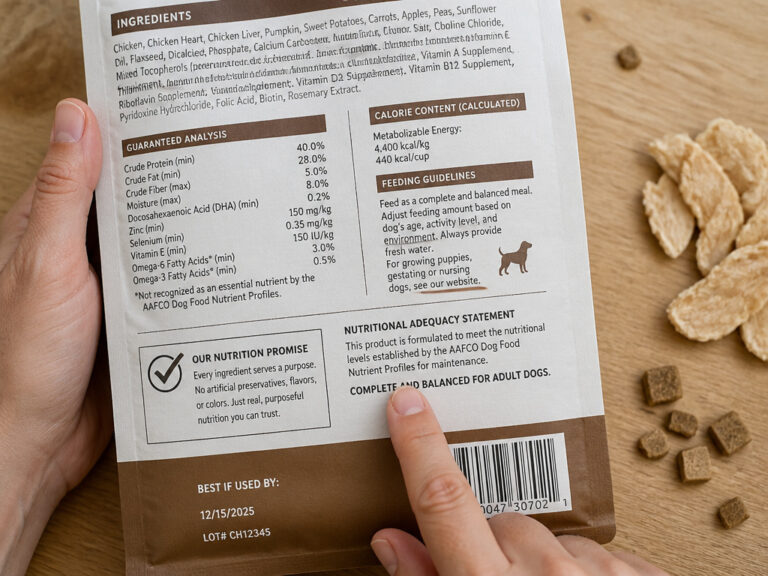
Dehydrated and freeze-dried dog food differ in rehydration, shelf life, and label rules. Here’s how to read both bags before you buy.
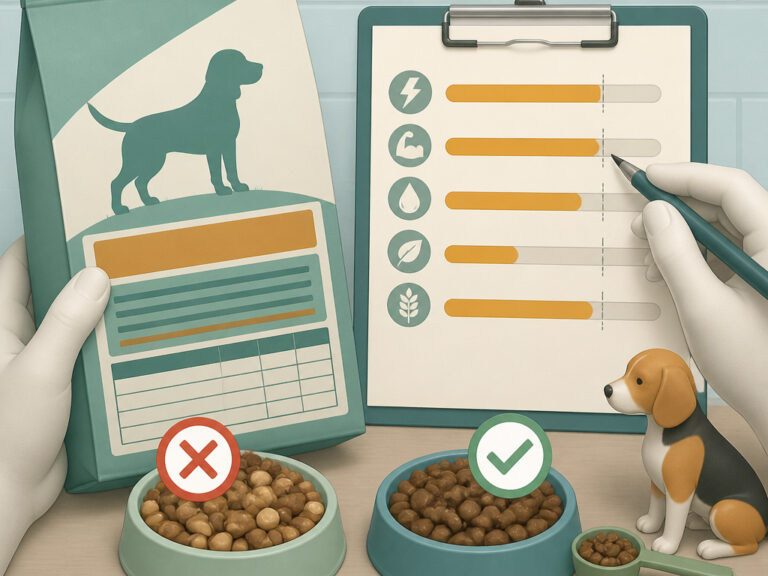
A label-first weight management dog food guide: how calorie density, RER math, and the 10% treat rule actually work, and where the bag chart misleads.
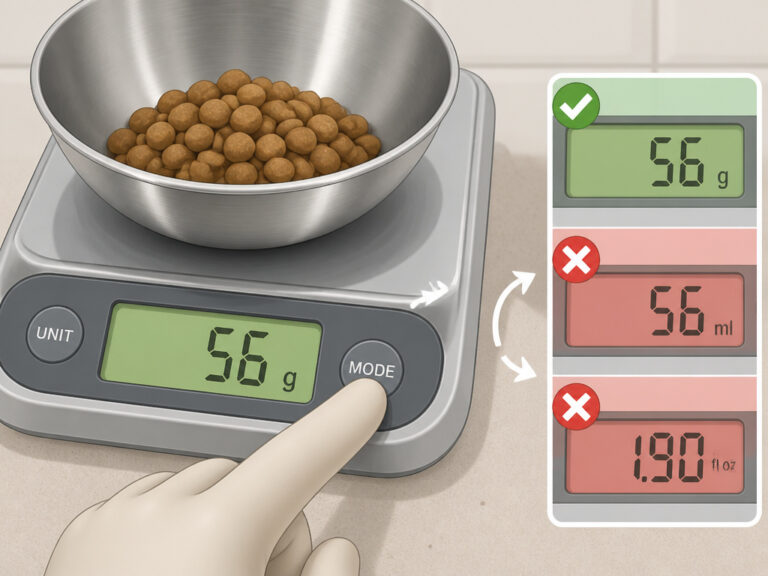
Learn how to use a kitchen scale for dog food: tare the bowl, choose grams over cups, and turn the bag’s kcal/kg figure into a daily gram target.
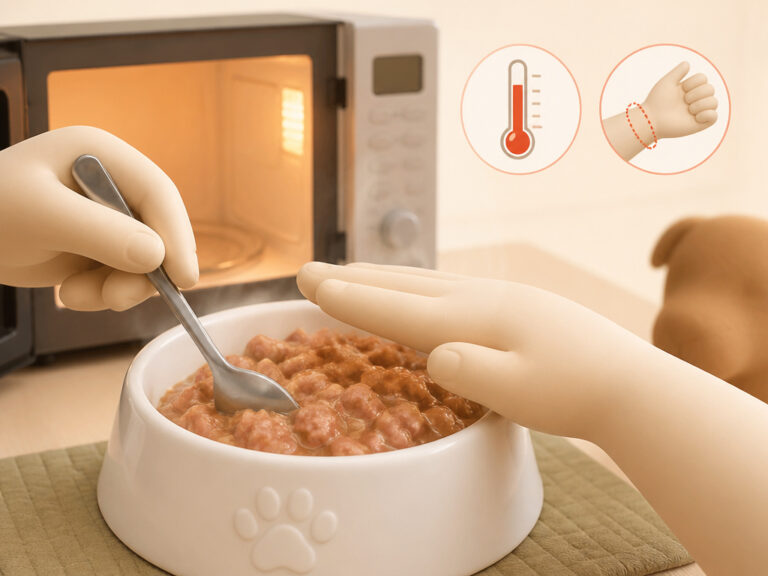
Learn how to entice a picky dog to eat with vet-backed tactics: the 10% treat cap, safe warming, and when refusal means a vet visit.
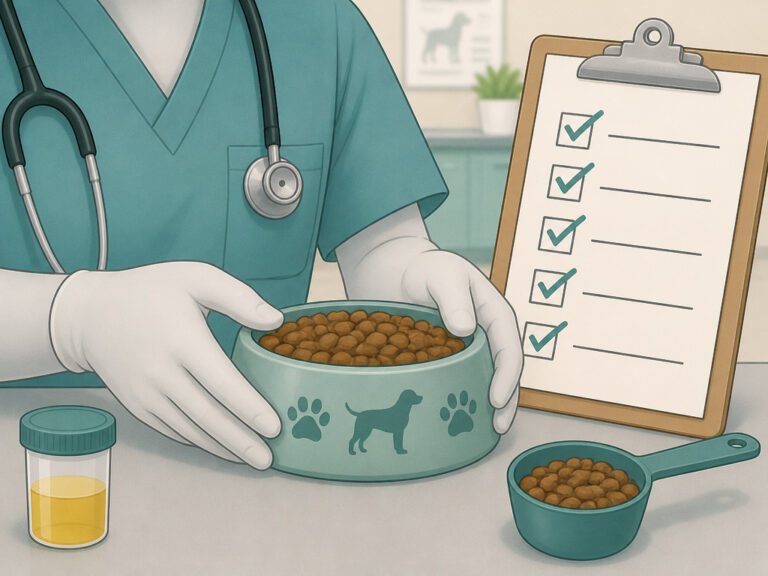
When to switch to senior dog food depends on body condition, bloodwork, and diagnosis, not a birthday. Here’s what the label and the research actually say.
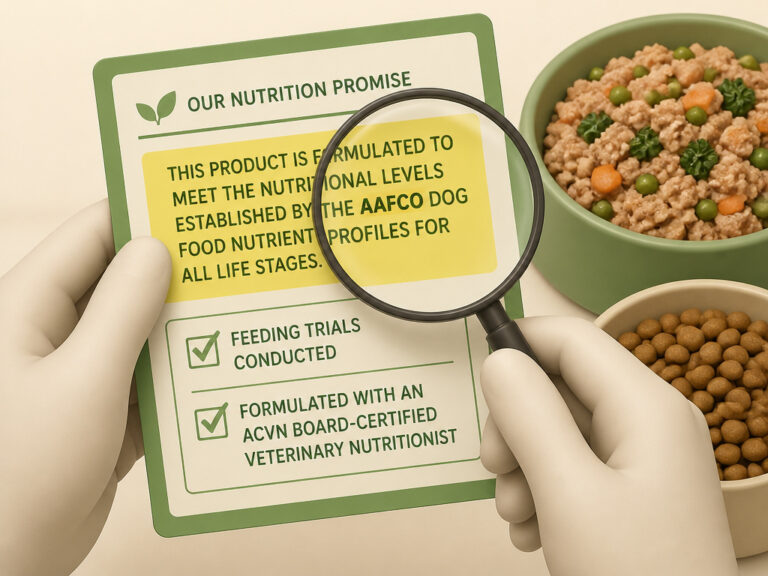
Fresh dog food pros and cons, weighed against feeding-trial data: digestibility, AAFCO completeness, cold-chain costs, and which dogs should stay on kibble.
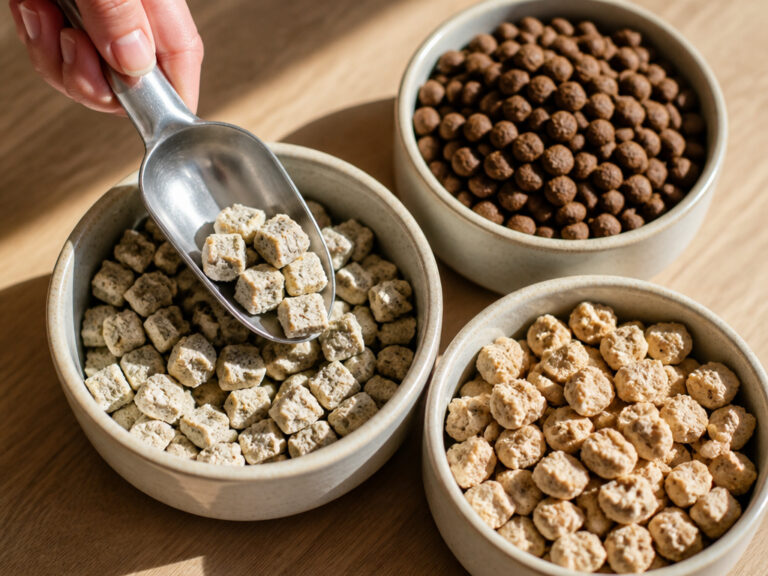
Air-dried dog food pros and cons, from nutrient retention to bacterial risk. Learn what the label won’t tell you and how to feed it safely.
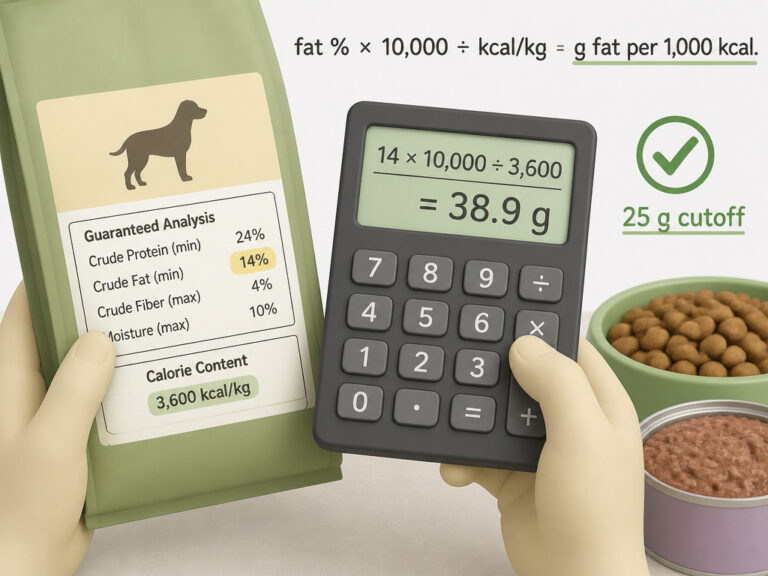
A low-fat dog food guide built on dry matter math: how to convert fat percentages, spot label understatements, and know when fat restriction helps.

Free feeding vs scheduled feeding for dogs: measured meals win for most adults. How to count intake, weigh portions in grams, and switch safely.