
How to Entice a Picky Dog to Eat: Step-by-Step
This post contains affiliate links. As an Amazon Associate, we earn from qualifying purchases.
To entice a picky dog to eat, cap treats and toppers at 10% of daily calories, feed at fixed times instead of free-feeding, and warm food to roughly body temperature to release aroma. If a healthy dog refuses food for more than 24 hours, call your vet.
Warming works because heat lifts the aroma a dog uses to decide the bowl is worth the trip. A cold bowl of perfectly good food smells like nothing, and a dog that can’t smell dinner won’t start eating it. The rest of this guide is about how to entice a picky dog to eat, the order to try things, and the mistakes that make owners quit too early.
What follows is that order: rule out the medical causes first, fix the feeding routine, then reach for warming, toppers, and food switches. By the end you’ll know which lever to pull first when you compare a how to entice a picky dog to eat and when to stop guessing and call the vet.
Key Takeaways
- Cap all treats and toppers at 10% of daily calories. It’s the one hard number the veterinary sources agree on.
- Feed at set times and pick the bowl up. Free-feeding trains a dog to graze and ignore meals.
- Warm food for a few seconds and test it with your finger to make sure it isn’t too hot before it goes down.
- Call the vet if a dog refuses food for more than 24 hours and you don’t know why.
- Rule out pain and illness before you touch palatability. Arthritis can look like pickiness.
Why Is Your Dog Actually Refusing Food?
Three things make a dog refuse a bowl: it’s full, eating hurts, or it feels sick. Palatability is the fourth cause, and it’s the one owners reach for first when they ask how to entice a picky dog to eat.
A dog that refuses food may be full from overfeeding, or in pain from arthritis that makes reaching the bowl difficult. Palatability work fails when the barrier is medical.
VCA’s clinical team lists the medical causes in order of how often they’re missed. Overweight picky dogs top the list. A dog that’s slightly heavy and turning up its nose may simply be full, and the fix is a measured calorie target, not a tastier food.
Arthritis is the second. A dog in pain may not want to stand up to reach the bowl, so the appetite looks off when the real problem is mobility. Move the bowl closer, raise it, and get the joints checked.
Both show up as refusal long before any other sign.
If you can’t tell which of these you’re dealing with, keep a food diary for 3 to 5 days. Record everything, including treats and any food used to hide medication. Your vet can read that log faster than you can reconstruct the week from memory.
| What you see | Likely cause | First move |
|---|---|---|
| Overweight dog that won’t eat | Full from overfeeding | Set a daily calorie target with your vet |
| Dog stands but won’t approach the bowl | Arthritis pain | Move and raise the bowl, book a vet visit |
| Sudden refusal plus lethargy | Illness or obstruction | Call the vet the same day |
| Picks at food, normal energy | Behavioral pickiness | Fix the routine, then warm the food |
Once medical causes are off the table, dog food for picky eaters is worth a look, but only after the routine is fixed.
The 10% Cap That Most Owners Blow Past
Ten percent. That’s the ceiling on everything that isn’t the main meal.
VCA and the AKC land on the same number from different directions: calories from treats and toppers should be no more than 10% of a dog’s total daily intake. Go over it and the dog fills up on extras before the bowl ever lands.
Here’s what counts toward that 10%:
- Training treats and biscuit rewards
- Toppers and gravies spooned over kibble
- Cheese, lunch meat, and table scraps
- Pill pockets and food used to hide medication
- Chew treats and dental sticks
That last one matters more than most owners think. A clinical case in Today’s Veterinary Practice tied commercial chew treats with suspected low protein digestibility to diarrhea severity when they made up approximately 15% of total daily food intake. Cutting them and swapping in small amounts of highly digestible cheese produced rapid clinical improvement, with fecal frequency reduced to once daily.
What most people get wrong: Adding a topper to tempt a dog, then topping up the bowl again when it begs. The extras climb past 10%, the dog learns to hold out for the good stuff, and the meal it actually needs goes uneaten.
Toppers work when they’re a garnish, not a second meal. A spoon of a preferred canned food over dry kibble raises interest without blowing the calorie budget. The dog food toppers guide breaks them down by type, and the best dog food toppers add smell without adding much volume.
How Do You Warm Food Without Burning a Tongue?
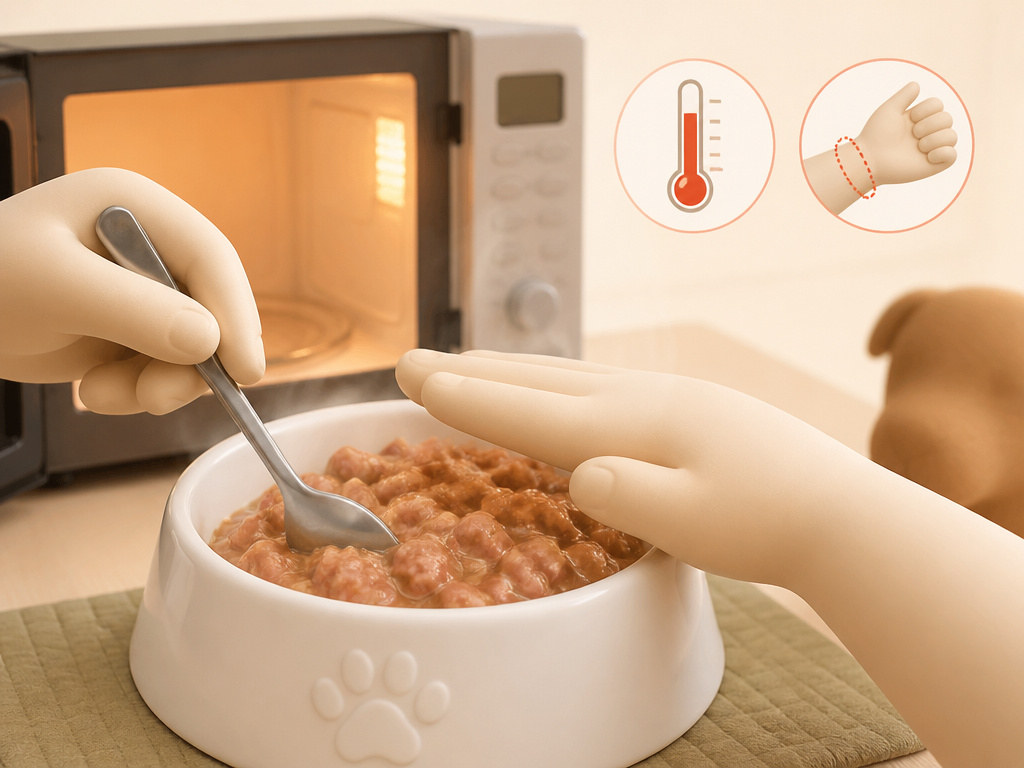
You pull the bowl from the microwave, set it down, and the dog walks away. The food is warm, but it’s also uneven, and one hot pocket is enough to teach a dog to distrust the bowl.
Warming works because heat lifts the aroma a dog uses to decide the bowl is worth the trip. Cornell’s clinical guidance says to add water, let it soak, and use hot or warm water to bring out the scent. A few seconds in the microwave does the same job faster.
Before you start: Microwaved food heats unevenly, and a hot spot in the middle can burn a dog’s tongue or gums. Stir after heating, test on your wrist, and never microwave food in a metal bowl. Let it sit a few seconds before serving.
My own rule is simpler: warm it gently, never hot. I microwave canned food for a few seconds, stir it, and check the inside of my wrist before it goes down. If it feels warm on the wrist, it’s right. I’ve watched owners scald a tongue and then spend a week rebuilding trust with a dog that now flinches at the bowl.
Cornell’s method is a few seconds in the microwave plus a finger test, and that safety step is the one most guides skip. The warm up dog food walkthrough covers water soaking versus microwaving, and the Cornell vet refusal to eat guide is the source for the finger-test habit.
Fixed Meals Beat Free-Feeding Every Time
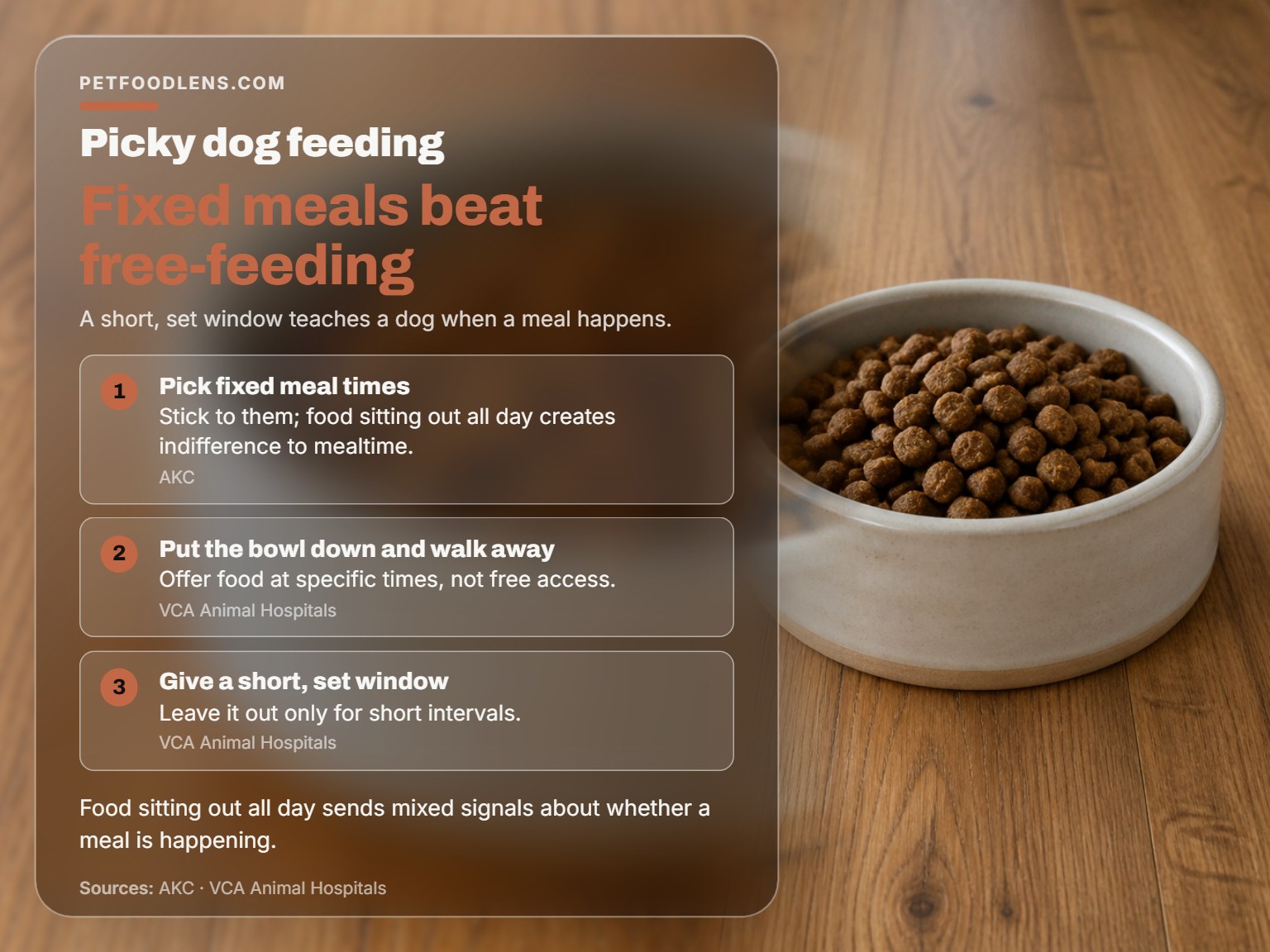
A bowl that’s always full is a bowl a dog has no reason to empty.
VCA recommends offering food at specific times and leaving it out only for short intervals, not free access. The AKC says the same thing from the behavior side: food sitting out all day sends mixed signals about whether a meal is even happening.
Here’s the routine I use with clients:
- Pick fixed meal times and stick to them. Skipping this is why dogs learn to graze.
- Put the bowl down and walk away.
- Give it a short, set window.
- Pick the bowl up and don’t refill until the next meal. Leaving it down rewards waiting.
The AKC also flags the environment. Feed in the same quiet spot every day, away from loud kids and other pets.
One more lever that fits the routine: a food puzzle. VCA suggests a puzzle or interactive feeder for mental stimulation, and Cornell suggests stuffing a hollow toy with canned food.
Where this goes sideways: Topping up the bowl whenever the dog cries. That teaches begging, not eating, and it makes a real appetite problem impossible to spot. A predictable routine is also how you notice illness early, because the one day the dog skips dinner stands out.
The AKC picky dog eating advice is worth reading in full for the schedule framing.
Canned vs Dry: Which One Gets Eaten?
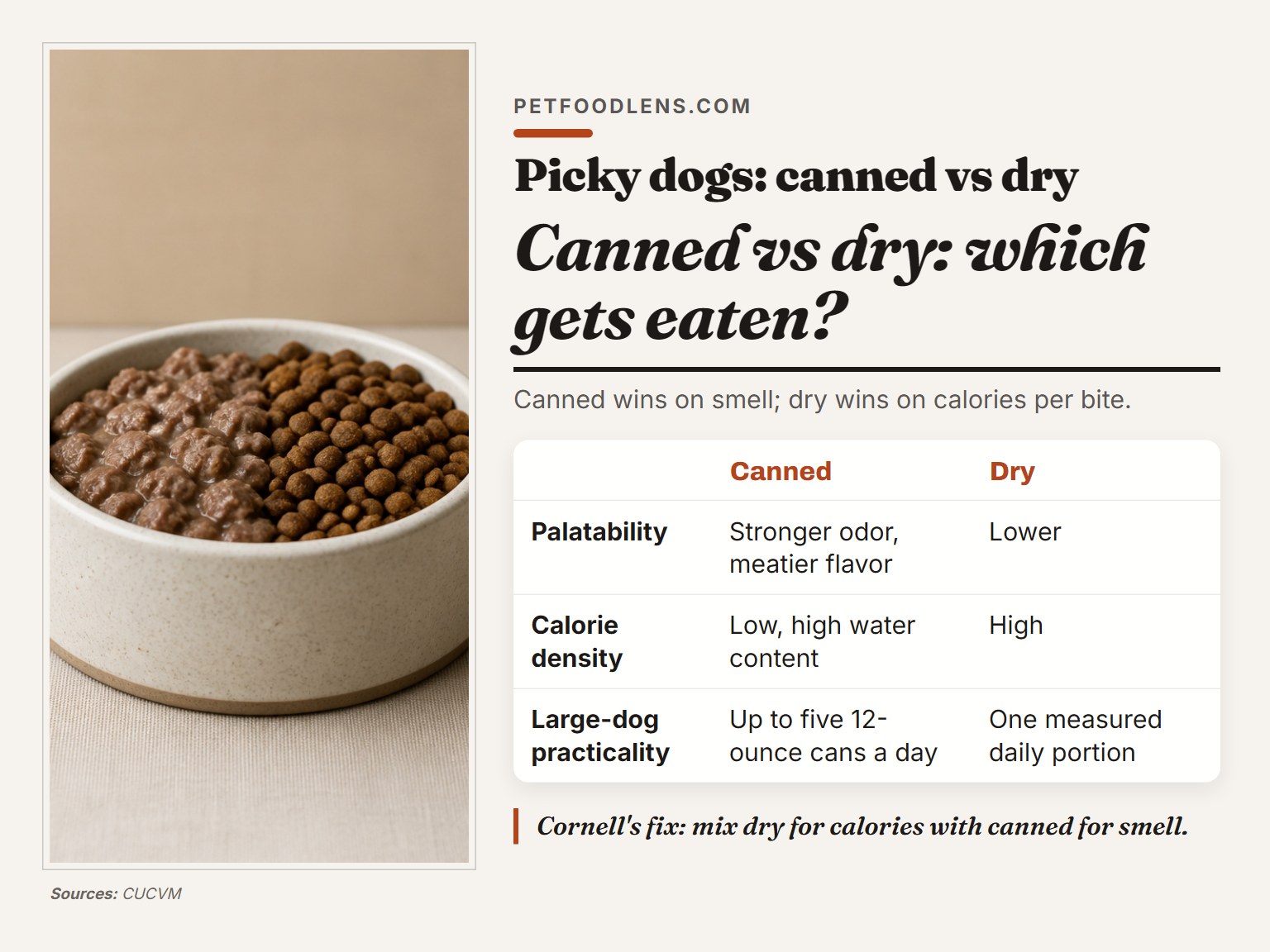
Canned food wins on smell and loses on calories per bite, and that trade-off decides which dogs it actually helps.
Cornell’s team says canned is more palatable for most picky eaters because of the stronger odor and meatier flavor. The catch is water content. Canned food is less calorie-dense, so a large dog may need as much as five 12-ounce cans a day to meet its needs. That’s a volume problem before it’s a cost problem.
VCA takes the other default for dry-food dogs: measure the whole day’s portion in the morning and let the dog eat it across the day, since dry food won’t spoil, whereas Cornell holds that canned is more palatable for most picky eaters and suggests switching to canned.
| Factor | Canned | Dry |
|---|---|---|
| Palatability | Stronger odor, meatier flavor | Lower |
| Calorie density | Low, high water content | High |
| Large-dog practicality | Up to five 12-ounce cans a day | One measured daily portion |
| Best for | Small picky dogs, kidney cases | Budget, large dogs, free-choice eaters |
When Canned Wins
Canned is the better lever for a small dog that turns its nose up at kibble.
When Dry Wins
Dry wins for large dogs and for owners who can’t absorb the volume. Cornell’s own fix is to mix the two: dry for the calories, canned for the smell. That gets palatability without the five-can problem.
Easy to miss: Switching a large dog to canned-only to fix pickiness, then wondering why it’s still hungry. The water content dilutes the calories, so the bowl looks full and the dog is underfed.
The wet dog food options and the dry food for picky dogs picks are where to compare specific formulas.
Does Variety Help or Hurt a Picky Eater?
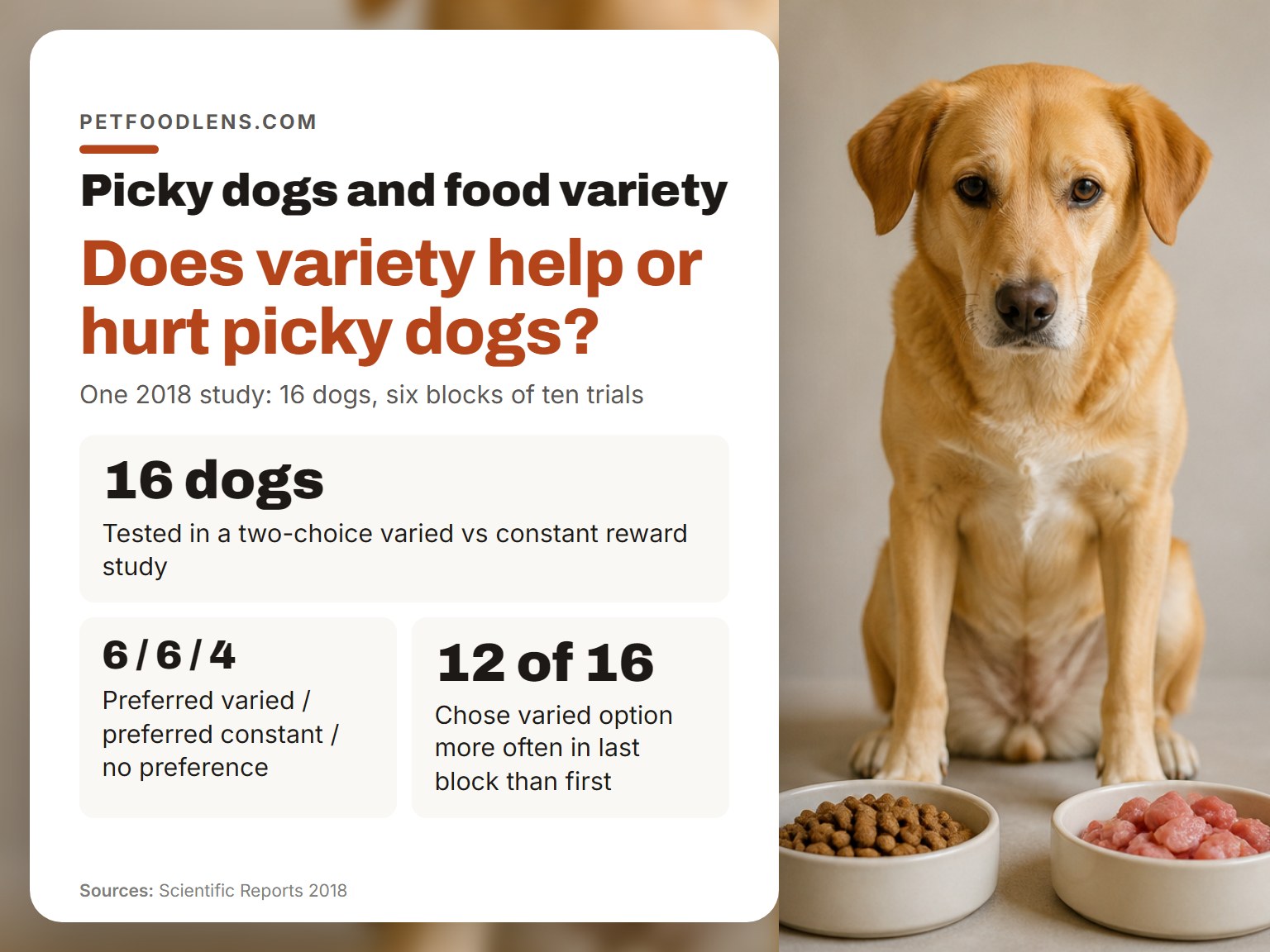
Two credible sources look at food variety and reach opposite conclusions, and both are right about different dogs.
The Case for Consistency
VCA frames variety as a risk, warning that rotating through too many foods can teach a dog to hold out for a favorite, while a 2018 Scientific Reports study found varied food rewards maintained or increased preference over time in 12 of 16 dogs.
The Case for Variety
A 2018 study in Scientific Reports found the reverse at the group level. Sixteen dogs ran a two-choice test across six blocks of ten trials. Six preferred the varied reward, six preferred the constant one, and four showed no preference. By the last block, 12 of the 16 dogs chose the varied option more often than they had at the start.
So variety can sustain motivation in some dogs and train waiting in others. Which one you have depends on the individual dog, and the study is the first to say so out loud.
Rule of thumb: If your dog eats well on a consistent food, don’t rotate just to keep it interested. If your dog is losing interest in a food it used to finish, a controlled switch is worth trying, one variable at a time.
The practical version: change one thing at a time, give it days to weeks, and watch. The make dog food more appetizing playbook covers switches that don’t reset the whole routine, and the incentive motivation in pet dogs study is worth reading if you want the raw numbers.
When Refusal Means a Vet Visit, Not a Trick
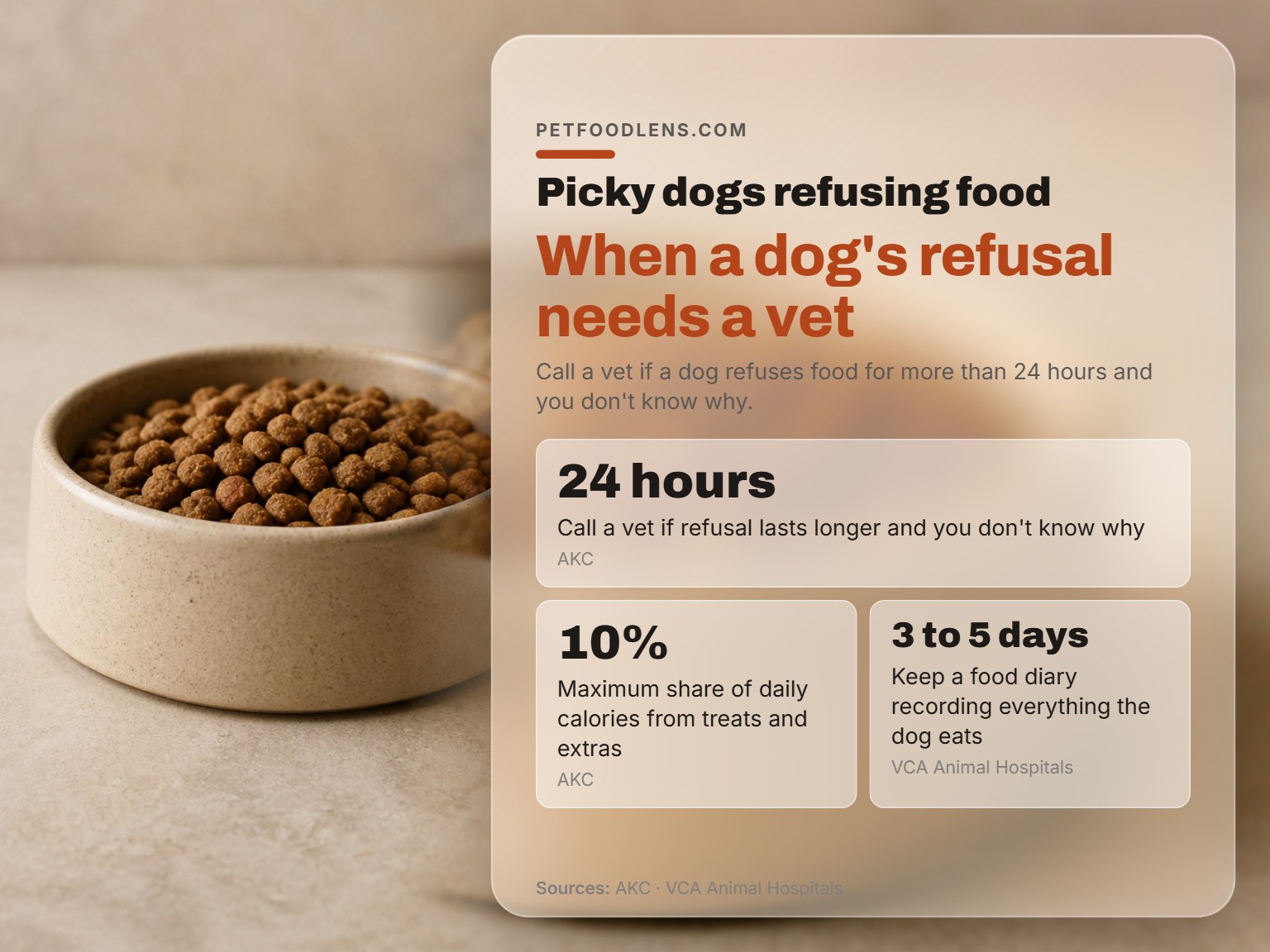
Twenty-four hours. That’s how long a healthy dog can go without food before you stop troubleshooting and call.
The AKC is blunt about it: call a vet any time a dog refuses food for more than a day and you don’t know why. Fair warning: the ones that do work may take time.
Watch for these alongside the refusal:
- Lethargy or weakness
- Vomiting or diarrhea
- Weight loss
- Pain when the dog moves or is picked up
If the workup comes back clean and the dog still won’t eat, Cornell notes two options. Your vet can help formulate a home-cooked diet, or refer you to a veterinary nutritionist. For short-term use, a vet may prescribe an appetite stimulant like capromorelin oral solution (Entyce) to jump-start eating.
Cornell also points out that several manufacturers make acceptable prescription formulas, and most offer a money-back guarantee. If one brand fails, a different one, or a different texture like a smooth pate versus a chunky stew, may land.
Frequently Asked Questions
Should I let a picky dog skip a meal?
VCA says it’s okay for a healthy dog to miss a meal occasionally, and a hungry dog may eat better at the next one. Cornell takes a more active line for prescription diets and pushes enticement over waiting. If the dog is healthy, an occasional skipped meal is fine. If it’s losing weight, don’t wait.
Is it bad to add water to dry food?
No. Cornell recommends adding warm water and letting it soak to soften kibble and release smell. Test the temperature on your wrist first, because a hot spot can burn a tongue.
How long can a dog go without eating?
Healthy dog can miss a meal or two, but call your vet if refusal passes 24 hours and you don’t know why, per the AKC.
Will switching food fix a picky eater?
Sometimes. Canned is more palatable for most dogs, but variety can also teach a dog to hold out. Change one thing at a time and give it days to weeks.
Do puzzle feeders help?
For some dogs. VCA and Cornell both suggest them, but they’re not a fix for a medical cause or a free-feeding habit.
The Bottom Line
Most picky eating is a routine problem, and the routine fixes it. Fixed meals, a 10% cap on extras, and food warmed to body temperature solve the bulk of healthy, otherwise-normal dogs within days to weeks.
Here’s the line to hold. If your dog is at a healthy weight, has normal energy, and just eats slowly, keep working the routine. If the dog is losing weight, vomiting, or refusing for more than a day, the routine is the wrong tool and the vet is the right one.
The one thing I’d change first: pick the bowl up. A dog that knows the food disappears in a short window eats differently than one that can graze all day. That single habit does more than any topper.
And if you take one number with you, take the 10%. It’s the only hard limit the veterinary sources agree on, and it’s the one most owners cross without noticing.
