
When to Switch to Senior Dog Food: Skip the 7-Year Rule
This post contains affiliate links. As an Amazon Associate, we earn from qualifying purchases.
When to switch to senior dog food should follow body condition, bloodwork, and any diagnosed disease, because there are no AAFCO nutrient requirements for senior dogs and no legal definition of a senior diet.
That legal gap explains why two bags with the same word on the front can carry very different protein, sodium, and phosphorus numbers. A senior line follows the same AAFCO rules as the adult line sitting next to it on the shelf, so the label word is a marketing decision rather than a nutrient standard.
What follows covers the three competing definitions of senior in circulation, the when to switch to senior dog food question, the label claims worth checking against the research, and the transition schedule that keeps a fussy dog eating.
Key Takeaways
- No AAFCO senior nutrient profile exists. Adult maintenance is the legal baseline, and a senior bag gets judged against it.
- Age alone is a weak trigger. PetMD draws the senior line after 8 years; VCA puts large and giant breeds at 5 to 8 and small breeds at 10 to 11.
- Reduced protein isn’t the senior default. Senior bags run 18 to 23 percent protein on a dry matter basis, inside the 18 to 30 percent adult range.
- Transition over 7 to 10 days, with the swap complete by day 14.
- A kidney diagnosis changes everything. Ask about phosphorus before you buy anything labeled senior.
What ‘Senior’ Actually Means on a Dog Food Label
The word “senior” on a dog food bag has no legal definition behind it. Tufts’ clinical nutrition team says so directly in its Tufts Petfoodology senior diet guidance: senior and geriatric foods follow the same legal guidelines as adult diets.
Senior and geriatric foods follow the same legal guidelines as adult maintenance diets. No AAFCO nutrient profile exists for mature, senior, or geriatric dogs. Manufacturers set standards individually, which produces documented variability among products marketed for older dogs. Protein, sodium, phosphorus, and calorie content vary widely between brands carrying that label.
The AAHA age-specific diet guidelines go further and state that AAFCO sets no specific nutritional requirements for mature, senior, or geriatric pets. That means a senior bag is measured against the adult maintenance profile, not against a separate senior standard.
Manufacturers fill that vacuum themselves. AAHA documents significant variability among foods marketed for senior dogs and notes there’s no consensus among companies about what a senior food should contain.
Which is why two bags can both say “senior” and disagree on almost everything inside.
Is There a Set Age When a Dog Becomes Senior?
Three definitions of senior are in circulation, and they contradict each other.
PetMD sets mature adults at 6 to 8 years and moves a dog into the senior category after 8, while VCA uses the last 25 percent of expected lifespan and Tufts rejects fixed ages entirely. VCA and the Canadian Academy of Veterinary Nutrition use a share of lifespan instead: senior means the last 25 percent of expected life, which puts large and giant breeds at 5 to 8 years and small breeds at 10 to 11.
| Source | Senior starts at | Basis |
|---|---|---|
| PetMD | After 8 years | Labeling convention |
| VCA / CAVN | Last 25% of lifespan | Share of expected lifespan |
| Tufts Petfoodology | No fixed age | Breed, genetics, health |
Tufts rejects the fixed-age approach outright. Turning 7, 10, or even 15 doesn’t make a dog biologically old, because aging tracks breed, genetics, and health problems rather than a calendar. The nutrition and aging in dogs review reaches the same place from the research side: a fixed age threshold is hard to propose at all.
So which number do you use? None of them as a trigger. Use them as a prompt to book the exam.
The one age marker that holds firm sits at the other end. AAHA advises a growth diet until roughly 1 year for cats and small to medium dogs, and closer to 15 to 16 months for some large and giant breeds, because skeletal maturity arrives later. If you’re still deciding when to leave puppy food behind, that puppy to adult dog food timing matters more than anything on a senior bag.
When to Switch to Senior Dog Food: The Triggers That Count
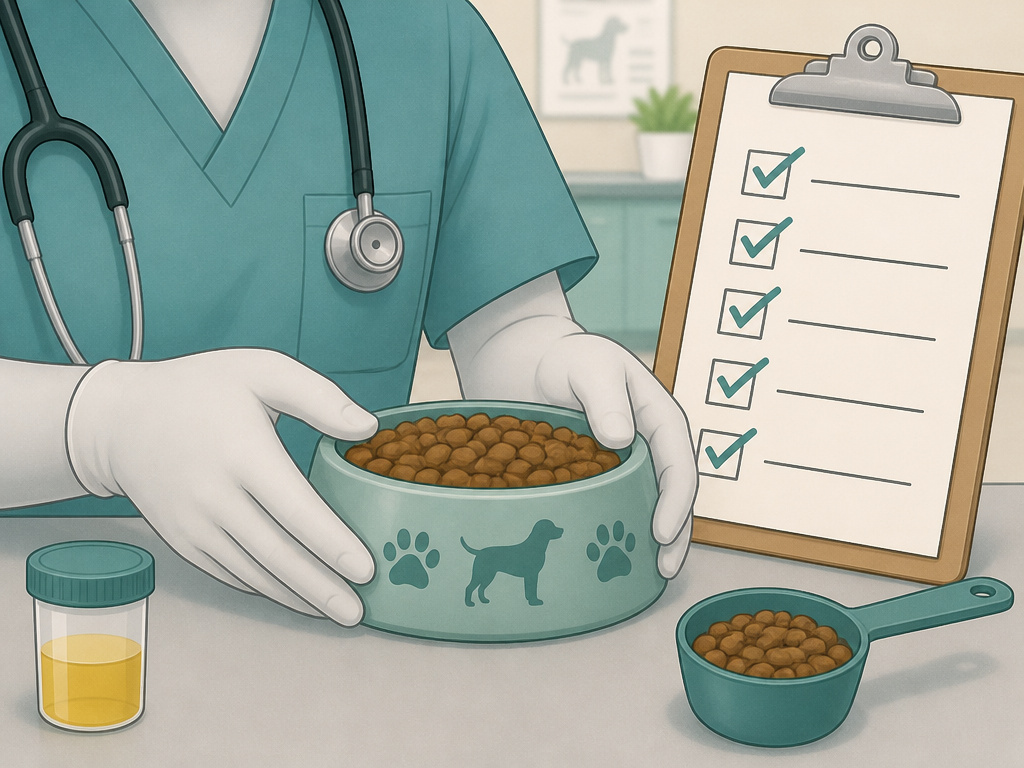
Age alone is a bad trigger.
A senior visit at most practices means a complete physical exam, a full diet history, two blood tests, and a urine sample for urinalysis. VCA notes there’s no single blood test that judges nutritional status, so the exam and the diet history carry the weight.
What justifies a switch is a finding. The list is short:
- A diagnosed condition that nutrition influences. PetMD treats this as the clearest reason to move, and it’s the one I’d trust over a birthday.
- Dental disease. Kibble shape, size, and texture can be built to reduce plaque, and a dog who has lost most teeth may do better on canned food for comfort.
- Arthritis, where added glucosamine hydrochloride, chondroitin sulfate, and long-chain omega-3s (EPA and DHA) may help.
- Weight drifting off target in either direction, which is a body condition question rather than an age question.
- Kidney disease, which rewrites the protein and phosphorus conversation entirely.
Whether a senior bag helps depends on which of those triggers is actually present, so weigh the pros and cons of senior dog food against the diagnosis rather than the age.
Where this goes sideways: Switching because the bag says “senior” while the dog is losing weight. High-fiber senior diets are typically low in calories, so a thin dog on one can keep sliding for weeks before anyone puts him on a scale.
Do Senior Formulas Actually Differ From Adult Food?
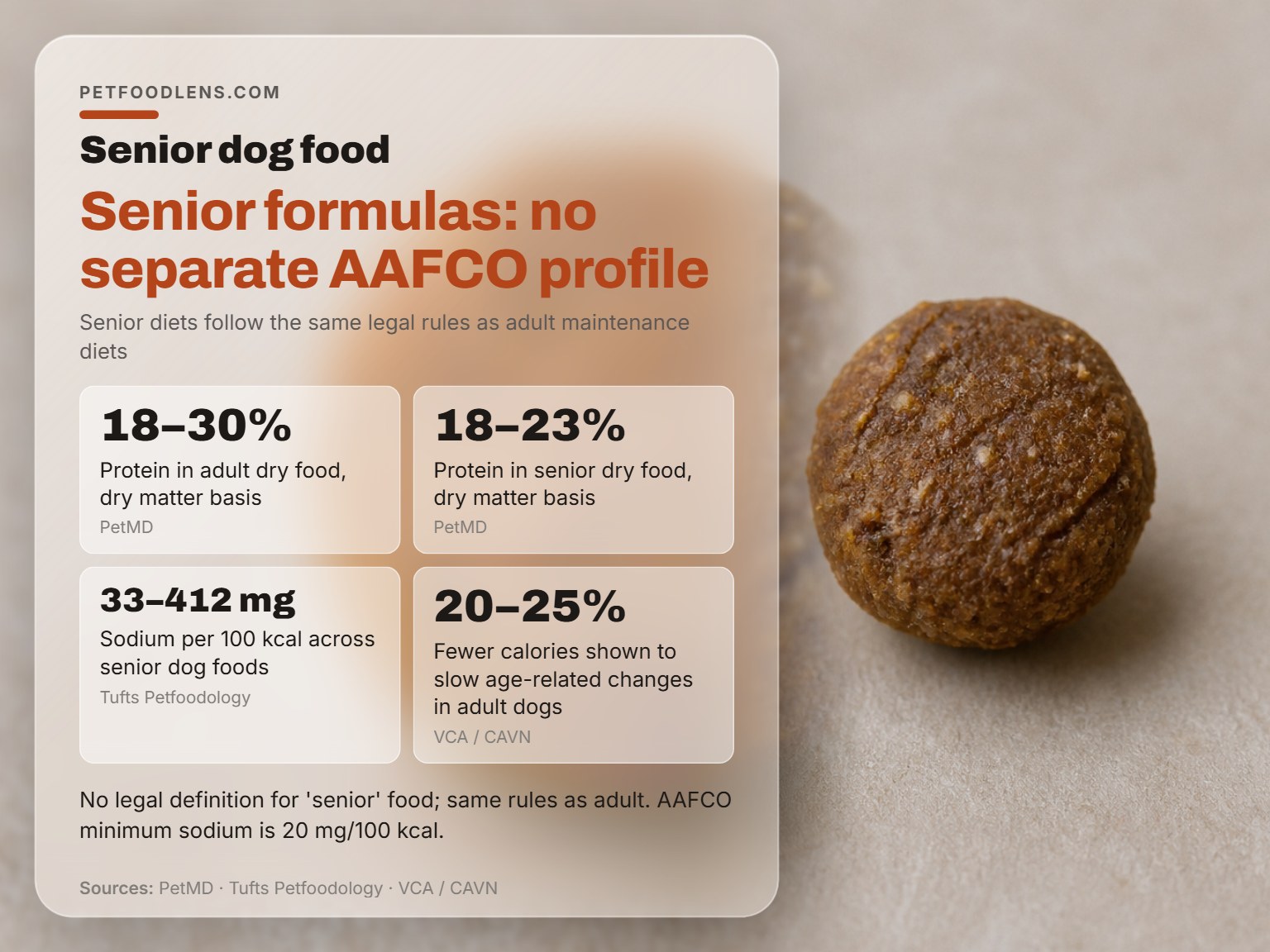
AAFCO’s adult maintenance profile is the baseline every senior bag is measured against, and there is no separate senior profile to measure against.
| Label claim | What the sources show | Who says it |
|---|---|---|
| “Senior formula” | No legal definition; same rules as adult | Tufts |
| “Lower protein” | Senior 18-23% vs adult 18-30%, dry matter | PetMD |
| “Lower sodium” | 33-412 mg per 100 kcal across senior foods | Tufts |
| “Fewer calories” | Less calorie-dense than growth diets | VCA |
Protein: The Number Owners Assume Is Lower
The protein range on senior bags overlaps the adult range almost completely. PetMD puts adult dry food at 18 to 30 percent protein on a dry matter basis and senior food at 18 to 23 percent, which is a narrower window sitting inside the wider one.
Tufts is blunt about the assumption underneath it. Tufts holds that reduced protein isn’t beneficial for a healthy older dog and lower-protein diets may contribute to muscle loss, while VCA notes some senior foods may have protein calorie levels similar to growth diets and PetMD finds senior and adult protein ranges overlap. The optimal level is still argued over, and some manufacturers go lower while others go higher.
VCA adds the part owners worry about most. High-protein food hasn’t been shown to cause kidney disease in healthy older dogs, and protein quality matters more than the raw percentage.
I’d rather see a muscle condition score in the chart than a weight on its own. Weight holds steady while muscle drains, and the scale won’t tell you.
Sodium, Phosphorus, and Calories: Where the Ranges Are Real
One survey of commercial senior dog foods found sodium ranging from 33 to 412 milligrams per 100 kilocalories, against an AAFCO minimum of 20. That’s a wide spread hiding behind one label word.
Restricting sodium isn’t necessary for older dogs in general. Tufts recommends it only when heart disease, high blood pressure, or kidney disease is present.
Phosphorus is the one worth understanding. Lowering it helps a pet that already has kidney disease, but it isn’t known whether low phosphorus prevents kidney disease in the first place, and senior foods range widely in content.
Calories are where the evidence is strongest. VCA notes that eating 20 to 25 percent fewer calories has been shown in adult dogs to slow age-related changes and increase lifespan.
You’ll notice the calorie difference in the scoop before you notice it anywhere else. Senior foods tend to be less calorie-dense, so the same volume delivers less energy, and a dog that was holding weight on a full scoop starts feeling sharp over the ribs.
The ‘All Life Stages’ Question
VCA advises against feeding an all-life-stages product to a healthy mature or senior dog, because those diets are built to meet the requirements of growing puppies and can oversupply nutrients, while PetMD notes all-life-stages labels sit alongside mature and senior foods without flagging a concern. PetMD notes the same all-life-stages labels sit alongside mature and senior foods without flagging a concern.
Two credible sources, two different readings. I’d follow VCA here, since the nutrient-excess argument is the more specific one.
How to Switch Without a Hunger Strike
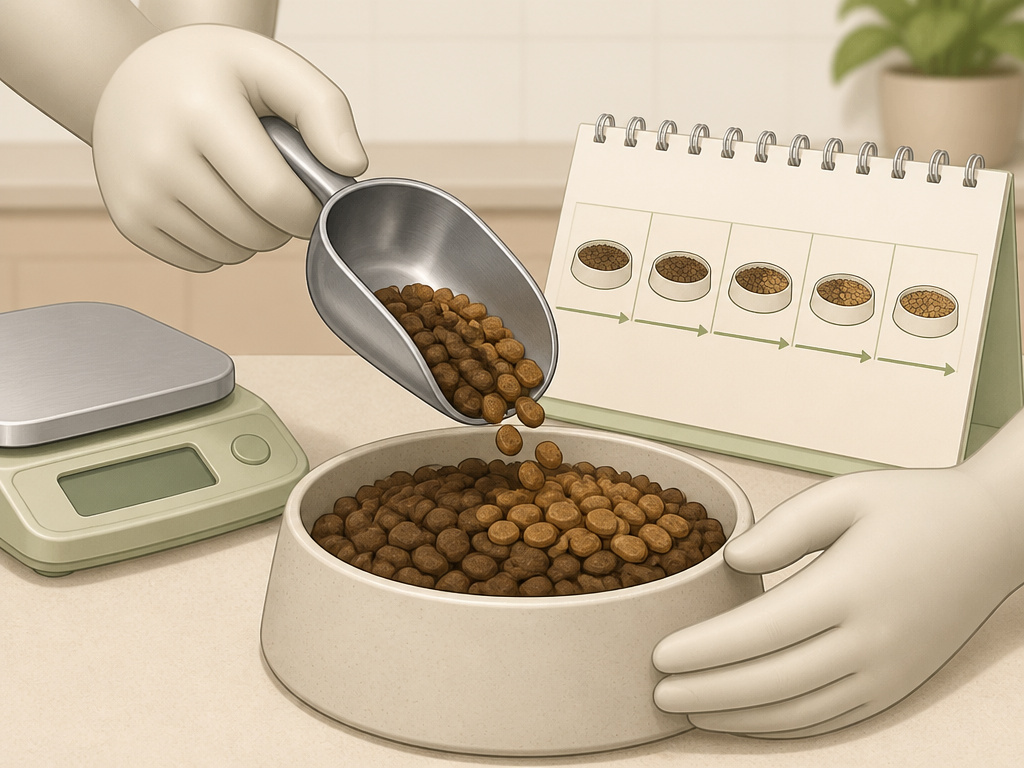
A client once asked whether she could swap foods over a single weekend to save a second trip to the store. The bowl came back half full for three days, and she was certain something was wrong with the dog. Nothing was wrong. He’d been handed a completely different bowl overnight.
I now walk people through a 7 to 10 day ramp every time, and I’d rather they take 14 days than rush it.
- Book the exam before you buy the bag. VCA’s guidance is to get a physical and metabolic evaluation first, so the food matches a finding instead of a guess.
- Start with a mostly-old bowl and a small amount of the new food mixed through it.
- Stretch the mix across 7 to 10 days, aiming to be fully on the new food by day 14.
- Watch stools and appetite and slow the ramp if either slips. Most failed switches I hear about were rushed, not wrong.
- Weigh the dog at the start and again at the end, because calorie density differs between bags and the scoop size may need to change.
- Keep the old bag until the transition is finished. Running out mid-ramp forces a hard swap.
If the dog has a sensitive stomach, the how to switch dog food mechanics matter more than which formula you picked.
Storage is the part nobody asks about. I emptied a pantry bin once and found a tacky yellow film on the walls and a sharp crayon-and-paint smell. Months of fresh kibble had gone in on top of that residue, so every new bag met old oxidized fat on day one. Empty the bin and wash it between bags, then let it dry all the way through.
When Switching Is the Wrong Move
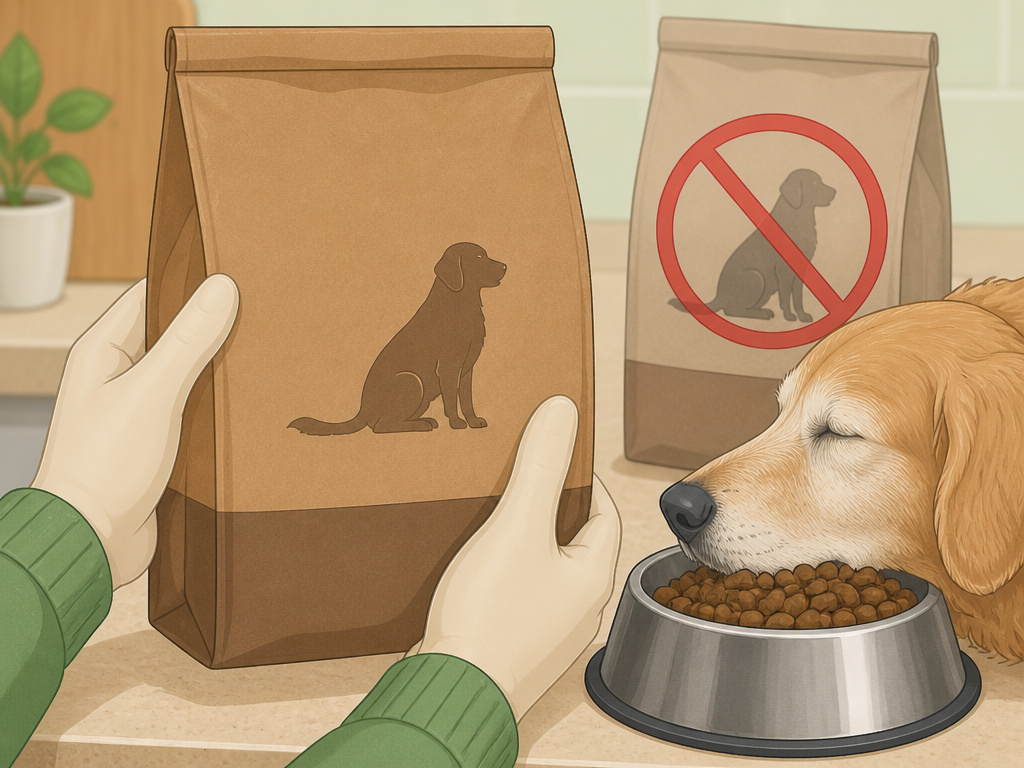
Sometimes the right answer is to keep the bag you already own.
AAHA’s position is that if an older dog is doing well on a complete and balanced adult maintenance diet, it’s appropriate to keep feeding it until a medical condition prompts a change. Tufts says the same thing from the nutrition side: a healthy senior in good body condition on a complete and balanced adult maintenance diet has no reason to switch. PetMD agrees on the healthy-dog case and adds the exception list, where a nutrition-influenced diagnosis is the clearest reason to move.
Worth knowing before you start: A senior or mature diet handed to a cat with chronic kidney disease who won’t accept a renal diet can push phosphorus above target. AAHA flags that as a documented risk, not a theoretical one.
Kidney disease is the case where the label word gets actively dangerous. For a confirmed diagnosis, the diets vets reach for are therapeutic ones, with a senior food as a fallback rather than a first choice.
If the dog is carrying too much weight, calorie density is the lever, and a dog food for overweight senior dogs search should start with calories per cup rather than the word “senior” on the front.
How to Read a Senior Bag in Ten Seconds
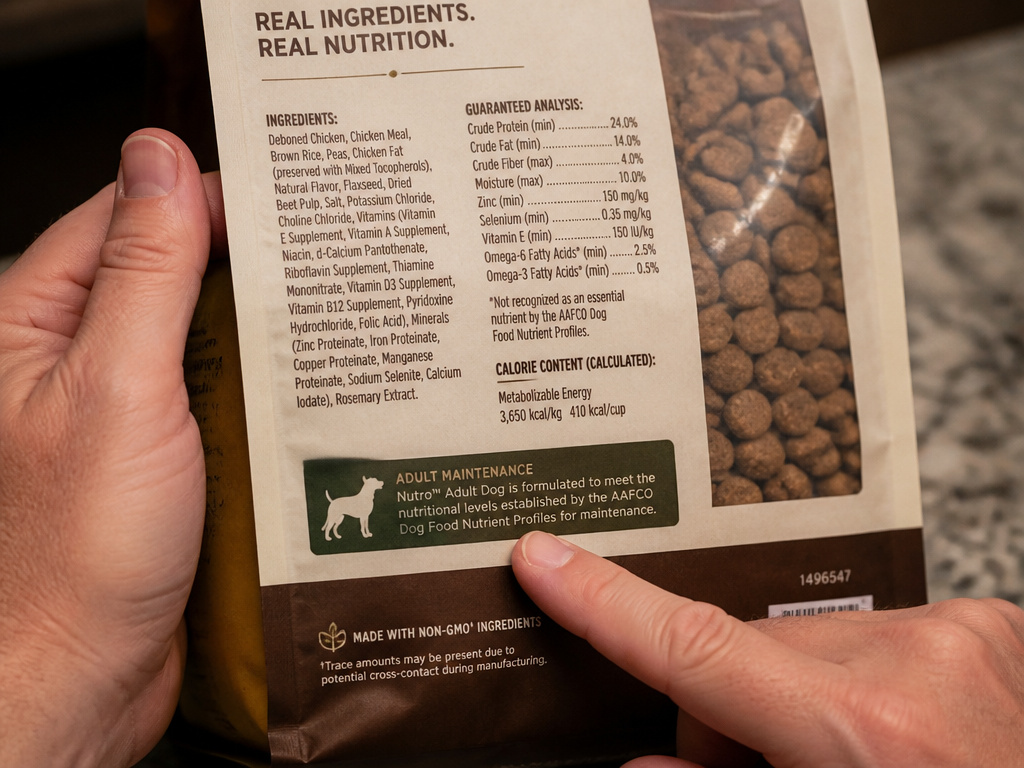
Three things on the back of a bag decide whether it’s worth buying: the adequacy statement, the calorie count, and whether a size-specific line exists.
The AAFCO Statement Is the Sentence That Matters
Every bag that meets a recognized nutrient profile carries an adequacy statement, and the wording is specific. “Adult maintenance” means the food is complete for an adult dog. “All life stages” means it also meets growth requirements, which is the profile VCA says to skip for a healthy senior.
PetMD adds a practical fallback: if your brand has no senior version, look for a food with an ingredient and nutrient profile close to what the dog already eats. Small and large breed senior varieties exist, and choosing by size is worth the extra minute.
Filtering dry dog food for senior dogs by adequacy statement and calories per cup cuts the shelf down fast.
Read the adequacy statement before the ingredient list. A bag can list chicken first and still be built for puppies.
I’d pick up a senior formula and read the statement on the back before the front. If neither matches the dog’s calorie needs, the size-specific line from the same brand is the next thing to check.
Skip this if: Your dog is healthy, at a good weight, and eating an adult maintenance diet he tolerates. The research gives you permission to change nothing at all.
Frequently Asked Questions
At what age should a dog switch to senior food?
There’s no agreed age, and the sources don’t converge. PetMD puts the senior category after 8 years. VCA uses the last 25 percent of expected lifespan, which means 5 to 8 years for large and giant breeds and 10 to 11 for small breeds. Tufts rejects fixed ages entirely.
Is senior dog food necessary for a healthy older dog?
Not automatically. AAHA advises continuing a complete and balanced adult maintenance diet until a medical condition prompts a change, and Tufts says a healthy senior in good body condition on a complete and balanced adult maintenance diet has no reason to switch. A diagnosis is the trigger, not a birthday.
Should senior dog food be lower in protein?
The ranges overlap more than owners expect. PetMD puts senior food at 18 to 23 percent protein on a dry matter basis against 18 to 30 percent for adult food. Tufts notes reduced protein isn’t beneficial for a healthy older dog and may contribute to muscle loss, and VCA says protein quality matters more than the percentage.
How long does the switch take?
PetMD recommends transitioning over 7 to 10 days or more, with a complete switch by day 14. Rushing it is the most common cause of refused meals and loose stools that I hear about.
Can I just swap the food overnight?
You can, and some dogs handle it. The risk is a dog who refuses meals for several days while the owner assumes illness. A 7 to 10 day ramp costs nothing and removes the guesswork.
What if my dog has kidney disease?
Protein and phosphorus get re-evaluated once kidney function is compromised, and a therapeutic diet is often the recommendation. AAHA specifically warns that a senior or mature diet may unintentionally deliver excessive phosphorus, so this is a case for the vet rather than the shelf.
The Bottom Line
The trigger to act on is a diagnosis or a change in body condition, not a birthday. If your dog is healthy, holding weight, and eating an adult maintenance diet without trouble, the research gives you permission to change nothing this year.
The one step worth taking this week: book the exam and bring the bag with you. A senior visit with a diet history, bloodwork, and a urinalysis gives you something concrete to act on instead of guessing your way through three senior formulas.
None of this holds if kidney disease is on the table. Once kidney function is compromised, protein and phosphorus get re-evaluated, and the senior bag stops being the safe default.
I’d rather see an owner keep a boring adult food that works than chase a senior formula because the dog turned eight. Read the back of the bag, check the adequacy statement, and let the bloodwork decide the rest.
