
How to Switch Dog Food Brands Safely: Step-by-Step
This post contains affiliate links. As an Amazon Associate, we earn from qualifying purchases.
For those wondering how to switch dog food brands safely, in one line: blend the new food into the old gradually over roughly a week, starting small and stepping up, with total daily calories held flat. Veterinary groups and manufacturers disagree on the exact calendar, and none of them recommend an overnight swap.
The clearest evidence for that window comes from a controlled trial of 13 beagle puppies that compared a seven-day ramp against a cold switch. The gradual group had a 0% diarrhea rate. The abrupt group did not, and the difference showed up in their gut bacteria and fecal chemistry.
What follows is the schedule, the day-one ratio the sources can’t agree on, the stool signals that tell you to hold or retreat, and the cases where the standard calendar doesn’t apply at all.
Key Takeaways
- The sources disagree on the exact range. AAHA says seven days, AKC says five to seven, PetMD says at least a week, Purina says one week to ten days, and the Animal Medical Center says ten. Pick one and write it on the bag.
- Day one is either 25% new food or 10% new food, depending on which source you follow, and both camps publish a reason. Neither is wrong.
- Hold total daily food flat. The percentages refer to what the dog already eats, so mixing two foods should not add calories.
- Stool decides when to advance, not the calendar. Soft stool means hold at the current ratio. Vomiting or significant diarrhea means pause and call the vet.
- Sensitive dogs need a longer window than the standard schedule allows, and no source publishes a numeric ceiling for the sensitive group.
How Long Does a Dog Food Switch Actually Take?
Credible sources give four different answers, and every one of them is defensible. That is the first thing to understand before you pick a number, because the disagreement is real and it is not sloppiness.
A controlled trial used 13 six-month-old beagle puppies. Seven received 260 g of a chicken-and-duck diet from day one. Six followed a seven-day ramp in 40 g daily increments, moving from 260 g of the old food to 260 g of the new. Diarrhea occurred in 10.20% of the abrupt group and 0% of the gradual group.
Here is how the published guidance stacks up.
| Source | Transition length | Day-one proportion |
|---|---|---|
| AAHA | 7 days | 25% new / 75% old |
| AKC | 5-7 days | 25% new |
| Purina New Zealand | 1 week to 10 days | 1 part new to 9 parts old (10%) |
| Animal Medical Center | 10 days | Gradual, as a share of total food |
| PetMD | At least a week | 10% new |
The AAHA pet food transition timeline is the shortest at a flat seven days. The Animal Medical Center stretches to ten and adds a rule the others leave out. Purina sits in the middle and starts at one part new to nine parts old.
A shorter window is not more aggressive, and a longer one is not more cautious. They are different assumptions about how to switch dog food brands safely, about how fast a gut adapts.
Why a Sudden Switch Upsets the Gut
Gut bacteria do the digesting, and a new food hands them a different substrate mix overnight. The population geared to the old diet has nothing left to ferment. The population geared to the new diet has not expanded yet. That gap is where the loose stool lives.
A peer-reviewed dog diet transition study measured exactly that gap. The gradual group came out of the week with higher relative abundances of Turicibacter and Faecalibacterium, two bacteria associated with a settled gut. The abrupt group went the other way on several fronts.
The abrupt group showed higher fecal histamine and spermine, and lower serotonin and 5-hydroxyindoleacetic acid. Isovaleric acid dropped significantly after a gradual transition. Both methods shifted amino acid metabolism; the abrupt method also shifted lipid metabolism.
Translation: a cold switch does not just loosen stool. It changes what the gut is doing at a chemical level inside a week.
The food gets blamed. The calendar rarely does.
Here is the part worth slowing down for. The headline diarrhea number in that study, 10.20% versus 0%, came with a p-value of 0.059. That misses the conventional 0.05 cutoff. The fecal score difference was statistically solid at p=0.009, but the diarrhea gap was not. Anyone quoting that study as proof needs to quote the caveat with it.
The Step-by-Step Switch, With Ratios That Add Up
Pick the food before you open the bag, then write the schedule on the bag in marker. The marker matters more than it sounds for how to switch dog food brands safely, because eyeballing a mix can drift toward more new food than you planned.
Before you start: A dog that refuses food for longer than a day needs a vet call, not a longer schedule. Vomiting or significant diarrhea means pause the switch and phone the clinic. And keep the daily total flat, because a transition that adds calories produces loose stool you will misread as intolerance.
- Read the label before you commit. Look for the words “complete and balanced” and the AAFCO nutritional adequacy statement. Skipping this means you can spend two weeks transitioning onto a food that was never adequate in the first place.
- Write the schedule down. Day number, grams of old, grams of new. Without it you will not know which step caused the problem when one appears.
- Pick your starting ratio and hold it. AAHA and AKC start at 25% new. Purina and PetMD start at 10%. Choose one, and keep it before the first increase.
- Keep total daily food flat. The pet food transition guide from AMC is explicit that the percentages refer to the total amount the dog normally receives. Adding new food on top of the old raises calories and produces loose stool.
- Advance one step at a time, not every day. A seven-step ramp over seven days is the fastest published version. Stretching each step turns a one-week schedule into a two-week one, which is what a sensitive dog needs.
- Watch stool, not the calendar. Formed stool means advance. Soft stool means hold at the current ratio.
- Hold at 100% new food before judging it. Coat and stool take time to reflect a new diet, and an early verdict tells you nothing.
What to Do With a Picky Eater
AAHA suggests low-salt chicken or beef broth as a flavor enhancer for dogs during a transition, and advises asking the veterinary team about other enhancers if the dog needs more encouragement.
The other lever is texture. PetMD’s advice is to make the change as small as possible, so a dog that likes wet food should get a new wet food rather than a jump to dry. That single decision removes most refusal cases before they start.
What Should You Do If the Dog Gets Diarrhea Mid-Switch?
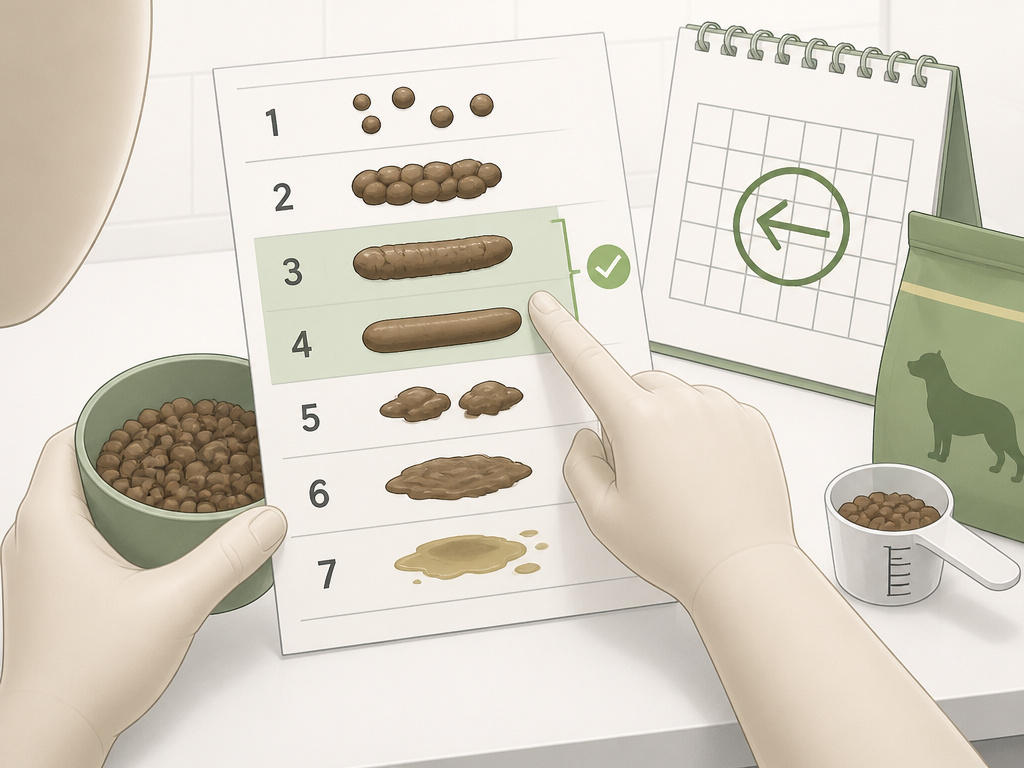
Stop advancing and go back one step. That is the whole protocol, and it works far more often than pushing through does.
PetMD is the most direct on this: if the dog stops eating or has vomiting or diarrhea at any point, switch back to the old food and slow the transition down. Call the vet if symptoms continue after reverting. PetMD also sets a hard line at refusing food for longer than a day.
The sources diverge on how much upset is acceptable early on. Purina says an upset tummy at the beginning is not unusual, while the Animal Medical Center expects only mild stool changes and PetMD treats any vomiting or diarrhea as a revert signal. The Animal Medical Center expects only mild stool changes and treats vomiting, significant diarrhea, or a dropped appetite as a reason to slow or pause and contact the vet. PetMD treats any vomiting or diarrhea as a revert signal. Three positions, one direction: when in doubt, go backward.
I treat the one-week figure as a floor, not a target. For a dog with a touchy stomach I stretch the ramp well past it, move in small steps, and let stool consistency decide when the next step happens. Most “this food gave my dog diarrhea” complaints I hear trace back to a too-fast swap. The food gets the blame and the calendar walks away clean.
The AKC guide to switching dog foods uses a fecal scoring chart where 3 to 4 is ideal, lower numbers point toward dehydration or constipation, and higher numbers signal gastrointestinal upset. That is a more useful daily instrument than a calendar.
You can read a stool at a glance. One that holds its shape when you pick it up through the bag is a green light. One that flattens into the grass and leaves a smear is a hold signal, not a crisis.
| What you’re seeing | Likely cause | What to do |
|---|---|---|
| Soft stool, dog bright and eating | Gut adjusting to a new substrate | Hold the current ratio |
| Vomiting | Ramp too fast, or true intolerance | Revert to old food, call the vet |
| Refusing food past a day | Food aversion building | Revert, call the vet same day |
| Watery diarrhea | Significant GI upset | Pause the switch, vet visit |
| Itching or ear redness | Adverse food reaction, not transition | Vet; elimination trial, 8 weeks |
That last row matters. An adverse food reaction is not a transition problem, and slowing the ramp will not fix it. The AKC notes that an elimination diet trial means a prescription hypoallergenic diet and nothing else for at least eight weeks. Over-the-counter “limited ingredient” bags are the wrong tool here, and I have counted distinct animal proteins on labels that were sold as limited. A prescription hypoallergenic diet is the kind of diet that trial actually calls for.
Where the Standard Schedule Breaks: Puppies, Seniors, and Sensitive Stomachs
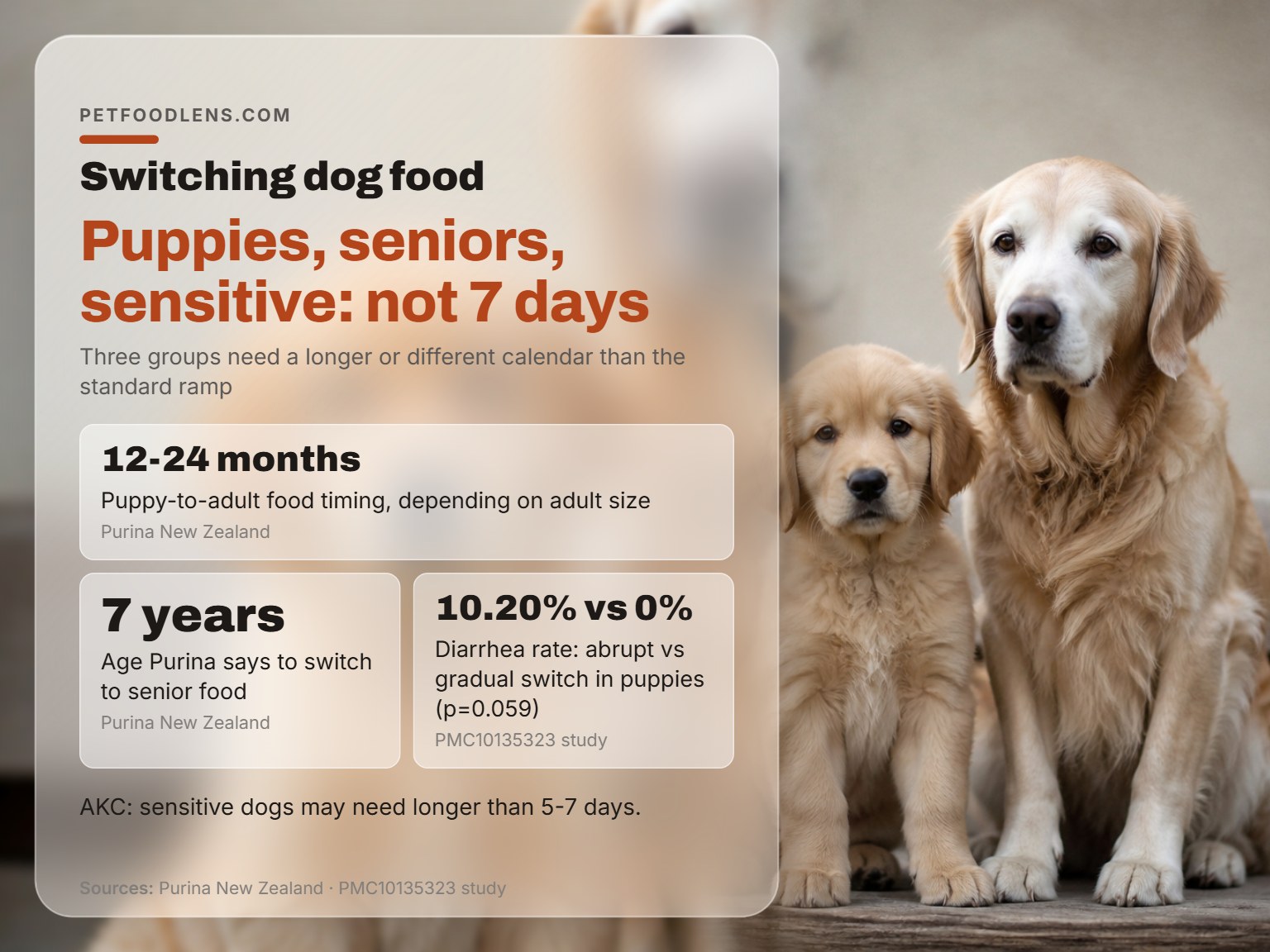
Three groups need a different calendar: puppies, seniors, and any dog with a history of reacting to food.
- Puppies. PetMD warns that a quick switch is dangerous for puppies. Move slowly and do not compress the ramp to save a week.
- Sensitive dogs. AKC says to extend beyond the standard window for dogs with sensitive stomachs, food allergies, or other gastrointestinal conditions. Neither publishes a numeric ceiling, so stool is your only clock.
- Seniors. Purina recommends specially formulated senior food from seven years onward, which is a diet change, not a brand change, and deserves the full ramp.
Puppies and the 12-to-24-Month Question
Purina puts the move from puppy food to adult food at around 12 to 24 months, depending on the dog’s adult size. That range is wide because large and giant breeds mature later than small ones. A fixed seven-day plan does not touch this decision, and getting the timing wrong matters more than the ramp does. The detail is in when to switch from puppy to adult dog food.
Senior Dogs and the Seven-Year Line
Purina’s seven-year threshold is a starting point, not a diagnosis. A dog at seven who is lean and active does not automatically need a senior formula, and a dog at six with joint issues may. The switch itself still follows the same ramp, just with a longer hold at each step. More on the timing sits in when to switch to senior dog food.
Rotating Brands, Raw Diets, and Changes That Aren’t a Simple Swap
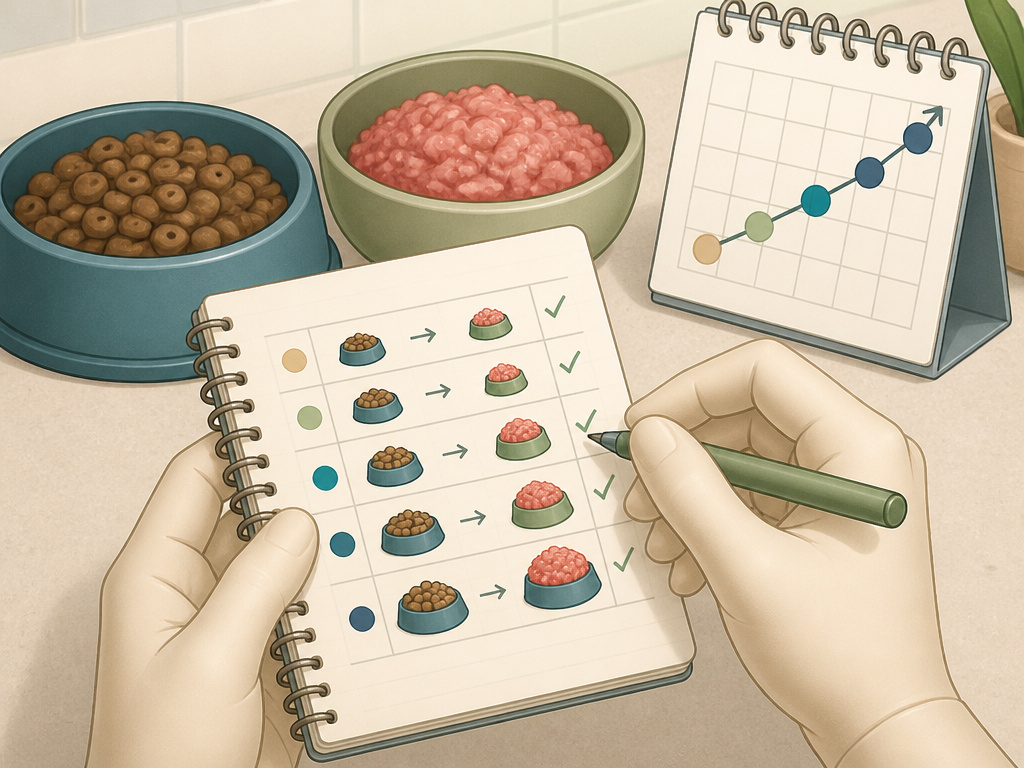
Rotational feeding is fine for a dog with a cast-iron gut and a bad idea for one that reacts to every change. PetMD’s position is that rotating through several complete and balanced diets may be beneficial and shouldn’t do harm, with two clear exceptions: a dog that gets an upset stomach from dietary changes, and a dog that needs a specific food for medical reasons.
Where this goes sideways: Rotating a dog that already has soft stool every time you change protein. You will spend months chasing a problem you are actively causing, and the vet workup starts from zero each time.
If you do rotate, the mechanics are in rotational feeding for dogs, and the protein side is covered in protein rotation. Both still use the same stepwise ramp. Rotation means changing what you feed, not skipping the transition.
Rotational Feeding Without the Guesswork
Keep every diet in the rotation complete and balanced, keep the ramp identical each time, and keep a written record of which protein caused which reaction. Without the record you are guessing, and guessing is how owners end up convinced a food is bad when the issue was the calendar.
A raw diet is a different job altogether, because the moisture and fat profile changes more than a kibble swap does. Start with raw food transition rather than improvising from a kibble schedule.
The Bin, the Bag, and the Label
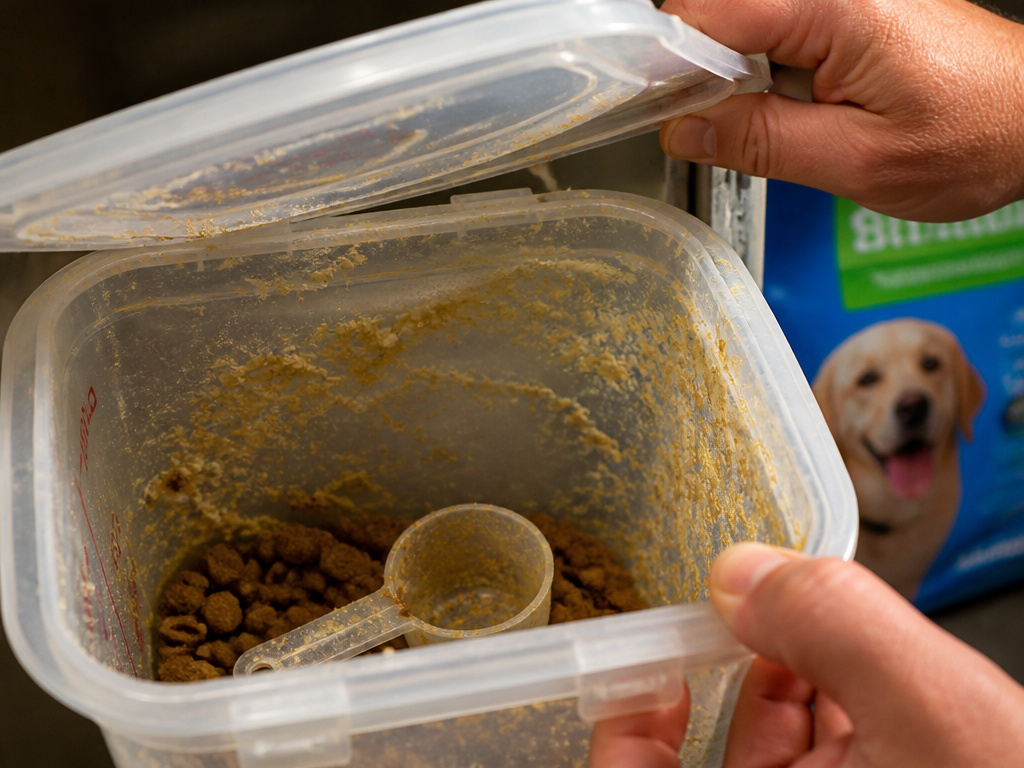
A plastic bin at the bottom of a pantry, a scoop, and fresh kibble poured on top of last month’s leftovers. That is the setup in a lot of homes, and it quietly ruins the food before the dog ever eats it.
I emptied one of those bins once and found a yellowish, tacky film on the walls and a sharp crayon-and-paint smell. Months of fresh kibble had been poured over that residue, so every new batch met oxidized fat on day one. If you use a bin, empty it completely between bags, wash it with hot soapy water, and dry it fully. Damp plastic plus fat residue is a bad pairing, and plastic takes longer to dry than people expect.
An airtight container that gets washed between bags solves this. A bag clipped shut and stored cool solves it too.
Then flip the bag over. The front of the package is marketing; the guaranteed analysis and the ingredient panel are the actual content, and the AAFCO statement is the part that says the diet is complete. Every food that meets the standard prints one.
Two more things to settle before day one: where the new brand sits on pet food safety record, and how to bring new treats in without wrecking the transition. A new treat introduced mid-switch is a variable you cannot isolate later.
Common mistake: Changing the food and the treats in the same week. When the stool loosens you will have two suspects and no way to separate them, and you will restart the whole ramp to find out.
When You Can’t Take a Week: Recalls and Urgent Switches
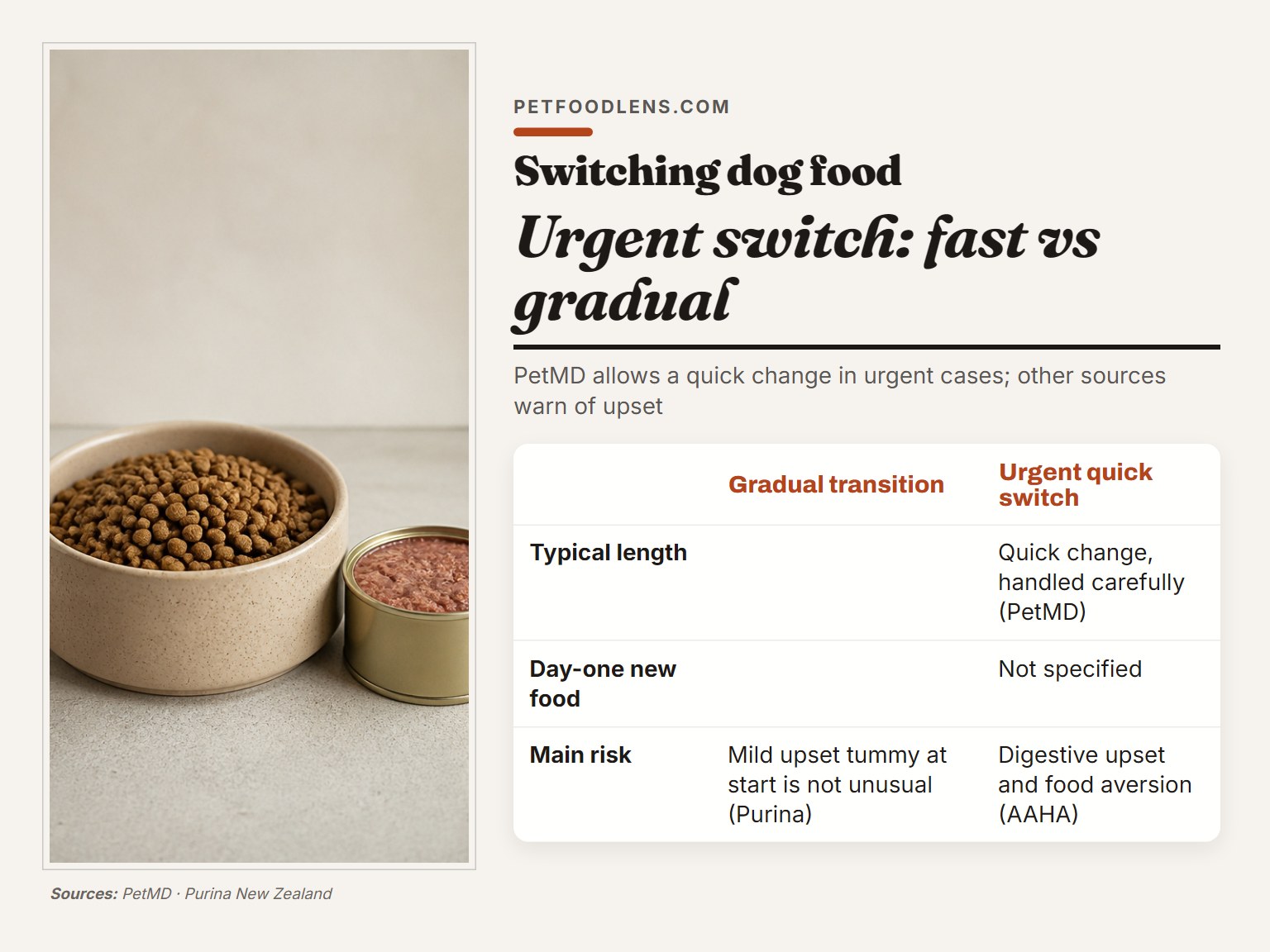
A recall does not wait for a ramp. PetMD allows a quick change when the situation demands it, including a recall, a discontinued food, or a vet-recommended immediate switch, with the warning that it has to be handled carefully and is dangerous for puppies or dogs with health problems.
That is a genuine split in the guidance. AAHA, the Animal Medical Center and Purina all present gradual transition as the route, and AAHA notes that a sudden switch can cause digestive upset and food aversion, while PetMD names a fast method as legitimate under pressure. PetMD is the one source that names a fast method as legitimate under pressure.
If you are mid-recall, the sequence is in pet food recall. Get the dog onto something complete and balanced first, then accept a rougher week.
One variable the day-percentage schedules ignore entirely: moisture. Purina points out that dry food contains far less water than canned, so a canned-to-dry switch needs plenty of drinking water available throughout.
Frequently Asked Questions
Can I switch my dog’s food faster if the old brand ran out?
Running out is the most common reason people rush a transition, but an empty bag is not a medical reason to skip the ramp. Ask a neighbor, a local shelter, or a pet store for a small amount of a similar formula to bridge the gap, or buy a small bag of the old food to finish the blend. If neither is possible, feed smaller portions of the new food for the first two days rather than a full bowl, and watch the stool closely. A rushed switch is survivable for many dogs, but it removes your ability to retreat to a ratio that was working.
Does a puppy need a different transition schedule than an adult dog?
Puppies have less reserve and a faster gut transit time, so a loose stool can dehydrate them sooner than it would an adult. The beagle trial that anchors the seven-day recommendation used puppies, so the standard ramp is at least validated in young dogs. Still, many vets prefer a slower ramp for puppies under six months or for any dog small enough that a day of diarrhea matters. Weigh the puppy daily during the switch and call your vet if weight drops.
What should I do if my dog refuses the new food entirely?
Refusal is different from a soft stool and usually means the blend tastes wrong rather than that the gut is struggling. Warm the food slightly, or hand-feed a few pieces of the new kibble as treats so the smell becomes familiar before it appears in the bowl. Never starve a dog into accepting a food; a skipped meal is fine for a healthy adult, but more than a day without eating warrants a call to your vet. If refusal persists past three or four days, the food may simply not suit the dog, and trying a different formula is reasonable.
Can I switch back to the old food if the new one causes problems?
Yes, and you should do it the same way you came in, by blending rather than swapping. If diarrhea or vomiting appears, hold at the last ratio that produced normal stool, and if symptoms persist beyond a day, return to the old food and contact your vet. A reaction to a new food can also be a sign of an underlying issue rather than the food itself, so note what you saw and when. Keep the old bag until the new food has been fully accepted for at least a week.
The Bottom Line
Loose stool that persists at the same ratio means the transition has stopped working. Stop advancing, revert a step, and call the vet. That is a different situation from a dog that softened up for a day and then settled.
The concession worth stating plainly: none of this applies cleanly to a recall. When the food has to go today, you take the rough week and manage it, and the careful ramp becomes something you do on the next switch instead.
Pick your number, write it on the bag, and let the stool vote.
