
How to Handle a Pet Food Recall: Step-by-Step
This post contains affiliate links. As an Amazon Associate, we earn from qualifying purchases.
To handle a pet food recall, stop feeding the product, keep the packaging and its lot number, and report the problem to both FDA and the manufacturer. FDA says the lot number and best-by date, along with the full product name, are the details that let a company pull one batch instead of everything on the shelf.
The bag is the object that gets thrown away first, and it’s the only thing in your kitchen that ties your purchase to a specific batch. Less than half of the pet food complaints FDA receives include a lot number, by the agency’s own count. That gap slows every traceback down. Knowing how to handle a pet food recall starts with keeping that bag.
What follows is the order I’d work in: find the code, match it to the notice, report it to both parties, then fix the storage habit that made the code hard to find in the first place.
Key Takeaways
- Keep the bag until the food is gone. The UPC, lot number, and best-by date are the only details that tie your purchase to a recall.
- Less than half of FDA pet food complaints include a lot number, which is why the agency asks for every code on the package when you’re unsure.
- Store dry food below 80 F and hold opened cans at 40 F or below.
- Report to FDA and the manufacturer both. FDA encourages complaints to each, and the manufacturer is the party that can pull a batch.
- A single recall says more about a company’s testing than its marketing does. Judge the cause and the response, then decide.
Where the Lot Number Actually Is on the Package
The lot number is the one code on the packaging that identifies the plant and the production date. FDA describes it as a long or short string of printed numbers and letters, so there’s no fixed format to memorize.
A lot code identifies the production date and the plant. Bagged food carries the code on the bottom or side, or a few inches from the top. Canned food carries the code on the bottom. Some packages print no label beside the code, and some companies use the best-by date as part or all of the number.
On bagged food the code usually sits on the bottom or side, or a few inches from the top. On cans it’s most often on the bottom, though some companies print it on the lid. FDA’s save your pet food lot number page notes that the code may carry no label at all, and that some companies use the best-by date as part or all of the number.
Characters get misread constantly. A B reads as an 8, a V reads as a U, and a code printed in low-contrast ink on a glossy bag turns into a grey smudge under kitchen lighting. Photograph the code and zoom in before you type it into a complaint form.
If the format on your bag looks nothing like the example in the notice, work through how to read a pet food lot number and how to handle a pet food recall before you assume you have the wrong product.
Bags, Cans, and the Tear-Off Strip
| Package type | Where the code sits | What to watch |
|---|---|---|
| Bag or pouch | Bottom, side, or a few inches from the top | Tear-off strip codes vanish at opening |
| Canned food | Bottom of the can | Sometimes printed on the lid instead |
| Multipacks and cases | On the case, not the individual can | Photograph the case before recycling it |
| Any package with a printed date | Near the best-by date | Some companies fold the date into the code |
The tear-off strip is the case that catches everyone. Some bags print the code on a strip you rip away when you open the food, which means the code is gone weeks before a recall notice arrives. Peel the strip carefully and keep it with the bag, or tape it inside a cupboard door.
Easy to miss: A lot number printed on the strip you tear off at the top of the bag. You destroy it the first time you open the food, usually weeks before a recall notice shows up.
What Counts as a Recall, and Who Actually Starts One
Three routes exist for pulling a product off a shelf, and the differences between them matter when you’re reading a notice.
FDA defines a recall as an action a firm takes to remove a product from the market. The FDA recalls and withdrawals hub lists three routes: the firm’s own initiative, an FDA request, or an FDA order under statutory authority.
The Pet Food Institute, the industry trade body, describes the same three routes and adds a detail FDA’s page doesn’t: FDA can mandate a recall under Food Safety Modernization Act authority, and “this has never occurred.”
| Recall route | Who starts it | Status per the sources |
|---|---|---|
| Firm-initiated | The manufacturer, after internal monitoring | Pet Food Institute calls this routine |
| Regulator-requested | FDA or a state agency asks the firm to act | Follows complaints or finished-product testing |
| FDA-ordered | FDA mandates it under FSMA authority | FDA lists it as live; trade body says never used |
Both descriptions are accurate as written. FDA is describing authority it holds. The trade group is describing how often that authority has been used. If you’re reading a notice and wondering who forced the action, the notice itself usually says.
Recalls are uncommon relative to the size of the market. FDA puts the U.S. Pet population above 135 million and describes pet food recalls as relatively rare given the volume produced and the number of animals eating it.
The recall process and how to handle a pet food recall matter less to an owner than the cause does, though the two connect: a mislabeled product and an out-of-spec test result both end in the same place, which is a batch coming off shelves.
The Five Steps to Take the Day a Recall Lands
Five things happen in order, and skipping the second one costs you the traceback.
- Stop feeding the food. Pet Food Institute puts this first, and it’s the only step that reduces exposure. Every meal served from a recalled bag adds to the dose.
- Photograph the bag, the code, and the best-by date. Skip this and you’ll be reciting a code from memory to a phone rep, which is how a B becomes an 8 and the batch stops matching.
- Match your code to the recall notice. Notices name specific lots. A bag of the same flavor from a different plant is a different product.
- Report it to FDA and the manufacturer. FDA encourages complaints to both. The company can pull a batch, and the agency can see a pattern across brands.
- Take the food back to the store. The Pet Food Institute lists a return to the place of purchase as part of the standard response, and the retailer is usually the fastest route to a replacement.
If you’d rather hear about the next one before a friend texts you, sign up for pet food recall alerts from a source that mirrors the FDA list.
The 80 F Storage Rule That Protects the Bag and the Codes
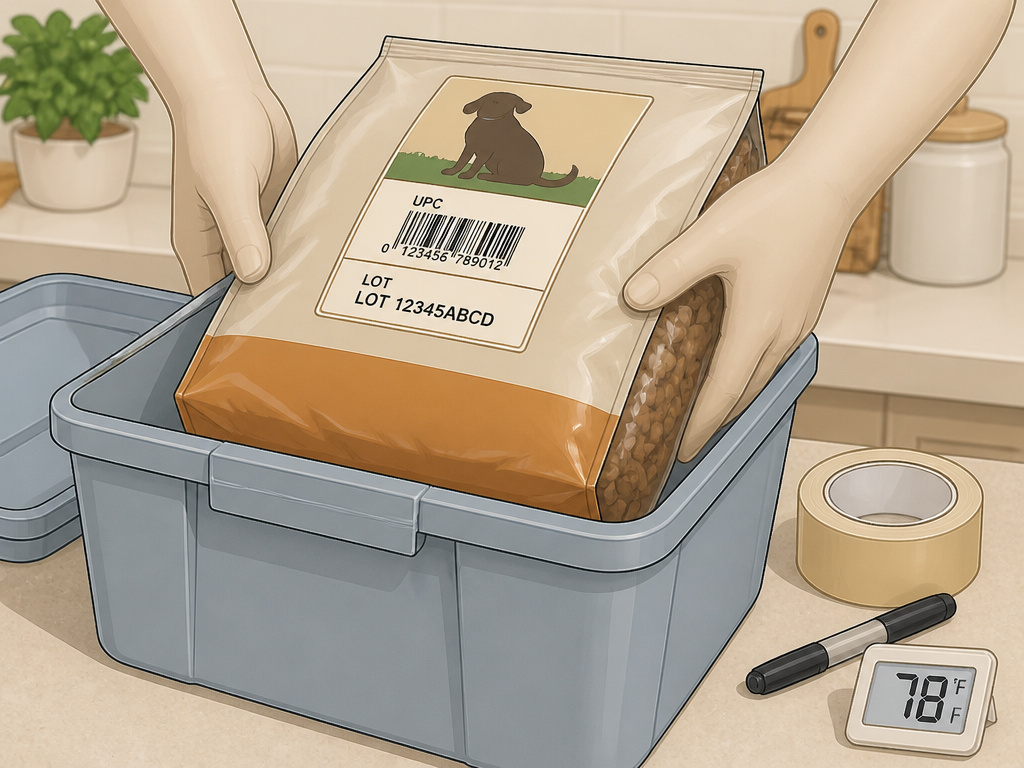
Heat and moisture break the food down long before a recall does. FDA sets the ceiling at less than 80 F for dry food and unopened cans, and states that excess heat or moisture may cause the nutrients in pet food to break down.
I’ve watched owners buy a large bag for one cat. That’s far more food than one cat will finish while it’s still fresh, and the last portion has been open long enough to oxidize. I tell people to buy only what they’ll finish while it’s still fresh. A bag that’s cheaper per pound stops being cheaper when you’re still scooping from it in month four.
The Container Question
FDA’s preference is blunt: put the entire bag into the container rather than pouring kibble into it. The bag carries the UPC, lot number, product name, manufacturer, and best-by date, and all of that stays readable if the bag stays intact.
If you do pour, use something clean, dry, and lidded, and tape the codes to the outside. A sturdy lidded container holds a full bag and seals well enough for a garage. Smaller lidded containers work for smaller bags kept in a kitchen cabinet. Any clean, dry, lidded bin is fine as long as the bag goes in whole.
Common mistake: Pouring kibble straight into a plastic bin and binning the bag. The lot number leaves with the bag, and the bin tells you nothing about which batch you’re feeding.
Leftover Wet Food
Opened cans go in the refrigerator at 40 F or below, and FDA says to refrigerate or discard leftovers promptly. A can left in its tin with foil over the top picks up a metallic taste and whatever else is in the fridge. A glass jar with a tight lid avoids that, and I’d use it promptly.
For cats eating a third of a can at a time, spooning pate into an ice cube tray and freezing it works. Thaw one or two cubes in the refrigerator overnight. Don’t thaw on the counter and don’t refreeze, and expect some gravy styles to separate after thawing.
In the bowl, don’t leave the food sitting out at room temperature for long, and less in a warm kitchen. A crusted, dried surface on the food means it sat too long, whatever the clock says.
Why Is the Lot Number Not Required but Still Crucial?
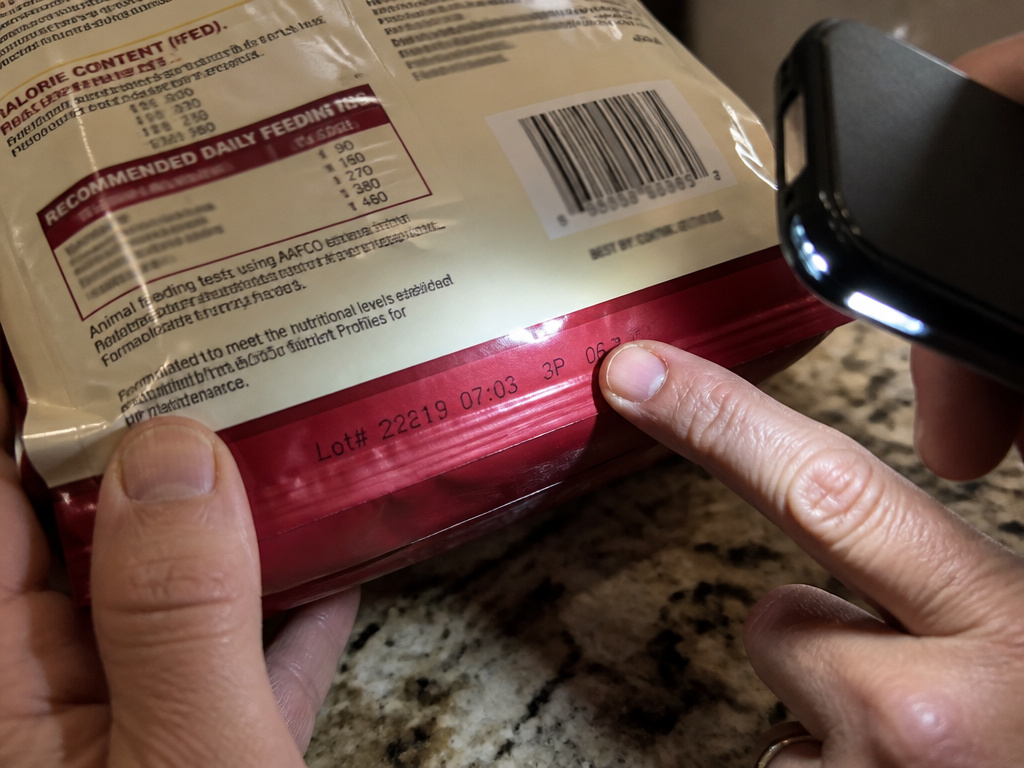
Have you actually looked for the lot number on your current bag? Most owners haven’t, and nothing on the front of the package tells them to.
FDA’s lot number page says the code is “not required,” though most companies include it anyway. The same page then spends several paragraphs on why that optional code is what identifies a specific batch, which plant made it, and when. Both statements sit in the same document, and the tension is real: the code is voluntary and load-bearing at once.
Rule of thumb: If you can’t find the lot number in under a minute, change how you store the food. A code you can’t locate is a code you don’t have.
The UPC doesn’t solve it. A UPC identifies the company and the product, and it says nothing about which plant made the bag. FDA also notes that companies aren’t required to print UPCs on pet food packages at all.
Best-by dates are company-set and mark when quality starts to drop, which is a different question from safety. Some companies use the best-by date as part or all of the lot number, which is why FDA’s advice when you’re unsure is to report every code on the package.
What Do You Do If Your Pet Already Ate the Recalled Food?
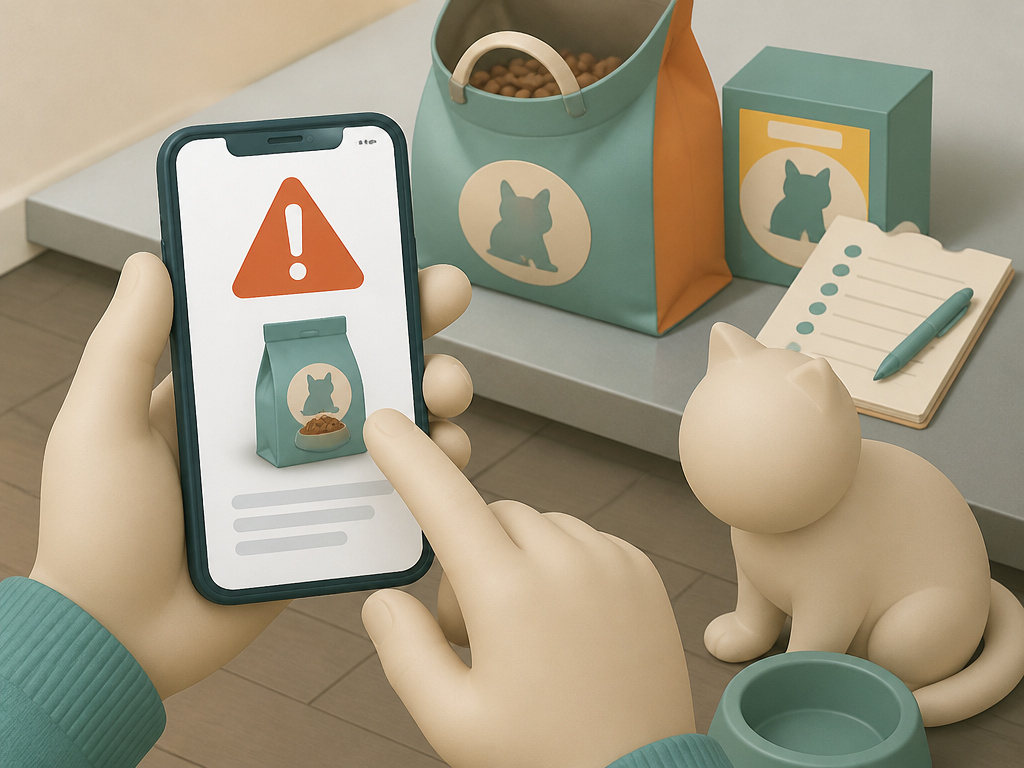
The bowl is empty, the cat seems fine, and the notice is on your phone.
Stop feeding the product and call your veterinarian if there’s a health problem, which is FDA’s instruction. The ASPCA adds a step owners skip: don’t throw away the packaging or the remaining food yet, because both are what you’ll need for a report.
Signs That Mean a Vet Call Now
The ASPCA lists the signals worth acting on: a sudden refusal to eat, or illness and discomfort after eating, particularly if you recently opened a new container. Vomiting and diarrhea after a food change are the common ones.
The ASPCA Animal Poison Control Center takes calls at (888) 426-4435 if you think your pet ingested something toxic.
For a suspected food poisoning case, keep a written timeline of what was eaten and when symptoms started. Reporting a pet food illness to FDA goes faster with the product name, container type, lot number, best-by date, and purchase details in front of you.
I’m not a veterinarian and I don’t diagnose. Formulation questions I can answer. A sick cat goes to the clinic.
Should One Recall Change Your Brand?
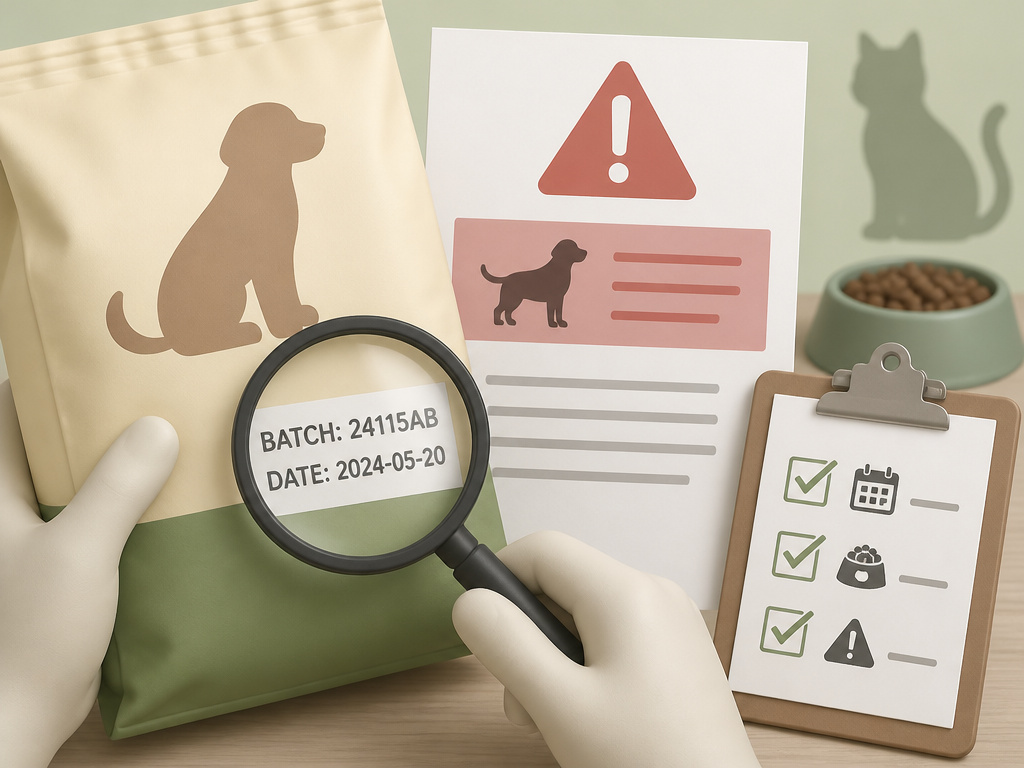
I don’t treat a single recall as a disqualification. A recall is evidence that a company’s monitoring caught something, and the useful question is what they found and how fast they moved.
Third-party lists of recall-free brands look like a shortcut, and they reward the companies that test least. A brand running fewer finished-product checks has fewer chances to find a problem worth announcing. That’s a structural argument, and it’s why I read those lists sideways.
What I read instead:
- The date and the manufacturer, so you know which plant and which production run.
- The food type and the stated issue, which separates a labeling error from a contamination finding.
- Whether the recall is ongoing or closed, since an open recall means product may still be on a shelf.
Then look past the single event to the pet food safety record across several years. One recall with a fast, well-documented response reads differently from several recalls with vague notices.
Before you switch, check for recalls on the brand you’re considering, because the alternative has a cost too. A cat moved onto a new protein every few weeks is harder to read when something goes wrong, since you’ve changed two variables at once.
When an owner wants a plain answer I point at brands with a strong safety record. That’s my preference and I’ll say so plainly. Treat it as a starting point and run your own check on the FDA list.
Frequently Asked Questions
What if I already threw away the bag?
You can still act, just with less precision. Report every code you can remember or find on a receipt, plus the purchase date and location. FDA says it can work with a company to identify the product even when the code isn’t completely correct, so a partial answer beats no report.
Does a recall mean the whole brand is unsafe?
No. Recalls target specific batches, and FDA notes that a lot number lets a company pull one production run without clearing every bag from every store. The brand-wide question is about the pattern of causes and how the company communicated, not one notice.
How long do I have to return recalled food?
There’s no single national window. The Pet Food Institute’s guidance is to contact the manufacturer and take the product back to the place of purchase, and the retailer sets its own terms. Call the store before you drive over.
Can dry food go bad in the container even if it’s sealed?
Yes, if it’s stored warm. FDA sets the ceiling at less than 80 F for dry food and unopened cans, and states that excess heat or moisture may cause nutrients to break down. A sealed bin in a hot garage doesn’t protect against that.
Where should I watch for new recalls?
The ASPCA points owners to the AVMA recalls and safety alerts page and to the FDA list, which records the date, manufacturer, food type, issue, and whether the recall is ongoing. Pick one and check it regularly rather than waiting for a social media post.
The Bottom Line
Here’s the trigger I’d give you: if you can’t produce the lot number for the bag you’re currently feeding within a minute, fix that before the next notice arrives. Tape the code to the container lid tonight, or drop the whole bag inside the bin and leave it there.
The rest is patience. Read the notice, match the batch, report it to both parties, and don’t panic-switch a cat onto a new food over one recall. A brand’s record is a pattern, and a pattern needs more than one data point.
One concession. If your cat is a fussy eater or has a diagnosed condition, none of this applies cleanly. A therapeutic diet comes from your vet, and a recall on that diet is a call to the clinic, not a trip to the store for a substitute.
