
How to Sign up for Pet Food Recall Alerts: Ranked by Speed
This post contains affiliate links. As an Amazon Associate, we earn from qualifying purchases.
To sign up for pet food recall alerts, use three separate federal lists: FDA’s GovDelivery subscription for pet food and animal drug recalls, CPSC’s list for crates and bowls, and FSIS for raw food containing USDA-inspected meat. Recalls.gov routes you to all three. FDA’s live recall table keeps entries for three years before archiving them.
Three lists sounds like overkill until you see what each one covers. A bag of kibble, a compounded veterinary medication, and a metal crate are handled by three different agencies, and a subscription to one tells you nothing about the other two.
The how to sign up for pet food recall alerts question is quick. Knowing which list to open at 11pm is the part that takes practice.
What follows is the order I’d use to sign up for pet food recall alerts, the two places the sources flatly disagree about how fast alerts land, and the ten-second habit that makes any of it useful when a notice hits a bag you opened in March.
Key Takeaways
-
Three subscriptions, not one. FDA covers pet food and animal drugs, CPSC covers crates, gates and bowls, FSIS covers raw food with USDA-inspected meat.
-
Photograph the label the day you open the bag. The lot code and best-by date are what let you match a notice to your food months later.
- A recall record is a testing record. It says more about how much a company checks than about how good the food is.
Where Do Pet Food Recall Alerts Actually Come From?
Three federal agencies split the work, and the split follows the product rather than the pet.
FDA’s recall table publishes eight fields per entry: date, brand names, product description, product type, recall reason, company name, a terminated-recall flag, and an excerpt. Entries stay on the live page for three years, then move to the archive, which is searchable by year and by product or company name.
Everything pet food and animal drug related lands on the FDA Center for Veterinary Medicine recalls page. That includes compounded medications, which turn up more often than owners expect. A 10/21/2026 entry lists Wedgewood Pharmacy, LLC and compounded veterinary medications under “Potential Potency Issues,” filed in the Animal & Veterinary/Drugs category.
Non-food pet products go somewhere else entirely. A crate, a gate, a ceramic bowl: those sit with CPSC, and the subscription is a different one.
Then raw food. If the meat or poultry in it is USDA-regulated, the recall can land on FSIS instead of FDA. Two parallel systems.
FDA sorts recalls by who started them: firm-initiated, FDA-requested, or FDA-ordered under statutory authority.
One caveat straight from the agency: not all recalls have press releases, and not all of them get posted on the FDA recalls page.
Read that sentence twice. It’s the reason one subscription isn’t enough.
How to Sign Up for Pet Food Recall Alerts in the Right Order
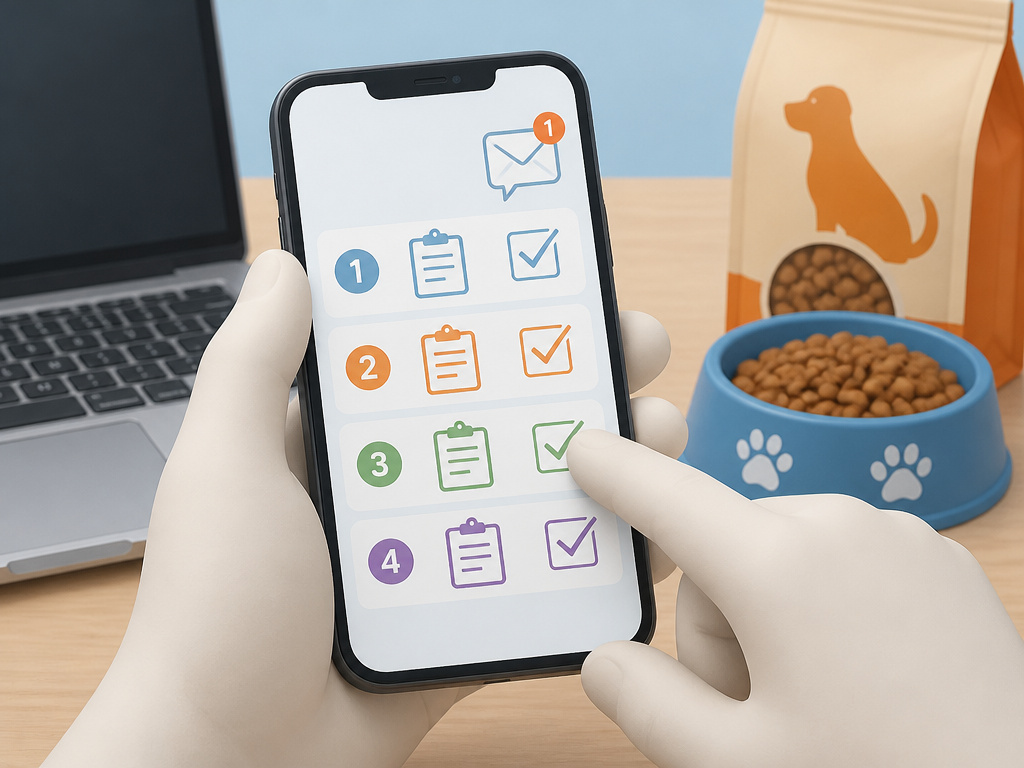
Three subscriptions cover a normal household. Do them in this order.
That’s a low bar, but it’s the only privacy promise in the chain.
- FDA first. Recalls.gov sends FDA sign-ups to the GovDelivery subscriber page. Skip this one and you’re depending on news coverage, which one source says can lag by days.
- CPSC second, if you own a crate, gate, bowl, or any other non-food pet product. Recalls.gov routes those sign-ups to the CPSC Newsroom Subscribe page. Skip it and a cracked crate hinge never reaches your inbox.
- FSIS third, if you feed raw food containing USDA-inspected meat or poultry. Enrollment runs through farmers.gov’s stay-connected page. Skip it and that recall sits on a different agency’s site entirely.
- Your state agriculture department last, and only if it publishes alerts. Ohio and Pennsylvania test retail pet food themselves, independently of what manufacturers report.
| What you bought | Who handles it | Where to sign up |
|---|---|---|
| Kibble, canned food, treats | FDA (CVM) | GovDelivery list via Recalls.gov |
| Compounded animal drugs | FDA (CVM) | Same FDA list |
| Crates, gates, bowls | CPSC | CPSC Newsroom Subscribe |
| Raw food, USDA-inspected meat | FSIS (USDA) | farmers.gov stay-connected |
Recalls.gov sorts its subscriptions into seven categories: Consumer Products, Motor Vehicles, Boats, Food, Medicine, Cosmetics and Environmental Products. Pet food sits under Food and Medicine, which is why owners scanning the menu for a “pets” button don’t find one.
How Fast Do FDA Alerts Actually Arrive?
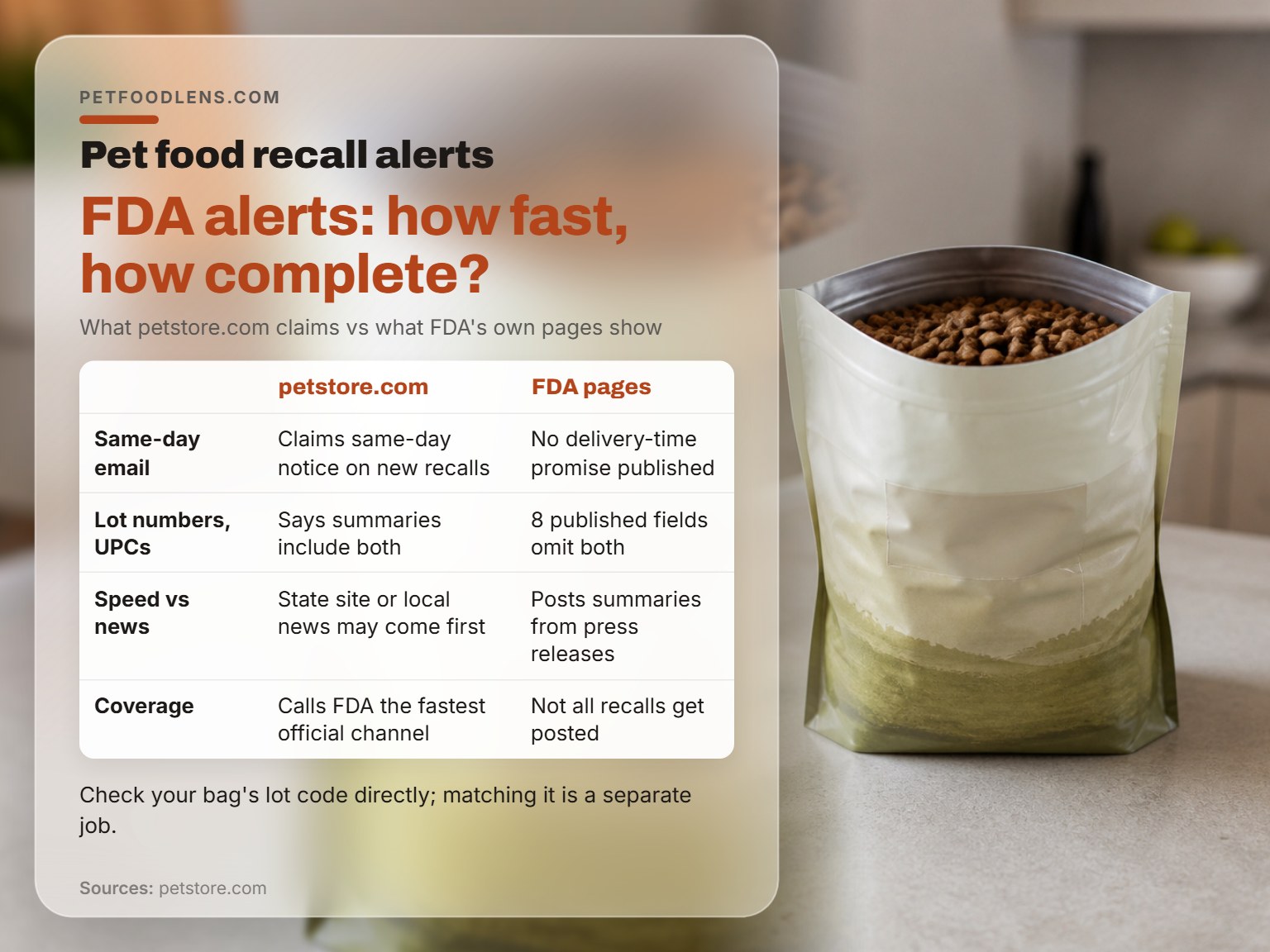
That gap matters. Different service levels, and you’re the one holding the bag either way.
| Claim | Who says it | What the primary page shows |
|---|---|---|
| Same-day email on new recalls | petstore.com | No delivery-time promise on FDA pages |
| Listings carry lot numbers and UPCs | petstore.com | FDA’s eight published fields omit both |
| A recall can hit state news first | petstore.com | FDA posts summaries from press releases |
| FDA is the most current source | Dogster | FDA says not all recalls get posted |
The lot-number row is the one that bites. Petstore.com says FDA recall summaries include lot numbers and UPCs, while FDA’s own published fields omit both, so check your bag’s code directly. The code is printed on your bag, and matching it is a separate job.
None of this makes FDA unreliable. A record and an alert do two different jobs, and FDA’s table does the first one well.
The FDA recalls market withdrawals alerts table is the authoritative record, though petstore.com notes a recall can surface on a state site or in local news before it appears in FDA’s searchable database. The practical version of how to check for pet food recalls is to search by brand, then confirm the lot against your own bag.
The Three-Year Cliff Nobody Warns You About
A bag you opened in January is still being scooped in April.
A large bag for a single cat can stay open for months. I used to hand those out as the sensible buy without thinking past the price per pound. Then I counted how long the last third actually sits there.
Over time, the food smells flat and dusty next to the first scoop. Oxidation is doing its work, and the savings evaporate if the cat quits eating it or half gets tossed.
The recall angle is the part I missed for years. A bag that lasts months is a bag that’s still open when a notice lands. If the label went out with the recycling in week one, you have no lot code to match.
FDA keeps entries on the live page for three years, then archives them. To search the archive, you enter the product name, the company name, or both, plus the year, into Search FDA Archive. There’s also a Recall and Safety Alerts Archive you can scroll by year.
So the three-year mark is where a lot of checking quietly fails. A recall from years ago won’t appear on the live table, and it won’t appear in a search that only covers a shorter window either.
Ten seconds. That’s what the label photo costs you, and it’s the only reason any of this works months later. How to read a pet food lot number covers where the code sits, because the placement varies by manufacturer.
What to Do the Day a Recall Lands
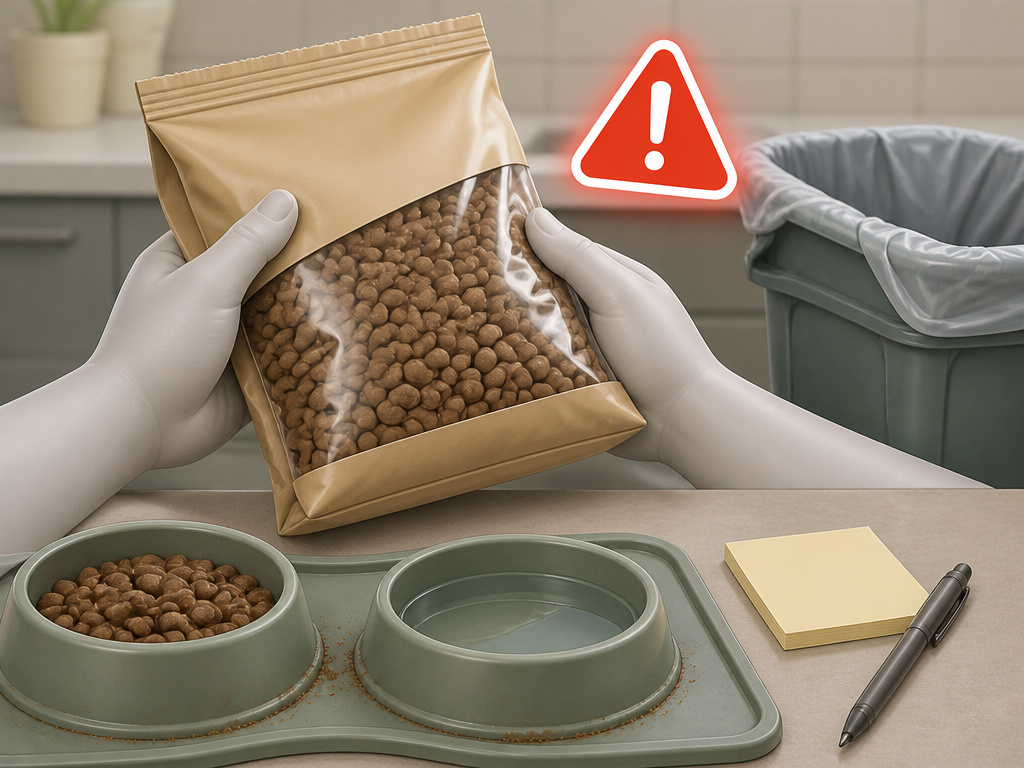
Stop feeding the food before you finish reading the notice.
Before you start: Recalled food can carry Salmonella, and it transfers to hands, counters, and bowl rims before anyone notices a symptom. Keep the bag sealed and away from wildlife if you’re binning it, and wash your hands after every contact, including the ones where you only moved the bag.
Stop feeding first, read second
Dogster’s guidance is blunt: stop feeding immediately, even if the dog shows no signs of illness. Then contact the manufacturer with questions.
Keep the packaging. You need the lot code to match your bag against the notice, and how to read a pet food recall notice walks through which fields to compare.
Common mistake: Binning the bag before you write down the lot number. The notice will name a lot range, and without the code you’re guessing for weeks whether the food your cat already ate was inside it.
The vet question, and where the two sources split
Both positions have a rationale. Vitamin D toxicity is the case that supports the cautious read, since petstore.com notes acute kidney injury signs that don’t appear until one to two weeks after exposure.
I’d take the vet call either way. I’m not a veterinarian and I can’t run kidney values over the phone.
Call the emergency clinic rather than waiting if vomiting or diarrhea comes with collapse, seizures, or repeated vomiting. And if you handled the food and end up with fever, diarrhea, or abdominal cramping, petstore.com’s advice is to contact your own physician and mention the exposure.
Clean the gear, not just the bowl
Dogster’s list covers bowls, water bowls, storage containers, scoops, and the floor around the feeding station.
- Water bowls, because a thirsty pet drinks more than it eats on a bad day
- Storage containers, including the one you poured the bag into
- The scoop
- The feeding mat and the floor beneath it
The scoop is the one people skip. A plastic scoop that’s been sitting in a recalled bag holds a fine dusting of kibble in the seams, and a rinse under the tap doesn’t lift it out.
Do all of it. Returning the food to the store gets you a refund, and how to handle a pet food recall covers the rest of the cleanup.
If your pet got sick, how to report a pet food illness covers the FDA Safety Reporting Portal, which petstore.com recommends using even when the pet seems fine. FDA’s consumer complaint line is 1-888-463-6332 if you’d rather talk to a person.
Where Recall News Lands Before the Federal List
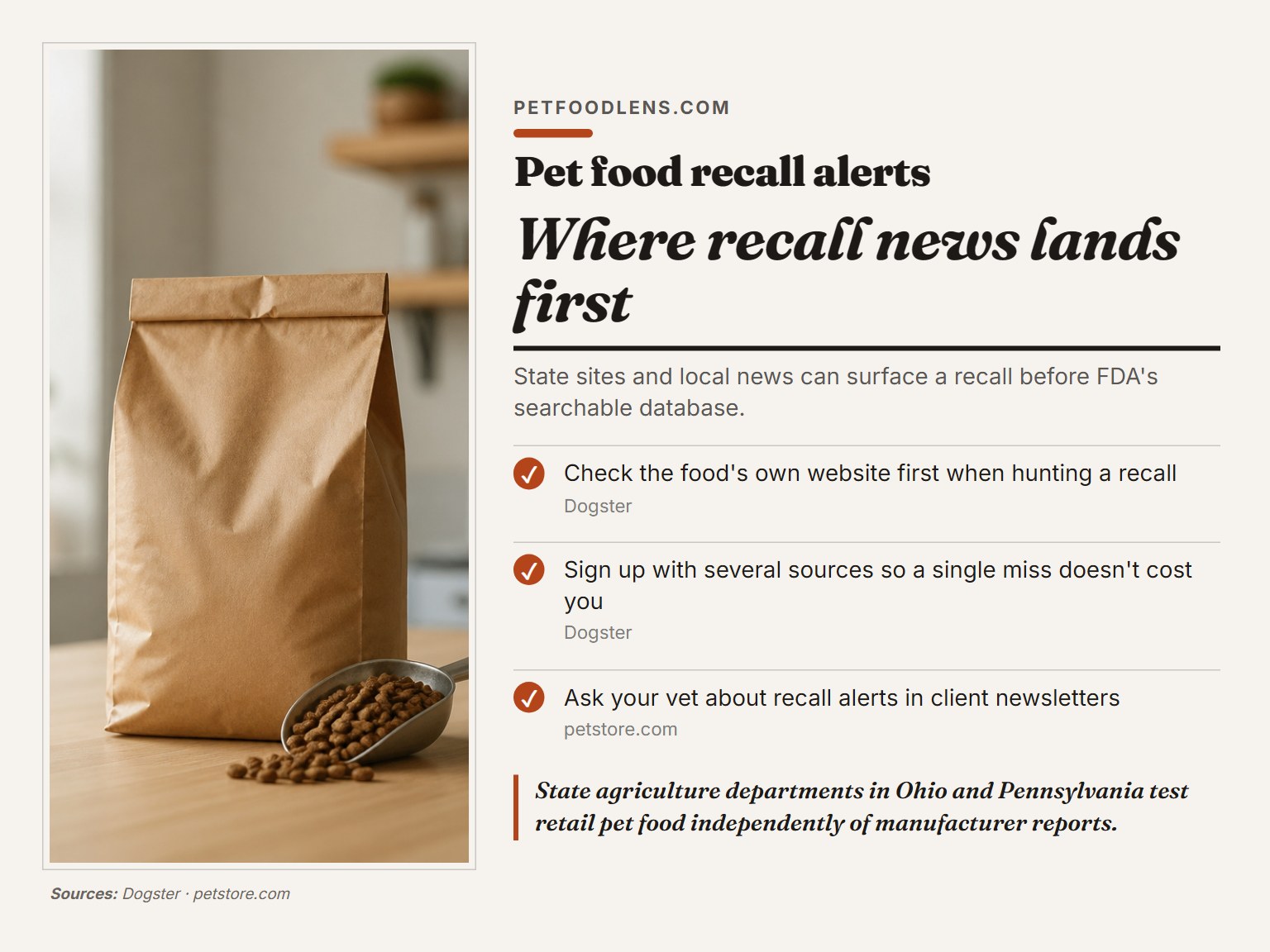
State agriculture departments in Ohio and Pennsylvania test retail pet food for pathogens and nutrient deficiencies on their own, independent of what a manufacturer reports.
That’s why a recall can surface on a state site or in local news before it reaches FDA’s searchable database. Petstore.com makes that point directly, and it’s the strongest argument for checking more than one place during an active outbreak.
The channels that aren’t federal
Dogster’s list runs wider than the federal hub: FDA’s Twitter/X account, Pet Food Recall, Dog Food Advisor, Paw Diet for text-message alerts through a toll-free number, and Dogster’s own email list. Petstore.com points at MedWatch and a manufacturer’s own recall notification list.
Dogster also says to check the food’s own website first when you’re hunting a recall, and to sign up with several sources so a single miss doesn’t cost you.
Where this goes sideways: Relying on one third-party list. Dogster builds its records from FDA and AVMA, so a lag on either end shows up as a gap in yours.
Veterinary hospitals and university extension offices push recall alerts through client newsletters during active outbreaks, according to petstore.com. That’s worth asking about at your next visit, because it’s the one channel tied to a clinic that already knows your animal.
Third-party “recall-free” lists are the part of this space I trust least. A brand only lands on one by having had something to recall, so the list rewards small brands that test little as much as careful ones that test constantly.
A recall record says more about how much a company tests and how quickly it talks than about how good the food is. Those are separate questions, and the front of the bag answers neither.
One recall shouldn’t disqualify a brand on its own. Look at the cause, then look at how fast the company moved.
For the symptom side, how to recognize food poisoning in pets is the reference I’d keep open: vomiting, diarrhea (especially with blood), lethargy, loss of appetite, increased thirst and urination, or fever.
Frequently Asked Questions
Do I need separate alerts for cat food and dog food?
No. The FDA list covers pet food and animal drug recalls across species, so one subscription catches both. You do need a second subscription if you feed raw food with USDA-inspected meat, because that can land on FSIS instead.
Is there a text message option?
Dogster points to Paw Diet, which enrolls you by texting a toll-free number. The federal lists are email only, and Recalls.gov routes every agency subscription to an email signup page.
How long does a recall stay on the FDA site?
Three years on the live table, then it moves to the archive. The archive is searchable by product name, company name, or year, so a four-year-old recall is still findable. It just won’t be on the page you’re used to checking.
My pet ate recalled food and seems fine. Do I still call the vet?
Vitamin D toxicity is the case for caution, since kidney signs can take one to two weeks to appear.
Do I need to sign up for every brand I feed?
No. The federal lists are organized by product category, not by brand. A manufacturer’s own notification list is the only brand-specific channel, and it only helps if you stay on one food long enough for it to matter.
What if my pet’s food isn’t on any list but the bag looks wrong?
Report it. Petstore.com recommends the FDA Safety Reporting Portal even when the pet seems fine, because consumer reports help regulators decide whether a recall needs to expand to more lots.
The Bottom Line
How to sign up for pet food recall alerts is really two jobs: get on the lists, then keep the records that make the lists useful. The first is quick. The second takes ten seconds per bag, and it’s the one people skip.
Do one thing today. Photograph the white label on whatever bag is open in your kitchen right now, lot code and best-by date, and save it to your phone. That photo is the difference between a five-minute check and a call to a manufacturer who can’t help you without it.
One threshold worth remembering: three years. Go to Search FDA Archive with the brand and the year instead.
And a concession. I read ingredient panels for a living, and I still can’t tell you whether your cat’s kidney values are fine. That’s a veterinarian’s job, and a recall is one of the few moments where the vet call comes before the label reading.
