When to Switch to Senior Cat Food: Age Is Not It
AAHA/AAFP says 10, Hill’s says 7, and research finds changes start at 8. Here’s how to match the food to your cat’s actual condition.

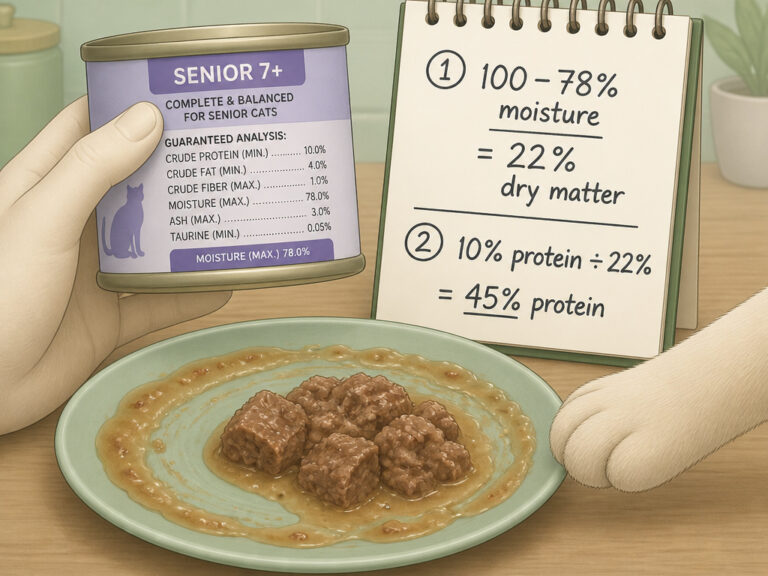
AAHA/AAFP says 10, Hill’s says 7, and research finds changes start at 8. Here’s how to match the food to your cat’s actual condition.
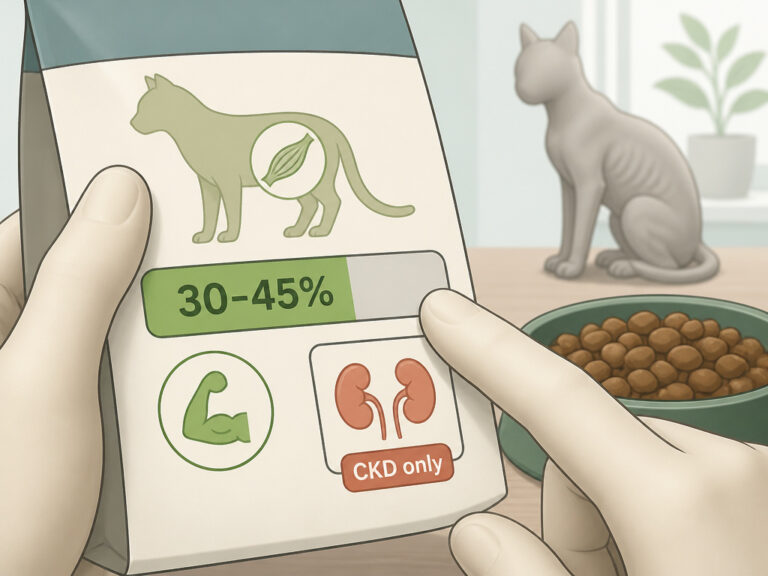
Senior cat food pros and cons, measured against the research: fiber, calories, protein, and the label claims that have no standard behind them.
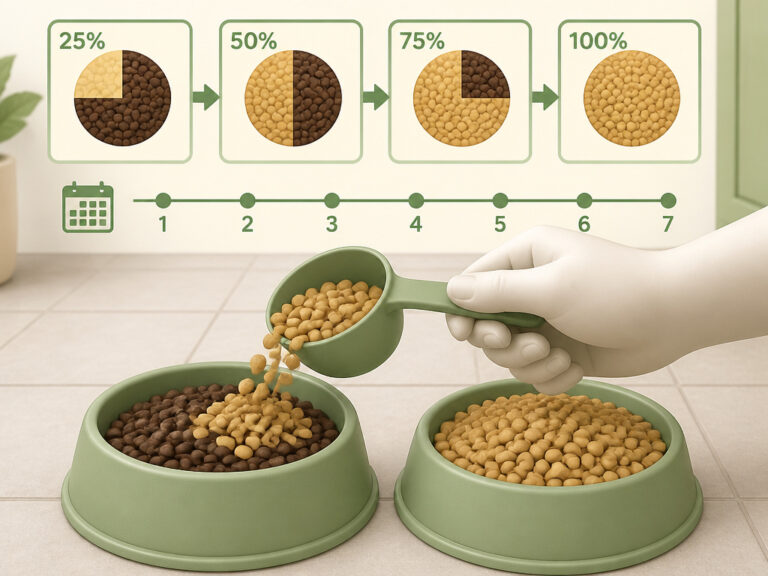
Kitten food stops fitting somewhere between 9 and 12 months. Here is where the sources disagree, the 7-day ramp, and the two cases that break the rule.
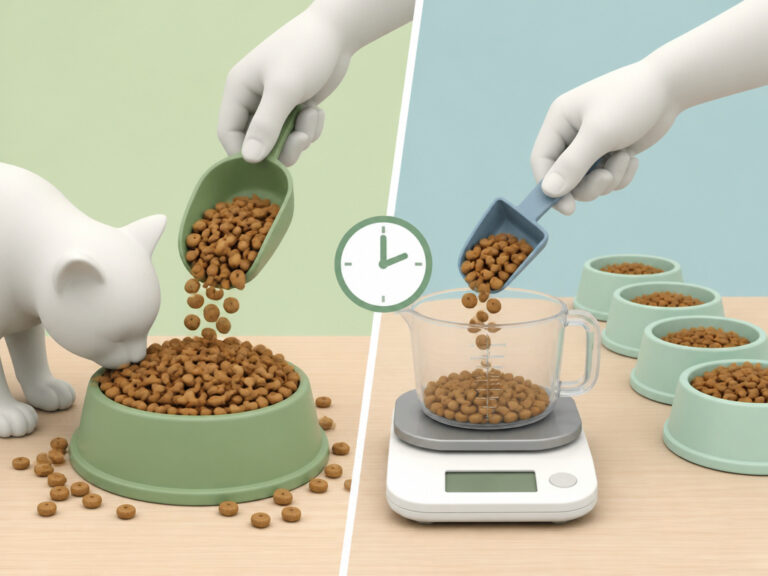
How much to feed a kitten depends on weight and age: 200 kcal/kg at 10 weeks down to 80 by 10 months. Here’s the math, meal counts, and when to switch.
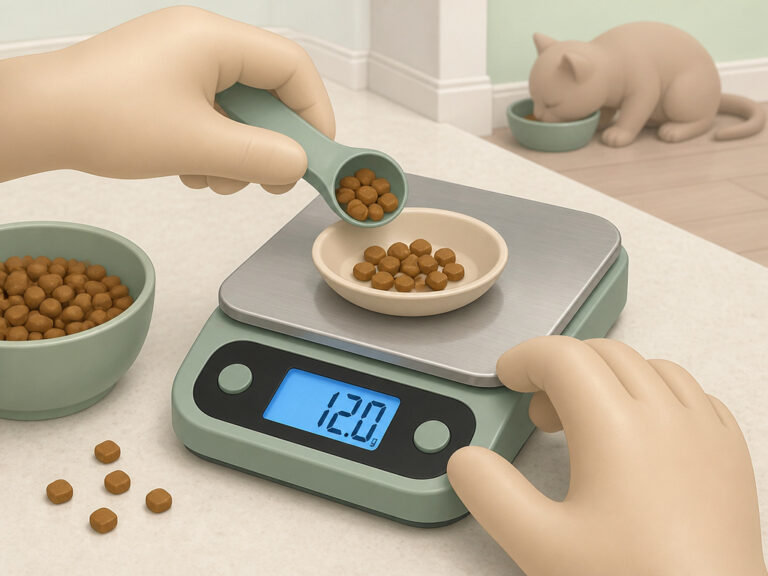
Kitten food pros and cons, judged on the label: wet vs dry moisture math, AAFCO rules, raw diet risks, and what a growing kitten actually needs.
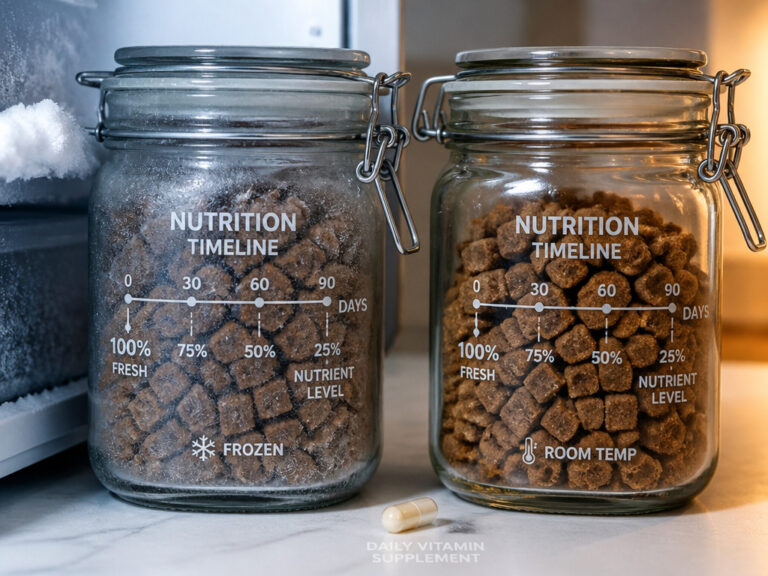
Freeze-dried cat food pros and cons, checked against feeding trials and pathogen studies: what the panel shows, what it hides, how to feed it safely.
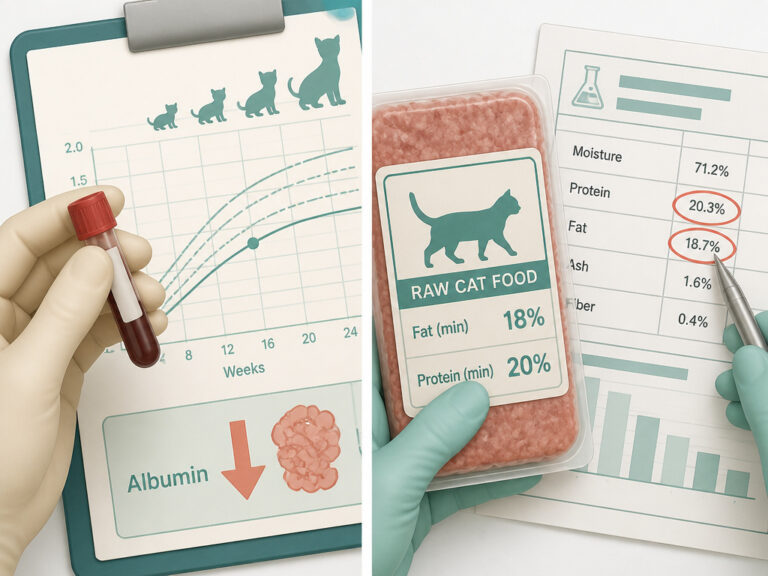
Raw cat food skips the kill step. FDA found Salmonella in 15 of 196 raw samples. Here’s what the pros and cons actually rest on, and who should skip it.
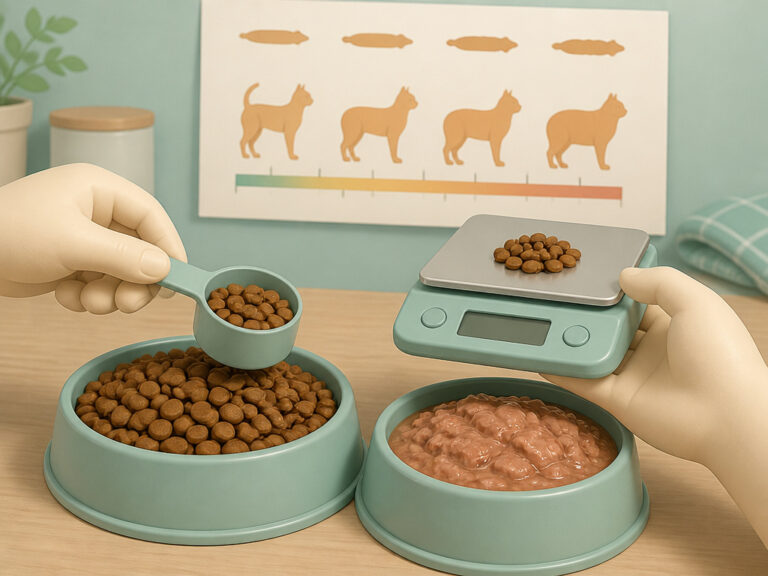
Dry cat food pros and cons, read from the label: moisture figures, extrusion temperatures, and what the disease studies actually show.
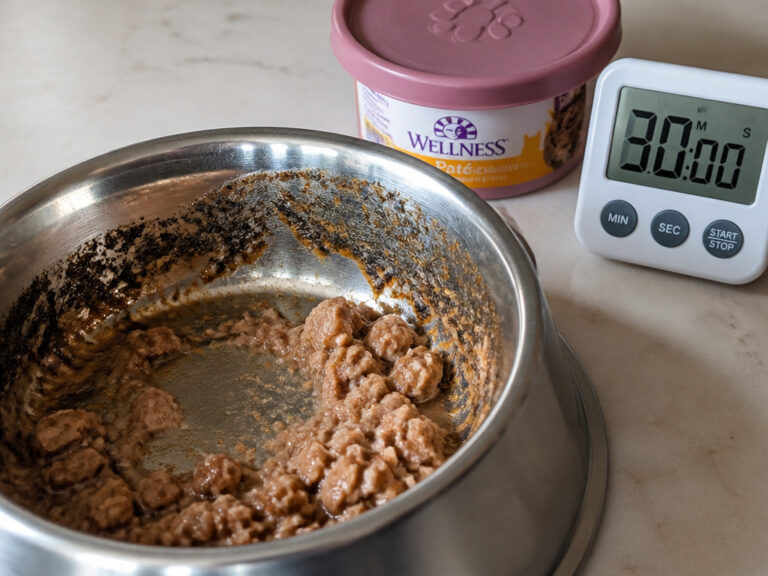
Wet cat food is 70-80% water. Here’s what that buys you, where the calorie and mineral claims break down, and how to feed it without waste.
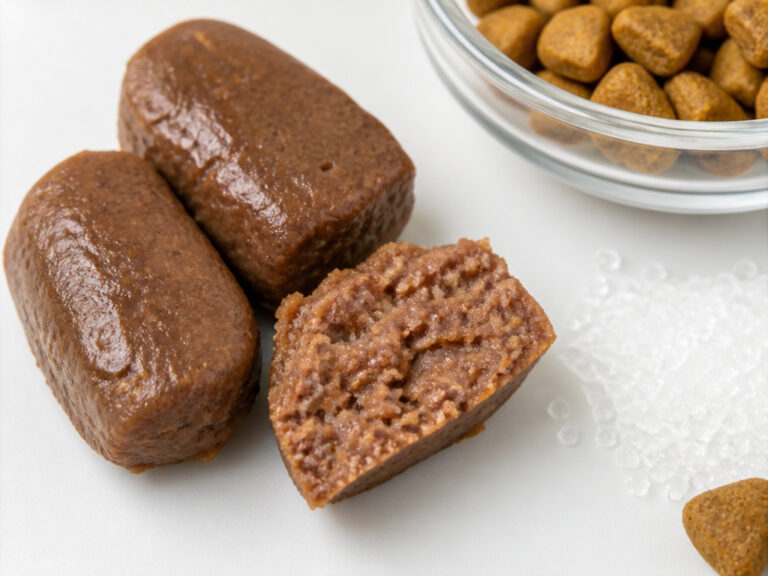
Types of cat food formats split by water and processing, not marketing. Compare dry, canned, semi-moist and raw on the numbers that actually matter.