How to Attract Cardinals to a Feeder: Seed, Water, Cover
Offer black oil sunflower in a hopper feeder near cover, add water, and clean it every two weeks. Here is what actually brings cardinals in.

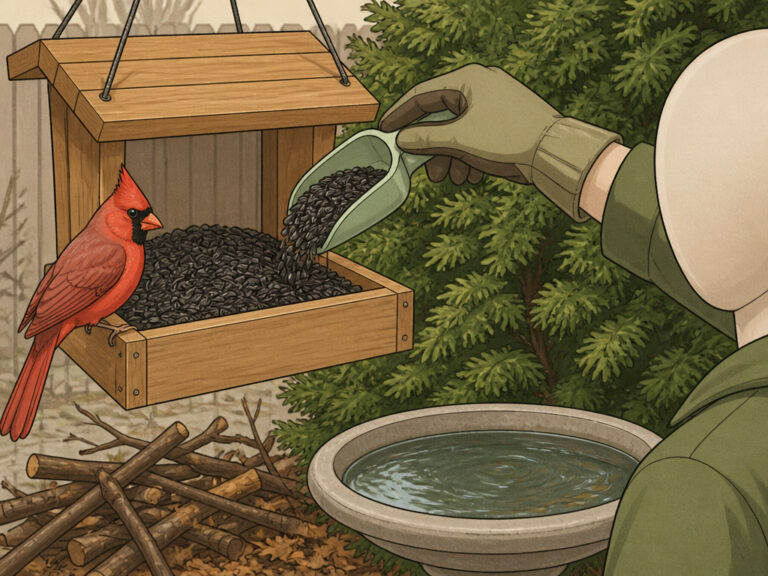
Offer black oil sunflower in a hopper feeder near cover, add water, and clean it every two weeks. Here is what actually brings cardinals in.
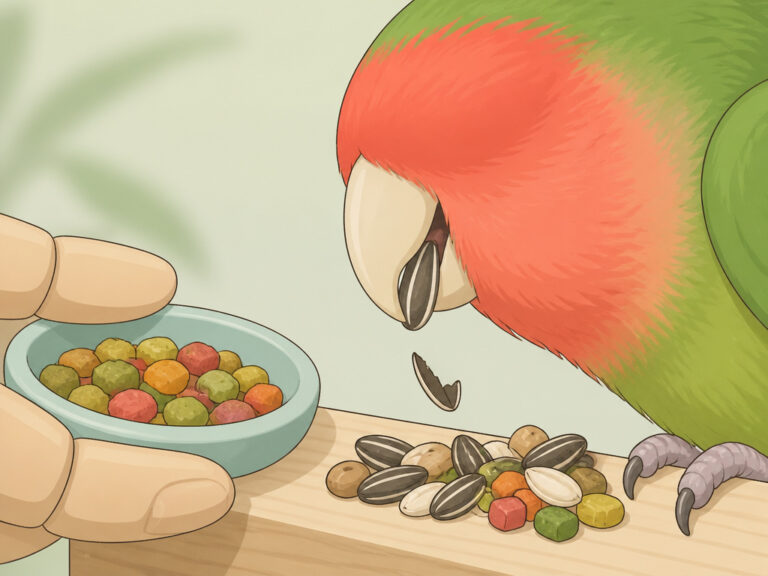
Build a lovebird diet around 75%-80% pellets, 20%-25% fresh produce, and seed as a supplement. See the conversion schedules and where vets disagree.
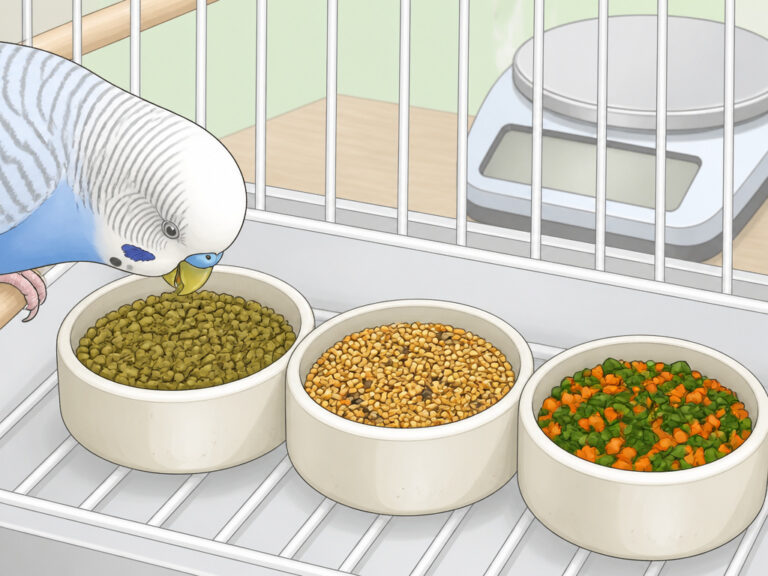
How to feed a budgie: vets put pellets at 60-80% of the diet, produce at 20-40%, and disagree on seed. Here’s how to build the bowl and convert safely.
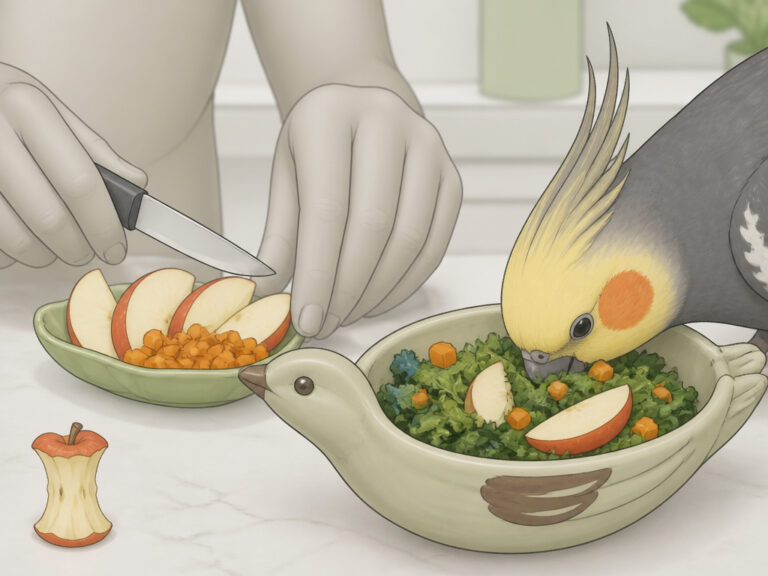
Learn how to feed a cockatiel with a pellet-based diet, safe vegetables, and a slow conversion plan that avoids the seed-only trap vets warn about.
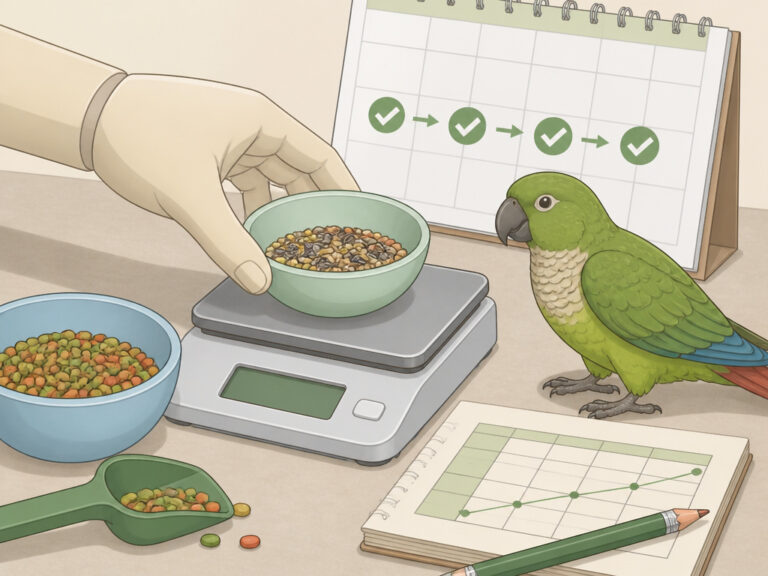
How to feed a pet parrot: pellets at 75 to 80 percent, veg at 15 to 20, and a four-week conversion schedule with a weight check that stops it.
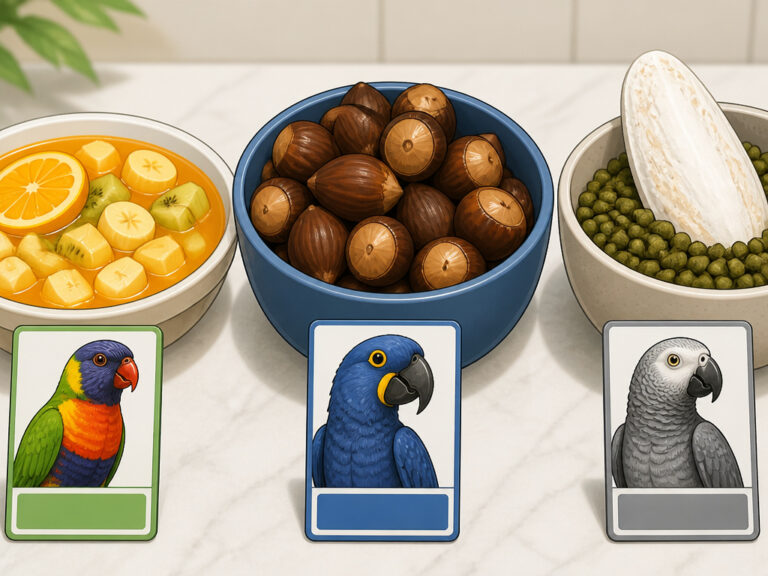
What do parrots eat? Roughly 75-80% pellets and 15-20% produce, with seeds kept minimal. Here are the numbers vets publish, and how to switch safely.
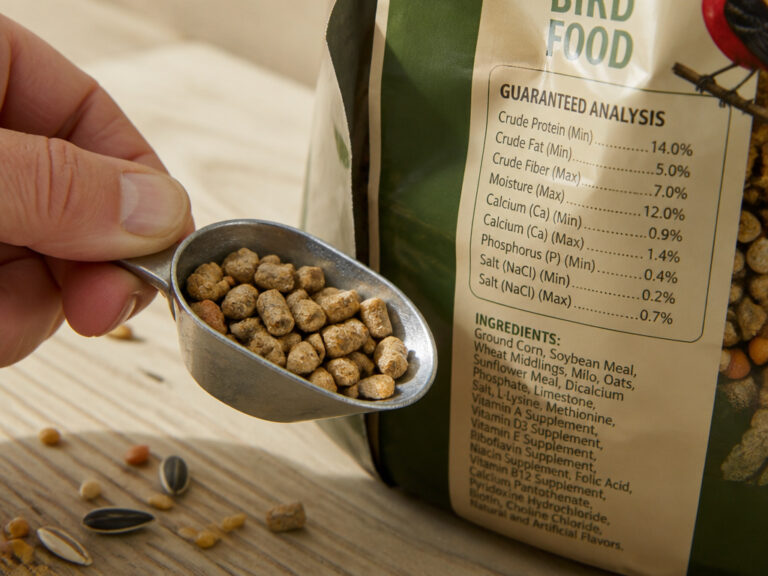
How to choose a bird food format: compare pellets, seed mix, and fresh food on the label, spot dyed seed, and switch diets without a hunger strike.
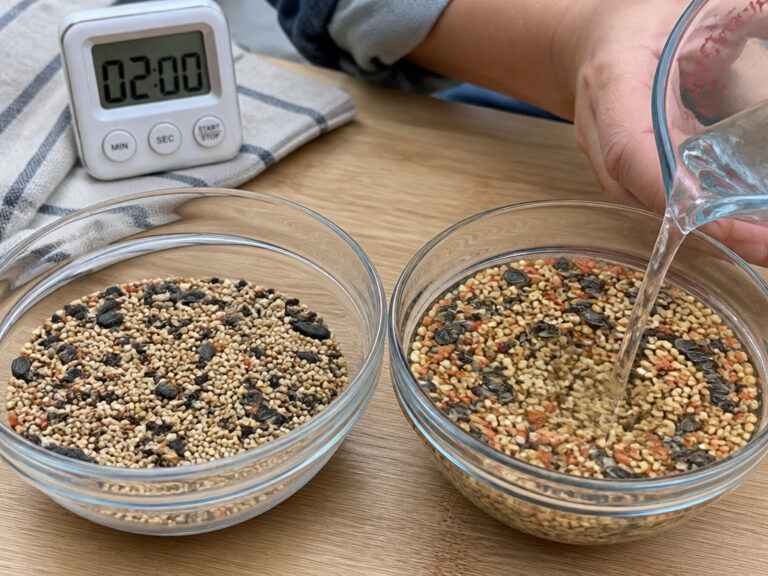
Sprouted seed vs dry seed for birds: what actually changes, the soak-and-rinse numbers behind it, and how to judge which belongs in your bird’s bowl.
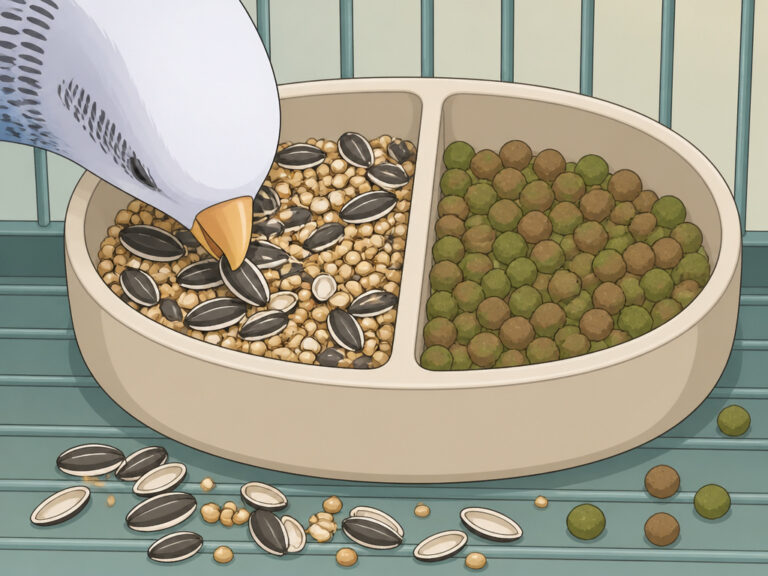
Pelleted bird food pros and cons, read from the panel up: what pellets fix, what they miss, and where the veterinary sources disagree with each other.
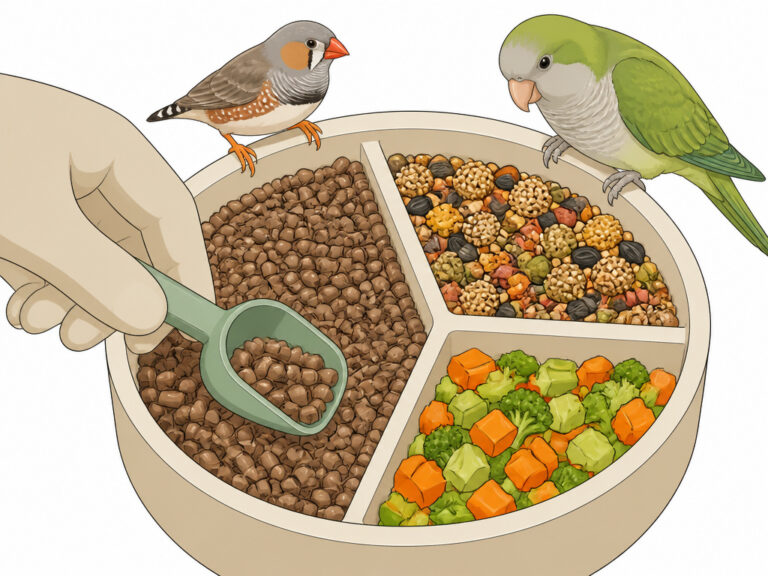
Compare pellets vs seed mix for birds using measured intake data and published pellet ratios, then convert with a gram scale. Start your switch today.