
Wheat in Pet Food Pros and Cons: What the Label Hides
This post contains affiliate links. As an Amazon Associate, we earn from qualifying purchases.
Wheat in pet food pros and cons hinge on digestibility and allergen risk: wheat gluten is over 80 percent protein and 99 percent digestible, which is why formulators use it. But wheat is also a named allergen target, and it carries amylase/trypsin inhibitors that some researchers link to inflammation. Most dogs handle it without issue, and a smaller group reacts.
Those inhibitors are one reason the wheat in pet food pros and cons debate keeps going. Wheat’s protein quality is genuinely high, and a protein can be both nutritious and reactive depending on the animal eating it. The same logic explains why a food that helps one dog can trigger loose stools in another.
What follows covers what wheat actually delivers, where the allergy claims hold up, what the huskie digestibility data shows, and the situations where wheat should be off the table.
Key Takeaways
- Wheat gluten is over 80 percent protein and 99 percent digestible, which is why it survives in formulas even under grain-free pressure.
- Wheat is a named allergen target, not a category-level cause. The AKC’s framing is that specific foods trigger allergies, not “grains” as a group.
- The 2007 melamine recall was a contamination event, not a wheat problem. The gluten was the carrier; the industrial chemicals were the culprit.
- Grain-free swaps often trade wheat for potato, chickpea, or lentil, and in dogs the carbohydrate load barely moves.
- Storage matters more than the grain choice. Opened kibble in a non-sealed bin can grow storage mites within six weeks, per the AKC’s cited studies.
What Wheat Actually Contributes to a Bowl of Kibble
Wheat gluten is the protein fraction that gives bread dough its elasticity, and it does the same structural work in extruded kibble. That binding function is why formulators keep using it even when the front of the bag says otherwise.
Wheat (Triticum aestivum) ranks third in worldwide cereal grain production, behind corn and rice. In extruded pet diets, cereal grains and alternative carbohydrate sources make up 20 to 50 percent of the finished formula. Wheat contributes gluten, a protein that supports dough elasticity and helps bind kibble during extrusion. The grain also carries B vitamins and fiber.
The protein number is the one worth remembering. Wheat gluten is more than 80 percent protein and 99 percent digestible, with an amino acid profile similar to meat proteins, per the AKC. That is not a filler profile. It is a protein source that happens to arrive in a grain.
Three things wheat actually does in a formula:
- Binds the kibble. Gluten is a structural protein, and whole grains can break or prevent kibble formation when the formula doesn’t account for them.
- Delivers digestible protein. The 80 percent figure is measured, not marketed.
- Carries B vitamins and fiber that a potato or tapioca swap does not replace one-for-one.
Does Wheat Cause Allergies in Dogs and Cats?
The allergen in a wheat-containing food is wheat, not “grains” as a category. That distinction comes from the AKC, and it changes how you read a label. A bag that says “grain-free” has not removed the risk of an allergy to a specific ingredient; it has swapped one set of proteins for another, which is central to the wheat in pet food pros and cons.
The AKC’s position is that grains can be targets of allergies without being causes, and that the allergenic foods are specific ones like wheat, while dvm360 reports that gluten-containing cereals, wheat in particular, contain amylase/trypsin inhibitors implicated in inflammation.
What the Pro-Inflammatory Claim Actually Says
Dvm360 reports that gluten-containing cereals, wheat in particular, contain amylase/trypsin inhibitors that have been implicated in various types of inflammation. The same article notes that other wheat compounds, including lectins and amylopectin, also possess proinflammatory properties. That is not the same claim as “wheat causes allergies.” It is a claim about immune signaling, and it comes from a different research tradition than the AKC’s consumer-facing summary.
Both positions can be true at once. Wheat can be a target of an allergy in a small number of animals and carry compounds that nudge inflammation in others. The AKC’s own framing supports that reading.
Where owners commonly overreach is in assuming that removing all grains solves the problem. Royal Canin Academy notes that in humans, grains carry a 25 percent cross-reactivity risk, but that cross-reactivity categories have not been verified in cats and dogs. The cross-reactivity question is worth understanding before you eliminate a whole food family.
Common mistake: Pulling every grain from the diet the moment a dog scratches. Seasonal allergies are often mislabeled as food allergies, and true food allergies are uncommon and usually directed against protein sources. The allergenic proteins sit at higher levels in meats than in grains.
If a dog has repeated diarrhea or persistent scratching, the AKC’s advice is to see a vet before changing foods. A diet switch can mask a problem that needed an exam.
The 2007 Melamine Recall and Why It Still Shapes the Debate
In 2007, wheat gluten imported from China arrived contaminated with industrial chemicals used to falsely boost protein readings, and the resulting kidney damage sickened thousands of pets and killed many of them. That is the origin of a lot of the suspicion still attached to wheat today, and it is worth separating from the ingredient itself.
The gluten was the carrier. The contamination was the problem. A wheat gluten supply chain that had been tested for protein content but not for melamine is a supply-chain failure, not a nutritional one.
Kibble that has sat in an open bin for six weeks often grows storage mites, per the AKC’s cited studies. That is a handling problem with a timeline, and it applies to grain-free bags just as much as wheat ones.
The AKC’s cited research did not differentiate between grain-free and grain-containing foods when it came to storage mites. The mites grow in the bag, not in the grain.
Does Grain-Free Actually Lower the Carbohydrate Load?
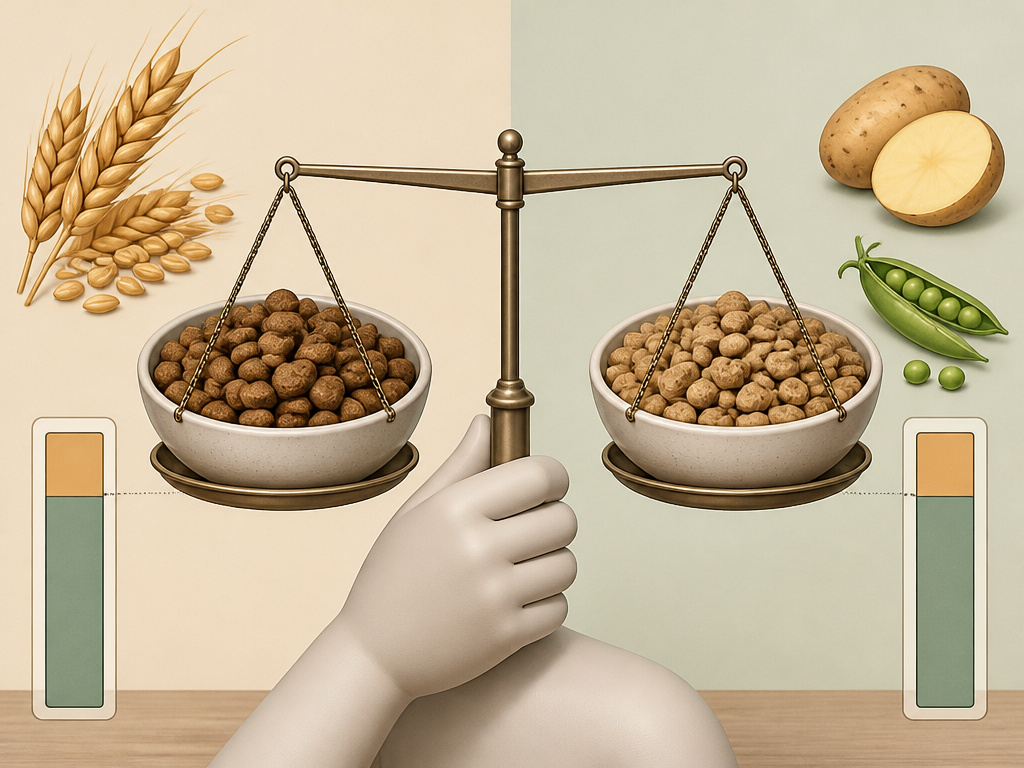
29 percent of United States pet specialty market sales in 2015 were grain-free, according to Royal Canin Academy’s review. That is a market share number, not a nutrition number, and the two get confused constantly.
Here is where the sources split. The AKC states that grain-free foods contain about the same amount of carbohydrates as foods containing grains. Royal Canin Academy reports that grain-free dry diets for cats contain less carbohydrate than grain-containing diets, at 22.4 plus or minus 5.6 percent metabolizable energy versus 30.1 plus or minus 7.7 percent, and notes that similar data are not yet available for dog diets.
The sources disagree: the AKC states grain-free foods contain about the same carbohydrates as grain-containing foods, while Royal Canin Academy reports lower carbohydrate in grain-free dry cat diets (22.4 vs 30.1 %ME) and notes similar dog data are not yet available.
| Metric | Wheat-Inclusive Formula | Grain-Free Swap |
|---|---|---|
| Primary carb source | Wheat, corn, or rice | Potato, pea, or tapioca |
| Carbohydrate share (dogs) | About the same, per AKC | About the same, per AKC |
| Carbohydrate share (cats) | Higher, per Royal Canin | 22.4 vs 30.1 %ME |
| Protein contribution | Gluten: over 80% protein | Variable by legume or tuber |
| Binder function in kibble | Strong, from gluten | Needs added starch or gum |
The swap moves the source, not always the total.
If you want the full argument on the other side, the grain-free dog food and grain-free cat food writeups cover the DCM and taurine questions in more detail.
Which Grain Wins on Digestibility? The Huskie Data
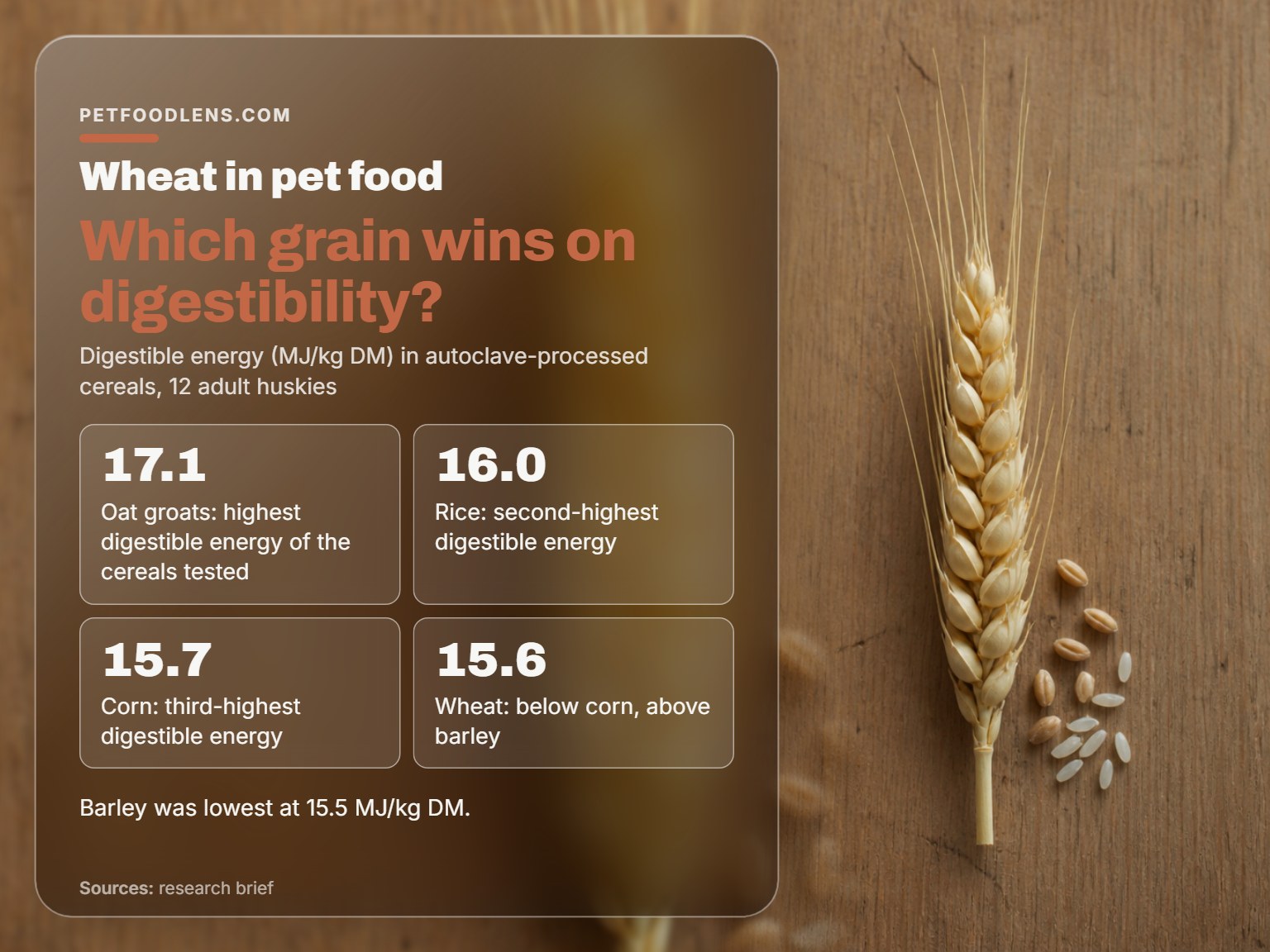
Oat groats lead at 17.1, then rice at 16.0, corn at 15.7, then wheat, then barley at 15.5.
| Cereal (autoclave-processed) | Digestible energy (MJ/kg DM) |
|---|---|
| Oat groats | 17.1 |
| Rice | 16.0 |
| Corn | 15.7 |
| Wheat | 15.6 |
| Barley | 15.5 |
That is a real gap, and it argues for oats over wheat if digestible energy is the only metric, though a separate metabolic trial concluded whole rye or oats may not be more beneficial than whole wheat in dogs. It is not the only metric. A related digestibility study found that oat groats had higher organic matter, crude protein, and gross energy digestibility than barley, wheat, and corn, with digestible crude protein at 118 grams per kilogram of dry matter.
Where the research gets genuinely murky is on whether rye or oats beat wheat for dogs. One study, published in PMC’s whole-grain cereals fecal microbiota study, found that rye had the strongest effect on gut microbiota and short-chain fatty acids, with lower Lachnospiraceae and Bacteroides after rye and higher fecal acetate and propionate than oats. The same study found microbial alpha diversity was higher after wheat than after rye, and its conclusion was careful: implications for dog gut health are not yet elucidated.
A separate whole grains metabolic hormonal effects trial concluded that whole rye or oats may not be more beneficial than whole wheat in dogs. That is the opposite emphasis from the microbiota paper. Both are real findings. Neither settles the question.
The compositional side is better documented. Whole grains compositional analysis pet food work confirms wheat is the most common grain in breads and pastries, that gluten gives dough its elasticity, and that demand for “no-corn” and “no-wheat” diets keeps rising even without a nutritional case for the swap.
I stopped ranking foods by ingredient order years ago. The same logic applies to wheat: its position on the list understates its protein contribution once the water is gone.
When Wheat Is the Wrong Choice
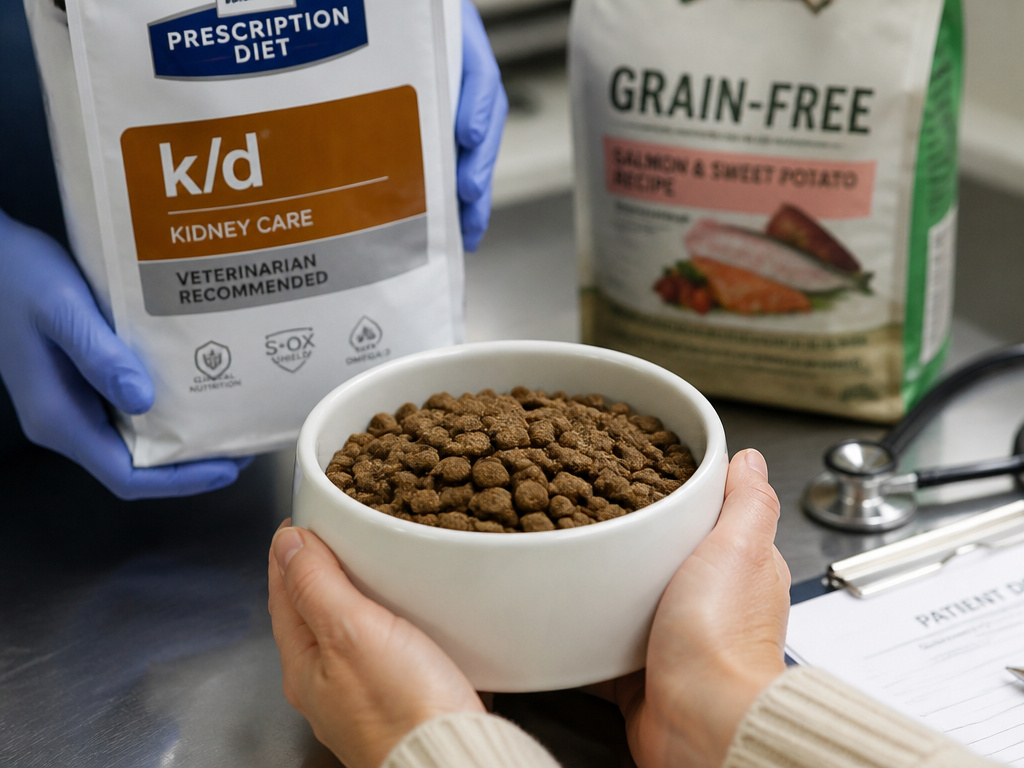
Some pets should never eat wheat, and the reasons are specific. This is where the general “wheat is fine” answer stops applying.
- Confirmed wheat allergy on an elimination trial. A vet-supervised dietary challenge is the only way to confirm it. Guessing from symptoms gets you a diet change that doesn’t fix anything.
- Advanced kidney disease or a fat-restricted protocol. Low-carb grain-free formulas are higher in protein and fat, which is the opposite of what those patients need, per Royal Canin’s review.
- Repeated diarrhea with no diagnosis. The AKC’s advice is to see a vet before changing foods. A diet switch can hide a problem that needed an exam.
Where this goes sideways: Swapping a therapeutic diet for an OTC “grain-free” bag because the front panel looked cleaner. The prescription food was tested on the condition; the bag was not. You will not see the difference in the bowl until the next ultrasound.
If your dog has repeated diarrhea, change the food only after a vet has ruled out something worse. A diet switch can mask a problem that needed an exam.
How to Read a Wheat-Containing Label Without Getting Fooled
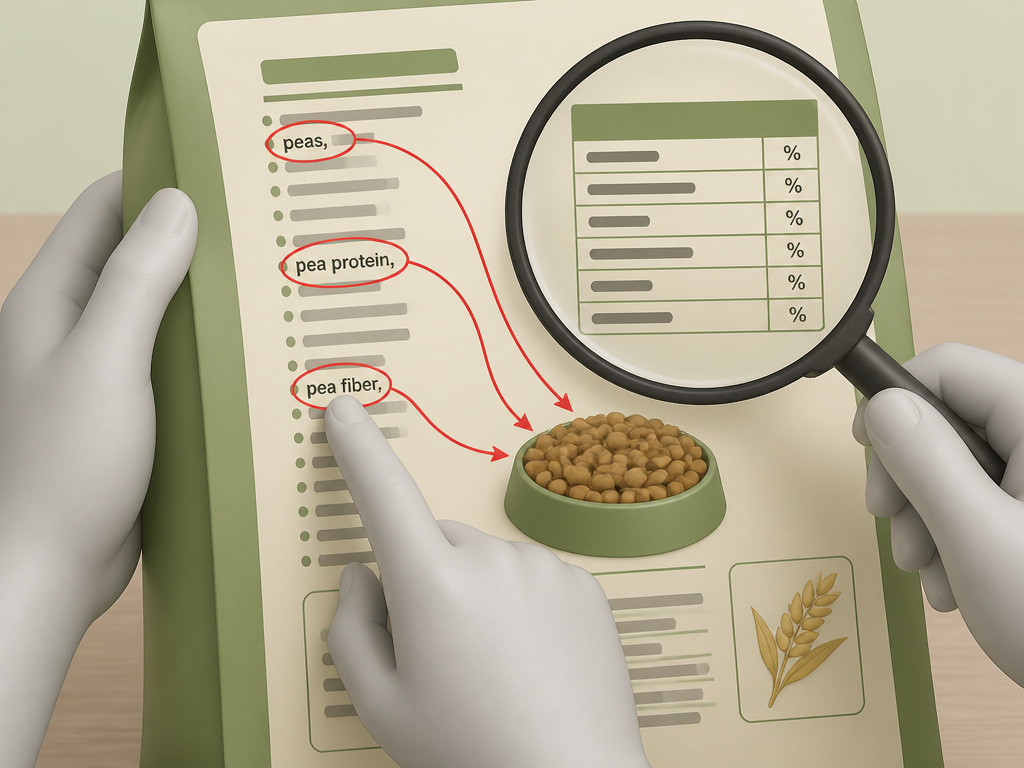
The back panel of a grain-free bag usually lists pea protein or potato starch in the first three slots, which is the same trick the industry uses to bury corn. Ingredient splitting is the most common label move in the category, and a formula listing peas, pea protein, and pea fiber separately often has more pea than meat.
That is the gluten doing its binding work. It is also a sign the bag has been open a while.
Four steps that separate a real label read from a marketing scan:
- Check the guaranteed analysis first. Convert crude protein and carbohydrate to a dry matter basis before you compare two bags.
- Regroup split ingredients. Peas, pea protein, and pea fiber are one ingredient in three costumes. If you don’t add them together, the meat source looks more dominant than it is.
- Look for an animal feeding test statement. “Formulated to meet AAFCO” is a recipe claim; “animal feeding tests using AAFCO procedures” means the food was fed to animals. The difference matters when you’re paying for a premium bag.
- Check the seal and the “best by” date. Kibble in a non-sealed container grows storage mites within six weeks, per the AKC’s cited studies. A torn bag accelerates that timeline.
The Three-Second Label Check
Flip the bag over and find the guaranteed analysis. If the carbohydrate percentage is not printed, you can estimate it by subtracting protein, fat, fiber, moisture, and ash from 100. That number, converted to a dry matter basis, is the one that actually tells you whether the formula is a starch delivery system.
The number is still verifiable.
For dogs with suspected sensitivities, limited ingredient dog food is the more sensible first step than a blanket grain removal. If a true protein allergy is confirmed, hydrolyzed protein dog food is where the conversation goes next. For the broader filler question, the fillers in pet food explainer covers what counts and what doesn’t.
Easy to miss: “Grain-free” does not mean “carbohydrate-free.” The carbohydrate just arrives as potato, pea, or tapioca instead of wheat, and the total load often lands in the same range.
Frequently Asked Questions
Is wheat bad for dogs?
Wheat is not inherently bad for dogs. Wheat gluten is over 80 percent protein and 99 percent digestible, and most dogs tolerate it without issue. The dogs that react are usually reacting to wheat as a specific allergen target, not to “grains” as a category.
Is wheat gluten the same thing as grain?
No. Gluten is a protein found in wheat, barley, rye, and triticale, and oats are excluded, per Royal Canin Academy. A grain-free diet removes the grain; a gluten-free diet removes the protein. They are not the same restriction.
Do grain-free foods have fewer carbohydrates?
In dogs, the AKC reports grain-free foods contain about the same carbohydrate amount as grain-containing foods. In cats, Royal Canin Academy reports grain-free dry diets contain less, at 22.4 versus 30.1 percent metabolizable energy. The dog data is not yet available.
Can cats eat wheat?
Cats can eat wheat, and many commercial cat foods include it. The question is whether a specific cat reacts to it. Cats with confirmed wheat allergy or with conditions like chronic kidney disease need a different calculation, and that calculation belongs to a vet, not a label.
What about wheat allergies in dogs?
True food allergies are uncommon and usually directed against protein sources, per dvm360, and allergenic proteins sit at higher levels in meats than in grains. The AKC’s framing is that wheat can be a target of an allergy even though it does not cause allergies as a category.
The Bottom Line
Here is the practical takeaway. If your pet has no confirmed reaction to wheat, the ingredient is doing useful work in the bowl: it binds the kibble, it delivers over 80 percent protein at 99 percent digestibility, and it costs less than the potato-and-pea swaps that replaced it. The pros and cons of wheat in pet food land on the side of “keep it” for most animals.
The threshold where that flips is specific. A confirmed wheat allergy on a vet-supervised elimination trial, advanced kidney disease, or a fat-restricted protocol all move wheat off the table, and each of those is a diagnosis, not a hunch.
I’ll be honest about my own limits here. My day-to-day work is centered on commercial cat food, and I am noticeably less sure about dog nutrition than I am about cats. The huskie data is real, but it is a small trial, and the rye-versus-wheat question is still open in the literature.
What I am sure of is the label math. Convert to dry matter, regroup the split ingredients, and check whether the bag has a feeding trial behind it. The front of the bag will keep saying “ancestral.” The back panel is where the answer actually lives.
