
Fillers in Pet Food Explained: Corn, Soy and Beet Pulp
This post contains affiliate links. As an Amazon Associate, we earn from qualifying purchases.
Fillers in pet food explained: the word has no legal or nutritional definition, and no regulatory body recognizes it as an ingredient category. Corn, wheat, soy, beet pulp and rice bran get called fillers, yet each has a documented job in the formula, and labels must list every ingredient by weight.
Order by weight is where the fillers in pet food explained confusion starts, because that order is measured before cooking and before water is accounted for. A fresh chicken entry carries a lot of water that cooks off before the kibble is finished, so its position on the list overstates what it contributes to the bowl. Meanwhile a corn entry that gets called a filler posts a measured digestibility number most people have never seen.
What follows walks the three places the word means something different: the front of the bag, the FDA’s ingredient rules, and the extrusion lab where “dispersed-phase filler” is a real classification. Then the numbers on corn, the fiber ingredients, and the one situation where avoiding a specific ingredient genuinely changes an outcome.
Key Takeaways
- “Filler” has no regulatory definition. No agency or nutrition text defines it, so “no fillers” is a marketing phrase rather than a measurable claim about the food.
- Corn-based diets average 80.23% dry matter digestibility, which beat barley by 2.9 percentage points and sorghum by 5.7 in the comparison cited by a 2021 review.
- The FDA requires ingredients listed most to least by weight, which is why splitting peas into three separate entries pushes each one down the order.
- Beet pulp, rice bran and soybean hulls each have a documented function: fermentable fiber, digestible carbohydrate, and lower caloric density respectively.
- Grains account for less than 1.5% of food allergy cases, so a grain-free switch rarely fixes an itchy animal.
What Does “Filler” Actually Mean on a Pet Food Label?
Greg Aldrich, a research associate professor at Kansas State University, has written that “filler” is not a defined ingredient term by any regulatory body or nutrition text. That single sentence dismantles most of what gets printed on the front of a bag.
The FDA requires every pet food ingredient to be safe and to serve an appropriate function in the finished product. Meat, poultry and grains are treated as safe and need no pre-market approval. Vitamins, minerals, flavorings, preservatives and processing aids must be generally recognized as safe, or approved as food additives under 21 CFR 570, 571 or 573.
That rule is the one worth internalizing. “Appropriate function” is a legal requirement, and it applies to every ingredient in the bag, including the ones a competitor wants you to fear. The full set of labeling and ingredient rules sits on the FDA pet food labeling requirements page, including the requirement that ingredients appear from most to least by weight.
Aldrich traces the word back to grain milling, where the secondary products were genuine waste streams. Those were genuine waste streams. The modern bag contains none of that, and the word survived the trip anyway.
He calls “no fillers” a throw-away phrase built to play on the perception and fear of being cheated and harmed. That’s a marketing diagnosis, not a nutritional one.
Where the Word Came From
Milling leftovers were the original fillers, and they were cheap because nobody wanted them. Corn, wheat, soy, beet pulp and rice bran inherited the label by association rather than by analysis. Once a word attaches to a category, the ingredient list stops being read and starts being scanned for villains.
The Same Word Means Something Different in an Extrusion Lab
Two definitions are circulating, and they don’t overlap. One is a marketing insult with no technical content. The other is a defined processing category from the extrusion literature.
| Term | Who uses it | What it means |
|---|---|---|
| “Filler” | Brands, retailers, review sites | No regulatory or nutrition-text definition; applied to corn, wheat, soy, beet pulp, rice bran |
| “Dispersed-phase filler” | Extrusion scientists (Guy, 2001) | A processing category for high-fiber corn by-products and corn gluten meal |
| “Structure-forming” | Extrusion scientists (Guy, 2001) | A processing category for ground corn and corn flour that build kibble shape |
The Guy Classification System uses ‘dispersed-phase filler’ as a defined extrusion-processing category for ingredients like high-fiber corn by-products and corn gluten meal. Nothing in that system is an insult, and nothing in it describes sawdust.
Merging the two meanings is where most fillers in pet food explained label arguments go wrong. A formulator saying “corn is a dispersed-phase filler” and a marketer saying “corn is a filler” are not making the same claim, even though the words match.
Corn Digests at 80.23%, and the Bag Still Calls It a Filler
Corn-based diets average 80.23% dry matter apparent total-tract digestibility across the studies reviewed in a 2021 paper in Critical Reviews in Food Science and Nutrition. In plain terms, that’s the share of the dry portion of the food the animal actually absorbs rather than passes.
The same review cites Murray et al. 1999, where corn-based diets came in 2.9 percentage units above barley and 5.7 above sorghum, and roughly level with rice, wheat and potato. Corn is a well-digested starch source by measurement.
Starch is also doing structural work. Dry extruded kibbles generally contain between 30% and 60% starch ingredients, and that starch provides the binding and expansion that give a kibble its shape when cooked with water and heat. Pull the starch and you don’t just change the label, you change whether the piece holds together. The starch characterization in extruded pet food literature covers how much variation exists between commercial products on that front.
The review is not a clean bill of health, and it says so. Genetically modified corn remains controversial regarding long-term potential for mutagenicity or carcinogenicity, and the authors call for more long-term studies. That question is open. Anyone telling you it’s settled in either direction is overselling.
Mycotoxins are the other real hazard, specifically aflatoxin, fumonisin and deoxynivalenol. The FDA sets a maximum legal limit of 20 ppm for aflatoxin in corn used in pet foods. Tegzes, Oakley and Brennan 2019 found mycotoxins present in dry commercial grain-based diets but below that FDA threshold. That is a contamination story, and it’s a different story from the filler myth.
For the fuller ingredient argument on this grain, the corn in dog food breakdown covers the co-products and where they land.
What Do Beet Pulp, Rice Bran and Soybean Hulls Actually Do?
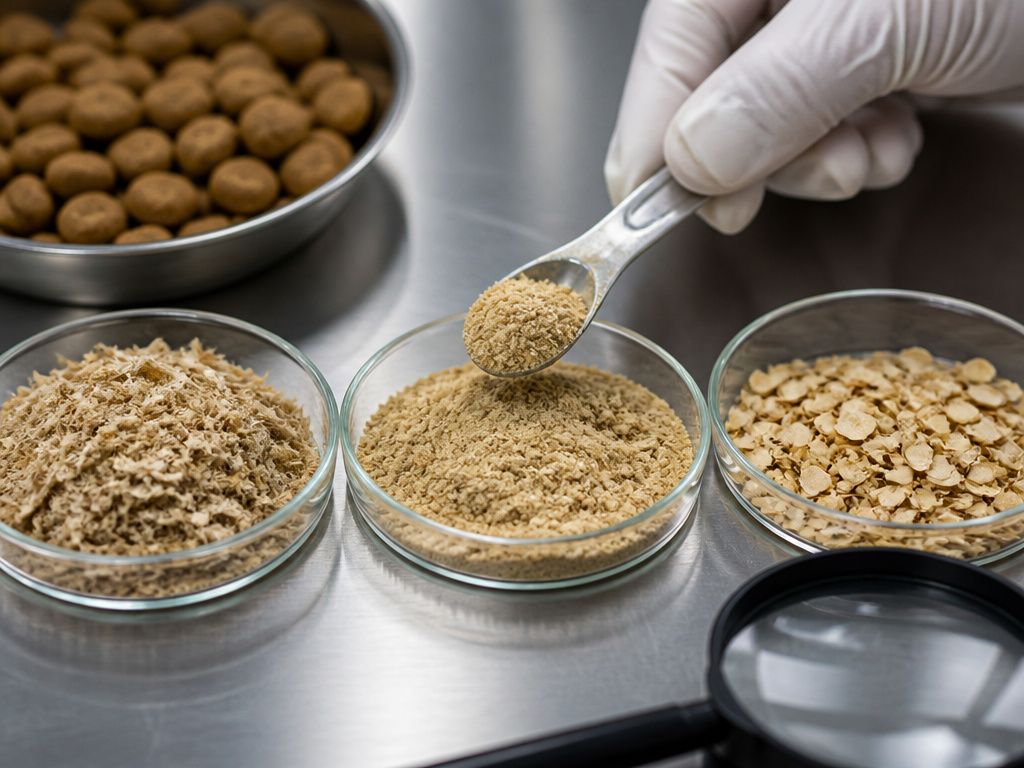
Three ingredients, three separate jobs. None of them is bulking for the sake of bulk, and each has a documented reason a formulator reached for it.
- Beet pulp supplies fermentable fiber that supports gut health, and it’s one of the two conventional fiber sources in dog diets alongside cellulose.
- Rice bran and corn deliver highly digestible carbohydrates and essential amino acids, which is a nutrient contribution rather than a volume contribution.
- Soybean hulls lower caloric density in weight-management formulations. Fiber dilutes dietary energy, and that dilution is the point when the goal is fewer calories per scoop.
Fiber as a category earns its place too. Inclusion of fiber in pet diets can assist with weight loss while supporting microbial fermentation, and the list of alternatives keeps growing. Pea fiber, sorghum bran and miscanthus grass are all in use, and Dainton et al. 2022 found no adverse health effects in dogs consuming avocado meal as a fiber source. The alternative fiber sources in pet food review lays out that set.
There’s a catch worth knowing. Fibers affect extruded pet food texture and palatability, and protein, grain and fiber sources can shift appearance, aroma, flavor and texture. A fiber inclusion and palatability study put eight extruded products through sensory evaluation to map that. So a fiber swap changes more than a number on a chart. It changes whether the animal eats it.
Soy has its own evidence base, and a systematic review of soybean ingredients works through the applications. If you want the fiber taxonomy in more depth, the types of fiber in pet food piece separates soluble from insoluble and explains which does what.
Where Sources Genuinely Disagree on Soybean Hulls
Aldrich describes soybean hulls as functional, specifically for lowering caloric density in weight-management diets. The marketing frame classes the same ingredient as bulk with no purpose beyond filling the bag. Both descriptions exist in print. Only one of them comes with a stated mechanism, and the mechanism is energy dilution.
The Ingredient List Is Sorted by Weight, and That Explains Most of the Confusion
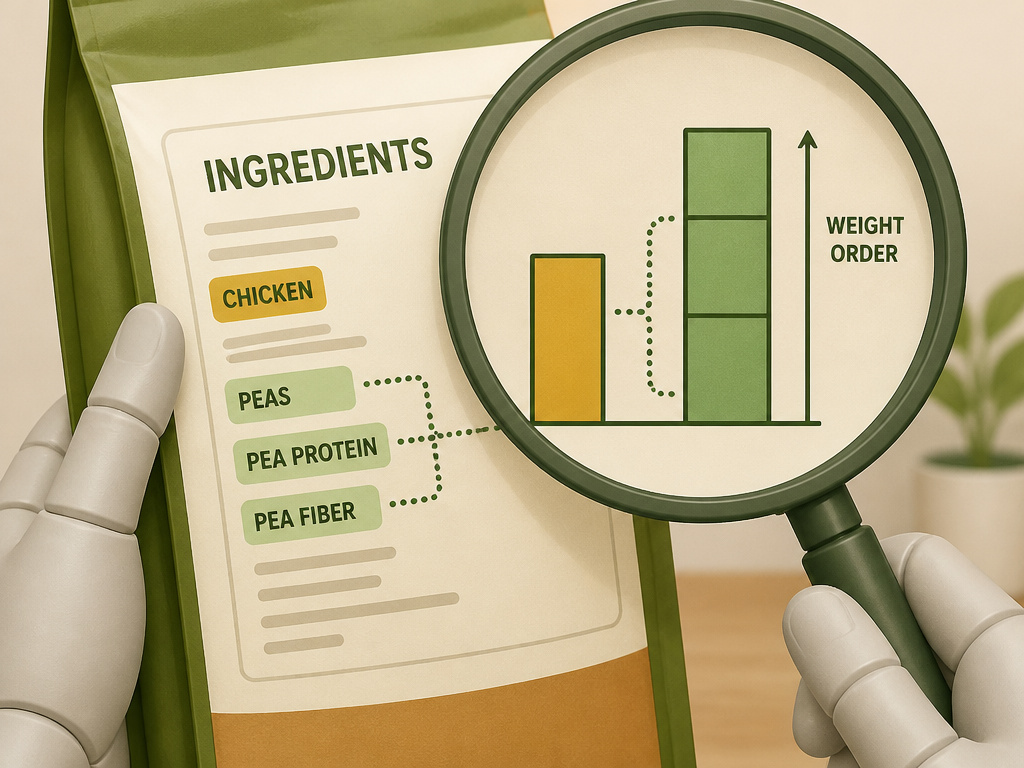
The list itself follows one rule: ingredients appear from most to least by weight, per the FDA. Everything else is interpretation, and interpretation is where the tricks live.
Ingredient splitting works because of that rule. A manufacturer who lists peas, pea protein and pea fiber as three separate entries pushes each fraction further down the order, even when the combined pea content outweighs the named meat above it. Nothing about it is illegal. The list is accurate and the picture is still misleading. There’s a full walkthrough of that tactic in ingredient splitting in pet food, and it’s the single most useful label skill I can hand someone.
- Convert the guaranteed analysis to dry matter before comparing anything. Divide each percentage by the dry matter fraction. A canned food’s protein percentage divided by its dry matter fraction gives a much higher dry matter figure than the number printed on the tin. Skip this step and every comparison afterward is between two numbers that don’t mean the same thing.
- Regroup split ingredients by parent source. Add the positions of peas, pea protein and pea fiber before you decide what leads the formula.
- Find the nutritional adequacy statement.
- Check calories against what the animal actually eats. A calorie-diluted formula only helps if the bowl gets emptied.
| What you see | Why it happens | What to check |
|---|---|---|
| Peas, pea protein and pea fiber all listed | Splitting pushes each fraction down the order | Add the positions together before judging |
| Corn sits near the top of the list | Dry kibble runs 30%-60% starch ingredients by formulation | Compare the guaranteed analysis on dry matter |
| “No fillers” printed across the front | No legal or scientific definition exists for the term | Look for the nutritional adequacy statement instead |
| Soybean hulls appear high in a weight-loss food | Fiber dilutes energy density on purpose | Check calories per cup, not ingredient order |
Common mistake: Judging the main ingredient by whichever name appears first. Three split entries can total more than the meat above them, and you’ll spend months feeding a formula that’s mostly plant starch while believing otherwise.
If an ingredient appears three times on the list under three names, add the three positions together before you decide what leads the bag. The list is sorted by weight, and splitting is legal.
The Loudest Words on the Bag Carry the Least Legal Weight
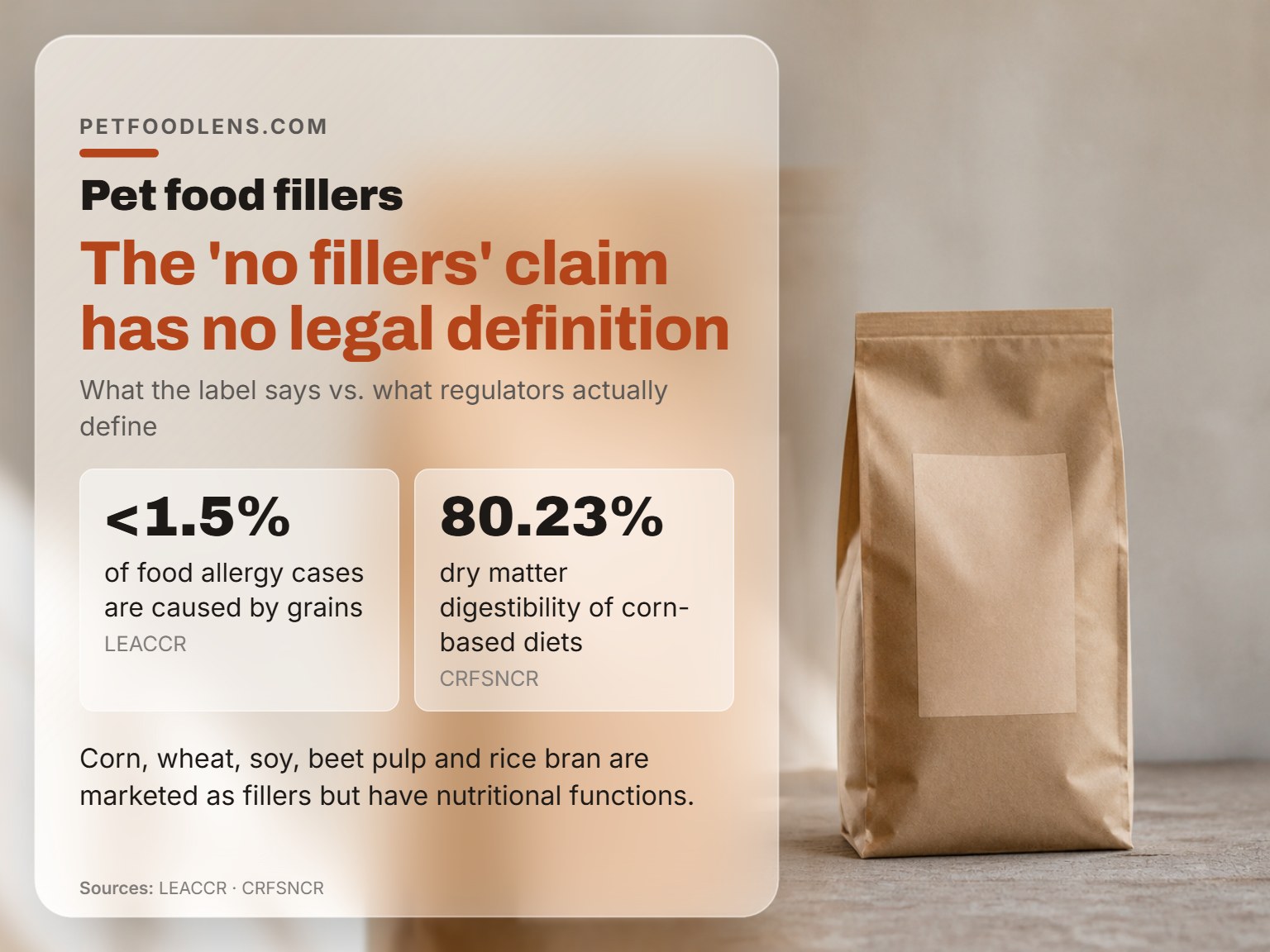
“No fillers” has no legal or scientific definition behind it, which means a brand can print it without proving anything. It’s one of several misleading pet food claims that survive because nobody is required to define the terms.
The same logic runs through the grain-free aisle. Replacing rice with peas and potato doesn’t make a formula meaningfully better for a cat, and the allergy data doesn’t support the switch. Laflamme et al. 2014, cited in the corn review, found grains cause less than 1.5% of all food allergy cases. The protein source is the better suspect.
If you’re shopping specifically against the claim, the dog food without fillers and cat food without fillers roundups at least apply a consistent standard. The grains in pet food comparison handles the grain question directly, and by-products in pet food covers the term that gets confused with filler most often.
What actually degrades a food after you buy it is time and air. A large bag for a single cat can take months to finish, and the last portion of that bag has had months to oxidize. Buy what you’ll finish while it’s still fresh.
Wet food has a shorter clock. Wet food left out at room temperature spoils quickly, less so in a warm kitchen, and a crusted dried ring around the bowl edge means it’s been down too long whatever the clock says. Those are the failures that show up in a week, not a marketing claim that shows up in a lawsuit.
When Avoiding a Specific Ingredient Actually Changes Something
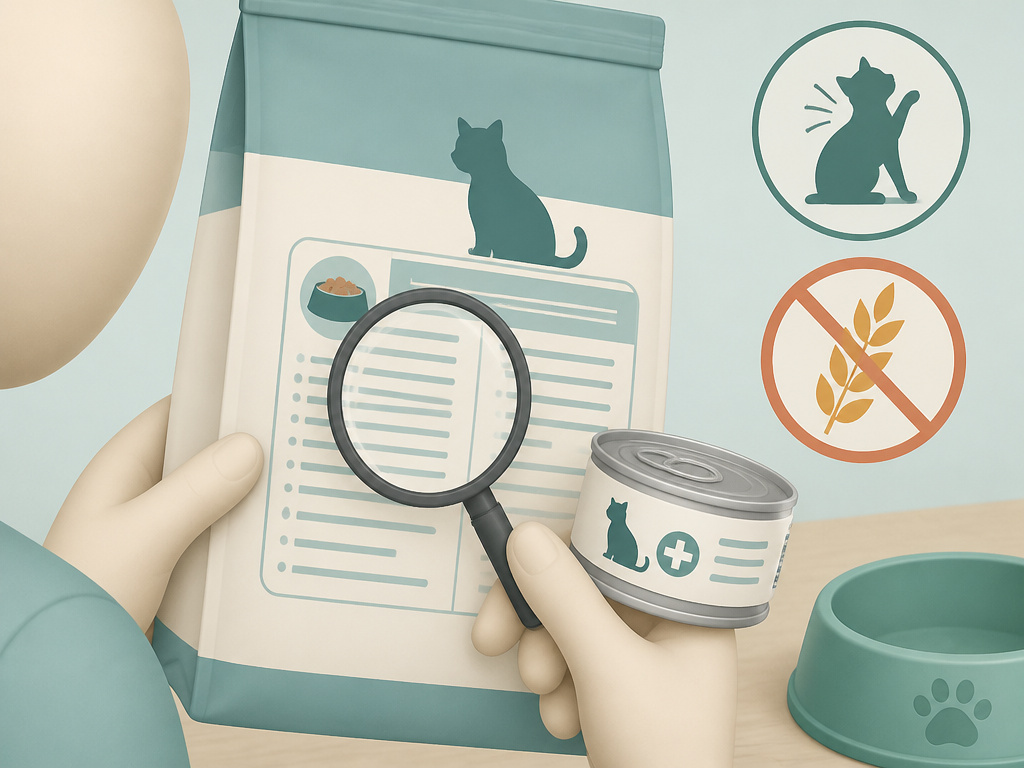
A cat that scratches its ears raw after every chicken-based meal is a real case, and it’s the one where the ingredient list earns its keep. That animal needs a protein it has never eaten, chosen with a vet, not a bag with a nicer front panel.
Where this goes sideways: Swapping to a grain-free formula for an itchy cat. Grains sit under 1.5% of allergy cases, so the switch usually does nothing, and you lose time before the real trigger gets investigated.
The reverse warning applies too. Don’t remove a fiber source because a review site called it a filler. Beet pulp is a conventional fiber ingredient with a stated gut-health function, and pulling it out of a weight-management formula removes the mechanism doing the work. Diarrhea and stool changes can follow an abrupt switch, which is why any diet change should be made gradually.
Here’s the part I can’t help with. I’m not a veterinarian, and I can’t diagnose or manage kidney disease, diabetes or food allergies. Dogs, raw diets and home-cooked recipes are areas where I’ve seen too few cases to speak with the same confidence, and the ingredient argument doesn’t transfer cleanly to any of them. If your animal is sick, the label is the wrong place to start.
Frequently Asked Questions
Are corn, wheat and soy actually fillers in pet food?
No, because nothing in the regulatory or nutrition literature defines them that way. Corn, wheat, soy, beet pulp and rice bran are the ingredients most often called fillers in marketing. Each has a documented function: corn and rice supply digestible carbohydrate and amino acids, beet pulp supplies fermentable fiber, and soybean hulls lower caloric density.
Does “no fillers” mean anything legally?
It doesn’t. The term has no regulatory or nutritional definition, so a brand printing it isn’t making a defined claim. The FDA requires that ingredients be safe and serve an appropriate function, and that they’re listed from most to least by weight. Those are the requirements worth checking against.
Is grain-free food better for cats?
The evidence doesn’t support grain avoidance as a general rule. Grains account for less than 1.5% of all food allergy cases, so a grain-free switch rarely resolves an itching or digestive problem. If a cat reacts to a food, the protein source is the more productive place to look, with a vet involved.
Should I avoid beet pulp?
There’s no nutritional reason to. Beet pulp is one of the two conventional fiber sources used in dog diets alongside cellulose, and it provides fermentable fiber that supports gut health. It’s also a common target of filler-free marketing, which is a positioning choice rather than a finding.
Why does corn appear so high on some ingredient lists?
Dry extruded kibbles generally contain between 30% and 60% starch ingredients, and that starch provides kibble binding and expansion during cooking. Corn is one of the ingredients that supplies it. Its position on the list reflects how much went into the formula, not an absence of nutritional value.
The Bottom Line
Everything above concerns ingredients with documented functions. That’s a separate question from whether a given food suits a given animal, and the two get tangled constantly.
The trigger to stop reading and start acting is narrow. If your cat has episodes of vomiting, loose stool or intense scratching around a food change, get an elimination plan from your vet rather than working through bags on your own. Grain is an unlikely culprit at under 1.5% of allergy cases, and the protein is the better first suspect.
The first step this week costs nothing. Pick up the bag you already own, find the guaranteed analysis, and convert the protein and fat percentages to a dry matter basis. That number is the one you can compare against anything else on the shelf.
The front of the bag is a sales pitch. The back panel has to be truthful, and it’s the only part of the package that does.
