
Prescription Dog Food Pros and Cons: When They’re Worth It
This post contains affiliate links. As an Amazon Associate, we earn from qualifying purchases.
Prescription dog food pros and cons are real on both sides: a therapeutic diet is formulated and tested for one condition and can measurably improve it, but it costs more, some dogs refuse it, and the category has a documented recall record. In one trial, 16 of 23 dogs with chronic enteropathy responded by week 8.
The word that separates a therapeutic bag from a grocery bag is a verb. An over-the-counter formula says it supports or promotes something. A prescription diet carries a claim that it manages or dissolves a named condition, and that claim rests on feeding trials in dogs that already have the diagnosis.
What follows is the prescription dog food pros and cons ledger, both columns: what the trials show, what the recall notices show, where the label and the peer-reviewed data disagree, and the two situations where a prescription diet is the wrong tool.
Key Takeaways
- A therapeutic claim is narrow and tested. “Supports” on a grocery bag and “manages” on a prescription bag are different classes of statement.
- The 2023 PPVD EL recall traced to one supplier and one formula, and no other Purina pet care products were affected.
- Refusal is common and fixable. Cornell’s order is brand switch first, canned second, warming third, home-cooked last, while Today’s Veterinary Nurse holds that home-prepared diets are appropriate when an ideal therapeutic diet exists but is not acceptable to the pet.
- Canned prescription food is the cost outlier, not prescription food as a category.
- Most published home-cooked recipes aren’t complete and balanced, including recipes written by veterinarians.
What a Prescription Diet Does That an Over-the-Counter Bag Can’t
A prescription diet changes one variable hard and leaves the rest alone. In a renal formula that variable is phosphorus and protein load. In a fat-restricted gastrointestinal formula it’s the fat percentage. In a hydrolyzed formula it’s the size of the protein fragment.
Prescription diets are formulated around a single clinical target, such as restricted fat, restricted phosphorus, or protein broken into fragments too small for the immune system to recognize. The manufacturer supports that target with feeding trials in dogs diagnosed with the condition, which is why the label carries a claim of management rather than a claim of support.
That single target is the product. Change three variables at once and nobody can tell which one did the work, which is why therapeutic diets are built around one clinical goal and tested against it in dogs that already have the diagnosis.
Read the back first. The front of a bag tells you the category. The back tells you whether the food is a complete diet or a product intended for supplemental feeding, and those are different things with different rules.
The categories aren’t interchangeable. A hydrolyzed protein dog food works on protein size, while a limited ingredient dog food works on the number of ingredients, and only one of those addresses an immune response to a specific protein. Kidney food for dogs sits in a third bucket, built around mineral load rather than protein structure.
Here’s the short version of the three main buckets:
- Renal formulas cut phosphorus and hold protein at a moderate level, which is the opposite of what a high-protein badge pushes you toward.
- Fat-restricted gastrointestinal formulas lower fat for dogs that struggle to digest it, and they’re the formula most often prescribed after a bout of pancreatitis.
- Hydrolyzed formulas break protein into fragments small enough that the immune system stops flagging them.
What the front of the bag won’t tell you is how narrow the claim is. A grocery formula that says it supports skin health has made a statement about a nutrient. It hasn’t been tested against a disease.
The Recall Record Belongs in the Pros and Cons
Two Purina recalls sit in the public record, and both are worth reading in full before you decide how much brand trust to extend.
The first is the PPVD EN Low Fat labeling error. On September 15, 2022, for a brief period at one factory, 13.4 oz cans of Purina ONE True Instinct Tender Cuts In Gravy With Real Turkey & Venison were labeled as the prescription gastrointestinal diet. Purina found out because owners noticed the texture had changed.
That detail matters more than it looks. The failure was caught by a hand and an eye, not by a lab test. Chunks in gravy where a smooth pate should be is the whole tell.
The second is the PPVD EL Elemental recall. The original announcement came on February 8, 2023, and it was later expanded to two additional lots that preceded the earlier production dates. The cause was a supplier error that produced potentially elevated vitamin D in that one formula.
| Product | Package | Key identifier | What went wrong |
|---|---|---|---|
| Purina Pro Plan Veterinary Diets EL Elemental | 8 lb bag | UPC 38100 19190 | Elevated vitamin D, supplier error |
| Purina Pro Plan Veterinary Diets EL Elemental | 20 lb bag | UPC 38100 19192 | Same formula, expanded lot list |
| Purina Pro Plan Veterinary Diets EN Gastroenteric Low Fat | 13.4 oz can | UPC 38100 17599 | Purina ONE True Instinct in the can |
The FDA Purina Pro Plan recall notice is blunt about what to do with an affected bag: stop feeding it and throw it away in a container no other animal, wildlife included, can get into. That last clause is there because a discarded bag in an open bin is still a meal.
A recall notice is a lot number, not a brand verdict. Check the code on the package before you decide anything about the company.
What the record actually teaches is traceability. The vitamin D problem traced to a single supplier and a single formula. That’s a lot-level failure, and lot-level checking is the control that matches it.
Does Prescription Dog Food Actually Work? What the Trials Show
The clearest number available comes from a prospective, uncontrolled trial of an amino-acid-based elemental diet in 23 dogs with chronic enteropathy. The diet was the single dietary change.
At two weeks, 15 of 22 dogs responded, which is 68% with a 95% confidence interval of 47 to 84%. By week 8, 16 of 23 dogs were overall responders, or 70% with a confidence interval of 49 to 84%. Median CCECAI, the clinical activity index used to score the disease, fell from 6 to 2, and that result carried a P value below .001.
Now the part that gets left out of the summary. Six dogs didn’t finish. One left at two weeks because of insatiable appetite, persistent flatulence, and coprophagia. Four more exited within 11 days of the second visit because of unacceptable signs, including unformed feces in three dogs and worsened itching with very firm, dry feces in one.
A fifth dog, one of the responders, developed a fibrocartilaginous embolus with acute paraparesis after five weeks on the diet and was started on prednisolone 0.67 mg/kg/day.
The elemental diet chronic enteropathy trial is also uncontrolled, which means there’s no placebo arm and no blinding. That’s a real limitation and it’s worth saying plainly. What it does show is that a subset of dogs improves measurably on a single dietary change, and a subset doesn’t.
One more finding from the same paper complicates the marketing story. The authors state there’s minimal evidence that food proteins drive chronic enteropathy in dogs. So the protein-size logic that sells hydrolyzed diets is on firmer ground for adverse food reactions than it is for chronic gut disease.
Where the Prescription Dog Food Pros and Cons Actually Split
Three disputes run through this category, and each one has a named position on both sides.
| Question | Position A | Position B | Practical read |
|---|---|---|---|
| Palatability | Cornell: refusal is common | Palatability panels: comparable to standard diets | Clinic dogs and panels differ |
| Cost | Cornell: prescription food is expensive | Per-calorie data: dry is cheapest | Canned is the outlier |
| Formulation | Recall notices: supplier error, not formula | Peer-reviewed analysis: minerals out of range | Check lots, not brands |
Take palatability first. Cornell’s owner-facing guidance is built around dogs refusing the food, and it concedes that prescription ingredients aren’t always tasty. Controlled palatability work has rated hydrolyzed diets as comparable to traditional diets. The two aren’t measuring the same population, which is why both can be right.
Cost is the second split, and the framing needs correcting. Cornell calls prescription food expensive. A home-cooked versus kibble cost study found home-cooked diets cost more than dry prescription diets but not more than canned, making canned prescription the cost outlier. Canned is the expensive part.
Formulation is the third, and it’s the one manufacturers won’t like. A peer-reviewed element levels in prescription dog diets analysis found several element levels in prescription diets were inappropriate for therapeutic purpose and may be outside EU legal limits. The authors noted some values may fall outside EU legal limits.
That’s a direct challenge to the assumption that a therapeutic formula is automatically well-formulated, though recall notices treat elevated vitamin D as a supplier error rather than a design flaw. Set it beside the recall notices, which treat elevated vitamin D as a supplier error rather than a design flaw, and you get a category that needs lot-level checking instead of blanket trust.
Why Dogs Refuse Prescription Food, and the Order to Try Things
The bowl comes back full. The dog looks at you, then at the bowl, then leaves, and you’re standing there holding a bag you went out of your way to get.
Before you start: A recalled bag goes into a bin no other animal can open, not the kitchen trash. Vitamin D toxicity in dogs shows up as vomiting, lost appetite, heavy drooling, and increased thirst and urination, and it can progress to kidney dysfunction. If any of those appear while your dog is eating a recalled lot, contact your veterinarian instead of waiting for the bag to run out.
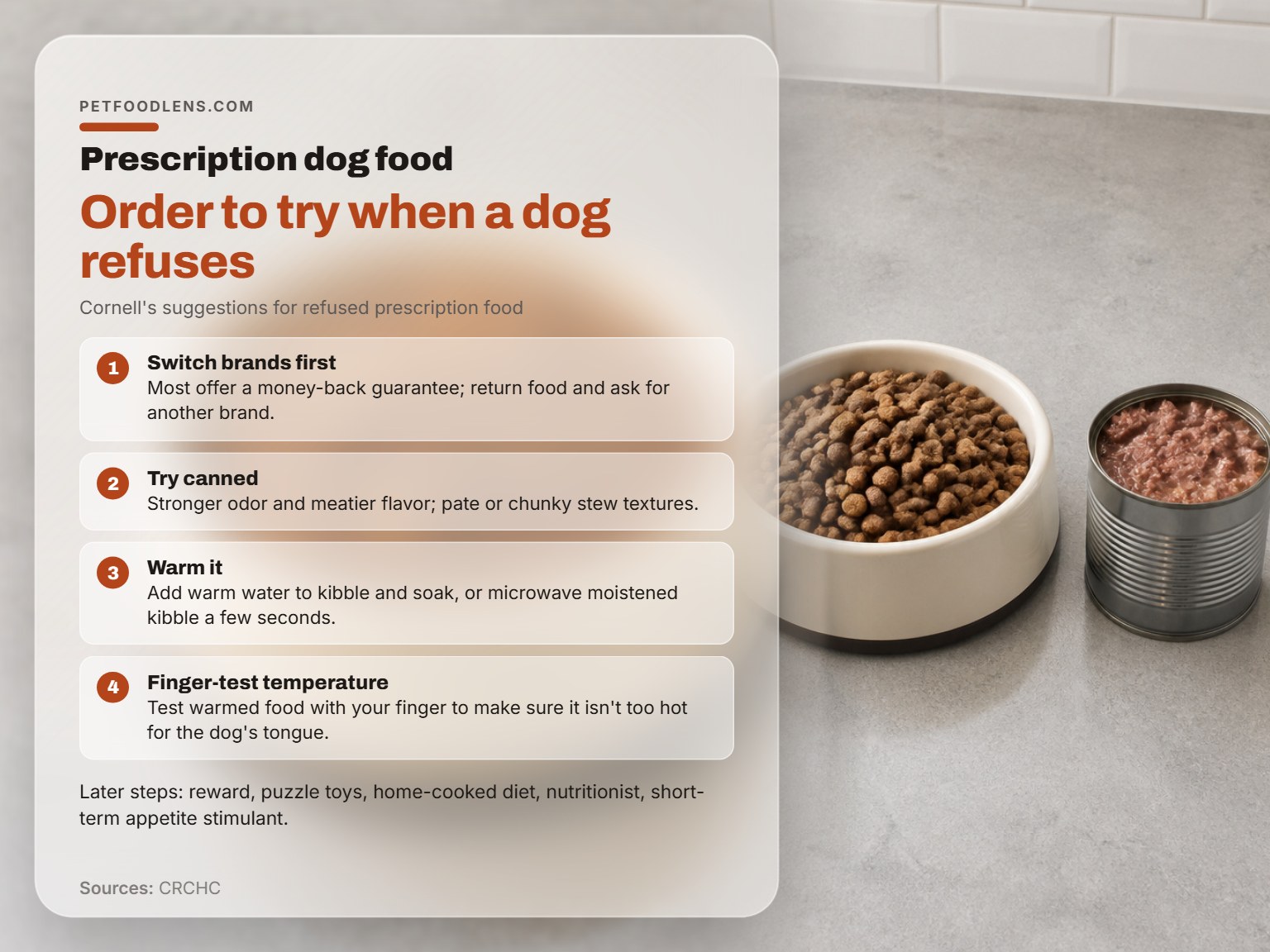
Cornell’s prescription diet refusal veterinary guidance lays out a sequence, and the order matters because the cheap fixes come first.
- Switch brands before you switch strategies. Several manufacturers make acceptable formulas for the same condition, most offer a money-back guarantee, and returning the food to the clinic and asking for a different brand costs you nothing but a phone call.
- Try canned. For most picky eaters, canned food wins on stronger odor and meatier flavor, and many prescription lines come in both a smooth pate and a chunkier stew with meat and vegetables in gravy. Texture preference is real and some dogs hold out for one.
- Warm it. Add warm water to the kibble and let it soak, or microwave moistened kibble for a few seconds. Warm food smells stronger the moment the water hits it.
- Test the temperature on your own finger before it goes down. Microwaved food heats unevenly and a dog’s tongue is more sensitive than your fingertip.
- Make it a reward. Start with a single kibble as a training treat and build up. Cornell suggests making mealtimes fun by using the prescription food as a training reward, starting with a single kibble and increasing amounts.
- Use a puzzle toy or a stuffed hollow toy with canned food for dogs that like to work.
- Ask about a home-cooked recipe or a nutritionist referral if none of the above lands, and ask whether a short course of capromorelin oral solution (Entyce) is appropriate. That’s an appetite stimulant intended for short-term use.
Where this goes sideways: Mixing canned and dry without recalculating the portion. Canned food carries more water and fewer calories per ounce, so a dog can clean the bowl and still lose weight. Cornell notes some dogs need as many as five 12-ounce cans a day to hit their calorie needs.
The mix-and-match approach solves both problems at once. Dry food carries the calories, canned food carries the palatability, and the bowl gets emptied.
The Cost Question, Read Per Calorie
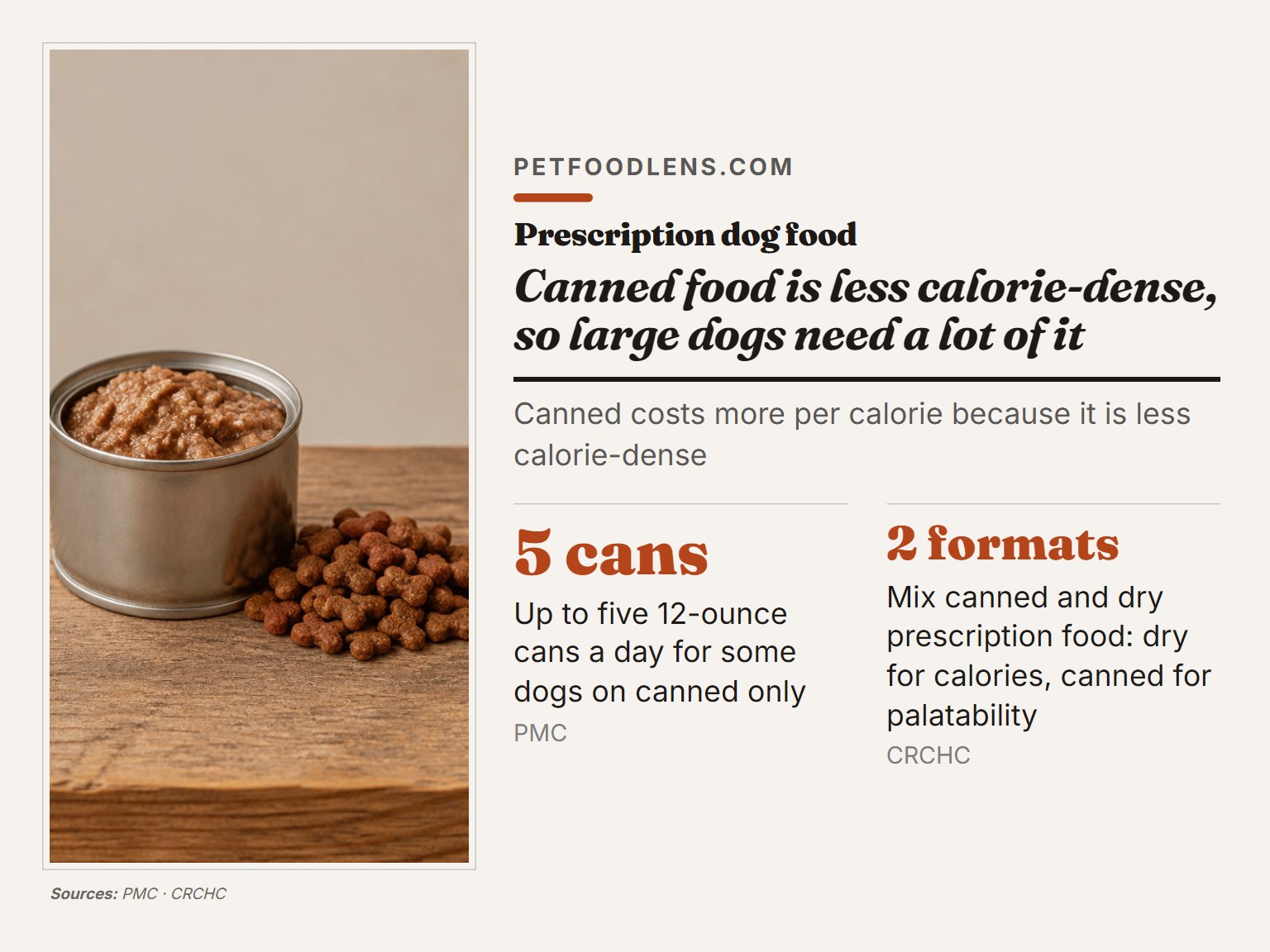
Per calorie, dry prescription food is the cheapest option in this comparison, and canned is the one that stings.
The reason is water. Canned food is less calorie-dense, so a large dog needs a lot of it, and the per-calorie figure climbs accordingly. That’s the finding behind the cost study, and it reframes the usual complaint. The cost study found one format is the outlier, while Cornell states prescription foods can be expensive.
Cornell’s practical fix is to blend the two: dry for calories, canned for palatability. You get most of the acceptance benefit at a fraction of the canned-only cost.
Home-cooked sits in the middle on cost, which surprises people who assume cooking at home is the budget route. It came in above dry prescription food and below canned.
When a Prescription Diet Is the Wrong Answer
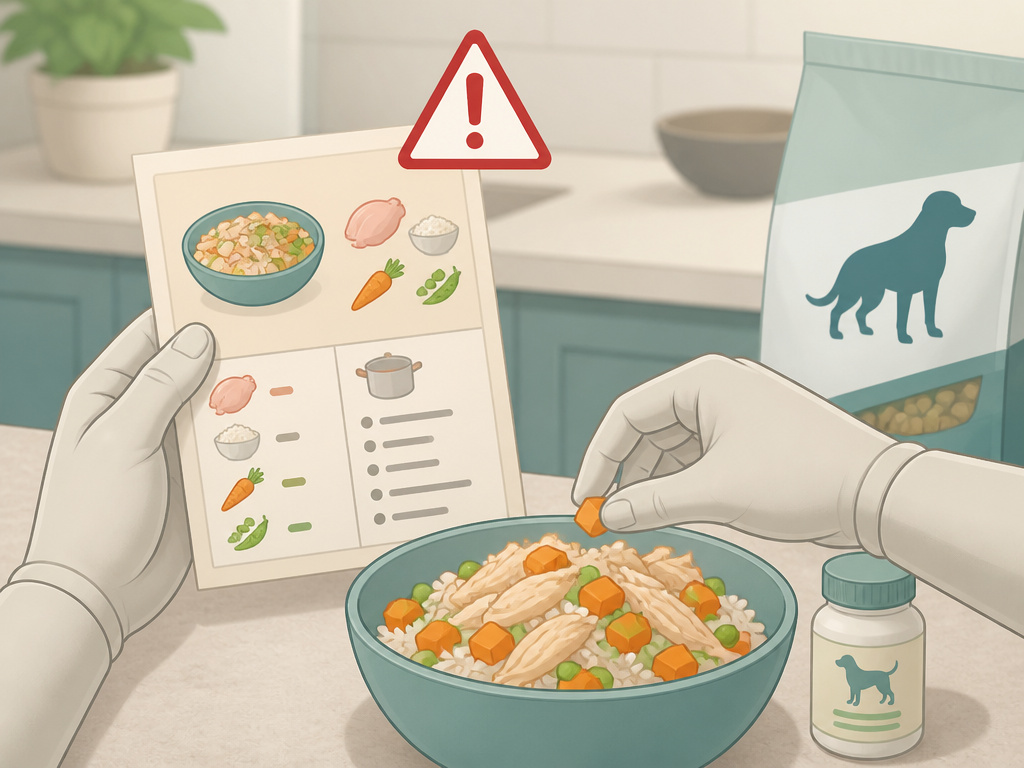
There are two situations where the therapeutic bag isn’t the answer, and both are legitimate.
The first is when no single therapeutic diet covers a dog with multiple conditions. The second is when the right diet exists but the dog won’t accept it. In both cases a home-prepared diet becomes a real option rather than a fallback.
Home-Cooked, Done Properly
The 2021 AAHA guidelines are direct about the risk here. Multiple veterinary studies of recipes found in books and on websites have shown that the majority of those recipes, even ones written by veterinarians, don’t provide complete and balanced nutrition.
So the process has rules. A consult with a board-certified veterinary nutritionist is recommended. The recipe has to be followed exactly as written, especially where vitamin, mineral, and amino acid supplements are concerned. Recipes should be updated annually. And a recipe should always name a specific supplement brand and dosage, because supplement products vary widely in nutrient content.
There’s a follow-up piece too. Home-prepared diets haven’t been through animal feeding trials and a laboratory analysis probably doesn’t exist, which means nobody can confirm the formulation holds up long term. Owners feeding one should be checked in on two or three times a year.
Skip this if: You’re planning to swap a prescription diet for a recipe you found online. Most of those recipes fail an adequacy check, and the failure shows up as a slow deficiency rather than a sudden crash.
Why Raw Doesn’t Get a Pass
AAHA doesn’t advocate or endorse feeding pets any raw or dehydrated nonsterilized foods, including treats of animal origin. The stated reason is pathogen transmission risk to the pet, to people in the house, and to other animals.
One detail is worth knowing. Dogs and cats can shed Salmonella without showing any clinical signs, so a healthy-looking dog is not evidence that the food is clean. And a high-pressure processing claim on a label doesn’t make the food sterile.
If you’re mapping out which formula type fits a specific diagnosis, the types of veterinary diets break down by target organ and by mechanism. For dogs that can’t stay on a prescription formula, non-prescription kidney food and diabetic dog food are the two categories where owners most often go looking for an alternative.
How to Read a Prescription Bag Before You Pay for It
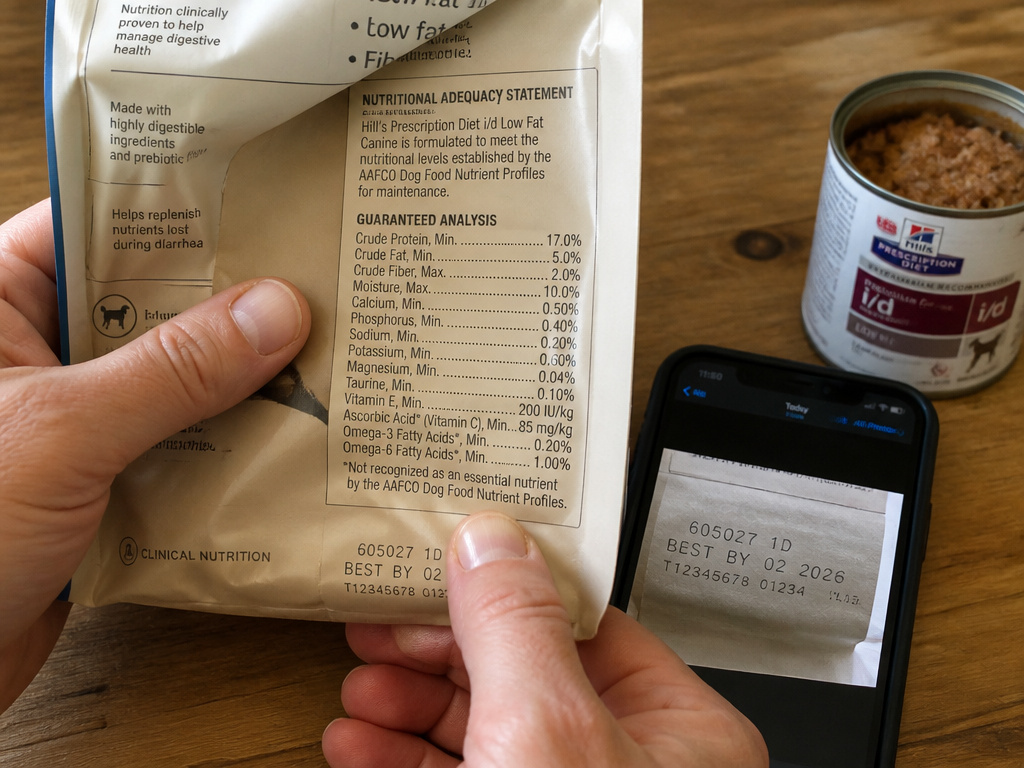
Early in my first couple of years reviewing labels, I skipped the nutritional adequacy statement entirely. The product I was looking at turned out to be labeled for supplemental feeding rather than as a complete diet, which meant it wasn’t a complete diet at all. I check that line first now, before the ingredient panel.
Start with the label, not the slogan. Here’s the order I use.
The Four Things to Check on the Back of the Bag
- The nutritional adequacy statement. It tells you whether the food is complete and balanced or intended for supplemental feeding. Skip this and you can end up feeding a topper as if it were dinner.
- The claim verb. “Supports” and “manages” are different promises, and only one of them implies testing in dogs with the condition.
- The lot code and best-by date. Write them down or photograph them. That’s the only way to match your bag against a recall notice, and the PPVD EN Low Fat recall covered 13.4 oz cans of the mislabeled product.
- The guaranteed analysis, converted to dry matter basis. Comparing the protein percentage on a canned food to the protein percentage on a dry food without adjusting for moisture is the most common mistake I see. Canned food is mostly water, so the numbers on the two labels describe different things until you convert them.
That fourth point is the one that changes decisions. A canned formula listing 8% protein and a dry formula listing 25% protein can be far closer than they look once you strip the water out.
If you’re comparing across brands, the best prescription dog food shortlist is organized by condition, and the same logic runs through prescription cat food pros and cons for anyone feeding both species.
Frequently Asked Questions
Are prescription dog foods better than over-the-counter dog foods?
Better at one job, and only if that job is the one your dog has. A therapeutic diet is built around a single clinical target and tested in dogs with the diagnosis. An over-the-counter formula that claims to support the same organ has made a nutrient statement, not a disease statement. For a healthy dog with no diagnosis, the prescription version buys you nothing.
Do prescription diets cause more side effects than regular food?
They cause different ones. In the elemental diet trial, five of 23 dogs left early, with reasons including flatulence, coprophagia, unformed feces, and worsened itching. Those are tolerance problems, not toxicity. The more serious safety issue in this category has been manufacturing, which is why the recall record matters as much as the formulation.
Can I take my dog off a prescription diet once the symptoms stop?
That’s a question for the veterinarian who diagnosed the condition, not for a label. Chronic conditions like kidney disease are managed rather than cured, and the diet is often part of what’s holding the numbers steady. Stopping without a recheck means you won’t know what changed until the next blood panel.
Is canned prescription food better than dry?
Canned is more palatable for most picky eaters and it carries more water, which helps dogs with kidney or urinary issues and dogs that get constipated on dry food. Dry is far cheaper per calorie. Cornell’s suggested compromise is to feed both, using dry for calories and canned for acceptance.
How do I find out if my dog’s food was recalled?
Match the lot code and best-by date on your package against the notice, not the brand name. The PPVD EL recall was expanded to two additional lots that preceded the earlier production dates. If your code matches, stop feeding and discard the food in a container no other animal can reach.
The Bottom Line
None of this settles whether your dog needs a prescription diet. That’s a diagnosis question, and a label can’t answer it.
Here’s what a label can do. Before you open the next bag, photograph the lot code and the best-by date and check them against the FDA recall page. It takes two minutes and it’s the only control that matches how these failures actually happen.
And one threshold worth carrying with you: if your dog keeps refusing prescription formulas, ask for a veterinary nutritionist referral rather than working through another flavor. That’s the point to ask for a veterinary nutritionist referral rather than working through a fourth flavor. Cornell’s sequence is designed to get you there in weeks, not months, and the home-cooked route has real rules attached once you arrive.
