
6 Best Prescription Dog Food in 2026
This post contains affiliate links. As an Amazon Associate, we earn from qualifying purchases.
For dogs with chronic digestive issues, Hill’s Prescription Diet GI Biome Digestive Dry Dog Food is the best overall. It clinically firms loose stool within 24 hours while feeding beneficial gut bacteria with its ActivBiome+ technology. The Royal Canin Veterinary Hydrolyzed Protein formula stands out for allergy elimination diets, and the Blue Buffalo Veterinary Diet Kidney Support leads for owners who want natural ingredients in a renal formula.
A veterinary diagnosis changes everything about how you feed your dog. Prescription diets aren’t about marketing claims, they’re formulated to manage specific medical conditions through controlled levels of protein, minerals, fiber, and fat that over-the-counter foods simply can’t deliver.
This guide compares six vet-exclusive foods across digestive, urinary, kidney, and allergy categories. We evaluated each formula’s therapeutic claims, ingredient restrictions, and the conditions each one is designed to manage based on manufacturer specifications and patterns in veterinary nutrition guidance.
Top 6 Prescription Dog Foods in the Market

Certain content that appears on this site comes from Amazon. This content is provided "as is" and is subject to change or removal at any time.
The Best Prescription Dog Foods, Reviewed
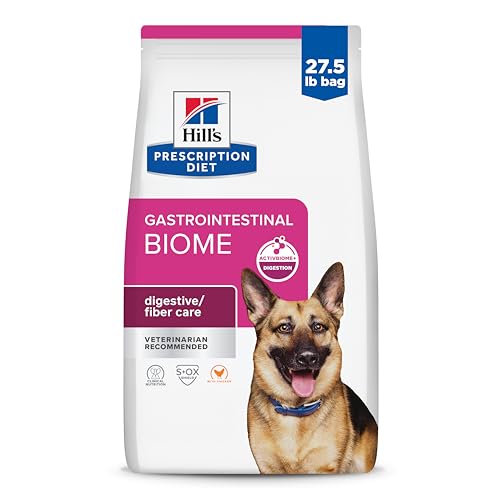
Hill's Prescription Diet GI Biome Digestive Dry Dog Food
What We Like
- Clinically firms loose stool in 24 hours
- ActivBiome+ supports beneficial gut bacteria
- #1 US Vet Recommended therapeutic food
Trade-offs
- Requires veterinary consultation before use
- Single chicken recipe limits protein variety
A proprietary ActivBiome+ prebiotic fiber blend targets the gut microbiome directly, with clinical data showing it can firm loose stool within 24 hours. That speed matters when your dog is dealing with chronic digestive upset or post-antibiotic diarrhea. The formula also provides high levels of omega-3 fatty acids (DHA and EPA). For a dog whose primary issue is irregular or loose stools, this formula addresses the root cause rather than just masking symptoms.
The trade-off is that this is a therapeutic diet, not a general maintenance food. You need a veterinarian’s go-ahead before buying, and the single chicken protein source may not work for dogs with poultry sensitivities. The 27.5-pound bag is substantial, so be sure you have storage space and a dog that will eat chicken-based food consistently.
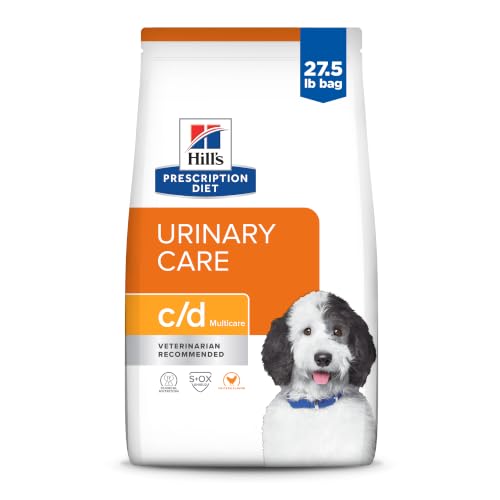
Hill's Prescription Diet c/d Multicare Urinary Care Dry Dog Food
What We Like
- Controlled minerals reduce stone-forming building blocks
- Enriched with omega-3 fatty acids
- Formulated to help dissolve struvite stones
Trade-offs
- Requires veterinary authorization to purchase
- Not formulated for dogs with kidney disease
The controlled levels of magnesium, calcium, and phosphorus are the key mechanism here: they limit what’s available for stone formation in the first place. For a dog with a history of urinary blockages or recurrent crystals, this is the kind of targeted nutrition that makes a real difference in daily management.
A prescription diet requires a vet’s okay before buying, which is standard for therapeutic foods but adds a step compared to over-the-counter options. Compared to the Purina Pro Plan Vet Diets EN Gastroenteric Wet Food in this guide, which focuses on digestive support, the Hill’s c/d is laser-focused on urinary health. If your dog’s primary issue is struvite or oxalate stones, this is the more appropriate pick. If stones aren’t the problem, you’d be paying for features you don’t need.
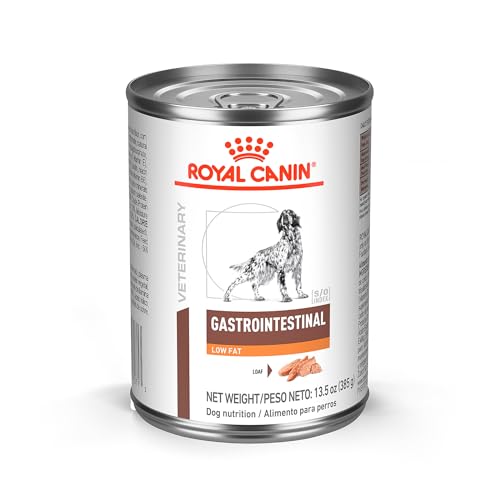
Royal Canin Veterinary Gastrointestinal Low Fat Dog Food
What We Like
- Low-fat formula for fat digestion issues
- Prebiotics support healthy gut bacteria
- Blend of dietary fibers for stool quality
- Highly flavorful pate for picky dogs
Trade-offs
- Wet food only; no dry kibble in this pack
- Veterinary-exclusive; requires vet consultation
A 13.5-ounce wet pate loaf formulated with low fat, prebiotics, and a blend of dietary fibers means this is built for dogs whose digestive systems struggle to process fat. The prebiotics feed beneficial gut bacteria, while the fiber blend helps produce firmer, more predictable stools. The product is described as highly flavorful, which can help dogs with picky appetites.
A 12-pack of canned food means you’re buying wet-only unless you mix in Royal Canin’s dry Gastrointestinal Low Fat kibble, sold separately. Hill’s Prescription Diet GI Biome comes as a dry formula in a 27.5-pound bag, so the Royal Canin gives you a different feeding style with more moisture. For a dog that needs low fat and accepts wet food, this is a practical choice.
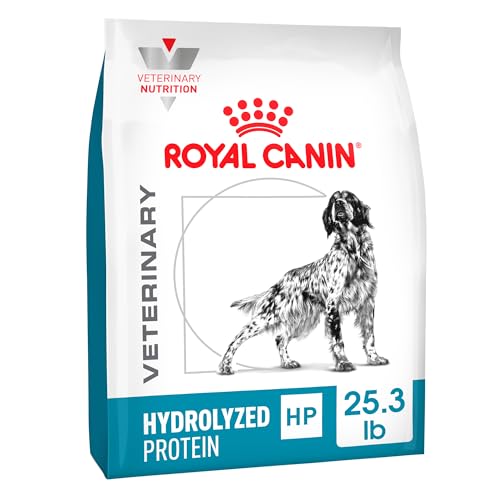
Royal Canin Veterinary Hydrolyzed HP Adult Dry Dog Food
What We Like
- Hydrolyzed soy protein for food sensitivities
- EPA and DHA support skin and digestion
- Formulated to support skin barrier
- Helps regulate intestinal transit
Trade-offs
- Veterinary-exclusive; requires vet approval
- Not suitable for dogs with soy intolerance.
Hydrolyzed soy protein built from low molecular weight peptides means this formula breaks proteins down into pieces so small the immune system is less likely to flag them. That makes it a go-to for adult dogs with suspected food sensitivities, especially when you need an elimination diet to identify triggers. The added EPA and DHA fatty acids back up skin and coat health, while the formulation targets the skin’s natural barrier and supports balanced digestive flora. For a dog with chronic itching or loose stools tied to diet, this is the kind of precise, vet-only tool that addresses both the skin and the gut in one bag.
This is a targeted elimination diet, not a daily all-rounder. If your dog has a known soy intolerance, the hydrolyzed soy protein here won’t solve the problem. At 25.3 pounds, feeding guidelines matter, overfeeding defeats the purpose of a controlled diet. This is a precise tool for dogs with food sensitivities.
Product photos
Purina Pro Plan Vet Diets EN Gastroenteric Wet Dog Food
What We Like
- High total digestibility for nutrient absorption
- Prebiotic fiber nourishes GI microbiome balance
- Contains medium-chain triglycerides (MCTs)
Trade-offs
- Wet food format requires refrigeration after opening
- Formulated for digestive issues, not general nutrition
A 12-pack of 13.4-ounce cans means this wet food delivers a full course of digestive support without the guesswork. The high total digestibility promotes nutrient absorption, which matters when a dog’s gut is already stressed. It’s a wet food, so it’s also a good option for dogs who need a highly digestible meal.
The wet format means that once you open a can, it’s a refrigerator item, and at 13.4 ounces per can, you’re committing to a fairly specific portion size. Compared to the Hill’s Prescription Diet GI Biome dry food, which is a 27.5-pound bag you can scoop and seal, this Purina option is less convenient for travel or free-feeding. But if your dog has a sensitive stomach and you want a highly digestible, moisture-rich meal that’s ready to serve, the wet formula’s texture and ingredient profile make it a practical first-line choice.
Product photos
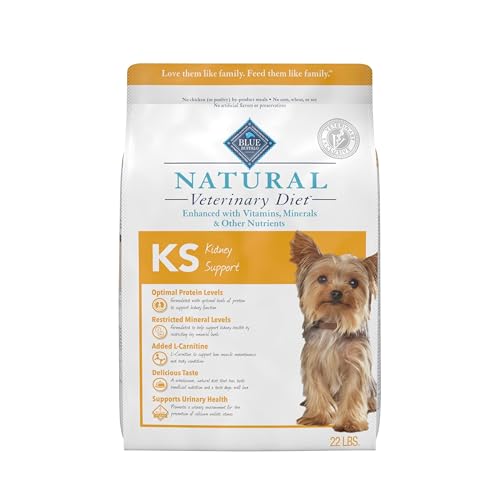
Blue Buffalo Natural Veterinary Diet Kidney Support Dry Dog Food
What We Like
- Real chicken is first ingredient
- Controlled phosphorus and sodium for kidneys
- No chicken by-product meals, corn, wheat, soy
- No artificial flavors or preservatives
Trade-offs
- Requires veterinarian authorization to purchase
- Not suitable for dogs without kidney disease
Controlled phosphorus and sodium levels are the core of kidney management in dogs, and this formula delivers that with real chicken as the first ingredient rather than a by-product meal. The absence of corn, wheat, soy, and artificial flavors or preservatives aligns with a natural veterinary diet. For owners whose vet has prescribed a renal support food, this product offers a chicken-first recipe with controlled minerals to support kidney function.
This food requires veterinarian authorization to purchase, so it is not available over the counter. Compared to Hill’s Prescription Diet c/d Multicare, which also targets urinary health, this Blue formula is specifically designed for kidney support. The 22-pound bag is a standard size for this therapeutic diet. It is a prescription diet, not a general maintenance food, and it requires a vet’s sign-off to buy.
Product photos
How We Evaluated Prescription Dog Foods
We built this guide around manufacturer-published nutritional data, veterinary diet type classifications, and patterns in owner feedback about palatability and stool quality. Because these are prescription products, we focused on the specific therapeutic claim each formula makes, whether that’s dissolving struvite stones, managing fat digestion, or supporting an elimination diet for food sensitivities.
The four criteria that mattered most were: the condition-specific formulation (does the nutrient profile match the disease management goal?), the protein source and hydrolyzation method for allergy diets, the fat content for dogs with pancreatitis or fat digestion issues, and the mineral profile for urinary and kidney formulas. Every pick here addresses at least one of those four factors directly.
A research-led evaluation has limits. We cannot verify clinical outcomes for individual dogs, and we rely on the manufacturer’s published feeding trials and AAFCO nutritional adequacy statements. The pros and cons of each formula should be discussed with your veterinarian, who knows your dog’s specific lab values and medical history.
What To Look For In Prescription Dog Foods
The right prescription food matches your dog’s diagnosed condition first and your feeding preferences second. Look for a nutrient profile that directly addresses the clinical problem, not just a brand name you recognize.
Match the formula type to the veterinary diagnosis: digestive formulas for microbiome issues, hydrolyzed proteins for allergies, low-fat for fat malabsorption, controlled minerals for urinary stones, and restricted phosphorus for kidney disease.
Condition-Specific Nutrient Profile
A prescription diet must alter specific nutrients to manage a disease. For kidney disease, that means controlled phosphorus and sodium. For urinary stones, it means restricted calcium, oxalate, or magnesium levels depending on stone type. For digestive issues, it means highly digestible proteins and added prebiotic fibers. The different types of veterinary diets are each formulated to a precise therapeutic target; general “healthy” ingredients don’t apply here.
Protein Source and Allergen Profile
For dogs with suspected food allergies, a hydrolyzed protein formula breaks the protein into fragments too small for the immune system to recognize. Chicken is the most common protein allergen in dogs, so formulas using chicken as the primary protein may trigger reactions in sensitive animals. The best vet-recommended dog food brands typically offer both chicken-based and novel or hydrolyzed protein options to accommodate different allergy profiles.
Format and Palatability
Wet food formulas often work better for dogs with reduced appetite from illness, but they require refrigeration after opening and cost more per feeding. Dry kibble is more convenient but may be less appealing to sick dogs. Some conditions, like fat digestion difficulty, are more commonly managed with wet food because the moisture content aids digestion. The best vet-recommended dog food options include both formats, and your veterinarian can help you choose based on your dog’s willingness to eat.
- Confirm your dog’s diagnosis with your veterinarian before purchasing any prescription diet
- Check the protein source if your dog has known food sensitivities or allergies
- Compare the fat percentage if your dog has pancreatitis or fat digestion issues
- Verify the phosphorus and sodium levels for kidney disease management
- Ask your vet about transitioning slowly from the current food to avoid GI upset
A prescription diet works only if your dog eats it consistently, palatability matters as much as the nutrient profile for long-term management.
Prescription Dog Foods Compared
The table below compares the six prescription diets across their primary therapeutic function, key nutritional features, and the specific conditions each formula is designed to manage.
| Product | Key Feature | Target Condition | Form | Weight |
|---|---|---|---|---|
| Hill's Prescription Diet GI Biome Digestive Dry Dog Food | ActivBiome+ prebiotic fiber technology | Digestive/Fiber Care | Dry | 27.5 pounds |
| Hill's Prescription Diet c/d Multicare Urinary Care Dry Dog Food | Controlled magnesium, calcium, phosphorus | Struvite & calcium oxalate stones | Dry | 27.5 pounds |
| Royal Canin Veterinary Gastrointestinal Low Fat Dog Food | Low fat, prebiotics, fiber | Fat digestion difficulty | Wet pate loaf | 13.5 oz, 12-pack |
| Royal Canin Veterinary Hydrolyzed HP Adult Dry Dog Food | Hydrolyzed soy protein | Food sensitivity | Dry | 25.3 lb |
| Purina Pro Plan Vet Diets EN Gastroenteric Wet Dog Food | MCT oil, prebiotic fiber, antioxidants | Gastroenteric support | Wet dog food | 13.4 oz, 12-pack |
| Blue Buffalo Natural Veterinary Diet Kidney Support Dry Dog Food | Controlled phosphorus & sodium | Kidney function | Dry | 22 lb |
Frequently Asked Questions
Do I really need a prescription to buy these dog foods?
Yes. These formulas are classified as veterinary-exclusive diets, meaning a licensed veterinarian must authorize the purchase. This requirement exists because the nutrient profiles can be harmful to dogs that don’t have the specific condition the food is designed to manage.
Can I switch my dog from prescription food to over-the-counter food once symptoms improve?
Not without your veterinarian’s guidance. Prescription diets manage chronic conditions, and stopping the food often causes symptoms to return. Your vet can help determine if a non-prescription kidney food or maintenance diet is appropriate after a period of stabilization.
How long does it take to see results from a prescription diet?
Some formulas, like the Hill’s GI Biome digestive food, claim clinical improvement in stool quality within 24 hours. Other conditions, like food allergies managed with hydrolyzed protein diets, typically require several weeks of exclusive feeding before symptoms fully resolve.
What happens if my dog refuses to eat the prescription food?
Ask your veterinarian about alternative formulas within the same therapeutic category. Many brands offer both wet and dry versions, and some offer multiple protein sources. Mixing a small amount of a tolerated wet food with the prescription kibble can help during the transition period.
Can I feed prescription food to a healthy dog as a preventive measure?
No. Prescription diets are formulated with restricted or elevated nutrient levels that can cause imbalances in healthy dogs. Feeding a renal diet to a dog without kidney disease, for example, can lead to protein deficiency over time.
The Bottom Line
Hill’s Prescription Diet GI Biome Digestive Dry Dog Food is the best overall choice for dogs with chronic loose stool or microbiome imbalance, especially when rapid digestive support is the priority. The 24-hour firming claim and ActivBiome+ technology make it the most targeted option for gut health among the six formulas we evaluated.
For dogs with food sensitivities requiring an elimination diet, the Royal Canin Veterinary Hydrolyzed HP formula offers the most reliable approach to identifying trigger ingredients through its hydrolyzed soy protein. Owners of dogs with kidney disease who prioritize natural ingredients will find the Blue Buffalo Veterinary Diet Kidney Support formula the most aligned with their preferences. It has real chicken as the first ingredient and no corn, wheat, or soy.
The single most important factor in choosing a prescription diet is matching the formula to your veterinarian’s diagnosis. No amount of premium ingredients or brand reputation replaces the precision of a nutrient profile designed for your dog’s specific medical condition.
