
4 Best Non Prescription Diabetic Dog Food in 2026
This post contains affiliate links. As an Amazon Associate, we earn from qualifying purchases.
The best non prescription diabetic dog food overall is Dave’s Pet Food Carbolight Canned Dog Food. Its reduced-carbohydrate recipe helps with glucose management while supporting healthy weight, making it a good choice for diabetic dogs. For owners who want full control over ingredients, Dr. Harvey’s Paradigm Green Superfood Base Mix offers a quick-prep base, while Wysong Epigen 90 provides a starch-free dry kibble option.
Managing a diabetic dog’s diet means controlling carbohydrate intake and maintaining stable blood sugar levels without needing a veterinary prescription. Many owners struggle to find foods that balance low starch with adequate protein and fat for energy. The wrong mix can spike glucose or leave a dog undernourished.
This guide compares four non-prescription options based on manufacturer specifications, ingredient quality, and patterns in owner feedback. We focused on carbohydrate content, protein sources, and ease of feeding to help you match a food to your dog’s specific needs.
Top 4 Non Prescription Diabetic Dog Foods in the Market
Certain content that appears on this site comes from Amazon. This content is provided "as is" and is subject to change or removal at any time.
The Best Non Prescription Diabetic Dog Foods, Reviewed
Dave's Pet Food Carbolight Canned Dog Food
What We Like
- Reduced carbohydrate recipe for glucose management
- Includes L-Carnitine to support fat metabolism
- Balanced fat content for healthy weight
- Made in USA, reviewed by vet nutritionists
Trade-offs
- Canned format requires more storage space than dry kibble
- Single-protein chicken formula limits rotation for dogs with poultry sensitivities
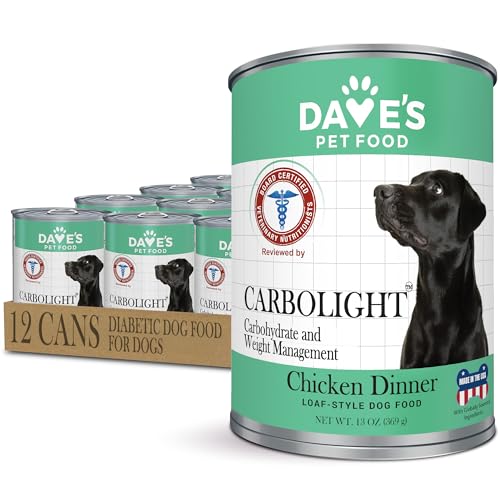
A reduced-carbohydrate recipe that lists L-Carnitine and balanced fat content means this canned pate is built around two things that matter for a diabetic dog: steady glucose levels and weight control. The high protein helps maintain lean muscle while the dog drops pounds, which is exactly the metabolic tightrope you want to walk. For owners who want a straightforward, nutritionist-reviewed wet food that doesn’t require a prescription, this is the most complete single can on the shelf.
The canned format means each 13-ounce can is ready to serve with no mixing, which is convenient for owners who want a straightforward wet food. If your dog prefers wet food or you want a product reviewed by Board Certified Veterinarian Nutritionists, this pate delivers that without a prescription. The trade-off is that twelve cans take up more pantry space than a dry kibble like Ketona Chicken Recipe, but for dogs that need the moisture of wet food, the convenience of opening a can outweighs the extra storage.
Dr. Harvey's Paradigm Green Superfood Base Mix
What We Like
- Control over meat type and quality
- Rehydrates in 8 minutes
Trade-offs
- Requires adding own protein and oil
- Very low fat (1% min) needs oil supplement
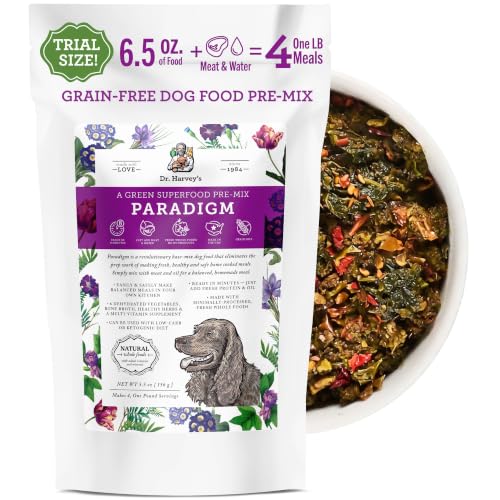
A base mix with 13% protein and 1% fat is a vegetable-and-broth starter, not a complete meal. You add your own meat and oil, which gives direct control over protein source and fat content, critical for a diabetic dog whose carb intake needs tight management. The 54 kcal per scoop is low enough to help build a ketogenic profile without overshooting calories. For owners who want to avoid kibble’s starch and still keep prep under ten minutes, this base mix delivers a genuinely low-carb foundation without fillers, dyes, or preservatives.
Wysong Epigen 90 Starch Free Dry Dog Food
What We Like
- Includes probiotics and prebiotics
- Nutrient dense, can be used as supplement
- Starch free dry kibble
Trade-offs
- Very nutrient dense requires slow introduction
- Not suitable for cats with starch sensitivity issues
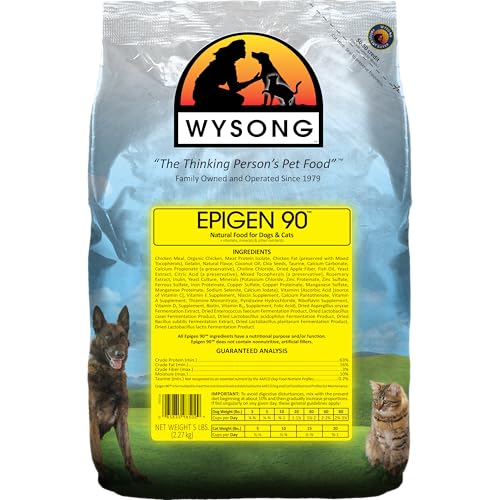
Wysong Epigen 90 skips the grains and the starches that most grain-free foods still sneak in, delivering a formula that more closely matches what a carnivore’s digestive system expects. For owners who want to minimize carbohydrate impact on blood sugar without switching to a canned or raw diet, this kibble offers a practical dry option that doesn’t compromise on the meat-to-starch ratio.
The trade-off is in the transition. Because this food is so nutrient dense, the manufacturer explicitly warns to introduce it slowly according to the feeding guidelines, which means a week or more of mixing with the old food. It comes in a five-pound bag, so if you’re feeding a larger dog exclusively on this formula, you’ll be reordering frequently. That said, for a small or medium dog where starch control is the priority, the ingredient list here is hard to beat.
Product photos
Ketona Chicken Recipe Dry Dog Food

What We Like
- Only 5-6% digestible carbohydrate
- 46%+ protein from antibiotic-free chicken
- Grain-free with 85% less carbs than competitors
- Produced in USA with natural ingredients
Trade-offs
- Dry kibble only; no moisture for dogs needing hydration
- Single-protein formula limits variety for sensitive stomachs
With less than 6% total digestible carbohydrate and more than 46% protein from non-GMO, antibiotic-free chicken raised by American ranchers, this kibble delivers a low-carb, high-protein profile. That matches the nutrition of a raw diet in a shelf-stable bag. It is made 100% in the USA using natural ingredients with added vitamins and minerals. Owners who want a straightforward dry food that avoids the high starch levels of many grain-free brands will find this formula fits their needs without the prep work of fresh or frozen options.
The trade-off is that dry kibble lacks the moisture content that canned foods provide, which matters for dogs prone to dehydration or urinary issues. Compared to Dave’s Pet Food Carbolight Canned Dog Food, Ketona offers a dry format that requires you to add water or broth separately if your dog needs extra hydration. For a dog that drinks well and tolerates a concentrated protein load, this is a low-carb kibble option.
Product photos
How We Evaluated Non Prescription Diabetic Dog Foods
This guide was built from manufacturer nutritional data, ingredient lists, and patterns reported by owners of diabetic dogs. We looked for foods with clearly stated carbohydrate levels, high-quality protein, and minimal fillers that could spike blood sugar. We also considered practical factors like preparation time and storage.
The three criteria that mattered most were carbohydrate content (total starch and sugar), protein-to-fat ratio for weight management, and ease of integration into a diabetic dog’s feeding routine. A food that looks great on paper but requires elaborate prep or slow transition may not work for every household.
A research-based evaluation has limits. Individual dogs respond differently to the same food, and we cannot predict how a specific dog’s glucose levels will react. We encourage owners to check any new food against their vet’s recommendations and monitor their dog’s response closely.
What To Look For In Non Prescription Diabetic Dog Foods
Choosing the right food means looking past marketing claims and reading the guaranteed analysis and ingredient list. The best options keep carbohydrates low, protein moderate, and fat balanced for steady energy.
Look for foods with low digestible carbohydrates, a single named protein source, and added fiber or L-carnitine to support metabolism and weight maintenance.
Carbohydrate Content
Carbohydrates have the biggest impact on blood glucose. Dry kibble typically contains starches like rice, potato, or tapioca to bind the kibble. The best diabetic foods keep these at a low level of digestible carbs. Wet foods naturally have fewer carbs because they don’t need binders. Look for terms like “low carb,” “reduced carbohydrate,” or “starch free” on the label, and check the guaranteed analysis for crude fiber and carbohydrate estimates.
Protein Quality and Fat Balance
Diabetic dogs need moderate protein from a single, digestible source to avoid gastrointestinal upset. Chicken, lamb, and fish are common. Fat content should support weight maintenance without being so high it causes pancreatitis. Foods with added L-carnitine help the body use fat for energy rather than storing it. Avoid foods with vague “meat meal” or multiple protein sources that make rotation difficult.
Feeding Convenience and Transition
- Wet food offers better moisture and lower carbs but requires refrigeration after opening.
- Dry kibble is easier to portion and store but often has more starch to hold its shape.
- Base mixes need you to add your own protein and oil, giving full control but requiring extra steps.
- Any new food needs a gradual transition over several days to avoid digestive upset.
Always introduce a new diabetic dog food slowly, mixing increasing amounts with the old food over a week.
Non Prescription Diabetic Dog Foods Compared
The table below compares the four non-prescription diabetic dog foods side by side, highlighting carbohydrate levels, protein sources, and feeding formats.
| Product | Form | Key Feature | Protein Focus |
|---|---|---|---|
| Dave's Pet Food Carbolight Canned Dog Food | Canned pate | Reduced carbohydrate recipe | High protein for lean muscle |
| Dr. Harvey's Paradigm Green Superfood Base Mix | Base mix | Low Carb Ketogenic Diet | Added separately (not included) |
| Wysong Epigen 90 Starch Free Dry Dog Food | Dry kibble | Starch Free | Chicken (including organic) |
| Ketona Chicken Recipe Dry Dog Food | Dry kibble | Low Carb (only 5%) | More than 46% protein |
Frequently Asked Questions
Can I manage my dog’s diabetes with diet alone?
Diet is a critical part of managing canine diabetes, but it usually works best alongside insulin therapy. A consistent low-carbohydrate diet helps stabilize blood sugar, making insulin doses more predictable. Always consult your veterinarian before changing your dog’s food or adjusting medication.
What carbohydrates should I avoid in diabetic dog food?
Avoid foods with high-glycemic ingredients like white rice, corn, wheat, potato starch, and sweet potato. These can cause rapid blood sugar spikes. Look for foods that use low-glycemic alternatives like lentils, chickpeas, or green vegetables, or choose starch-free formulas entirely.
Is dry kibble or wet food better for diabetic dogs?
Wet food typically has fewer carbohydrates because it doesn’t need starches for binding, making it a strong choice for glucose control. Dry kibble is more convenient for portioning and storage but often contains more starch. Some owners use a low-carb dry food and add water or a wet topper to increase moisture.
How often should I feed my diabetic dog?
Most diabetic dogs do best on two meals per day, fed 12 hours apart, to match insulin injection timing. Consistent meal times and portion sizes help maintain stable blood glucose. Some owners add a small snack before peak insulin activity, but only with vet guidance.
Can diabetic dogs have treats?
Yes, but treats must be very low in sugar and carbohydrates. Look for treats for diabetic dogs made with single protein sources like freeze-dried liver or low-carb vegetables like green beans. Avoid treats with added sugars, grains, or starches, and count them toward daily calorie intake.
The Bottom Line
For most owners, Dave’s Pet Food Carbolight Canned Dog Food is the best overall non-prescription choice. Its reduced-carbohydrate recipe, balanced fat content, and vet-reviewed formulation address the core needs of a diabetic dog without requiring a prescription. It works well for dogs that tolerate chicken and need wet food for hydration.
If you prefer to control the exact protein and fat your dog eats, Dr. Harvey’s Paradigm Green Superfood Base Mix gives you that flexibility with minimal prep time. For those who want a starch-free dry kibble, Wysong Epigen 90 offers a nutrient-dense option that supports digestive health through added probiotics.
The single most important factor in managing canine diabetes with diet is carbohydrate control. Whatever food you choose, keep carbohydrates low, feed consistent portions, and work with your vet to monitor glucose levels. A food that looks good on paper still needs to work for your dog’s individual metabolism.
