
Mono-Protein Diet for Dogs Guide: When It Actually Helps
This post contains affiliate links. As an Amazon Associate, we earn from qualifying purchases.
A mono-protein diet for dogs guide starts with one definition: a single animal protein source, nothing else. It earns its place only in dogs with a suspected or confirmed adverse food reaction. Purina states plainly that mono-protein food has no advantage in a pet without an allergy, so treat it as a diagnostic tool rather than a wellness upgrade.
Purina goes a step further than that sentence suggests. The company warns that restricting a healthy dog to one protein source as a precaution may disturb the normal response of the immune system. That is a manufacturer arguing against a category it also sells into, and it is worth sitting with.
What follows is the practical version: what the label really claims, what the studies found, why the duration advice conflicts, and the one test that decides whether a mono-protein food is doing anything at all.
Key Takeaways
- One animal protein source, nothing else. That is the entire definition, and it says nothing about quality or digestibility.
- Purina states mono-protein food has no advantage in a pet without an allergy, and warns precautionary protein restriction may disturb normal immune response.
- A 2018 PCR study found undeclared mammalian DNA in 21 of 21 over-the-counter single-protein diets it screened.
- Duration advice conflicts badly: Monge labels 3 to 8 weeks, while the Olivry consensus says at least 8 and preferably 12.
- The protein has to be new to that specific dog, or the trial tests nothing and costs you the full trial window.
What Mono-Protein Actually Means on a Label
The bag says salmon. Four lines down, the fat is chicken fat, and further down there is fish meal with no species named. None of that breaks the mono-protein claim as most brands write it.
A mono-protein claim covers one animal species. The claim does not cover egg, dairy, chicken fat, bone broth from a second animal, or fish meal from an unnamed species. Each of those is a protein, and each can appear lower on the same ingredient panel without breaking the claim as written.
That gap between the front of the bag and the panel is where most of the confusion lives. A single protein diet is a claim about species count. It says nothing about protein quality, and nothing about whether the food was tested on anything with four legs.
Flip the bag over and read the panel in order. Hidden protein sources cluster in a predictable set:
- Chicken fat, a fat by name and an animal protein by origin, legal in a “salmon” recipe.
- Egg and dried whey, both real proteins and both easy to miss three lines down.
- Fish meal with no species named, which could be one fish or six.
- Bone broth from a second animal, increasingly common in premium tins.
- Pea protein and potato protein, plant proteins but concentrated enough to matter.
Reading gets harder, not easier, once you move into limited ingredient dog food, where “limited” has no legal definition at all.
Easy to miss: A recipe can name one species on the front and list a second species’ fat in the middle of the panel. The claim survives. The dog’s immune system does not read claims.
Does a Mono-Protein Diet Help a Dog Without an Allergy?
No. Not on the evidence available.
Purina is blunt about it. Its published guidance states that mono-protein food has no advantage when fed to a pet without an allergy, and that healthy pets have no need to limit protein sources as long as the diet is complete and balanced. The same paragraph carries the warning about immune response.
Two other sources land in the same place. Vitomalia states that healthy dogs without symptoms gain no proven added benefit. My Perfect Pet concedes that outside diagnostic trials, confirmed protein reactions, or a logged digestive history, single-protein food gives a healthy dog no measurable advantage.
One study complicates the clean answer. An open-label, non-controlled trial put atopic dogs without food hypersensitivity on either a rice-based diet (n=22) or a grain-free salmon diet (n=8) for 30 days. The rice-based diet reduced pruritus scores and altered IL-31 and IL-10. The salmon diet did not.
Read the clinical and immunological parameters monoprotein diet result carefully. The authors flag their own limits: no control group, small numbers, open label. Those were atopic dogs, not healthy ones, and the diet that worked was rice-based rather than a clean single-protein format.
So the honest position is narrower than either camp states. In a symptom-free dog there is no measured benefit and one manufacturer’s warning. In a dog with skin disease but no confirmed food reaction, the picture is unsettled and the studies are weak.
If you are still working out which protein sources for dogs actually suit an itchy animal, start with the reaction history rather than the ingredient list.
When a Mono-Protein Diet Is the Right Tool
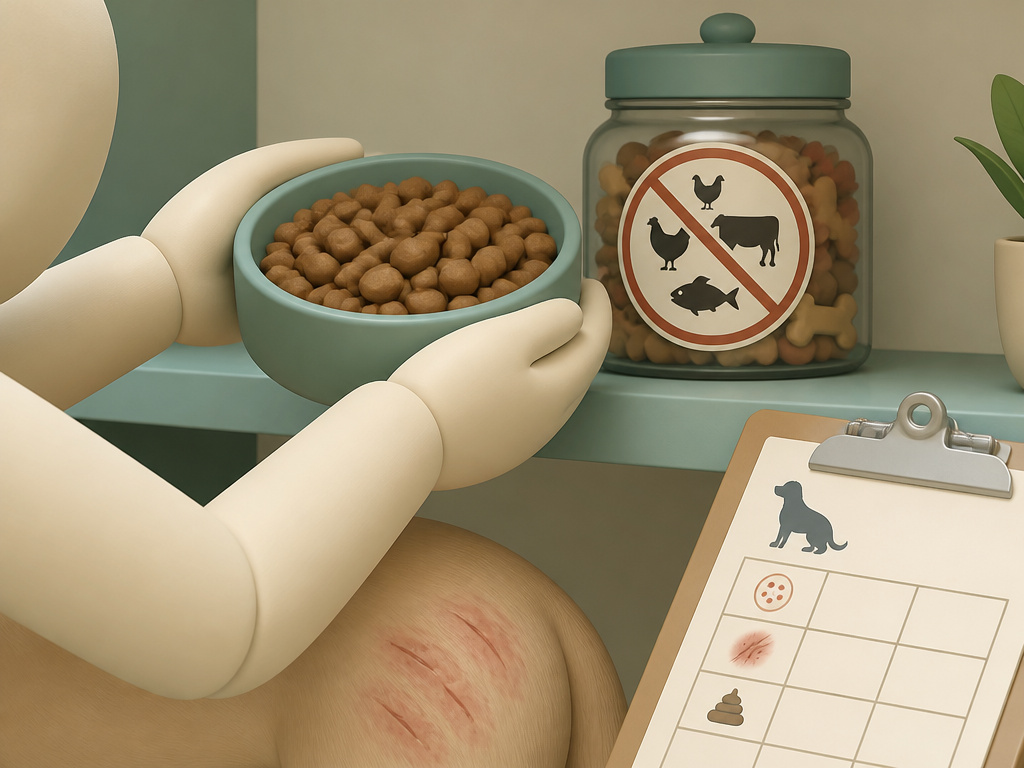
The Olivry consensus, summarized in the veterinary literature, puts a single novel protein source and hydrolyzed protein at the top of the diagnostic ladder for adverse food reactions. Purina frames it the same way: a single source protein diet can serve as a diagnostic method or as long-term treatment in dogs showing clinical signs.
The word carrying the weight there is “signs”. This is a tool for a dog that is scratching, scooting, or losing coat condition. It is not a default for a dog that is fine.
Before you start: Monge’s label instructs owners to seek a veterinarian’s opinion before use and before extending the period of use, and that instruction is not decorative. A single flavored chew or supplement containing another protein can break a trial within days. Keep every treat in the house out of reach for the full run.
- Get a diagnosis on the table first. History and skin workup come before the bag. IgE testing exists as a supplement but is not part of standard diagnostic procedure.
- Pick a protein the dog has never eaten. Olivry is explicit that the diet is diagnostically valuable only if the protein source is new to that specific dog. A chicken trial for a dog that has eaten chicken for four years tests nothing, and it costs you the full trial window.
- Strip every other protein for the whole run. No treats, no chews, no supplements containing other proteins. Skipping this turns a clean trial into a guess.
- Log the dog, not the food. Pruritus score, stool, coat, ear wax. Without a written baseline you cannot separate a real improvement from a good week.
- Challenge the suspect protein at the end. A targeted challenge confirms the diagnosis. Without it you have a suspicion, not an answer.
The elimination diet for dogs protocol is where most of this gets executed, and it is worth reading before you spend anything.
| Approach | What it controls | Where it fits |
|---|---|---|
| Mono-protein | One animal species, nothing else | Diagnostic trial or long-term management |
| Novel protein | A protein new to that dog | Diagnostic trial only |
| Limited ingredient | A short ingredient list | Marketing term, no legal definition |
| Hydrolyzed | Protein split into small fragments | Strict trials, lower contamination risk |
These four are not interchangeable, and the bag does not always tell you which one you are holding. Hydrolyzed protein diets are increasingly preferred for strict elimination work because the protein arrives already fragmented, which lowers the chance a stray intact protein sets the dog off.
How Long Should a Mono-Protein Elimination Diet Run?
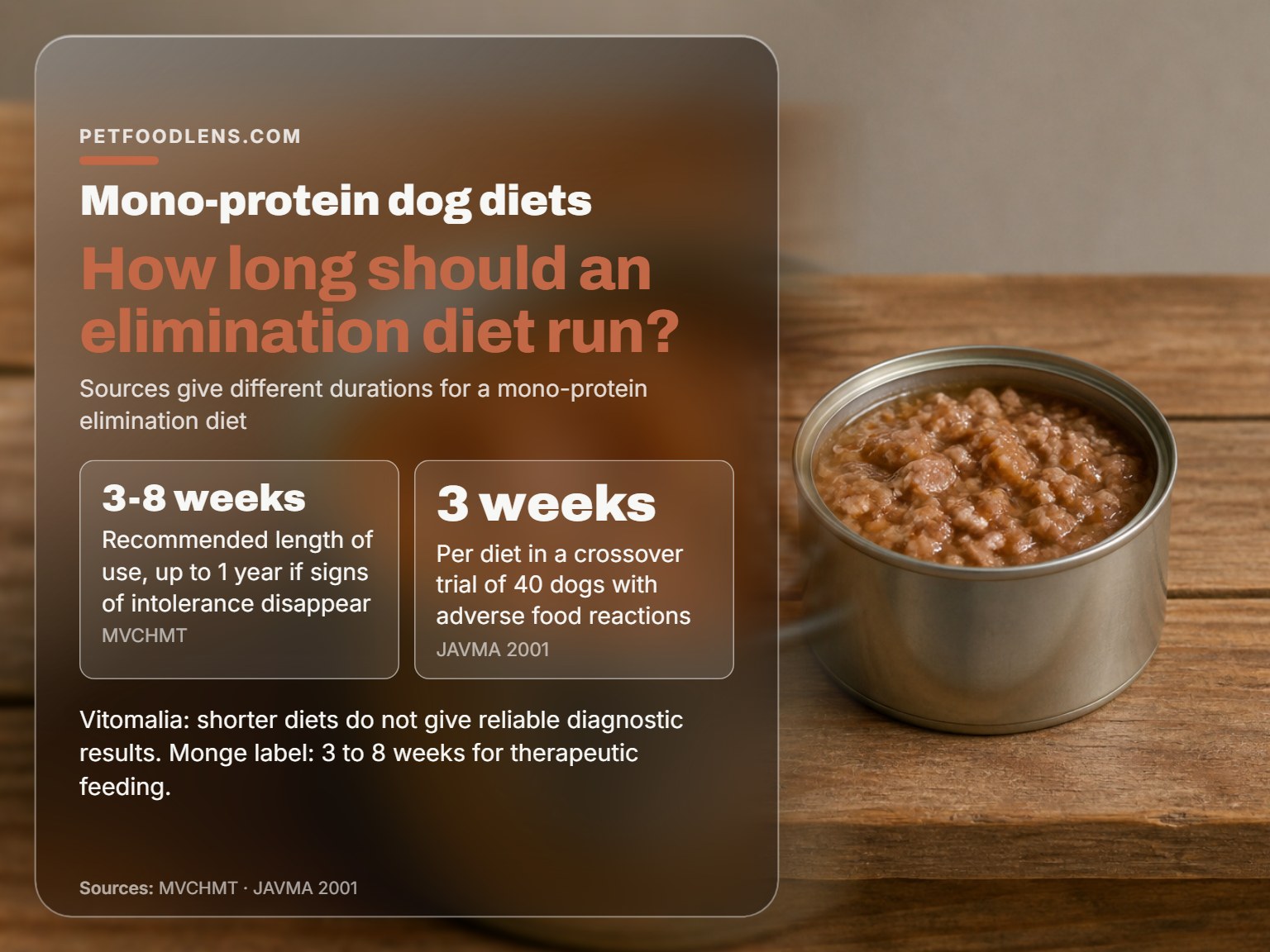
Vitomalia, citing the Olivry 2015 consensus, recommends at least 8 weeks and preferably 12, while Monge’s label recommends 3 to 8 weeks.
Vitomalia, citing the Olivry 2015 consensus, states that an elimination diet should run at least 8 weeks and preferably 12, and that shorter diets do not give reliable diagnostic results.
Monge’s VetSolution Canine Hypo Monoprotein Tuna label says something different. It gives a recommended length of use of 3 to 8 weeks, with an extension up to one year if signs of intolerance disappear.
The 2001 JAVMA crossover trial used a third number: 3 weeks on each of three diets.
| Source | Stated duration | What it covers |
|---|---|---|
| Olivry 2015 consensus | At least 8 weeks, preferably 12 | Diagnostic elimination |
| Monge VetSolution label | 3 to 8 weeks, up to 1 year | Therapeutic feeding |
| JAVMA 2001 crossover | 3 weeks per diet | Study protocol, 40 dogs |
The gap is real and it is not a rounding error. Vitomalia holds that shorter diets do not produce reliable diagnostic results, while Monge’s label recommends 3 to 8 weeks for therapeutic feeding.
Where this goes sideways: Splitting the difference between the two recommendations. That is long enough to cost you weeks of careful feeding and short enough to leave the answer ambiguous. You end up back at the start with a dog that has lost condition in the meantime.
One practical note from the label that nobody repeats: Monge instructs serving at room temperature and consuming an opened tin within 24 hours.
The Label-Integrity Problem: 21 Out of 21
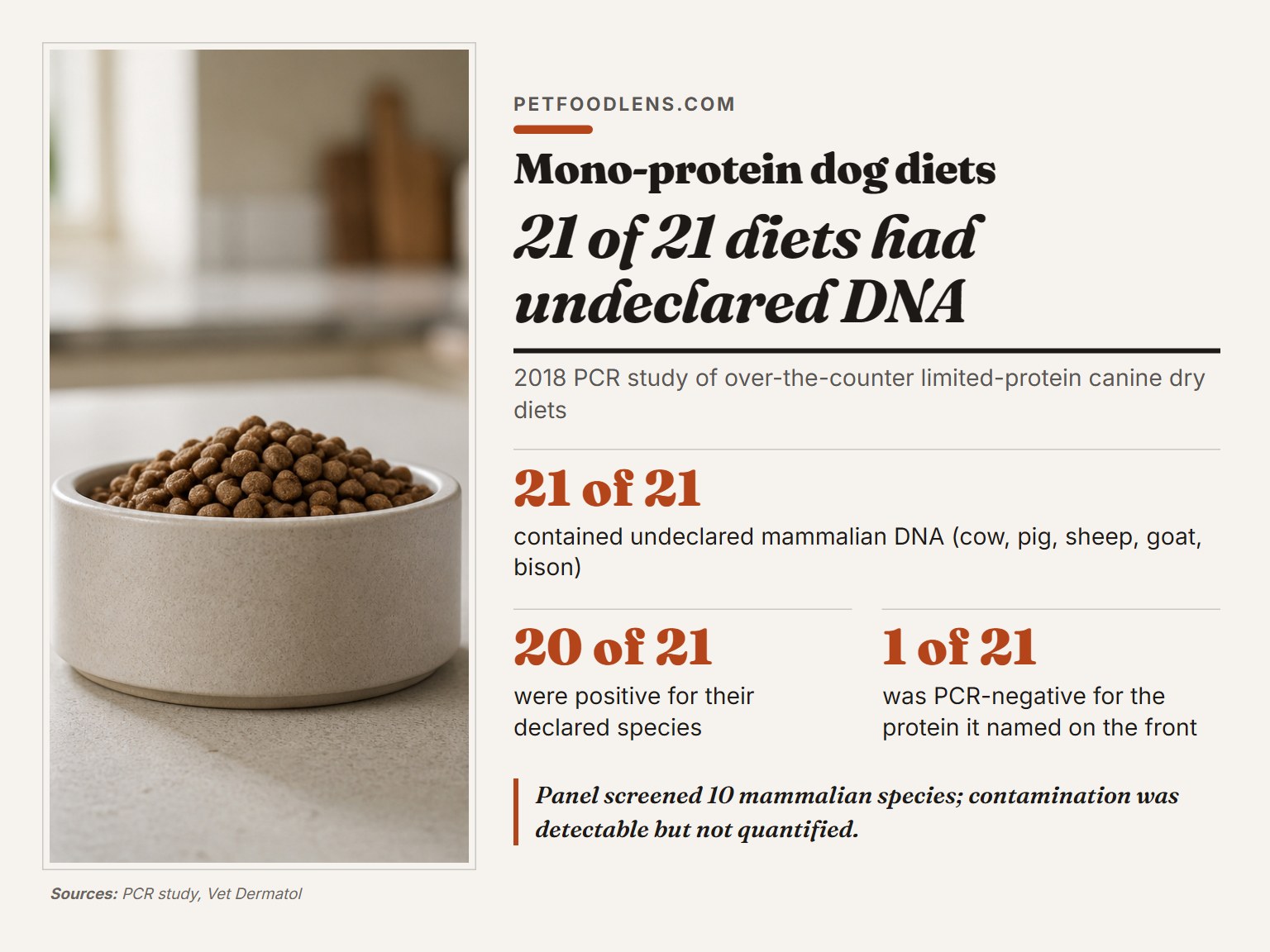
Three numbers from the 2018 PCR study matter more than the headline: 21 of 21, 20 of 21, and 1 of 21.
Every one of the 21 contained mammalian DNA from a species nobody declared: cow, pig, sheep, goat, or bison.
Twenty of the 21 were positive for their declared species. One was PCR-negative for the protein it named on the front. Cat, dog, horse, mouse, and rat DNA were absent, which at least rules out the worst cases.
I stopped trusting the front of a bag for exactly this reason. Years ago I watched a label list pea fiber, pea starch, and pea protein as three separate entries, which pushed the combined legume content far past what the list implied. Group related ingredients before you draw a conclusion, because splitting is legal and common.
The authors are careful about what the finding means. PCR can detect a minuscule amount of DNA, and the quantity needed to provoke a reaction in a sensitized dog is unknown. Quantification was not performed, so nobody can say how much contamination was there, only that it was detectable.
Even with that caveat, the authors concluded these diets cannot be used as reliable diagnostic or treatment tools in dogs with adverse food reactions. The mammalian DNA in commercial canine diets finding supports using a veterinary diet or a controlled home-cooked ration during a trial.
A dry diet that fails a PCR panel looks identical in the bowl.
One blind spot worth knowing: the panel covered 10 mammalian species.
Why Novel and Mono Are Not the Same Thing
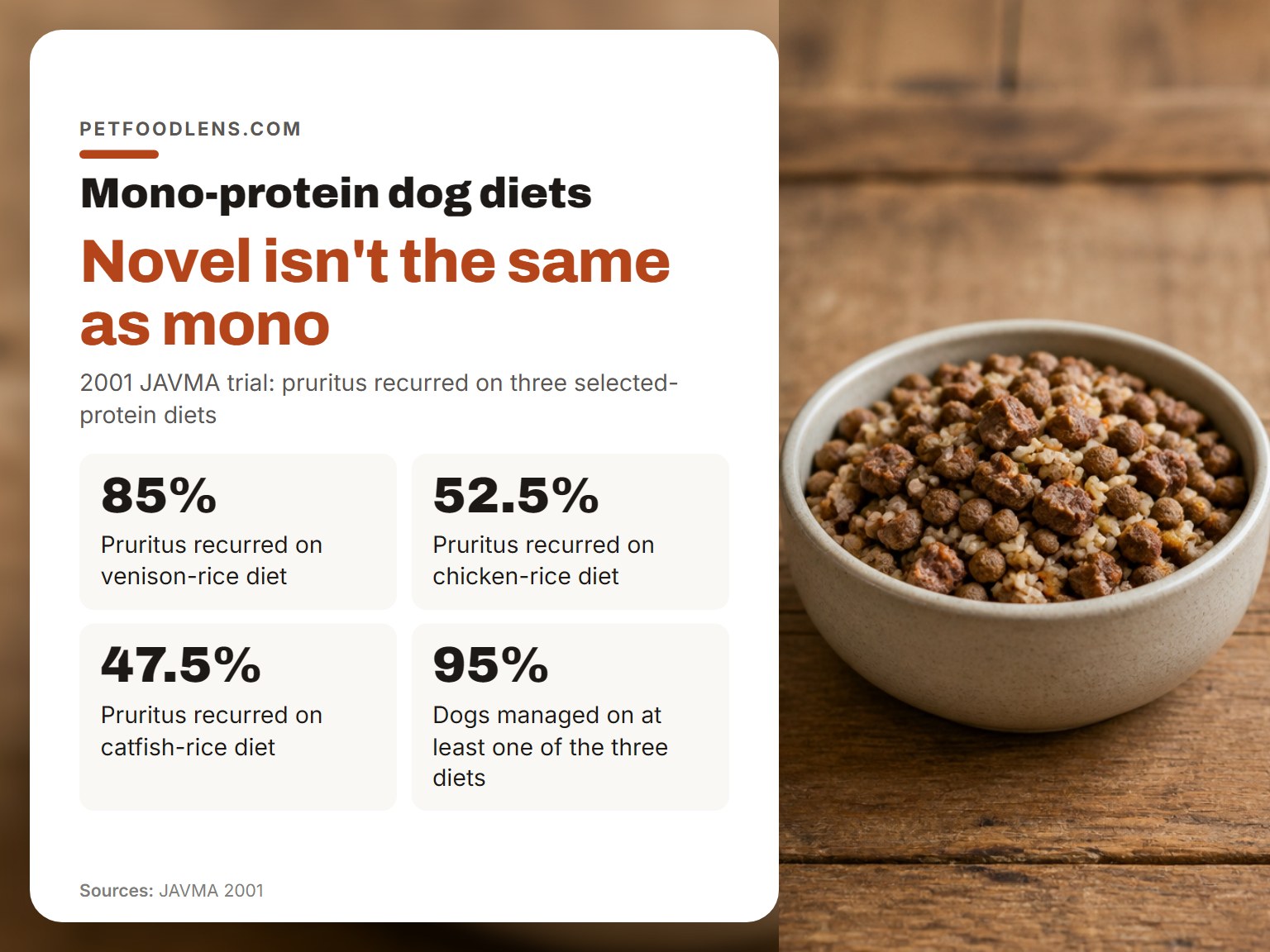
Venison was novel once. In the 2001 JAVMA trial, pruritus recurred in 85% of dogs on the venison-rice diet.
The 2001 JAVMA crossover trial is the clearest evidence available on this. Forty dogs with confirmed adverse food reactions were rotated through three commercial selected-protein diets, 3 weeks each. Pruritus recurred in 52.5% of dogs on the chicken-rice diet, 47.5% on catfish-rice, and 85% on venison-rice. Overall, 95% of the dogs were managed on at least one of the three.
The venison number is the one to sit with. In the 2001 JAVMA trial, 85% of these dogs reacted to the venison-rice diet. Novelty belongs to the individual dog’s history, not to the ingredient.
Verlinden et al. 2006 found the most common trigger proteins in dogs and cats are beef, milk, wheat, chicken, and egg. Less common sources such as ostrich, kangaroo, horse, and trout offer a diagnostically useful alternative, provided the food is genuinely single-protein.
A mono-protein diet only tests something if the protein is new to that dog. Chicken, beef, wheat, dairy, and egg are the five most common triggers, so a chicken-based mono-protein food is unlikely to be informative.
Which is why a novel protein dog food has to be chosen against the dog’s own history rather than against a marketing list. If the dog has eaten duck, duck is not novel. If a mono-protein diet for dogs guide only teaches one thing, make it that.
A short ingredient list is only useful when you can verify what is on it, which is the core of the limited ingredient dog food pros and cons argument. The selected protein diets dogs adverse reactions trial is the reason verification matters.
What to Feed Instead If Your Dog Is Not Allergic
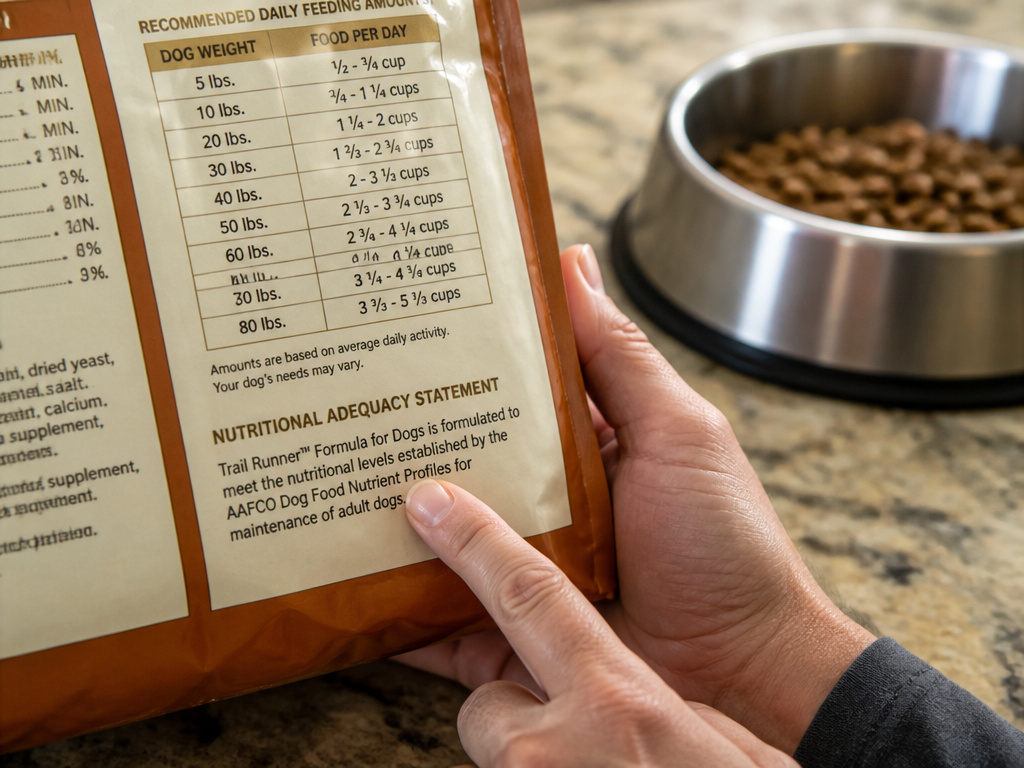
So what goes in the bowl if the dog is fine?
Purina’s position is that healthy pets have no need to limit protein sources as long as the food is complete and balanced. That is the least exciting sentence here and the most useful one.
The practical test is the nutritional adequacy statement, not the ingredient panel. Check the nutritional adequacy statement on the bag and which life stage it covers. A food carrying the right statement is doing its job.
If you want one answer for a healthy dog with no reaction history: a complete, balanced diet from a manufacturer that runs feeding trials. Fair warning, I know commercial cat food far better than dog food, so where this leans on dog-specific studies, the studies are doing the work.
If the dog does have a confirmed reaction, the recommendation changes completely. The label admits it may contain traces of other protein source.
For a strict trial, hydrolyzed options are increasingly preferred, and each carries an adequacy statement you can check.
The hydrolyzed protein single source study fed healthy adult dogs for 45 days and found complete blood count unchanged and within reference range, with a greater and sustained reduction in eosinophil counts at day 45.
Whatever you pick, check the protein requirements for dogs against the life stage printed on the bag. And if you are shopping before a diagnosis exists, treat any best single protein dog food list as a starting point rather than an answer.
What most people get wrong: Buying a mono-protein bag, feeding it briefly, and declaring the dog cured. A short trial is shorter than the diagnostic protocols in this article, and without a challenge phase you have a coincidence rather than a diagnosis.
Frequently Asked Questions
Is a mono-protein diet good for a healthy dog?
Purina states it has no advantage in a pet without an allergy, and warns that precautionary protein restriction may disturb normal immune response. Vitomalia reaches the same conclusion for dogs without symptoms. If the diet is complete and balanced, there is no nutritional reason to limit protein sources.
How long before I see a difference on a mono-protein diet?
Vitomalia, citing the Olivry consensus, recommends at least 8 weeks and preferably 12, while Monge’s label gives a shorter 3-to-8-week window for therapeutic feeding; Vitomalia holds that shorter trials do not produce reliable diagnostic results.
Can I just buy a mono-protein food at the pet store for a trial?
Not reliably. A 2018 PCR study found undeclared mammalian DNA in all 21 over-the-counter single-protein diets it screened, and the authors concluded these products cannot serve as reliable diagnostic tools. Veterinary diets or controlled home-cooked rations are the safer route.
What is the difference between mono-protein, limited ingredient, and novel protein?
Mono-protein means one animal species. Novel protein means a protein new to that specific dog. Limited ingredient means a short list, a term with no legal definition. A food can be all three, or none of them, and the front of the bag rarely distinguishes.
Does mono-protein mean grain-free?
No. The two claims are unrelated. Grain-free describes the carbohydrate source, while mono-protein describes the number of animal species. Plenty of mono-protein diets contain grain, and plenty of grain-free diets contain three or four animal proteins.
Can I give treats during a mono-protein trial?
No. Vitomalia is explicit that treats, chews, and supplements containing other proteins must be removed for the whole elimination period. A single flavored chew can invalidate weeks of careful feeding.
The Bottom Line
Here is the trigger that decides it: if your dog has symptoms, book the vet before you book the bag. A mono-protein diet is a diagnostic instrument, and instruments belong with someone who can read the result.
If your dog has no symptoms, you are paying extra for a label feature you will never use. Purina says so, the diagnostic literature says so, and the PCR data says the feature is not reliably delivered anyway.
The concession: none of this rules out a mono-protein food for a dog with a confirmed reaction and a stable long-term plan. Monge’s label allows up to a year of use once signs resolve, with veterinary sign-off. That is a legitimate use. It is simply not the use most of these bags get bought for.
Every mono-protein diet for dogs guide ends up in the same place: the food is a tool, and the tool only works when someone qualified reads the result. One thing worth doing this week: pull the bag you are feeding now and read the panel in order, all the way down. If a second animal species turns up in there, you have learned more in five minutes than the front of the package told you in a year.
