
How to Do an Elimination Diet for Dogs: 8-Week Plan
This post contains affiliate links. As an Amazon Associate, we earn from qualifying purchases.
To do an elimination diet for dogs, feed one veterinary-approved protein and carbohydrate source for at least 8 weeks, cut every other food and flavored product, then reintroduce the old diet to confirm. Eight weeks clears 90% diagnostic sensitivity. Most dogs improve sooner, but stopping early leaves the diagnosis unproven.
That 90% figure traces to a 2015 appraisal pooling 209 dogs, and it explains why veterinary protocols keep landing on 8 rather than 4 or 6. The response curve is steep at the front and flat at the back. About half of dogs show a marked reduction by week 3, and the stretch from week 5 to week 8 sorts the fast responders from everyone else. Knowing how to do an elimination diet for dogs helps owners follow this timeline correctly.
What follows is the order I’d run it in: picking the diet, the switch-over, the things that quietly wreck a trial, and how to read the challenge when it’s over.
Key Takeaways
- Eight weeks is a common diagnostic target, though sources disagree on the minimum. More than 80% of dogs improve by week 5, but sensitivity for diagnosis only passes 90% at week 8.
- Treats break more trials than the main diet does. In one survey of owners, many reported at least one dietary slip during the trial.
- Flavored pills count as food. Chewable preventives, fish oil capsules, and poultry-flavored toothpaste carry enough protein to keep itch going.
- Skipping the challenge confirms nothing. You’ll know the dog improved, not what caused it.
- Fewer than 5% of dogs need to run past 13 weeks, so a trial that drags on past that point needs a different explanation.
How Long Does an Elimination Diet for Dogs Actually Take?
Eight weeks is the number most protocols land on. It comes from pooled data that clears 90% diagnostic sensitivity at that mark.
A 2015 appraisal pooled 209 dogs with cutaneous adverse food reactions and 40 cats. Approximately half of the dogs showed marked improvement by week 3. More than 85% were normal by week 5, rising above 95% at week 8. Fewer than 5% required up to 13 weeks.
The published duration of elimination diets in pets is a moving target across the literature, which is why owners asking how to do an elimination diet for dogs hear conflicting numbers from their vet, a forum, and a breed club in the same week. Recommendations have ranged from 3 to 12 weeks with no formal consensus. The appraisal set the practical floor: 5 weeks in dogs and 6 weeks in cats gets you an 80% diagnosis, and 8 weeks gets you past 90%.
Here’s how the timeline actually breaks down.
| Weeks on the trial | Dogs showing remission | Cats showing remission |
|---|---|---|
| 3 weeks | About half | Not measured |
| 4 weeks | Not measured | 50% |
| 5 to 6 weeks | More than 85% | 80% at 6 weeks |
| 8 weeks | More than 95% | 90% |
The skin tells you before the owner does. A dog with food-triggered itch often shows skin changes that fade gradually over weeks, not days. Owners who check daily get discouraged. Owners who photograph the belly once a week see the trend.
Timing differs by body system. Gastrointestinal signs improve within 2 to 3 weeks according to the 2020 clinical protocol in Today’s Veterinary Practice, while skin signs take 4 to 12 weeks. A dog with diarrhea and itchy ears will show you the gut result first and tempt you into a premature conclusion.
If you want the symptom checklist before you start, the signs of food allergies are worth reading in full, because pruritus is the most common skin sign and it mimics environmental allergy closely. That overlap is exactly why the diet trial exists.
Hydrolyzed Protein vs a Novel Protein: The Trade-Off
Two diet types do the diagnostic work, and the choice comes down to what’s already in the dog’s history.
Hydrolyzed Protein Diets
Hydrolyzed diets are built from proteins broken into fragments too small for the immune system to recognize. The fragments come from odd sources: poultry feathers, chicken liver, fish, soybeans. That sounds unappetizing and it works anyway.
The catch is that partial hydrolysis isn’t a guarantee. In a systematic review, between 20% and 50% of dogs fed a partially hydrolyzed diet derived from their reactive parent protein still flared. A dog can also react to one manufacturer’s hydrolyzed diet and tolerate another’s, so a failed first attempt at how to do an elimination diet for dogs doesn’t close the door.
For a dog with an unknown history, a hydrolyzed protein diet is often the practical first choice. Both are built for this specific job, and the sourcing controls behind them are the part you’re paying for. A different hydrolyzed formula is worth raising with a vet, particularly when a dog has already failed one hydrolyzed diet.
Novel Protein Diets
A novel protein diet means one protein and one carbohydrate the dog has never eaten. Rabbit, venison, and duck are the standard picks, chosen against the dog’s actual dietary history rather than picked off a bag.
This option only works if you genuinely know what the dog has eaten. Most owners don’t. If the dog spent three years on a “chicken and rice” food and you’re now feeding duck, that’s fine. If the dog scavenged a neighbor’s rabbit food last summer, the novelty is gone and nobody wrote it down.
| Factor | Hydrolyzed protein | Novel protein |
|---|---|---|
| Protein size | Broken into fragments | Whole and intact |
| Best when | Diet history is unknown | Prior foods are known |
| Flare risk | 20% to 50% on partial hydrolysates | Rises if novelty is assumed |
| Examples | Hydrolyzed diets from different manufacturers | Rabbit, venison, duck |
One rule that saves arguments: feed the veterinary therapeutic diet, not an over-the-counter bag with a similar ingredient panel. VCA Animal Hospitals is blunt about this, and the reason is cross-contamination during manufacturing. An OTC “duck” food processed on the same line as chicken is a coin flip.
If you’re weighing options across brands, this breakdown of hypoallergenic dog food covers how the labels differ. Read past the front of the package on that one.
Switching Diets: 4 Days or 7, and Why the Sources Split
Sources disagree on the switch: the 2020 four-phase protocol in Today’s Veterinary Practice describes a gradual transition over 5 to 7 days, a 2024 review describes a 4-day crossover in 25% increments, and a veterinary dermatology academy handout says at least a week. A 2024 review in Veterinary Dermatology describes conducting a successful diet trial with a faster crossover, mixing the new diet in increments over about 4 days. A veterinary dermatology academy handout says at least a week, possibly longer.
Three credible sources, three schedules. Pick the slow end if your dog has a sensitive stomach, and the fast end if the dog refuses the new food outright.
Before you start: A homemade elimination diet built without a board-certified nutritionist can cause real nutritional deficiencies. Weigh the dog weekly, because treat withdrawal alone can drop weight fast enough to matter. And if the dog is on medication for another condition, get the flavored version swapped before day one, not after a flare.
Here’s the sequence I’d run, in order.
- Get the diet from your vet, not the shelf. Bring a full diet history, including treats, chews, and table scraps. Skipping this step means you pick a “novel” protein the dog has already eaten.
- Switch over 4 to 7 days. A fast switch causes loose stool that you’ll then misread as a diet reaction.
- Cut every oral item except the trial diet and plain water. No treats, no supplements, no toothpaste, no dental chews. Move flavored parasite control to a topical form. Miss this and the trial measures nothing.
- Log the itch and the stool once a week, same day, same light. Daily scoring creates noise and false hope.
- Book the recheck before you begin. A trial with no scheduled checkpoint drifts past week 8 without anyone deciding anything.
That fifth step is the one owners skip and the one that costs the most. A trial without an endpoint becomes a permanent diet nobody evaluated.
What Actually Breaks a Trial: Treats, Toothpaste, and Flavored Pills
A bag of prescription kibble sits on the counter. Next to it: a jar of chicken-flavored dental chews, a tube of poultry toothpaste, and a bottle of fish oil capsules. That’s a failed trial in a photograph.
Most of the failed trials I’ve reviewed trace back to treats rather than the main diet. A dog on a hydrolyzed diet who still gets chicken-based freeze-dried nibbles isn’t on an elimination trial. That dog is on a very expensive chicken diet with extra steps.
The numbers back this up. In a survey of owners whose dogs went through an elimination diet, many reported at least one dietary indiscretion. Many owners provided additional food sources. Some dogs had access to unmonitored food, which in practice means the cat’s litter box and the kitchen bin.
Flavored medications are the second offender. Chewable pills, liver-flavored preventives, and fish oil capsules carry enough protein to keep itching going for the whole trial. Ask for unflavored or compounded versions before the trial starts, not after week 6 when nothing has changed.
Common mistake: Assuming a “small amount” of peanut butter or cheese is harmless. Those amounts are enough to trigger a hypersensitivity reaction, and the flare can show up days later, long after the teaspoon is forgotten.
Hydrolyzed kibble can smell and taste different from a dog’s usual food. Dogs notice. Some refuse it at first, and that refusal is where food aversion starts and trials die. Warm water helps. So does a slow crossover rather than a cold switch.
The full list of what counts as treats during the trial is shorter than most owners expect, and it’s worth reading before you buy anything with the word “limited” on the front.
Where this goes sideways: Supplements and dental hygiene products. Most owners don’t file them under “food,” and most of them contain flavorings. A single flavored chewable has broken a trial I reviewed.
Why Blood, Saliva, and Hair Tests Can’t Answer This
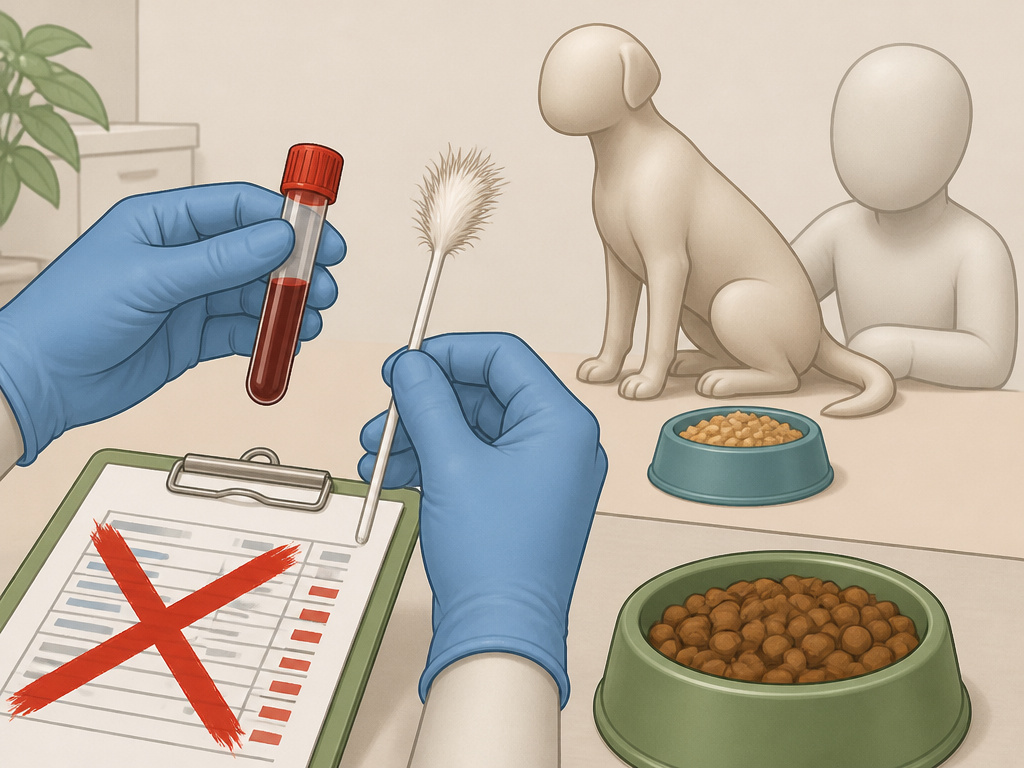
A blood test will hand you an answer in a week. That answer is worth nothing.
Researchers have submitted non-animal samples to commercial allergy labs, including water and stuffed-animal fur. The labs returned results indicating those “pets” were allergic to specific foods. That’s the whole problem in one experiment.
VCA Animal Hospitals states it plainly: blood, saliva, and hair tests are not accurate at predicting allergies, and the only way to determine a true food allergy is an elimination-challenge diet trial. The same conclusion shows up in the veterinary trade literature, where the diet trial is described as the most reliable tool available.
There’s a mechanical reason. Most culprit allergens are glycoproteins under 70 kDa, which is small enough to slip past the gut barrier and reach the immune system intact. A test that measures circulating antibodies tells you the dog has met a protein. It doesn’t tell you the dog reacts to it.
This is also where food allergy vs food intolerance in dogs gets confused. A true allergy is immune-mediated and involves protein. An intolerance can come from carbohydrates, dyes, flavors, or preservatives, and it produces a different response. The trial catches both, but the follow-up advice differs.
If you want the diagnostic side in more depth, this walkthrough on how to test for food allergies in dogs covers what the trial can and can’t prove.
Reading the Challenge: The Median Flare Time Is 12 Hours
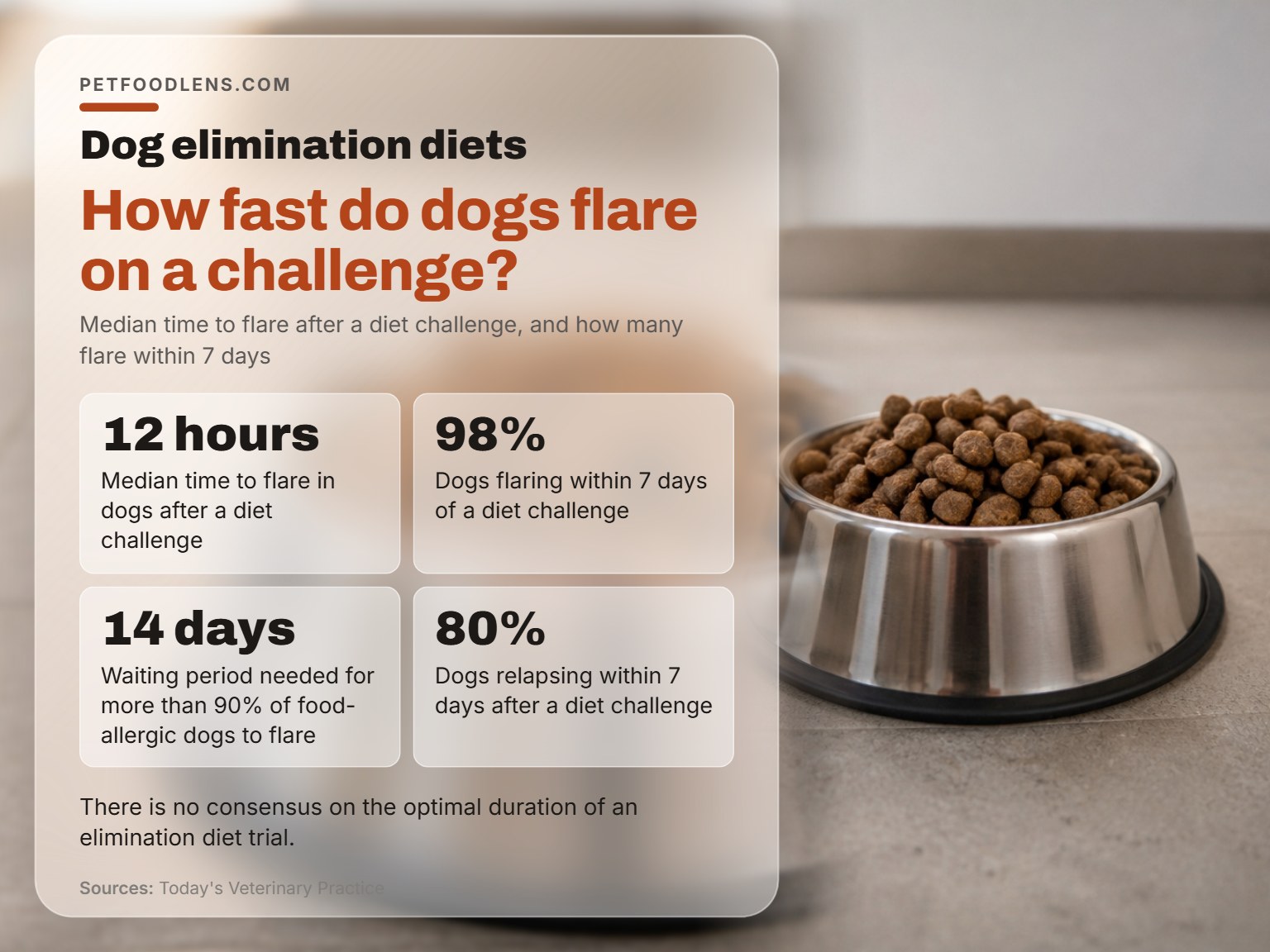
Twelve hours. That’s the median time to a flare in dogs after a diet challenge, and 98% of dogs flare within 7 days.
The challenge phase is where the diagnosis actually gets made. You feed the old diet back and watch. If the itch returns, you’ve confirmed the food. If nothing happens after 12 hours, the food wasn’t the problem and you’ve saved yourself years of guessing.
The timing data is more useful than most owners realize. A 14-day waiting period captures more than 90% of food-allergic dogs. At least 80% relapse within 7 days. In cats, 90% flare within 7 days of rechallenge. VCA’s client guidance says no flare after about 3 to 4 weeks means the protein isn’t the issue.
There’s no consensus on exactly how long to wait before ruling food allergy out. That’s a real gap in the literature, and anyone who quotes you a hard number is quoting a preference, not a finding.
In the trials I’ve reviewed, reactions can take longer than a week to appear. Rushing the wait makes the result useless, which is the one outcome worse than a slow answer.
The culprit food varies with each dog’s dietary history. If the dog flares on the first challenge, stop there, go back to the trial diet, and let the skin settle before testing the next item.
The reintroducing foods sequence matters here. One ingredient at a time, spaced out so each reaction can be read. Challenge two proteins in the same week and you’ve learned nothing except that something in the bowl caused a problem.
Easy to miss: Owners who stop the trial after improvement and never run the challenge. They have a dog that got better on a diet, and no idea which ingredient to avoid for the next ten years.
When a Strict Trial Isn’t Realistic
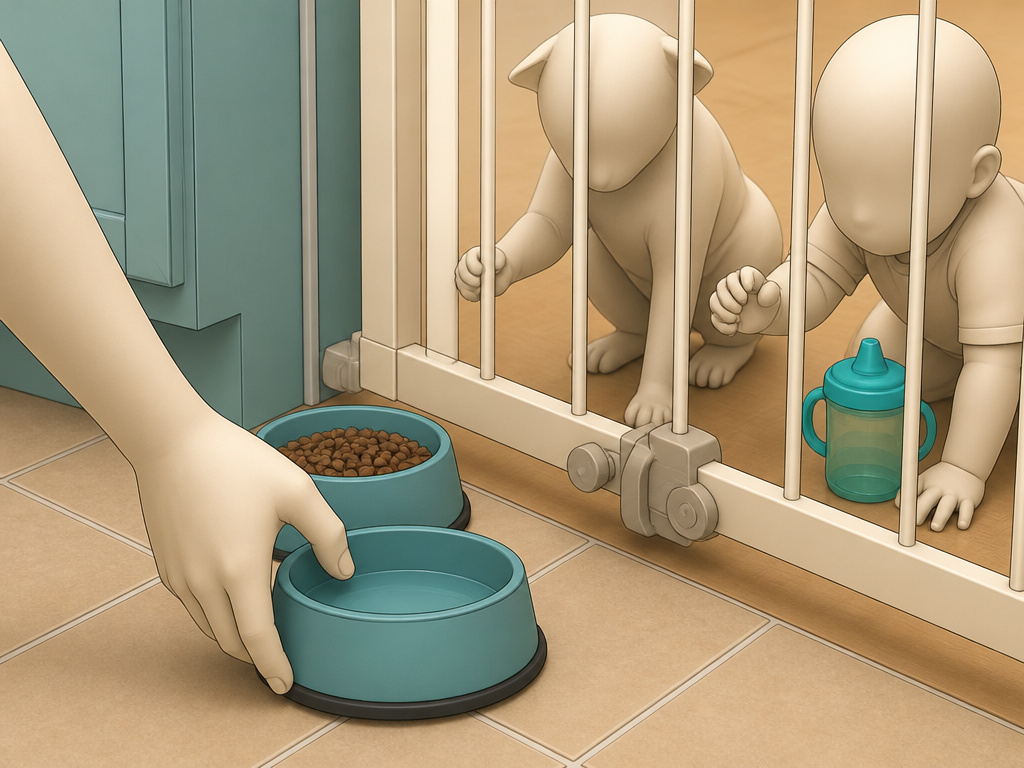
Some households can’t run a clean trial, and pretending otherwise wastes eight weeks.
Multi-Pet Households
A dog in a house with three cats and a toddler has access to food nobody is tracking. A 2024 review acknowledges that a strict trial may not be feasible where household members accidentally or intentionally hand over alternative food. That’s an honest limitation, not a moral failing.
The workaround is management, not willpower. Feed the trial dog separately, pick up bowls, and put the litter box behind a gate. It’s tedious for the length of the trial.
Seasonal Itch and Otitis Cases
If the itch has a seasonal pattern, run the trial in winter. Environmental allergy that flares in spring makes a food trial unreadable, and a 2024 review recommends timing the trial against the season for exactly that reason.
Recurrent ear infections need a longer window. Otitis cases may need the trial extended to overlap the interval between flares, which can push past the standard 8 weeks. That’s an exception to the rule, not a reason to extend every trial.
Weight loss is the other exit ramp. Weigh the kibble, mark the cup, and track the dog weekly. Unacceptable loss means changing the diet, not pushing through.
Three things that should send you back to the vet rather than forward:
- No improvement at all by week 6. Some literature treats that as evidence food allergy is unlikely, which redirects the workup.
- Improvement that stalls and reverses on the same diet. Cross-contamination or a hidden oral item is the usual cause.
- A dog that stops eating entirely. Food aversion ends more trials than owners admit, and a starving dog can’t finish a diagnostic.
One honest note from my side: I work with commercial cat food far more than dog food, and I’ve learned not to port feline logic straight across. Cats are harder to transition and stress can worsen their itch. Dogs are more forgiving on the switch and less forgiving on the scavenging. The 8-week framework holds for both, but the failure modes differ.
If you keep cats too, the elimination diet for cats runs on the same skeleton with different timing.
Frequently Asked Questions
Can I just switch to a grain-free food and call it an elimination diet?
No. Grain-free is a carbohydrate swap, not a protein restriction. If the dog reacts to chicken, a grain-free chicken food changes nothing. A real trial uses a hydrolyzed diet or a genuinely novel protein, and it removes every other oral item for the duration.
How long before I should see improvement?
Gastrointestinal signs improve within 2 to 3 weeks. Skin signs take 4 to 12 weeks. More than 80% of dogs reach remission by week 5, and more than 90% by week 8. Improvement at week 3 is encouraging but not a finish line.
Do I have to do the challenge phase?
You have to if you want a diagnosis. Stopping after improvement tells you the dog did better on a different diet. It doesn’t tell you which protein caused the problem, so you can’t make an informed choice about long-term food. Some owners decline the challenge out of fear the dog will deteriorate, and that leaves the diagnosis unproven.
Can I give small treats if they’re tiny?
No. Small amounts of cheese, peanut butter, or a pill pocket can be enough to trigger a reaction, and the flare can land days later when nobody connects it to the treat. The same applies to flavored dental chews and supplements.
What if my dog won’t eat the hydrolyzed diet?
Try a slow crossover over 5 to 7 days, warm water, or a different hydrolyzed formula from another manufacturer. Dogs that fail one hydrolyzed diet often do better on a different one. If refusal continues, talk to your vet before the trial collapses from food aversion.
My dog improved but I never challenged. What now?
You have an unconfirmed result. Restart the challenge under supervision, one ingredient at a time, and allow enough time for a reaction to show. If the dog flares, you’ll know what to avoid. If nothing happens after a full wait, the food wasn’t the driver and the workup moves elsewhere.
The Bottom Line
One threshold decides most of this. Some literature treats no improvement by week 6 of a strict trial as making food allergy unlikely, though other sources recommend longer trials before ruling it out. That’s a real fork in the road, and it’s the one owners miss because they’re still waiting for week 8.
The other thing worth saying out loud: a trial that ends at improvement without a challenge has cost you eight weeks and bought you a guess. Run the challenge. It’s the only step that turns a suspicious diet into an answer.
And if your household genuinely can’t keep the dog out of the cat’s bowl for eight weeks, say so at the start. A managed trial with a gate and a picked-up bowl beats a perfect plan nobody follows.
