
How Long Can Wet Pet Food Sit Out? Sources Disagree
This post contains affiliate links. As an Amazon Associate, we earn from qualifying purchases.
FDA veterinarians say wet pet food should not sit out more than two hours at room temperature, and USDA guidance shortens that to one hour above 90°F. Hill’s allows four hours, and the FDA’s pet food storage advice assigns no universal number.
That distinction matters when you’re standing in the kitchen at 9 p.m. Deciding the how long can wet pet food sit out question, whether to cover the bowl or scrape it into the trash.
What follows: the bowl-time numbers ranked by source, the refrigerated window that runs from 24 hours to 7 days depending on who you ask, and the storage failures that make both numbers irrelevant.
Key Takeaways
- Two hours is the conservative bowl-time limit; Hill’s allows four, and the FDA publishes no number.
- One hour above 90°F is the USDA’s shortened window for perishable food.
- Opened cans keep 5 to 7 days refrigerated per Hill’s.
- Don’t freeze canned food for later. Hill’s says texture and taste change, and WebVet says discard overnight leftovers outright.
- A resealed lid does not reset the clock; time out of refrigeration accumulates from the moment of preparation.
How Long Can Wet Pet Food Sit Out? The Numbers, Ranked by Source
The most permissive number in the fact sheet is four hours, from Hill’s. The FDA, which regulates pet food, publishes no bowl-time figure at all.
A bowl of moist pet food left at room temperature sits in the temperature range where bacteria reproduce fastest. The commonly cited two-hour limit comes from general perishable-food guidance, not from a pet-specific study. Hill’s publishes a four-hour figure, and the FDA’s own storage page gives no numeric cutoff.
Here’s the full spread, with what each source is actually measuring:
| Source | Bowl-time limit | Basis |
|---|---|---|
| FDA vets (Burkholder & Conway) | 2 hours | General food-safety rule of thumb |
| USDA (via WebVet) | 2 hours, 1 hour above 90°F | Perishable-food guidance |
| Hill’s | 4 hours (above 50°F) | Manufacturer guidance |
| FDA / Nebraska Dept. Of Ag | No number (“promptly”) | Regulator guidance |
The how long can wet pet food sit out gap between two hours and four hours is a factor of two. Two of those numbers come from companies that sell the food; two come from regulators and veterinarians who don’t. That doesn’t make the manufacturer figures wrong, but it tells you which one to reach for when you’re unsure.
The FDA’s position is the most interesting one, because it’s the regulator and it declines to give a number. Its FDA pet food storage guidance says to refrigerate or throw out leftovers “promptly” and sets the refrigerator at 40°F or below. That’s it. No hours.
The Nebraska Department of Agriculture takes the same approach in its safe handling tips for pet foods: refrigerate promptly or discard, and follow the label on the product. Two regulators, no number.
So what do you actually do? FDA veterinarians say two hours and USDA guidance says one hour above 90°F, while Hill’s allows four hours; treat four hours as the outer limit you’d only accept if you’ve read the can and it says so. The label overrides every general rule above it.
The Refrigerated Window Is Where the Real Disagreement Lives
For a while I stored opened cans in the tin with the foil lid folded back down. By day two the food had picked up a metallic edge and whatever else was sitting in the fridge. A small glass jar with a screw lid fixed it, and the food now keeps its smell for three days instead of one.
The refrigerated window is a separate question from bowl time, and the sources spread even wider here. Hill’s says 5 to 7 days.
Here’s the table:
| Product | Refrigerated life after opening | Source |
|---|---|---|
| Canned (Hill’s) | 5-7 days at 40-45°F | Hill’s |
| Fresh-frozen (JustFoodForDogs, non-fish) | 5 days opened | Brand FAQ |
Canned, Pouched, and Fresh-Frozen Are Not the Same Food
JustFoodForDogs publishes different windows for different product lines, which tells you the answer depends on the food, not the category. Its non-fish fresh-frozen recipes keep 7 days sealed after thawing and 5 days once opened. The Fish & Sweet Potato recipe gets 5 days sealed and 3 days opened. JustFresh is 3 days opened; Pantry Fresh is 5.
The practical rule: write the opening date on the container, and use the shortest window that applies to the food in front of you. If you can’t find the window, follow the label on the product.
Before you start: Opened wet food is a bacterial growth medium, and the risks aren’t theoretical. Wash your hands for 20 seconds with hot water and soap before and after handling it, keep raw and cooked pet food separate, and never let a child under 5 handle the bowl or the food, since the CDC flags developing immune systems as a specific risk. A bowl that sat out overnight goes in the trash, not back in the fridge.
- Open only what the pet will eat in one sitting. A smaller initial serving means a smaller remainder to store.
- Cover and refrigerate the untouched portion immediately, before the pet starts eating. Thirty seconds on the counter counts.
- Write the opening date on the lid with a marker. You will not remember.
- Discard what’s left in the bowl after the meal, even if it looks untouched. The bowl has been in the feeding environment.
- Wash the bowl in hot soapy water before the next meal, not the next day.
The full routine for opened canned pet food is worth reading once, because the mistakes compound.
What Counts as Time Out of the Fridge?
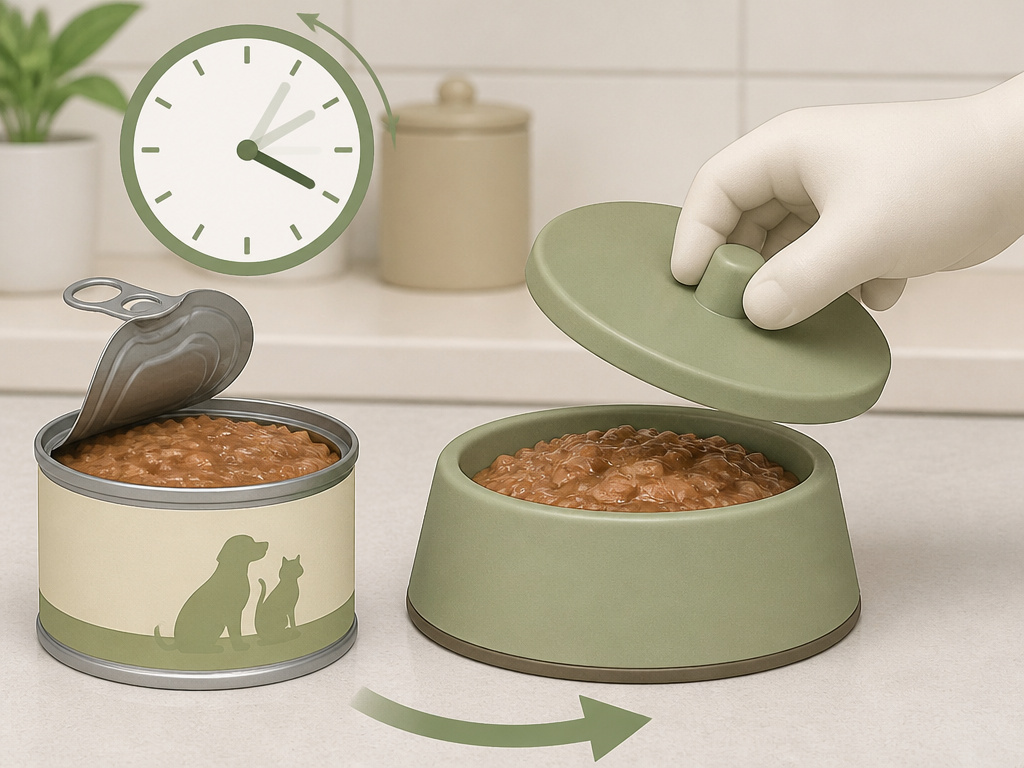
The clock starts when the food leaves the refrigerator, not when the pet starts eating. A can that sat on the counter for 20 minutes while you prepared the bowl has already spent 20 minutes outside refrigeration.
Moving it to the floor, covering it, or putting it back in the fridge for a minute does not create a new starting point. WebVet lists the specific non-resets: a lid, a move to another room, a brief return to the refrigerator.
If the bowl has been out for two hours and the dog has eaten half, the remaining half has still been out for two hours. The clock belongs to the food, not to the portion.
What doesn’t reset the clock:
- A lid on the bowl
- Moving the bowl to another room
- A brief return to the refrigerator
- Stirring the old portion into a fresh one
The other thing that doesn’t reset the clock is appearance. A bowl that looks ordinary has not established that it’s safe. You shouldn’t wait for a smell or a dried surface before deciding a serving has been out too long.
And the opposite is also true. A crusted, dried surface means the food has been sitting too long, whatever the clock says. That’s the visual tell I check first.
For the full list of what to look for, the signs of spoilage are worth knowing before you need them.
Where this goes sideways: Stirring a leftover portion into a fresh serving. The old food’s clock doesn’t reset because it’s mixed with new food, and you’ve now contaminated the whole bowl.
When the Bowl Looks Fine and Isn’t
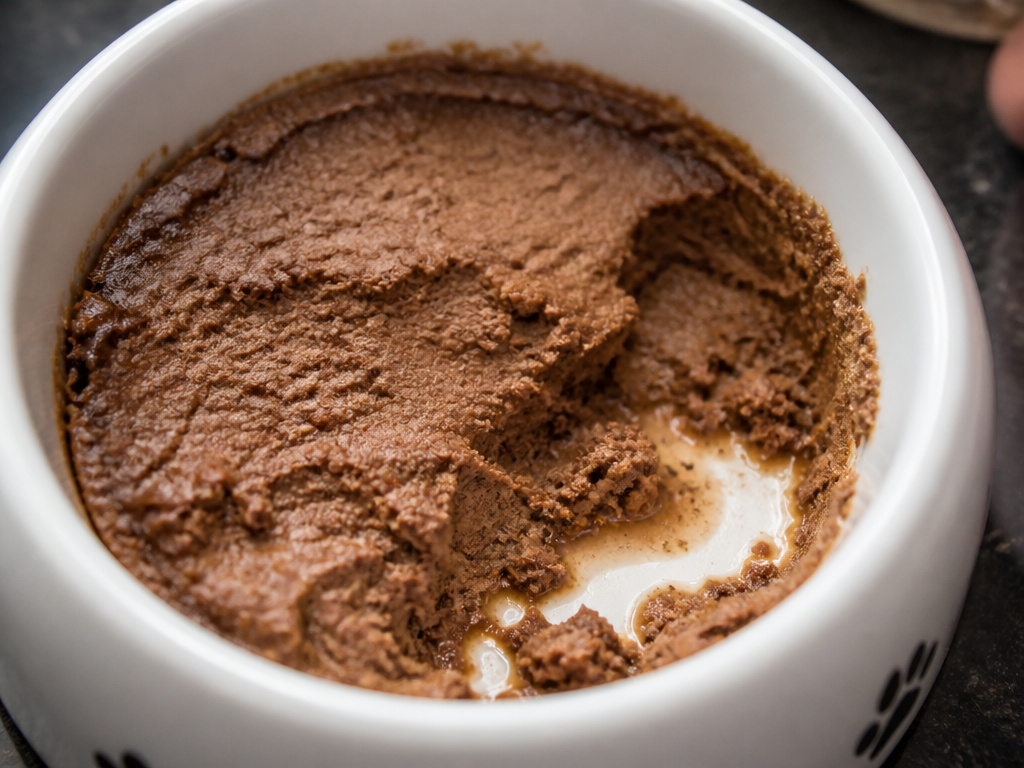
The most dangerous bowl of wet food is the one the cat licked twice and walked away from. A nearly untouched bowl is the hardest case, because there’s no visible evidence of how long it’s been there.
You can’t tell from the food whether the pet ate at 6 p.m. Or 6 a.m. The only reliable record is the time you put it down.
The spoilage signs that do show up:
- A dried, crusted surface on the food, especially at the edges of the bowl.
- A sour or sharply metallic smell that wasn’t there when you opened the can.
- Separation, with liquid pooling on top where the texture was uniform before.
- A change in color toward grey or dull brown, particularly on pate.
- Any visible mold, which means the food is well past the point of debate.
None of those signs is required for the food to be unsafe. A bowl can look and smell normal and still have been out too long. The signs are confirmation, not a test.
The one I check first is the surface. A pate that has been out for three hours in a warm kitchen goes matte and slightly tacky at the edges, and that’s before any smell develops.
The part nobody mentions: The bowl itself holds bacteria after the food is gone. A bowl that sat out with food in it needs washing before the next meal, not a rinse.
Freezing, Reheating, and the Leftovers You Shouldn’t Save
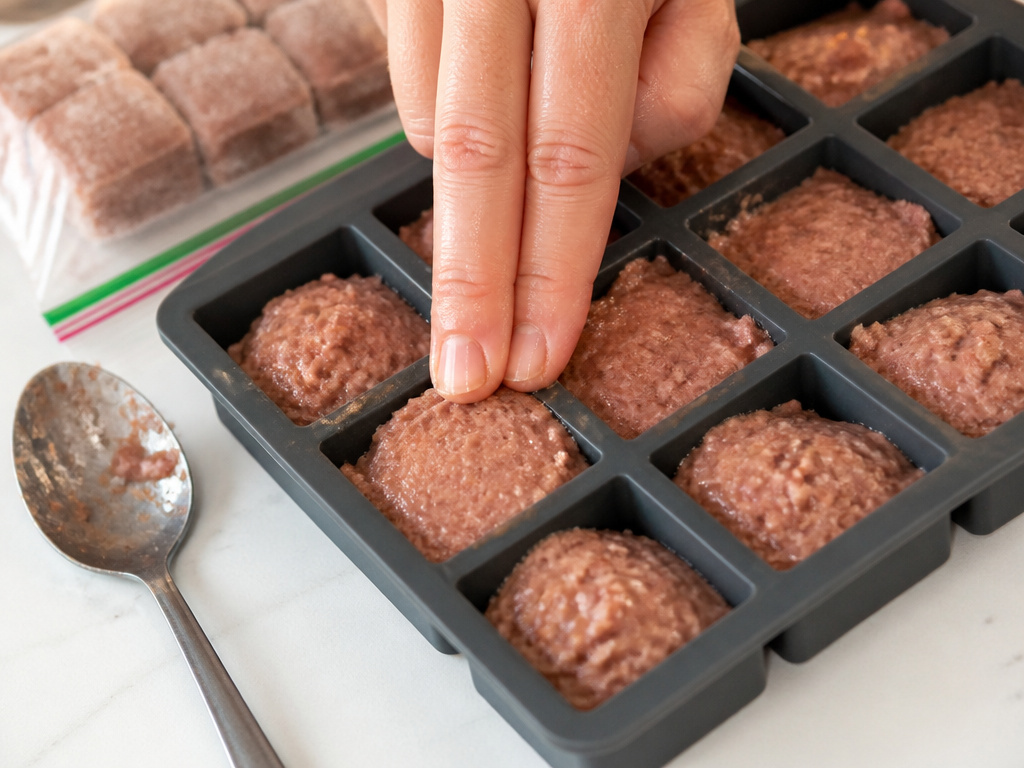
Freezing works for some wet food and not others, and the difference is texture. Hill’s says not to freeze canned food at all, because the texture and taste change. That’s an objection about texture and taste, not about safety.
If your cat eats a third of a can at a time, freezing the remainder is the only way to avoid throwing out two-thirds of every can. The method that works: spoon the leftover pate into an ice cube tray or small silicone molds, freeze, then bag the cubes. Pop out one or two the night before and thaw in the refrigerator.
Thaw in the fridge, not on the counter, and don’t refreeze.
Which Leftovers Can Be Frozen and Which Cannot
- Plain pate: freezes well; texture holds after thawing.
- Chunky stews and chunks in gravy: the gravy separates on thaw and needs a stir, and some cats refuse it.
- Fish-based recipes: freeze, but expect a stronger smell on thaw.
- Anything that sat out overnight: not freezable. WebVet is explicit; discard it, don’t freeze it for later.
- Canned food you’ve already reheated once: don’t refreeze.
The texture problem is real. Ice crystals form in the water content of the food and rupture cell walls, so a pate that was smooth going in comes out slightly grainy. A quick stir while it’s still cold helps; bringing it to room temperature helps more.
For the full method, freezing wet food portions covers the container choices and the thaw timing.
Reheating is its own small problem. A refrigerated portion comes out of the fridge at 40°F, and most cats won’t touch food that cold. Heating wet dog food works the same way for cats: a few seconds in the microwave and a stir to even out the hot spots, or a bowl set in warm water.
Skip this if: You’re feeding a kitten or a cat with a known sensitive stomach. The freezing-and-thawing routine changes texture enough that some cats will refuse it, and the refusal is harder on a kitten than the waste from a half-can.
Dry Food Belongs in the Bag, Not the Decorative Bin
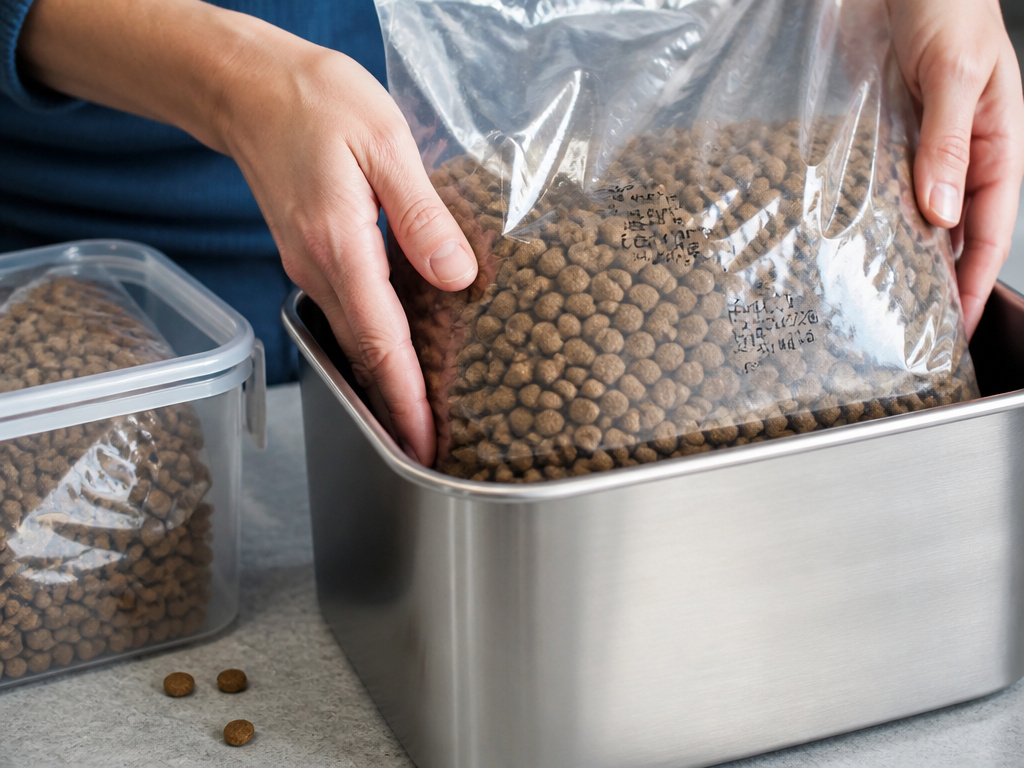
Pouring kibble into a decorative container is a mistake, and the reason is fat. Dry food is coated in fat, and fat goes rancid when it’s exposed to air and light.
A plastic or ceramic container that gets emptied and refilled without washing leaves a film of old fat on the walls, and the new kibble picks up that rancid note within days. The bag is a fat barrier. The container is not.
Hill’s says plastic containers may impart an odor and taste to dry food, and recommends keeping the food in the original bag inside a clean metal container. The FDA says the same thing in different words: put the entire bag into the container rather than pouring the kibble directly in.
Why the Original Bag Beats Every Container You Can Buy
Three reasons, and only one of them is about freshness:
- The fat barrier. The bag’s inner lining is designed to keep fat from migrating to the surface.
- The lot number. The FDA says less than half of the pet food complaints it receives include the lot number. Keeping the bag keeps the number.
- The best-by date. It’s printed on the bag, and it’s the first thing you’ll need if the food is recalled.
The container still has a job. It keeps the bag sealed, keeps pests out, and gives you something to stack. What it shouldn’t do is replace the bag.
My own setup is a Vittles Vault with the bag dropped in whole, and a smaller IRIS USA container for the current bag so I’m not opening the big one twice a day. Purina Pro Plan is the dry food I end up recommending most often, and the bag is part of why.
The temperature ceiling matters too. Hill’s says under 100°F; the FDA and Vetstreet both say under 80°F. Hill’s also notes that storage at 120°F for more than 48 hours accelerates vitamin degradation. A garage in July hits all three.
For the broader routine, keeping pet food fresh covers the dry and wet sides together.
And buy smaller bags. A 30-pound bag that takes two months to finish has been open for two months, and the last third of it is not the food you bought. I try to finish an opened bag within about six weeks, which is why I buy the smaller size even though it costs more per pound.
The Bowl Itself Is Where the Bacteria Live
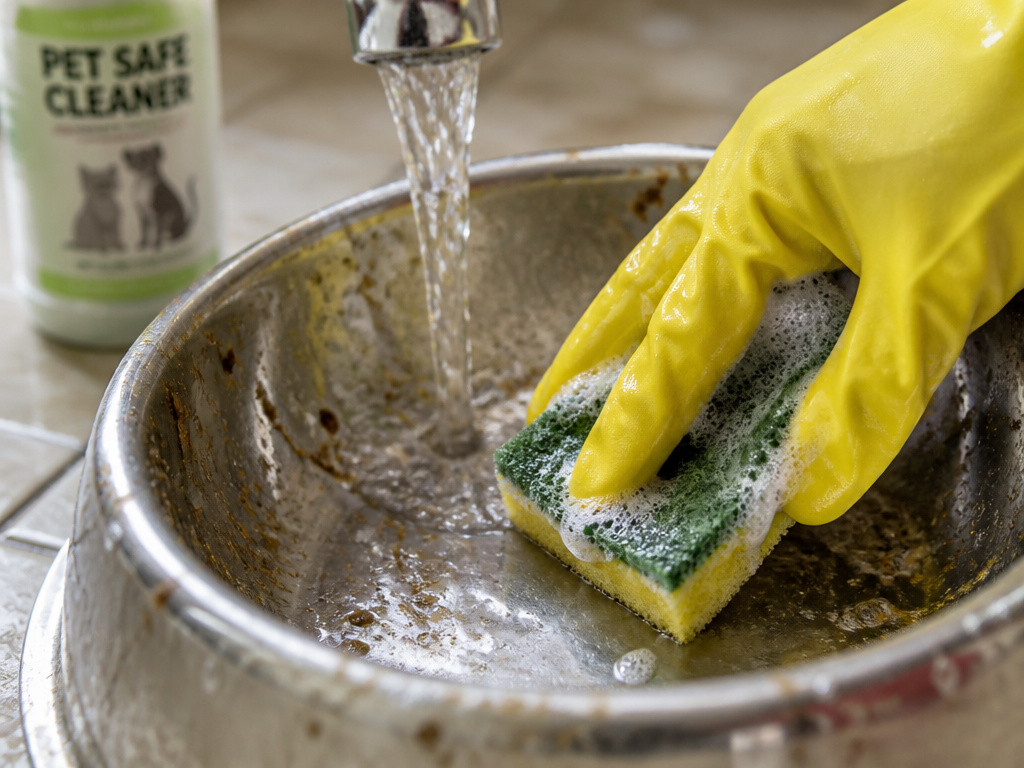
How often do you actually wash the food bowl? The FDA says wash and dry pet food bowls after each use, and wash water bowls daily. Vetstreet’s veterinary sources say food bowls after every meal and water bowls every couple of days.
That’s a real disagreement on the water bowl, and it’s the one most owners get wrong in the direction of less often.
The bacteria involved are not exotic. Vetstreet’s FDA sources list Staphylococcus aureus, Pasteurella multocida, and various Streptococcus and Enterobacteria species as possible residents of a dirty bowl. Some of those are dangerous to humans, especially the very young, the very old, and anyone immunosuppressed.
The bowl also transfers bacteria to the next meal. A bowl that held food for two hours and then sat on the floor until dinner has had bacteria multiplying in the residue the whole time. Washing it before the next meal matters as much as washing it after the last one.
For raw feeders, the Nebraska brochure is more specific: a solution of 1 tablespoon bleach to 1 quart of water disinfects surfaces and objects that contacted raw food, and hands get 20 seconds with hot water and soap.
Easy to miss: The scoop. A measuring cup that lives in the food bag and gets used for every meal is a contamination path between the bag and the bowl. Wash it when you wash the bowl.
The refrigerated cat feeder question comes up here, because an automatic feeder that holds wet food at temperature is solving the same problem from the other direction. It’s worth knowing what they actually do before you buy one.
Frequently Asked Questions
Can I leave wet cat food out overnight?
No. Overnight is well past every published limit, including Hill’s four-hour figure. WebVet is explicit that wet food left out overnight should be discarded rather than saved, and that freezing it for later is not an option. Scrape it into the trash and wash the bowl.
Is it safe to put the can back in the fridge after the cat eats from it?
The can goes back in the fridge; the bowl does not. An untouched remainder can be covered and refrigerated promptly. A portion the cat has already eaten from has entered the feeding environment and should be discarded after the meal. The distinction is between the can and the bowl, not between one brand and another.
How long does opened wet food last in the fridge?
It depends on the product. Hill’s says 5 to 7 days at 40-45°F. Texas A&M says up to 72 hours. The label on the can overrides any general rule.
Does a lid reset the clock on wet food?
No. Time outside refrigeration accumulates from the moment the food leaves the fridge, and a lid, a move to another room, or a brief return to the refrigerator does not create a new starting point. The lid protects the remainder from drying out; it does not undo the time already spent warm.
Can I freeze leftover wet food?
Yes for plain pate, with caveats. Hill’s advises against freezing canned food because texture and taste change, and that’s an objection about texture and taste rather than about safety. Spoon the leftover into an ice cube tray or silicone molds, freeze, bag the cubes, and thaw in the refrigerator. Don’t refreeze, and don’t freeze anything that sat out overnight.
What temperature should the fridge be?
40°F or below, per the FDA. Hill’s gives a narrower range of 40-45°F for opened cans, which is compatible with the FDA figure at the low end. A fridge that runs at 45°F is at the top of Hill’s range and above the FDA’s recommendation, so check it with a thermometer rather than trusting the dial.
The Bottom Line
Two hours is the number I’d give a friend who asked, and one hour above 90°F. If you want a single rule that covers every brand and every can: put the food down, set a timer, and pick the bowl up when it goes off. The timer is doing more work than any of the published figures.
The threshold that changes the advice: if the bowl has been out more than four hours, no source cited here endorses saving it. Hill’s four-hour figure is the most permissive number any of them publishes, and it’s a maximum, not a target.
The first step this week: write the opening date on the lid of every can you open. It takes five seconds, and it’s the only way to know which container in the fridge is the one from Tuesday.
And if you take one thing from the whole exercise, take the disagreement itself. The fact that FDA veterinarians say two hours and Hill’s says four is the most useful piece of information here, because it tells you the right answer is a range, and the conservative end of the range costs you nothing but a slightly earlier trip to the fridge.
