
How to Store Opened Canned Pet Food: 72 Hours or 5 Days?
This post contains affiliate links. As an Amazon Associate, we earn from qualifying purchases.
To store opened canned pet food, refrigerate it right away in a covered container at 40 F or below and use it within 72 hours. Tufts Petfoodology, Texas A&M and Arden Grange all land on 72 hours. Hill’s Pet allows 5 to 7 days, and that gap is the one thing worth knowing before you trust any single number.
A sealed can is commercially sterile, which is why it sits on a shelf for years without trouble. Break the seal and oxygen plus airborne spores get in, and the food’s moisture and fat content turn the can into a hospitable place for both.
What follows is the storage routine, the four places where the major sources contradict each other, and the handful of habits that answer how to store opened canned pet food and keep a half-used can safe.
Key Takeaways
- Use 72 hours as your working limit. Four of the six sources I checked land on it, including two university veterinary programs.
- Cover the can, don’t just refrigerate it. Hill’s rates a fitted plastic lid and plastic wrap as good moisture, air and odor barriers; zip-close bags fail on oxygen and odor.
- On bowl time, the sources split: Hill’s says to empty the bowl of moist food not eaten within 4 hours if the ambient temperature is above 50 F, while Royal Canin caps the same situation at 2 hours.
- Keep the lot number. Fewer than half of the pet food complaints FDA receives include one.
How to Store Opened Canned Pet Food: Why 72 Hours Is the Number
Three of the six sources I checked land on the same figure: 72 hours.
Opened canned pet food carries a high moisture and fat load, and both degrade once air reaches the can. Refrigeration slows bacterial growth and fat oxidation but does not stop either process. A covered can held at 40 F or below buys roughly three days before spoilage risk climbs.
That number has a mechanism behind it. Arden Grange notes that wet food is cooked inside the can and stays free of contaminants unless the can is dented or pierced. The clock starts the moment you open it, not the moment you scoop it into a bowl.
Fat is the variable that shortens the window. Dr. Katie Tolbert at Texas A&M points out that foods with more fat, especially polyunsaturated fat, have a shorter shelf life. A higher-fat formula sits closer to the edge of 72 hours than a leaner formula does.
Here’s the why: fat oxidizes. Oxygen attacks the double bonds in polyunsaturated fat and splits them into smaller compounds, which is what rancidity actually is. That change shows up as an off smell and a flat, slightly bitter taste long before anything visible happens.
Tufts Petfoodology states the rule without softening it. Once opened, even if refrigerated, canned food should be discarded after 72 hours. That’s from the Tufts Petfoodology storage explainer, written by a boarded veterinary nutritionist.
How Long Does Opened Canned Pet Food Last? Where the Sources Split
The sources divide into two camps, and the split is wide enough to matter.
| Source | Refrigerated limit | Stated fridge temp |
|---|---|---|
| Tufts Petfoodology | 72 hours | Not specified |
| Texas A&M (Dr. Tolbert) | 72 hours, covered | Not specified |
| Arden Grange | 72 hours | Not specified |
| Royal Canin UK | 48 hours ideal, 72 hours max | Not specified |
| Hill’s Pet | 5 to 7 days | 40 to 45 F |
Hill’s figure runs roughly double the other four. That gap isn’t settled, and I won’t pretend it is. The 72-hour camp has more members, and two of them are university veterinary programs rather than manufacturers.
Fat content and bowl time both move the how to store opened canned pet food answer, which is why no single number fits every can. A lean formula in a cold fridge is not the same risk as an oily fish pate in a warm kitchen.
My read: treat 72 hours as the ceiling and 48 hours as the target. If you’re throwing out a quarter of a can every time, buy smaller cans.
How Should You Cover the Open Can?
Open a can at breakfast, set it on the fridge shelf, and check it the next morning. The exposed surface has gone from pink to a dull grey-brown, and the whole shelf smells like it.
Hill’s recommends a plastic pet food lid sized to the top of the can. That lid holds moisture in and odors out. Plastic wrap is the backup, and Hill’s calls it a very good moisture, air and odor barrier. Zip-close bags are the weakest of the three: good against moisture loss, poor against oxygen and odor.
Royal Canin UK wants a tin cover plus an airtight container, and pouches closed and stood upright in the fridge. Both manufacturers agree on the principle. Cover it, seal it, and keep the air off it.
I’ve done the lazy version. A half-used can with the foil pressed back down, parked next to a container of leftover curry. By morning the food had a metallic edge and a faint curry note that no cat was going to accept.
A small glass jar with a tight lid fixes both problems.
- Fitted plastic can lid. Best barrier for the effort, and it stacks.
- Plastic wrap. Hill’s rates it highly; it’s fiddly and it doesn’t survive a second opening.
- Zip-close bag. Fine for moisture, weak on oxygen and odor, so short trips only.
- Glass jar with a tight lid. My pick for a half-used can.
If you’re weighing materials, plastic vs glass containers covers the trade-offs in more detail, and the storage containers question gets more complicated once dry food enters the picture.
Common mistake: Leaving the can open on the fridge door shelf. The door is the warmest zone in the fridge and the one that swings through the biggest temperature range every time someone reaches for milk.
What Temperature Should the Fridge Be?
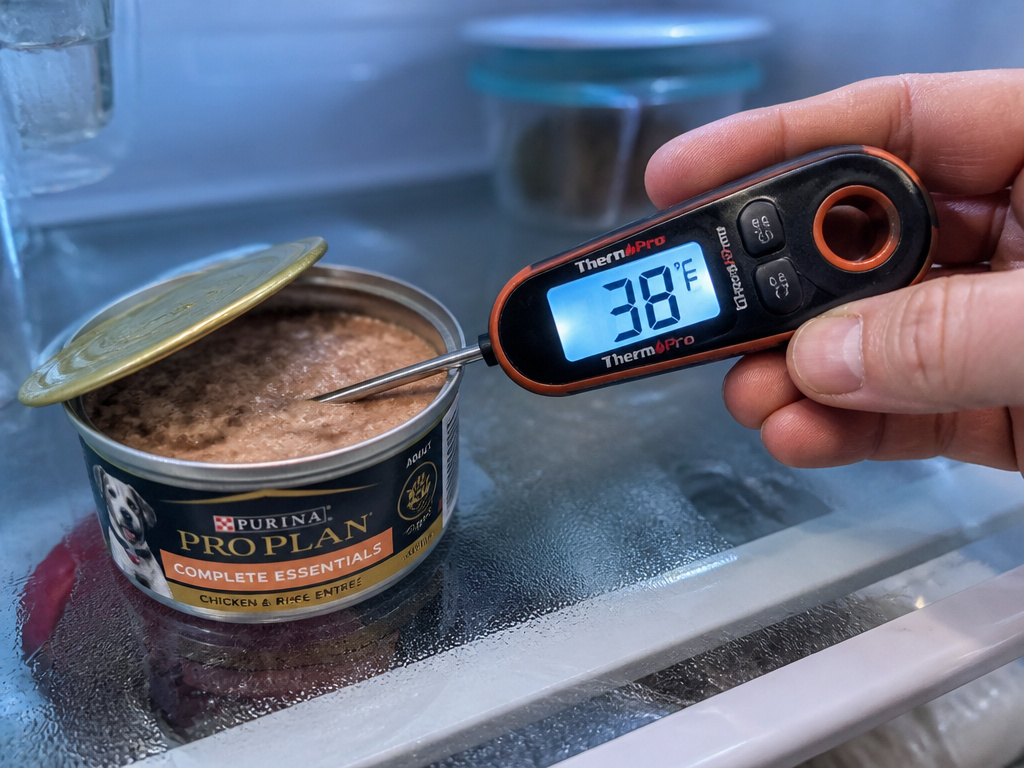
Your fridge is probably warmer than you think. The FDA sets the target at 40 F or below, and that’s the number to check with a thermometer rather than a dial.
Hill’s gives a range of 40 to 45 F for opened cans. That upper bound sits above the FDA ceiling, which is the kind of small conflict that makes a single storage chart useless. Follow the FDA pet food storage guidance here: 40 F or below covers both positions.
| What you’re storing | Target temperature | Source |
|---|---|---|
| Opened can, in fridge | 40 F or below | FDA |
| Opened can, in fridge | 40 to 45 F | Hill’s Pet |
| Unopened cans | Under 80 F | FDA |
| Unopened cans | 40 to 80 F | Tufts |
| Unopened cans | 50 to 100 F | Hill’s Pet |
| Dry food | Under 100 F (38 C) | Hill’s Pet |
Three different upper limits for unopened cans, two different lower limits. Pick the tightest set and you’re covered: under 80 F, dry, indoors.
Hill’s is blunt about the garage. An uncontrolled environment like a garage or outdoors is not recommended, and Arden Grange adds that moisture causes rust which can penetrate a can over time. A rust spot you can see is a rust spot that’s been working for a while.
If you buy dry food in bulk, an airtight container that holds the entire bag with the bag still inside it is exactly what the FDA asks for.
How Long Can Wet Food Sit in the Bowl?
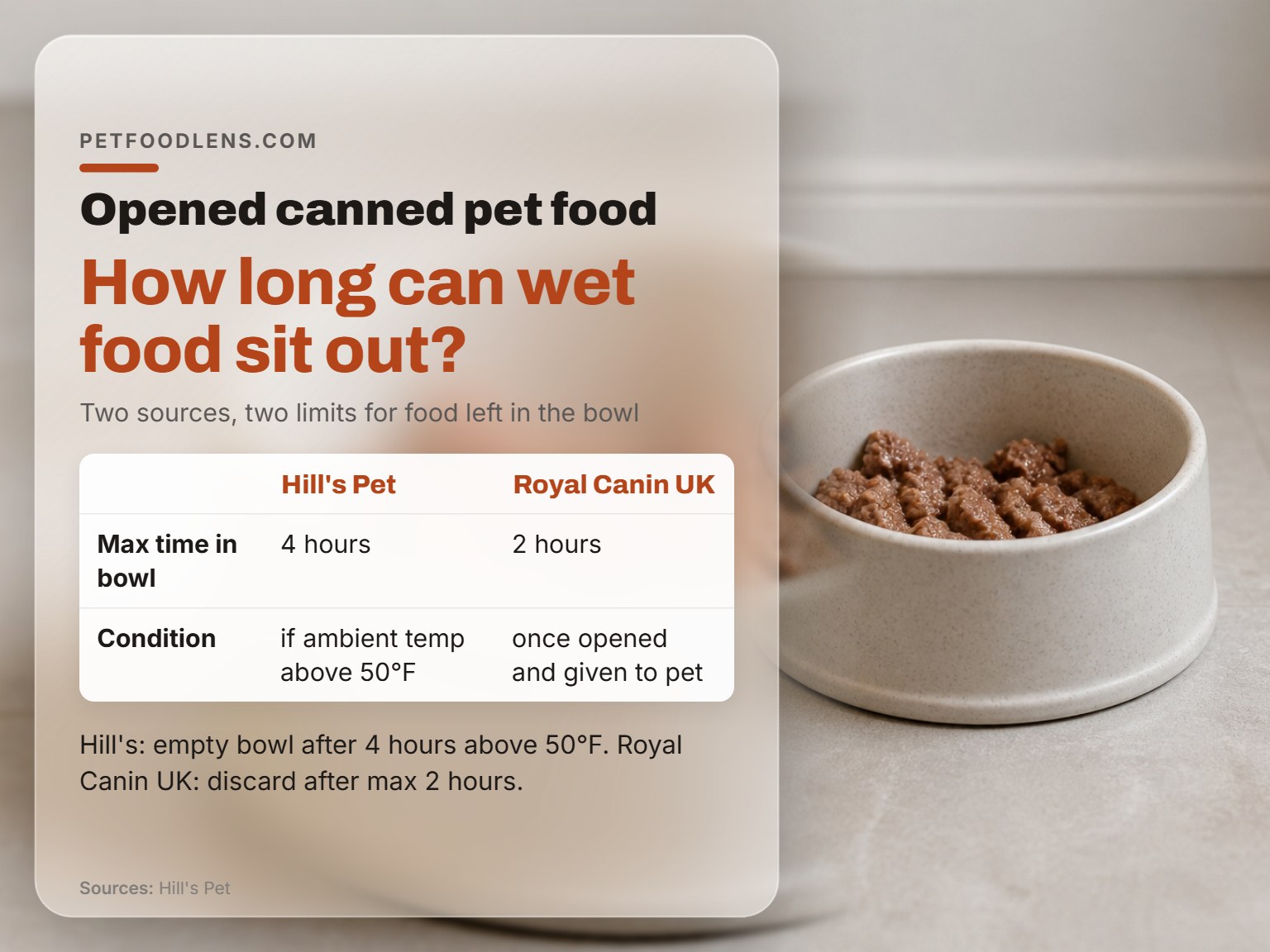
Four hours is the number in Hill’s guidance, and it comes with a condition attached: ambient temperature above 50 F. Royal Canin UK caps the same situation at 2 hours.
Hill’s allows 4 hours above 50 F and Royal Canin caps it at 2 hours; I lean toward the shorter Royal Canin figure, since a bowl of wet food at room temperature is a bacterial culture with a garnish.
There’s a physical tell that beats the clock.
Where this goes sideways: Free-feeding wet food through a warm afternoon. A bowl left down for hours gives bacteria a running start, and vomiting or diarrhea can result from eating spoiled food. Pick the bowl up at 2 hours.
The how long wet food can sit out question has more moving parts once you factor in room temperature and bowl depth. Short version: less time than you’d guess.
Can You Freeze Opened Canned Pet Food?
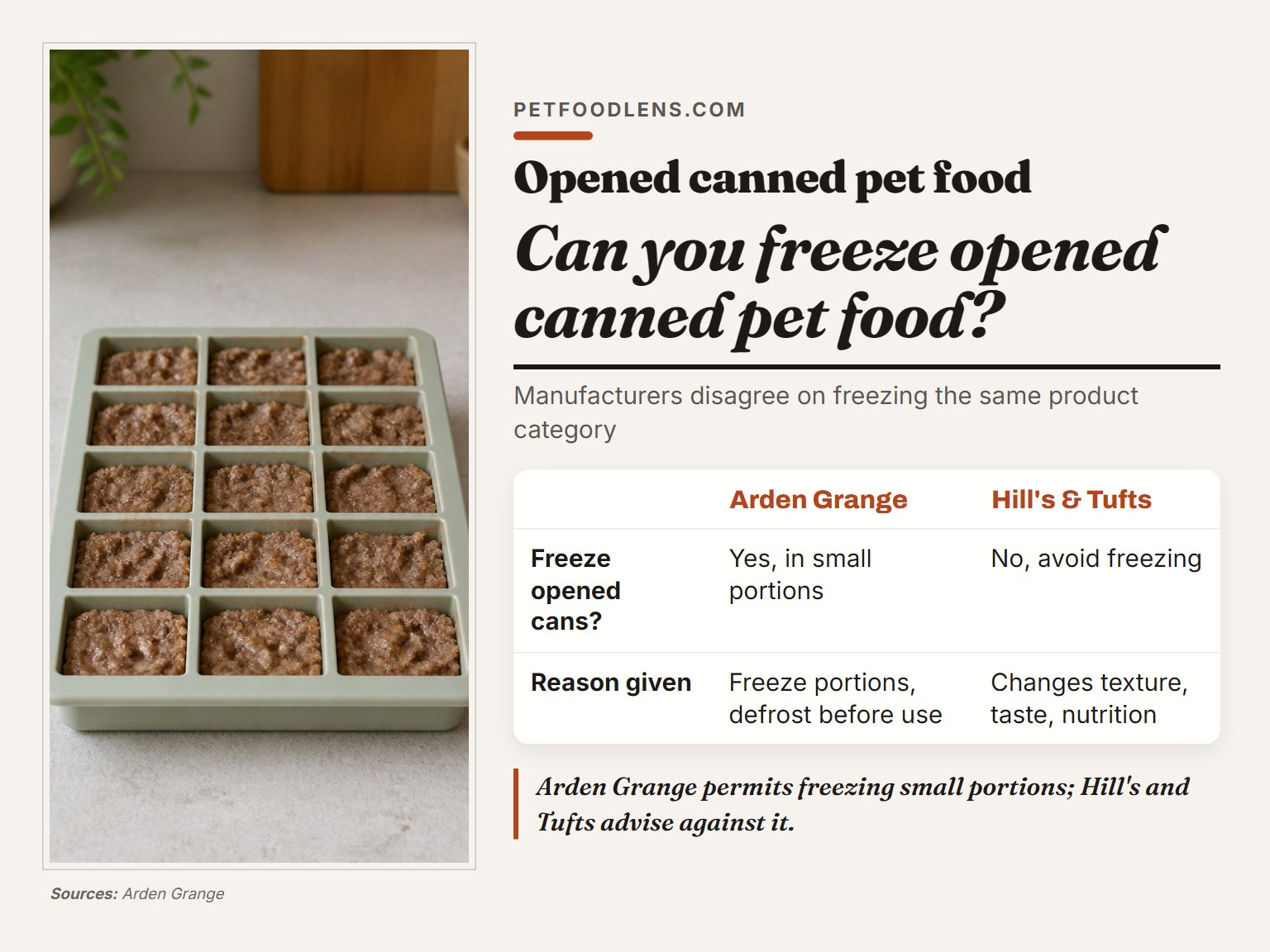
Arden Grange permits it. Hill’s and Tufts both advise against it, citing changes to texture, taste and nutritional value.
That’s a straight manufacturer-versus-manufacturer disagreement on the same product category, and neither side is confused about the facts. Arden Grange’s position is that small portions frozen and defrosted are fine. Hill’s and Tufts are telling you the eating quality drops.
For cats eating only part of a can at a time, I’ve used the ice cube tray method. Spoon the pate into small silicone molds, freeze solid, bag the cubes, and move one or two to the fridge the night before.
Freezing portions without wrecking the texture
- Spoon the leftovers into the mold while the food is still fridge-cold. Spoon the leftovers into the mold while the food is still fridge-cold.
- Freeze solid, then bag the cubes and write the date on the bag. Cubes left loose in an open tray pick up freezer burn.
- Thaw in the fridge overnight, never on the counter. Thaw in the fridge overnight, never on the counter.
- Stir before serving and smell it. Skipping this is how a separated gravy gets rejected by a cat that would have eaten it stirred.
I freeze pate and I don’t freeze chunky stews. Match the freeze to the style.
Don’t refreeze a thawed cube. The freezing canned food portions guide covers portion sizing if you’re splitting a large can across several days.
How Do You Tell If Opened Canned Food Has Gone Bad?
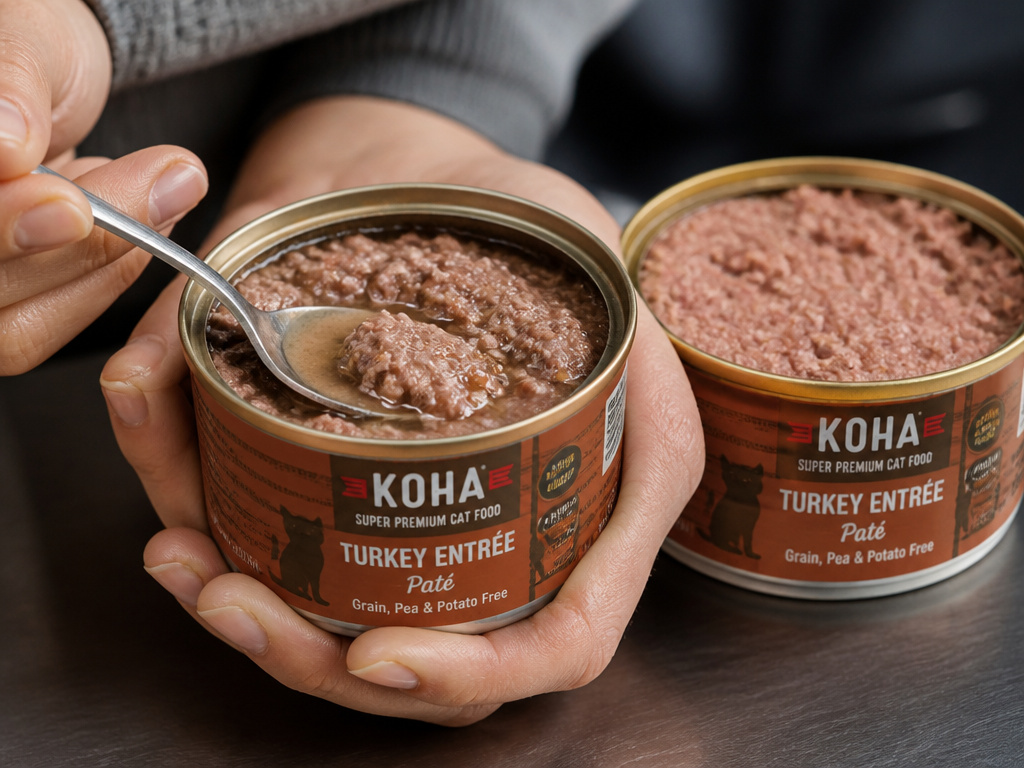
Your nose beats the date code. Dr. Tolbert calls the color and smell test the most available tool a pet parent has.
The color and smell test
Compare the can in front of you against the last one from the same product. You’re looking for a shift, not an absolute.
- Color darker or duller than the previous batch.
- A sour, sharp or metallic smell. Rancid fat reads as flat and slightly bitter on the nose.
- Separation that doesn’t stir back in.
- Any fizzing or bubbling. That’s gas production, and it ends the conversation.
If the color or smell differs from previous batches, Tolbert’s advice is direct: don’t feed it, and contact the company in case it’s a wider problem. The Texas A&M spoiled pet food article is worth reading in full for the symptom list.
When the can itself is the warning
A swollen or leaking can or pouch is a sign of a problem with the product, full stop. That’s the FDA’s language, and it applies before opening as much as after.
Arden Grange makes the related point that a can is sterile until it’s dented or pierced. A dented can is one I’d return rather than open.
The telling if canned food is bad checklist goes further into off odors and texture changes if you’re unsure.
The Lot Number Habit That Saves a Recall
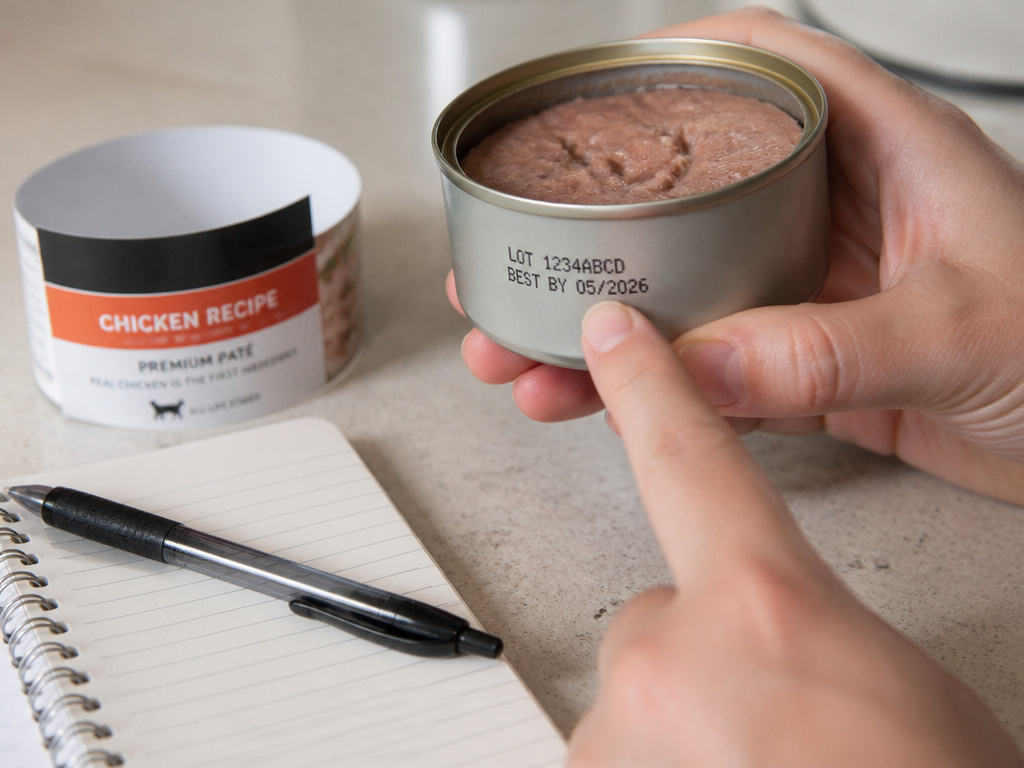
Fewer than half of the pet food complaints FDA receives include the lot number. That single statistic explains why the lot number matters.
Tolbert recommends recording the lot number, which sits near the expiration date on most packaging. Arden Grange says the same thing in different words: note the batch number and best-before date when you open a new bag.
The FDA’s reason is simpler. Keep the food in its original container or bag and the UPC code, lot number, product name, manufacturer and best-by date are all sitting there when you need them. Pour the kibble into a bare bin and you’ve thrown the evidence away.
Record the lot number the day you open the package, not the day you file a complaint. The number is printed on the thing you’re about to throw in the recycling.
Reading date codes on cans and bags takes about ten seconds once you know where the stamp sits.
Frequently Asked Questions
Can I leave opened canned pet food out overnight?
No. Royal Canin caps opened wet food at 2 hours once it’s been given to the pet, and Hill’s says to empty the bowl within 4 hours when the room is above 50 F. Overnight is well past both. Refrigerate what’s left and put the bowl in the dishwasher.
Is 5 days too long for an opened can in the fridge?
Hill’s allows 5 to 7 days at 40 to 45 F. Tufts, Texas A&M and Arden Grange all say 72 hours, and Royal Canin calls 48 hours ideal. I’d stay at 72 hours, because the stricter figure costs you nothing but a partial can.
Can I microwave the food to take the chill off?
Royal Canin’s guidance is to use a microwave-safe container and heat for no more than 10 seconds, then check the temperature before feeding. Stirring in a little warm water does the same job with less risk of hot spots.
Do I have to wash the bowl every time?
The FDA says to wash and dry pet food bowls after each use, along with scooping and measuring utensils, and to wash water bowls daily. Royal Canin notes that leftover food particles attract bacteria and insects.
Should the food stay in the can or go into another container?
Either works if it’s covered. Hill’s prefers a fitted plastic lid on the can; Arden Grange says to decant into a food-safe lidded container. I use a small glass jar because the metal tin picks up fridge odors through an imperfect seal.
The Bottom Line
If you take one number from all of this, take 72 hours. Four of six sources land there, two of them university veterinary programs, and the one outlier allows nearly double. When a can of food costs less than a vet visit, the conservative number wins.
Here’s the concession, though. If your cat eats only part of a can a day and you’re binning the rest at the 72-hour mark, the waste is real. That’s the case where portioning into molds and freezing makes sense, texture risk included, and Arden Grange’s guidance gives you cover for it.
The first thing to do this week is dull and unglamorous: put a cheap fridge thermometer on the middle shelf and read it tomorrow morning. If it reads above 40 F, every storage number here shifts against you, and you’ll want to know that before the next can gets opened.
