
9 Best Flake Fish Food in 2026
This post contains affiliate links. As an Amazon Associate, we earn from qualifying purchases.
For most community tanks, TetraMin Tropical Flakes Fish Food is the best overall choice because it combines prebiotics and protein for digestion and growth with a clear-water formula that won’t cloud the tank. If you want visible color enhancement, the Omega One Super Color Flakes use salmon skin for natural beta carotenes. For a high-protein insect-based option, the Fluval Bug Bites Color Enhancing Fish Food leads with black soldier fly larvae as the first ingredient.
The problem with choosing flake food is that every brand claims to be complete, but ingredients, protein sources, and digestibility vary widely. What matters most is matching the flake to your fish’s feeding habits, top and mid-feeders need floating flakes, while bottom dwellers require sinking food, and reading past the marketing to the guaranteed analysis.
This guide is research-based, drawing on manufacturer specifications, ingredient lists, guaranteed analyses, and patterns in owner feedback. We focus on protein content, ingredient quality, water clarity impact, and which fish species each flake actually suits.
Top 9 Flake Fish Foods in the Market
Certain content that appears on this site comes from Amazon. This content is provided "as is" and is subject to change or removal at any time.
The Best Flake Fish Foods, Reviewed
TetraMin Tropical Flakes Fish Food

What We Like
- Complete diet for top- and mid-feeders
- Prebiotics and protein for digestion and growth
- Clear-water formula won't cloud tank
- Antioxidants support healthy cells
Trade-offs
- Only for top- and mid-feeding tropical fish
- Requires careful portioning to avoid waste
A 7.06-ounce container of flakes built around a clear-water formula means you can feed a balanced daily diet without turning your tank into a fog machine. The protein and prebiotics target growth and digestion directly, while added antioxidants work at the cellular level. This is the sort of straightforward nutritional logic that appeals to anyone who reads the back of the bag before the front. It suits a mixed tropical community where most fish feed from the surface or mid-water, and where water clarity matters as much as what goes into the fish.
This flake is formulated for top- and mid-feeding tropical fish, so it works best as a daily staple for species that feed near the surface or middle of the tank. Compared to the Fluval Bug Bites Color Enhancing flakes, which target color enhancement, TetraMin focuses on overall health and growth without promising visual changes. That makes it a sensible choice for a balanced diet, but not a universal option for every fish in the aquarium.
Fluval Bug Bites Color Enhancing Fish Food

What We Like
- First ingredient is Black Soldier Fly Larvae
- Contains whole salmon for Omega 3 and 6
- Fortified with vitamins, amino acids, minerals
- Sustainably processed in small batches
Trade-offs
- Flakes sized for small to medium fish only
- Requires feeding two to three times daily
Up to 40% protein from Black Soldier Fly Larvae makes this flake food a dense, insect-based option for tropical fish that need more muscle-building fuel than standard grain-heavy flakes provide. The formula also includes whole salmon as a protein source, delivering Omega 3 and 6 for healthy skin, scales and fins rather than just filler. If you keep small to medium tropical fish and want a protein-forward daily diet without relying on fish meal or soy, this formula is built around that priority. It’s also fortified with vitamins, amino acids, and minerals, so it works as a complete diet for all life stages, not just a supplement.
The biggest trade-off is portion size: at 3.17 oz, this container is smaller than a 7.06 oz tub of TetraMin Tropical Flakes, especially if you feed two to three times daily as directed. That smaller package makes sense if you have a single tank or want to test the formula before committing, but heavy feeders will restock more often. The flakes are designed for small to medium fish, so if you keep larger species you’ll need a different product. If you want insect-based protein over a more general flake mix, this is worth trying; if you need a bigger volume per purchase, TetraMin gives you more ounces per container.
Product photos
Omega One Super Color Flakes

What We Like
- Beta carotenes from salmon skin boost color
- Rich in Omega 3 & 6 HUFA for immunity
- No meals, hydrolysates, or pre-processed protein
- Naturally insoluble, reduces water pollution
Trade-offs
- Requires feeding only what fish eat in 2 minutes
- Not suitable for bottom-feeding fish that need sinking food
The 42% minimum crude protein and elevated beta carotenes from salmon skin target color enhancement directly, not as a side effect. That means fish get the pigments they need to show their best reds, oranges, and yellows, while the Omega 3 and 6 HUFA support immune function. The lack of pre-processed protein sources, no meals, hydrolysates, or digests, means you’re getting whole-protein ingredients.
While TetraMin Tropical Flakes offers a complete daily diet for fish that feed near the top and middle, Omega One focuses on color and protein quality, making it a more specialized choice. If your tank is full of fish that need a color boost, this is the better bet. For a mixed community with bottom feeders, you may want to supplement with another option.
Omega One Freshwater Flakes

What We Like
- High omega-6 for immune support
- Natural beta carotenes boost color
- No pre-processed proteins or meals
- Low starch reduces fish waste
Trade-offs
- Only 0.2 pounds per container
A 41% minimum crude protein and enhanced omega-6 fatty acids target freshwater species that need strong immune systems and cell wall development. That makes this flake a solid fit for keepers who prioritize immune health and natural color enhancement from salmon-based beta carotenes. The formula skips meals, hydrolysates, and other pre-processed proteins, so you’re getting whole-protein ingredients rather than industrial leftovers. Low starch content also means less fish waste, which helps keep the tank cleaner between water changes.
The trade-off is that you get only 0.2 pounds of food per container, so if you have a heavily stocked tank or multiple aquariums, you’ll be reordering more often than with larger jars. For hobbyists focused on clean ingredients and omega-6 benefits, this is a straightforward, no-nonsense flake.
TetraColor Tropical Flakes Color Boosting Fish Food

What We Like
- Antioxidants support immune system
- Prebiotics aid digestion
- Color-enhancing formula
- Won't cloud water
Trade-offs
- Not suitable for bottom-feeding fish
- Requires separate sinking food for bottom dwellers
The TetraColor Tropical Flakes pack a clear-water formula that won’t turn your tank into a murky soup, which is a practical advantage for anyone who values a clean view of their fish. With added antioxidants for immune support and prebiotics for digestion, this flake food targets the health side of feeding rather than just filling bellies. It’s a solid daily option for top- and mid-feeding tropical fish, especially if you want to reduce stress and support natural color without relying on gimmicks.
This flake is formulated for fish that feed in the upper and middle water column, so bottom feeders like catfish or loaches won’t get their share from this food alone. TetraColor leans more into immune support and color enhancement, whereas TetraMin Tropical Flakes targets the same feeding zones but focuses on a complete daily diet. Owners of community tanks with bottom dwellers should plan to add a separate sinking food.
Product photos
Aqueon Natural Tropical Fish Food Flakes
What We Like
- Natural ingredients with added vitamins
- Floating flakes for surface feeders
- Formulated to reduce waste
- Won't cloud water when used as directed
Trade-offs
- Floating flakes require manual sinking for bottom feeders
- Floating only; not for bottom feeders
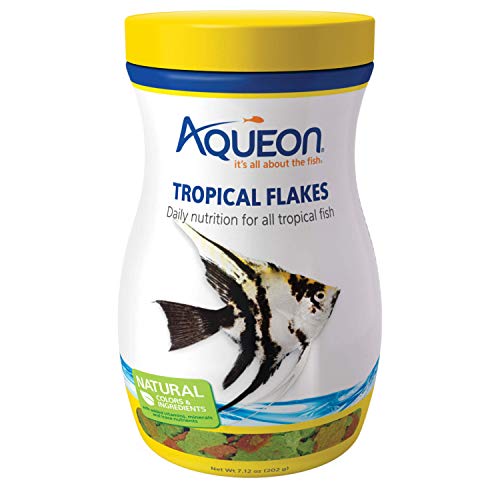
A 7.12-ounce container of floating flakes built around natural ingredients and supplemented with vitamins, minerals, and trace nutrients means you’re feeding a diet fish are instinctively drawn to without loading the tank with undigested particles. This is a straightforward, ingredient-first flake for tropical surface feeders like angelfish, guppies, and tetras, anyone who wants a clean, low-waste staple that prioritizes what’s actually in the food over flashy promises. The formulation is designed so fish utilize more of what they eat, which translates to less mess in the water column and less strain on your filter.
The floating flakes are ideal for surface-feeding species like angelfish and fancy guppies, so they won’t cloud water when used as directed. Compared to Omega One Freshwater Flakes, which also targets general tropicals, Aqueon’s approach leans on a natural-ingredient blend with added vitamins rather than a single protein source. If you keep a mixed community with mid- and bottom-feeders, you’ll want a sinking option alongside this one.
Xtreme Krill Flakes High Protein Fish Food

What We Like
- 100% krill and shrimp protein
- Supports natural color enhancement
- Versatile for freshwater and marine fish
- Easy to crumble for different fish sizes
Trade-offs
- Not suitable for bottom-feeding species
A 100% krill and shrimp formula means this flake delivers a concentrated protein punch that most tropical and marine fish find highly palatable. For keepers focused on growth, energy, and everyday nutrition, that protein density is the key draw, especially if you’re feeding cichlids, discus, or other species that benefit from a high-protein diet. The wild-caught krill also brings natural pigments that support vibrant coloration, so you’re getting both a nutritional boost and visual enhancement in one flake. This is a straightforward, no-frills protein source for anyone who wants to prioritize ingredient quality over flashy packaging.
Weighing just 0.1 pounds, this compact container fits easily in a small cabinet or a travel kit, but it’s a focused choice for hobbyists who value a clean, high-protein ingredient list over bulk quantity. You’re paying for premium ingredients rather than volume, unlike the larger 7.06-ounce tub of TetraMin Tropical Flakes. The seasonal color variation in the flakes is a natural result of using real krill, so if you prefer a consistent look in your food, that might catch your eye.
Product photos
Aqueon Tropical Color Flakes Jumbo 5 Pounds
What We Like
- Reduces aquarium waste
- Supports immune system
- Enhances natural red and orange colors
- Customizable feeding by breaking flakes
Trade-offs
- Only suitable for tropical species
- Jumbo flakes require breaking for small fish
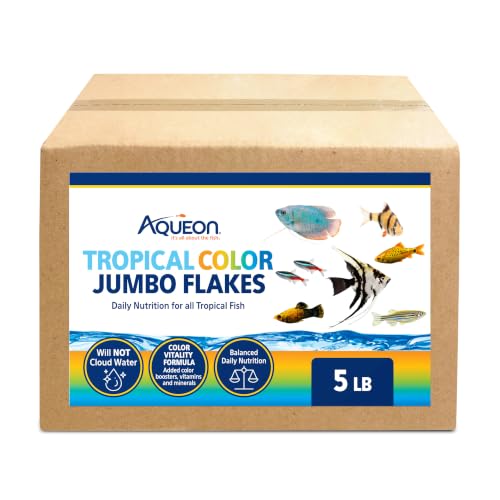
A 5-pound tub of jumbo flakes means you’re buying a large quantity, which is the whole point of this pick. Designed to reduce aquarium waste and support immune function with added vitamins and minerals, it’s a practical choice for anyone keeping tropical fish like cherry barbs, swordtails, and neon tetras. The flakes also enhance natural red and orange hues, so your fish stay colorful without you needing to supplement with extra color-enhancing foods.
The jumbo flake size itself is the main trade-off. While you can break them into smaller pieces for different species, it’s an extra step that smaller flakes from TetraMin skip entirely. If you keep very tiny fish or prefer a grab-and-feed routine, that added handling might bug you. But for the keeper who values volume, immune support, and less clouding over convenience, this tub delivers exactly what the label says.
Product photos
API Tropical Flakes Fish Food

What We Like
- Complete and balanced diet for tropical fish
- Includes menhaden and squid for amino acids
- Formulated to reduce waste and clear water
Trade-offs
- Feeding twice daily requires consistent routine
- Not suitable for bottom-feeding fish species
A 5.7-ounce container of flakes built around menhaden and squid means this isn’t just filler, it’s a protein-focused formula designed to deliver the amino acids tropical fish need for steady growth. The formulation also aims to help fish use nutrients more efficiently, which translates to less waste floating around your tank and clearer water between cleanings. For anyone keeping a mixed community of tropical fish and wanting a single, balanced daily option, this hits the mark without overcomplicating things.
At 5.7 ounces, you’re getting less volume than TetraMin’s 7.06-ounce tub, so if you have a heavily stocked tank or multiple aquariums, you’ll restock sooner. But the ingredient focus here, menhaden and squid as primary protein sources rather than generic fish meal, gives it an edge for owners who prioritize what actually goes into the food over just buying in bulk. It’s a straightforward, no-nonsense flake for everyday feeding.
Product photos
How We Evaluated Flake Fish Foods
We built this guide by examining manufacturer ingredient lists and guaranteed analyses, reviewing expert round-ups from aquatic nutrition sources, and identifying patterns in long-term owner feedback. No product was tested in a lab; our evaluation is a synthesis of published data and experienced aquarist consensus.
Three criteria mattered most. First, protein source and content, whole fish, insect larvae, and krill provide superior amino acid profiles compared to meals and hydrolysates. Second, digestibility and waste reduction, formulas with prebiotics or low starch reduce uneaten food and ammonia spikes. Third, suitability for the fish’s feeding zone, a top-quality flake is useless if it floats past a bottom feeder.
The honest limit of a research-led evaluation is that individual tank conditions vary. Water temperature, fish species mix, and feeding routine all affect how a flake performs. We encourage readers to check the ingredient list against their own fish’s needs and to understand the flake food pros and cons before committing to a large container.
What To Look For In Flake Fish Foods
The right flake food delivers complete nutrition without clouding your water or leaving waste behind. Start with the ingredient list, not the front of the bag.
Look for whole-protein sources (whole fish, insect larvae, krill) listed as the first ingredient. Avoid vague terms like “fish meal” or “hydrolysate.” Match the flake type to your fish’s feeding zone, floating for top-feeders, sinking for bottom-dwellers.
Protein Source and Quality
The first ingredient tells you more than the protein percentage. Whole salmon, black soldier fly larvae, and krill provide essential amino acids and omega fatty acids that meals and by-products lack. For example, the Fluval Bug Bites formula uses whole salmon alongside insect protein for Omega 3 and 6, while Omega One’s Super Color Flakes use salmon skin for natural beta carotenes. If you are choosing quality fish food, the ingredient list is the only reliable guide.
Digestibility and Water Quality
Flakes that pass through fish undigested create ammonia and cloud the water. Look for prebiotics (like in TetraMin and TetraColor) or low-starch formulations (like Omega One Freshwater Flakes) that reduce waste. The “clear-water” claim is meaningful only when the formula is naturally insoluble or includes digestive aids. Understanding the difference between flakes and pellets can also help you decide which format minimizes waste in your tank.
Feeding Zone Compatibility
Most flakes float, which makes them ideal for surface and mid-water feeders like tetras, guppies, and angelfish. Bottom feeders such as corydoras and plecos need sinking pellets or wafers. If you keep a mixed community tank, you may need a combination of floating flakes and sinking food. For guidance on mixed-species setups, review the best community tank food recommendations.
- Check whether the flake is designed for top/mid feeders only or can be crumbled for smaller fish.
- Confirm the container size matches your feeding frequency, larger tanks may need jumbo sizes like the Aqueon Tropical Color Flakes 5-pound bag.
- Look for added vitamins and antioxidants if immune support is a priority for your fish.
- Avoid flakes with artificial colors or preservatives if you prefer a natural-ingredient diet.
A good rule of thumb: if the ingredient list reads like a chemistry set, the fish probably isn’t getting whole-food nutrition.
Flake Fish Foods Compared
The table below compares all nine flake fish foods across protein source, key benefits, and best-use scenarios to help you match the right formula to your tank.
| Product | Size | Weight | Fish Type |
|---|---|---|---|
| TetraMin Tropical Flakes Fish Food | 7.06 oz | 3.0 lb | Tropical |
| Fluval Bug Bites Color Enhancing Fish Food | 3.17oz | 0.2 pounds | Tropical, small to medium |
| Omega One Super Color Flakes | 5.3 oz | 0.2 pounds | N/A |
| Omega One Freshwater Flakes | 5.3 oz | 0.2 pounds | N/A |
| TetraColor Tropical Flakes Color Boosting Fish Food | 7.06 oz | 0.4 pounds | Tropical |
| Aqueon Natural Tropical Fish Food Flakes | 7.12 Oz | 0.6 pounds | Tropical |
| Xtreme Krill Flakes High Protein Fish Food | 1oz | 0.1 pounds | Freshwater & marine |
| Aqueon Tropical Color Flakes Jumbo 5 Pounds | 5 Pounds | 5.0 pounds | Tropical |
| API Tropical Flakes Fish Food | 5.7-Ounce | 0.6 pounds | Tropical |
Frequently Asked Questions
What is the best flake fish food for tropical fish?
The TetraMin Tropical Flakes Fish Food is the best overall choice for most tropical community tanks. It provides a complete diet for top- and mid-feeders, includes prebiotics for digestion, and uses a clear-water formula that won’t cloud the tank. For a broader look at options, see our best tropical fish food guide.
How often should I feed my fish flakes?
Most flakes should be fed two to three times daily, offering only what the fish can consume in about two minutes. Overfeeding is the most common mistake, uneaten flakes break down and pollute the water. The Fluval Bug Bites formula specifically recommends feeding two to three times daily for best results.
Are flakes or pellets better for fish?
Flakes are better for small surface-feeding fish because they float and are easy to eat, while pellets sink and suit larger or bottom-feeding species. The guide to fish flakes versus pellets explains the trade-offs in digestibility, waste, and feeding behavior.
Can I feed only flake food to my fish?
Yes, if the flake is a complete and balanced formula like the TetraMin or API Tropical Flakes, it can serve as a staple diet. However, fish benefit from variety, rotating in frozen or live foods provides enrichment and different nutrient profiles. Bottom feeders will need sinking food in addition to floating flakes.
What should I look for in flake fish food ingredients?
Look for a named whole-protein source as the first ingredient, whole salmon, krill, or black soldier fly larvae. Avoid generic “fish meal” or “hydrolysate.” Check for added prebiotics, omega fatty acids, and natural color enhancers like beta carotene. Understanding the benefits and drawbacks of flakes can help you weigh ingredient quality against convenience.
The Bottom Line
The TetraMin Tropical Flakes Fish Food is our best overall pick for aquarists with top- and mid-feeding tropical fish who want a complete, clear-water daily staple. It balances protein, prebiotics, and antioxidants in a formula that won’t cloud the tank, exactly what a community tank needs for steady, low-maintenance feeding.
If your priority is visible color enhancement, the Omega One Super Color Flakes deliver natural beta carotenes from salmon skin without meals or hydrolysates. For a high-protein insect-based option, the Fluval Bug Bites Color Enhancing Fish Food leads with black soldier fly larvae and whole salmon for omega fatty acids. Budget-conscious keepers with larger tanks should consider the Aqueon Tropical Color Flakes Jumbo 5 Pounds for its waste-reducing formula and immune support.
The single most important factor in choosing flake fish food is matching the protein source and feeding zone to your fish. Read the ingredient list, not the packaging claims, and your fish will tell you the rest.
