
9 Best Tropical Fish Food in 2026
This post contains affiliate links. As an Amazon Associate, we earn from qualifying purchases.
For most community tanks, TetraMin Tropical Flakes Fish Food is the best overall choice because it offers a complete daily diet with prebiotics and a clear-water formula that won’t cloud your tank. Keepers wanting a high-protein, insect-based diet should look at the Fluval Bug Bites Tropical Fish Food, while those focused on bringing out natural brilliance will appreciate the TetraColor Tropical Flakes.
The challenge with tropical fish food isn’t finding something they’ll eat, it’s finding something that meets their specific feeding style and nutritional needs without polluting the water. Surface feeders, mid-water column swimmers, and bottom dwellers all need different food formats and sinking rates.
This guide is based on manufacturer specifications, ingredient lists, and patterns we’ve observed in owner feedback across the most popular tropical fish food options. We’ve organized nine picks by their specific strengths so you can match the food to your fish.
Top 9 Tropical Fish Foods in the Market
Certain content that appears on this site comes from Amazon. This content is provided "as is" and is subject to change or removal at any time.
The Best Tropical Fish Foods, Reviewed
TetraMin Tropical Flakes Fish Food

What We Like
- Complete daily diet for tropical fish
- Clear-water formula won't cloud tank
- Prebiotics support digestion
- Antioxidants for healthy cells
Trade-offs
- Only for top- and mid-feeding fish
- Requires feeding 2-3 times daily
A 7.06-ounce container of flakes formulated with select proteins, prebiotics, and antioxidants means this is a complete daily diet that supports growth and digestion without clouding the water. It suits keepers of top- and mid-feeding tropical fish who want a straightforward staple food that covers the nutritional bases, no fussing with multiple supplements or worrying about water clarity after feeding. The clear-water formula is a practical advantage for anyone who values a clean-looking tank between water changes.
These flakes aren’t designed for bottom feeders or fish that prefer sinking food. If your tank includes species that feed lower in the water column, you’ll need a separate option like Fluval Bug Bites. The two-to-three-times-daily feeding schedule also demands a bit more attention than a once-a-day pellet, but for the keeper focused on balanced nutrition and easy digestion, this is a reliable everyday choice.
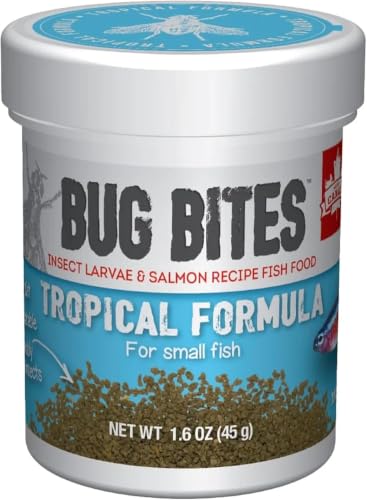
Fluval Bug Bites Tropical Fish Food
What We Like
- 40% black soldier fly larvae as first ingredient
- Whole salmon, herring, and shrimp meal
- Omega 3 and 6 for skin and fins
- Slow-sinking micro granules for mid-feeders
Trade-offs
- Not suitable for large or surface‑feeding fish
Black soldier fly larvae make up 40% of the formula here, which is an unusually high insect-protein content for a tropical fish food. That first ingredient, backed by whole salmon, herring meal, and shrimp meal, gives this a protein density that supports growth and tissue repair in active species like bettas, cichlids, and tetras. The omega-3 and omega-6 from the salmon and herring also target skin, scale, and fin health. So if you’ve got fish that tend to show fin fray or faded color, this addresses those needs at the ingredient level rather than with synthetic additives. The 0.7-1 mm slow-sinking granules let smaller fish feed at their preferred depth without clouding the water, which is a practical design for community tanks with mixed feeding zones.
Portion size is the main limitation here: at 1.6 oz, this container is smaller than some alternatives, so you’ll be reordering more often than with a larger bulk option. That’s fine if you’re feeding a single small tank and want to avoid stale food, but for heavy feeding schedules it’s a recurring chore. Compared to other formulas that include color enhancers, Fluval Bug Bites focuses on protein quality and fatty acid content. If you want a clean, high-protein daily diet, this is the more straightforward choice.
Product photos
TetraColor Tropical Flakes Fish Food

What We Like
- Color-enhancing formula for brilliant fish
- Includes prebiotics for digestion support
- Added antioxidants for healthy cells
- Clear-water formula won't cloud tank
Trade-offs
- Designed only for top- and mid-feeding fish
- Not suitable for bottom-feeding fish
Prebiotics support healthy digestion, while antioxidants help maintain cell health and select proteins encourage growth. The clear-water formula keeps the tank looking clean when used as directed, so there is no need for extra water changes after feeding. This combination makes the food a practical daily choice for fishkeepers who want to enhance natural colors while providing balanced nutrition without added maintenance.
These flakes are designed for top- and mid-feeding fish only, so bottom feeders will miss out unless you also add a sinking pellet. Compared to the TetraMin Tropical Flakes in the same lineup, which also offers prebiotics and clear-water benefits but without the color-enhancing claim, this one gives you the extra pigment boost if that’s your priority. Just pair it with something that sinks if your tank has a mixed community.
Product photos
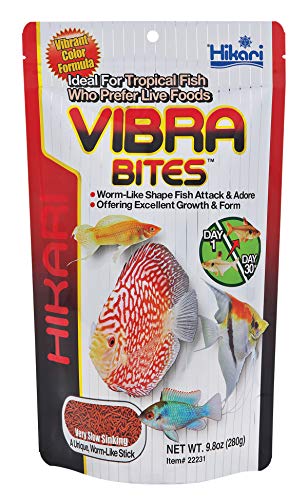
Hikari Vibra Bites Color-Enhancing Sticks
What We Like
- Slow-sinking sticks mimic live food movement
- Color-enhancing ingredients bring out brilliance
- Includes mealworms for high palatability
- Reduces parasite and bacteria risks of live worms
Trade-offs
- Not suitable for very small-mouthed fish
- Contains mealworms which some owners avoid
The slow-sinking stick moves with the current and drifts through the water column like live food, which can encourage feeding behavior in many tropical fish. Hikari includes color-enhancing ingredients and a nutrient blend that help bring out brilliant colors, without the parasite or bacteria risks that can come with live worms. This makes it a good option for aquarists who want the movement of live food but with added nutrition and safety.
Because the sticks are slow-sinking and stick-shaped, they are best suited for fish that feed in the middle or bottom of the tank. Fish that prefer to feed at the surface or have very small mouths may have difficulty with this format. If your community includes a mix of feeding zones, you may want to offer a floating flake or a micro pellet alongside these sticks.
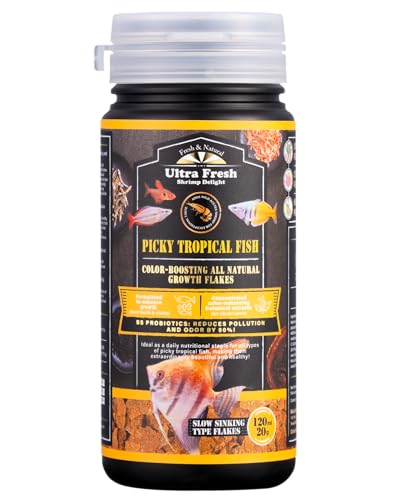
Ultra Fresh Tropical Fish Flakes Food
What We Like
- BS Probiotics cut water pollution up to 50%
- Plant carotenoids plus spirulina boost natural colors
- No artificial flavors, colors or byproducts
Trade-offs
- 0.7 oz bag is small for multiple-tank setups
- Not formulated for bottom-feeding or large cichlids
Protein comes entirely from real fresh meat, vegetables, and algae, with no byproducts or fillers in the mix. The formula adds Ganoderma polysaccharides, spirulina, and a full suite of vitamins including A, D3, C, E, and B complex to support optimal metabolism and immunity in tropical fish. For keepers who want a high-protein flake that also helps maintain water quality, this is a clean, transparent recipe. The BS probiotics specifically designed for fish can break down ammonia and hydrogen sulfide in waste, reducing water odor and pollution by up to 50 percent for a healthier living environment.
Portion size is the main limitation here: at 0.7 oz, this bag disappears fast if you feed a community tank or multiple aquariums. You will reorder more often than with a larger container like TetraMin’s 7.06 oz tub. That smaller package means heavy feeders should plan for frequent restocks. Compared to TetraMin, which offers a complete daily diet with protein for growth and prebiotics for digestion, Ultra Fresh puts the emphasis on whole marine protein and probiotic filtration, making it the better choice if ingredient transparency and water cleanliness are your priorities.
Ultra Fresh Wild Sword Prawn Pellets

What We Like
- Natural color enhancement from seaweed and spirulina
- 3 million CFUs/g probiotics aid water cleanliness
- 9:1 meat-to-vegetable protein ratio
- No artificial flavors, colors, or byproducts
Trade-offs
- Targets medium-sized cichlids, not small community fish
- Requires refrigeration after opening to maintain probiotic potency
A 9:1 meat-to-vegetable protein ratio means these pellets lean heavily on wild sword prawns and akiami paste shrimp as the primary protein sources, which closely mimics the natural diet of discus and medium-sized cichlids. The addition of 3 million CFUs/g probiotics goes beyond basic nutrition by helping break down waste in the water column, so you get a food that supports both color and tank maintenance. The natural seaweed and Australian spirulina in the formula enhance coloration without relying on artificial dyes, making it a clean option for keepers who want ingredient transparency.
These are slow-sinking pellets, so they won’t work well for species that feed exclusively at the surface, unlike TetraMin Tropical Flakes which float longer. If your tank has a mix of top and mid feeders, you might need two foods. The pellet size and protein profile are tailored for discus, angelfish, and dwarf cichlids, so small community tetras or bottom-scavenging catfish may struggle with the particle size. For a focused color-enhancing diet aimed at medium-sized tropical fish, this is a clean, probiotic-rich option, but it’s not a one-size-fits-all flake replacement.
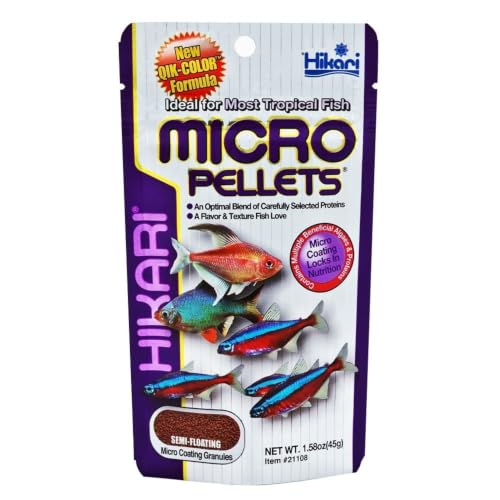
Hikari Tropical Micro Pellets
What We Like
- Multi-colored granules attract fish attention
- Superior nutrition for essential nutrients
- Designed for small-mouthed tropical fish
- Feeding guidance: 2-3 times daily
Trade-offs
- Pellets only, not suitable for larger fish
- Requires multiple daily feedings
The multi-colored micro pellets are sized specifically for tetras, barbs, and other small-mouthed tropical fish, so you won’t have to worry about pieces being too large for them to eat. This formulation provides superior nutrition with essential nutrients packed into each granule, making it a practical choice for hobbyists who keep smaller community species. The red, green, and yellow granules add visual interest during feeding, which can help even shy fish find their share.
The trade-off here is that these pellets are tailored for small mouths, so if you have a mixed tank with larger fish like angelfish or cichlids, you will need a separate food for them. The feeding instructions recommend providing the pellets two to three times daily in quantities that the fish can consume within a few minutes, which means a bit more hands-on attention than some other options.
Omega One Color Mini Pellets

What We Like
- Color-boosting beta carotenes from salmon skin
- High Omega 3 & 6 HUFA for immunity
- Naturally insoluble, reduces water pollution
- No meals, hydrolysates, or digests
Trade-offs
- Sinking pellets not for top-feeders
- Feed only 1-3 times daily, 2-minute limit
A 42% minimum crude protein and elevated beta carotenes from salmon skin make these pellets a targeted option for bringing out color in tropical fish without relying on artificial additives. The Omega 3 and 6 HUFA levels also support immune function. Because the pellets are naturally insoluble and low in starch, they produce less waste and keep the water cleaner. That makes them a practical choice for aquarists who want visible color gains without sacrificing water quality.
These are sinking pellets, so they work best for mid- and bottom-feeding species. If your tank is full of surface-oriented fish, a floating flake would reach them more reliably. But for fish that feed lower in the water column, the slow-sinking format is actually an advantage. Just stick to the 2-minute feeding window to avoid overloading the filter.
Product photos
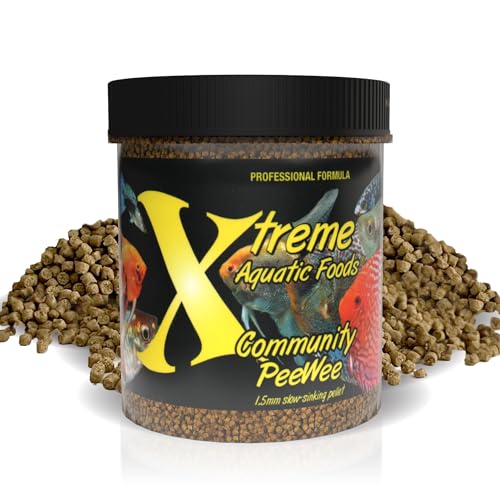
Xtreme Community Peewee Pellets
What We Like
- Slow-sinking feeds all water column levels
- No added hormones or inferior fillers
- Includes spirulina for color and immunity
- USA farm-grown non-GMO ingredients
Trade-offs
- Requires 14 days for visible color improvement
- Not for large cichlids or bottom feeders
The 1.5mm slow-sinking pellet design means fish at every level of the tank get a chance to eat, from top-dwelling tetras to bottom-feeding community fish. That makes this a genuinely versatile option for a mixed community tank, especially when you have species that prefer different feeding zones. The ingredient list backs up the approach: cold-water krill, shrimp meal, and squid meal provide real animal protein, while USA non-GMO spirulina adds plant-based nutrition and natural color enhancement. No fillers or added hormones here, just a balanced pellet that covers the basics without marketing fluff.
The 1.5mm size, while small, might still be a bit large for the tiniest nano fish like chili rasboras or dwarf pencilfish. If your tank is all micro-species, Fluval Bug Bites’ granules would be a better fit. But for the common community mix of small tetras, guppies, and dwarf cichlids, these pellets work across the water column and deliver visible color improvement within 14 days. You get a straightforward, protein-forward formula from a US-based manufacturer.
Product photos
How We Evaluated Tropical Fish Foods
We started by looking at the first few ingredients on every label. Protein source, inclusion of whole prey ingredients versus meals and byproducts, and the presence of probiotics or color-enhancing compounds like spirulina and carotenoids all factored into our rankings. We also checked whether each food was formulated for specific feeding zones, top, mid, or bottom of the water column.
Water quality was a major criterion. Foods that cloud the tank or break down quickly can cause ammonia spikes, so we prioritized options with clear-water formulas or naturally insoluble ingredients. We also considered feeding frequency requirements and whether a food works for single-tank setups or multiple aquariums.
A research-led evaluation like this has limits. We haven’t tested these foods in our own tanks, so we rely on the ingredient transparency of each brand and the collective experience of the aquarium community. We recommend cross-referencing our picks with the specific needs of your fish species.
What To Look For In Tropical Fish Foods
The right tropical fish food depends on your fish’s feeding zone, mouth size, and protein requirements. Here are the key factors to consider when reading a label.
Choose a food that matches your fish’s natural feeding zone (top, mid, or bottom), has a whole-protein source as the first ingredient, and includes digestive aids like prebiotics or probiotics to reduce water pollution.
Feeding Zone and Food Format
Fish feed at different levels in the tank. Surface feeders like hatchetfish and gouramis need floating flakes or sticks. Mid-water column fish like tetras and barbs do well with slow-sinking micro pellets or granules. Bottom feeders like corydoras and loaches need sinking pellets or wafers. If you have a mixed community tank, a slow-sinking pellet that feeds all levels can simplify feeding.
Protein Source and Ingredient Quality
Look for named protein sources, whole salmon, krill, shrimp, or black soldier fly larvae, rather than generic “fish meal” or byproducts. High-protein formulas (around 40% or more) suit active species and growing juveniles, while community fish often do fine with moderate protein levels. Avoid artificial colors, flavors, and unspecified meals.
Digestive Health and Water Quality
Prebiotics and probiotics support digestion and can reduce the amount of waste your fish produce. Some foods are formulated to be “naturally insoluble,” meaning they hold their shape longer and break down less quickly, which keeps the water cleaner. If you struggle with cloudy tanks, look for a clear-water formula.
- Check whether the food is designed for top, mid, or bottom feeders
- Read the first three ingredients for named protein sources
- Look for prebiotics or probiotics on the label
- Choose a pellet or flake size appropriate for your fish’s mouth
- Consider feeding frequency: some foods require 2-3 small feedings daily
A food that sinks too fast or floats too stubbornly will leave some fish in your tank hungry.
Tropical Fish Foods Compared
The table below compares all nine picks side by side, highlighting their protein focus, feeding zone, and key ingredient features so you can find the right match for your aquarium.
| Product | Form | Target Fish | Key Ingredients | Weight |
|---|---|---|---|---|
| TetraMin Tropical Flakes Fish Food | Flakes | Top- and mid-feeding tropical fish | Select proteins, prebiotics, antioxidants | 7.06 oz |
| Fluval Bug Bites Tropical Fish Food | Slow-sinking micro granules | Small to Medium Sized Fish | Black Soldier Fly Larvae (40%); Salmon, herring, shrimp meal | 1.6 oz |
| TetraColor Tropical Flakes Fish Food | Flakes | Top- and mid-feeding | Select proteins, prebiotics, antioxidants | 7.06 oz |
| Hikari Vibra Bites Color-Enhancing Sticks | Slow-sinking sticks | Tropical fish | Color enhancers, mealworms | 9.8 oz (280g) |
| Ultra Fresh Tropical Fish Flakes Food | Flakes | Tropical fish, Discus, Angelfish | Ganoderma polysaccharides, spirulina, BS Probiotics | 0.7oz |
| Ultra Fresh Wild Sword Prawn Pellets | Slow sinking pellet | Discus, Angelfish, Medium Sized Cichlids and Fish | Wild sword prawns, akiami paste shrimp | 4.6 oz |
| Hikari Tropical Micro Pellets | Multi-colored micro pellets | Tetras, barbs, small-mouthed tropical fish | N/A | 1.58 Oz |
| Omega One Color Mini Pellets | Sinking mini pellets | N/A | Salmon skin | 3.5 oz |
| Xtreme Community Peewee Pellets | Slow-sinking 1.5mm pellets | tetras, guppies and community fish | Krill, shrimp meal, squid meal | 5oz |
Frequently Asked Questions
What is the best tropical fish food for a community tank?
A slow-sinking pellet like the Xtreme Community Peewee Pellets works well for mixed communities because it feeds fish at all water column levels. For tanks with mostly top- and mid-feeders, TetraMin Tropical Flakes is a solid complete diet. The key is matching the food format to the feeding habits of every fish in the tank.
How often should I feed my tropical fish?
Most tropical fish do best with two to three small feedings per day, offering only what they can consume in about two minutes. Overfeeding is the most common cause of poor water quality. Some foods, like the Omega One Color Mini Pellets, specify a two-minute feeding limit to prevent waste buildup.
What ingredients should I avoid in fish food?
Avoid foods that list generic “fish meal” or “byproducts” as the first ingredient without specifying the source. Artificial colors and flavors offer no nutritional benefit. Inferior fillers like wheat or corn gluten can cloud the water and provide empty calories. Whole named proteins like salmon, krill, or black soldier fly larvae are better choices.
Can tropical fish food enhance my fish’s color?
Yes. Ingredients like spirulina, astaxanthin from salmon skin, and natural carotenoids can bring out the reds, oranges, and yellows in fish. The TetraColor Tropical Flakes and Omega One Color Mini Pellets both use these natural color enhancers. Results are gradual and depend on the fish’s genetics and overall health.
What is the difference between flakes and pellets for tropical fish?
Flakes float at the surface and are best for top- and mid-feeding fish. Pellets sink at different rates, micro pellets suit small-mouthed fish, while larger sinking pellets reach bottom feeders. The choice depends on your fish’s natural feeding zone. A good overview of the different fish food types can help you decide.
The Bottom Line
For most keepers of top- and mid-feeding tropical fish, the TetraMin Tropical Flakes Fish Food is the best overall choice. It provides a complete daily diet with prebiotics and antioxidants, and its clear-water formula keeps the tank looking clean. It’s a reliable staple for community tanks with tetras, barbs, and gouramis.
If your fish need more protein or have specific feeding habits, one of the other picks will serve you better. The Fluval Bug Bites are excellent for insect-based nutrition, the Hikari Micro Pellets are ideal for small-mouthed species, and the Xtreme Community Peewee Pellets work well for mixed tanks where fish feed at different levels.
The single most important factor is matching the food to your fish’s natural feeding zone. A great ingredient list won’t help if the food sinks past your surface feeders or floats away from your bottom dwellers.
