
9 Best Fish Food in 2026
This post contains affiliate links. As an Amazon Associate, we earn from qualifying purchases.
The best fish food for most aquarists is the Fluval Bug Bites Cichlid Pellets, thanks to its 40% Black Soldier Fly Larvae content and whole salmon for Omega 3 and 6. For top feeders, the TetraMin Tropical Flakes deliver a balanced diet with prebiotics, while the TetraBetta PLUS Floating Mini Pellets are the clear choice for betta owners.
Every fish has different feeding habits, from surface-grazing tetras to bottom-scouring catfish. The wrong food either floats past your fish or sinks too fast, leading to waste and poor nutrition. Matching the food type to your fish’s natural feeding zone is the single most important decision you’ll make.
This guide is based on a close look at ingredient lists, manufacturer specifications, and patterns in owner feedback across nine products. We organized them by award so you can skip straight to the food that fits your tank.
Top 9 Fish Foods in the Market
Certain content that appears on this site comes from Amazon. This content is provided "as is" and is subject to change or removal at any time.
The Best Fish Foods, Reviewed
Fluval Bug Bites Cichlid Pellets

What We Like
- 40% nutrient-rich Black Soldier Fly Larvae
- Whole salmon provides Omega 3 and 6
- Slow sinking for all feeding depths
- No artificial fillers, colors, or preservatives
Trade-offs
- 5-7mm pellets too large for small fish
- Slow sinking not ideal for surface feeders
A 40% Black Soldier Fly Larvae content as the first ingredient means this pellet delivers a concentrated insect-based protein source that mimics many cichlids’ natural diet. That high protein level, paired with whole salmon for Omega 3 and 6 fatty acids, supports healthy skin, scales, and fins without relying on cheap fillers.
The trade-off is the pellet size: at 5-7mm, these are too big for small-mouthed fish like tetras or bettas, so this isn’t a one-jar solution for mixed community tanks. The slow-sinking action means surface-oriented species won’t get as many bites, though that’s by design for a balanced feeding zone. If your cichlids are on the bigger side and you want a clean ingredient list without artificial additives, this covers the nutritional bases.
Product photos
TetraMin Tropical Flakes

What We Like
- Balanced complete diet for tropical fish
- Prebiotics and antioxidants support digestion and health
- Clear-water formula won't cloud tank
- Formulated for top- and mid-feeding species
Trade-offs
- Not suitable for bottom-feeding fish
- Requires careful portion control to avoid waste
When used as directed, this flake formula won’t cloud your tank water, so you can feed without worrying about murky conditions. It’s designed for top- and mid-feeding tropical fish and provides a nutritionally balanced diet with added prebiotics for digestion and antioxidants for cell health. That makes it a straightforward staple for community tanks filled with surface-oriented species like tetras, guppies, and rasboras. The feeding instruction, two to three times daily, only what they can finish in three minutes, helps keep waste low and water quality stable.
TetraMin is a flake food for top- and mid-feeding tropical fish, while Fluval Bug Bites Cichlid Pellets are pellets for medium to large sized fish. The flake format doesn’t work for bottom feeders, so if your tank includes catfish or loaches, you’ll need a sinking option like Hikari Sinking Wafers alongside it. TetraMin is a generalist flake for smaller surface feeders, making it a reliable choice for anyone keeping a typical tropical community with top-dwelling fish, as long as you’re willing to match the feeding routine to avoid overfeeding.
TetraBetta PLUS Floating Mini Pellets
What We Like
- Floating crisps for top-water feeders
- Natural color enhancers for vibrant coloration
- High protein and omega-3 for energy
- Clear water formula maintains clarity
Trade-offs
- Only suitable for top-water feeding fish
- Not suitable for bottom-feeding fish in a community tank
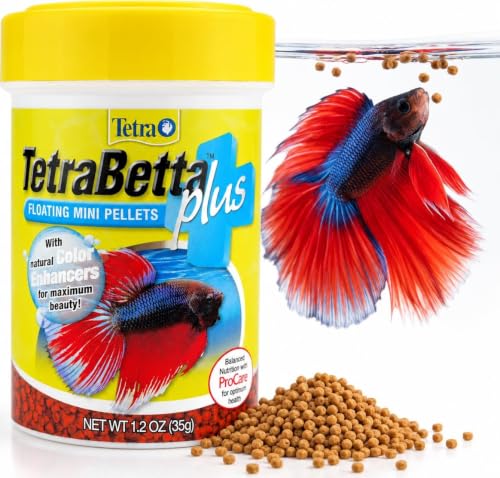
The floating mini pellet design means these crisps stay on the surface, which is exactly where a Siamese fighting fish expects its food. That matters because bettas are top-water feeders by nature, and sinking pellets can go uneaten and foul the tank. The high protein and omega-3 fatty acids support energy and growth, while the natural color enhancers help develop rich coloration without artificial dyes. This is a daily staple that keeps the water clear thanks to the advanced clear water formula, so you spend less time scrubbing glass and more time watching your fish.
This formulation is narrowly aimed at bettas and other top-water feeders, so it won’t work for bottom-dwelling fish like the catfish or loaches that the Aqueon Shrimp Pellets target. If you keep a mixed community tank, you’ll need a second food for the bottom feeders. The 1.2-ounce container is compact, but for a single betta it lasts a reasonable time. Compared to the TetraMin Tropical Flakes, which serve mid- and top-feeders, this pellet gives you a more targeted diet with the color-enhancing and floating features that betta keepers specifically want.
Product photos
Hikari Micro Pellets Semi-Floating Food
What We Like
- Semi-floating pellets suit mid- and top-feeders
- Micro size fits bettas, tetras, barbs
- Small package for trial or nano tanks
Trade-offs
- 0.77 oz bag runs out fast with multiple fish
- Not suitable for large-mouthed or bottom-feeding fish
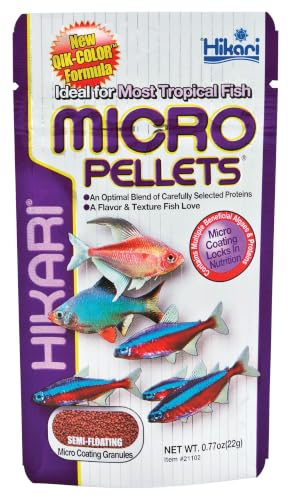
A 0.77-ounce bag of micro pellets that stay semi-floating means you can feed small-mouthed fish like bettas, tetras, and barbs without worrying about food sinking past them. The tiny pellet size matches the gape of these species, so every bite is accessible. For a single betta or a small school of nano fish, this package lasts a reasonable while, and the semi-floating action keeps the meal visible so you can monitor who’s eating.
Volume is the main consideration: at 0.77 oz, this is a trial-size or single-fish supply. If you have a community tank with multiple small fish, you’ll be reordering sooner than you’d like. Stick with Hikari Micro Pellets if you want a precise, small-portion option for a delicate mouth.
Aqueon Shrimp Pellets Sinking Food
What We Like
- Sinking pellets target bottom feeders
- Reduces waste with better nutrient absorption
- Supports immune system and color
- Won't cloud water when fed as directed
Trade-offs
- 9 mm pellets too large for small fish
- Sinking food not suitable for top feeders
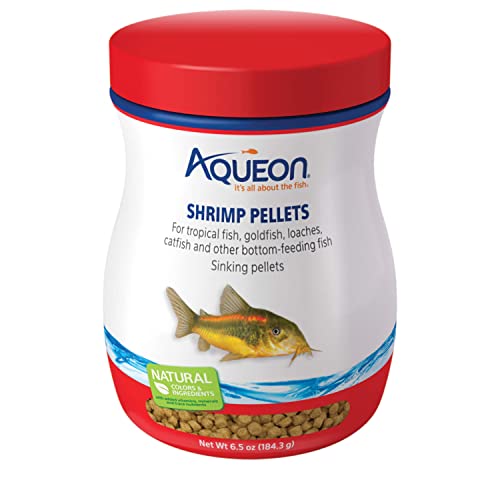
A 9 mm pellet that sinks to the bottom is designed for fish that feed near the substrate, like cory catfish, loaches, and South American cichlids. It supports immune health and color while keeping the water clear when used as directed. The formula helps fish absorb more nutrients and produce less waste, which means less mess for you to clean. For anyone keeping bottom-dwelling species, this is a practical food that matches how they naturally eat.
Those 9 mm pellets are too big for small-mouthed fish or tiny species. Compare that to Hikari Micro Pellets, which are semi-floating and sized for small-mouthed freshwater fish, and you see the divide. Aqueon Shrimp Pellets commit fully to the bottom-feeder niche, so if your tank includes mid- or top-feeders, you’ll need a separate food. For a dedicated bottom-feeder setup, though, this pellet’s size and sinking action do exactly what they’re supposed to.
Aqueon Cichlid Slow Sinking Pellets
What We Like
- Contains shrimp and squid meal
- Slow-sinking pellets
- Medium 3mm granule size
Trade-offs
- Not suitable for top-feeding or floating-feed cichlids
- Not suitable for herbivorous cichlids
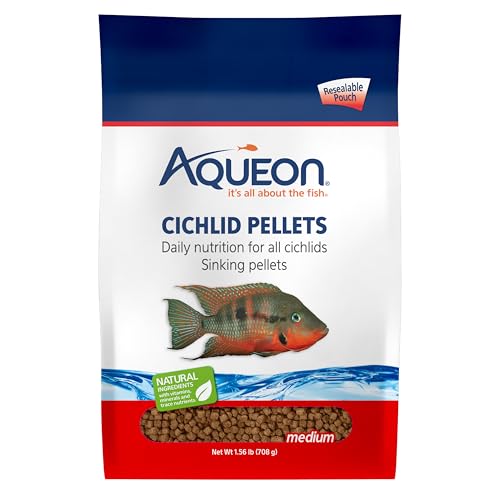
A 3mm pellet size that sinks slowly means this food targets the mid-water feeding zone where most cichlids naturally hunt. That’s a smarter approach than a generic flake that floats at the surface and breaks apart before many fish get a bite.
Hikari Sinking Wafers Bottom Feeder Food
What We Like
- High vegetable matter for bottom feeders
- Fortified with vitamin C and minerals
- Unique disc shape suits various fish sizes
- Extreme digestibility reduces water clouding
Trade-offs
- Not suitable for mid-water or surface feeders
- Softens gradually, allowing faster fish to dominate
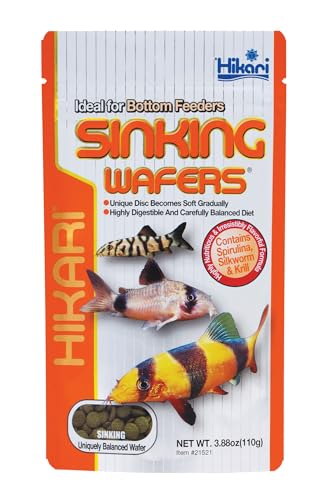
Decades of research back the formulation of these wafers, which deliver the high levels of vegetable matter, spirulina, silkworm, and krill that bottom feeders like corydoras catfish and loaches naturally prefer. The unique disc shape and small wafer size soften gradually, so smaller fish can nibble as larger ones swallow them whole. With extreme digestibility, the food reduces the chance of water clouding, keeping the tank cleaner.
The extreme digestibility means less waste clouding your water, but the gradual softening can be a disadvantage if you have fish that finish it before the smaller ones get their share. It’s a specialized tool for a specific job.
Product photos
Ultra Fresh Tetra Micro Pellet
What We Like
- Slow-sinking 0.6mm pellets suit small fish
- Contains natural spirulina for color enhancement
- Includes vitamins A, C, D3, E, B1, B2, B6, B12
Trade-offs
- 0.6mm pellets too small for medium/large fish
- Requires daily feeding 1-3 times
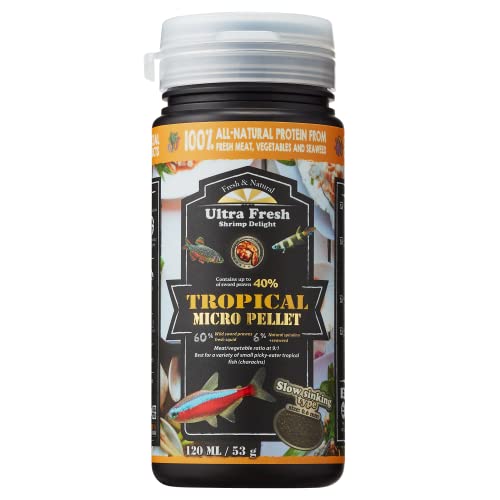
The pellet size is a key detail: at 0.6mm, these are designed specifically for small-mouthed fish. If you keep angelfish or congo tetras they’ll work, but for larger cichlids or bottom feeders you’d need something bigger, like the 3mm pellets in Xtreme Big Fella Cichlid Pellets. Not a hassle if you’re already feeding once or twice a day, but worth noting if you prefer a less hands-on approach.
Product photos
Xtreme Big Fella Cichlid Pellets
What We Like
- Marine protein blend for large cichlids
- Natural color enhancement without dyes
- Supports immune and digestive health
- Low waste production keeps water cleaner
Trade-offs
- Small bag size for larger tanks
- Not suitable for small-mouthed or nano fish
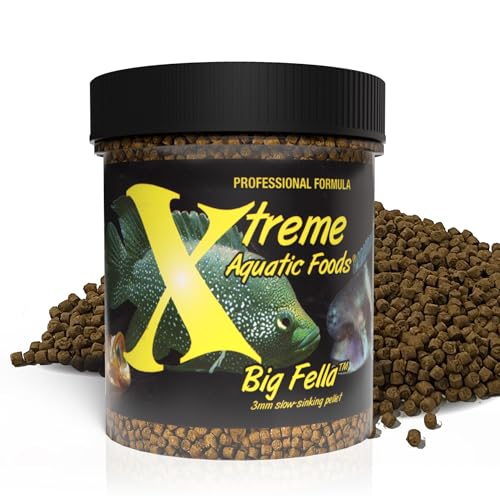
The 3.0mm pellet size is the first thing to notice here, it’s designed specifically for medium to large cichlids and aggressive community fish like silver dollars and angels. That slow-sinking action means the food reaches mid-water feeders before hitting the bottom, which cuts down on waste and keeps the tank cleaner. The marine protein blend (krill, shrimp meal, squid meal, plus USA farm-grown spirulina) provides a nutrient-rich, easily digestible feast without relying on artificial color enhancers. If you keep larger cichlids that need a pellet that supports color, digestion, and vitality, this is a straightforward match.
The bag size is small: at 2.5 ounces, it’s a small container for a tank full of big fish, so you’ll be reordering more often than with a bulk bag like Aqueon’s 25-ounce cichlid pellets. That said, the ingredient transparency here is better than what you get with many competitors, the marine protein sources are listed clearly, and the spirulina is farm-grown in the US. For someone who reads labels and wants to avoid fillers and artificial enhancers, the smaller bag is a reasonable compromise for the quality inside.
Product photos
How We Evaluated Fish Foods
We built this guide by comparing ingredient quality, protein sources, and physical form (flake, pellet, wafer, or crisp) against the feeding habits of common aquarium species. Manufacturer data on crude protein, fat, and fiber levels informed our rankings, as did owner reports on water clouding and fish acceptance.
The three criteria that mattered most were protein source and content, sinking behavior, and particle size. A high-protein insect or marine meal is better for carnivores, while herbivores need vegetable matter. Whether the food floats, sinks slowly, or drops straight to the bottom determines which fish will actually eat it. Particle size matters because a 5mm pellet is useless to a neon tetra.
A research-led evaluation can’t replace watching your own fish eat. We recommend checking the ingredient list on the bag against your fish’s natural diet, then observing whether they take the food readily. Every tank is a little different, and the best food is the one your fish actually eat.
What To Look For In Fish Foods
Match the food form to your fish’s feeding zone, the protein level to their dietary needs, and the pellet size to their mouth size. A mismatch in any of these three leads to wasted food, dirty water, or underfed fish.
Feeding Zone and Food Form
Fish feed at three levels: surface, mid-water, and bottom. Flakes and floating crisps suit top- and mid-feeders like tetras, bettas, and guppies. Slow-sinking pellets reach mid-water fish and some bottom feeders, while sinking wafers and pellets target catfish, loaches, and corydoras. The types of aquarium fish food are designed around these zones, so choosing the wrong form means your bottom feeder may never see dinner.
Protein Content and Ingredient Source
Carnivorous fish like cichlids and bettas need 40% or higher protein from animal sources such as black soldier fly larvae, salmon, shrimp, or squid meal. Herbivores like many Rift Lake cichlids need more vegetable matter. A freshwater fish food that lists a named protein as the first ingredient is generally better than one that leads with grain fillers. For marine tanks, a dedicated saltwater fish food will have the right marine protein profile.
Particle Size
A pellet that is too large will be ignored or spit out, while one that is too small may not satisfy larger fish. Micro pellets work for nano fish and bettas. Medium pellets suit most community fish. Large pellets are for big cichlids and oscars. When in doubt, the difference between flakes and pellets is largely about size control: flakes break apart naturally, while pellets give you precise portioning.
- Check the first three ingredients for named protein sources (salmon, shrimp, insect larvae) rather than vague “fish meal.”
- Match pellet diameter to the largest fish’s mouth, a good rule is the pellet should be about half the width of the fish’s eye.
- Look for “clear water” or “low waste” claims on the label if you struggle with tank clouding. Consider a food for community tanks if you keep mixed species; it will usually have a particle size and sinking speed that works for most fish.
A food that lists a whole protein source first and matches your fish’s feeding zone will almost always outperform a generic “fish meal” flake.
Fish Foods Compared
The table below compares the nine fish foods side by side, with their best-use award, key protein source, and the feeding zone they target.
| Product | Form | Target Fish | Protein Source |
|---|---|---|---|
| Fluval Bug Bites Cichlid Pellets | Pellets | Medium to Large Sized Fish | Black Soldier Fly Larvae |
| TetraMin Tropical Flakes | Tropical flakes | Top- and mid-feeders | Proteins |
| TetraBetta PLUS Floating Mini Pellets | Floating mini pellets | Betta | High protein |
| Hikari Micro Pellets Semi-Floating Food | Semi-Floating Pellets | Small-mouthed freshwater fish | N/A |
| Aqueon Shrimp Pellets Sinking Food | Sinking pellets | Bottom feeders | N/A |
| Aqueon Cichlid Slow Sinking Pellets | Slow sinking | South American, West African, Carnivorous Rift Lake Cichlids | Shrimp & squid meal |
| Hikari Sinking Wafers Bottom Feeder Food | Sinking wafers | Corydoras catfish, loaches, bottom feeders | Spirulina, silkworm, krill |
| Ultra Fresh Tetra Micro Pellet | Slow sinking | N/A | Wild Sword Prawns |
| Xtreme Big Fella Cichlid Pellets | Slow-sinking | medium/large cichlids & community fish | Krill, shrimp, squid, spirulina |
Frequently Asked Questions
What is the best fish food for tropical fish?
A balanced tropical fish food like TetraMin Tropical Flakes works well for most community tanks because it contains prebiotics and antioxidants. For species-specific needs, look at the protein source, carnivorous tropical fish need insect or marine protein, while herbivores need spirulina or vegetable matter.
How often should I feed my aquarium fish?
Most fish do well on one to two small feedings per day, with only as much food as they can consume in two to three minutes. Overfeeding is the most common cause of poor water quality. Adjust frequency based on species, herbivorous fish may graze more often, while large cichlids do fine with one feeding.
What is the difference between fish flakes and pellets?
Flakes float longer and break apart easily, making them ideal for top- and mid-water feeders. Pellets sink faster and come in controlled sizes, which reduces waste and lets you target specific fish. The flakes vs pellets choice depends on whether your fish feed at the surface, mid-water, or bottom.
Can I feed my betta fish regular tropical fish food?
Betta fish are carnivores that need high protein and prefer floating food. Standard tropical flakes may not have enough protein and often sink too fast. A dedicated betta food like TetraBetta PLUS Floating Mini Pellets provides the protein level and floating form bettas need.
What is the best food for bottom feeder fish?
Bottom feeders need a sinking food that reaches the substrate before mid-water fish eat it. Aqueon Shrimp Pellets and Hikari Sinking Wafers both sink quickly and have high vegetable or protein content suited to catfish, loaches, and corydoras.
The Bottom Line
The Fluval Bug Bites Cichlid Pellets is the best overall fish food for aquarists who want a high-protein, insect-based pellet with no artificial fillers. It works especially well for cichlid keepers, though the 5-7mm pellet size means it isn’t for small-mouthed fish. If you keep top feeders like tetras or guppies, the TetraMin Tropical Flakes give you a balanced complete diet with prebiotics.
Budget-minded aquarists and those with mixed community tanks should look at the Hikari Micro Pellets for nano fish or the Aqueon Shrimp Pellets for bottom dwellers. For betta owners, the TetraBetta PLUS Floating Mini Pellets deliver the floating form and high protein bettas need.
The single most important factor in choosing fish food is matching the feeding zone. A food that floats, sinks slowly, or drops straight down will only feed the fish that live at that level. Everything else, protein level, ingredient quality, pellet size, comes after that first decision.
