
10 Best Saltwater Fish Food in 2026
This post contains affiliate links. As an Amazon Associate, we earn from qualifying purchases.
The Hikari Marine-S Slow-Sinking Pellets earn our Best Overall pick. Their high-protein, soft-sponge texture mimics a natural reef diet that small marine fish instinctively accept, while shrimp meal enhances coloration and stabilized vitamin C supports immune health. For reef keepers who want clean flakes, the Ocean Nutrition Prime Reef Flakes take Best Natural Marine Protein, and the Hikari Marine Carnivore Probiotic Pellets win Best Waste Reduction with a formula that cuts waste volume.
Keeping a saltwater tank healthy depends on matching the food to the fish’s natural feeding behavior and digestive needs. A surface-feeding tang has different requirements than a bottom-dwelling wrasse, and the wrong pellet size or sinking rate can mean wasted food and cloudy water.
This guide is research-based, drawing on manufacturer specifications, expert round-ups, and patterns in owner feedback across ten distinct products. We break down what each formula does best so you can match the right food to your tank’s specific residents.
Top 10 Saltwater Fish Foods in the Market
Certain content that appears on this site comes from Amazon. This content is provided "as is" and is subject to change or removal at any time.
The Best Saltwater Fish Foods, Reviewed
Hikari Marine-S Slow-Sinking Pellets
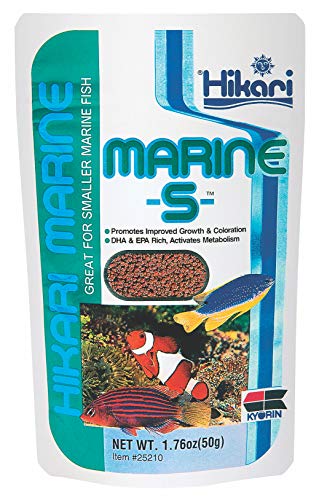
What We Like
- High protein mimics natural reef diet
- Soft sponge-like texture fish instinctively accept
- Shrimp meal enhances natural coloration
- Stabilized vitamin C supports immune health
Trade-offs
- Only for smaller marine fish
- Not suitable for flake-feeding species
A soft, sponge-like pellet that smaller marine carnivores and omnivores instinctively take to, because the texture mirrors what they’d encounter on the reef. The high protein levels and shrimp meal support both growth and natural coloration, while stabilized vitamin C gives the immune system a boost. This is the kind of straightforward, ingredient-driven formulation that makes sense for anyone who wants a daily staple without gimmicks.
The main trade-off is that it’s designed specifically for smaller fish, so if you’re keeping larger species you’ll need to look elsewhere. For a small marine tank, though, the targeted nutrition and texture are hard to beat.
Ocean Nutrition Prime Reef Flakes

What We Like
- Natural marine protein source
- Supports coloration and vitality
- Made in the USA
- Does not cloud aquarium water
Trade-offs
- Small jar size limits bulk feeding
- Not suitable for bottom-dwelling fish that ignore floating food
A flake food built around pure marine proteins, with no clouding of water when used as directed. That means the protein source is straightforward and supports coloration and vitality, as stated on the label. If you keep a mixed reef tank with fish that readily take flakes, this is a clean option that won’t turn your water into a haze.
The most decisive fact about this flake food is that it’s made with natural ingredients and pure marine proteins, which supports coloration and health in reef aquariums without clouding the water when used as directed. This makes it a clean option for tanks where you want to maintain water clarity while feeding. However, because it’s a flake format, it floats on the surface, so fish that feed higher in the water column will get the most benefit. If your tank includes bottom-dwellers or shy eaters that prefer food that sinks, you might need to supplement with another type of food.
Hikari Marine Carnivore Probiotic Pellets
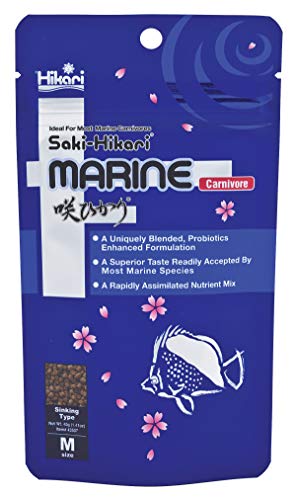
What We Like
- Probiotic-enhanced formula reduces waste volume
- Sinking pellets suit marine carnivores
- Promotes 'just off the reef' coloration
Trade-offs
- Not suitable for freshwater fish
- Requires exclusive use for color results
A probiotic-enhanced pellet that shrinks waste volume means less strain on your biofilter and fewer water changes. For a marine tank full of carnivores like lionfish or triggers, this sinking formula delivers protein directly where they hunt. The color-enhancing ingredients aim for that vivid reef look without relying on artificial dyes. It’s a focused tool for keepers who prioritize water quality over flashy packaging.
The trade-off is portion size: at 1.41 oz, this bag won’t last long in a heavy feeding schedule. For smaller setups or targeted feeding, though, the waste reduction makes it worth the extra trip to the store.
Omega One Marine Mini Pellets with Garlic
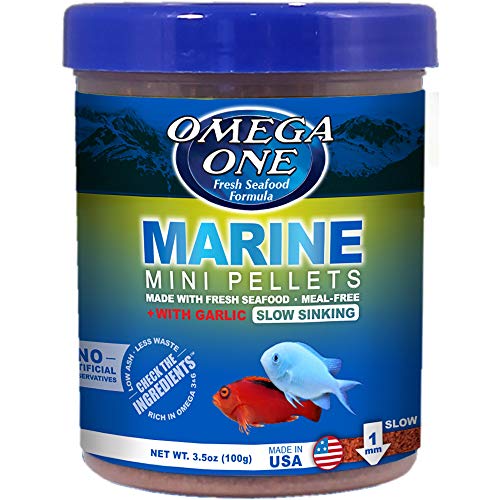
What We Like
- Made directly from fresh seafood
- Contains hand-harvested ocean kelp
- Includes spirulina for nutrition
- Free of pre-processed protein meals
Trade-offs
- Mini pellets too small for large marine fish
- Not suitable for large marine fish needing bigger pellets
This is the only dry fish food made directly from fresh seafood rather than meals or pre-processed proteins, which means the amino acid profile stays closer to what a marine fish would naturally eat. The inclusion of hand-harvested ocean kelp and spirulina adds plant-based nutrients, and the garlic is a practical addition for palatability and immune support. It’s a good fit for aquarists who prioritize whole-food ingredients and want a pellet that doesn’t rely on filler meals.
The formula’s whole-fresh-seafood ingredient list means it avoids the filler meals found in many other dry foods, which can be a plus for aquarists focused on natural nutrition. For larger carnivorous fish, a product like Hikari Marine Carnivore Probiotic Pellets offers a different pellet format that may be more appropriate.
Seachem Nutridiet Marine Flakes with Probiotics
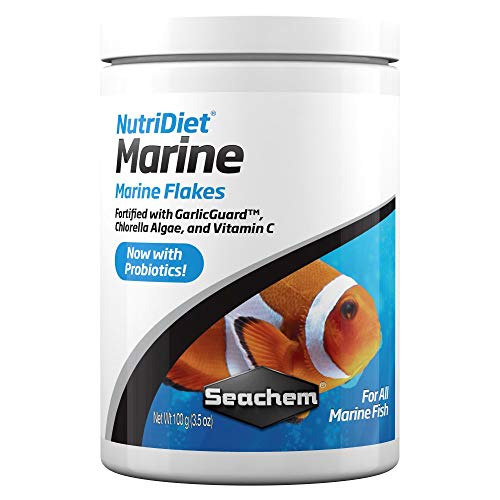
What We Like
- High marine protein content
- Contains Entice attractant for picky eaters
- Includes proteinates and hydrolysates
Trade-offs
- Not formulated for freshwater species
- Not suitable for freshwater fish tanks
High in marine protein and fortified with probiotics, this flake food delivers concentrated nutrition that supports both growth and digestive health in one feeding. The inclusion of Entice, a natural attractant, helps draw in picky eaters that might otherwise ignore standard flakes, making it easier to get new fish feeding reliably. Protein hydrolysates and proteinates cut down on waste and boost nutrient absorption while strengthening immune response, a practical benefit for any aquarium where maintaining water quality is a constant job.
Flakes tend to float and disperse more than pellets, which can lead to some loss to the filter before fish consume them. Compared to Hikari Marine-S Slow-Sinking Pellets, which are designed to sink slowly, this product is better suited for fish that feed at the surface or mid-water. If your tank has bottom feeders that prefer sinking food, a pellet format may be a better choice. For a flake that even finicky eaters will accept, this jar delivers on its formulation.
New Life Spectrum Marine Regular Pellet
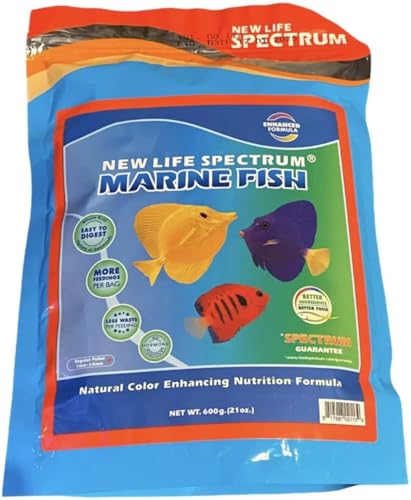
What We Like
- No artificial colors, flavors, or preservatives
- Contains krill, garlic, ginger, algae, seaweeds
- Formulated for saltwater environments
Trade-offs
- Not suitable for freshwater fish
- Only for saltwater fish environments
A 600g bag of pellets built around krill, garlic, ginger, algae, and seaweeds means you are getting a mix that skips artificial colors, flavors, and preservatives entirely. That ingredient list reads like a pantry, not a chemistry set, which is exactly what I look for when I flip a bag over. This one suits anyone who wants to feed their marine fish a diet built on whole-food components rather than synthetic fillers. The absence of artificial additives is the kind of detail that matters when you are staring at a label late at night.
Pellets are pellets: they sink, they are uniform, and some fish that prefer flakes or frozen foods may turn up their noses. Compared to the Ocean Nutrition Prime Reef Flakes, which offer a flake texture that drifts longer in the water column, this New Life Spectrum bag demands that your fish accept a denser, slower-sinking bite. If your tank is full of enthusiastic eaters that will chase a pellet to the bottom, this is a clean, ingredient-forward option. If you have shy or surface-feeding species, you might need to soak them first or look elsewhere.
Ocean Nutrition Nano Reef Soft Pellets
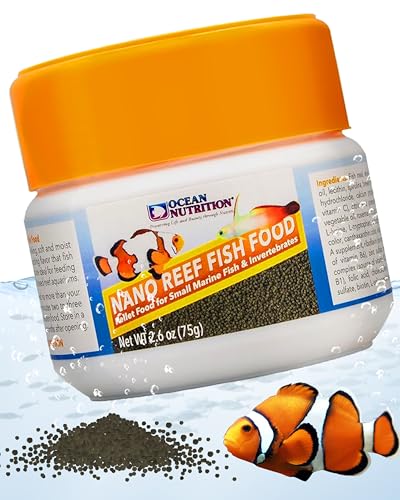
What We Like
- Soft, moist pellets for small mouths
- Spirulina enhances fish coloration
- Natural attractants for quick acceptance
- High HUFA and vitamin content
Trade-offs
- Slow-sinking limits surface feeders
- Not suitable for surface-feeding fish species
The 0.95mm mini pellet size is the key feature here, small enough for tiny mouths like clownfish or gobies to handle easily, and the soft, moist texture means they won’t fall apart before being eaten. That’s why this food works best for nano reef tanks where picky eaters and delicate invertebrates share space. The spirulina and high HUFA content support color and health without needing a separate supplement, and the included mini-spoon helps you portion out just a few pellets without overfeeding.
At 2.6 oz, this container is designed for precision feeding rather than bulk storage, so if you have a larger tank or multiple fish, you’ll go through it quickly. Compared to Hikari Marine-S Slow-Sinking Pellets at 1.76 oz, Ocean Nutrition offers a bit more volume while keeping the same targeted approach for small marine fish. For tanks with bigger species or those needing a general-purpose food, this pellet’s focus on nano fish becomes a limitation.
Product photos
San Francisco Bay Brand Freeze-Dried Mysis Shrimp

What We Like
- 67.3% crude protein for high energy
- Works for freshwater and saltwater fish
- Entices finicky eaters like seahorses
Trade-offs
- Freeze-dried, not a complete daily staple
- Not suitable for fish needing a sinking pellet diet
A crude protein content of 67.3% puts this freeze-dried mysis shrimp among the densest protein sources you can offer saltwater fish. That matters for finicky eaters like seahorses and butterflies that often refuse pellets or flakes. This is a targeted treat, not a complete ration, but for coaxing reluctant feeders or adding variety, the ingredient list is about as clean as it gets.
Freeze-dried food is lower in moisture than frozen or fresh options, so it’s best used as a supplement rather than a sole diet. If your fish eat pellets readily, you don’t need this. If they turn their noses up at everything else, it’s worth trying.
Product photos
Ultra Fresh Marine Shrimp Patties

What We Like
- 75% sword prawns and squids for high protein
- 8:2 meat/vegetable ratio for picky eaters
- 3 million CFUs/g probiotics aid digestion
- Natural seaweed and spirulina for color enhancement
Trade-offs
- No pellet or flake option for varied feeding
- Only suitable for large saltwater fish
A 75% sword prawn and squid content gives this patty a protein density that even finicky marine carnivores find hard to ignore. The 8:2 meat-to-vegetable ratio mirrors what many large saltwater fish would chase in the wild, and the added 3 million CFUs/g probiotics help keep the water cleaner by breaking down waste. If you keep bigger fish that need a high-protein boost, and you want to see their natural colors pop, this is the kind of food that delivers on the ingredient list without gimmicks.
The 75% sword prawn and squid blend gives this food a natural protein ratio that even picky marine fish can’t resist. So it’s a smart choice for keepers who want a clean-label protein source with built-in probiotic support. Unlike pellet or flake options, the patty format means you’ll need to break it apart for smaller fish, but for large saltwater species it delivers a meaty, high-palatability meal. Reviewers note that the 3 million CFUs/g probiotics help keep water cleaner by breaking down waste, which is a real bonus for busy aquarists.
Product photos
Piscine Energetics PE Pellets Saltwater Fish Food

What We Like
- Naturally gut-loaded with zooplankton and phytoplankton
- Supports ecosystem restoration by removing invasive shrimp
- Contributes to global conservation efforts
- Rich in proteins and essential fatty acids
Trade-offs
- Small 2 oz pouch limits quantity for larger tanks
- Not suitable for large carnivorous fish needing bigger pellets
The single most decisive fact here is that every purchase helps remove invasive Mysis shrimp from Okanagan Lake, aiding the restoration of native kokanee salmon populations. That means your fish food choice directly funds ecosystem restoration, not just your aquarium. This pellet is naturally gut-loaded with zooplankton and phytoplankton, so it delivers proteins, essential fatty acids, and nutrients that support growth, health, and vibrant coloration. It suits the aquarist who wants their feeding routine to have a conservation impact beyond the glass.
A small 2 oz pouch keeps the amount compact, so if you have a large tank or multiple fish, you’ll be reordering sooner than with a bigger bag like Hikari Marine-S Slow-Sinking Pellets (1.76 oz). Still, for the eco-conscious hobbyist who values a product that actively restores a lake ecosystem while feeding their fish well, this is a thoughtful pick.
How We Evaluated Saltwater Fish Foods
We started by examining each product’s ingredient list and guaranteed analysis, focusing on protein sources, fat content, and the presence of whole marine ingredients versus pre-processed meals. Manufacturer documentation on pellet size, sinking rate, and intended species guided the initial sorting.
Three criteria mattered most. First, protein source and content, marine fish need animal-based proteins like shrimp meal, krill, or whole seafood, not plant fillers. Second, digestibility and waste output, formulas with probiotics or high-quality proteins reduce waste load on the filtration system. Third, palatability for specific feeding styles, slow-sinking pellets suit bottom feeders, while flakes work for surface-oriented fish.
A research-led evaluation has limits. Our conclusions come from reading labels, comparing published nutritional data, and identifying consistent patterns in what experienced aquarists report about acceptance and water quality. For a deeper look at feeding schedules and portioning, see our guide to feeding saltwater fish.
What To Look For In Saltwater Fish Foods
Matching food to your fish’s natural diet and feeding zone keeps the tank clean and the fish healthy. Pay attention to protein content, ingredient quality, and whether the food sinks, floats, or stays in the middle column.
Choose a food whose protein source matches your fish’s natural diet, whole marine ingredients for carnivores, algae and spirulina for herbivores, and whose sinking rate matches where your fish prefer to eat.
Protein Content and Source
Marine fish need higher protein levels than most freshwater species. Look for foods that list whole seafood, shrimp meal, krill, or fish meal as the first ingredient. Avoid foods where the primary protein comes from terrestrial grains or soy. The best formulas use marine-derived proteins that mimic what fish eat on a reef.
Pellet Size and Sinking Rate
A pellet that is too large goes uneaten and fouls the water. A pellet that sinks too fast may never reach surface-feeding fish. Small-mouthed fish like clownfish and gobies need mini or nano pellets. Larger carnivores like lionfish need bigger chunks. Slow-sinking pellets work for mid-water and bottom feeders; flakes suit fish that feed at the surface.
Ingredient Additives and Preservatives
Artificial colors, flavors, and preservatives add nothing your fish needs. Natural color enhancers like spirulina, astaxanthin, and krill bring out reds and oranges without synthetic dyes. Stabilized vitamin C and probiotics support immune function and digestion. If you are feeding a picky eater, look for natural attractants like garlic or squid.
- Check the guaranteed analysis for crude protein above 40% for carnivores.
- Confirm the first ingredient is a named marine protein, not “fish meal” or “poultry by-product.”
- Match pellet diameter to the size of your fish’s mouth, a general rule is the pellet should be no larger than the fish’s eye.
- Look for stabilized vitamin C on the ingredient list for immune support.
- Choose a sinking rate that matches your fish’s natural feeding zone.
A good rule of thumb: if the ingredient list looks like a reef, the food probably works for reef fish.
Saltwater Fish Foods Compared
The table below compares all ten picks side by side, showing their protein emphasis, best-use scenario, and key trade-offs so you can match the right food to your tank’s residents.
| Product | Type | Key Ingredient | Target Fish |
|---|---|---|---|
| Hikari Marine-S Slow-Sinking Pellets | Slow-Sinking Pellets | Shrimp Meal | Small marine carnivores/omnivores |
| Ocean Nutrition Prime Reef Flakes | Flake food | N/A | All reef aquariums |
| Hikari Marine Carnivore Probiotic Pellets | Sinking Small Probiotic-Enhanced Pellets | N/A | Marine Carnivores |
| Omega One Marine Mini Pellets with Garlic | Mini Pellets | Garlic | N/A |
| Seachem Nutridiet Marine Flakes with Probiotics | Flakes | N/A | N/A |
| New Life Spectrum Marine Regular Pellet | Pellet | Krill, garlic, ginger, algae, seaweeds | Fish in saltwater environments |
| Ocean Nutrition Nano Reef Soft Pellets | Soft & Moist Slow Sinking Pellet | Spirulina, high HUFA, vitamins | Small marine fish, invertebrates |
| San Francisco Bay Brand Freeze-Dried Mysis Shrimp | Freeze-Dried | Mysis shrimp | Freshwater and Saltwater Fish |
| Ultra Fresh Marine Shrimp Patties | Marine Shrimp Patties | Calcium, Vitamin D | Large Saltwater Fish |
| Piscine Energetics PE Pellets Saltwater Fish Food | Pellets | Mysis diluviana | N/A |
Frequently Asked Questions
What is the best food for clownfish?
Clownfish do well on a varied diet that includes high-protein pellets and occasional treats. The best food for clownfish includes the Hikari Marine-S Slow-Sinking Pellets for daily nutrition and the San Francisco Bay Brand Freeze-Dried Mysis Shrimp for variety. Clownfish are omnivores, so a mix of marine protein and spirulina supports their coloration and health.
Can I feed freshwater fish food to my saltwater fish?
No. Freshwater fish food lacks the marine proteins, fatty acids, and mineral profile that saltwater fish need. Saltwater fish require higher levels of HUFAs (highly unsaturated fatty acids) and marine-derived ingredients. Feeding freshwater food long-term can lead to nutritional deficiencies and poor coloration.
How often should I feed my saltwater fish?
Most marine fish do best with two to three small feedings per day, offering only what they can consume in two to three minutes. Overfeeding is the most common cause of poor water quality in saltwater tanks. Adjust portion size based on the number and size of fish, and skip one feeding day per week to let their digestive systems rest.
What is the difference between flakes and pellets for saltwater fish?
Flakes float on the surface and suit fish that feed at the top of the water column, like anthias and chromis. Pellets sink at varying rates and work for mid-water and bottom-feeding fish. Pellets also tend to produce less waste because they are more nutrient-dense and less likely to disintegrate before being eaten.
Do saltwater fish need garlic in their food?
Garlic acts as a natural appetite stimulant and can help entice picky eaters to accept a new food. It also has mild antiparasitic properties that some aquarists find useful during quarantine. However, garlic should not replace a balanced diet, it is a supplement, not a nutritional requirement. The Omega One Marine Mini Pellets with Garlic offer a convenient way to add it.
The Bottom Line
The Hikari Marine-S Slow-Sinking Pellets are the best overall choice for aquarists keeping small marine carnivores or omnivores. Their soft texture and high protein content mimic a natural reef diet, and the stabilized vitamin C supports immune health through daily feeding. If you have a mixed community of surface feeders and bottom dwellers, this pellet’s slow-sinking action covers both zones.
Budget-conscious keepers and those with larger tanks should look at the Ocean Nutrition Prime Reef Flakes for a clean, protein-focused flake that does not cloud the water. For nano reef owners, the Ocean Nutrition Nano Reef Soft Pellets deliver a soft, moist pellet sized for small mouths. And if you keep finicky eaters like seahorses or butterflies, the San Francisco Bay Brand Freeze-Dried Mysis Shrimp is a high-protein treat that reliably triggers a feeding response.
The single most important factor in choosing saltwater fish food is matching the protein source and sinking rate to your fish’s natural feeding behavior. Get that right, and you will see better acceptance, less waste, and healthier color.
