
8 Best Canned Cat Food For Cats With Kidney Disease in 2026
This post contains affiliate links. As an Amazon Associate, we earn from qualifying purchases.
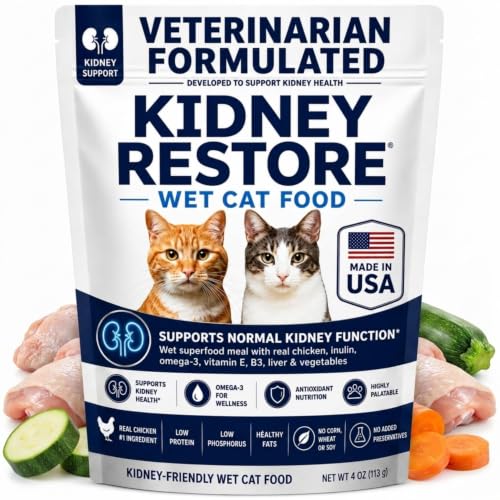
The best overall canned cat food for cats with kidney disease is Royal Canin Veterinary Renal Support E Loaf in Sauce. This veterinary-exclusive formula has low phosphorus to protect kidney function. It also uses an energy-dense recipe that reduces meal volume for cats who may have a poor appetite. For owners seeking a non-prescription option, the Kidney Restore Non-Prescription Renal Cat Food Wet offers low phosphorus and sodium without a vet visit. The Weruva Wx Phos Focused Chicken & Tilapia in Gravy provides up to 50% less phosphorus than the AAFCO minimum in a filler-free gravy.
A kidney disease diagnosis changes everything about how you feed your cat. The right canned food needs to manage phosphorus levels carefully, support hydration, and still taste good enough that a nauseated cat will actually eat it. Balancing these competing demands is the real challenge.
This guide is based on a careful review of manufacturer specifications, ingredient lists, nutritional analyses, and patterns in owner feedback. We evaluated eight formulas across prescription and non-prescription categories, looking at phosphorus content, protein quality, texture, and palatability to help you find the right fit for your cat’s stage of kidney disease and personal preferences.
Top 8 Canned Cat Foods For Cats With Kidney Disease in the Market

Certain content that appears on this site comes from Amazon. This content is provided "as is" and is subject to change or removal at any time.
The Best Canned Cat Foods For Cats With Kidney Disease, Reviewed
Royal Canin Veterinary Renal Support E Loaf in Sauce
What We Like
- Veterinary-exclusive kidney support formula
- Low phosphorus to protect kidney function
- Energy-dense recipe reduces meal volume
- Antioxidant complex and fish oil included
Trade-offs
- Requires veterinary authorization to purchase
- Only available through veterinary prescription
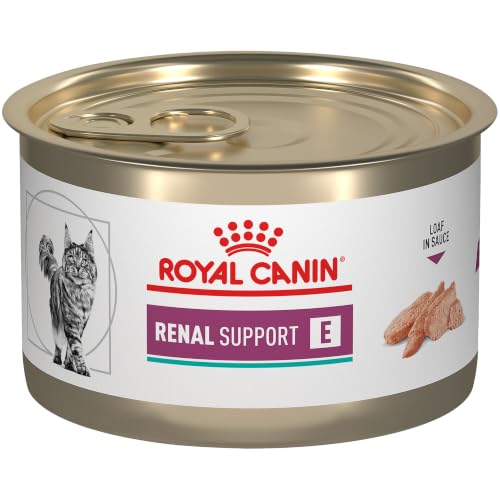
Low phosphorus and targeted protein levels support kidney function in adult cats, making this a precise nutritional tool for managing feline renal disease. The energy-dense formula reduces meal volume, which helps compensate for decreased appetite, while the antioxidant complex and fish oil from the recipe further promote kidney health. This wet food is designed to be highly palatable, so it encourages eating even when a cat is feeling picky.
Because it’s a veterinary-exclusive diet, you’ll need a prescription to buy it, which adds a step compared to grabbing a non-prescription option off the shelf. The loaf-in-sauce texture is meant to entice finicky eaters, but it may not appeal to every cat’s personal taste. If your vet has already diagnosed kidney issues and supports this food, the targeted nutrition makes the extra effort worthwhile.
Weruva Wx Phos Focused Chicken & Tilapia in Gravy
What We Like
- Up to 50% less phosphorus than AAFCO minimum
- Highly bioavailable proteins for muscle maintenance
- No powdered cellulose or fillers
- Hydration from bone-free proteins
Trade-offs
- Small 3 oz cans require more frequent feeding
- Not suitable for cats needing high phosphorus levels
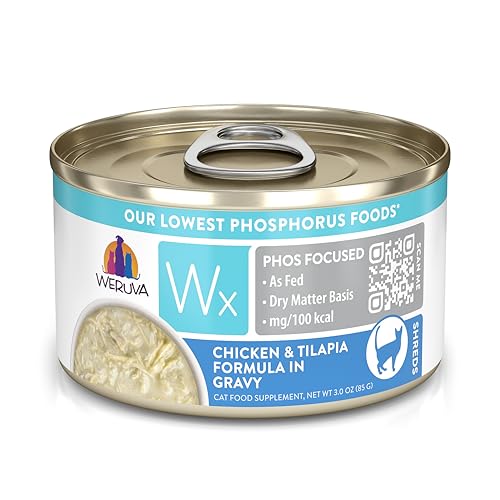
A phosphorus level up to 50% below AAFCO’s minimum means this formula is built from the ground up for cats who need to keep mineral intake in check without sacrificing protein quality. That matters because many low-phosphorus foods rely on fillers or plant proteins to dilute phosphorus numbers, but here the protein comes from chicken and tilapia with no powdered cellulose or carbohydrate tricks. The bone-free gravy also adds hydration, which is a practical bonus for cats who need extra moisture in their diet. This is a straightforward, ingredient-driven approach that suits owners who want a clean label and measurable phosphorus reduction.
The trade-off is portion size: at 3 ounces per can, you’ll be opening more cans per day than with larger formats like Royal Canin Veterinary Renal Support E Loaf in Sauce’s 5.1 oz cans. The gravy texture also won’t appeal to every cat, especially those used to a denser loaf. But if your cat accepts the consistency and you don’t mind a few more can pulls per day, the phosphorus numbers here are a strong feature for a wet food with low phosphorus levels.
Blue Buffalo Natural Veterinary Diet K+M Wet Cat Food
What We Like
- Real chicken is first ingredient
- Contains glucosamine and chondroitin for joints
- No chicken by-product meals, corn, wheat, or soy
- Formulated for kidney function plus mobility
Trade-offs
- Requires veterinarian authorization to purchase
- Requires veterinary prescription for purchase
This wet cat food pairs kidney support with glucosamine and chondroitin for joint care, so you’re addressing two common senior cat issues in one can. It starts with real chicken as the first ingredient, and controlled levels of protein help manage kidney workload. That dual-focus design makes it a practical option for cats that need both renal and joint support, especially if you’d rather not juggle separate supplements or rotate between two prescription diets.
Because this formula requires your vet’s authorization, you’ll need to plan ahead, no grabbing it off the shelf on a whim. That extra step can be a hassle if your cat’s kidney values are already stable and you just want a quick refill. But for cats that need both renal and joint support in one can, skipping the hassle of mixing separate products makes the vet visit worthwhile.
Kidney Restore Non-Prescription Renal Cat Food Wet
What We Like
- Non-prescription renal support formula
- Low phosphorus and low sodium
- Human grade ingredients, USA made
- Includes superfoods and omega-3
Trade-offs
- Higher protein than some prescription renal diets
- Not suitable for cats requiring a veterinary prescription diet
A low phosphorus, low sodium wet food with human grade ingredients and real chicken and liver means this is about as close as you can get to a homemade renal diet without a prescription. The inclusion of superfoods, omega-3, and inulin fiber targets hydration, toxin elimination, and inflammation, which are the key concerns for kidney support. It’s formulated by a vet nutritionist and meets AAFCO non-prescription renal guidelines, so you’re not guessing about nutrient ratios. This makes it a strong pick for owners who want a transparent, high-quality option without going through a vet’s office.
This food is not a veterinary prescription diet, so it may not be appropriate for cats requiring a strictly controlled renal diet under a vet’s supervision. For early to moderate kidney concerns, or for cats that refuse prescription diets, the real food ingredients and added hydration make it a practical alternative.
Product photos
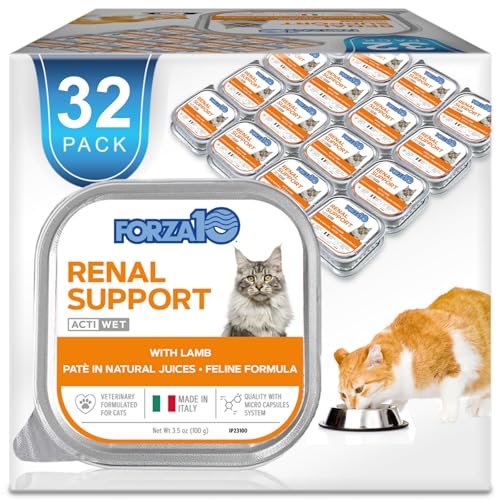
Forza10 Renal Wet Cat Food for Kidney Support
What We Like
- Hydrolyzed protein for renal support
- Cranberries, dandelion, clover added
- Non-GMO, no by-products or soy
- Convenient 3.5 oz single-serve cans
Trade-offs
- Only one flavor option (lamb)
- Not suitable for cats with poultry allergies
Controlled phosphorus and adapted protein levels come from hydrolyzed protein and potato protein, which is exactly what a cat with kidney disease needs. Cranberries, dried dandelion, and clover extract support kidney health without relying on synthetic additives. Forza10 skips the marketing fluff: no GMOs, by-products, wheat, soy, or artificial anything. This is a straightforward, Italy-made wet food that puts ingredient transparency first, suited for owners who read the label and want a targeted renal formula in a convenient single-serving size.
This food comes only in lamb flavor, so picky cats might not cooperate. The 3.5 oz cans are small, which keeps each serving fresh. If your cat tolerates lamb and you value a clean, non-GMO ingredient list with targeted renal herbs, this is a solid fit.
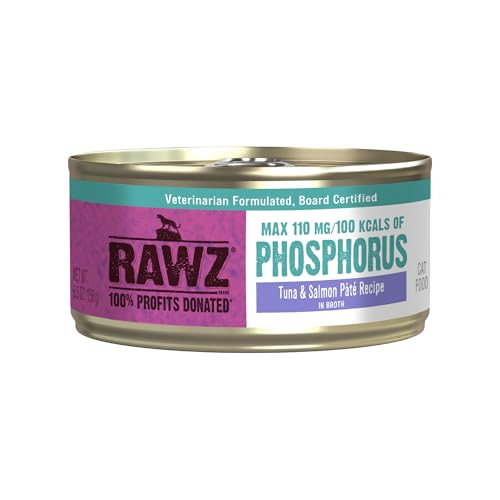
Rawz Tuna & Salmon Canned Cat Food in Broth
What We Like
- Low phosphorus max 110 mg/100 kcals
- No xanthan, guar, or carrageenan
- Vet formulated by board certified
- Supplemental feeding flexibility
Trade-offs
- For supplemental feeding only, not complete
- Not a complete diet, requires mixing with other food
Phosphorus capped at 110 mg per 100 kilocalories puts this among the tighter renal options, which matters when every milligram counts for a cat with compromised kidneys. The absence of xanthan gum, guar gum, and carrageenan means you’re not relying on common thickeners that some owners prefer to avoid. It’s formulated by a board-certified veterinarian, so the design intent is clear, even if the can itself doesn’t shout about it. This is a supplemental food, not a complete diet, which makes it a tool to add variety or extra moisture alongside a primary renal prescription food. For cats who turn up their nose at standard renal diets, this broth-based texture and tuna-salmon profile can be a useful way to keep them eating.
You cannot feed this as a sole ration, so you’re still buying a complete renal food as the base. Compared to Royal Canin Veterinary Renal Support E, which is a complete diet, this requires more management and mixing. It works best as a rotation or topper for a cat who needs coaxing to eat, but if you want a single-can solution, you’ll need to look elsewhere. For the owner willing to layer products, this fills a specific gap without the gums found in many other wet foods.
Product photos
Tiki Cat Silver Senior Wet Cat Food

What We Like
- Low phosphorus for kidney support
- High protein maintains muscle mass
- Antioxidants support immune system
- Real shredded chicken and fish in broth
Trade-offs
- Small 2.4 oz cans require multiple per feeding
- Limited to senior cats age 11+ only
Low phosphorus is a key feature for senior cats, and this recipe delivers it without skimping on protein. Real shredded chicken and flaked salmon, tuna, and mackerel in broth give a texture that older cats often find easier to eat. The high protein helps maintain muscle mass that tends to drop in seniors. The added antioxidants support the immune system, which is a bonus for aging cats. This is a straightforward, no-fuss option for owners who want a senior-specific diet that addresses phosphorus without turning mealtime into a chore.
The 2.4-ounce can size means you’ll need multiple cans per day for an average cat, so expect more opening and recycling. Compared to Royal Canin’s Veterinary Renal Support E Loaf in Sauce, which comes in 5.1 oz cans, Tiki Cat’s smaller portions can feel less convenient if you’re feeding a larger cat or multiple cats. But if your senior cat is a light eater or you prefer the shreds-in-broth texture over a loaf, the smaller can helps reduce waste. It’s a practical trade-off for a recipe that keeps phosphorus low and protein high.
Product photos
Evanger's EVX Restricted Diet Phosphorus Canned Cat Food
What We Like
- Limited ingredient list for sensitive cats
- Grain-free formulation
- Low phosphorus for renal support
- Soft pâté texture easy to eat
Trade-offs
- Single-protein limits variety for picky eaters
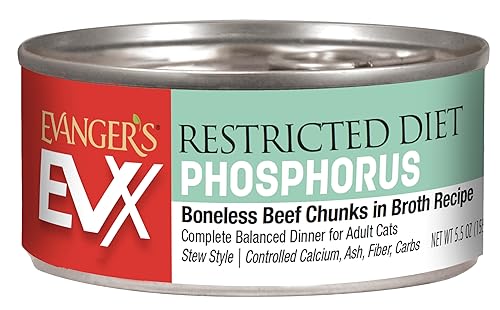
A grain-free, limited-ingredient wet food with boneless beef chunks in broth and added cranberries skips the fillers that can trigger sensitivities in cats on a restricted phosphorus diet. The soft pâté style and gravy texture make it easy for cats with reduced appetite or dental issues to get the nutrition they need. Each 5.5-ounce can delivers a straightforward recipe that keeps the ingredient list short, so you know exactly what your cat is eating.
The single-protein beef base won’t work for every cat, especially those who prefer poultry or have beef sensitivities. Compared to the Weruva Wx Phos Focused Chicken & Tilapia, which offers a fish-poultry blend, this Evanger’s formula is more restrictive by design. That’s fine if your cat tolerates beef and you want maximum simplicity, but it does limit rotation options for picky eaters. Stick with this if your priority is a grain-free diet with minimal ingredients.
Product photos
How We Evaluated Canned Cat Foods For Cats With Kidney Disease
We started by examining the nutritional specifications and ingredient lists of each formula, focusing on phosphorus content, protein levels, moisture percentage, and the presence of kidney-supportive additives like omega-3 fatty acids and antioxidant complexes. Manufacturer data sheets and veterinary nutrition guidelines provided the baseline for what makes a renal diet effective.
The four criteria that mattered most were phosphorus restriction (the primary dietary intervention for CKD), protein quality and quantity, moisture content, and palatability. Too little protein causes muscle wasting, while too much stresses the kidneys. Hydration is critical for kidney function, and a perfect diet is useless if the cat won’t eat it. We also considered whether each food was a complete diet or required supplementation, and whether a veterinary prescription was needed.
A research-led evaluation has limits: we haven’t measured blood work changes in individual cats, and individual responses to any diet vary. What we can do is give you the tools to compare options against your veterinarian’s specific phosphorus and protein targets. For a deeper look at the category, our guide to wet cat food for kidney disease covers additional options and considerations.
What To Look For In Canned Cat Foods For Cats With Kidney Disease
Choosing a renal diet means reading past the marketing claims and focusing on the numbers that matter for kidney health. Here’s what to check on every label.
Look for canned food with restricted phosphorus, moderate high-quality protein to maintain muscle without overloading the kidneys, high moisture content, and added omega-3 fatty acids from fish oil for their anti-inflammatory effects.
Phosphorus Content
Phosphorus restriction is the single most important dietary change for managing chronic kidney disease. The goal is to slow the progression of kidney damage by reducing the workload on the remaining functional tissue. Most prescription renal diets target a low phosphorus level on a dry matter basis, while non-prescription options like the low phosphorus wet food we recommend may go slightly higher. Check the guaranteed analysis and ask your vet for a target number based on your cat’s current blood work.
Protein Quality and Quantity
This is the trickiest balance in renal nutrition. Cats are obligate carnivores that need protein, but damaged kidneys struggle to process protein waste products. The solution is moderate protein from highly bioavailable sources, real meat, not rendered by-products, so the body can use it efficiently with less waste. Look for named protein sources like chicken, turkey, or fish as the first ingredient, and avoid foods with excessive plant proteins that offer lower biological value.
Moisture and Texture
Cats with kidney disease are at high risk for dehydration, which further stresses the kidneys. Canned food naturally provides high moisture content, making it far superior to dry kibble for CKD management. Texture matters too: some cats with nausea prefer a smooth pâté, while others will eat more from a gravy or broth-style food. The advantages of canned food for hydration are well documented, and finding a texture your cat will consistently eat is worth experimenting with.
Added Kidney Support Ingredients
- Omega-3 fatty acids from fish oil help reduce inflammation and proteinuria (protein leakage in urine).
- Antioxidant complexes (vitamin E, selenium, taurine) combat oxidative stress associated with kidney disease.
- Potassium citrate may be added to help manage metabolic acidosis.
- B vitamins support appetite and energy metabolism in cats that may eat less.
A good rule of thumb: the ideal renal diet is one your cat will actually eat consistently while meeting your vet’s phosphorus and protein targets. No single food works for every cat.
Canned Cat Foods For Cats With Kidney Disease Compared
The table below compares the eight canned renal diets we evaluated across key nutritional and practical factors to help you narrow down your choices.
| Product | Texture/Form | Protein Source | Key Ingredients/Features |
|---|---|---|---|
| Royal Canin Veterinary Renal Support E Loaf in Sauce | Loaf in sauce | Targeted levels | Antioxidant complex, fish oil |
| Weruva Wx Phos Focused Chicken & Tilapia in Gravy | In Gravy | Chicken & Tilapia | Bone-free proteins for hydration |
| Blue Buffalo Natural Veterinary Diet K+M Wet Cat Food | Wet | Real Chicken | Glucosamine & Chondroitin |
| Kidney Restore Non-Prescription Renal Cat Food Wet | Wet | Real chicken & liver | Low sodium |
| Forza10 Renal Wet Cat Food for Kidney Support | Wet | Hydrolyzed & potato protein | Cranberries, dandelion, clover |
| Rawz Tuna & Salmon Canned Cat Food in Broth | Broth | Tuna & Salmon | No xanthan, guar, carrageenan |
| Tiki Cat Silver Senior Wet Cat Food | Shreds in broth | Real shredded chicken, flaked salmon, tuna, mackerel | Optimal antioxidants |
| Evanger's EVX Restricted Diet Phosphorus Canned Cat Food | Soft Pâté Style | Boneless Beef | Cranberries, grain-free |
Frequently Asked Questions
What is the best canned cat food for cats with kidney disease?
The best overall choice is Royal Canin Veterinary Renal Support E Loaf in Sauce. This prescription diet is formulated with low phosphorus, reduced protein, and an energy-dense recipe that helps cats with poor appetites maintain their weight. It requires veterinary authorization to purchase.
Can I feed my cat non-prescription food for kidney disease?
Yes. The Kidney Restore Non-Prescription Renal Cat Food Wet is formulated with low phosphorus and sodium and uses human-grade ingredients without requiring a prescription. It works best for early to moderate kidney disease, but cats with advanced CKD may need a stricter prescription diet.
What phosphorus level should I look for in cat food for kidney disease?
Most veterinary renal diets target a low phosphorus level on a dry matter basis. Your veterinarian can give you a specific target based on your cat’s blood work. Non-prescription options like the Weruva Wx Phos Focused line offer up to 50% less phosphorus than the AAFCO minimum.
How do I transition my cat to a renal diet?
Gradually mix the new food with the old food over several days, increasing the proportion of renal food each day. Cats with kidney disease may be nauseated, so warming the food slightly or adding a small amount of low-sodium chicken broth can help. Our guide on feeding a cat with kidney disease has more detailed tips for managing picky eaters.
Is wet food better than dry food for cats with kidney disease?
Yes. Wet food provides high moisture content, which helps maintain hydration and supports kidney function. Dry food contains low moisture and can contribute to dehydration. The benefits of wet food for CKD management are significant enough that most veterinary nutritionists recommend an all-wet or mostly-wet diet.
The Bottom Line
The Royal Canin Veterinary Renal Support E Loaf in Sauce is our best overall pick because it combines the three things that matter most for a cat with kidney disease: tight phosphorus control, an energy-dense formula that helps maintain weight, and a palatable loaf texture that encourages eating even when appetite is poor. It requires a veterinary prescription. That is appropriate for cats with confirmed CKD who need a precisely controlled diet.
If your cat has early or moderate kidney disease and you prefer to avoid prescription diets, the Kidney Restore Non-Prescription Renal Cat Food Wet offers low phosphorus and sodium with human-grade ingredients. No veterinary authorization is needed. For cats that need joint support alongside kidney care, the Blue Buffalo Natural Veterinary Diet K+M Wet Cat Food combines glucosamine and chondroitin with a renal-friendly formula.
The single most important factor in any renal diet is whether your cat will eat it consistently. Work with your veterinarian to set phosphorus and protein targets, then use this guide to find a food that meets those numbers and suits your cat’s texture and flavor preferences. For additional options, our list of top-rated wet food for kidney disease includes more prescription and non-prescription choices.
