
5 Best Low Phosphorus Wet Cat Food in 2026
This post contains affiliate links. As an Amazon Associate, we earn from qualifying purchases.
For cats with kidney concerns, the Dave’s Pet Food Renal Cat Food earns Best Overall because it delivers a controlled low phosphorus level (max 0.3%) in a non-prescription, vet-reviewed formula. It also includes moisture-rich broth for hydration. The Weruva Wx Phos Focused Chicken is our Best Low Phosphorus Chicken pick for its exceptionally reduced phosphorus content, while the Hill’s Prescription Diet k/d Kidney Care stands as the Best Veterinarian Recommended option for cats needing a clinically proven therapeutic diet.
Managing a cat’s kidney health through diet means balancing multiple factors at once: phosphorus restriction, protein quality, hydration support, and palatability. The challenge is finding a wet food that hits all these marks without requiring a veterinary prescription or breaking your budget.
This guide is based on a careful review of manufacturer specifications, ingredient lists, nutritional analysis, and patterns in owner feedback for five top-rated low phosphorus wet cat foods. We break down what each formula offers so you can match a diet to your cat’s specific stage of kidney disease and eating preferences.
Top 5 Low Phosphorus Wet Cat Foods in the Market
Certain content that appears on this site comes from Amazon. This content is provided "as is" and is subject to change or removal at any time.
The Best Low Phosphorus Wet Cat Foods, Reviewed
Dave's Pet Food Renal Cat Food
What We Like
- Low phosphorus (max 0.3%) for kidney support
- Vet-reviewed, non-prescription clinical diet
- Moisture-rich broth to boost hydration
- No carrageenan, artificial colors, or gluten
Trade-offs
- Contains brown rice, not grain-free
- Small 3 oz cans mean more frequent feeding
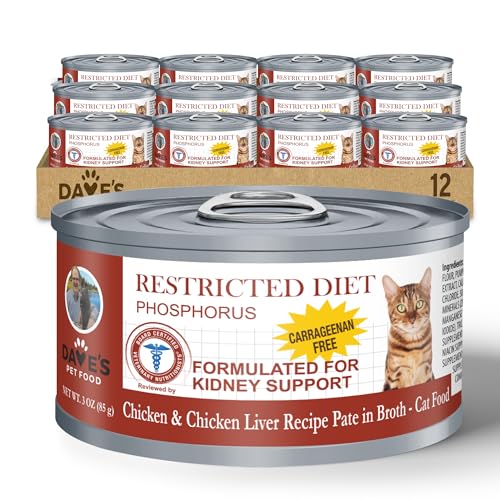
A phosphorus cap of 0.3% puts this squarely in renal-friendly territory, and the fact that it was reviewed by board-certified veterinary nutritionists without needing a prescription makes it a practical first-line option for kidney care. The slow-cooked broth adds moisture to support hydration, which is critical when kidneys struggle to conserve water, and the soft texture with real chicken and pumpkin is designed to tempt cats whose appetite is fading. This diet covers the basics well for someone seeking a vet-backed option that doesn’t require a prescription.
The deliberately low protein level, 5% minimum, is fine for renal support but won’t satisfy a young, active cat’s needs. For a cat already showing signs of kidney trouble, this food provides gentle nutrition with extra fluids, and it doesn’t require a prescription.
Weruva Wx Phos Focused Chicken
What We Like
- Up to 50% less phosphorus than AAFCO minimum
- Highly bioavailable proteins for muscle maintenance
- No powdered cellulose, fillers, or carb fillers
- Bone-free proteins support hydration
Trade-offs
- Single chicken flavor limits variety for picky eaters
- Not suitable for kittens or general feeding
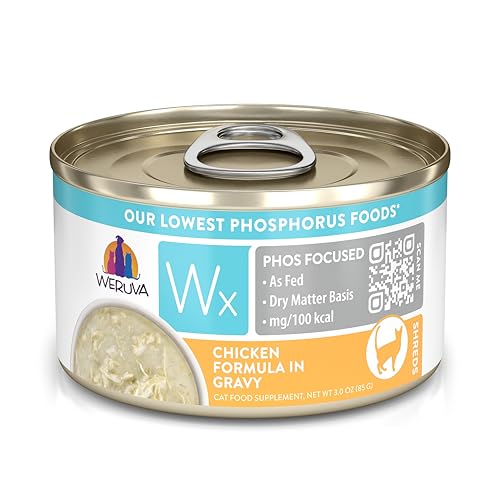
Up to 50% less phosphorus than AAFCO’s minimum levels makes this a focused option for cats needing kidney-friendly nutrition without sacrificing protein quality. The highly bioavailable proteins support digestion and muscle mass, while the bone-free gravy adds hydration, a practical combo for cats who need to drink more. It’s a straightforward, no-filler recipe that skips the powdered cellulose and carb tricks some brands use to artificially lower phosphorus numbers. For owners who want a clean ingredient list and measurable phosphorus reduction, this delivers exactly what the label says.
The 3 oz can size means some cats may need more than one can per meal, but the pack of 12 offers a convenient supply. Compared to Dave’s Pet Food Renal Cat Food, which also comes in a 2.2-pound pack, Weruva’s advantage is the explicit 50% phosphorus reduction claim and the absence of fillers. If your cat tolerates chicken well and you prefer a minimalist ingredient deck, this is a strong pick. Not ideal for multi-cat households where one cat needs a different protein source or for owners who want larger single-serve cans.
Hill's Prescription Diet k/d Kidney Care

What We Like
- ActivBiome+ Kidney Defense prebiotic blend
- #1 US Vet Recommended therapeutic food
Trade-offs
- Requires veterinary prescription
- Only available in 2.9 oz cans
This is the food your vet is most likely to recommend for a reason: it’s built around the specific metabolic needs of cats with compromised kidney function, not just a generic low-phosphorus recipe.
The trade-off is that you cannot buy this off the shelf, it’s a prescription diet, so you’ll need a vet’s okay first. That barrier exists because the nutrient levels are tightly controlled, which is exactly what makes it effective, but it does mean a trip to the clinic before you can order. Compared to something like Dave’s Pet Food Renal (which is non-prescription), the Hill’s formula offers a proprietary prebiotic blend and clinical backing that Dave’s does not claim. The Dave’s option lets you skip the vet visit if that’s a hurdle. For a cat already diagnosed with kidney disease, the prescription route is usually the right one.
Product photos
Tiki Cat Silver Senior Wet Cat Food

What We Like
- Low phosphorus for kidney health
- High protein maintains muscle mass
- Antioxidants support senior immune system
- Variety pack with three recipes
Trade-offs
- Only formulated for cats age 11 and older
- Not suitable for cats under 11 years old
The low phosphorus content is the headline here, directly relevant for senior cats whose kidneys often need a lighter mineral load. Tiki Cat Silver Senior pairs that with real shredded chicken and flaked salmon, tuna, or mackerel in broth, so you’re getting recognizable protein sources rather than vague meat meals. High protein helps maintain muscle mass in aging cats, and the added antioxidants target immune support, which matters when a cat’s natural defenses start to slow down. This is a recipe built around the specific metabolic shifts of cats over 11, not just a general adult formula rebadged for seniors.
The trade-off is that each can is 2.4 oz, which is a small portion. For larger senior cats, you may need to serve more than one can per meal, increasing daily volume and cost compared to larger cans from other brands. Also, this formula is designed for cats age 11 and older. If you have a younger cat with kidney concerns, a renal formula that covers all adult life stages, such as Weruva Wx Phos Focused, would be more appropriate. For a cat in that senior window, the targeted nutrient balance supports their specific needs.
Product photos
Royal Canin Veterinary Renal Support T Wet Food
What We Like
- Soft texture encourages eating
- Energy-dense formula reduces meal volume
- Includes fish oil fatty acids
- Veterinary-exclusive kidney support
Trade-offs
- Requires veterinary authorization to purchase
- Only available in 3 oz cans
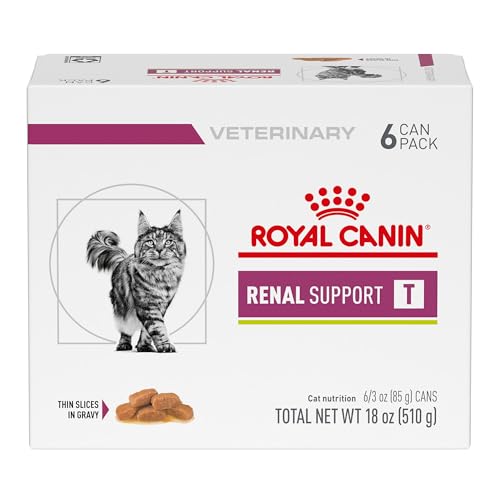
This wet cat food is formulated to support kidney health with a precise antioxidant complex, fatty acids from fish oil, low phosphorus, and targeted protein levels. What makes it different is the focus on appetite stimulation: a soft texture and energy-dense formula help cats with decreased appetite eat a smaller meal, reducing meal volume. That means a cat that’s reluctant to eat can still get calories without overloading the kidneys. It’s a veterinary-exclusive diet, so it’s designed for cats that need this level of renal support.
You’ll need a prescription to buy this food, which adds a step compared to over-the-counter options like Dave’s Pet Food Renal. It’s designed to support kidney health with controlled phosphorus and targeted protein levels, so if your cat has kidney issues and a poor appetite, the extra effort may be worthwhile. For a cat that’s eating well and just needs general kidney maintenance, a non-prescription diet might be simpler.
Product photos
How We Evaluated Low Phosphorus Wet Cat Foods
Our evaluation began with a close read of each product’s guaranteed analysis and ingredient panel, focusing on phosphorus content as the primary metric. We cross-referenced these numbers against AAFCO nutrient profiles and veterinary renal diet guidelines to separate genuinely low-phosphorus formulas from marketing claims. Manufacturer websites and published nutritional data sheets provided the technical foundation.
Four criteria guided our rankings. Phosphorus level came first, we prioritized foods with low phosphorus, with extra credit for formulas under 0.3%. Protein quality and source mattered next, since cats with kidney disease need highly digestible protein to maintain muscle mass without overtaxing the kidneys.
Moisture content was the third factor, because wet food’s hydration benefit is a key advantage over dry kibble for kidney support. Finally, we weighed accessibility, whether a food required a prescription, how widely it was available, and whether it offered flavor variety for picky eaters.
A research-led evaluation has limits. We did not lab-test these foods, and individual cats may respond differently to the same formula. Owner feedback patterns helped us identify palatability issues and real-world feeding challenges, but your cat’s acceptance of a new food is something only trial can confirm. For a deeper look at dietary options, our renal cat food guide walks through the full decision process, and our breakdown of non-prescription kidney food covers OTC alternatives in more detail.
What To Look For In Low Phosphorus Wet Cat Foods
Choosing a low phosphorus wet cat food means reading the guaranteed analysis and ingredient list with a skeptical eye. The right formula supports kidney function without sacrificing the protein and moisture your cat needs.
Look for wet foods with low phosphorus on a dry matter basis, ideally under 0.3% for cats with diagnosed kidney disease. Prioritize high-quality animal protein, high moisture content, and minimal phosphorus additives.
Phosphorus Content
The target phosphorus level depends on your cat’s stage of kidney disease. For early-stage or maintenance, foods with low phosphorus on a dry matter basis are appropriate. Cats with advanced CKD benefit from formulas under 0.3%. Check the guaranteed analysis for “phosphorus (min)” and “phosphorus (max)”, the max figure is the one that matters. Some foods add phosphate binders or use eggshell calcium as a natural phosphorus restrictor.
Protein Quality and Source
Kidney disease changes how a cat processes protein. You want highly digestible animal protein, chicken, fish, or egg, that provides essential amino acids without producing excess waste products. Avoid foods with plant-based protein concentrates like corn gluten meal or soy protein isolate, which are less bioavailable. Single-protein formulas can help if your cat has food sensitivities alongside kidney issues.
Moisture Content
Wet food’s biggest advantage for kidney cats is water. Canned foods typically run high moisture, which helps flush the kidneys and maintain hydration in cats who don’t drink enough on their own. Pâté and broth-based formulas tend to have higher moisture than chunky or shredded styles. If your cat is on a mix of wet and dry, account for the lower moisture in the kibble portion.
- Check the guaranteed analysis for phosphorus max, not min, as your target number
- Look for named animal protein as the first ingredient, not meat by-products or plant protein
- Choose pâté or broth styles for highest moisture content
- Verify the food is complete and balanced for adult maintenance, not just a supplement
- Avoid formulas with added phosphorus from bone meal, dicalcium phosphate, or phosphoric acid
A cat eating a typical portion of wet food at high moisture gets a significant amount of water, more than most cats drink from a bowl in a day.
Low Phosphorus Wet Cat Foods Compared
The table below compares these five low phosphorus wet cat foods across key specs, including phosphorus levels, protein sources, moisture content, and whether a prescription is required.
| Product | Phosphorus Level | Form | Can Size | Pack Size |
|---|---|---|---|---|
| Dave's Pet Food Renal Cat Food | max 0.3% | Wet stew in broth | 3 oz | 12-pack |
| Weruva Wx Phos Focused Chicken | Up to 50% less than AAFCO minimum | Gravy | 3 oz | 12 cans |
| Hill's Prescription Diet k/d Kidney Care | Reduced | Chicken & Vegetable Stew | 2.9 oz | 24-pack |
| Tiki Cat Silver Senior Wet Cat Food | Low | Shreds in broth | 2.4 oz | 12-count |
| Royal Canin Veterinary Renal Support T Wet Food | Low phosphorus | Wet cat food | 3 oz | 6-pack |
Frequently Asked Questions
What is a safe phosphorus level in wet cat food for kidney disease?
For cats with diagnosed kidney disease, a low phosphorus level on a dry matter basis is generally recommended. Many veterinary renal diets target 0.3% or lower. Always check the “phosphorus (max)” figure on the guaranteed analysis rather than the minimum, and consult your veterinarian for the appropriate target based on your cat’s bloodwork.
Can I feed low phosphorus wet cat food to a healthy cat?
Healthy cats can eat low phosphorus food short-term, but it is not ideal as a long-term diet. Phosphorus is an essential mineral for bone health and cellular function. A cat without kidney issues needs the standard phosphorus levels found in regular adult maintenance foods. Reserve low phosphorus diets for cats with diagnosed kidney disease or as directed by your veterinarian.
What is the difference between prescription and non-prescription low phosphorus cat food?
Prescription renal diets like Hill’s k/d and Royal Canin Renal Support are formulated to meet strict nutritional profiles for managing kidney disease. These require veterinary authorization. Non-prescription options like Dave’s Renal Cat Food offer controlled phosphorus without a vet visit, but may have slightly higher phosphorus levels and lack some therapeutic additives like potassium citrate or omega-3 fatty acids at clinical doses.
How do I transition my cat to a low phosphorus wet food?
Transition gradually over one to two weeks by mixing increasing amounts of the new food with the current diet. Start with a small portion of new food and a larger portion of old food for a few days, then half and half, then mostly new, then all new. Cats with kidney disease can be picky or nauseous, so go slowly and warm the food slightly to boost aroma. Our guide on how to feed a cat with kidney disease has more detailed transition tips.
Is low phosphorus wet cat food the same as low protein cat food?
No. Low phosphorus and low protein are not the same thing. Many renal diets actually maintain moderate to high levels of highly digestible animal protein while restricting phosphorus. The goal is to reduce the kidney’s workload from phosphorus processing, not to starve the cat of protein. A cat with kidney disease still needs adequate protein to maintain muscle mass and immune function.
The Bottom Line
For most cat owners managing kidney disease, the Dave’s Pet Food Renal Cat Food offers the best balance of controlled phosphorus, moisture-rich hydration, and non-prescription accessibility. It is our top pick for cats who need kidney support without a vet visit, especially those who will eat a pâté with brown rice.
If your veterinarian has recommended a therapeutic diet, the Hill’s Prescription Diet k/d Kidney Care brings decades of clinical research and the ActivBiome+ prebiotic blend. For picky seniors, the Tiki Cat Silver Senior variety pack provides low phosphorus in multiple flavors. And for cats losing interest in food, the Royal Canin Veterinary Renal Support T‘s soft, energy-dense texture can make a real difference.
The single most important factor is getting the phosphorus level right for your cat’s specific stage of kidney disease. Check the guaranteed analysis, talk to your vet, and transition slowly. Your cat’s kidneys will thank you.
