
6 Best Wet Cat Food For Kidney Disease in 2026
This post contains affiliate links. As an Amazon Associate, we earn from qualifying purchases.
For cats with kidney disease, the right diet can make a real difference. Our Best Overall pick, Royal Canin Veterinary Renal Support T Wet Cat Food, leads with its veterinary-exclusive low-phosphorus formula designed to support kidney function while encouraging eating. We also highlight the Dave’s Pet Food Non-Prescription Renal Cat Food for owners who want an over-the-counter option. And the Blue Buffalo Natural Veterinary Diet K+M Wet Cat Food works well for cats needing combined kidney and joint support.
Managing kidney disease in cats means balancing several competing needs. Lower phosphorus and controlled protein ease the workload on the kidneys, while keeping the food palatable enough that a cat with a suppressed appetite will actually eat it. Dehydration is a real concern, which is why wet food’s high moisture content is often preferred over dry kibble.
This guide is based on a review of manufacturer specifications, veterinary nutrition guidelines, and patterns in owner feedback. We compare six wet foods across phosphorus levels, protein content, ingredient quality, and palatability to help you find the right match for your cat’s stage of kidney disease and your feeding preferences.
Top 6 Wet Cat Foods For Kidney Disease in the Market

Certain content that appears on this site comes from Amazon. This content is provided "as is" and is subject to change or removal at any time.
The Best Wet Cat Foods For Kidney Disease, Reviewed
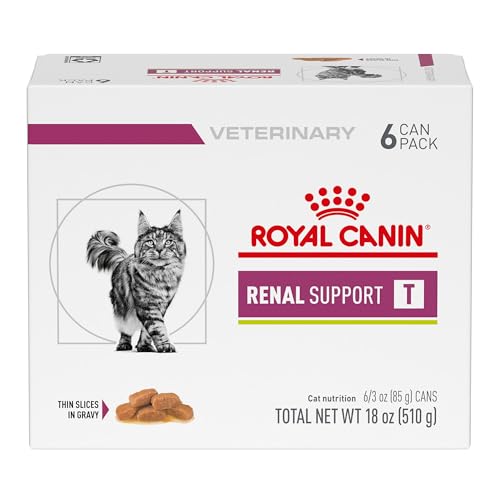
Royal Canin Veterinary Renal Support T Wet Cat Food
What We Like
- Veterinary-exclusive kidney support formula
- Low phosphorus and targeted protein levels
- Soft texture to stimulate appetite
- Energy-dense to reduce meal volume
Trade-offs
- Veterinary prescription required for purchase
- Not suitable for cats without kidney issues
Low phosphorus and targeted protein levels directly support kidney function in cats with renal disease, which is exactly what you need from a therapeutic diet. This wet food from Royal Canin is designed to be highly palatable and energy-dense, so even a cat whose appetite has dropped can get enough nutrition in a smaller meal. The soft texture helps encourage eating when smell or taste sensitivity is an issue.
The main catch is that this is a veterinary-exclusive diet, so you’ll need a prescription to buy it. That’s a hurdle if you prefer grabbing food off the shelf, but it also means the formula is backed by clinical nutrition research rather than marketing claims.
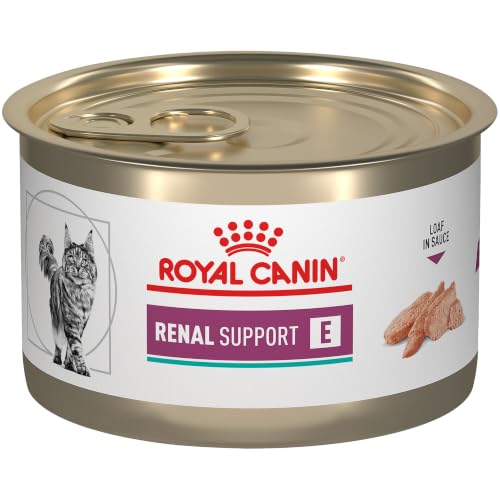
Royal Canin Veterinary Diet Feline Renal Support E Wet Cat Food
What We Like
- Loaf in sauce texture stimulates appetite
- Energy-dense formula reduces meal volume
- Low phosphorus supports kidney function
- Antioxidant complex and fish oil included
Trade-offs
- Veterinary-exclusive; requires prescription
- Not suitable for cats without kidney issues
The loaf-in-sauce texture is the single most deliberate design choice here. Royal Canin calls it ‘E’ for Enticing, and it’s aimed squarely at cats who lose interest in food as kidney issues progress. That energy-dense formula means your cat gets more calories per bite, so a smaller portion still delivers what they need. For a cat that’s started turning up its nose at mealtime, this addresses the real problem: getting them to eat at all while keeping phosphorus low and fatty acids from fish oil in the mix to support kidney function.
The obvious trade-off is that you need a veterinarian’s okay to buy it, which adds a step compared to non-prescription options like Dave’s Pet Food Renal. That’s not a knock on the formula, it’s a therapeutic diet, and the targeted protein and precise antioxidant complex reflect that. But if your cat doesn’t like loaf textures or you’re looking for something off the shelf, this won’t work. For the cat that needs kidney support and a strong appetite nudge, the texture and energy density make it worth the extra trip to the vet.
Dave's Pet Food Non-Prescription Renal Cat Food
What We Like
- Low phosphorus (max 0.3%)
- Low protein (min 5%)
- Moisture-rich stew for hydration
- Carrageenan-free formula
Trade-offs
- Contains brown rice (grain source)
- Not suitable for cats needing a grain-free diet
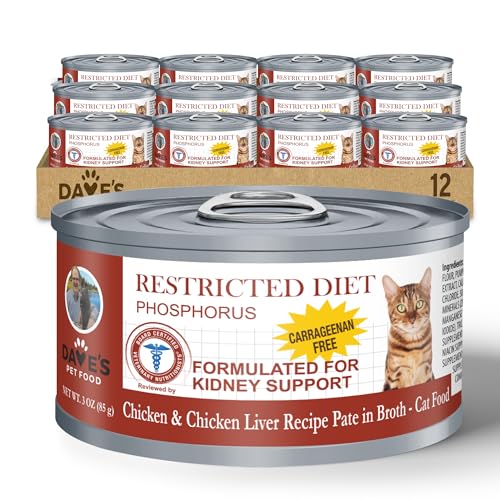
A phosphorus cap of 0.3% and protein floor of 5% make this a diet built around the two numbers that matter most for kidney support. That low phosphorus helps reduce strain on compromised kidneys, while the controlled protein keeps metabolic waste in check. The moisture-rich stew texture, slow-cooked with added broth, also pushes fluid intake, which is critical when kidneys struggle to concentrate urine. For owners who want a clinical-grade renal diet without a prescription, this is the one to reach for. It skips the carrageenan and artificial additives, and the real chicken, pumpkin, and brown rice base is gentle enough for cats with touchy digestion or reduced appetite.
The low protein (5% minimum) is designed for cats with compromised kidney function, but owners of highly active cats or those needing to maintain muscle mass should consult their veterinarian to ensure this level meets their cat’s individual needs. Compared to Royal Canin Veterinary Renal Support T, which targets similar phosphorus levels with a higher protein content, Dave’s takes a more conservative approach for cats requiring the strictest protein restriction. It also includes brown rice, a grain some owners prefer to avoid, though it aids digestibility. For picky eaters or cats needing a gentle, hydration-focused renal diet without a prescription, this is a transparently formulated option.
Forza10 Renal Wet Cat Food Lamb Flavor
What We Like
- Hydrolyzed protein for kidney support
- Controlled phosphorus and protein levels
- Enriched with cranberries and dandelion
- Non-GMO, no artificial additives
Trade-offs
- Only one flavor option available
- Smaller 3.5 oz cans per serving
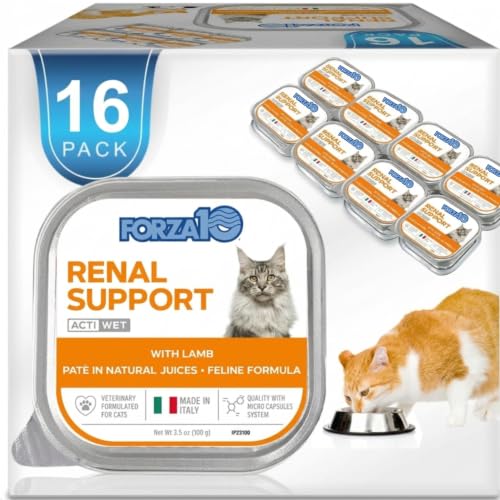
Controlled phosphorus and adapted protein content come from the hydrolyzed protein and potato protein in this 3.5 oz can of lamb-flavored wet food, so it’s designed to support kidney function without overloading the system. Made in Italy, it skips GMOs, by-products, wheat, soy, artificial colors, and preservatives, while adding cranberries, dried dandelion, and dried clover extract for renal health. The single-protein lamb base works well for cats that tolerate lamb.
The trade-off here is variety: you get lamb or nothing, while Royal Canin’s Veterinary Renal Support line offers other options (such as the 3 oz T formula and the 5.1 oz E formula) that may appeal to cats with different preferences. If your cat is happy with lamb and you value a product made in Italy with a straightforward ingredient list, this is a straightforward choice. Just be aware the 3.5 oz cans are smaller than the 5.1 oz cans in Royal Canin’s Renal Support E line, so you may need to open more cans per feeding.
Product photos
Blue Buffalo Natural Veterinary Diet K+M Wet Cat Food
What We Like
- Real chicken as first ingredient
- Glucosamine and chondroitin for joint support
- No corn, wheat, or soy
- No artificial flavors or preservatives
Trade-offs
- Requires veterinarian authorization to purchase
- Not suitable for cats without kidney disease
Controlled protein levels to manage kidney workload start with real chicken as the first ingredient. This wet food adds glucosamine and chondroitin for joint care, making it a dual-purpose option for cats dealing with both kidney issues and mobility concerns. The 5.5-ounce cans come in a 24-count case. It skips corn, wheat, soy, and artificial additives.
The trade-off is that this is a prescription diet, meaning you’ll need a vet’s authorization before you can buy it, so it’s not something you can grab on a whim. Compared to Royal Canin’s Renal Support E, which also requires a prescription, Blue Buffalo’s formula includes glucosamine and chondroitin for joint support, but the controlled protein levels might not fit every cat’s specific needs. If your vet has already recommended a kidney-support diet and your cat also shows signs of joint stiffness, this product addresses both concerns.
Product photos
Kidney Restore Non-Prescription Renal Cat Food
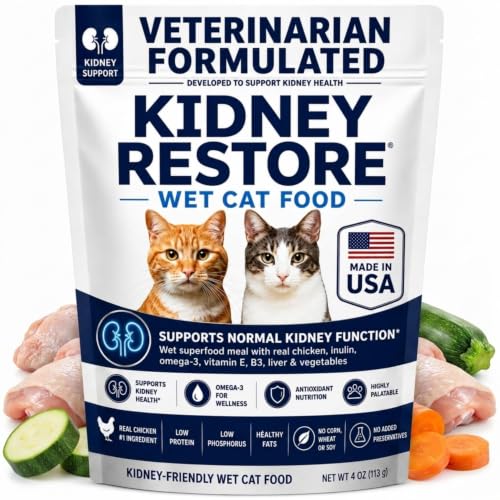
What We Like
- Human grade ingredients sourced locally
- Low phosphorus, sodium, and protein
- Includes superfoods and omega-3s
- Non-prescription with AAFCO guidelines
Trade-offs
- Requires 60-day satisfaction assurance period
- Not suitable for cats requiring a prescription diet
A low-phosphorus, low-sodium, and lower-protein wet food means this formula targets the three biggest dietary levers for kidney support without needing a vet’s prescription. The human-grade ingredients and inclusion of superfoods like inulin fiber and omega-3s go beyond basic restriction, aiming to actively support normal kidney function and digestion. It’s a fit for owners who want a non-prescription option that still follows AAFCO nutrient guidelines for renal care, and who prioritize ingredient transparency over convenience.
The trade-off is that the reduced protein content might not be ideal for every cat, especially those with higher activity levels or other health needs. Compared to Royal Canin’s Veterinary Renal Support T, which is prescription-only and more tightly controlled for advanced stages, this formula offers a middle ground for earlier-stage management or owners who prefer a non-prescription route. The 60-day satisfaction window gives you room to see if your cat adapts to the lower protein profile without being locked in.
Product photos
How We Evaluated Wet Cat Foods For Kidney Disease
We started by looking at the nutritional numbers that matter most for kidney health: phosphorus content, protein levels, and moisture percentage. Manufacturer-provided guaranteed analyses and ingredient lists were cross-checked against current veterinary consensus on managing chronic kidney disease (CKD). We also reviewed expert round-ups from veterinary nutritionists and patterns in owner-reported palatability issues, since a food a cat won’t eat has no value regardless of its nutrient profile.
The four criteria that carried the most weight were phosphorus restriction, protein level, moisture content, and ingredient transparency. Phosphorus restriction is the single most important dietary intervention for CKD. Protein must be low enough to reduce kidney workload but high enough to prevent muscle wasting. For prescription diets, we also considered whether the formula was energy-dense, since smaller meal volumes can help cats who eat less.
A research-led evaluation has limits. What we can offer is a clear comparison of what each product claims, how it fits current veterinary recommendations, and what other owners commonly report about acceptance and tolerance. We encourage you to discuss any diet change with your veterinarian, especially for cats with advanced kidney disease.
What To Look For In Wet Cat Foods For Kidney Disease
Choosing a kidney-friendly wet food means understanding a few key numbers and what they mean for your cat’s stage of disease. The goal is to slow progression while maintaining quality of life.
Focus on phosphorus content (under a certain percentage dry matter for most CKD cats), moderate protein that avoids both excess and deficiency, and high moisture to support hydration. Prescription diets offer tighter control; non-prescription options can work for early-stage disease.
Phosphorus Restriction
Phosphorus is the primary dietary target for kidney disease. Elevated blood phosphorus accelerates kidney damage, so the food should keep phosphorus as low as practical. Prescription renal diets typically run low phosphorus on a dry matter basis, while non-prescription options like Dave’s Pet Food target a maximum of 0.3%. For cats in early-stage CKD, a low phosphorus wet food may be sufficient; advanced disease usually demands a prescription formula with tighter control.
Protein Level and Quality
Cats with kidney disease need enough protein to maintain muscle mass, but not so much that it produces excess nitrogen waste the kidneys have to filter. Most renal diets land around a moderate crude protein as fed. The protein source matters, too: highly digestible animal proteins create less waste than lower-quality sources. The Royal Canin Renal Support formulas use targeted protein levels, while the Forza10 Renal uses hydrolyzed protein for easier digestion.
Moisture and Palatability
Cats with kidney disease are prone to dehydration, and they often lose their appetite. Wet food provides the moisture they need while the soft texture and stronger smell can stimulate eating. The Royal Canin Renal Support T has a soft mousse texture, and the Renal Support E comes as a loaf in sauce. The Dave’s Pet Food stew is moisture-rich. If your cat is a picky eater, palatability may be more important than a perfect phosphorus number.
- Check the guaranteed analysis for phosphorus and protein percentages.
- Look for added omega-3 fatty acids (fish oil) to support kidney health.
- Confirm the food matches your cat’s stage of CKD with your veterinarian.
- Consider texture preferences: pâté, loaf, or stew.
A cat that won’t eat a perfect diet is worse off than one eating a slightly less restricted food willingly.
Wet Cat Foods For Kidney Disease Compared
The table below compares the six wet cat foods across the nutritional and practical factors that matter most for kidney disease management.
| Product | Form/Texture | Protein Level | Phosphorus Level | Key Ingredients/Additives |
|---|---|---|---|---|
| Royal Canin Veterinary Renal Support T Wet Cat Food | Wet Cat Food | Targeted levels | Low phosphorus | Antioxidant complex, fish oil |
| Royal Canin Veterinary Diet Feline Renal Support E Wet Cat Food | Loaf in sauce | Targeted levels | Low | Antioxidant complex, fish oil |
| Dave's Pet Food Non-Prescription Renal Cat Food | Moisture-rich stew | min 5% | max 0.3% | Chicken, pumpkin, brown rice |
| Forza10 Renal Wet Cat Food Lamb Flavor | Wet Cat Food | N/A | Controlled phosphorus | Hydrolyzed protein, potato protein, cranberries |
| Blue Buffalo Natural Veterinary Diet K+M Wet Cat Food | Wet Cat Food | Controlled levels | N/A | Glucosamine & Chondroitin |
| Kidney Restore Non-Prescription Renal Cat Food | Wet cat food pouches | Low protein | Low phosphorus | Human grade, real chicken & liver |
Frequently Asked Questions
What is the best wet cat food for kidney disease?
The Royal Canin Veterinary Renal Support T Wet Cat Food is our Best Overall pick for its veterinary-exclusive low-phosphorus formula, energy density, and soft texture that encourages eating. It requires a prescription and is designed for cats actively managing kidney disease under veterinary supervision.
Can I feed my cat non-prescription food for kidney disease?
Yes, for cats in early-stage kidney disease. The Dave’s Pet Food Non-Prescription Renal Cat Food and Kidney Restore Non-Prescription Renal Cat Food are formulated with low phosphorus and controlled protein without requiring a prescription. Always check with your veterinarian before switching to ensure the levels match your cat’s needs.
What phosphorus level should I look for in cat food for kidney disease?
For most cats with CKD, a phosphorus content of a certain percentage or lower on a dry matter basis is recommended. Prescription diets often target low phosphorus. Non-prescription options like Dave’s Pet Food cap phosphorus at 0.3% as fed. Your veterinarian can advise the right target for your cat’s specific stage.
Is wet or dry food better for cats with kidney disease?
Wet food is generally preferred because its high moisture content helps combat dehydration, a common issue in CKD cats. Dry food for kidney disease can be used in combination or for cats that refuse wet food. Moisture-rich diets support kidney function more directly.
How do I transition my cat to a renal diet?
Gradually mix the new food with the old over several days, increasing the proportion of renal food each day. Cats with kidney disease can be finicky, so feeding a cat with CKD may require patience, warming the food slightly, or offering multiple textures. Never starve a cat into eating a new diet.
The Bottom Line
The Royal Canin Veterinary Renal Support T Wet Cat Food is our Best Overall choice for cat owners managing kidney disease under veterinary guidance. Its low-phosphorus, energy-dense formula and soft texture address the two biggest challenges in CKD feeding: restricting phosphorus while keeping a picky cat eating. If your cat prefers a loaf texture, the Royal Canin Veterinary Diet Feline Renal Support E is the same nutritional philosophy in a different format.
For owners who want a non-prescription option, the Dave’s Pet Food Non-Prescription Renal Cat Food offers strict phosphorus control (max 0.3%) without a vet’s authorization. It works best for early-stage CKD or as a maintenance diet. The Blue Buffalo Natural Veterinary Diet K+M is the pick if your cat also needs joint support, though it does require veterinarian authorization.
The single most important factor in choosing a renal cat food is matching the phosphorus and protein levels to your cat’s specific stage of kidney disease. Work with your veterinarian to interpret bloodwork, then pick a food from this list that your cat will actually eat. A diet that sits uneaten in the bowl helps no one.
