
BARF vs Prey Model Raw Diet: What Actually Separates Them
This post contains affiliate links. As an Amazon Associate, we earn from qualifying purchases.
In the BARF vs prey model raw diet question, the split is simple: BARF blends raw meat, bone, organ, vegetables, fruit, and often supplements, while prey model raw feeds only muscle meat, bone, and organ at a fixed 80:10:10. No standards body defines that ratio.
That 80:10:10 figure is where the argument usually goes wrong. Raw-feeding forums quote it like a nutrient profile. It’s a feeding convention, and the only compositional standard for dog food in the US is AAFCO’s nutrient-based Dog Food Nutrient Profiles, which measure nutrients rather than ingredient ratios.
What follows covers both models side by side, the 200-recipe study that tested homemade diets, the FDA’s dated contamination findings, and a label checklist you can run on any tub or bag.
Key Takeaways
- BARF includes plant matter and supplements; prey model raw excludes both. That single difference drives most of the philosophy gap.
- 80:10:10 is a community convention, not an AAFCO or NRC designation. No standards document defines it.
- Of 200 homemade dog recipes analyzed, the vast majority fell short on at least one essential nutrient, many with severe calcium-to-phosphorus imbalance (Stockman et al., JAVMA 2013).
- FDA confirmed Salmonella and Listeria monocytogenes in multiple raw pet foods and warned about risk to pets and household members.
- WSAVA and AAHA both say a homemade raw diet belongs under veterinary supervision with a formulated recipe, not a forum printout.
BARF vs Prey Model Raw Diet: What Actually Separates Them
The two models split on three things: plants, supplements, and how the bone arrives. Dr. Ian Billinghurst’s BARF model built in vegetables, fruit, and organ meat on purpose, aiming to copy the stomach contents of prey as much as the prey itself.
BARF formulations typically run 60 to 80 percent raw meaty bones, roughly 10 percent offal, and the remainder plant matter plus optional supplements. Prey model raw uses a fixed 80:10:10 split: 80 percent muscle meat, 10 percent raw edible bone, and 10 percent organ, with liver taking half the organ share.
So the BARF diet reads like a mixed meal. Beef, chicken, lamb, or fish for protein. Bone for calcium and minerals, served whole or ground into the bowl. Liver and kidney for vitamins A and B. Produce for fiber. Some formulations add fish oil, probiotics, or a vitamin mix on top.
Prey model raw strips that back to the animal. A prey model raw diet is whole meat and bone with no vegetables or fruit, and PMR sources argue whole prey already carries everything a dog needs, while BARF sources say supplementation may be required for completeness. Processing goes too: no grinding, no cooking.
| Component | BARF | Prey Model Raw |
|---|---|---|
| Muscle meat | Beef, chicken, lamb, fish | Whole prey muscle |
| Bone | Whole or ground, 60-80% of bowl | Raw edible bone, 10% |
| Organ | Liver and kidney | 10% total, 5% liver |
| Plant matter | Vegetables and fruit | None |
| Supplements | Fish oil, probiotics, vitamins | None |
Read across that table and the trade is visible. BARF gets flexibility and pays for it with a longer ingredient list and more planning. Prey model raw gets simplicity and pays for it with a narrower base and total trust in one ratio.
Neither column tells you whether the bowl is complete. That’s a separate question, and it’s where most of the arguing happens.
Is 80:10:10 an Actual Standard?
No, and the absence is telling. No AAFCO or NRC document defines 80:10:10; raw-feeding community guides do.
The AAFCO profiles are built on nutrient levels, not ingredient ratios. A diet can hit 80:10:10 exactly and still land short on zinc, iodine, or vitamin D. Veterinary nutritionists at UC Davis and Tufts make precisely this point: whole-prey ratios don’t guarantee micronutrient sufficiency, and those four nutrients plus calcium-to-phosphorus balance are the usual places a bowl drifts.
No PMR ratio maps to AAFCO adequacy without formulation analysis. The profiles measure what’s in the bowl, so the ingredient split stays beside the point until somebody runs the numbers.
If you want the arithmetic side of it, the balanced raw diet breakdown covers how those ratios get built in practice.
Common mistake: Treating 80:10:10 as a completeness guarantee. The ratio says nothing about zinc, iodine, or vitamin D, and a bowl can hit the split exactly while missing one of them.
What the Recipe Studies Found
Two hundred. That’s how many homemade dog recipes, raw ones included, a UC Davis team ran through nutrient analysis for a 2013 paper in JAVMA. The vast majority were deficient in at least one essential nutrient, and many had severe imbalances, with calcium-to-phosphorus the repeat offender.
The mechanism is boring and predictable. A bowl assembled by eye drifts toward whatever the freezer holds that week. When calcium runs short against phosphorus, the skeleton pays for it.
Peer-reviewed case reports describe that exact outcome: nutritional secondary hyperparathyroidism in dogs fed unbalanced homemade raw diets, bone-heavy or organ-light.
A bone-heavy stretch shows up in the yard before it shows up on a blood panel.
Freeman et al. At Tufts published a review in JAVMA the same year covering pathogen shedding and nutritional gaps. Separate JAVMA and Vet Record studies found many published homemade raw recipes fail NRC nutrient minimums.
A raw diet is complete when someone has run the numbers on that exact recipe. Swap the protein source and you have a new recipe that needs its own analysis.
Does Raw Feeding Really Carry a Pathogen Risk?
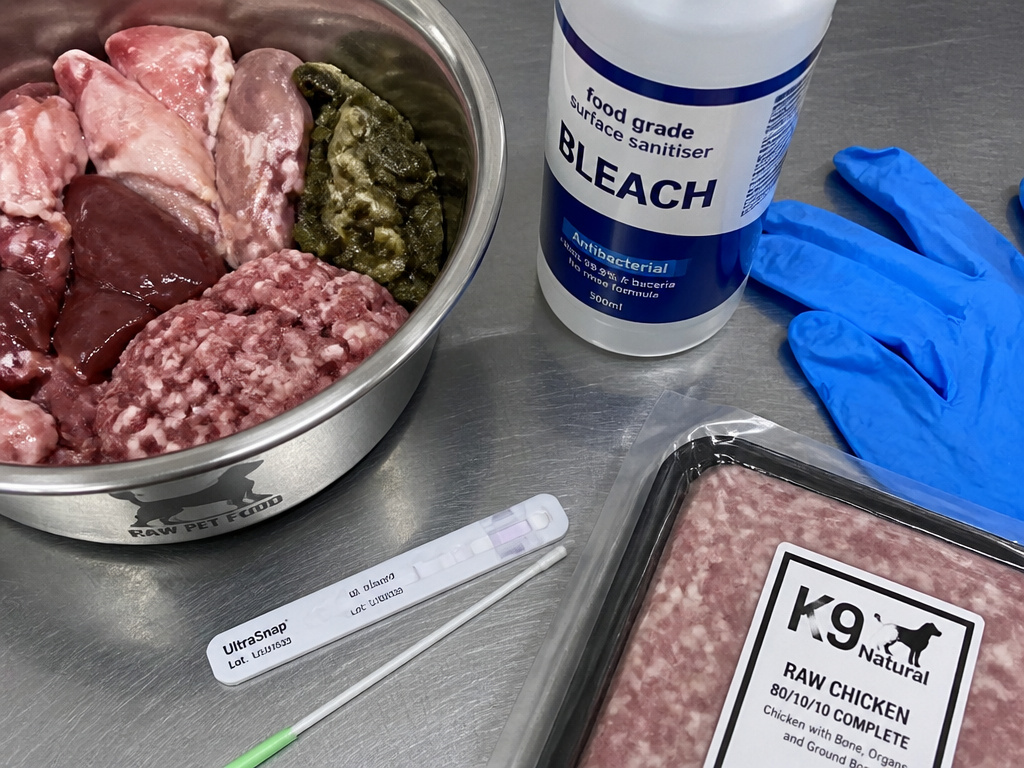
Regulators answer that with dated findings rather than philosophy.
What the Regulators Found
In July 2018, FDA’s Center for Veterinary Medicine announced an investigation that confirmed Salmonella and Listeria monocytogenes in multiple raw pet food products and linked them to illness in people and animals. The agency issued a warning that raw diets pose risks to pets and to household members.
CDC documented multi-state Salmonella outbreaks tied to raw pet food, including a 2018 outbreak linked to raw ground turkey pet food. FDA’s surveillance sampling from 2018 through 2023 kept finding both organisms in a meaningful share of raw products, with repeated consumer advisories.
The zoonotic piece is the part owners underestimate. Peer-reviewed studies document Salmonella shedding in dogs fed raw poultry, which puts an immunocompromised person in the same house inside the exposure chain.
| Hazard | What it looks like | Documented by |
|---|---|---|
| Salmonella, Listeria in product | Contamination found in finished raw food | FDA CVM, 2018 onward |
| Human illness | Multi-state outbreaks traced to raw pet food | CDC |
| Shedding to people | Dogs fed raw poultry shed Salmonella | Peer-reviewed studies |
| Nutrient deficiency | Ca:P imbalance, secondary hyperparathyroidism | JAVMA case reports |
What the Raw Camp Says Back
This is a real disagreement, so it’s worth naming who holds which position. One raw pet food supplier describes myths about bacteria in raw meat as “mostly nonsense”. Raw-advocacy sources frame the risk as manageable with careful handling, and commercial raw vendors point to sourcing and freezing controls.
FDA and CDC call contamination an inherent, documented hazard of uncooked product. WSAVA’s Global Nutrition Committee advises against raw feeding where safer alternatives exist, citing both pathogen and nutritional risk.
The positions don’t reconcile. Handling reduces exposure; it doesn’t remove the hazard FDA keeps finding in finished product.
Raw poultry is why the counter gets bleached rather than wiped. FDA’s raw pet food safety page is where current advisories land.
Where the Two Camps Disagree on Supplements and Bone
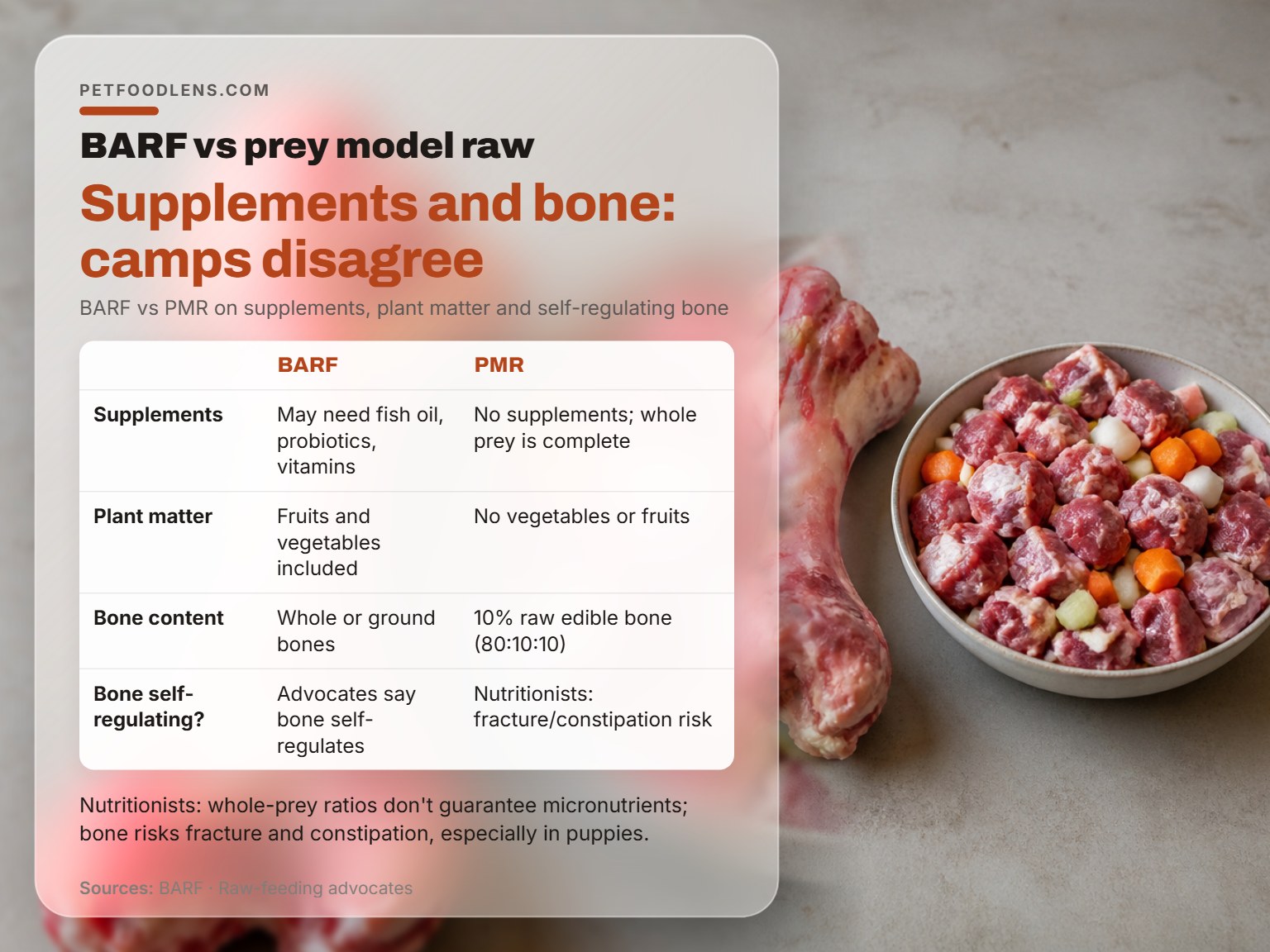
Three arguments come up every time: supplements, vegetables, and whether a dog self-regulates bone.
Supplements: Two Opposite Answers
Brodies’ BARF source says a raw diet may need supplementation to cover every essential nutrient, and some formulations build in fish oil, probiotics, or a vitamin mix. PMR sources say the reverse: whole prey is nutritionally complete, so supplements are unnecessary, while BARF sources and veterinary nutritionists counter that whole-prey ratios don’t guarantee micronutrient sufficiency.
Veterinary nutritionists land on neither side. Whole-prey ratios don’t guarantee micronutrient sufficiency, and the 200-recipe analysis found deficiencies in the vast majority of homemade diets tested.
Do Bones Regulate Themselves?
Raw-feeding advocates say bone content is self-regulating, while nutritionists document fracture and constipation risk, especially in growing puppies. Nutritionists document fracture and constipation risk from raw bones, especially in growing puppies, plus mineral imbalance in dogs fed bone-heavy bowls for months.
I won’t back a bone-in raw bowl for a growing puppy without a formulated recipe and a vet’s sign-off. Puppies are the group where the bone argument stops being theoretical, and the case reports are written about them.
Plant matter splits the same way. BARF advocates argue vegetables and fruit are necessary to mimic prey stomach contents. PMR purists argue plant matter is unnecessary filler, while BARF advocates argue vegetables and fruit are necessary to mimic prey stomach contents. Both camps are arguing from philosophy, and neither has a nutrient analysis to settle it.
What to Check Before You Commit
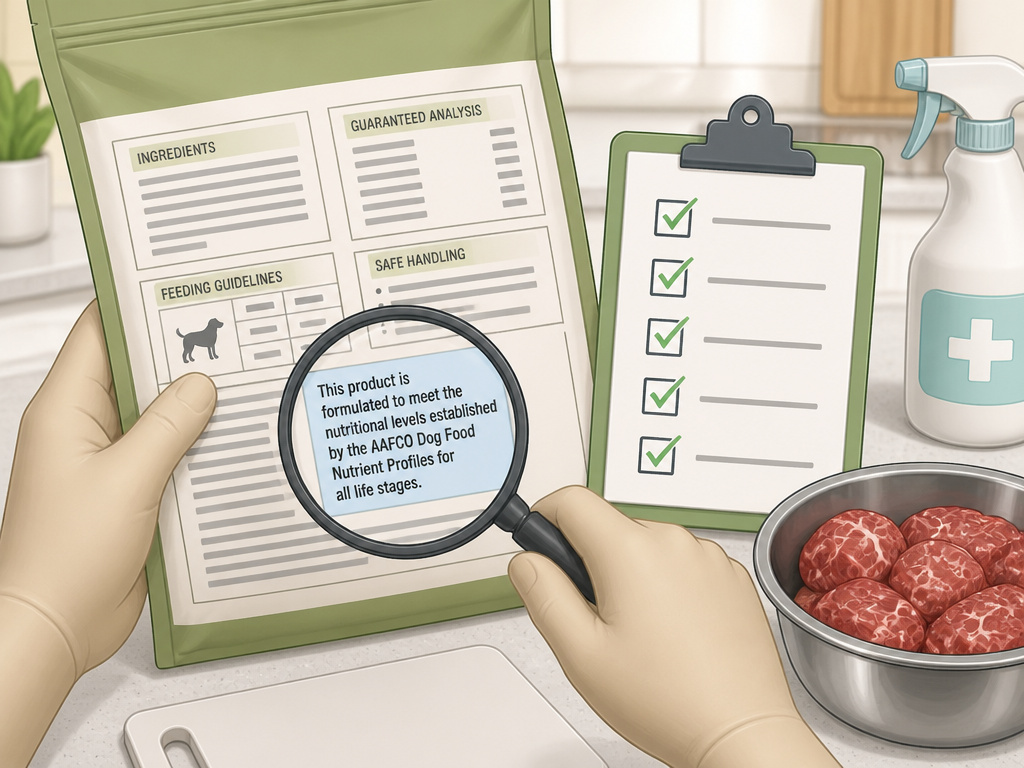
Five checks, in order. Any one of them failing is enough to walk away once you know where to look.
Before you start: Raw meat carries Salmonella and Listeria, so treat the prep area like a poultry plant. Use a board that goes straight into the dishwasher, don’t leave the bowl on the floor for hours, and wash your hands before you touch anything else in the kitchen.
- Find the AAFCO statement. Flip the bag over. It’s the sentence that says the food is complete and balanced for a stated life stage. No statement means you’re holding a supplement or a topper, not a diet.
- Check which kind of statement it is. “Formulated to meet” means somebody ran the numbers on paper. “Animal feeding tests using AAFCO procedures” means dogs ate it and were measured. The second is stronger evidence, and the difference is printed right there.
- Find out who formulated it. A named board-certified veterinary nutritionist is a different proposition from an unnamed “team of experts” on a website.
- For homemade, get the recipe from a nutritionist. WSAVA and the 2011 AAHA Nutritional Assessment Guidelines both say homemade raw diets belong under veterinary supervision with a formulated recipe.
- Move slowly. A gradual transition to raw gives you a stool you can actually read instead of a mess you have to diagnose after the fact.
If you’re new to the mechanics of portioning and storage, a raw feeding guide for beginners covers the practical side. The label logic above is the part that decides whether the food is worth feeding at all.
When Raw Feeding Isn’t the Right Call
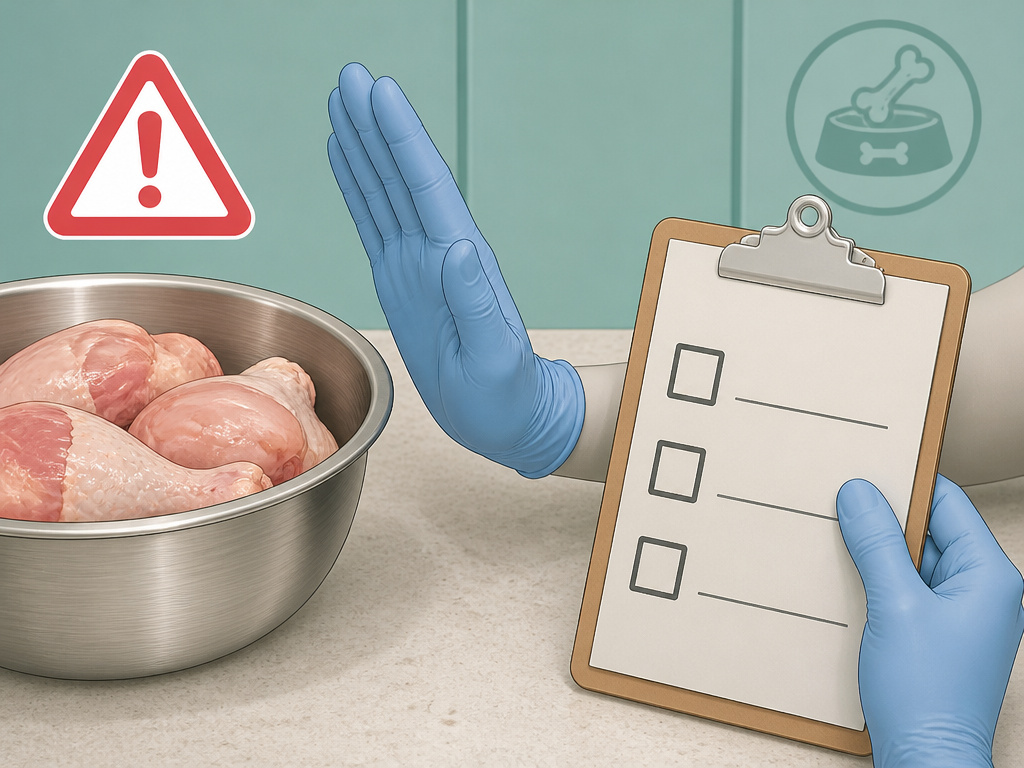
Three groups should stop before they start: households with an immunocompromised person, puppies, and anyone hoping the diet will fix a medical problem.
- Immunocompromised household. FDA’s warning covers household members, not just the dog. Salmonella shedding is documented in dogs fed raw poultry, so a person on immunosuppressants is sharing a kitchen with a live risk.
- Puppies. Nutritionists document fracture and constipation risk from bone content in growing dogs. Growth is the window where a mineral imbalance does permanent structural damage.
- Medical cases. Kidney disease, diabetes, and elimination diets are veterinary territory. I work mostly in commercial cat food, so I’ll say plainly that the dog clinical side is not my deepest ground. A raw diet is not a treatment for any of those conditions.
Where this goes sideways: Feeding a bone-heavy bowl to a puppy through the growth window. The imbalance builds quietly, then shows up as lameness or a fracture, and by then you’re managing a skeletal problem rather than a diet.
The raw dog food pros and cons are worth reading in full before you commit, because the honest version of that list is longer than either camp usually admits.
Frequently Asked Questions
Is prey model raw better than BARF?
No peer-reviewed benchmark shows either one outperforming a complete commercial diet on health outcomes. The choice between them comes down to plant matter and supplements, not to which is more complete. Completeness depends on the specific formulation and whether anyone analyzed it.
Do raw diets need supplements?
It depends on the model and the recipe. BARF sources say supplementation may be needed for completeness, and some formulations include fish oil, probiotics, or vitamins. PMR sources say whole prey makes supplements unnecessary. Nutritionists point out that whole-prey ratios don’t guarantee micronutrient sufficiency, so the answer lives in the formulation rather than the philosophy.
Can I feed raw bones to a puppy?
Nutritionists document fracture and constipation risk from bone content, especially in growing puppies. If you go ahead, do it with a formulated recipe and veterinary supervision rather than free-feeding bone and hoping the dog self-regulates.
How do I know if a raw diet is complete?
Check for an AAFCO nutritional adequacy statement and see whether it’s based on formulation or on feeding trials. For homemade diets, the recipe needs to be formulated by a board-certified veterinary nutritionist. A ratio on its own doesn’t establish adequacy.
Is raw feeding safe in a house with young children?
FDA warns that raw diets pose risks to pets and household members, and peer-reviewed studies document Salmonella shedding in dogs fed raw poultry. Hand hygiene and separate prep surfaces reduce exposure but don’t remove it.
The Bottom Line
Here’s the trigger I’d use. If you can’t name the person who formulated the diet and point to the AAFCO statement on the package, the bowl is a philosophy experiment with a dog attached to it.
I’ll concede something to the raw side, though. A raw diet built by a board-certified nutritionist is a different object from a forum recipe, and the 200-recipe analysis tested published homemade recipes, not supervised formulations. The studies that get quoted against raw feeding are mostly measuring the unsupervised version.
That concession has a limit. The pathogen findings don’t care who wrote the recipe. Salmonella and Listeria monocytogenes showed up in finished commercial raw product in FDA sampling, and no amount of formulation care changes what’s in the tub.
So the BARF vs prey model raw diet argument will keep running, because it’s about identity as much as nutrition. My short version: pick whichever model gets you a formulated recipe and a vet who knows your dog, and leave the rest of the debate to the forums.
