
How to Make Homemade Bird Treats: Step-by-Step
This post contains affiliate links. As an Amazon Associate, we earn from qualifying purchases.
To make homemade bird treats, melt beef suet over very low heat, stir in roughly the same weight of seed mix (about 240g of each), press the mixture about an inch deep into containers, and chill until set. Serve it as a supplement to foraging, not the main diet; note that sources disagree on when to stop putting it out, the Missouri Department of Conservation says above 50 degrees F, Audubon says below 55 degrees F, and UF/IFAS says suet cakes can be left out year-round.
The fat is doing two jobs at once. It holds the seed in a block a bird can grip, and it is the ingredient that turns rancid, which is why every temperature rule below is about the fat rather than the seed.
What follows is three recipes from named sources, the fat argument that splits them, the temperature gap between two conservation agencies, and how to make homemade bird treats without letting a feeder quietly become a bird’s whole diet.
Key Takeaways
- Weigh the fat and the seed 1:1 if you follow the RSPCA method. Volume measures vary too much between seed mixes.
- Melt on the lowest heat your stove has. Iowa State Extension warns that hurrying the melt risks scorching or a serious fire.
- The Missouri Department of Conservation says pull suet at 50 degrees F, while Audubon sets its own ceiling at 55 and UF/IFAS says suet cakes can be left out year-round.
- Crush any peanuts into small pieces before they go in, because whole ones are a choking risk for young birds.
- Homemade suet is a supplement. Keep the feeder as an extra to what birds find on their own.
How to Make Homemade Bird Treats: Start With the 1:1 Ratio
Roughly 240g of beef suet to roughly 240g of wild bird seed mix, by weight. That is the ratio the RSPCA publishes, and it is the shortest version of this recipe in circulation.
Suet binds seed into a block that birds can cling to, and the binding is physical rather than chemical. Rendered beef fat sets firmer than lard, which softens faster once temperatures climb. A 1:1 ratio by weight of fat to seed mix is the ratio published by the RSPCA for garden bird biscuits.
The RSPCA is blunt about the fat: beef suet, and explicitly not a vegetarian substitute. That puts it at odds with two US state agencies, which I’ll get to shortly. For now, the shopping list is short.
- Beef suet, about 240g. Ask a butcher first. The shelf-stable tubs work, but you pay more for the same fat.
- Wild bird seed mix, about 240g.
- Oats, peanuts, or dried fruit, if you want them. Any peanuts must be crushed into very small pieces, because whole ones are a choking risk for younger birds.
- No raisins anywhere a cat or dog can reach.
Most homemade bird food recipes for how to make homemade bird treats come down to the same three parts: fat, seed, and something to set it in. The variation lives entirely in the fat.
I’d leave it out. Sugar adds calories a bird doesn’t need and does nothing the seed isn’t already doing.
How Do You Melt Suet Without Setting the Kitchen on Fire?
Slowly, and with a towel within reach. The Iowa State Extension suet cake recipe is unusually direct about this step: use very low heat, and never raise it to hurry the job, because the result can be scorching or a serious fire.
Before you start: Fat that gets too hot can scorch or catch light, so keep the burner on its lowest setting and a dry towel within arm’s reach to smother the pan. Set the containers on a baking sheet before you pour, because spilled fat stays hot enough to burn skin.
- Chill the fat, then cube it. Slice it into 1- to 2-inch pieces and pulse it in a food processor to a saw-dust consistency. Skip the pulse and you get lumps that scorch on the pan bottom while the rest is still solid.
- Melt it over very low heat, stirring as it comes up to temperature. This is the step where impatience costs you a pan.
- Measure about two cups of seed mix into each container while the fat melts. That is Iowa State’s number, not mine.
- Pour the fat between the containers and stir. It takes a couple of passes to fill one evenly, which surprises people the first time.
- Fill to about an inch deep. That depth is almost exactly the size of a commercial suet block.
- Cool on a baking sheet, then cover and refrigerate or freeze.
Three Recipes Worth Making, and the One That Needed Fixing
Four organizations publish four different recipes, and the fat is where they part company.
| Source | Fat | Dry mix | Method note |
|---|---|---|---|
| RSPCA | Beef suet, 1:1 with seed | About 240g seed mix | Crush peanuts small |
| Missouri Dept. Of Conservation | 1 cup shortening, 1/2 cup peanut butter | 2 1/2 cups birdseed, oats, cornmeal | Hang in shade |
| Indiana DNR | 1/4 cup shortening, 1/4 cup peanut butter | 1 cup cornmeal or oatmeal, 1/4 cup flour | Mesh bag method |
| Audubon (Zick Dough) | 1 cup lard, 1 cup peanut butter | 2 cups chick starter, oats, flour, cornmeal | Makes 12 cups |
| Iowa State Extension | Fat melted over very low heat | About 2 cups seed per container | Very low heat |
Read the table by the fat column. The RSPCA uses beef suet, Missouri and Indiana build the block on vegetable shortening plus peanut butter, and Audubon uses lard plus peanut butter.
The Shortening Versions (Missouri and Indiana)
The Missouri Department of Conservation how-to guides give the most forgiving version: 2 1/2 cups birdseed, 1/2 cup oats, 1/4 cup cornmeal, 1 cup vegetable shortening, and 1/2 cup peanut butter. Mix the dry goods, melt the fat, combine, then hang the cake in a cage in a shady spot you can see from the house.
The Indiana DNR homemade birdseed PDF scales it down to a kid-sized batch: 1/4 cup shortening, 1/4 cup peanut butter, 1/4 cup flour, and 1 cup of cornmeal or oatmeal. Pack it into a mesh bag and tie it to a branch or around the trunk.
Two details in that sheet are worth keeping. Spread on bark, two or three spoonfuls is plenty, since more just makes a mess. And if you hang the bag free from a branch, woodpeckers may not be able to reach it, because they want a solid surface to hang onto.
These two recipes sit alongside the rest of the types of bird treats people actually make at home.
Audubon’s Zick Dough and the Gout Correction
Audubon’s version is the most involved and the most instructive. The Audubon homemade suet recipe article calls for 2 cups unmedicated chick starter, 2 cups quick oats, 3 cups white flour, 1 1/2 cups yellow cornmeal, 1 cup lard, and 1 cup peanut butter. That yields 12 cups, or 3.5 pounds, served at 1/2 cup per day as a once-daily treat.
The correction matters more than the formula. The original version caused gout in the author’s bluebirds when eaten in excess, and a reader diagnosed the cause: too much fat and not enough calcium. Chick starter went in as the base to fix it. That is the only documented failure case in this whole source set, and it points at a weakness in every other recipe here.
Whole wheat flour is out, by the way. Audubon specifies white because whole wheat spoils too quickly.
Beef Suet vs Shortening vs Lard: Which Fat Holds Up?
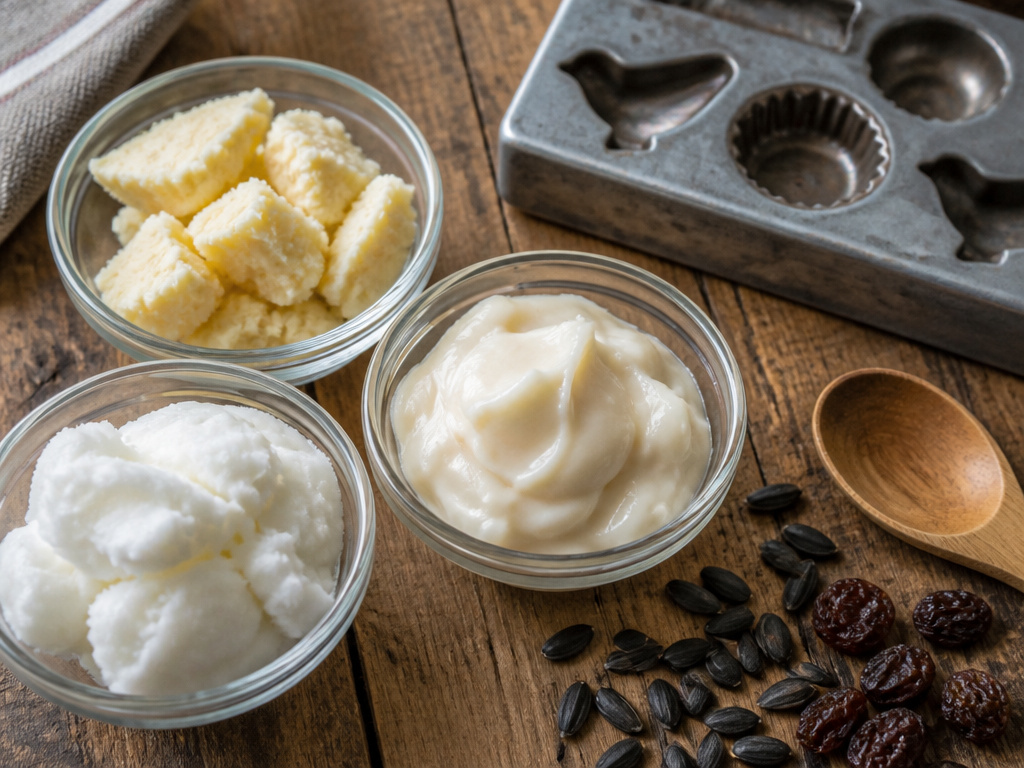
The UF/IFAS DIY suet guide says lard softens in the heat faster than true suet does, though sources disagree on which fat to use, the RSPCA specifies beef suet, while Missouri and Indiana use vegetable shortening and Audubon uses lard. That single sentence settles most of the argument for anyone feeding through a warm spring.
Here is how I’d call it by situation.
- Cold months, shaded feeder: any of the three works. The shortening versions are easier to source and easier to melt.
- Warm months or an exposed site: beef suet, for the reason above.
- No stove, no afternoon: a bought cake does the job without the rendering.
The RSPCA position is beef suet and nothing else. Missouri and Indiana both build on vegetable shortening. Audubon uses lard, and its author notes that his birds clearly prefer lard over shortening. Four credible sources, two different fats, no consensus.
If you want help weighing which bought cakes are worth the shelf space, choosing bird treats comes down to the same first-ingredient test as any other feed.
When Lard Is the Only Option
When Do You Stop Putting Suet Out?
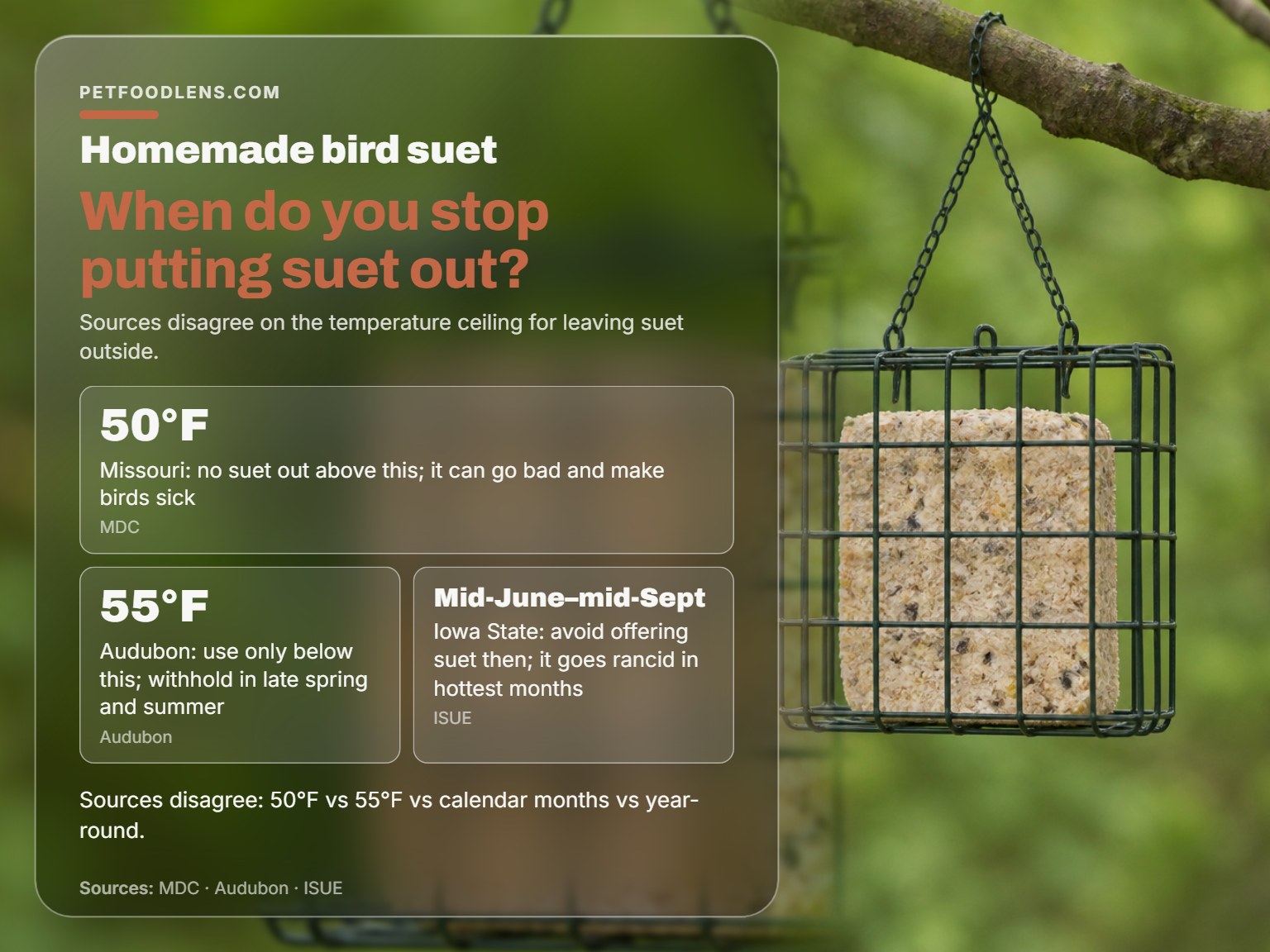
A warm afternoon, the block slumps in the cage, and the birds quit it. That slump is the signal, and the sources don’t agree on the number that triggers it.
| Source | Guidance | Reason given |
|---|---|---|
| Missouri Dept. Of Conservation | No suet out above 50 degrees F | Can go bad and make birds sick |
| Audubon | Use only below 55 degrees F | Withhold in late spring and summer |
| Iowa State Extension | Avoid mid-June to mid-September | Goes rancid in the hottest months |
| UF/IFAS Gardening Solutions | Can be left out year-round | High-fat cakes melt in Florida heat |
That is a real disagreement, and it isn’t resolved by picking the source you like best. Missouri draws the line at 50 degrees F. Audubon draws it at 55. Iowa State works in calendar months instead of temperatures. UF/IFAS says year-round is fine, then adds the melt caveat that undercuts the claim in a Florida summer.
The 50 vs 55 Gap
Five degrees is not a rounding error when the consequence is spoiled fat that can make birds sick. My read: treat 50 degrees F as the working ceiling and 55 as the absolute one. If you’re going to be away for a week and the forecast is warm, take the feeder down before you go.
What Spoilage Looks and Smells Like
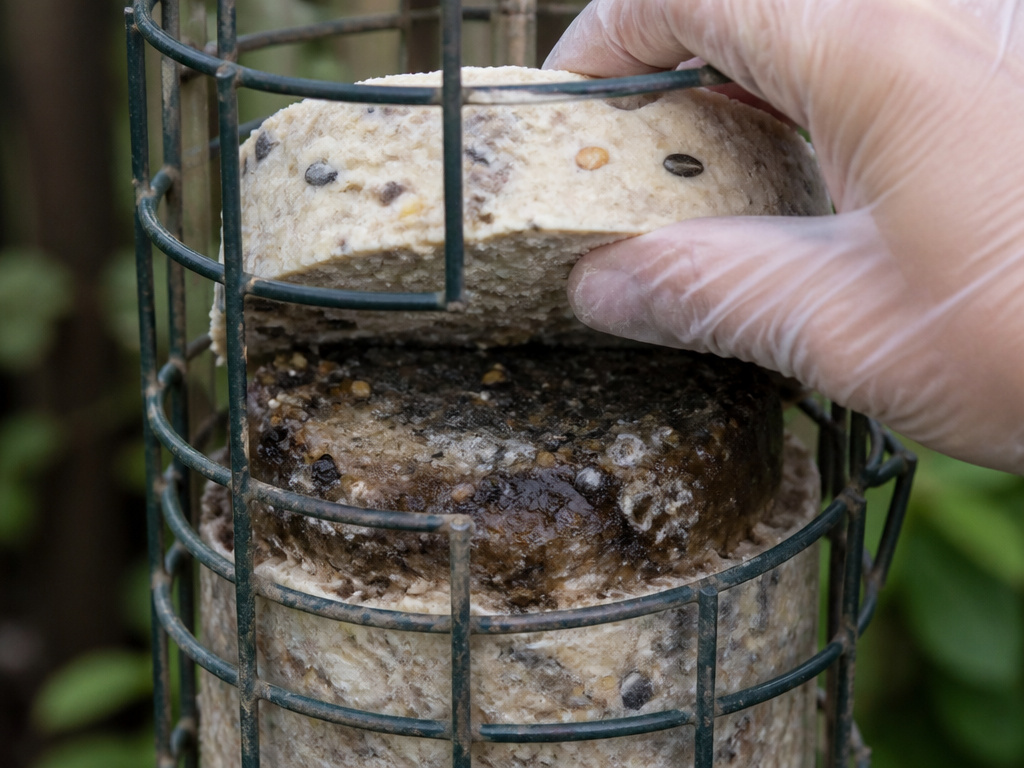
Birds quitting a feeder is information. The RSPCA reads a feeder the birds have stopped visiting as a possible sign of spoilage, and that is easy to miss because a half-eaten cage looks the same as an abandoned one.
Watch for these:
Easy to miss: Topping up a cage instead of emptying it. Old fat stays at the bottom, the fresh cake sits on top, and the birds work down into the spoiled layer.
Storage is where most of this is decided. Iowa State advises freezing any blocks you won’t use within a week. Audubon keeps its dough in mason jars in a cool place. UF/IFAS chills fresh cakes for about 24 hours so they harden before hanging. The full routine for storing bird treats is worth reading once if you plan to make a large batch.
Where Homemade Treats Fit in a Bird’s Diet
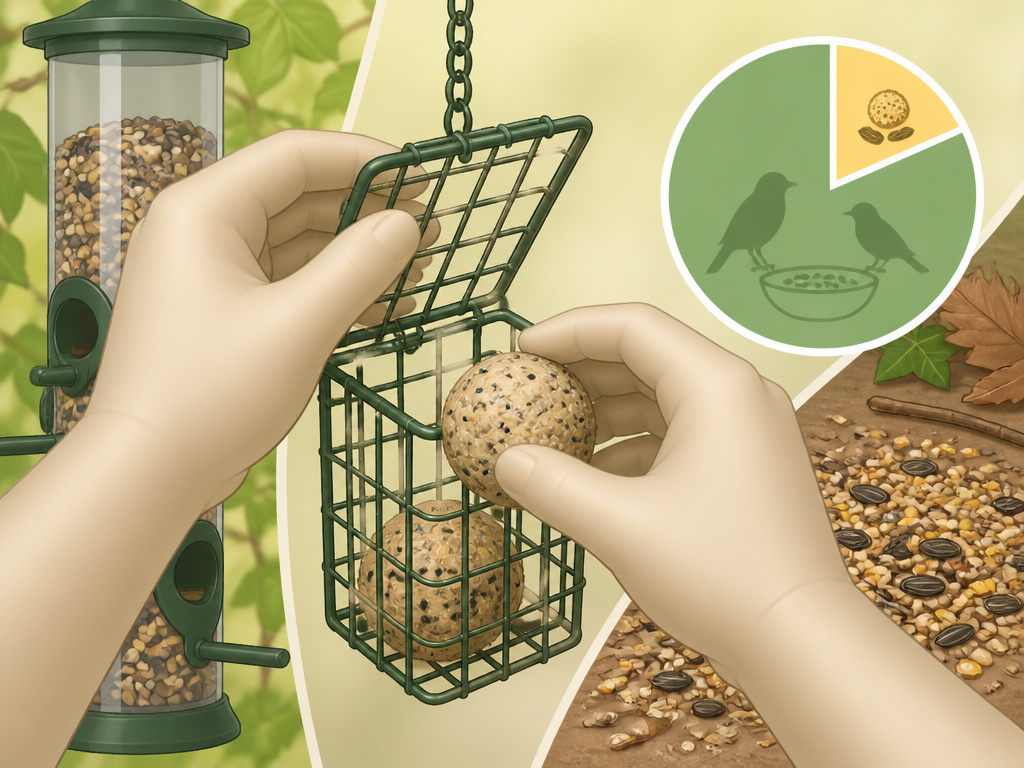
The treats were the hole in the arithmetic, and I have asked about treats first ever since. Same lesson applies here, even though the species changed.
The rule I give people is that treats are a supplement, and the complete food does the nutritional work. For a garden bird you can’t measure intake, so the principle has to carry it: the feeder is the extra, and foraging is the base.
That sounds boring. It also works every time.
- Keep the base food in place. Seed feeders and natural foraging stay the main event.
- Use suet as the topper, not the meal.
- Skip the sugar-forward commercial sticks. Read one the way you’d read a pet food bag: if sugar or honey sits near the front and the seed is mostly filler, it’s a biscuit, not a diet.
Two related decisions do more for a bird than any recipe: how often to give birds treats and the proportions behind a balanced bird diet.
Frequently Asked Questions
Can I use vegetable shortening instead of beef suet?
Two of the recipes below do exactly that. The Missouri Department of Conservation uses 1 cup of vegetable shortening plus 1/2 cup peanut butter, and the Indiana DNR version uses 1/4 cup of each. The RSPCA specifies beef suet and rules out vegetarian substitutes, so you are choosing between two published positions rather than between a right and a wrong answer.
Can I put homemade suet out in summer?
The sources split. Iowa State Extension advises against offering suet from mid-June to mid-September because it can go rancid in the hottest months, and Audubon reserves its dough for winter below 55 degrees F. The University of Florida IFAS says suet cakes can be left out year-round, with the caveat that high-fat cakes melt in Florida heat.
Why did my suet blocks crumble?
The RSPCA’s 1:1 ratio by weight is the firmest guide in this set.
Is peanut butter safe in bird treats?
Several of the recipes here use it, including Audubon’s, so it is an established ingredient in this context. The choking warning in the RSPCA guidance is about whole peanuts added to treats, which need crushing into very small pieces for younger birds.
How long do homemade suet blocks keep?
Iowa State advises freezing any blocks you won’t use within a week. Audubon stores its dough in mason jars in a cool place, and UF/IFAS refrigerates fresh cakes for about 24 hours to harden before hanging.
Do raisins belong in homemade bird treats?
The RSPCA lists raisins and sultanas as an optional addition and warns in the same breath that both are poisonous to cats and dogs. If you use them, keep the feeder where a pet cannot reach what falls.
The Bottom Line
One number decides most of this: 50 degrees F. Above it, the Missouri Department of Conservation says don’t leave suet out, and Audubon draws its own line at 55. If you would rather not track the weather, follow the stricter figure and take the feeder down for the summer.
Your first step this week is one small batch. 240g of beef suet, 240g of seed mix, one container, lowest heat on the stove, and a towel within reach. Hang it in shade, at least 10 to 15 feet from trees to keep squirrels off it, and check it daily for the first week.
One concession: if you live somewhere warm, the year-round guidance from UF/IFAS will tempt you, and the melt problem is real. A shortening cake that slumps by noon feeds the grass, not the birds.
The rest is patience with the melt and honesty about the label. Same as any feed.
