
How to Make Peanut Butter Dog Treats: Step-by-Step
This post contains affiliate links. As an Amazon Associate, we earn from qualifying purchases.
To make peanut butter dog treats, mix peanut butter with oats or flour and a binder like banana or egg, roll and cut the dough, then bake. Colorado State Extension bakes at 350°F for 10 minutes; JustFoodForDogs uses 325°F for 15 to 20 minutes. Check the jar for xylitol first.
That temperature spread is the first thing to understand when you compare a how to make peanut butter dog treats guide. Same three ingredients, two very different ovens, and the recipe you pick decides whether you get a soft, pale biscuit or a firm, browned one.
A peanut butter treat is a snack. Keep it under 10% of your dog’s daily calories and let the complete food do the nutritional work. Six recipes sit side by side below, along with the xylitol check that comes before any of them and the storage rules that keep a batch from going stale.
Key Takeaways
- Check the peanut butter jar for xylitol before anything else. It’s toxic to dogs, and “natural” on the front label doesn’t rule it out.
- Bake temps range from 325°F to 375°F across six published recipes. Colorado State uses 350°F for 10 minutes; Sally’s Baking Addiction uses 325°F for 18 to 20 minutes, then flips.
- Keep treats under 10% of daily calories. Break them into small pieces and let the complete food carry the nutrition.
- Storage depends on moisture. JustFoodForDogs puts soft treats in the fridge for about a week; Sally’s Baking Addiction says treats keep at room temperature up to 1 week or in the fridge up to 2 weeks, and crunchy biscuits last longer at room temperature.
- Oat flour sidesteps the wheat question. Oregon Humane Society recommends oat, rice, or coconut flour over wheat for dogs with allergies.
What Actually Goes Into a Peanut Butter Dog Treat
Every recipe below runs on three components: a fat-and-flavor base (peanut butter), a structure (oats or flour), and a binder (banana, egg, pumpkin, or milk). Change the ratio and you change the texture.
A peanut butter dog treat is a baked dough of peanut butter, a starch, and a binder. The starch controls structure, the binder controls moisture, and the peanut butter controls palatability. Bake temperature and time then set the final texture: lower and slower for a soft chew, hotter and shorter for a crisp biscuit.
The peanut butter is the ingredient that needs the most scrutiny. Everything else is a starch and a binder you probably already have.
What you need on hand:
- Xylitol-free peanut butter. Natural or unsweetened, two ingredients if you can find it.
- Oats or oat flour. Rolled oats work; oat flour gives a smoother dough.
- A binder. Banana, egg, pumpkin puree, or milk, depending on the recipe.
- A lined baking sheet. Parchment or a silicone mat, because low-fat doughs stick.
JustFoodForDogs puts a hard number on portioning: treats and snacks, including peanut butter treats, should make up less than 10% of a dog’s total daily calorie intake. That’s the ceiling.
Check the Peanut Butter Jar Before Anything Else
Xylitol is the one ingredient that turns a batch of treats into a veterinary emergency. It’s an artificial sweetener that’s toxic to dogs, and it shows up in peanut butter brands that market themselves as “natural.”
Before you start: Check the ingredient list on the jar for xylitol before you measure anything — it’s toxic to dogs and can cause rapid illness. Line the baking sheet with parchment or a silicone mat, because low-fat doughs stick to bare metal. Let the treats cool completely before a dog taste-tests them.
I’ve pulled “natural” peanut butter jars off a client’s counter and found xylitol on the label. The front said natural in big green letters. The ingredient list said something else. Now I read the jar the way I read a kibble bag: ingredient list first, front label never. If xylitol is anywhere on that list, it goes back on the shelf.
The best jars have two ingredients: peanuts and maybe salt. Anything with palm oil and sugar is frosting wearing a health claim. The front of the jar is the showroom shine. The ingredient list is the engine specs, and I always want to see the engine.
Whatever brand you grab, the ingredient list is the only thing that tells you what’s in the jar. Read the label, not the packaging.
6 Peanut Butter Dog Treat Recipes, Compared Side by Side
Six published recipes cover the range from a three-ingredient shortcut to a bacon-and-whole-wheat biscuit. If you’ve made homemade dog treats before, the formula will look familiar.
The basic method is the same across all six:
- Mix the peanut butter with the binder.
- Add the starch and stir until a dough forms.
- Roll to the thickness the recipe specifies.
- Cut shapes and bake at the recipe’s temperature.
| Recipe | Key Ingredients | Bake Temp / Time | Notes |
|---|---|---|---|
| Colorado State Extension | 2 bananas, ½ cup PB, 1½ cups oats | 350°F / 10 min | 3 ingredients; grind oats fine |
| JustFoodForDogs | 1 cup PB, 1 cup rolled oats, 1 banana | 325°F / 15–20 min | 3 ingredients; rolled oats |
| OSU Peanut Butter & Pumpkin | 2½ cups oat flour, 2 eggs, ¾ cup pumpkin, ½ cup PB | 350°F / 25 min | 24 small or 12 large bones |
| UGA Peanut Butter & Pumpkin Bites | 2 cups flour, 1 cup pumpkin, ½ cup PB | 375°F / 12 min | Space ½ inch apart |
| Oregon Humane Society | 2½ cups flour, ½ cup powdered milk, 1 egg, 8 oz PB | 350°F / 30 min | Includes 1 tsp salt |
| Sally’s Baking Addiction | 1 cup PB, 2 cups whole wheat flour, ⅓ cup oats, bacon | 325°F / 18–20 min + flip + 10–12 min | Flip mid-bake |
The 3-Ingredient Shortcut
The Colorado State Extension dog biscuit recipe uses two bananas, ½ cup peanut butter, and 1½ cups oats, baked at 350°F for 10 minutes. JustFoodForDogs uses 1 cup peanut butter, 1 cup rolled oats, and 1 banana, baked at 325°F for 15 to 20 minutes.
The oat form is the other split. CSU grinds the oats to a fine powder. JustFoodForDogs uses rolled oats or oat flour whole. Fine powder gives a smoother dough; whole oats give a chewier biscuit.
CSU’s crumbly-dough fix is one more tablespoon of peanut butter. JustFoodForDogs adds water or broth for crumbly dough, and flour or chilling for sticky dough. Opposite directions, same problem.
The Pumpkin and Savory Versions
The Oklahoma State homemade dog treat recipes include full nutrition panels. The Peanut Butter & Pumpkin version uses 2½ cups oat flour, 2 eggs, ¾ cup pumpkin, ½ cup unsalted natural peanut butter, 2 Tbsp coconut oil, and 1 Tbsp baking powder, baked at 350°F for 25 minutes.
That recipe yields 24 small bones at 80 calories each, or 12 large bones at 170 calories each. The small bone carries 7g carb, 2g protein, 5g fat, 1.5g sat fat, 75mg sodium, and 2g fiber. The large bone carries 14g carb, 5g protein, 10g fat, 3g sat fat, 150mg sodium, and 3g fiber.
OSU’s savory version uses 2 cups oat flour, 1 Tbsp baking powder, 2 Tbsp ground flax, 1 cup water, 1 cup peanut butter, 2 Tbsp coconut oil, and ¼ cup parmesan. Roll it to ¼-inch thickness and bake at 350°F for 35 to 40 minutes. It yields 50 little treats at 50 calories each, or 20 large at 130 calories each.
The UGA vet college peanut butter bites recipe is simpler: 2 cups flour, 1 cup canned pumpkin puree (not pie mix), and ½ cup pet-safe peanut butter, baked at 375°F for 12 minutes. Space the treats ½ inch apart on an ungreased sheet.
The Bacon Version
Sally’s Baking Addiction adds 2 to 3 strips of cooked bacon to a whole-wheat dough. The full list: 1 cup (255g) peanut butter, ¾ cup (180ml) nonfat milk, 1 egg or ¼ cup applesauce, 2 cups (244g) whole wheat flour, 1 Tbsp baking powder, ⅓ cup (28g) oats, and the bacon.
Roll to ¼-inch thickness, bake at 325°F for 18 to 20 minutes, flip, then bake 10 to 12 more minutes. That flip is the technique no university source uses; Sally’s Baking Addiction flips mid-bake, while Colorado State Extension, Oklahoma State University, and UGA do a single bake with no flip.
Why Do These Recipes Bake Anywhere From 325°F to 375°F?
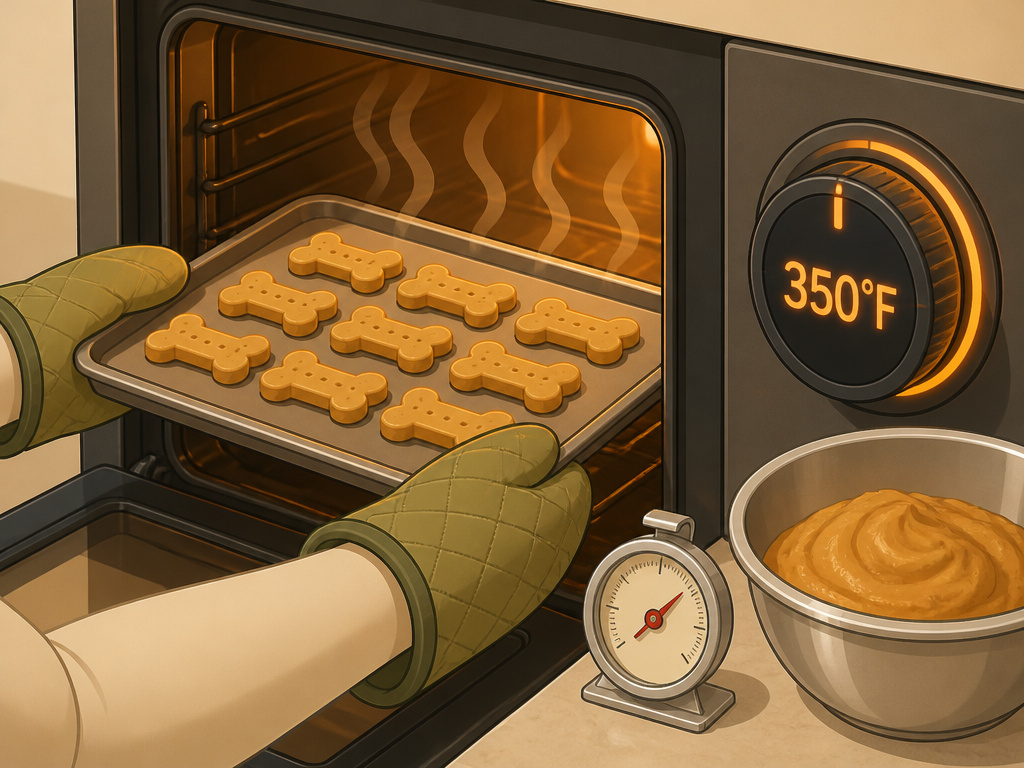
Six sources, six different bake settings. There’s no single correct temperature here, and the sources don’t pretend otherwise.
Colorado State Extension bakes at 350°F for 10 minutes. JustFoodForDogs uses 325°F for 15 to 20 minutes. Oklahoma State bakes its pumpkin version at 350°F for 25 minutes and its savory version at 350°F for 35 to 40 minutes. UGA goes to 375°F for 12 minutes. Oregon Humane Society bakes at 350°F for 30 minutes. Sally’s Baking Addiction uses 325°F for 18 to 20 minutes, then flips and bakes 10 to 12 more.
The practical rule: follow the temperature in the recipe you’re actually using. Colorado State Extension bakes at 350°F for 10 minutes, while JustFoodForDogs uses 325°F for 15–20 minutes, so don’t borrow one recipe’s time for the other’s dough. The two formulas look similar on paper, but the oat form and the banana ratio differ, and the bake time follows the dough.
Oven temperature for dog treats does more than set the bake time. It decides whether you get a soft chew or a snap.
Common mistake: Pulling the tray at 10 minutes because one recipe says 10 minutes. Colorado State Extension bakes its banana dough at 350°F for 10 minutes, but if you’re baking a wetter dough — pumpkin, banana, milk — the center may still be raw at 10, and the biscuit can collapse when it cools.
How to Make Peanut Butter Dog Treats That Hold Their Shape
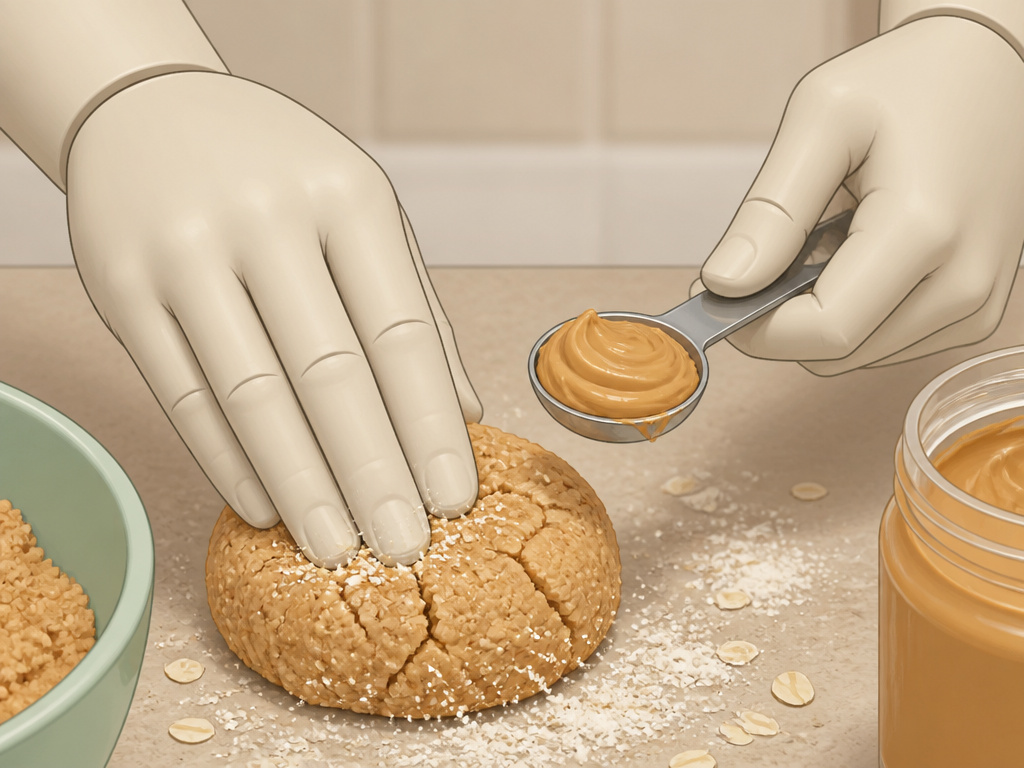
The dough looks fine in the bowl and falls apart on the counter. That’s the most common failure, and the sources fix it in opposite directions.
Here’s the decision rule:
- Crumbly and dry: Colorado State Extension adds another tablespoon of peanut butter, while JustFoodForDogs adds water or broth. Start with a small amount.
- Sticky and wet: add a little oat flour (OSU) or chill the dough before rolling (JustFoodForDogs).
- Too soft to roll: refrigerate the cut shapes before baking. OSU does this as standard practice.
A crumbly dough sheds flour on the counter and cracks when you press it. That’s the visual tell that you need fat or liquid, not more starch.
Where this goes sideways: Adding flour to a crumbly dough. Flour dries it further. If the dough won’t hold, add fat or liquid, not starch.
OSU notes that biscuits look best without extra flour, so add it sparingly.
Which Flour Belongs in the Bowl?
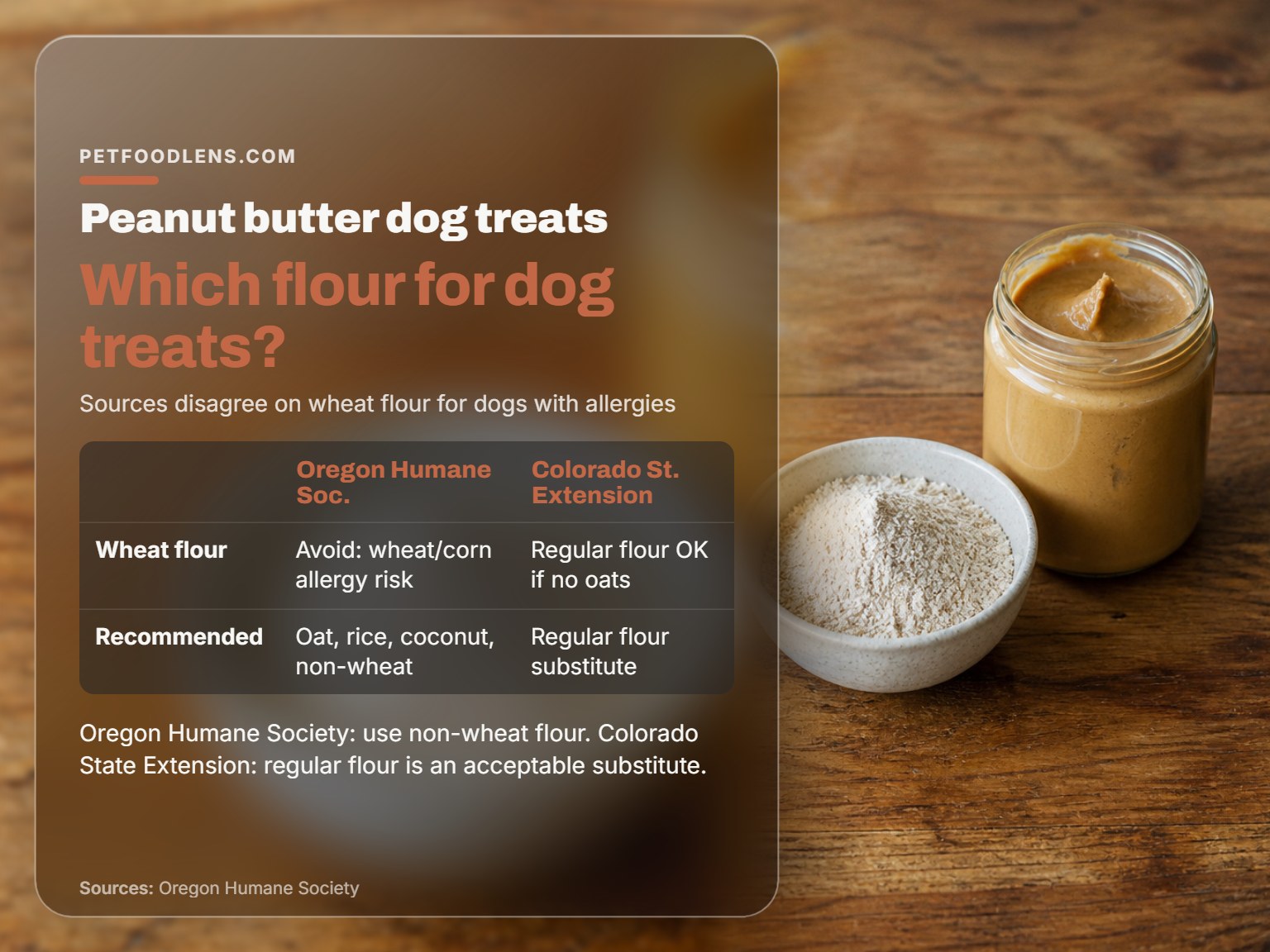
Oregon Humane Society draws a hard line here. Some dogs are allergic to wheat or corn, so the society recommends oat, rice, coconut, or other non-wheat flour for treats.
Colorado State Extension takes the opposite view on its three-ingredient page: if you don’t have oats, substitute regular flour. That’s a direct contradiction, and it matters if your dog has a wheat sensitivity.
The choice of flour for dog treats comes down to your dog’s gut, not the recipe’s reputation. Oregon Humane Society recommends oat, rice, or coconut flour over wheat for dogs with allergies, while Colorado State Extension says regular flour is an acceptable substitute if you don’t have oats. It sidesteps the wheat question, and it’s what OSU uses in both of its recipes.
Making oat flour dog treats at home is quick in a food processor. Grind rolled oats until they hit a fine powder and you’re done.
Sally’s Baking Addiction uses whole wheat flour and notes that her vet preferred it over all-purpose for the added health benefits. That’s one vet’s opinion, not a universal rule.
Oregon Humane Society includes 1 teaspoon of salt in its recipe. No other source here adds salt. If you’re watching sodium, that’s the recipe to skip or modify.
If your dog needs grain-free dog treats, swap the wheat flour for oat or coconut flour. The binder and the peanut butter stay the same.
Oregon Humane Society favors oat, rice, or coconut flour over wheat, while Colorado State Extension treats regular flour as an acceptable substitute.
Storing Peanut Butter Dog Treats: What the Sources Actually Say
Three sources give three different shelf lives, and the gap is wide enough to matter: JustFoodForDogs recommends the fridge for soft treats, while Sally’s Baking Addiction allows room temperature up to 1 week.
| Source | Room Temp | Fridge | Freezer |
|---|---|---|---|
| JustFoodForDogs | Not recommended for soft treats | About 1 week | Extended storage |
| Oklahoma State University | Not specified | 1 week | Yes |
| Sally’s Baking Addiction | Up to 1 week | Up to 2 weeks | Up to 2 months |
The spread comes down to moisture. Soft treats carry more water and spoil faster. Crunchy biscuits have less moisture and keep longer at room temperature, which is why JustFoodForDogs separates the two categories, while Sally’s Baking Addiction allows room temperature up to 1 week.
Label the container with what’s inside and the date, which is the same habit you’d use to store homemade dog treats safely. A zip-bag with no date on it is a guessing game later on.
For longer storage, frozen dog treats hold up well. Sally’s freezes hers for up to 2 months, while JustFoodForDogs and OSU say treats freeze well without specifying a time, and UGA says to freeze turkey-treat leftovers after three days.
A soft treat left in a zip-bag goes tacky and smells faintly sour. That’s the smell of moisture doing what moisture does.
The part nobody mentions: A soft treat left in a zip-bag on the counter for two days. JustFoodForDogs puts soft treats in the fridge for about a week, while Sally’s Baking Addiction says treats keep at room temperature up to 1 week.
How Much Peanut Butter Is Too Much for a Dog?
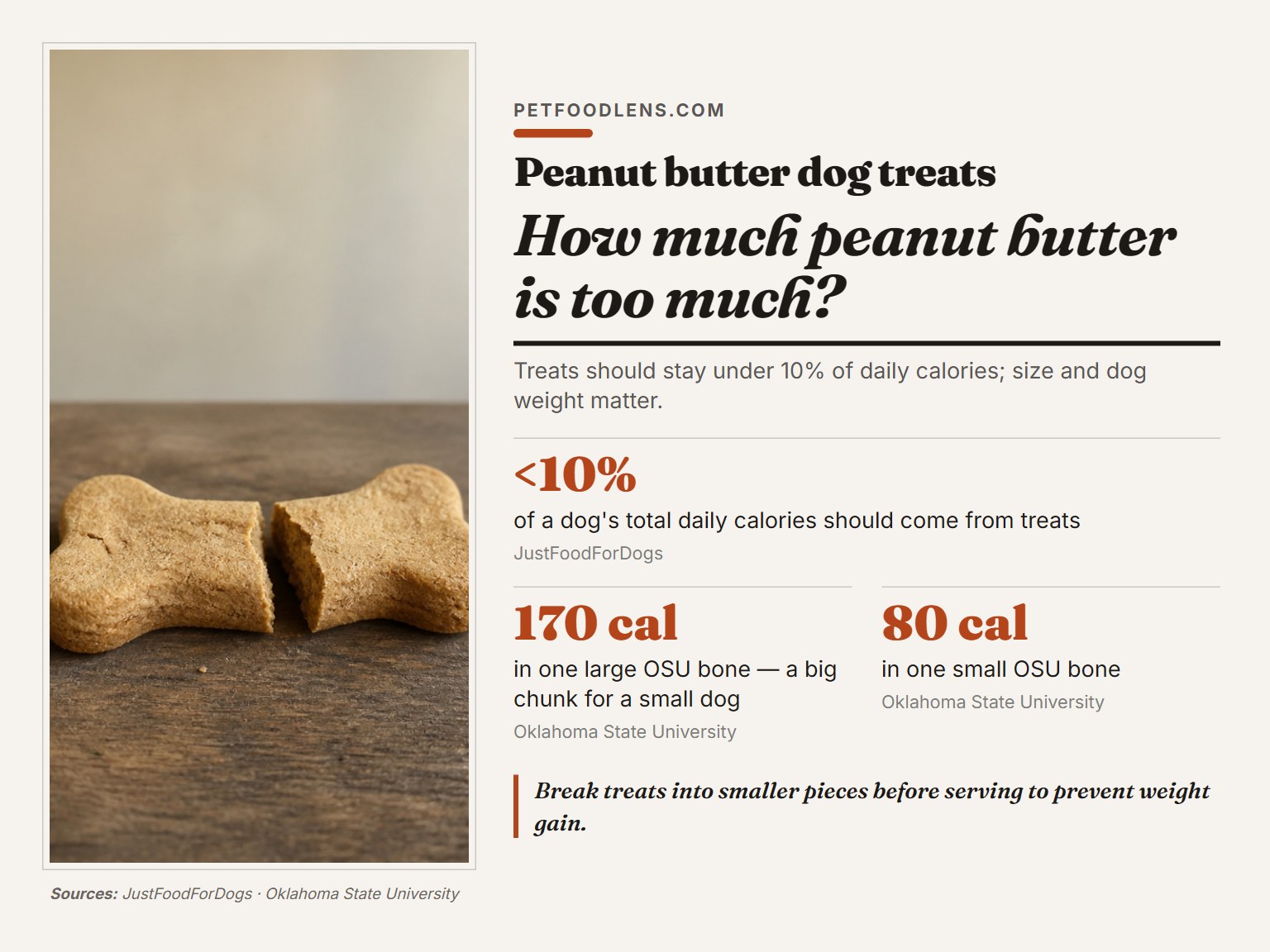
Three numbers matter here: the 10% calorie ceiling, the size of the treat, and the dog’s weight.
JustFoodForDogs puts the ceiling at less than 10% of total daily calories. That’s the number to remember. An OSU large bone at 170 calories is a big chunk of that budget for a small dog.
Break treats into smaller pieces before serving. JustFoodForDogs recommends it to prevent weight gain, and it stretches a batch further.
If your dog has never had peanut butter, start with a small amount and work up to a few treats per day. Peanut butter is high in fat, and too much at once can cause digestive upset.
For sensitive stomachs, use highly digestible ingredients: oats, rice flour, or banana. Those are the bases JustFoodForDogs points to for dogs with touchy digestion.
When you introduce new treats to your dog, start with one small piece and watch for any reaction. The 10% rule is the one I repeat most, because most of the people I talk to are feeding treats like they’re a meal, and the dog’s weight tells the story.
The question is peanut butter safe for dogs has a short answer: yes, unless the jar contains xylitol. Then it’s a hard no.
If you want a different base, sweet potato dog treats use the same peanut butter binder and the same 10% rule.
If the treat is large, break it in half. A dog doesn’t need a biscuit the size of a coaster to feel rewarded.
Frequently Asked Questions
Can dogs eat peanut butter every day?
Yes, in small amounts. JustFoodForDogs recommends keeping treats under 10% of daily calories, so a daily treat is fine if it fits that budget. Check the jar for xylitol every time you buy a new brand.
What if my dog has never had peanut butter?
Start with a small amount and work up to a few treats per day. Peanut butter is high in fat, and too much at once can cause digestive upset. For sensitive stomachs, use oats, rice flour, or banana as the base.
Can I use regular flour instead of oat flour?
Colorado State Extension says yes. Oregon Humane Society warns that some dogs are allergic to wheat or corn and recommends oat, rice, or coconut flour instead. Oat flour is the safer default.
How do I know when the treats are done?
The recipe tells you. CSU bakes for 10 minutes, OSU for 25, UGA for 12, Oregon Humane for 30, and Sally’s for 18 to 20 plus a flip. Follow the time in the recipe you’re using, and look for light browning at the edges.
Can I freeze the dough instead of the baked treats?
The sources cover freezing baked treats, not raw dough. Sally’s freezes baked treats for up to 2 months, and OSU says its biscuits freeze well. For dough, chill it before baking, which OSU does as standard practice.
The Bottom Line
The recipe you pick matters less than the two checks that come before it: xylitol on the jar, and the 10% calorie ceiling. Get those right and almost any of these six recipes will work.
If you want one place to start, use the Colorado State Extension formula: two bananas, ½ cup peanut butter, 1½ cups oats, 350°F for 10 minutes; JustFoodForDogs uses 325°F for 15–20 minutes for a near-identical formula. It’s the shortest ingredient list and one of the fastest bakes, though JustFoodForDogs uses 15–20 minutes and UGA 12 minutes for their versions. Grind the oats fine if you want a smoother biscuit.
One threshold to hold onto: if your dog is small, break every treat into pieces. An OSU large bone at 170 calories is a meal, not a snack, for a small dog.
Fair warning: the first batch usually comes out either too dry or too soft. That’s a dough problem. Colorado State Extension adds a tablespoon of peanut butter if it crumbles, while JustFoodForDogs adds water or broth; add a little oat flour if it sticks, and the second batch will land. The best way to learn how to make peanut butter dog treats is to bake one batch and adjust from there.
