
Types of Bird Feeders: Which One Fits Your Yard?
This post contains affiliate links. As an Amazon Associate, we earn from qualifying purchases.
The main types of bird feeders are tube, hopper, platform, suet, nyjer, and nectar designs, plus window-mounted models for close viewing. Match the feeder to the bird: a 1 1/4-inch caged feeder admits chickadees and Downy woodpeckers while excluding grackles and starlings. No single style attracts everything.
That caged opening is the clearest example of how feeder design actually works. The size of the port, the length of the perch, and the way the food sits decide which birds can physically use it. Get those three wrong and the feeder fills with the wrong crowd or sits untouched.
What follows covers each major feeder type, the birds each one serves, and the cleaning routine that keeps any of them safe. Where the university extension sources disagree, I’ll show both positions instead of picking a winner for you.
Key Takeaways
- Match the feeder to the bird, not the other way around. A 1 1/4-inch cage admits chickadees and Downy woodpeckers but shuts out grackles and starlings.
- Offer at least two feeder types if you want real diversity, per UF/IFAS, though Wisconsin 4-H says a single wooden hopper is the best one-feeder choice.
- Clean seed feeders weekly to biweekly per Cornell, more often in wet weather or heavy use, though BirdNet’s fact sheet calls for rigorous daily cleaning.
- Skip wooden feeders if you won’t scrub them. Cornell’s Project FeederWatch says avoid any feeder that can’t be thoroughly washed, while Wisconsin 4-H calls the traditional wooden hopper the best single-feeder choice.
- Place feeders 10 to 12 feet from cover so birds can flee predators without giving those predators an ambush point.
What Are the Main Types of Bird Feeders?
Six feeder designs cover almost every backyard setup: tube, hopper, platform, suet, nyjer, and nectar, with window mounts as a variation on the tray. Each one solves a different problem, and each one fails in a predictable way.
A tube feeder is a hollow cylinder with multiple feeding ports and perches, usually made of clear plastic or glass so the seed level stays visible. Metal ports and perches cost more but resist squirrel damage better than plastic, which squirrels gnaw to widen the openings until seed pours out.
The single most useful rule comes from the UF/IFAS bird feeder selection guide: to attract a wide diversity of birds, install at least two different types of feeders. One style serves one crowd. A tube full of sunflower seed won’t pull in the ground-feeding sparrows and towhees that a low tray will.
| Feeder Type | Best For | Main Drawback |
|---|---|---|
| Tube | Chickadees, titmice, finches | Short perches exclude larger birds |
| Hopper | Keeping seed dry; several days’ supply | Fungus if seed gets wet |
| Platform/Tray | Widest variety of seed-eaters | Highest disease transmission |
| Suet | Woodpeckers, nuthatches, chickadees | Starlings and grackles raid it |
| Nyjer | Goldfinches, siskins, redpolls | Most other birds ignore it |
| Window | Close viewing | Collision debate; daily cleaning |
Sources don’t agree on which single feeder is best. Wisconsin 4-H calls the traditional wooden hopper the best choice if you’re buying only one. Cornell’s All About Birds says platform feeders attract the widest variety. Mississippi State Extension says the same about tray feeders. The honest answer depends on whether you value variety, seed economy, or disease control most.
Tube Feeders: The Small-Bird Default
A tube feeder’s perch length decides its guest list. UF/IFAS notes that most tube perches are short, so usually only small birds like chickadees, titmice, wrens, and finches can use them. That’s a feature if you’re tired of grackles emptying the feeder by noon.
Metal vs Plastic Tube Feeders
Cornell’s All About Birds feeder guide is blunt about material: metal tube feeders resist squirrel damage, while squirrels gnaw plastic tubes to widen the openings. Metal tube feeders resist squirrel damage better than plastic, which squirrels gnaw to widen the openings. Plastic is fine if squirrels never find it. They will.
If you’re weighing a tube feeder vs hopper, the tube wins on squirrel resistance and the hopper wins on seed capacity.
The Seed Below the Lowest Port
Both Cornell and Mississippi State flag the same design flaw: tube feeders usually hold seed below the lowest feeding port, where birds can’t reach it. Rainwater collects there and the seed clumps into a sour, moldy plug you can smell when you open the tube. Block that section off, or buy a tube that doesn’t have one.
Hopper Feeders: The One to Pick If You Only Want One
Sources disagree on the best single feeder: Wisconsin 4-H calls the traditional wooden hopper the best choice if you’re buying only one, while Cornell’s All About Birds and Mississippi State Extension say platform or tray feeders attract the widest variety. Wisconsin 4-H says so directly, and the design earns it. A hopper keeps seed dry and holds several days’ worth at a time, according to Mississippi State. The catch is that fungus and bacteria grow fast if water gets in.
Here’s where the sources split. Cornell’s Project FeederWatch says don’t use feeders you can’t thoroughly wash, and names wood specifically. Wisconsin 4-H recommends the wooden hopper. Both are right about different things. A wooden hopper that stays dry and gets scrubbed is fine. A wooden hopper that soaks up rain and never dries is a mold farm.
If you’re still choosing a bird feeder, weigh cleanability against Wisconsin 4-H’s endorsement of the wooden hopper. A wooden hopper works for most birds if you keep it dry.
Platform and Tray Feeders: Widest Variety, Highest Disease Risk
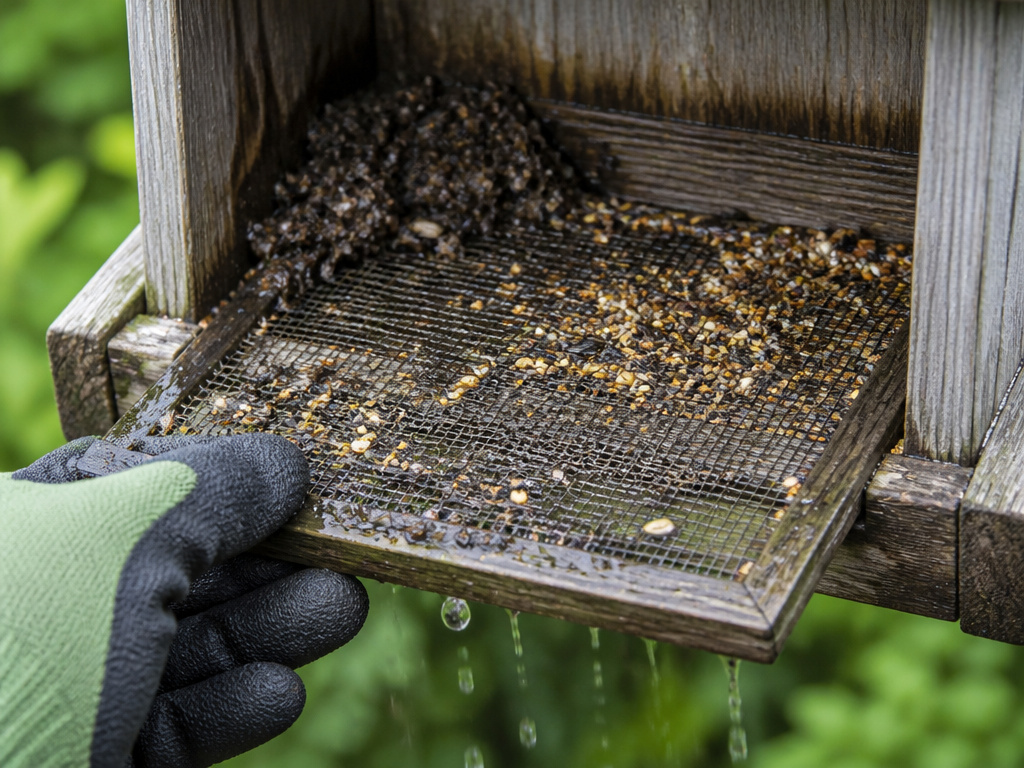
Platform feeders win on variety, per Cornell and Mississippi State, while UF/IFAS flags a higher disease-transmission rate; the sources disagree on the trade-off. Cornell says they attract the widest variety of seed-eating birds, while UF/IFAS says studies cite them for a higher rate of disease transmission because droppings collect and mingle with the food; the sources disagree on how to weigh the trade-off.
The fix is a wire-mesh or screened bottom. UF/IFAS recommends wire mesh, the Mississippi State Extension feeder guide recommends a screened bottom you can remove, and Wisconsin 4-H says tray feeders need drainage holes. Any of the three lets water and waste fall through instead of stewing in the seed.
Droppings and hulls mingle in the tray, and after a few wet days the seed at the bottom turns dark and clumped. That’s the visual cue to dump it.
Pair a tray with the right types of bird food and ground-feeding species will actually use it.
Suet, Nyjer, and Nectar Feeders: Specialty Designs
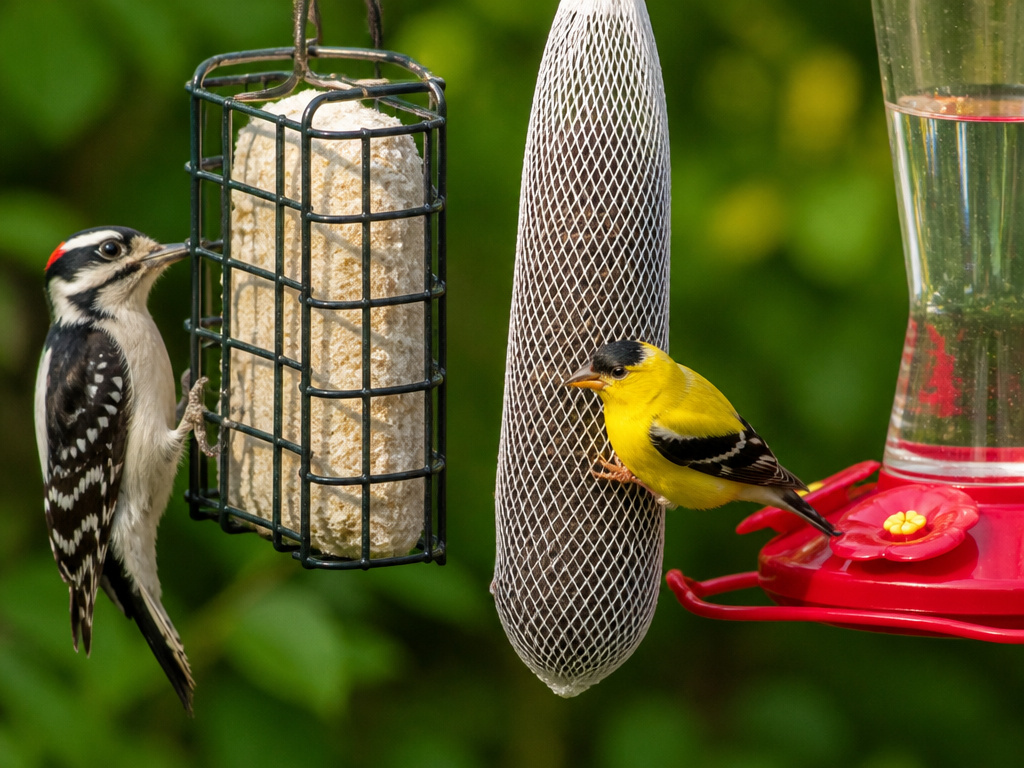
Three specialty feeders do one job each: suet, nyjer, and nectar. They’re worth adding once you have a seed feeder running.
Suet Feeders
Suet is rendered beef or mutton fat, and it pulls in woodpeckers, nuthatches, chickadees, and titmice. Cornell notes it’s most often used in winter, though hot-stable formulations exist for summer. Two designs dominate: a wire cage for blocks, or wood you smear with suet or peanut butter.
Upside-down suet feeders, where the fat is only exposed from underneath, let clinging birds feed while excluding starlings and grackles (UNL/BEHT). One warning from the same source: skip capsaicin-treated suet. It doesn’t deter birds, but it can hurt mammals if it gets in their eyes.
The suet feeders worth buying are the ones a squirrel can’t tip.
Nyjer Feeders
Nyjer feeders need special small ports to stop spillage, according to Cornell FeederWatch. They attract goldfinches, Pine Siskins, Redpolls, and Indigo Buntings, giving small songbirds a spot away from larger species. UF/IFAS is more skeptical: most other birds won’t feed from them at all.
Seasonality is regional. In Florida, UF/IFAS says nyjer feeders only need to be out October through March because the birds are winter-only there. That’s a Florida rule, not a national one. Mesh “thistle sock” feeders get soaked in rain, so use small amounts and change the seed every few days (Cornell, Mississippi State).
A nyjer feeders setup is worth it only if finches are the goal.
Nectar Feeders
Mix one part white sugar to four parts hot water, per the National Wildlife Federation. Never use honey or artificial sweeteners, and skip the red dye, which isn’t necessary and may be harmful. Homemade nectar keeps up to a week in the fridge.
Where this goes sideways: Nectar ferments fast in warm weather. UF/IFAS calls fermentation a serious threat, and FeederWatch says to clean hummingbird feeders every couple of days, ideally at every refill. Cloudy water or black mold means dump it and scrub now.
Saucer-style hummingbird feeders are easier to clean than bottle designs, and easier cleaning means you’ll actually do it.
Do Window Feeders Actually Protect Birds?
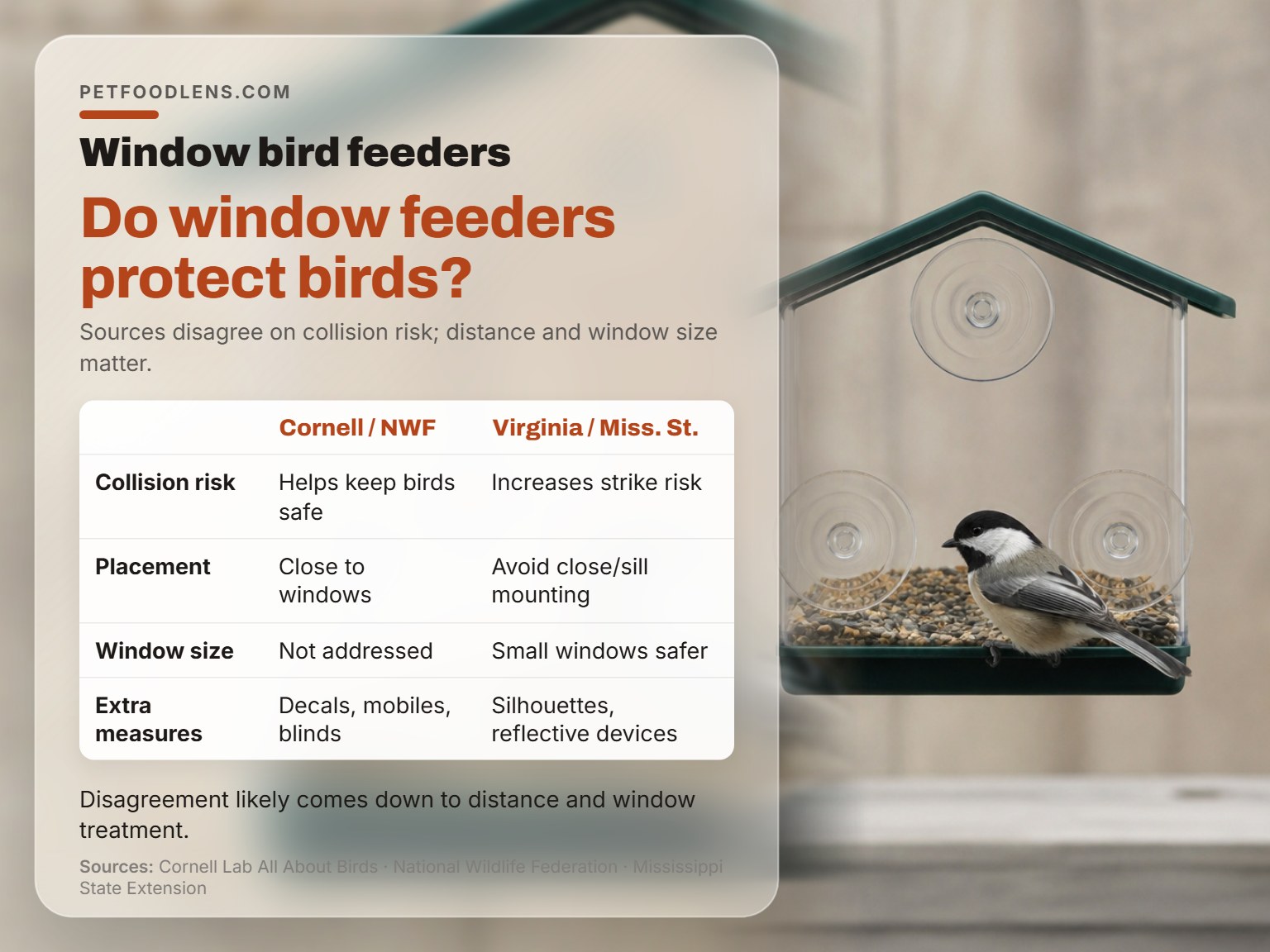
The sources flatly contradict each other here, and you should know it before you buy. Cornell’s All About Birds says a window feeder helps keep birds safe from collisions, while Virginia Cooperative Extension says mounting a feeder close to a window or on a sill increases the risk of birds striking the glass. Virginia Cooperative Extension says mounting a feeder close to a window or on a sill increases the risk of birds striking the glass. Mississippi State adds that large picture windows raise collision risk and small windows are safer.
The National Wildlife Federation says place feeders close to windows to minimize the chance a bird flying off the feeder hits the reflection, while Virginia Cooperative Extension says close or sill mounting increases strike risk and Mississippi State Extension recommends small windows over large picture windows. The disagreement likely comes down to distance and window treatment. A feeder suction-cupped to the glass gives birds no room to build speed. A feeder a few feet out gives them just enough rope to hang themselves.
My read: put a window feeder on a small window, add decals or a mobile, and don’t mount one on a big picture window. Virginia’s warning is the one to respect.
How Often Should You Clean a Bird Feeder?
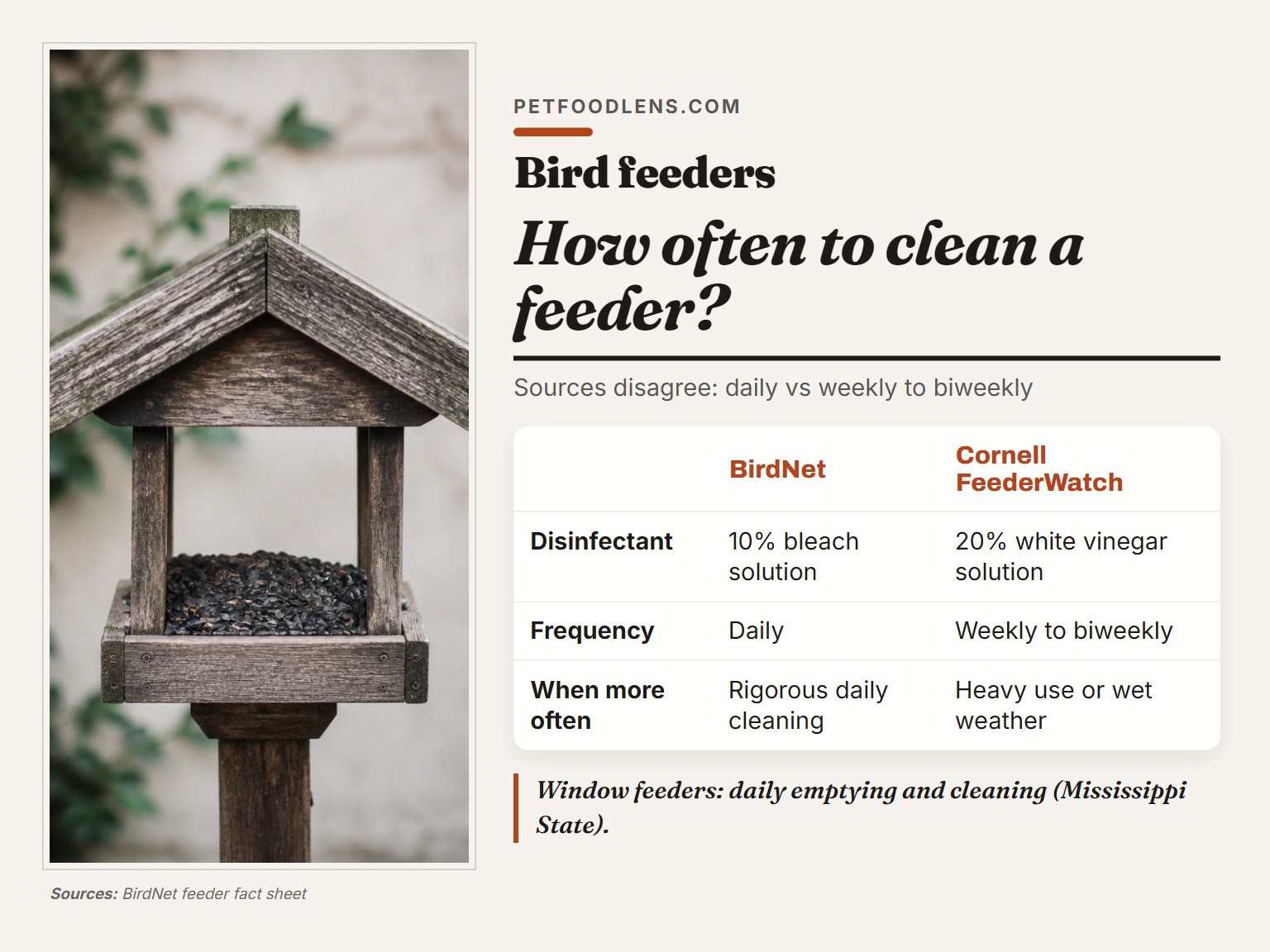
Sources disagree on frequency and on the disinfectant, and the gap matters. BirdNet’s fact sheet calls for rigorous daily cleaning with a 10 percent bleach solution, while Cornell’s Project FeederWatch says every week or two, more often in heavy use or wet weather. Cornell’s Project FeederWatch feeding birds guide says every week or two, more often in heavy use or wet weather, while BirdNet’s fact sheet calls for rigorous daily cleaning. Mississippi State says window feeders need daily emptying because birds stand in the seed.
| Source | Disinfectant | Frequency |
|---|---|---|
| BirdNet fact sheet | 10% bleach | Daily |
| Cornell FeederWatch | 1:9 bleach, 10-minute soak | Weekly to biweekly |
| National Wildlife Federation | Dishwasher or 20% vinegar | Regular |
The practical answer: seed feeders weekly to biweekly per Cornell, window feeders daily per Mississippi State, hummingbird feeders every couple of days, and BirdNet’s fact sheet calls for rigorous daily cleaning. If you can’t keep up year-round, FeederWatch says limit feeding to the seasons you can manage.
Before you start: Bleach burns skin and eyes. Wear nitrile gloves and eye protection when mixing it, and never clean feeders in the kitchen or a home dishwasher, because pathogens can transfer to food surfaces (BirdNet). Work outside or at a utility sink.
- Dump the old seed first. Cornell says to empty old seed before refilling, because seed left under the new layer stays damp and molds.
- Disassemble and scrub with warm water and dish soap. A bottle brush reaches the corners a sponge misses.
- Soak the clean parts 10 minutes in one part bleach to nine parts water. FeederWatch’s ratio works out to about 10 percent, and the soak is what kills pathogens rather than the scrub alone.
- Rinse until you can’t smell bleach, then dry completely. Refilling a wet feeder undoes the whole job.
- Wash your hands. BirdNet links human Salmonellosis to handling contaminated feeders.
Where to Put a Feeder So Birds Actually Use It
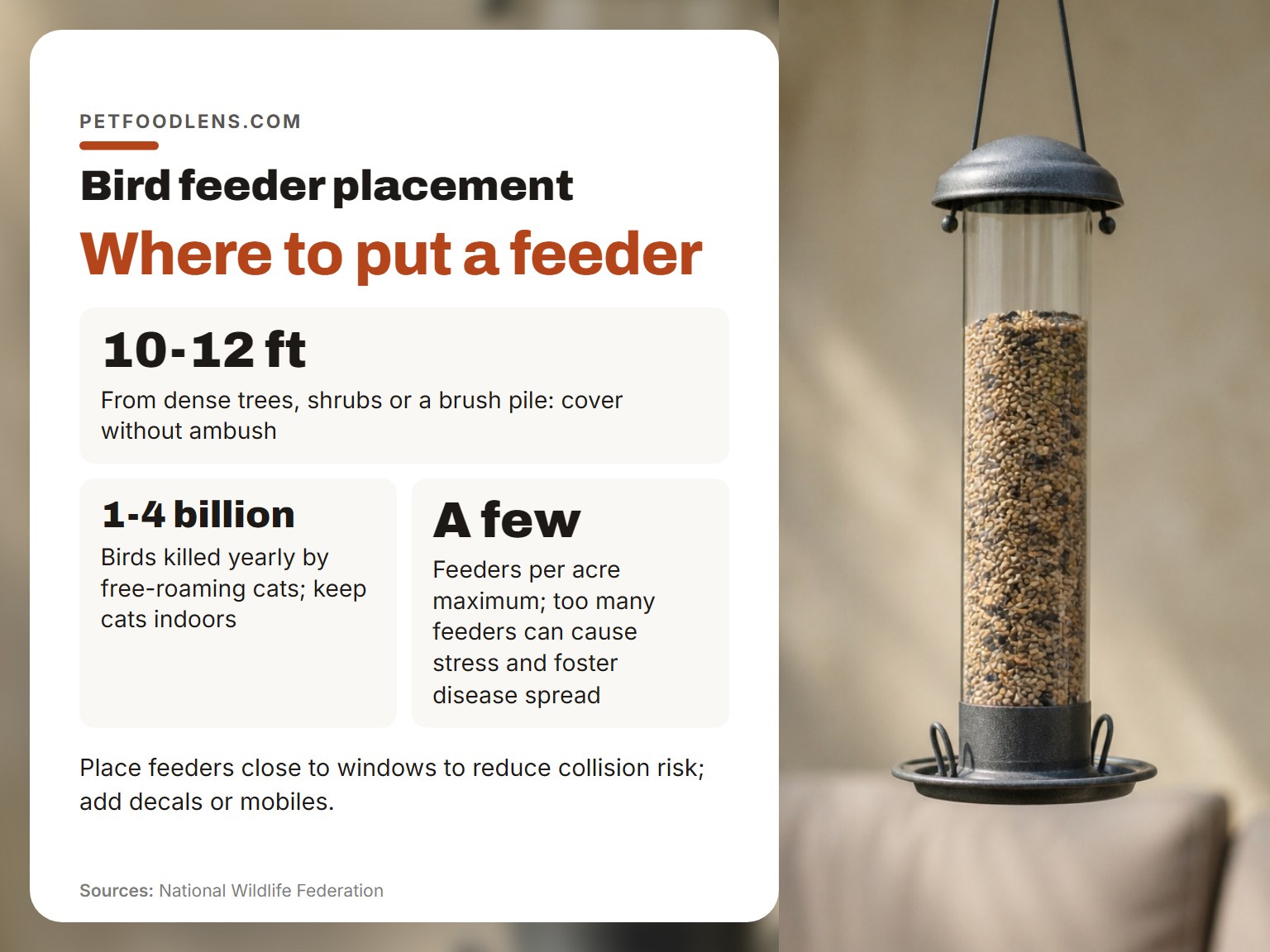
Placement decides more than feeder choice. The National Wildlife Federation feeder tip sheet recommends 10 to 12 feet from dense trees, shrubs, or a brush pile: close enough for cover, far enough that predators can’t ambush birds at the feeder.
- Keep cats indoors. Free-roaming cats kill between one and four billion birds a year (NWF) and will stake out a feeder.
- Skip pesticides. Most birds, including hummingbirds, eat insects and feed them to their young (NWF).
- Give ground feeders a tray. Sparrows, doves, juncos, and towhees ignore hanging feeders unless you offer a large open tray (Virginia).
- Scatter ground food sparingly. Only put out what birds will eat in a day (Virginia).
- Baffle for squirrels. A baffle above or below the feeder, or a caged design, is the standard fix.
Feed in moderation. NWF caps it at a few feeders per acre; more than that concentrates birds and spreads disease.
If squirrels are the problem, squirrel-proof feeders with a weighted shroud close the ports when something heavy lands, and a caged feeder with 1 1/4-inch openings keeps the big birds out too.
Frequently Asked Questions
Which bird feeder attracts the most birds?
Platform and tray feeders attract the widest variety of seed-eating birds, according to both Cornell and Mississippi State, though Wisconsin 4-H calls the wooden hopper the best single-feeder choice. The trade-off is disease risk, since droppings collect in the tray. Use a wire-mesh or screened bottom and clean it often.
What is the best feeder for a beginner?
Tube feeder hung from a shepherd’s crook with black-oil sunflower seed is the easiest start, per Cornell; add a squirrel baffle, though Wisconsin 4-H recommends a wooden hopper if you want one feeder that does more. If you want one feeder that does more, Wisconsin 4-H recommends a wooden hopper, while Cornell and Mississippi State say platform or tray feeders attract the widest variety.
Do I need more than one feeder?
UF/IFAS recommends at least two types to attract a wide diversity of birds. One feeder serves one crowd. A tube plus a suet cage covers small seed-eaters and clinging insect-eaters.
How do I keep squirrels off my feeder?
Use a baffle, choose metal over plastic, or buy a caged feeder with 1 1/4-inch openings (UNL/BEHT). A weighted feeder closes its ports when a squirrel’s weight lands on the perch.
Is a nyjer feeder worth it?
Only if you want finches. Nyjer pulls goldfinches, siskins, redpolls, and Indigo Buntings (Cornell), but UF/IFAS notes most other birds won’t use it. Use small amounts and change the seed often, especially with mesh socks.
The Bottom Line
Start with one tube feeder, black-oil sunflower seed, and a baffle, per Cornell, though Wisconsin 4-H calls a wooden hopper the best single-feeder choice. That combination covers a wide range of small birds for the least fuss, and it’s the setup Cornell recommends for beginners, though Wisconsin 4-H calls a wooden hopper the best single-feeder choice.
Here’s the threshold that decides your next move. If after two weeks you’re only seeing finches and chickadees, add a suet cage for woodpeckers and nuthatches. If ground-feeding sparrows and towhees are hopping around under the feeder but never landing, add a low tray. If squirrels are emptying the tube, stop buying seed and buy a caged feeder first.
None of the types of bird feeders above will work if you never clean them. A dirty feeder spreads disease faster than a bad design ever will. Weekly for seed, daily for window and nectar, and skip the wooden hopper if you know you won’t scrub it, though Wisconsin 4-H still calls it the best single-feeder choice.
