
Treats for Dogs With Pancreatitis Guide: Read the Label
This post contains affiliate links. As an Amazon Associate, we earn from qualifying purchases.
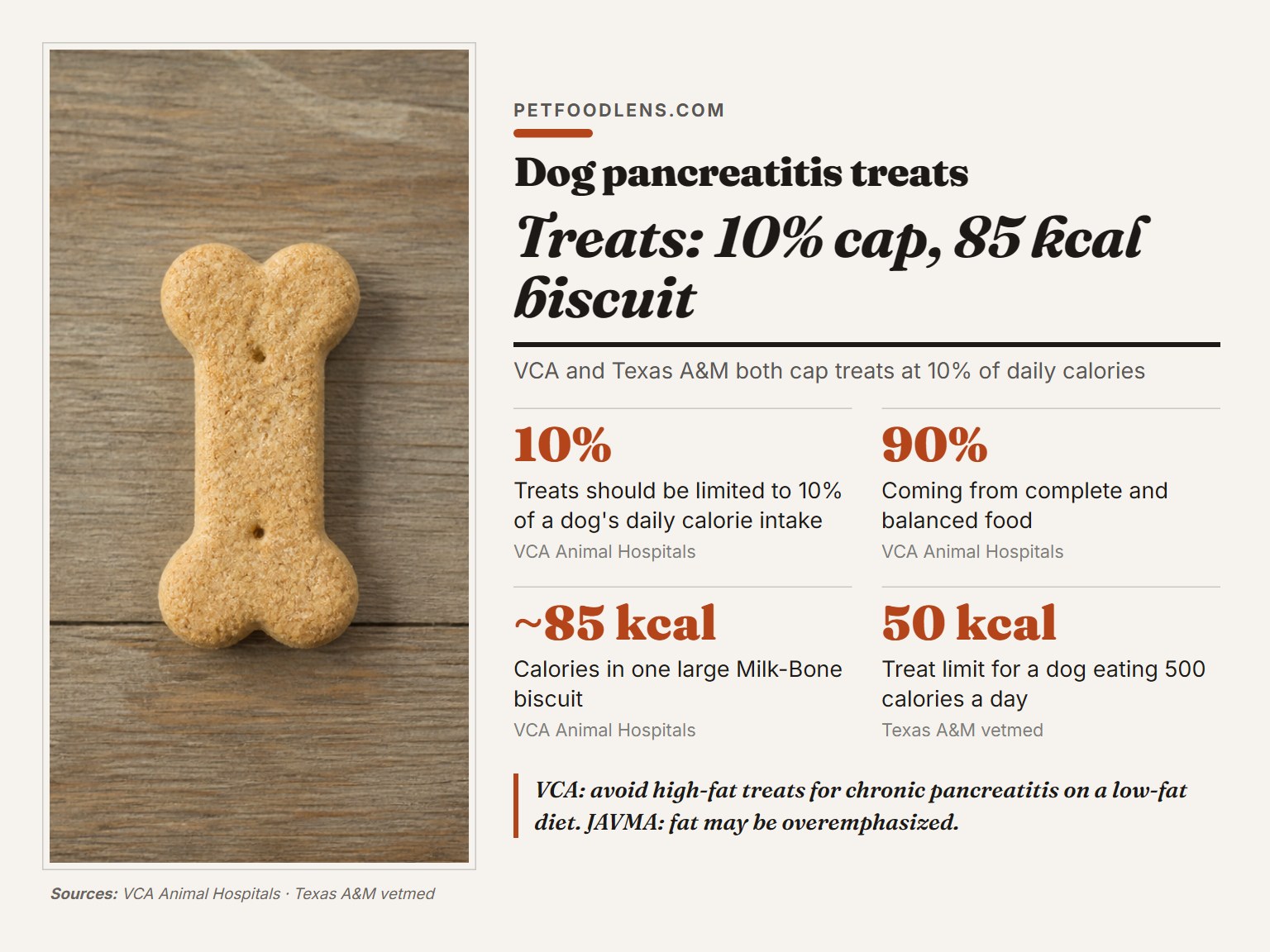
Cap treats at 10% of daily calories and pick the lowest-fat option your vet approves. That is the treats for dogs with pancreatitis guide in one sentence. VCA Animal Hospitals splits daily intake 90% complete food to 10% treats. Texas A&M puts the cap in working numbers: a dog eating 500 calories a day gets 50 calories of treats, total.
The 10% cap is arithmetic. Fat is where the argument starts, and the veterinary literature is less unanimous than the treat aisle suggests. A 2024 review in JAVMA argues that fat is overemphasized in pancreatitis management, while VCA and PetMD both treat fat restriction as the central rule.
What follows is how to read a treat label for calories and fat, which human foods hold up and which don’t, where the three main sources actually split, and the one question worth asking your vet before you buy another bag.
Key Takeaways
- Treats get 10% of daily calories, maximum. VCA and Texas A&M both use that split, and the other 90% has to come from a complete and balanced food.
- One large Milk-Bone is about 85 calories. On a 500-calorie-a-day dog, that single biscuit uses the entire treat budget.
- Fat is genuinely contested. VCA and PetMD say restrict it. The 2024 JAVMA review says it’s overemphasized and the evidence in natural disease is thin.
- “Light” and “lower calorie” mean almost nothing on a treat bag. VCA states those treats are not significantly lower in calories than the regular versions.
- Wait until the episode is fully resolved before trying new foods. Dogster’s veterinary guidance is explicit on that, and it’s the step owners skip.
Why the 10% Treat Cap Matters More Than the Treat Brand
Treats are the easiest part of a pancreatitis diet to get wrong, and the reason is arithmetic. Commercial treats are not required to be complete and balanced. VCA Animal Hospitals puts it plainly: a treat can be incomplete, but the share of incomplete food has to stay small.
Treat calories are budgeted, not added. Daily intake splits 90 percent complete and balanced food to 10 percent treats, and the treat share is capped in calories rather than in pieces. A large biscuit at about 85 kilocalories consumes the entire treat allowance of a 500-calorie-a-day dog.
That 10% is a calorie budget, not a piece count, and the treats for dogs with pancreatitis guide makes that clear. Three training rewards and one large biscuit can land in completely different places while looking like the same amount of “treating.”
A large Milk-Bone runs about 85 calories per biscuit, per VCA. On the 500-calorie example from Texas A&M, one biscuit is the whole day’s allowance.
What counts toward the 10%:
- Commercial biscuits and soft treats, which is the obvious one
- Table scraps, which is the one that quietly blows the budget
- Dental chews and long-lasting chews, which VCA flags as high-value and high-calorie items worth rationing
- Pill pockets and hiding aids, which nobody counts and everybody uses
- The canned food you bake into homemade treats, which is still food
The 90% is doing real work. That portion carries the vitamins and minerals the diet was formulated to deliver. Cut into it with enough treats and the bowl stops being balanced even though the bag still says it is.
The daily intake side is covered in more depth in feeding a dog with pancreatitis. The treat question only becomes live once the dog is home and eating again, which is where the management of acute pancreatitis in dogs review picks up the clinical thread.
How Do You Read a Treat Label for a Dog With Pancreatitis?
Read the calorie line first. Always. Treat packaging is not held to the same labeling standard as a complete food, and plenty of bags make the calorie statement genuinely hard to find.
A treat label may give kilocalories per treat, per piece, per kilogram, or per cup, which is why the treats for dogs with pancreatitis guide starts with the calorie line. If it’s per kilogram, you’re doing division in the aisle. If there’s no calorie statement at all, that’s information too.
I read a treat label the same way I read a kibble panel: ingredient order first, then the guaranteed analysis, then the calorie statement.
For human foods used as treats, VCA points owners to the USDA Food Database, which lists calorie and nutrient content for essentially everything in a kitchen. That’s a real advantage over a treat bag, because the numbers are already there and you don’t have to trust a marketing department.
A treat that eats a tenth of the day’s calories is a meal wearing a biscuit costume.
The “Light” Label Problem
VCA states directly that treats labeled “light” or “lower calorie” are not significantly lower in calories than other treats. That’s the single most useful sentence in this whole area, because it kills a shortcut a lot of owners take in good faith.
The bag says light. The calorie count says otherwise. Weigh the two against each other and the label loses.
If you’re comparing bags on a shelf, the low-fat dog treats breakdown is a faster route than reading nine panels in a store aisle. The Texas A&M vet med treat guidance is also worth having open, because it frames the cap in plain arithmetic rather than in marketing language.
Fresh or stale, the calorie load doesn’t change. That smell is just a reminder of what you’re portioning.
The Fat Question: Where VCA, PetMD, and JAVMA Actually Disagree
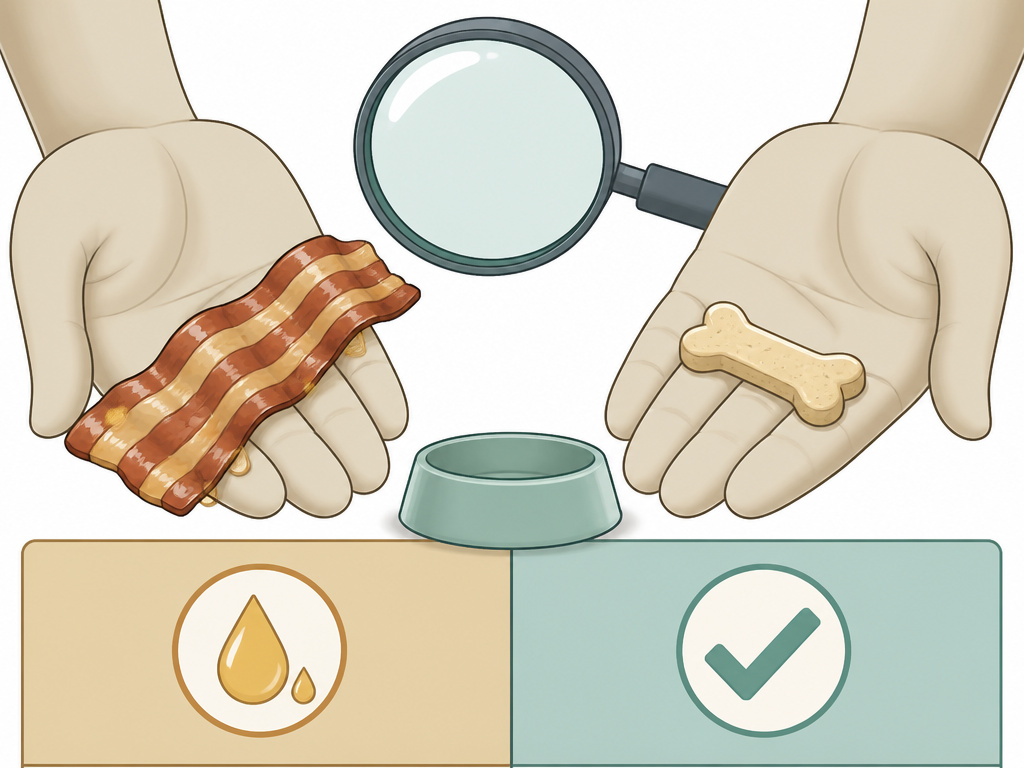
The low-fat rule is less settled than the treat aisle implies. Three credible sources look at the same question and land in three different places, and pretending otherwise does the reader no favors.
| Source | Position on fat | What it means for treats |
|---|---|---|
| VCA Animal Hospitals | Dogs with chronic pancreatitis on a low-fat diet should avoid high-fat treats | Fat restriction is the working rule |
| PetMD (Boldan, 2024) | Low fat with moderate protein; fatty treats and scraps drive recurrence | Fatty treats are the main thing to cut |
| Texas A&M vetmed | Consistent high-fat feeding leads to obesity and pancreatitis | Low-fat choices, framed preventively |
| JAVMA (Cridge & Parker, 2024) | Fat is overemphasized; effect in natural disease is unclear | Case-by-case, not a blanket rule |
Why the Disagreement Exists
The JAVMA review is candid about its own evidence base.
Noncommercial high-fat diets have been shown to induce and worsen experimentally induced pancreatitis in dogs. The same review notes that the effect of high dietary fat in naturally occurring disease is less clear. Experimental induction and real-world disease are not the same question.
The review also notes that the effect of high dietary fat in naturally occurring disease is less clear.
So the nutritional management of pancreatitis in dogs picture is a genuine split between a cautious clinical default and a review arguing the default is overweighted. The evidence surrounding canine pancreatitis nutrition is thinner than the confident tone of most treat packaging suggests.
There’s a second disagreement running underneath. VCA gives a hard 10% calorie cap. The JAVMA review gives no numeric treat ceiling at all and handles fat case by case. Different metrics for the same decision, and both are defensible.
Practically: VCA and PetMD treat fat restriction as the working rule, while the JAVMA review argues fat is overemphasized and handles it case by case. The JAVMA review notes many dogs can return to a maintenance diet if no significant comorbidity is present, while PetMD recommends prescription low-fat diets for chronic cases and VCA advises avoiding high-fat treats in chronic pancreatitis. If the vet wants a longer restriction, low-fat dog food is the bigger lever than any treat.
The base diet matters more than the treats anyway, and dog food for pancreatitis covers that choice properly.
Which Treats Actually Work: Prescription, Kibble, and Vegetables
Three sources, three different answers on what to actually put in the bowl, and all three are reasonable.
PetMD points to specially formulated prescription treats for chronic pancreatitis cases. That’s the most expensive route and the most tightly matched to a therapeutic diet.
VCA takes a cheaper angle. Ask the vet whether a canned version of the prescription food exists, then bake that canned food into small treats. Same diet, different format. VCA also suggests using a portion of the dog’s regular food as treats, which works well for food-motivated dogs that don’t inspect the offering too closely.
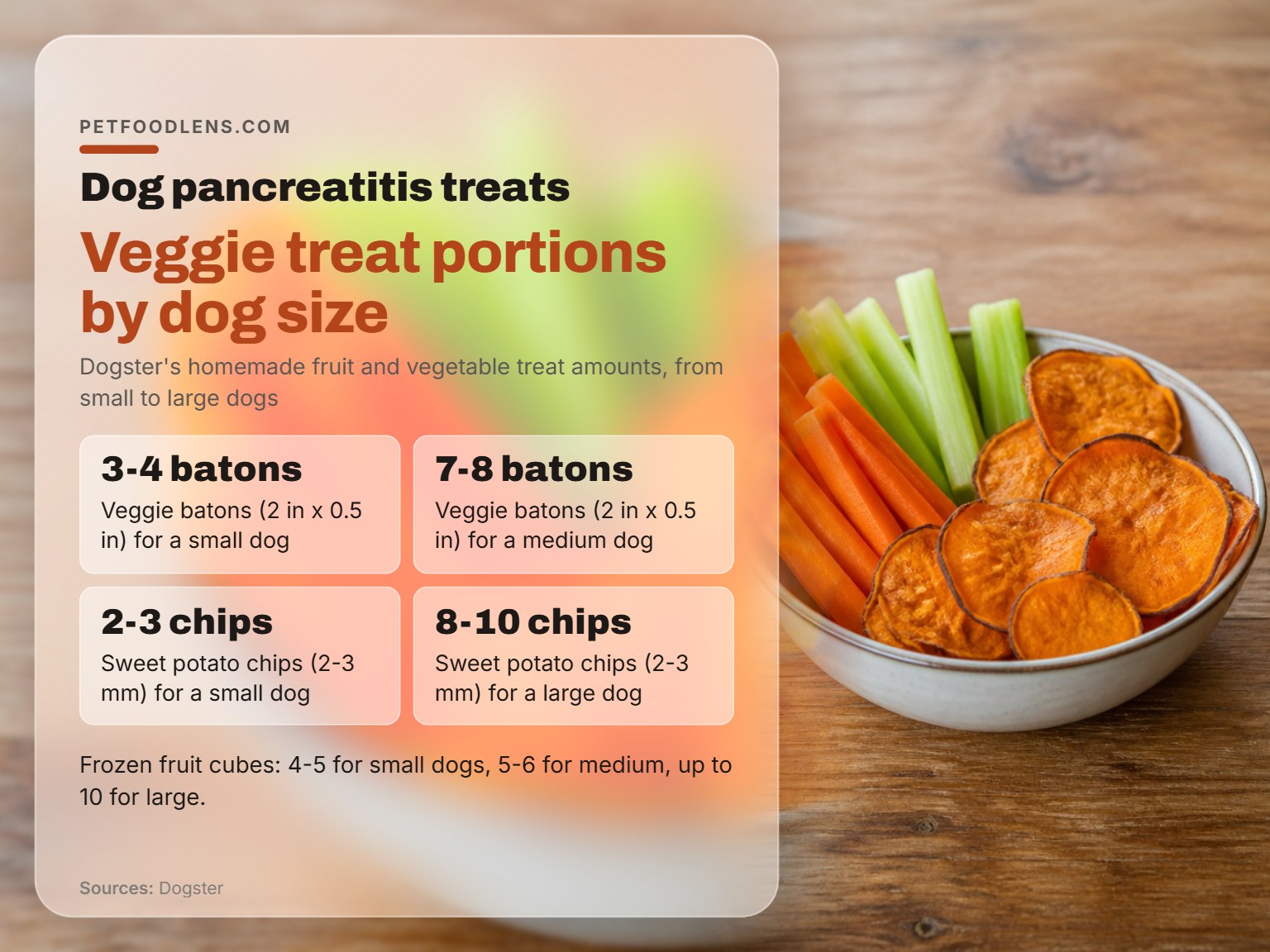
Dogster’s veterinary write-up goes the homemade route with fruit and vegetables, and it’s the only source that gives actual portion sizes by dog size.
| Treat | Small dog | Medium dog | Large dog |
|---|---|---|---|
| Veggie batons, 2 in x 0.5 in | 3-4 batons | 7-8 batons | All the batons |
| Sweet potato chips, 2-3 mm | 2-3 chips | 4-5 chips | 8-10 chips |
| Frozen fruit cubes | 4-5 cubes | 5-6 cubes | Up to 10 cubes |
Prescription Treats vs. Baked Canned Food
Prescription treats win on convenience and lose on flexibility. Baked canned food wins on matching the exact diet the vet prescribed, which matters more than most owners realize.
VCA notes that some veterinary diets, prescription urinary foods in particular, may not work properly if extra food items and treats are fed. In those cases the vet may recommend a prescription treat designed to pair with that specific food. This is a matching problem, not just a fat problem.
Vegetables and Fruit, With Sizes
The Dogster method is straightforward, and the prep matters as much as the ingredient.
- Cut the vegetable to size. Carrot and celery go to batons about 2 inches long and half an inch wide. Skip the peel on the carrot.
- Bake sweet potato chips plain. Slice one small sweet potato about 2-3 mm thick and bake 5-10 minutes until just browning. No oil, no salt, no seasoning.
- Freeze fruit in water. Blueberries, strawberries, or raspberries in an ice cube tray, topped with water, frozen solid.
- Match the portion to the dog. Use the table above rather than eyeballing it.
PetMD adds two useful cautions. Sweet potato is fine in moderation only if it isn’t cooked with butter or other fats. Pumpkin is a fiber source and low in fat, so it’s likely fine for a dog that has had pancreatitis. Egg yolk is where PetMD draws the line, because it carries more fat than a chronic pancreatitis dog should get.
The best treats for dogs with pancreatitis shortlist pulls these routes together if you want the comparison in one place.
When introducing anything new, I give one novel item at a time, starting with a small piece. Change three things at once and you have no idea which one caused the problem.
The Treats That Cause Trouble
A dog gets into the trash on a Tuesday night. By Wednesday morning there’s vomiting, a hunched stance, and a water bowl that hasn’t been touched.
Merck Veterinary Manual lists dietary indiscretion as a common risk factor for pancreatitis in dogs. PetMD ties recurrence to fatty treats and fatty table scraps specifically. Texas A&M makes the same point from the prevention side, linking consistent high-fat feeding to obesity and then to pancreatitis.
That posture is worth knowing, because dogs don’t report pain the way people do.
Skip these:
- Fatty table scraps and pan drippings. The clearest line in the whole literature.
- Freeze-dried and dehydrated raw treats. VCA flags a bacterial contamination risk to the dog and to other pets and humans through saliva and feces. That risk has nothing to do with fat.
- Anything that breaks a prescription diet. See the urinary diet problem above.
- Treats with no calorie statement. If the manufacturer won’t print a number, that’s your answer.
Common mistake: Feeding a “recovery” treat while the dog is still symptomatic. Dogster’s guidance is to wait until the dog has fully recovered before exploring different foods, and starting early is how a mild episode turns into a second one.
The best low-fat dog treats comparison is useful here, but read it with the fat disagreement in mind. Low fat is a reasonable default, not a law of physics. Dogs with a touchy gut on top of the pancreatitis history often do better on treats for sensitive stomachs than on a novel-protein chew that happens to be low in fat.
What About Pill Pockets and Hiding Medication?
Roughly two-thirds of canine pancreatitis cases are classified as chronic rather than acute, per PetMD. Chronic cases mean daily medication for a lot of these dogs, and that means pill pockets.
Pill pockets are where I got careful. I read a pill-pocket ingredient list the same way I read a kibble panel, line by line, because the fat content is not obvious from the front of the tub. Many are perfectly fine for a healthy dog. For a dog with a pancreatitis history, the fat line is the first thing I check, and it’s usually higher than the owner expects.
I read pill-pocket labels the way I read any other panel. Most are fine for a healthy dog. For a dog with a pancreatitis history, the fat number is the first line I look at, and it’s routinely higher than the owner assumed.
Building a Pill Pocket That Fits the Diet
VCA’s baked-canned-food trick works here too. Take the canned version of the prescribed diet, bake small pieces, and use those to wrap the pill. Same diet, same balance, no new fat source.
A piece of the regular kibble softened in warm water does the same job for a lot of dogs. Dogster makes the point that a treat is often about how it’s given rather than what it is, and a small portion of regular food delivered with praise lands about as well as a biscuit.
When Another Disease Outranks the Pancreatitis
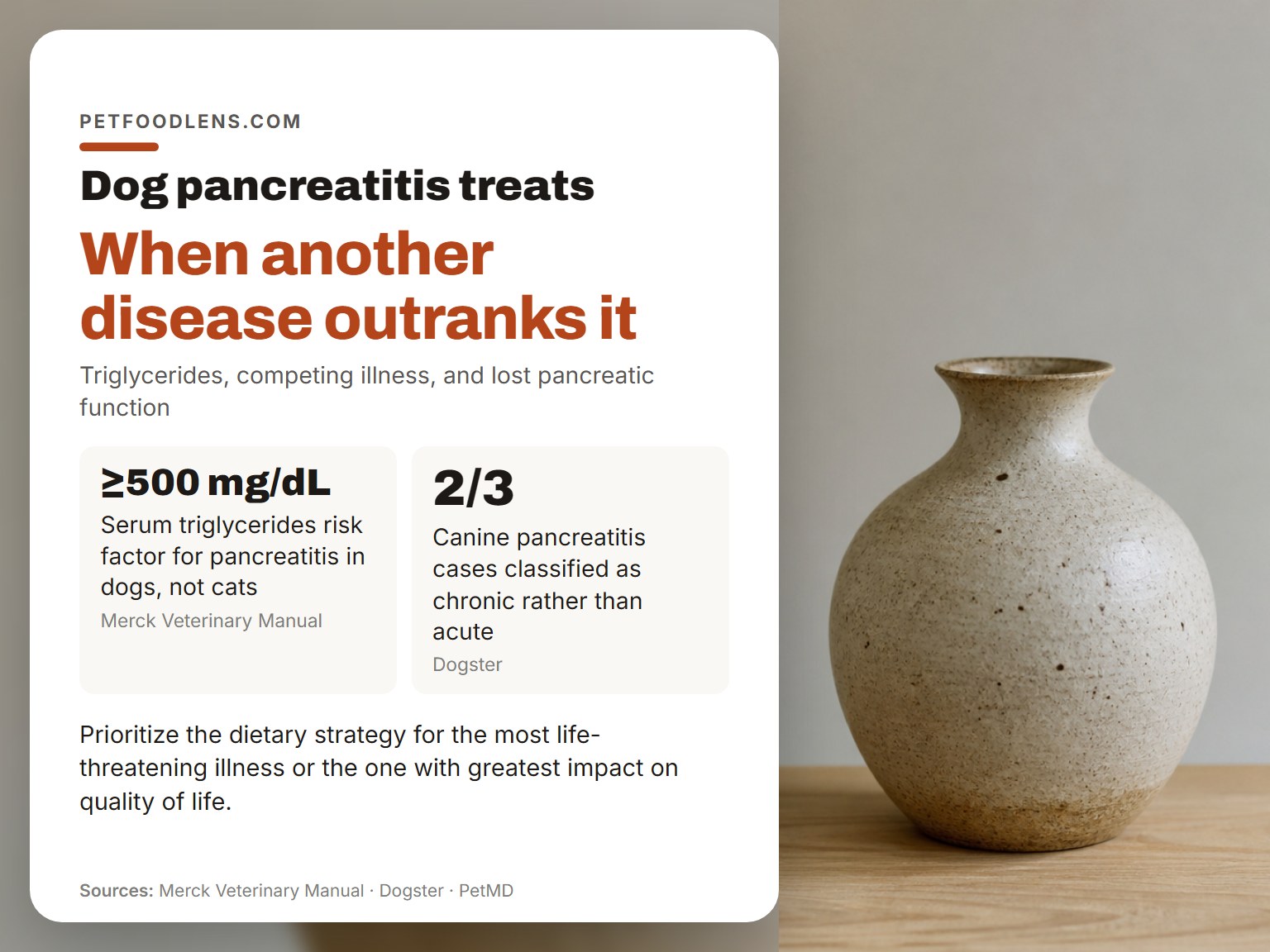
Merck Veterinary Manual draws a line at serum triglycerides of 500 mg/dL or higher as a risk factor for pancreatitis in dogs, and notes the same threshold does not apply to cats. That’s a number your vet can check, and it changes the conversation from treats to bloodwork.
The JAVMA review gives the rule for competing conditions: when diseases occur together, prioritize the dietary strategy for the most life-threatening illness, or the one with the greatest impact on quality of life. A pancreatitis-friendly treat can be the wrong treat if kidney or heart disease is the bigger problem.
Merck also notes that chronic pancreatitis can lead to loss of exocrine and endocrine function, with exocrine pancreatic insufficiency or diabetes mellitus developing as a result. Either one rewrites the treat rules entirely.
I read labels for a living, mostly on the cat side. Once a dog has two conditions competing, the treat decision belongs to the vet holding the chart rather than to a label comparison.
Skip this if: Your dog is on a prescription urinary or renal diet. VCA warns those diets may not work properly once extra food and treats enter the picture, so an unmatched “low-fat” treat can undo the thing the diet was prescribed to fix.
Frequently Asked Questions
How many calories of treats can a dog with pancreatitis have?
VCA and Texas A&M both put the ceiling at 10% or less of daily calorie intake. On a 500-calorie-a-day dog, that’s 50 calories of treats. The JAVMA review doesn’t set a numeric treat ceiling at all, so treat the 10% figure as the common clinical default rather than a universal rule.
Are “light” treats safe for a dog with pancreatitis?
Not automatically. VCA states that treats labeled “light” or “lower calorie” are not significantly lower in calories than other treats. Check the calorie statement on the back rather than the claim on the front.
Can I give carrots, pumpkin, or sweet potato?
Yes, in the right form and portion. Dogster gives size-based servings for carrot and celery batons and for plain baked sweet potato chips. PetMD notes sweet potato is fine only if it isn’t cooked with butter or fats, and that pumpkin is low in fat and likely fine.
Is fat actually the cause of pancreatitis?
The honest answer is that it’s contested. High-fat diets have been shown to induce and worsen experimentally induced pancreatitis in dogs. The JAVMA review states the effect of high dietary fat in naturally occurring disease is less clear, and its authors believe fat is overemphasized.
Can my dog go back to normal treats after recovering?
Possibly. The JAVMA review notes that many dogs can transition back to their pre-diagnosis or another commercial maintenance diet when significant comorbid disease is absent, and that long-term low-fat diets are usually reserved for dogs with recurrent episodes. Ask the vet before you make that switch.
Are freeze-dried treats okay?
VCA flags freeze-dried and dehydrated raw treats for bacterial contamination risk, which can affect the dog eating them and other pets and people in the household through saliva and feces. That’s a separate concern from fat content.
The Bottom Line
If your dog is mid-episode or just coming out of one, none of the treat math applies yet. Wait for full recovery first. Dogster is explicit about that, and it’s the step that gets rushed.
The first thing to do this week is find the calorie statement on whatever treat bag is already in your cupboard and divide it into your dog’s 10%. Most people discover the bag doesn’t make that easy. That difficulty is itself an answer about the bag.
One concession worth stating plainly: the fat question is not settled, and anyone who tells you it is has picked a side without saying so. The 10% calorie cap has broader agreement behind it than the low-fat rule does. Start there, ask your vet where they sit on fat, and let the bloodwork and the episode history decide the rest.
