
How to Feed Fish Without Clouding Water: Step-by-Step
This post contains affiliate links. As an Amazon Associate, we earn from qualifying purchases.
To feed fish without clouding water, match the food to how the fish actually eat, portion it by weight instead of by scoop, and feed in small amounts several times a day. Extruded pellets hold their shape in water far longer than steam-pelleted feed; water stability matters much more for slow feeders like prawns, while ACIAR/AwF/World Vision holds it is much less important for fast finfish.
Water stability is a measure of how long a pellet keeps its shape after it hits the tank. USDA’s Agricultural Research Service ran a rainbow trout trial comparing three pellet types, and the extruded feeds held together far better than the steam-pelleted feed. The difference showed up as less phosphorus leaving the system.
What follows covers the four variables that actually control clouding: pellet form, portion size, feeding frequency, and storage. There’s also a section on where the published guidance contradicts itself, because it does.
Key Takeaways
- Match the pellet to the feeder. Slow feeders like prawns need binders; fast finfish mostly don’t.
- Store feed below 60 °F and below 6 percent humidity, elevated off the floor, first in first out.
- Split the daily ration into 8 to 12 small events in a recirculating system to flatten ammonia and CO2 spikes.
- Growth stops improving past a point. In the ARS trout trial, higher feed rates improved growth up to a point and then stopped.
- Damaged pellets are a bacteria and mold reservoir. Check the hopper, not just the bag.
Why Water Stability Decides Whether Your Water Clouds
Starch gelatinization is one mechanism behind water-stable pellets; ACIAR/AwF/World Vision describes starchy binders gelatinised by heat, while sera states it does not use binding agents such as guar flour and relies on water-stable formulation. Heat and pressure burst the starch granules inside the feed, and that burst starch acts as the glue holding the pellet together once it hits the tank.
Extruded feeds are processed at higher temperature and pressure than steam-pelleted feeds. The higher heat gelatinizes more of the starch, and the gelatinized starch binds the pellet together in water. In a rainbow trout trial, extruded pellets showed significantly higher starch gelatinization, much higher water stability, and lower phosphorus discharge than expansion-steam pelleted feed.
That’s the argument in one paragraph. More gelatinized starch means a pellet that survives the trip down, and a pellet that survives the trip down doesn’t dissolve into the water column.
The second effect is less obvious. The same USDA ARS research publication record found extruded feeds produced larger, more durable fecal matter that mechanical filtration could actually capture. Waste you can filter is waste you can remove. Waste that dissolves is waste you can only test for.
Feed clouding has a flat, milky look to it. It hangs in the water and drifts with the current rather than settling into a green tint, which is what you’d see from an algae or bacterial bloom. If the haze appears within minutes of a feeding and clears over a few hours, you’re looking at feed breakdown, not a water chemistry crash.
Which Feed Form Fits Your Fish?
Floating and sinking are not interchangeable, and the sources here don’t fully agree on which one to pick: the Freshwater Institute prefers slow-sinking feed for removal through drains, while sera recommends matching floating or sinking behavior to the fish’s feeding zone.
Sera’s feeding guidance treats floating versus sinking as a match to where the fish naturally eats: surface, middle zone, or bottom. That’s a sensible default for a display tank with mixed species. The Freshwater Institute, which runs recirculating systems, goes the other way for its own context. Its operators prefer slow-sinking feed because it’s easier to remove through drains and settling structures than floating feed is.
Floating, Sinking, and the RAS Override
In a recirculating system, the drain is the removal mechanism. The Freshwater Institute prefers slow-sinking feed because a pellet that sinks slowly gets carried toward the bottom center drain and out, while a pellet that floats sits on the surface until it waterlogs; sera, by contrast, recommends matching floating or sinking behavior to the fish’s feeding zone.
In a pond or a tank with surface-feeding fish, that logic flips. Floating feed lets you watch how much gets eaten, which helps when you can’t see the bottom, though sera recommends matching floating or sinking behavior to the fish’s feeding zone.
| Pellet Type | Water Stability | Growth in Trout Trial | Where It Fits |
|---|---|---|---|
| Extruded floating | High | Fastest of the three | Surface feeders; ponds where you watch intake |
| Extruded sinking | High | Slower than floating | RAS and drains; mid-water and bottom feeders |
| Steam-pelleted sinking | Lower | Slower than floating | Cheap bulk feeding; short water residence time |
The processing method matters more than the buoyancy for stability. An extruded sinking pellet still beats a steam-pelleted one on stability, because the difference comes from heat and pressure during manufacture, not from whether the pellet floats; sera, however, recommends matching floating or sinking behavior to the fish’s feeding zone.
For a home tank, the flakes versus pellets comparison usually comes down to the same question in a different form. Flakes break down faster and spread wider, which is fine for surface feeders and bad for anything that needs the food to stay intact. Pellets win on water clarity almost every time.
If you’re running a planted tank setup, the calculation shifts again. Dense planting traps uneaten food where you can’t siphon it, so the stability of the pellet matters more, not less.
How to Feed Fish Without Clouding Water: Frequency and Portion
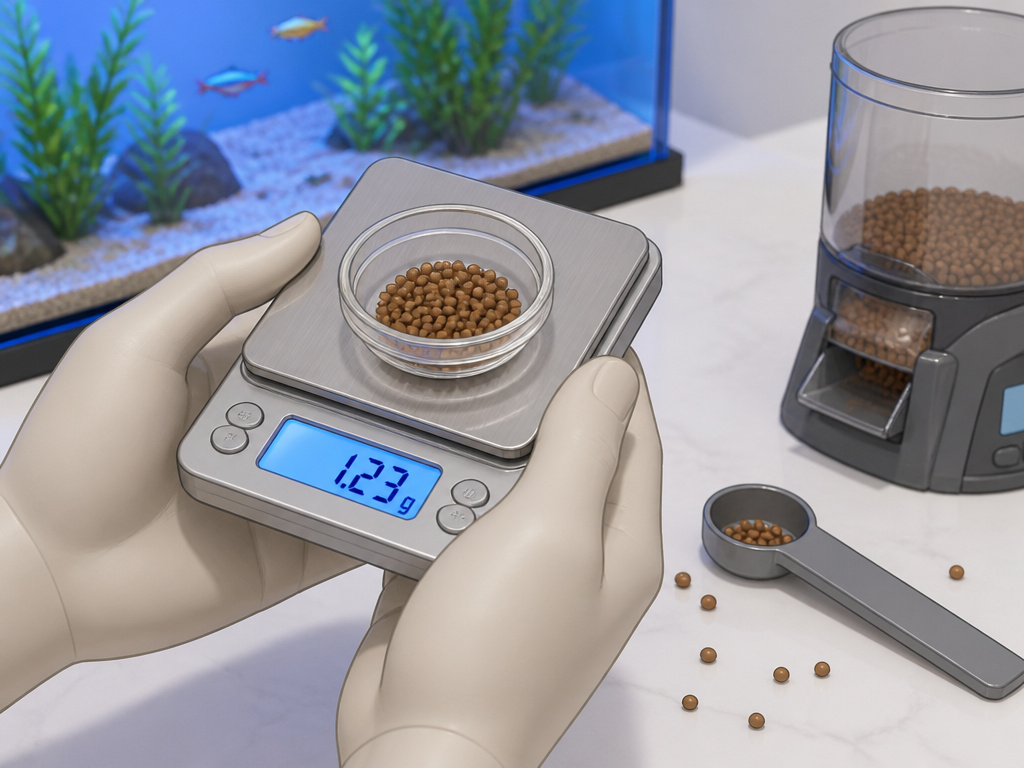
The first thing I ask when someone tells me their tank clouds after every feeding is the how to feed fish without clouding water question: how they measure the food. Nine times out of ten the answer is a scoop, a pinch, or “about that much” with two fingers.
I’ve weighed portions on a kitchen scale for as long as I’ve been advising on feeding, and it’s the cheapest change I recommend. Grams are consistent. Scoops and cups are not, because a level teaspoon of one pellet can weigh a completely different amount than a level teaspoon of another. Same volume, different feed, different result.
I weigh portions in grams, not scoops. Two brands can fill an identical teaspoon with very different weights of food, so a scoop instruction stops meaning anything the moment you switch products.
Once the portion is weighed, the next how to feed fish without clouding water question is how many times a day it goes in. The Freshwater Institute recommends at least 8 to 12 evenly spaced feeding events per day in a recirculating system. That sounds absurd until you look at what it’s for.
A single large feeding dumps a load of nitrogen and organic matter into the water at once. Ammonia production, CO2 production, and oxygen consumption all spike together. Spreading the same total ration across 8 to 12 events smooths those curves out over 24 hours. Same food, same fish, gentler water chemistry.
Setting a Ration You Can Defend
- Start from the manufacturer’s chart or your own historical records, then adjust toward satiation over time rather than treating the chart as a fixed rule.
- Weigh the daily total in grams and divide it by your planned number of events.
- Watch the fish eat each event. Feeding too aggressively or passing up pellets means the ration needs adjusting.
- Check for spitting, head shaking, or gill flaring. Those three behaviors usually mean the feed is unpalatable or the pellet is too large to swallow.
- Reprogram the feeder any time you change delivery speed, pellet size, or stocking numbers.
Hand feeding follows the same principle at a smaller scale. Throw feed across all areas of the tank in amounts small enough that each scoop is finished before it reaches the bottom. If your feeder drops food faster than the fish can chase it, fit a spreader so the pellets broadcast over a wider area instead of sinking in one column.
For more on dialing in the total volume, this guide to how much to feed covers the body-weight math. And if you keep pond fish rather than tank fish, note that the Feeding Catfish in Commercial Ponds guidance is written for warm-water surface feeding and doesn’t transfer to a recirculating tank. Commercial systems track ration programming in more detail; the Iowa State recirculating aquaculture feeding SOP is written for that setting.
The Storage Rules That Keep Feed Out of the Water Column
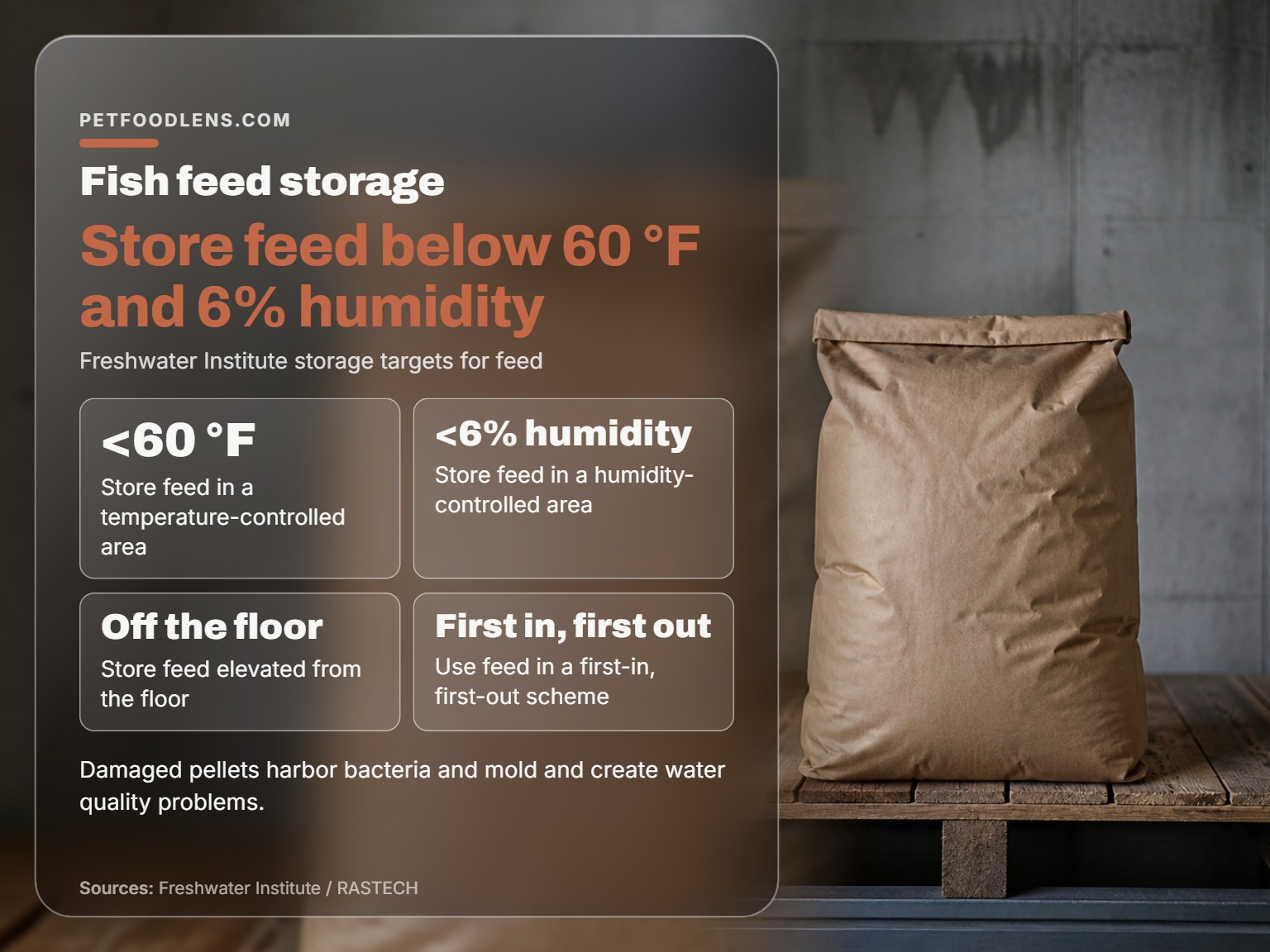
Feed starts degrading the moment the bag is opened, and degraded feed clouds water faster than fresh feed does because it’s already falling apart before it gets wet.
The Freshwater Institute’s storage standard is specific: below 60 °F, below 6 percent humidity, elevated off the floor, and used first in, first out. Those numbers are written for a commercial fish house, but the logic holds in a garage or a utility room. Heat drives vitamin loss. Moisture drives fungal growth. A bag sitting on a concrete floor wicks damp straight up through the paper.
| Factor | Target | What Happens If You Miss It |
|---|---|---|
| Temperature | Below 60 °F | Heat-labile vitamins degrade; feed value drops before the bag is empty |
| Humidity | Below 6 percent | Mold and fungal growth; the bag clumps and smells off |
| Elevation | Off the floor, sealed | Moisture wicking and pest access |
| Rotation | First in, first out | Old stock sits at the back and gets fed last |
Rancid oil in feed smells like old nuts, or like a jar of peanut butter that’s been open too long. That smell means the lipids have broken down into free fatty acids, and the ACIAR feed-preparation guidance is blunt about the consequence: rancid fats reduce palatability and contain compounds that can reduce growth.
Store lipids like fish oil in sealed containers, preferably plastic, in a cool dark place, and buy only product that had antioxidants added at manufacture. Keep everything dry, cool, and away from pests, and buy in quantities you’ll actually use rather than stocking up.
Worth knowing before you start: A bag of feed that’s been open for months in a warm room isn’t a bargain, it’s a water quality problem waiting for a feeding. Compounded feed should be used quickly, especially in warm conditions.
There’s a timing angle here too. Feeding schedules shift around maintenance, and the question of how soon to feed after a water change comes up constantly. The short answer is that the fish’s appetite is a better guide than the clock. If you want the full breakdown on fish food storage, that’s covered separately.
Do Binders Belong in Fish Feed?
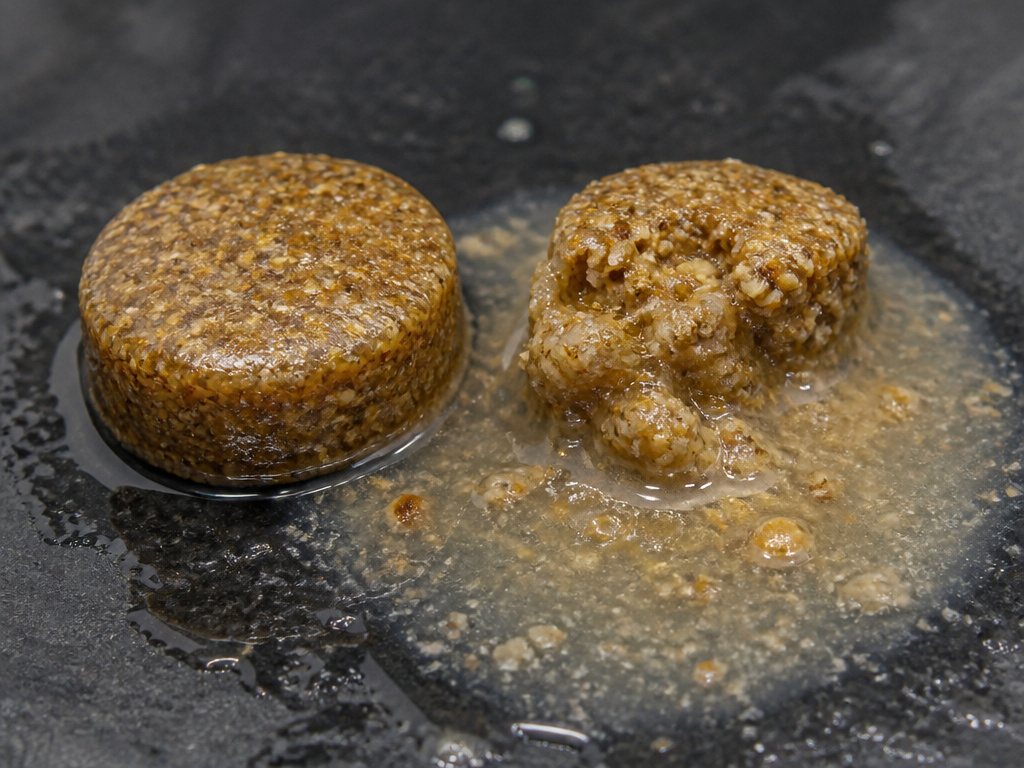
Two credible sources tell you opposite things about binders, and both are right for their own fish.
The ACIAR and Aquaculture Without Frontiers guidance puts binder inclusion at 1 to 2 percent of the dry diet, and describes specific binders as essential for species that masticate food externally before swallowing, while sera states it does not use binding agents such as guar flour. Starchy binders like palm starch, cassava starch, potato starch, wheat flour, rice, and maize work because heat gelatinizes the starch and glues the particles together.
Sera, meanwhile, states plainly that it does not use binding agents such as guar flour. Its position is that a properly formulated water-stable food should cloud and wash out as little as possible without leaning on added gums, while ACIAR/AwF/World Vision recommends binders at 1 to 2 percent of the dry diet and describes specific binders as essential for slow-feeding species like prawns.
Prawns vs. Finfish: The Real Dividing Line
The contradiction partly dissolves once you look at the species. A prawn holds food externally and grinds at it, so the pellet has to stay intact long enough for that to finish. A fast-feeding finfish grabs and swallows, and the ACIAR document says directly that water stability is much less important for those instantaneous feeders. The pellet only needs to survive transport without breaking apart. Sera, by contrast, states it does not use binding agents such as guar flour at all.
If you keep prawns, ACIAR/AwF/World Vision recommends buying for water stability and expecting binders on the label. If you keep fast-feeding finfish, ACIAR/AwF/World Vision holds water stability is much less important, while sera states it does not use binding agents such as guar flour and relies on water-stable formulation instead.
The same split shows up in the research. Welker and colleagues measured a real reduction in phosphorus discharge from more stable extruded feed in trout. The ACIAR position is that binder-driven stability is a prawn-specific requirement, while sera states it does not use binding agents such as guar flour. Both statements can be true at once, because they’re describing different problems: effluent chemistry on one side, physical pellet survival on the other.
Where the two sides genuinely diverge is on how much weight to put on stability for ordinary finfish. If you want the formulation detail rather than the marketing, the ACIAR farm-made feed preparation guide walks through binder options ingredient by ingredient.
What Overfeeding Actually Costs You
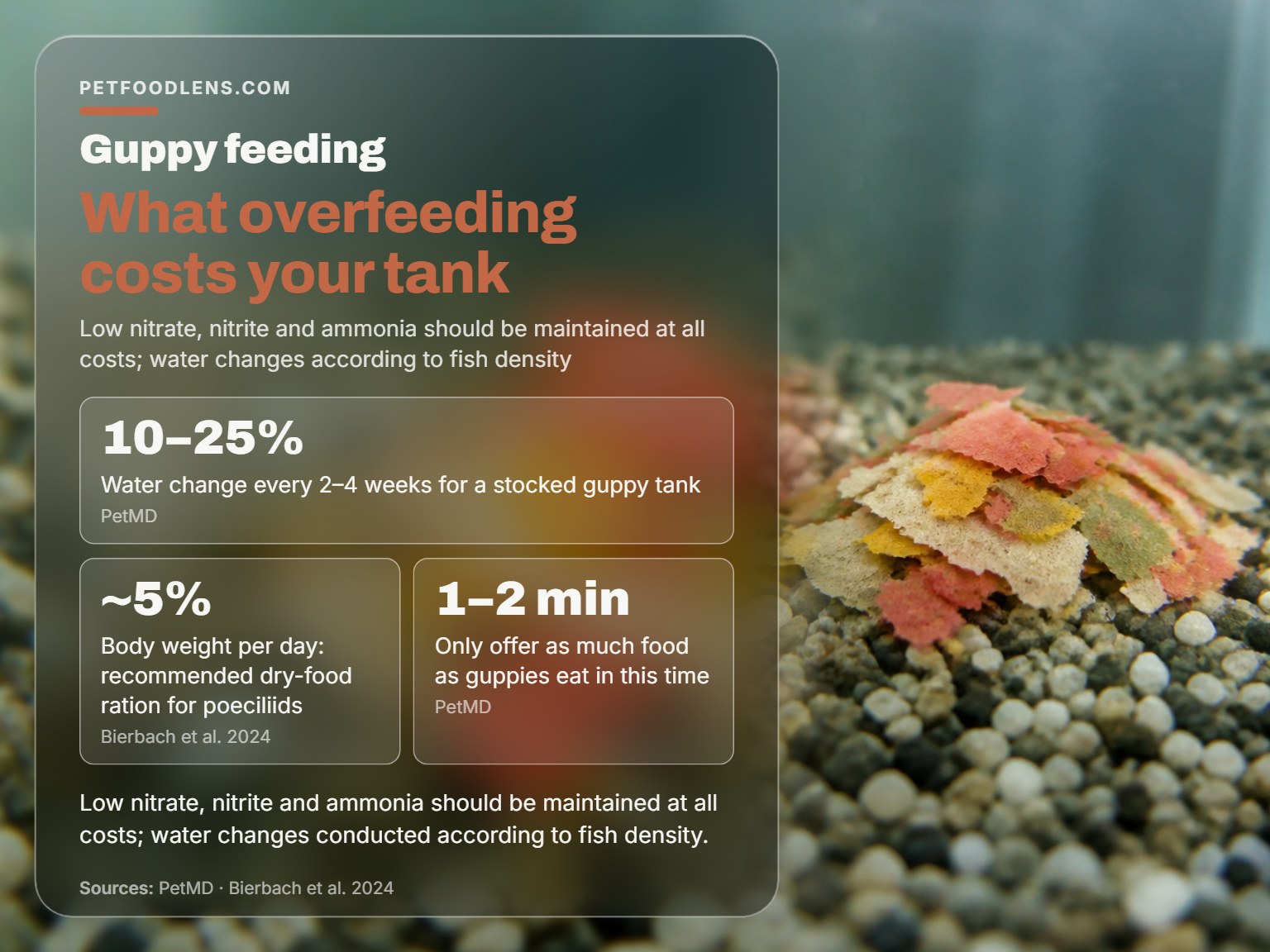
You drop in a second pinch because the fish still look hungry. Twenty minutes later there’s a haze in the water and the filter is working harder than it should.
Overfeeding wastes feed and money, and that’s the mild version. The Freshwater Institute is direct about the rest: uneaten feed drives ammonia and CO2 production up and oxygen down, which is the exact combination that makes water go cloudy and fish go listless. Underfed fish have their own problems, including aggression and fin damage, so the target is the middle, not the floor.
There’s a ceiling on the growth side too. In the ARS trout trial, higher feed rates improved growth up to a point and then stopped. Beyond that point, the extra feed bought no additional growth. It just went into the water.
Common mistake: Judging the ration by how fast the fish attack it. A hungry fish will eat past satiation and then pass undigested food, which is the single most common cause of a post-feeding haze in an otherwise stable tank.
If you want to know exactly how much is being wasted, put a collection basket in the bottom center drain flow during a feeding event and pull it a few minutes afterward. Whatever’s in the basket is your waste figure, measured rather than guessed. Adjust the ration up or down from there.
A few other things worth checking:
- Fines accumulating around the feeder mean the equipment is cracking pellets. Damaged pellets create a reservoir for bacteria and mold.
- Hoppers and spreaders need routine cleaning, not occasional cleaning.
- Spare parts matter more than they seem to. A dead feeder means either an unfed tank or a hand-fed one, and hand feeding tends to overshoot.
For a deeper look at the failure modes, this piece on overfeeding fish covers the water-quality fallout in detail. If you’re using gel food instead of dry, the fouling profile is different again and worth reading before you switch.
Where this goes sideways: Feeding damaged or moldy stock because it seems a waste to throw it out. The Iowa State extension SOP treats degraded feed as compost material, not fish food, and the water quality hit shows up soon after the first feeding.
Frequently Asked Questions
Why does my water go cloudy right after feeding?
Uneaten or dissolving food is the usual cause. Pellets that break down quickly release fine particles and dissolved organic matter into the water column. Switching to a more water-stable extruded pellet and cutting the portion usually clears it up within a few feedings.
Does rinsing flakes before feeding help?
It reduces the fine dust that flakes produce, but it also washes away water-soluble vitamins before the fish get them. A better fix is switching to a pellet that holds together, or feeding flakes in smaller amounts so less of it goes uneaten.
Is floating or sinking food better for clear water?
It depends on your system. The Freshwater Institute prefers slow-sinking feed in recirculating setups because it moves toward the drain and gets removed, while sera recommends matching floating or sinking behavior to the fish’s feeding zone. Ponds and surface-feeding tanks do better with floating feed because you can watch how much is actually eaten.
How long should food stay in the tank?
Not long. The practical standard is that each scoop should be finished before it reaches the bottom. If pellets are landing and sitting, the portion is too large or the feed rate is too fast.
Can cloudy water from food actually hurt my fish?
The haze itself is mostly cosmetic. The problem is what’s behind it: decomposing food consumes oxygen and pushes ammonia up. That’s the part that stresses fish, and it builds over days rather than minutes.
The Bottom Line
If your water is still hazy half an hour after a feeding, the problem is the feed or the portion, not the filter. Go back to those two variables before you spend anything on new equipment.
Here’s the first thing to do this week: weigh tomorrow’s ration on a kitchen scale, in grams, and write the number down. Then split it into smaller events and watch what happens to the water over three days. Most people find they were feeding more than the fish were actually eating.
One concession worth stating plainly. Everything above assumes a tank with a functioning biofilter and reasonable stocking. If your ammonia is already climbing before you feed anything, ration adjustments won’t fix it, and you’re looking at a filtration or stocking problem instead. Fix that first, then come back to the feed.
The label still says more than the slogan. A bag that lists soy grits early and won’t tell you its water stability is telling you something, and it isn’t flattering.
