
Honey Sticks for Birds Pros and Cons: Worth It or Not?
This post contains affiliate links. As an Amazon Associate, we earn from qualifying purchases.
The honey sticks for birds pros and cons break down this way: convenience and eager acceptance on one side, nutrient dilution, selective feeding, and sticky residue that can support yeast growth on the other. VCA Animal Hospitals says most avian veterinarians do not recommend them at all, while SpectrumCare says many avian veterinarians keep honey sticks as rare extras, if used at all.
Bind a seed mix with sugar and honey and two things change at once. The calorie density climbs, and the bird’s willingness to keep eating climbs with it. A budgie that fills up on the sticky version has less room for the pellets that VCA Animal Hospitals says should make up roughly 60 to 80% of the diet.
What follows is the honest version of the honey sticks for birds pros and cons: what a honey stick does well, what it costs the bird, where practicing vets split on the answer, and what belongs in the dish instead.
Key Takeaways
- Seeds plus sugar plus honey is the entire ingredient story. VCA Animal Hospitals calls honey sticks nutrient-deficient and overloaded with carbohydrates.
- No regulatory body certifies avian dietary products, so a “Complete Avian Nutrition” claim on the package has nothing standing behind it.
- Millet spray belongs at once or twice a month in small quantities, per VCA. No source sets a honey stick ceiling, which tells you something.
- Pellets should be 60 to 80% of the diet, and that leaves very little room for a sugar-bound seed stick.
- If honey gets matted into the feathers, clean it off and watch for 12 to 24 hours.
What Is Actually in a Honey Stick?
Turn one over and the ingredient line is short: seeds, sugar, honey, and a wooden stick holding the whole thing together.
A honey stick consists of seeds held together with sugar and honey on a wooden stick. VCA Animal Hospitals describes the product as nutrient-deficient and overloaded with carbohydrates, and notes that no regulatory body certifies avian dietary products, so package claims of complete nutrition carry no independent verification.
That last point deserves a longer look. Walk into any pet store and you will find bags carrying the phrase “Complete Avian Nutrition” in confident type. VCA’s position is that the phrase is unverified, because nothing in the regulatory system checks it.
Honey sticks sit at the far end of the seed sticks spectrum, where the seed is bound into a solid mass rather than left loose. Run a thumb across one and it comes away tacky, with seed dust stuck to the pad. That coating is the whole product.
Commercial mixes vary more than most owners realize. New Plymouth Vet Group puts budgie mixes at 2 to 8 seed types, while VCA gives finch mixes at 2 to 5 and cockatiel and lovebird mixes at 4 to 10, nuts included. A honey stick compresses that mix into a single block.
Honey Sticks for Birds: Do the Pros Hold Up?
Two of them do, and neither is nutritional. The first is acceptance.
The second is occupation.
Honey sticks are one of several types of bird treats, and they sit at the indulgence end of that range. The honey sticks for birds pros and cons are about the owner’s convenience more than the bird’s nutrition, and that is worth saying plainly.
A honey stick has one honest use: getting a shut-down bird eating again. VCA’s position is that most avian veterinarians don’t recommend them at all, and I’d add that the moment the bird takes pellets, the stick comes out of the cage.
The Cons, Ranked by What Actually Harms the Bird
Ranked by damage, the sugar load sits at the bottom of the list. The problems that matter are behavioral and hygienic.
- Nutrient dilution. A bird that fills up on bound seed eats less of the pellet ration that should carry most of its nutrition. This is the big one.
- Selective feeding. The variety claim on the package does not survive contact with a budgie.
- Sticky residue. Honey coats the beak, feathers, perches, and dishes. SpectrumCare notes that sugary residue left in place can support yeast and bacterial growth.
- Reinforced sweet preference. Short bullet, long consequence.
An all-seed diet carries its own seed diet risks, and sugar and honey belong on any ingredients to avoid in bird food list. Neither is a toxin. Both crowd out better food.
Selective Feeding Collapses the Variety Claim
A mix with 4 to 10 seed types sounds like variety until you watch a bird eat.
The mechanism is simple enough.
That is the residue SpectrumCare warns about.
Easy to miss: The sticky face is the part owners shrug at. SpectrumCare notes that honey left on feathers and dishes can support yeast and bacterial growth, and a bird that cannot wipe its own beak clean is the one that ends up with the problem.
Where Avian Vets Disagree About Honey Sticks
VCA Animal Hospitals and New Plymouth Vet Group agree completely on what a honey stick is made of. They split on what to do about it, and the split is worth seeing in full.
| Question | One position | The other |
|---|---|---|
| Honey sticks at all? | VCA: not recommended at all by most avian veterinarians | SpectrumCare: many vets keep them as rare extras, if used at all |
| A tiny accidental lick? | SpectrumCare: the safest amount of honey is none as a planned treat | SpectrumCare: a small lick is a monitoring case, watch 12 to 24 hours |
| Mix pellets into seed? | VCA: don’t mix, birds pick out the seeds they like | New Plymouth Vet Group: mixing into reduced seed may aid acceptance |
| Offer grit? | VCA: no, overconsumption can obstruct the gut | New Plymouth Vet Group: a small amount in a separate dish lets the bird choose |
Read that table honestly and one thing stands out.
That is where my confidence stops. I read labels for a living and I am not an avian veterinarian, so on species-specific questions the vet in the room outranks me every time.
Grit and Gravel: Two Camps
VCA’s line is that grit and gravel should not be offered to budgies and cockatiels because some birds overconsume it and develop a potentially life-threatening gastrointestinal obstruction, while New Plymouth Vet Group takes the softer view that a small amount in a separate dish lets the bird decide.
New Plymouth Vet Group takes the softer view: offer a small amount in a separate dish and let the bird decide. Both sources agree on one hard rule, which is never to scatter gravel across the cage floor, because the bird then eats it out of the dirtiest part of the cage.
How Much Millet or Honey Stick Is Too Much?
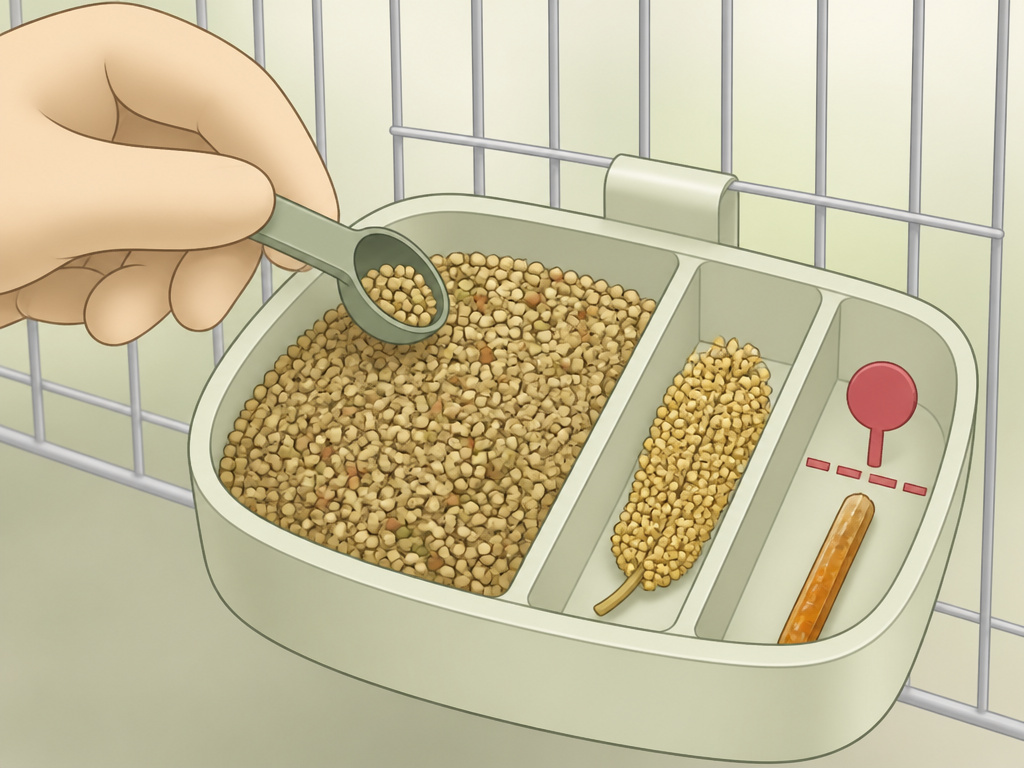
VCA’s ceiling for millet spray is small quantities once or twice a month. For finches, the daily seed allowance is one level teaspoon per bird per day. No source sets a honey stick ceiling at all.
Work out the math on the rest of the dish. If pellets are 60 to 80% of the diet, everything else shares the remaining 20 to 40%, and vegetables get a cut of that too.
| Species | Seed types in a commercial mix | What the source notes |
|---|---|---|
| Budgie | 2 to 8 | Eats one or two favorites and leaves the rest |
| Finch | 2 to 5 | Ceiling of 1 level teaspoon per bird per day |
| Cockatiel | 4 to 10, nuts included | Mixes run high-fat and nutrient-deficient |
| Lovebird | 4 to 10, nuts included | Same selective-feeding problem applies |
Fresh food has its own clock. VCA advises leaving fruits and vegetables in the cage for no more than a couple of hours, especially in warm climates, before they spoil.
The Thumbnail Rule
VCA’s scale comparison is the most useful line in the whole set of guidance: a thumbnail-size portion of food for a budgie equals a dinner-plate portion for a person.
Judge a treat against the pellet ration, not against the bird’s enthusiasm.
Millet treats get their own version of this argument, and the answer lands in the same place.
Honey for Wild Birds Follows Different Rules
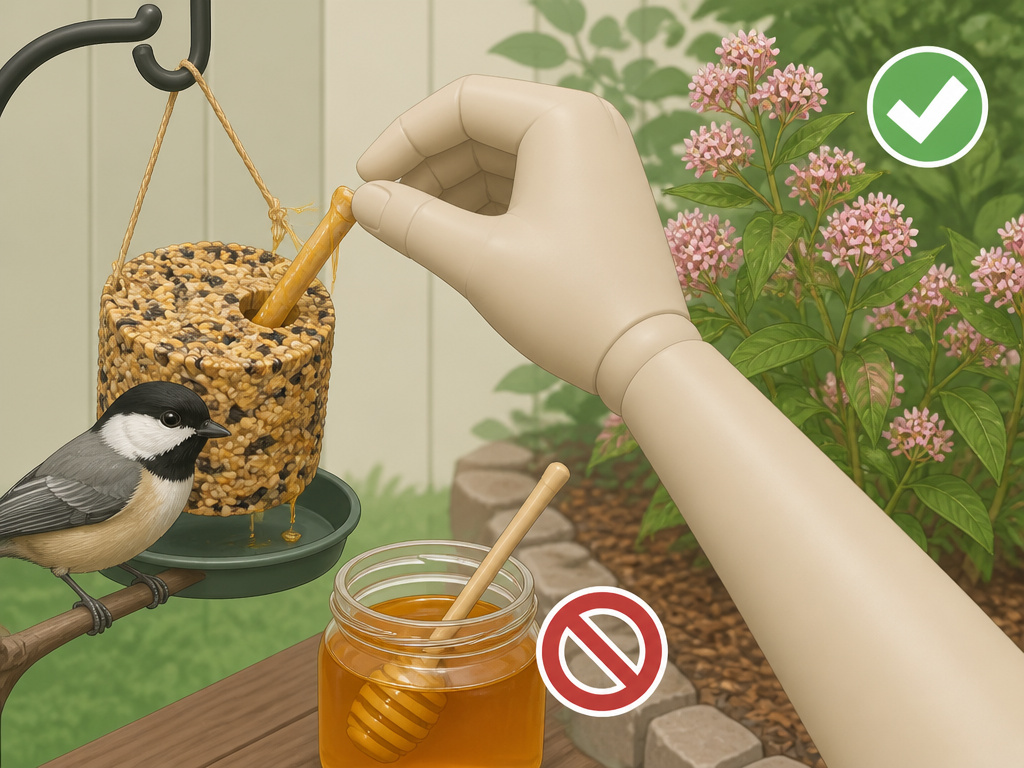
Everything above assumes a bird in a cage. Move the same question to a backyard feeder and the answer changes, because the population and the risk profile change with it.
BirdLife Australia does not encourage wild bird feeding at all, and lists honey and sugar among the foods to avoid. Their reasoning is specific: mixing water with sugar or honey delivers the wrong kinds of sugars for nectar-feeding birds, and planting flowering native shrubs does the job better.
Most of the birds at a backyard feeder are passerines, and the passerine bird biology overview covers the anatomy and husbandry behind that group. The short version is that a wild bird’s diet is built from what the landscape offers, and a seed-and-sugar block is not part of it.
BirdLife also notes that as many as 30 to 50% of Australian households feed birds, which is why the guidance keeps getting repeated. Bread makes the same list. It carries little to no nutritional value, goes mouldy quickly, and the mould spores can cause Aspergillosis, a potentially fatal respiratory infection.
Skip this if: You are in Western Australia. Feeding native fauna, birds included, is illegal there without a licence, per BirdLife Australia.
Avocado, citrus, onions, and garlic are toxic to birds and should never be offered, wild or captive.
What to Feed Instead of a Honey Stick
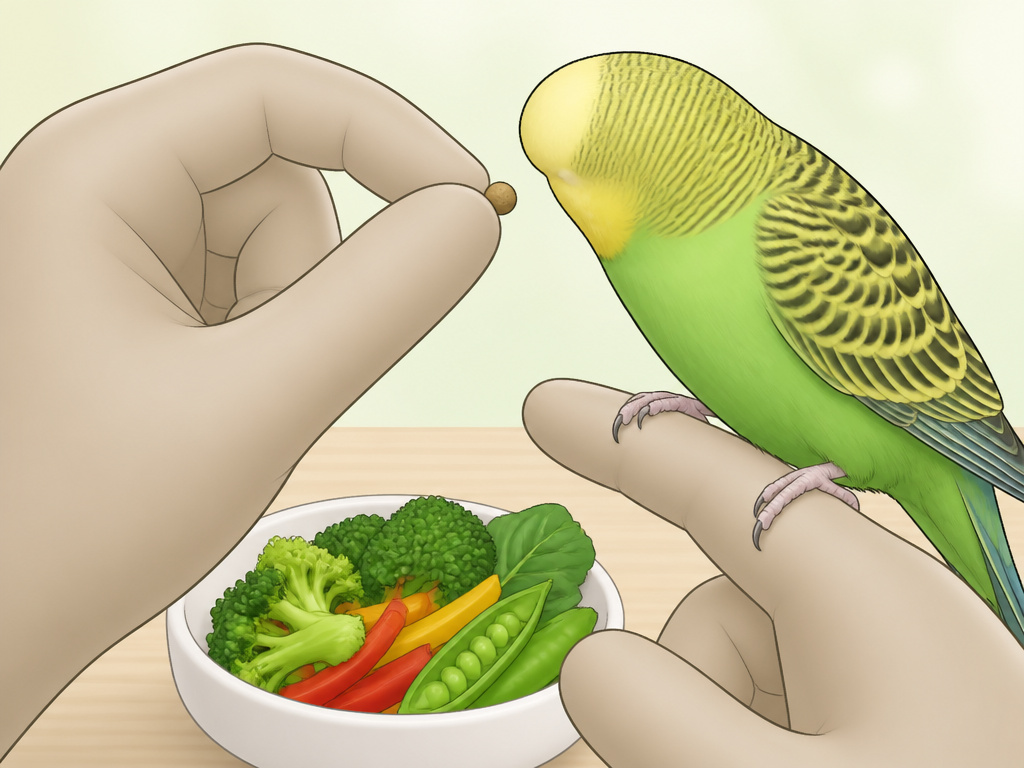
The replacement for a honey stick is a pellet the bird already accepts, handed over as a reward. That solves the sugar problem and reinforces the food you actually want the bird eating.
Small pieces of fresh vegetable do the rest of the work: broccoli, leafy greens, bell pepper, peas, squash, sprouts, or a thin slice of apple with the seeds removed, since VCA notes apple seeds may be toxic to birds.
Choosing bird treats gets easier once you stop reading the front of the package and start reading the ingredient line. Homemade bird treats built from the bird’s own pellet ration sidestep the sugar question entirely.
Pellets First, Then Produce
One habit worth building: pull a portion of the daily pellet ration and use that as the training reward. The bird works for food it needs, and nothing new enters the diet.
What Should You Do If Your Bird Ate Honey?
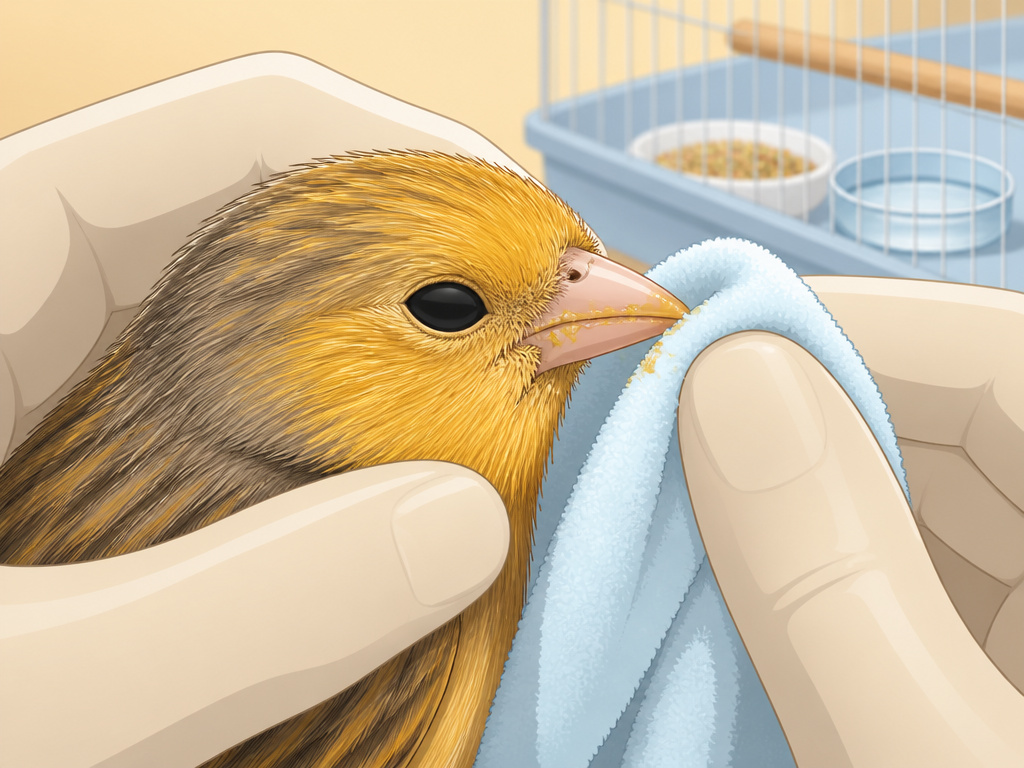
Clean the beak and feathers with warm water, refresh the cage, and watch closely for the next 12 to 24 hours. A tiny accidental lick is usually a monitoring situation rather than an emergency.
- Wipe the residue off first. Warm water on a cloth, working away from the nostrils. SpectrumCare notes that sticky honey on feathers and dishes can support yeast and bacterial growth if it is not cleaned promptly.
- Replace the food and water. Soiled dishes go straight to the sink. VCA’s cockatiel guidance calls for daily washing with soap and water as a baseline.
- Watch the droppings.
- Give it the full window. SpectrumCare advises close observation for the next 12 to 24 hours after a tiny lick.
Before you start: Sugary residue left in place can support yeast and bacterial growth, so clean the beak before anything else. Clean the beak before anything else, then watch for 12 to 24 hours, because a small bird can decline faster than a dog or cat.
Frequently Asked Questions
Are honey sticks bad for birds?
VCA Animal Hospitals describes them as nutrient-deficient and overloaded with carbohydrates, and states that most avian veterinarians do not recommend them at all. SpectrumCare takes a slightly softer line, calling them rare extras if used at all. Neither source treats them as a staple food.
Can birds eat honey?
Honey is not recommended at all by most avian veterinarians. It is high in sugar and adds calories without balanced nutrition, and SpectrumCare’s position is that the safest amount is none as a planned treat. A single tiny accidental lick is a monitoring situation rather than an emergency.
Is millet better than a honey stick?
Millet is still a seed, and VCA advises offering millet spray only in small quantities once or twice a month. The difference is that millet spray has a stated ceiling of small quantities once or twice a month, while honey sticks have no ceiling because no source recommends them as a regular item.
Do honey sticks count as food or as a treat?
Treat, and a minor one. Pellets should make up roughly 60 to 80% of a budgie’s diet according to VCA, with seeds and fresh food sharing the remainder.
Why does the package say complete nutrition?
Because no regulatory body certifies avian dietary products, and VCA flags that gap directly. The phrase “Complete Avian Nutrition” is a package claim rather than a verified standard, so it should carry no weight in your decision.
The Bottom Line
Here is the threshold that decides it. Fix the base diet first, then argue about treats.
One concession worth making. None of this applies cleanly to nectar-feeding species like lorikeets, whose needs differ from parrots, budgies, and finches. SpectrumCare’s advice is to ask your vet which commercial nectar diet is safest rather than improvising with honey, and that is the right call.
