
8 Best Wet Food For Senior Cats With Kidney Issues in 2026
This post contains affiliate links. As an Amazon Associate, we earn from qualifying purchases.
The best wet food for senior cats with kidney issues is Tiki Cat Silver Senior Wet Cat Food, thanks to its low-phosphorus, high-protein formula with real shredded meat and immune-supporting antioxidants. For cats needing more targeted kidney support, the Hill’s Science Diet Senior 11+ Healthy Cuisine provides clinically proven benefits, while Dave’s Pet Food Renal Support offers a budget-friendly low-phosphorus option without a prescription.
Senior cats with kidney issues present a tricky nutritional puzzle. They need lower phosphorus to reduce kidney strain, but they also require high-quality protein to maintain muscle mass, and many lose their appetite just when they need calories most. Finding a food that balances all three is the real challenge.
This guide is research-based, drawing on manufacturer specifications, veterinary nutrition guidelines, and patterns in owner feedback. We focused on phosphorus levels, protein quality, moisture content, and palatability to help you choose confidently.
Top 8 Wet Foods For Senior Cats With Kidney Issues in the Market
Certain content that appears on this site comes from Amazon. This content is provided "as is" and is subject to change or removal at any time.
The Best Wet Foods For Senior Cats With Kidney Issues, Reviewed
Tiki Cat Silver Senior Wet Cat Food

What We Like
- High protein maintains muscle mass
- Real shredded chicken and fish
- Antioxidants support immune system
Trade-offs
- Only available in variety pack
- No single-protein recipe option
Low phosphorus is a key feature for senior cats, and Tiki Cat Silver Senior delivers that while keeping protein high enough to help maintain muscle mass. The shreds-in-broth texture also makes it more palatable for picky seniors who might turn their nose up at pates. This is a food designed around what aging cats need: easy-to-eat, nutrient-dense meals.
The biggest draw here is the variety pack, three different fish-based recipes in one box, which keeps mealtime interesting for a senior cat. But if your cat has a specific protein sensitivity or just hates mackerel, you’ll end up with cans you can’t use. Compare that to Hill’s Science Diet Senior 11+ Healthy Cuisine, which offers single-flavor options. For most owners, the variety is a plus, but if your cat is a finicky eater who only tolerates one protein, this might not be the best fit.
Hill's Science Diet Senior 11+ Healthy Cuisine

What We Like
- Precisely balanced for senior kidney health
- High-quality protein helps maintain lean muscle
- Clinically proven antioxidants for immune support
- Made with natural ingredients plus added vitamins
Trade-offs
- 2.8 oz cans are smaller than some renal options
- Not a prescription diet for advanced kidney disease
This wet food is from Hill’s Pet Nutrition, the #1 Veterinarian recommended brand in the US. It is precisely balanced to sustain kidney and vital organ health in older felines, with high-quality protein to help maintain lean muscle and clinically proven antioxidants (Vitamin C+E) for immune support. Made with natural ingredients plus added vitamins, it is a non-prescription option for senior cats 11+ that focuses on general wellness.
The trade-off here is portion size: at 2.8 ounces per can, these are smaller than some competitors like Purina Pro Plan Veterinary Diets NF Kidney Early Care (5.5 oz cans). That means you’ll go through a 24-pack faster if your cat eats multiple cans a day. Compared to Dave’s Pet Food Renal Support, which is also non-prescription but explicitly low in phosphorus and protein, Hill’s takes a broader ‘balanced nutrition’ approach rather than targeting phosphorus restriction specifically. If your vet has recommended strict phosphorus limits, you may want a more specialized formula, but for general kidney support in a well-known brand, this is a solid everyday choice.
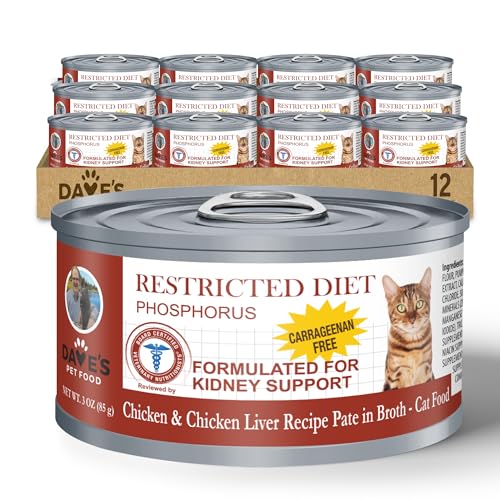
Dave's Pet Food Renal Support Cat Food
What We Like
- Low phosphorus for kidney support
- Vet nutritionist reviewed formula
- Added broth boosts hydration
- No carrageenan, wheat, or corn
Trade-offs
- Contains brown rice, not grain-free
- Not suitable for cats needing a high-protein diet
A phosphorus content capped at 0.3% and a protein minimum of 5% place this food squarely in the renal-support category, which is exactly what you want for a cat with compromised kidney function. The moisture-rich stew with added broth helps maintain hydration, a key concern for cats with kidney challenges. Fortified with B-complex vitamins to replace nutrients lost through increased urination, this formula addresses the nutritional gaps that kidney disease can create. Reviewed by board-certified veterinary nutritionists, it offers a non-prescription option that follows clinical-grade logic.
The trade-off is that a low-protein, low-phosphorus diet isn’t suitable for every cat. If your cat has decent kidney function but needs more protein for muscle maintenance, the 5% minimum here might be restrictive compared to a higher-protein senior food like Tiki Cat Silver Senior. Dave’s also includes brown rice and pumpkin, which are digestible ingredients but rule this out for anyone seeking a grain-free or ultra-low-carb profile. It’s a targeted food for cats with specific renal needs, not a general senior diet.
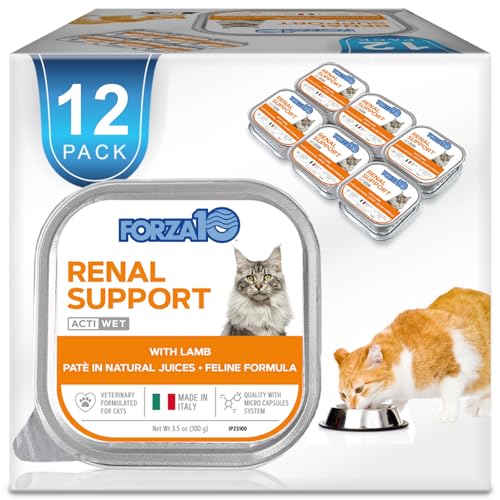
Forza10 Renal Wet Cat Food
What We Like
- Hydrolyzed protein for kidney support
- Controlled phosphorus and adapted protein
- Non-GMO, no by-products or artificial additives
- Made in Italy with veterinary expertise
Trade-offs
- Small 3.5 oz cans for multi-cat households
- Not suitable for cats with advanced kidney disease needing prescription diets
A 3.5-ounce can with hydrolyzed protein and controlled phosphorus means this formula is built around renal support from the ground up, not just a low-protein afterthought. The inclusion of cranberries, dandelion, and clover extract targets kidney health directly, which is exactly what a senior cat with kidney issues needs. Made in Italy and free of GMOs, by-products, and artificial additives, it appeals to anyone who wants transparent ingredients and a clean label. This is a wet food that prioritizes organ function without relying on vague marketing terms.
The 3.5-ounce cans are on the smaller side, so if you have more than one cat on a renal diet, you’ll be opening several cans per feeding. For a single senior cat that does well with lamb, though, the targeted ingredient list and Italian formulation make this a smart, no-nonsense pick.
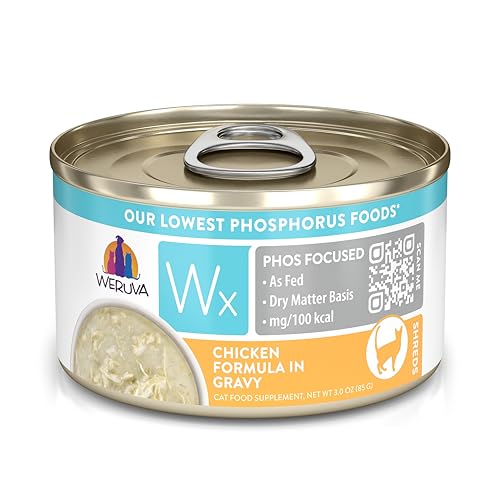
Weruva Wx Phos Focused Chicken Formula
What We Like
- High-quality, easily digestible proteins
- No fillers or cellulose that lower phosphorus artificially
- Low phosphorus levels up to 50% below AAFCO minimum
Trade-offs
- Chicken-only formula limits protein variety
- Not suitable for cats needing higher phosphorus levels
With phosphorus levels up to 50% below AAFCO’s minimum, this formula is built for cats whose kidneys need a light load without sacrificing protein quality. The bone-free, highly bioavailable proteins help maintain muscle mass while the gravy adds moisture, a real plus for cats who often don’t drink enough. It’s a straightforward, no-nonsense option for owners who want to cut phosphorus without relying on fillers or carbs to pad the numbers.
The trade-off comes in portion size: each 3 oz can is small, so a larger cat may need two cans a day. That adds up in cost and waste compared to bigger cans like Hill’s Science Diet Senior 11+ Healthy Cuisine’s 2.8 oz cans in a 24-pack. For a focused low-phosphorus diet with clean ingredients, this is a strong pick, just be ready for more frequent can-opening.
Product photos
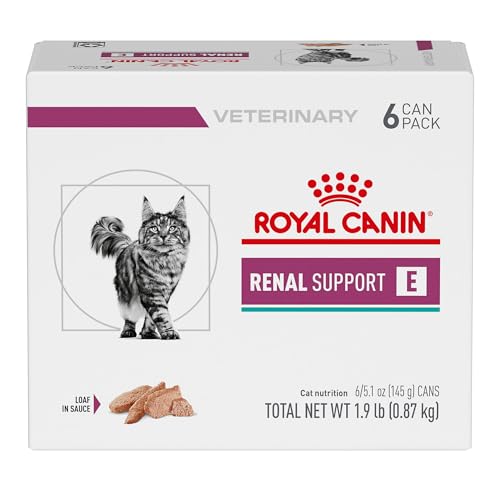
Royal Canin Veterinary Renal Support E
What We Like
- Enticing loaf-in-sauce texture
- Energy-dense formula for decreased appetite
- Low phosphorus supports kidney function
- Fish oil provides fatty acids
Trade-offs
- Veterinary-exclusive, requires vet authorization to purchase
- Not suitable for cats without kidney issues
The loaf-in-sauce texture is the key here: Royal Canin designed this formula specifically to be enticing for cats who’ve lost interest in eating, which is common with kidney issues. The energy-dense recipe means a smaller portion can deliver the calories a picky eater needs, while the low phosphorus and targeted protein levels support remaining kidney function without overloading it. For a senior cat that’s turning up its nose at food, this is a practical tool to keep them eating.
You’ll need a vet’s okay to buy it, since it’s a veterinary-exclusive diet. Compared to Tiki Cat Silver Senior, which is available over the counter, this one requires a prescription but offers a more targeted nutritional profile for kidney management. The loaf texture is a specific choice, if your cat prefers shreds or pate, you might need to transition slowly, but for appetite stimulation, this formula is built around that challenge.
Product photos
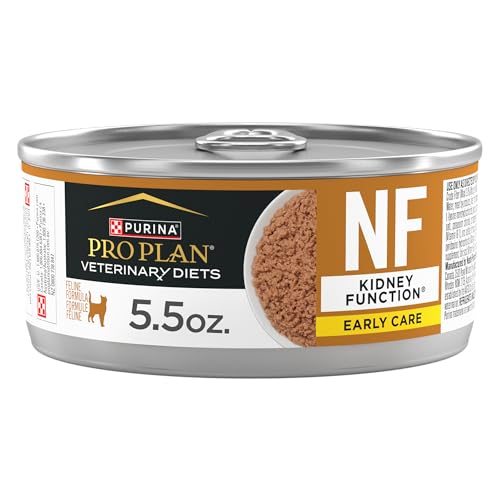
Purina Pro Plan Veterinary Diets NF Kidney Early Care
What We Like
- Restricted phosphorus supports kidney function
- Omega-3 fatty acids from EPA and DHA
- Prebiotic fiber nourishes GI tract
- Antioxidants included for overall health
Trade-offs
- Only targets early kidney care stages
- Requires veterinary diet commitment
Moderate high-quality protein combined with restricted phosphorus means this formula is built to reduce kidney workload while still providing the amino acids a senior cat needs. The addition of omega-3 fatty acids (EPA and DHA) and antioxidants supports both kidney and overall health. The prebiotic fiber helps maintain a healthy GI tract, a practical combination for cats whose kidneys are starting to show signs of stress. This is a wet pate designed for early intervention, so it fits cats that still have decent appetite and can handle a smooth texture without added chunks or gravy.
This is specifically an early-care product, not a late-stage renal formula. If your cat’s kidney values have already climbed significantly, a more restricted diet may be needed. Compared to a non-prescription option like Dave’s Pet Food Renal Support, Purina Pro Plan Veterinary Diets NF Kidney Early Care offers a more targeted phosphorus level and the backing of a veterinary diet formulation, but it also requires a vet’s authorization and a commitment to a prescription line. For a cat just starting on kidney support, the controlled nutrition here is a sensible first step.
Product photos
Blue Buffalo Natural Veterinary Diet K+M

What We Like
- Real chicken is first ingredient
- Includes glucosamine and chondroitin for joints
- No chicken by-product meals, corn, wheat, or soy
- Supports kidney function plus mobility
Trade-offs
- Requires veterinarian authorization to purchase
- Not suitable for cats without a vet's prescription
A 5.5-ounce can with real chicken as the first ingredient means this wet food puts protein quality front and center while keeping phosphorus and protein controlled to lighten the kidney workload. That dual focus on kidney support plus joint care, thanks to added glucosamine and chondroitin, makes it a practical choice for a senior cat whose stiff hips are as much a concern as their lab values. The absence of corn, wheat, soy, and poultry by-product meals is exactly the kind of label honesty I look for. The ingredient list tells you what you’re actually feeding, not what the marketing team dreamed up.
This is a prescription diet, so you’ll need a vet’s okay before you can buy it. That’s a barrier if you’re hoping to grab something off the shelf today, but it also means a professional has signed off on the formulation for your cat’s specific needs. Compared to the non-prescription Dave’s Pet Food Renal Support, which offers kidney support without a script, Blue Buffalo’s K+M adds the joint component and a cleaner ingredient panel, but it locks you into a single chicken flavor. If your cat is picky or you want more variety, that could be a sticking point.
Product photos
How We Evaluated Wet Foods For Senior Cats With Kidney Issues
We started by reviewing the nutritional profiles of dozens of wet foods designed for senior and renal care, comparing phosphorus and protein percentages against veterinary recommendations for chronic kidney disease. Manufacturer data and published feeding guidelines formed the backbone of our analysis.
Three criteria mattered most. First, phosphorus restriction: we looked for foods with phosphorus levels at or below the level that most guidelines for low-phosphorus food recommend for early to moderate kidney issues. Second, protein quality: senior cats need highly digestible animal protein to maintain lean body mass without overloading the kidneys. Third, moisture and palatability: adequate hydration supports kidney function, and a texture senior cats will actually eat is essential.
A research-led evaluation has limits. Our recommendations come from comparing specs, consulting veterinary nutrition resources, and identifying patterns in what owners report working for their cats. We encourage you to check the ingredient list on the can against your veterinarian’s specific phosphorus and protein targets.
What To Look For In Wet Foods For Senior Cats With Kidney Issues
Choosing the right food means reading past the marketing claims on the front of the can and focusing on the numbers and ingredients that actually matter for a cat with compromised kidneys.
Look for wet food with phosphorus under a low dry matter percentage, high-quality animal protein as the first ingredient, high moisture content, and a texture your cat will reliably eat. Avoid foods with artificial phosphorus sources or excessive carbohydrate fillers.
Phosphorus Levels
Phosphorus restriction is the single most important dietary change for cats with kidney issues. The International Renal Interest Society recommends keeping phosphorus low on a dry matter basis for early-stage kidney disease, and lower still for advanced cases. Many canned food options for cats with kidney disease list phosphorus on the guaranteed analysis, but you need to convert it to dry matter to compare fairly across brands. A wet food that lists a low phosphorus percentage as-fed is typically higher on a dry matter basis, higher than it appears.
Protein Quality and Quantity
Senior cats need more protein than younger adults to prevent muscle wasting, but damaged kidneys struggle to process protein waste products. The solution is not to cut protein drastically, but to feed highly digestible animal protein that produces less metabolic waste. Look for named meat sources like chicken, turkey, or fish as the first ingredient. Avoid foods that rely on plant proteins or fillers to meet protein minimums, as those are less bioavailable for aging cats.
Moisture Content and Hydration
Cats with kidney disease are prone to dehydration because their kidneys can no longer concentrate urine efficiently. Wet food naturally provides high moisture content, which is far superior to dry kibble for maintaining hydration. Aim for foods with high moisture content. Adding extra water or unsalted broth can further boost fluid intake, but the base food should already be a significant hydration source.
Palatability and Texture
Kidney disease often causes nausea and reduced appetite, so the food must be appealing enough that your cat will actually eat it. Some senior cats prefer smooth pates, while others want shreds or chunks in gravy. If your cat stops eating, try a different texture from the same brand. Practical feeding advice for cats with kidney disease often recommends warming the food slightly to enhance aroma, or offering a variety pack to identify preferences.
- Check the guaranteed analysis for phosphorus as a percentage, then convert to dry matter for comparison.
- Look for named animal protein as the first ingredient, not “meat by-products” or plant proteins.
- Choose wet food with high moisture to support hydration.
- Start with a variety pack to see which texture your cat prefers before buying in bulk.
- Confirm with your vet whether a prescription diet is needed or if an over-the-counter option is sufficient.
A good rule of thumb: if the ingredient list reads like a chemistry textbook or the first ingredient is corn or wheat, put the can back on the shelf.
Wet Foods For Senior Cats With Kidney Issues Compared
The table below compares all eight wet foods side by side, highlighting their key nutritional features, phosphorus approach, and best-use scenarios so you can see the differences at a glance.
| Product | Protein Source | Texture/Form | Key Feature |
|---|---|---|---|
| Tiki Cat Silver Senior Wet Cat Food | Real shredded chicken and flaked fish | Shreds in broth | Immune System Support |
| Hill's Science Diet Senior 11+ Healthy Cuisine | Tuna & Carrot | N/A | Balanced for kidney & vital organ health |
| Dave's Pet Food Renal Support Cat Food | Chicken, pumpkin, brown rice | Moisture-rich stew | Low Phosphorus & Low Protein |
| Forza10 Renal Wet Cat Food | Hydrolyzed & potato protein | Moist texture | Supports Healthy Kidneys |
| Weruva Wx Phos Focused Chicken Formula | Highly bioavailable bone-free proteins | Gravy | Low levels of phosphorus |
| Royal Canin Veterinary Renal Support E | Targeted protein | Loaf in sauce | Kidney Health Support |
| Purina Pro Plan Veterinary Diets NF Kidney Early Care | Moderate high-quality | Smooth pate | Kidney Function Early Care |
| Blue Buffalo Natural Veterinary Diet K+M | Real Chicken | N/A | Kidney + Mobility Support |
Frequently Asked Questions
What phosphorus level should I look for in wet food for a cat with kidney disease?
For early to moderate kidney disease, aim for phosphorus below a low dry matter percentage. Many renal diets target a low range. Always convert the as-fed percentage on the can to dry matter before comparing brands, because moisture content varies widely and changes the actual phosphorus concentration.
Can I feed my senior cat a non-prescription wet food for kidney issues?
Yes, several non-prescription diets offer reduced phosphorus and quality protein without a veterinarian’s authorization. Options like Tiki Cat Silver Senior and Dave’s Pet Food Renal Support are formulated with kidney health in mind. However, cats with advanced kidney disease or specific lab values may need a prescription diet, so check with your vet first.
How much wet food should I feed a senior cat with kidney issues?
Feeding amounts depend on your cat’s weight, activity level, and the calorie density of the food. Most cans provide a feeding guide based on an average-sized cat, typically a few cans per day split into multiple meals. Cats with kidney disease often eat smaller, more frequent meals, so dividing the daily portion into three or four feedings can help maintain intake.
Is grain-free wet food better for cats with kidney disease?
Not necessarily. Some kidney-friendly options contain rice or other grains as a carbohydrate source, which is fine for most cats. What matters more is phosphorus content and protein quality. Dave’s Pet Food Renal Support includes brown rice but provides excellent low-phosphorus support. Focus on the nutritional profile, not the grain-free label.
What should I do if my cat with kidney disease stops eating?
Loss of appetite is common with kidney disease and can be dangerous because it accelerates muscle wasting. Try warming the food to body temperature, offering a different texture like shreds instead of pate, or adding a small amount of low-sodium tuna juice as a topper. If your cat refuses food for more than 24 hours, contact your veterinarian, they may recommend an appetite stimulant or a different approach to feeding a cat with kidney disease.
The Bottom Line
For most senior cats with kidney issues, Tiki Cat Silver Senior Wet Cat Food is the best overall choice. It delivers low phosphorus, high-quality shredded protein, and immune-supporting antioxidants in a texture most cats find highly palatable, all without requiring a prescription. It is especially well-suited for cats that still have a good appetite and need to maintain muscle mass.
If your cat needs more targeted kidney support or has early-stage renal disease, Hill’s Science Diet Senior 11+ Healthy Cuisine provides a clinically tested formula backed by decades of veterinary nutrition research. For cats that need the lowest possible phosphorus without a prescription, Dave’s Pet Food Renal Support offers a solid, affordable option with added hydration from broth.
The single most important factor is phosphorus restriction, but it means nothing if your cat refuses to eat the food. Start with a single can or variety pack, watch how your cat responds, and confirm your choice with your veterinarian based on your cat’s latest bloodwork.
