
6 Best Vet Dog Food in 2026
This post contains affiliate links. As an Amazon Associate, we earn from qualifying purchases.
The Hill’s Prescription Diet GI Biome Digestive Dry Dog Food takes our Best Overall spot because it firms loose stool within 24 hours using ActivBiome+ technology. It also supports the gut microbiome with prebiotic fibers and high omega-3s. For dogs needing low-fat digestive care, the Hill’s Prescription Diet i/d Low Fat Wet Dog Food is our top pick, and the Royal Canin Veterinary Gastrointestinal Low Fat Dog Food earns Best Low Fat Digestive Support.
When your veterinarian prescribes a therapeutic diet, the food itself becomes part of the treatment plan. The right formula targets a specific condition, digestive upset, kidney disease, food sensitivities, or urinary stones, and the wrong one can delay recovery or worsen symptoms. This guide focuses on prescription-exclusive foods, not over-the-counter options, because these products are formulated to work under veterinary supervision.
We evaluated six prescription dog foods by analyzing manufacturer nutritional data, ingredient profiles, and patterns in owner feedback from expert round-ups and verified buyer reports. Each pick earned its award based on how well it addresses a specific medical need while meeting the strict quality and formulation standards that veterinary therapeutic diets require.
Top 6 Vet Dog Foods in the Market
Certain content that appears on this site comes from Amazon. This content is provided "as is" and is subject to change or removal at any time.
The Best Vet Dog Foods, Reviewed
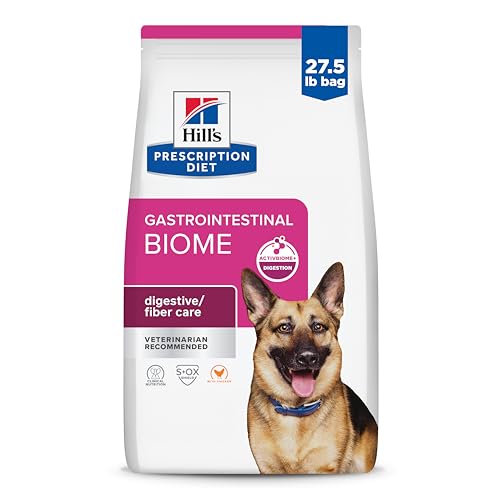
Hill's Prescription Diet GI Biome Digestive Dry Dog Food
What We Like
- Clinically firms loose stool in 24 hours
- ActivBiome+ supports gut microbiome balance
- High omega-3s DHA & EPA
- Prebiotic fibers promote regular bowel movements
Trade-offs
- Requires veterinary consultation before use
- Prescription diet limits over-the-counter access
Hill’s Prescription Diet GI Biome Digestive Dry Dog Food is clinically shown to help firm loose stool in 24 hours and reduce the risk of recurrence, making it a targeted option when your dog’s digestive system needs fast support. It uses ActivBiome+ ingredient technology to rapidly activate beneficial gut bacteria and support a healthy GI microbiome balance, alongside high levels of omega-3 fatty acids DHA and EPA. This combination addresses both the symptom and the underlying gut health, which is why it is a strong choice for dogs with digestive issues that respond to fiber and microbiome support.
This is a prescription diet, so you need a vet’s approval before buying, that means an extra step and possibly an added cost if your dog isn’t already under care. The Hill’s is designed to support digestive health through prebiotic fibers and microbiome balance, while the Royal Canin Veterinary Hydrolyzed HP Small Adult Dry Dog Food uses a hydrolyzed protein formula for food sensitivity support. If your dog struggles with loose stool or fiber-responsive digestion, the Hill’s is a direct option; if you need a hydrolyzed protein for food sensitivities, the Royal Canin is the alternative. Either way, read the label and talk to your vet before switching.
best_for”: “Dog owners whose vet has already diagnosed a digestive issue needing fast stool firming and long-term microbiome support. Not ideal for dogs without a veterinary prescription or those requiring a low-fat or hydrolyzed protein formula.
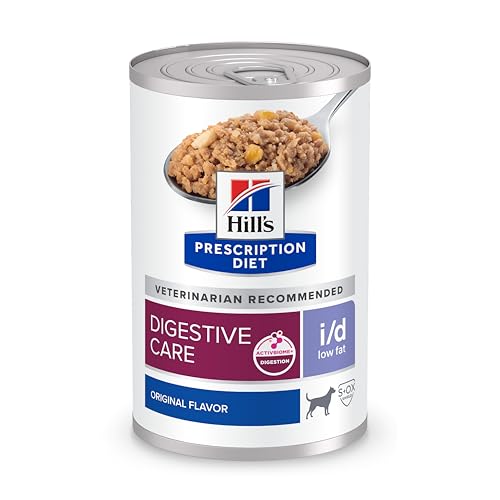
Hill's Prescription Diet i/d Low Fat Wet Dog Food
What We Like
- ActivBiome+ supports beneficial gut bacteria
- Low fat for digestive upsets
- Prebiotic fibers promote regular bowel movements
- Omega-3 fatty acids included
Trade-offs
- Requires veterinary prescription to purchase
- Wet food has shorter shelf life after opening
- Single protein source limits rotation options
The ActivBiome+ ingredient technology is shown to rapidly activate beneficial gut bacteria and support a healthy GI microbiome balance. That makes this wet food a targeted option for dogs that need digestive support alongside a low fat formula. It helps improve digestion, nutrient absorption, and lower blood fat levels. This food is designed for dogs whose vet has recommended a prescription diet for digestive health, not for owners guessing at a bag on a shelf.
The trade-off is that this is a prescription diet, so you cannot just grab it off a pet store aisle without a vet’s okay. Compared to the Royal Canin Veterinary Gastrointestinal Low Fat option, both are prescription diets that require a veterinary relationship to access. If your dog needs a low fat formula and you are already working with a vet, this can is a logical next step.
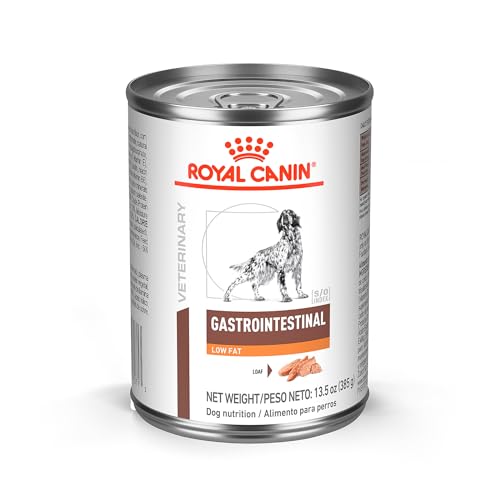
Royal Canin Veterinary Gastrointestinal Low Fat Dog Food
What We Like
- Low fat for sensitive digestion
- Prebiotics support healthy gut bacteria
- Fiber blend improves stool quality
- Highly flavorful for picky eaters
Trade-offs
- Veterinary-exclusive, requires vet consultation
- Wet food format lacks kibble's dental benefits
A 12-pack of 13.5 oz cans means this is a wet food designed for dogs that need low-fat, easy-to-digest meals without the extra calories that can trigger digestive upset. The prebiotics help support healthy bacteria in the gut, and the fiber blend supports healthy digestion for optimal stool quality. The food is highly flavorful, appealing to dogs including those with picky appetites.
You need a vet’s guidance to buy this food, and the wet loaf format won’t suit owners who prefer dry kibble for convenience or dental care. Compared to Hill’s Prescription Diet i/d Low Fat Wet Dog Food, both are low-fat wet foods for digestive care. But Royal Canin’s recipe includes prebiotics to support gut bacteria and a blend of dietary fibers for stool quality. If your vet recommends a low-fat wet food with prebiotic and fiber support, this is a focused option.
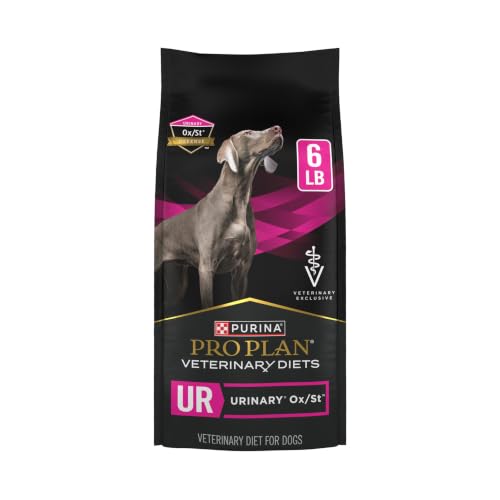
Purina Pro Plan Veterinary UR Urinary Dry Dog Food
What We Like
- Dissolves sterile struvite stones
- Reduces risk of stone recurrence
- Targets both struvite and calcium oxalate
Trade-offs
- Only for adult dogs, not all life stages
- Requires veterinary authorization to purchase
This kibble is designed to dissolve sterile struvite stones and reduce the risk of both sterile struvite and calcium oxalate recurrence, which makes it a targeted tool for dogs with a history of urinary crystals. The high-quality protein and added antioxidants support overall health while the formula works to maintain a urinary environment that discourages crystal formation. For a dog that has already dealt with stones, this is the kind of precision you want from a veterinary diet.
This Purina Pro Plan Veterinary diet is designed to dissolve sterile struvite stones and reduce the risk of both sterile struvite and calcium oxalate stone recurrence. That makes it a targeted choice for dogs with those urinary issues. Compared to the Hill’s Prescription Diet GI Biome Dry Dog Food, which is a different formula for digestive support, this Purina kibble focuses specifically on urinary health. If your dog’s primary concern is stones rather than digestion, this is the more relevant option.
Product photos
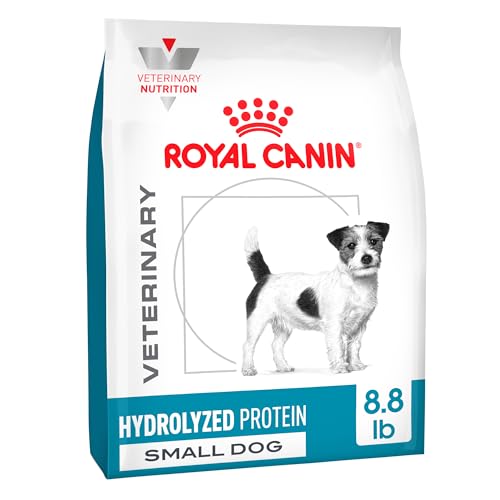
Royal Canin Veterinary Hydrolyzed HP Small Adult Dry Dog Food
What We Like
- Hydrolyzed protein for food sensitivities
- Supports skin and GI health
- Dental brushing effect from kibble shape
Trade-offs
- Veterinary-exclusive, not available over counter
- Only for adult dogs under 22 lb
- Single protein source limits rotation options
The protein in this food is broken down into fragments so tiny that the immune system is less likely to recognize them as a threat. That is exactly what you need when running an elimination diet for a dog with suspected food sensitivities. This turns the bag into a precise diagnostic tool, not just a meal. Royal Canin also formulated it to promote a urinary environment that discourages both struvite and calcium oxalate crystals. The kibble shape is designed for small-jawed dogs under 22 pounds, with a texture that helps scrub teeth during chewing. This is a veterinary-exclusive precision diet, not a general maintenance food.
The trade-off is that you cannot buy this without a veterinary prescription, which means a diagnosis and a conversation with your vet come first. It also locks you into a single protein source, so if your dog does well on it, you are stuck with that limited lineup unless you switch to a different hydrolyzed product. This Royal Canin formula is built specifically for sensitivity testing and management, not general gut support. That makes it the right pick for the diagnostic phase, but less flexible once you know what works.
Product photos
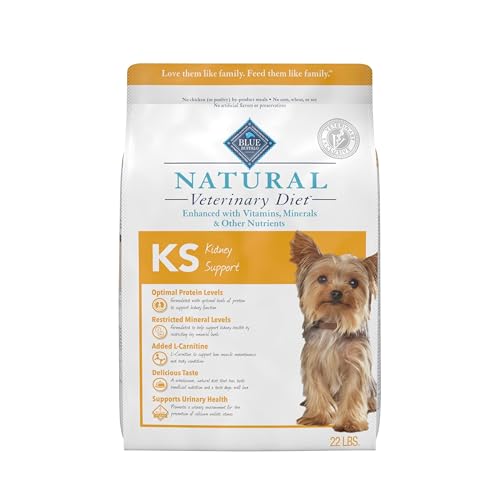
Blue Buffalo Veterinary Diet Kidney Support Dry Dog Food
What We Like
- Real chicken is first ingredient
- Controlled phosphorus and sodium levels
- No chicken by-product meals
- No corn, wheat, or soy
Trade-offs
- Requires veterinarian authorization to purchase
- Requires a prescription, adding a purchase step
A 22-pound bag of dry food with real chicken as the first ingredient and controlled levels of phosphorus and sodium means this formula is built to reduce the workload on a dog’s kidneys. It still provides a recognizable protein source. The controlled protein level is deliberate: enough to maintain muscle without overburdening filtration. This food also contains no chicken by-product meals, no corn, wheat, or soy, and no artificial flavors or preservatives.
You need a vet’s authorization to buy this food, so it’s not something you can just toss in the cart alongside a maintenance diet like Hill’s Prescription Diet GI Biome. That extra step makes sense for a therapeutic formula, though, because it delivers controlled levels of protein, phosphorus, and sodium to support kidney function in dogs with a diagnosed condition.
Product photos
How We Evaluated Vet Dog Foods
Our evaluation began with the manufacturer’s published nutritional adequacy statements, guaranteed analysis, and ingredient lists for each prescription diet. We cross-referenced these against the therapeutic claims, stool firming, struvite dissolution, low-fat digestion support, to confirm that the formula’s macronutrient profile, fiber sources, and mineral levels matched the intended medical purpose. We also reviewed the best vet-recommended dog food brands to understand how prescription diets fit into the broader landscape of veterinary-recommended nutrition.
The four criteria that mattered most were medical efficacy, ingredient quality, palatability, and the specific trade-off each formula requires. Medical efficacy means the diet does what it claims for the diagnosed condition. Ingredient quality covers real protein sources and no unnecessary fillers. Palatability matters because a therapeutic diet helps only if the dog eats it. Trade-offs include prescription-only access, limited protein sources for hydrolyzed diets, or the shorter shelf life of wet food. We gave extra weight to formulas that address multiple symptoms simultaneously, like the GI Biome’s dual action on stool quality and microbiome health.
A research-led evaluation has limits. We did not feed these diets to dogs in a controlled trial, and individual responses vary based on the dog’s specific condition, severity, and concurrent medications. Owner feedback patterns help, but they are not a substitute for the veterinary supervision that every diet on this list requires. Our job is to organize the data so you and your vet can make an informed choice together.
What To Look For In Vet Dog Foods
Before you buy any prescription diet, understand that these foods are medical tools, not grocery-store upgrades. The right choice depends on matching the formula’s therapeutic mechanism to your dog’s diagnosed condition.
Look for a prescription diet that targets your dog’s specific diagnosis, digestive, kidney, urinary, or food sensitivity, with controlled levels of fat, protein, phosphorus, or hydrolyzed protein. Confirm the formula is complete and balanced for your dog’s life stage.
Diagnosis-Specific Formulation
Every prescription diet on this list is designed for a particular medical condition. Digestive formulas control fat and fiber to manage loose stool or pancreatitis. Kidney diets restrict phosphorus and sodium while maintaining palatability. Urinary diets manipulate pH and mineral levels to dissolve or prevent stones. Hydrolyzed protein diets break protein into molecules too small for most immune systems to react to, making them safe for dogs with food allergies.
The key is to match the formula to the diagnosis, a kidney-support diet will not fix a digestive issue, and a low-fat digestive diet will not manage urinary stones. Your veterinarian’s diagnosis determines which category of veterinary therapeutic diets is appropriate.
Ingredient Quality and Protein Source
Even within a therapeutic category, ingredient quality varies. The Blue Buffalo Veterinary Diet Kidney Support Dry Dog Food lists real chicken as the first ingredient and excludes chicken by-product meals, corn, wheat, and soy. That is a meaningful difference from some competitors that rely on by-products and grain fillers. For hydrolyzed diets, the protein source matters because the hydrolysis process must be complete enough to avoid triggering an immune response.
When evaluating a high-quality dog food for medical use, check whether the formula uses whole proteins, named meat meals, or by-products, and whether it contains unnecessary additives. The ingredient list tells you what is in the bag; the nutritional adequacy statement tells you whether the diet is complete.
Palatability and Food Form
A therapeutic diet that your dog refuses to eat is useless. Wet foods like the Hill’s i/d Low Fat and Royal Canin Gastrointestinal Low Fat often score higher on palatability for picky eaters, and the extra moisture can benefit dogs with kidney or urinary issues. Dry kibble offers dental benefits and longer shelf life but may be less appealing to dogs with reduced appetite from illness.
The Royal Canin Hydrolyzed HP Small Adult Dry Dog Food uses a kibble shape designed to provide a dental brushing effect, a small but useful bonus for small-breed dogs on a long-term hydrolyzed diet. For dogs that need both palatability and convenience, some owners mix wet and dry versions of the same therapeutic line.
- Confirm the diet is approved for your dog’s life stage (adult, senior, or all life stages).
- Check whether the food requires a prescription from your veterinarian, all six picks here do.
- Ask your vet about the expected timeline for improvement (e.g., 24 hours for stool firming, 4-6 weeks for struvite dissolution).
- Consider the drawbacks of prescription food before committing, including the need for ongoing vet authorization and higher cost than over-the-counter diets.
- Rotate between wet and dry formats of the same therapeutic line if your dog needs variety.
A prescription diet is a medical intervention. Buy it only after your veterinarian has confirmed the diagnosis and authorized the specific formula.
Vet Dog Foods Compared
The table below compares all six prescription diets side by side, showing their primary medical targets, key ingredients, and the trade-offs that matter most when choosing between them.
| Product | Form | Key Feature | Weight | Vet Recommendation |
|---|---|---|---|---|
| Hill's Prescription Diet GI Biome Digestive Dry Dog Food | Dry kibble | ActivBiome+ | 27.5 lb | #1 US Vet Recommended |
| Hill's Prescription Diet i/d Low Fat Wet Dog Food | Wet / Canned | ActivBiome+ technology | 13 oz cans, 12-pack | #1 Veterinarian Recommended |
| Royal Canin Veterinary Gastrointestinal Low Fat Dog Food | Canned wet food | Low fat, prebiotics, fiber blend | 13.5 oz, 12-pack | Veterinary-exclusive formula |
| Purina Pro Plan Veterinary UR Urinary Dry Dog Food | Dry dog food | Urinary Ox/St | 6 lb bag | N/A |
| Royal Canin Veterinary Hydrolyzed HP Small Adult Dry Dog Food | Dry dog food | Hydrolyzed | 8.8 lb | Veterinary-exclusive |
| Blue Buffalo Veterinary Diet Kidney Support Dry Dog Food | Dry dog food | Controlled protein & minerals | 22 lb | Veterinarian required |
Frequently Asked Questions
What is the difference between prescription dog food and over-the-counter dog food?
Prescription dog foods are therapeutic diets formulated to manage or support treatment for specific medical conditions like kidney disease, digestive disorders, or urinary stones. They require a veterinarian’s authorization to purchase because they contain controlled levels of nutrients, such as reduced phosphorus or protein, that could be harmful to a healthy dog. Over-the-counter foods are designed for general maintenance and do not target specific medical conditions.
How quickly will I see results from a veterinary digestive diet?
The Hill’s Prescription Diet GI Biome is clinically shown to firm loose stool within 24 hours when fed as directed. Other digestive diets may take several days to a week for noticeable improvement in stool quality and digestive comfort. The timeline depends on the severity of the condition, whether the dog eats the food consistently, and whether any underlying issues like pancreatitis or food intolerance are also being managed.
Can I switch between different prescription diet brands for the same condition?
You should switch only under veterinary guidance. Different brands use different protein sources, fiber blends, and nutrient ratios even for the same condition, a kidney diet from one brand may have different phosphorus levels than another. An abrupt switch can disrupt treatment. If your vet approves a change, transition gradually over about a week by mixing increasing amounts of the new food with the old.
What is hydrolyzed protein in dog food, and why is it used?
Hydrolyzed protein is broken down into very small protein fragments that are too small for most dogs’ immune systems to recognize as allergens. The Royal Canin Veterinary Hydrolyzed HP Small Adult Dry Dog Food uses this process to provide a complete protein source that is unlikely to trigger food sensitivity reactions. Vets typically prescribe hydrolyzed diets for elimination trials to diagnose food allergies or for long-term management of confirmed sensitivities.
Is prescription dog food better than a homemade diet for medical conditions?
Prescription diets are formulated to be nutritionally complete and balanced for specific medical conditions, with precise nutrient levels that are difficult to replicate in homemade recipes. Homemade diets require careful formulation by a veterinary nutritionist to avoid deficiencies or excesses, especially for conditions like kidney disease where phosphorus and protein must be tightly controlled. For most owners, a therapeutic diet benefit is the convenience and reliability of a clinically tested complete food.
The Bottom Line
The Hill’s Prescription Diet GI Biome Digestive Dry Dog Food is our Best Overall pick for dogs whose veterinarian has diagnosed a digestive issue requiring fast stool firming and microbiome support. Its ActivBiome+ technology and high omega-3 content address both the symptom (loose stool) and the underlying gut health imbalance, making it the most complete digestive formula we evaluated.
If your dog needs a low-fat diet for pancreatitis or chronic digestive upset, the Hill’s Prescription Diet i/d Low Fat Wet Dog Food offers the same ActivBiome+ gut support in a highly palatable wet format. For dogs with kidney disease, the Blue Buffalo Veterinary Diet Kidney Support Dry Dog Food stands out for its real chicken first ingredient and controlled phosphorus without corn, wheat, or soy.
The single most important factor in choosing a vet dog food is matching the formula to the diagnosis, not the brand, not the price, not the ingredient list alone. Work with your veterinarian to identify the condition first, then pick the therapeutic diet that targets it. That is the only way a prescription food does its job.
