
8 Best Treats For Dogs With Kidney Disease in 2026
This post contains affiliate links. As an Amazon Associate, we earn from qualifying purchases.
For dogs managing kidney disease, every ingredient matters. Mattie’s Treats Mini Treats Low Protein wins as best overall because it combines low protein, phosphorus, and sodium with six simple ingredients and a donation to kidney research. For owners wanting a structured daily option, the Kidney Restore Petite Size Kidney Cleanse Treats offers a vet-formulated soft chew. The Hill’s Prescription Diet Soft Baked Dog Treats works best for dogs already on a Hill’s renal diet.
Kidney disease changes what a dog can safely eat. Protein, phosphorus, and sodium levels that are fine for a healthy dog can stress compromised kidneys. Owners also need to consider treat texture, ingredient transparency, and whether a product supports the urinary tract.
This guide is research-based, drawing on manufacturer specifications, veterinary nutrition guidelines, and patterns in owner feedback. We break down what to look for on the label and why each of these eight picks earned its spot.
Top 8 Treats For Dogs With Kidney Disease in the Market
Certain content that appears on this site comes from Amazon. This content is provided "as is" and is subject to change or removal at any time.
The Best Treats For Dogs With Kidney Disease, Reviewed
Mattie's Treats Mini Treats Low Protein

What We Like
- Low protein, phosphorus, and sodium
- Heart-shaped crunchy mini treats
- 6 simple ingredients including pumpkin and fish oil
- Donation funds canine kidney disease research
Trade-offs
- Smaller size means more frequent refills for larger dogs
- Contains canola oil, which some owners avoid
A 10-ounce box of treats formulated with low protein, low phosphorus, and low sodium means these are built around the three dietary limits that matter most for dogs managing kidney disease. The ingredient list is refreshingly short: light rye flour, tapioca flour, pure pumpkin, cinnamon, fish oil, and canola oil, so you can see exactly what you are feeding. Real pumpkin and cinnamon give them a flavor dogs tend to enjoy, and the fish oil provides Omega-3s. A percentage of sales from every box is donated to fund canine kidney disease research, which adds a practical layer of purpose beyond the bag.
The trade-off is that these are mini treats in a 10-ounce box, so if you have a larger dog, you will go through the box faster than a bigger bag like Mattie’s own 16-ounce version. That said, the smaller size works well for portion control and for small breeds. If you want a treat that directly addresses the renal diet numbers and lets you read every ingredient without a magnifying glass, this is the one.
Product photos
Mattie's Treats Low Protein Dog Treats

What We Like
- Low protein, phosphorus, and sodium levels
- Six simple, recognizable ingredients
- Contains fish oil for Omega-3s
- Donation to kidney disease research per box
Trade-offs
- Contains canola oil, which some owners avoid
- Rye flour means not grain-free
A 16-ounce box of heart-shaped treats built around three numbers that matter most for dogs with kidney disease: low protein, reduced phosphorus, and minimal sodium. That triple-low profile is the whole point, and Mattie’s Treats delivers it with just six ingredients: light rye flour, tapioca flour, pure pumpkin, cinnamon, fish oil, and canola oil. The fish oil provides Omega-3s, which can be a helpful addition for dogs on restricted diets. This is the pick for owners who want a treat that won’t throw off a carefully managed renal diet and who appreciate a company that donates a percentage of every sale to canine kidney disease research.
The ingredient list itself is the main drawback. Canola oil is a common binder, but it’s not everyone’s first choice, and the rye flour means these aren’t grain-free, something to flag if your dog has a separate grain sensitivity. Compared to the Vitafur Barkin Burger Lamb & Pumpkin treats, which are grain-free and have only two ingredients, Mattie’s offers a more complex formula specifically designed for low protein, phosphorus, and sodium. If your dog needs a treat that fits a strict renal plan, this is a strong option. If you want something grain-free, the Vitafur option may be worth considering.
Product photos
Kidney Restore Petite Size Kidney Cleanse Treats
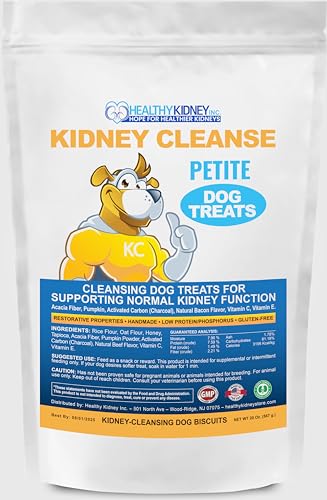
What We Like
- Low protein and reduced phosphorus formula
- Soft chews suitable for all dog sizes
- Contains activated charcoal as an ingredient
Trade-offs
- Designed for daily feeding, not occasional treats
- Requires vet consultation before use
Because these treats are tailored for daily feeding, they work best as part of a consistent diet plan rather than as a random reward. The beef flavor comes from natural beef flavor, pumpkin powder, and other ingredients, so picky dogs may still enjoy them. If your dog prefers poultry, the chicken version from the same brand is an alternative. Owners should follow the label directions and consult their vet about their dog’s nutritional needs, as with any specialized diet product.
Product photos
Hill's Prescription Diet Soft Baked Dog Treats
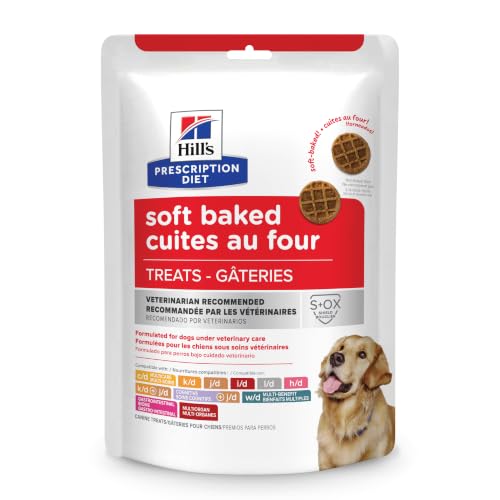
What We Like
- Formulated by Hill's nutritionists and veterinarians
- Soft and chewy texture for easy eating
- Supports kidney health when fed with k/d food
- Compatible with multiple Prescription Diet lines
Trade-offs
- Requires feeding alongside specific Prescription Diet food
- Not a standalone kidney-support treat
The single most decisive fact here is that these treats are formulated by Hill’s nutritionists and veterinarians specifically to complement Prescription Diet k/d food. That means they’re designed to support kidney health without undermining the therapeutic effect of the main diet. This is a benefit for owners who already have their dog on a Hill’s kidney prescription food and want a soft, chicken-flavored reward that won’t sabotage the regimen. The texture is soft and chewy, which can help dogs that have trouble with harder treats.
The #1 Veterinarian Recommended dog treats are designed as a companion to Hill’s Prescription Diet food, so their support for heart, kidney, and liver health only applies when fed alongside the matching prescription diet. For example, the kidney-support claim works with Prescription Diet k/d, but not as a standalone snack. In contrast, Mattie’s Treats Mini Treats Low Protein is a low-protein, low-phosphorus, low-sodium treat that doesn’t require a specific food pairing.
PetHeal Kidney Guard Chews for Dogs
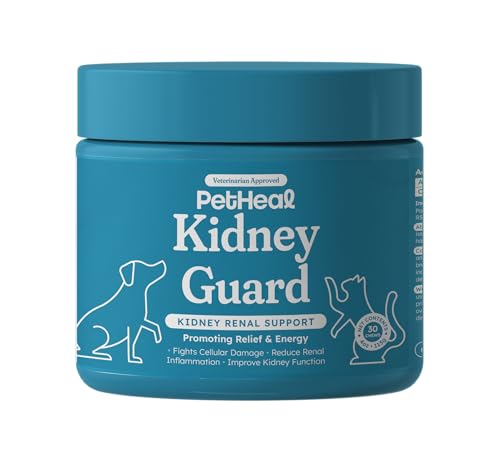
What We Like
- Vet-reviewed herbal formula
- Contains Astragalus and Cordyceps for renal support
- Pork flavor for easy administration
- Promotes natural detox and repair
Trade-offs
- Not a low-protein treat (no protein spec listed)
- No low-phosphorus claim for kidney diets
A 0.2-pound bag of soft chews built around four herbs: Astragalus, Cordyceps, Dong Quai, and Rehmannia. The formula is vet-reviewed and aims to support renal health and energy, as stated on the label. The pork flavor makes it easy to give as a treat, and the soft chew format is straightforward for daily use.
The most important thing to know is that this product doesn’t advertise low protein or low phosphorus levels, which are the main dietary tools for managing kidney disease. Mattie’s Treats Mini Treats Low Protein, for example, explicitly controls those numbers. Kidney Guard instead focuses on herbal ingredients like Astragalus and Cordyceps, so it’s best for owners who want targeted herbal support in a treat their dog will actually eat.
Product photos
Kidney Restore Chicken Dog Treats
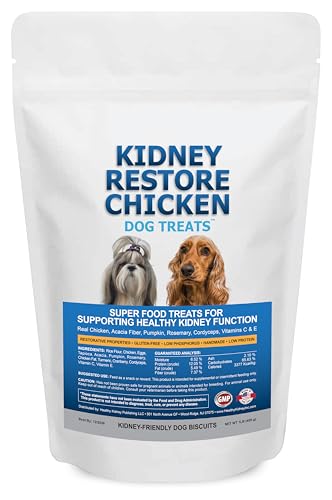
What We Like
- Low-protein formula for kidney support
- Contains antioxidant and anti-inflammatory herbs
- 60-day satisfaction guarantee
Trade-offs
- Only one flavor option (chicken)
- No phosphorus or sodium specs listed
- Designed for kidney issues, not general treats
The ingredient list tells the story here. Real chicken, organic turmeric, cordyceps, and cranberry extract are all packed into a low-protein treat that aims to support kidney function rather than just taste good. That 60-day satisfaction guarantee is a practical safety net if your dog turns up its nose, but the real value is in the targeted formulation. For owners navigating a kidney disease diagnosis, this treat offers a way to give something rewarding without undermining the dietary restrictions that matter most. It is not a supplement replacement, but it does pull double duty as a snack with functional ingredients like rosemary and pumpkin that many renal diets already lean on.
The antioxidant herbs and cordyceps in these treats are a thoughtful addition for dogs whose kidneys need a break from inflammation and oxidative stress. The catch is that you are locked into chicken flavor, which is fine if that is what your dog likes. It is a well-intentioned product for a specific need, and the ingredients back up the claims on the bag.
Product photos
Vitafur Barkin Burger Dog Treats Lamb & Pumpkin
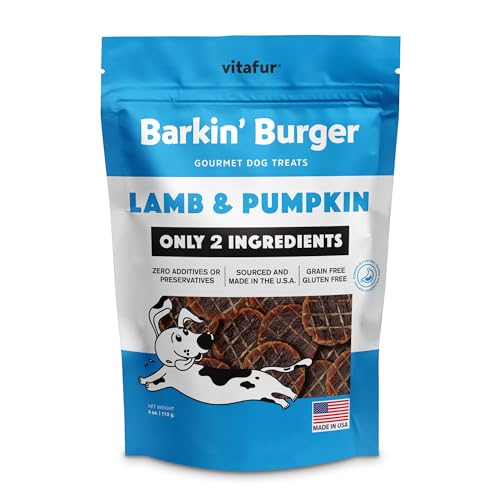
What We Like
- Only two human-grade ingredients
- Grain free with no fillers or preservatives
- Claims to support kidney health
Trade-offs
- Single size bag limits portion flexibility
- No specific protein or phosphorus numbers listed
Two ingredients, lamb and pumpkin, is about as stripped-down a label as you’ll find in a treat. For a dog whose diet needs minimal processing and no hidden binders, that simplicity matters: no fillers, no preservatives, just meat and a vegetable. Vitafur also leans on locally sourced U.S. lamb, which at least suggests a shorter supply chain and fresher raw material. This is a treat for owners who trust a short ingredient list over any front-of-bag promise.
The bag gives you no actual protein or phosphorus percentages, so you’re flying on trust rather than numbers. Compared to Mattie’s Treats Mini Treats Low Protein, which advertises itself as low in protein, phosphorus, and sodium, Vitafur leaves you guessing about the exact renal load. For owners who prioritize ingredient simplicity over detailed nutritional metrics, this fits; for those who want documented low-protein and low-phosphorus levels, the Mattie’s line gives you a product specifically labeled for that purpose.
Product photos
Vet Promise Cranberry Supplement for Dogs
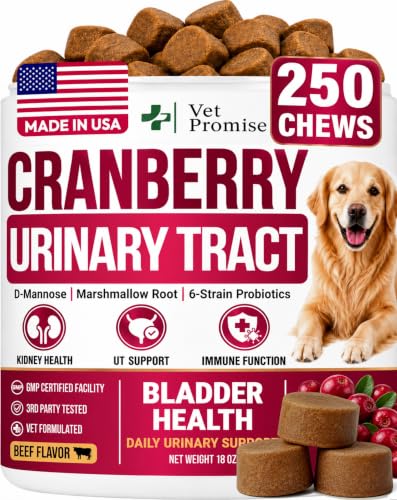
What We Like
- 250-count supply for long-term use
- Natural cranberry and D-Mannose formula
- Vet-formulated in FDA-registered facility
- Easy-to-chew treat format
Trade-offs
- Not specifically low in protein or phosphorus
- Focuses on urinary tract, not kidney disease diet
- No phosphorus or sodium content listed
A 250-chew supply offers long-lasting urinary tract support with cranberry and D-Mannose, which help block bacteria from sticking to the bladder wall. The formula is vet-formulated and made in an FDA-registered facility, so owners can feel confident in its safety. It targets urinary tract, kidney, and bladder health, but it is not a low-protein or low-phosphorus treat for advanced kidney disease.
The real trade-off here is that this supplement treats the urinary system broadly, not the specific dietary restrictions required for dogs with chronic kidney disease. Compared to Mattie’s Treats Low Protein, which explicitly controls protein, phosphorus, and sodium, this Vet Promise chew does not list those levels, so it cannot replace a renal diet treat. If your dog needs urinary tract support without strict dietary limits, this is a reasonable option; for renal diets, you will need a product with labeled low protein and phosphorus.
Product photos
How We Evaluated Treats For Dogs With Kidney Disease
We started with the nutritional metrics that matter most for kidney health: protein percentage, phosphorus content, and sodium levels. Manufacturer-provided guaranteed analyses and ingredient lists were cross-checked against veterinary dietary guidelines for managing chronic kidney disease. We also reviewed expert round-ups from veterinary nutritionists and patterns in owner-reported experiences.
The three criteria that carried the most weight were low protein and phosphorus content, ingredient transparency, and formulation intent. A treat designed for kidney support should list specific nutritional targets, not just vague health claims. Texture and palatability mattered too, dogs with kidney disease sometimes have reduced appetites, so a treat they actually want to eat is critical.
We encourage readers to check the bag against their own dog’s specific dietary restrictions and to consult their veterinarian before introducing any new treat.
What To Look For In Treats For Dogs With Kidney Disease
The right treat supports kidney function without adding unnecessary strain. Focus on protein, phosphorus, and sodium levels first, then consider ingredients and formulation.
Look for treats with explicitly stated low protein, phosphorus, and sodium levels. Avoid treats with vague “kidney support” claims that lack nutritional data. Short ingredient lists with recognizable whole foods are a good sign.
Protein and Phosphorus Levels
Protein restriction is a cornerstone of managing kidney disease, but the dog still needs enough for muscle maintenance. Look for treats that explicitly state low protein content, ideally under 10% on a dry matter basis. Phosphorus is even more critical: elevated phosphorus accelerates kidney damage. The best low phosphorus dog food and treats keep phosphorus under 0.5% dry matter. Mattie’s Treats Mini Treats and the Kidney Restore formulas both publish these numbers.
Sodium Content
Sodium drives thirst and can raise blood pressure, both of which stress compromised kidneys. The ideal treat has less than 0.3% sodium on a dry matter basis. Many renal treats don’t list sodium, which is a red flag. The best low sodium dog treats explicitly state their sodium content. If a treat doesn’t list it, assume it’s not formulated for a sodium-restricted diet.
Ingredient Quality and Additives
Short ingredient lists with whole foods, pumpkin, fish oil, oats, eggs, are preferable. Avoid treats with artificial preservatives, colors, or unspecified “animal digest.” Omega-3 fatty acids from fish oil support kidney function. Activated charcoal, found in Kidney Restore formulas, is a newer addition that some owners find helpful. For dogs with multiple dietary restrictions, protein-restricted diets that also limit phosphorus offer the most targeted support.
- Check the guaranteed analysis for protein, phosphorus, and sodium percentages.
- Look for a veterinary nutritionist or board-certified veterinarian on the formulation team.
- Match the treat texture to your dog’s dental health and appetite.
- Confirm the treat is compatible with your dog’s primary renal diet.
- Start with half a treat per day and monitor your dog’s response.
A treat that lists specific nutritional numbers is almost always better than one with only marketing claims.
Treats For Dogs With Kidney Disease Compared
The table below compares the eight treats across the metrics that matter most for kidney health, including protein content, phosphorus levels, and formulation approach.
| Product | Key Ingredients | Protein Level | Form |
|---|---|---|---|
| Mattie's Treats Mini Treats Low Protein | Rye flour, tapioca, pumpkin, cinnamon, fish oil | Low Protein | Crunchy treats |
| Mattie's Treats Low Protein Dog Treats | Light rye flour, tapioca flour, pumpkin, cinnamon, fish oil, canola oil | Low Protein | Crunchy treats |
| Kidney Restore Petite Size Kidney Cleanse Treats | Activated charcoal, acacia fiber, vitamins C & E | Low protein | Soft chews |
| Hill's Prescription Diet Soft Baked Dog Treats | N/A | N/A | Soft and chewy |
| PetHeal Kidney Guard Chews for Dogs | Astragalus, Cordyceps, Dong Quai, Rehmannia | N/A | Soft Chews |
| Kidney Restore Chicken Dog Treats | Chicken, turmeric, cordyceps, cranberry | Low-protein | Treat |
| Vitafur Barkin Burger Dog Treats Lamb & Pumpkin | Lamb & Pumpkin | N/A | N/A |
| Vet Promise Cranberry Supplement for Dogs | Cranberry, D-Mannose | N/A | Chews |
Frequently Asked Questions
Can I give my dog with kidney disease regular dog treats?
Regular treats are typically too high in protein, phosphorus, and sodium for dogs with kidney disease. Even one standard biscuit can push daily phosphorus limits. Stick to treats formulated for renal support.
What ingredients should I avoid in kidney disease treats?
Avoid treats with high phosphorus sources like bone meal, meat by-products, and cheese. Also avoid high-sodium ingredients like salt, sodium nitrite, and “natural flavor” without a breakdown. Check for artificial preservatives that add no nutritional value.
How many kidney-friendly treats can my dog have per day?
Most renal treats are designed for one to three treats per day, depending on the dog’s size and the treat’s nutritional profile. Always start with the manufacturer’s recommendation and adjust based on your vet’s guidance.
Are soft chews better than crunchy treats for kidney disease?
Texture depends on your dog’s dental health and appetite. Soft chews like the Hill’s Prescription Diet Soft Baked Treats are easier for dogs with dental issues or reduced appetite. Crunchy treats like Mattie’s Mini Treats can help with dental hygiene but may be harder for older dogs.
Do I need to consult my vet before giving kidney disease treats?
Yes. Every dog’s kidney disease stage and dietary needs are different. A vet can confirm whether a specific treat’s protein, phosphorus, and sodium levels fit your dog’s current renal diet guidelines.
The Bottom Line
For most dogs with kidney disease, Mattie’s Treats Mini Treats Low Protein is the best overall choice. It delivers low protein, phosphorus, and sodium in a crunchy format with six ingredients you can read. The donation to kidney disease research is a bonus that reflects the brand’s focus.
If your dog needs a structured daily option, the Kidney Restore Petite Size Kidney Cleanse Treats offers a vet-formulated soft chew designed for daily feeding. Owners already using Hill’s Prescription Diet k/d will find the Hill’s Soft Baked Treats a natural fit. For those prioritizing ingredient simplicity over nutritional numbers, the Vitafur Barkin Burger Treats Lamb & Pumpkin has just two human-grade ingredients.
The single most important factor is reading the guaranteed analysis. A treat that lists protein, phosphorus, and sodium levels gives you the control to match it to your dog’s specific needs. Everything else, flavor, texture, brand, comes second to those numbers.
