
10 Best Recommended Puppy Food in 2026
This post contains affiliate links. As an Amazon Associate, we earn from qualifying purchases.
After reviewing dozens of formulas, Purina Pro Plan High Protein Puppy Food stands out for its real lamb-first recipe, live probiotics for digestive health, and balanced calcium and phosphorus for strong bones. That combination supports lean muscle growth and helps a puppy’s developing immune system. For chicken-first recipes, Blue Buffalo Life Protection Puppy Food earns our top chicken pick, while Hill’s Science Diet Puppy Small Bites is the best vet-recommended option for balanced development.
Picking the right puppy food means balancing protein levels for growth, DHA for brain development, and the right kibble size for your pup’s breed. Many new owners also need to consider whether their puppy has a sensitive stomach or a preference for grain-free ingredients.
We built this guide by studying manufacturer specifications, veterinary nutrition guidelines, and patterns in owner feedback. Our goal is to help you match your puppy’s specific needs to the right formula without relying on marketing claims.
Top 10 Recommended Puppy Foods in the Market
Certain content that appears on this site comes from Amazon. This content is provided "as is" and is subject to change or removal at any time.
The Best Recommended Puppy Foods, Reviewed
Purina Pro Plan High Protein Puppy Food

What We Like
- Real lamb as first ingredient
- Live probiotics for digestive health
- Calcium and phosphorus for strong bones
Trade-offs
- Only one bag size available (6 lb)
- Not suitable for puppies with lamb sensitivity
The 6-pound bag is the only size available, so owners of large-breed puppies or multiple dogs will need to buy more frequently compared to the 34-pound Purina Pro Plan Large Breed option. That larger bag is formulated for larger frames, making this smaller bag more practical for small to medium breeds or for those who want to start with a manageable amount.
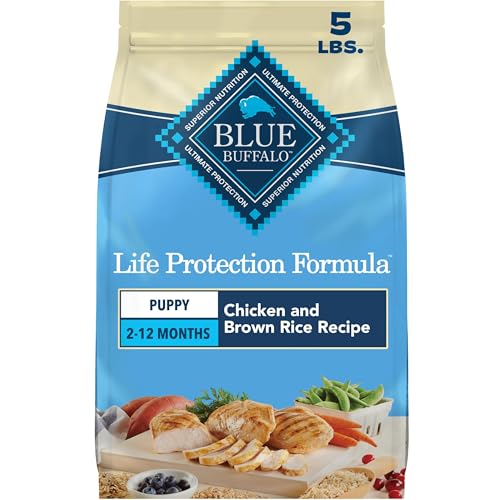
Blue Buffalo Life Protection Puppy Food
What We Like
- Real chicken is first ingredient
- Includes DHA and ARA for brain development
- LifeSource Bits support immune health
- Wholesome grains for gentle digestion
Trade-offs
- Contains grains, not suitable for grain-free diets
- Small 5-pound bag requires frequent repurchasing for large breeds
Real chicken as the first ingredient means this formula prioritizes animal protein for muscle development right from the start. The inclusion of DHA and ARA targets brain and eye development during the critical first year. Combined with LifeSource Bits, a precise blend of antioxidants, vitamins, and minerals formed at a lower temperature to ensure optimal potency, this recipe delivers a well-rounded nutritional foundation for puppies from two to twelve months. It’s a straightforward, ingredient-driven choice for owners who want to see chicken listed first and a clear focus on developmental needs without gimmicks.
The 5-pound bag is compact, so it’s easy to store in small spaces or try out before committing to a larger size. But you’ll need to buy it more often if you have a growing large-breed puppy. This chicken-first recipe includes DHA for brain and eye development, plus antioxidants in LifeSource Bits to support immune health, making it a solid daily option for puppies from 2 to 12 months. If your pup needs a grain-free diet, you’d want to look at ORIJEN’s Grain Free Puppy Recipe instead.
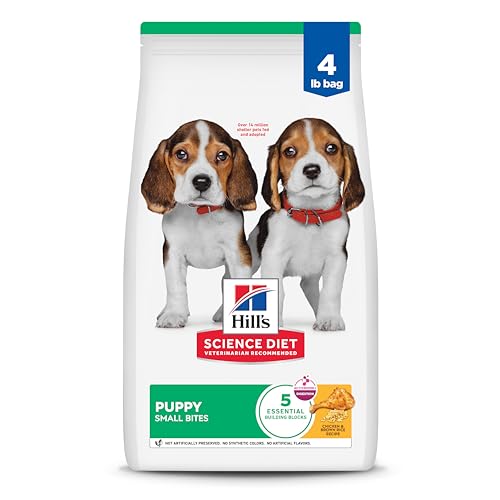
Hill's Science Diet Puppy Small Bites
What We Like
- Balanced minerals for growing bones and teeth
- DHA and fish oil support brain and eye development
- Antioxidant blend for developing immune system
- High quality proteins fuel growing muscles
Trade-offs
- Chicken-based recipe not suitable for poultry-sensitive puppies
- Small 4.5 lb bag requires frequent reordering
The #1 Veterinarian Recommended brand carries weight when you’re sorting through puppy food options, and this bag backs it up with a targeted nutritional profile. DHA from fish oil supports brain and eye development, while balanced minerals focus on growing bones and teeth, two critical areas for a puppy’s first year. The antioxidant blend bolsters a developing immune system, and high-quality chicken protein fuels muscle growth. It’s a formula built around what a growing dog actually needs, not marketing fluff, and that makes it a sensible starting point for most puppy owners.
The trade-off is bag size: at 4.5 lb, you’ll be reordering more often than with something like the Purina Pro Plan Large Breed Puppy Food’s 34 lb sack. That’s especially true if you have a larger breed puppy that eats more. That’s fine if you want to keep the food fresh or are just starting out with a small pup, but it’s worth factoring into your routine. Compared to the ORIJEN Grain Free Puppy Recipe, Hill’s uses chicken and brown rice rather than a high-protein fresh-or-raw approach, which some owners may find gentler on digestion. No single bag fits every puppy, but this one covers the basics with vet-backed reasoning.
Royal Canin Small Puppy Dry Dog Food

What We Like
- Crunchy kibble texture for small jaws
- Antioxidants support immune system
- Prebiotics and proteins promote gut health
- Developed by veterinarians
Trade-offs
- Only for puppies 9-22 lb adult weight
- Small 4 lb bag means frequent repurchasing
The 9-22 lb adult weight target is the most decisive spec here: this formula is calibrated for the rapid growth and high energy needs of small-breed puppies, not a generic all-puppy recipe. That means the kibble size, calorie density, and nutrient balance are all dialed in for dogs that will finish growing faster than larger breeds. For someone with a Chihuahua, a Miniature Poodle, or a Shih Tzu, that precision matters more than a bigger bag or a lower price per pound. The crunchy kibble also encourages chewing, which helps with dental health during those teething months.
This food is designed for puppies with an expected adult weight of 9 to 22 pounds. So it’s not suitable for larger breeds like Labradors or Golden Retrievers, those pups would need a large-breed formula such as Purina Pro Plan Large Breed Puppy Food. The 4 lb bag means you’ll restock more often than if you bought a 13 lb bag of Hill’s Science Diet Puppy Small Bites. But for the right small breed, the tailored nutrition makes those extra trips worthwhile.
Purina Pro Plan Large Breed Puppy Food

What We Like
- Real chicken as first ingredient
- Glucosamine for developing joints and cartilage
- DHA for brain and vision development
- Calcium for strong bones and teeth
Trade-offs
- Formulated only for large breed puppies
- Contains chicken, not suitable for chicken-free diets
A 34-pound bag of this large-breed puppy food lists real chicken first and includes glucosamine to support developing joints and cartilage, so you’re getting targeted nutrition for a big dog’s growing frame. The DHA from omega-rich fish oil aids brain and vision development, while vitamin A and omega-6 fatty acids help maintain healthy skin and coat.
At 34 pounds, this bag isn’t a small trial size, so you’re committing to a fair amount of food upfront. Compared to the Purina Pro Plan High Protein Puppy Food, which comes in a 6-pound bag and targets puppies under one year generally, this large-breed formula is purpose-built for the slower, controlled growth that big dogs need. If you have a Great Dane or a Labrador puppy, the joint support and calcium balance here are more directly relevant than a general high-protein recipe.
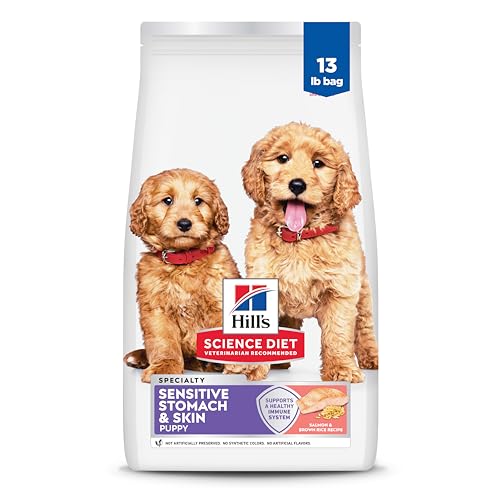
Hill's Science Diet Sensitive Stomach Puppy Food
What We Like
- Prebiotic fiber for sensitive stomachs
- DHA for brain development
- Vitamin E & Omega fatty acids for skin
Trade-offs
- Contains grains, not grain-free
- Not suitable for puppies on a grain-free diet
Salmon is the first ingredient in this 13-pound bag, so the protein comes from a named source rather than a generic blend. That matters for puppies with touchy digestion because the formula is designed to be gentle on the stomach, with prebiotic fiber to help nutrient absorption. It also includes DHA for brain development, so you are covering both gut comfort and early growth in one bag. This is a practical pick for owners who want a straightforward, veterinarian-recommended recipe that prioritizes digestive health without chasing trendy labels.
The prebiotic fiber in this formula is gentle on a sensitive stomach, making it a safer bet than a grain-free blend that might be too rich for some puppies. It includes brown rice, so it rules out anyone committed to a grain-free diet, unlike ORIJEN Grain Free Puppy Recipe which packs 85% fresh or raw ingredients and skips grains entirely. For steady, gentle nutrition, this Hill’s option delivers triple support for stomach, skin, and immune system health.
Product photos
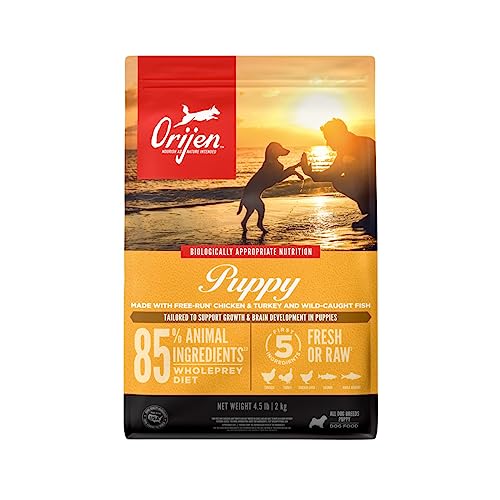
ORIJEN Grain Free Puppy Recipe
What We Like
- 85% fresh or raw poultry and fish
- First five ingredients are fresh or raw animal sources
- Includes WholePrey organs for natural nutrition
- No corn, soy, wheat, or tapioca
Trade-offs
- Not suitable for puppies that digest grains well
- Lacks the decades of veterinary research behind grain-inclusive formulas
85% fresh or raw poultry and fish ingredients means this kibble skips the rendered meals and plant fillers common in many puppy foods. The first five ingredients are fresh chicken, turkey, chicken liver, salmon, and whole herring, so protein comes from recognizable animal sources rather than corn or soy. For someone who reads the ingredient list before the front of the bag, that transparency matters. ORIJEN also includes organs like chicken liver to mimic a whole-prey diet, which provides a broader nutrient profile than muscle meat alone. This is a premium choice for owners who prioritize ingredient quality over bag size and want a grain-free, high-protein start for their puppy.
Grain-free diets don’t work for every puppy, and ORIJEN’s formula is no exception. This kibble is packed with 85% fresh or raw poultry and fish ingredients, including organs, to mimic an ancestral diet, but it lacks grains entirely. Owners who prefer a grain-inclusive option like Hill’s Science Diet Puppy Small Bites, which contains brown rice, may find this too restrictive. Best for those who prioritize fresh, whole-animal ingredients and want to avoid grains, but not ideal for conservative owners who favor a vet-recommended formula.
Product photos
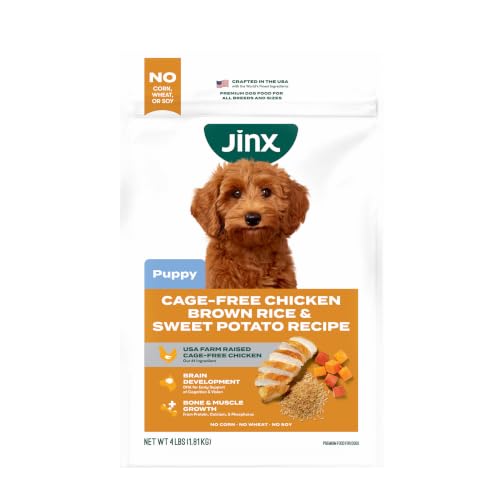
Jinx Puppy Dry Dog Food
What We Like
- Real chicken is first ingredient
- Includes DHA for brain development
- Probiotics support digestive health
- No corn, wheat, soy, or fillers
Trade-offs
- 4 lb bag is small for large breed puppies
- Contains grains, not grain-free
Real chicken as the first ingredient means this recipe delivers high-quality protein for lean muscle growth, with DHA added to support brain and eye development in growing puppies. The inclusion of probiotics and fiber-rich sweet potato also helps maintain healthy digestion and immune function, which is especially important during the first year. This formula is designed for puppies of all breeds from 1 to 12 months, offering a balanced diet without corn, wheat, soy, or fillers. It’s a clean, straightforward option for anyone seeking a protein-first recipe with added cognitive and digestive support.
At 4 pounds, this bag is best for small or toy breed puppies who eat less per day, so you won’t be running to the store as often. It contains brown rice, so it’s not suitable if you’re set on a grain-free diet. The recipe starts with real chicken and includes DHA for brain development, probiotics for digestion, and calcium for strong bones, everything a growing pup needs in one bowl.
Product photos
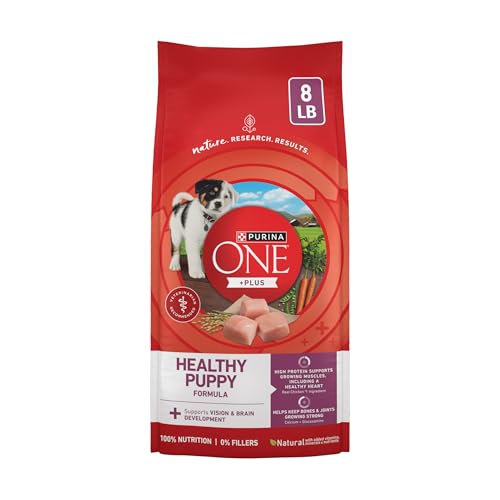
Purina ONE Plus Healthy Puppy Food
What We Like
- Real chicken as first ingredient
- DHA supports vision and brain development
- Four antioxidant sources for immune support
- No artificial flavors or preservatives
Trade-offs
- Not suitable for owners who prefer a grain-inclusive formula
- Contains chicken, not for pups with poultry sensitivities
Real chicken is the first ingredient, which means your puppy gets a solid protein base for growing muscles, including a healthy heart, without relying on meat by-products or fillers. The formula includes DHA, the same nutrient found in mother’s milk, to support vision and brain development, plus four antioxidant sources to back up the immune system. That combination makes this a smart choice for anyone looking for a balanced, everyday food that covers the basics without paying extra for flashy marketing. It’s the kind of label that rewards a careful read: every ingredient has a stated purpose, and the absence of artificial flavors or preservatives keeps the focus on nutrition.
Bag size is a practical consideration here. At 8 pounds, this bag is smaller than the 34-pound Purina Pro Plan Large Breed option, so if you have a big-breed puppy or multiple dogs, you’ll be restocking more often. That said, the crunchy bites and tender morsels add texture variety that many puppies enjoy, and the digestible SmartBlend with omega-6 fatty acids supports a shiny coat and healthy skin. For owners who prioritize value without sacrificing key developmental nutrients like DHA, this is a straightforward, no-nonsense formula that delivers exactly what the front of the bag promises.
Product photos
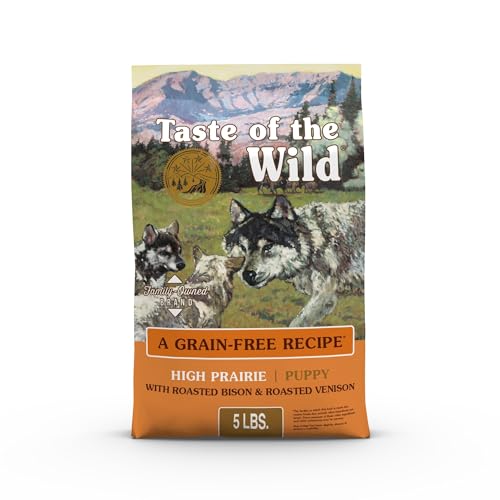
Taste of the Wild High Prairie Puppy Food
What We Like
- Real meat is first ingredient
- High protein for lean muscle
- Includes proprietary probiotics
- Omega fatty acids for skin and coat
Trade-offs
- Not suitable for puppies that digest grains well
- No breed-specific formula mentioned
A 28% protein content means this recipe is built to support lean muscle development in growing puppies, with roasted bison as the first ingredient rather than a meat meal or filler. The inclusion of species-specific K9 strain probiotics targets digestive health directly, which is a practical detail for pups with sensitive stomachs or during food transitions. This grain-free formula suits owners who want a high-protein option with omega fatty acids for coat condition without relying on corn or wheat.
Grain-free isn’t a universal fit, some puppies digest grains just fine. And this bag’s 5-pound size means frequent repurchasing for larger breeds. Compared to the Purina Pro Plan High Protein Puppy Food, which uses lamb and rice, Taste of the Wild features roasted bison and roasted venison, a helpful alternative if your pup has shown sensitivities to common meats. Just know that if your vet recommends a grain-inclusive diet, this isn’t the bag to grab.
Product photos
How We Evaluated Recommended Puppy Foods
We examined each formula against the nutritional standards set by the Association of American Feed Control Officials (AAFCO) for growth and reproduction, then cross-referenced those specs with veterinary feeding guidelines. Our research drew from manufacturer-published ingredient sourcing data, expert round-ups from veterinary nutritionists, and long-term owner reports on palatability and digestive tolerance.
The three criteria that mattered most were protein source and quality, DHA content for cognitive development, and kibble size appropriateness for different breed sizes. We also weighed the presence of probiotics or prebiotics for digestive health, since puppies have sensitive systems during their first year.
A research-led evaluation cannot replace a veterinarian’s advice for a specific puppy, especially one with known allergies or medical conditions. We present what the data and owner patterns show, and we encourage you to check the ingredient list against your own bag.
What To Look For In Recommended Puppy Foods
Choosing a puppy formula requires more than grabbing the bag with the cutest puppy photo. The right food supports rapid growth, brain development, and digestive health through the first year or more.
Look for a named meat protein as the first ingredient, guaranteed DHA from fish oil or algae, and kibble size matched to your puppy’s breed. Avoid generic “meat meal” and check for an AAFCO nutritional adequacy statement for growth.
Protein Source and Quality
The first ingredient should be a named animal protein like chicken, lamb, or salmon. Whole meat provides amino acids for muscle development, while meat meals (like chicken meal) offer concentrated protein. Avoid unnamed “meat meal” or “poultry meal,” which can come from any source. Many of our top-rated dry puppy foods start with real poultry or fish.
DHA for Brain and Vision Development
Docosahexaenoic acid (DHA) is an omega-3 fatty acid critical for cognitive development and retinal health in puppies. Look for DHA from fish oil, algal oil, or added as a supplement. Formulas without guaranteed DHA levels may still support growth but miss this key developmental boost. Our research shows that high-quality puppy diets consistently include DHA as a named ingredient.
Kibble Size and Breed-Specific Formulas
Small-breed puppies need smaller kibble to prevent choking and encourage chewing, while large-breed puppies benefit from larger kibble that slows eating and supports jaw development. Breed-specific formulas also adjust calcium and phosphorus ratios to support proper bone growth without over-supplementing. The small breed puppy food options we reviewed tailor kibble size and nutrient density to dogs under 22 pounds adult weight.
- Confirm the formula has an AAFCO statement for “growth” or “all life stages including growth of large-size dogs”
- Check the guaranteed analysis for crude protein (a typical range for puppy formulas)
- Look for added probiotics or prebiotics if your puppy has a sensitive stomach
- Avoid formulas with artificial colors, flavors, or preservatives
A puppy food that meets AAFCO growth standards and lists a named protein first will serve most healthy puppies well through their first year.
Recommended Puppy Foods Compared
The table below compares our top 10 recommended puppy foods across key criteria, including protein source, DHA content, and breed suitability.
| Product | Protein Source | Key Nutrients | Weight |
|---|---|---|---|
| Purina Pro Plan High Protein Puppy Food | Real lamb is first ingredient | DHA, probiotics, calcium, phosphorus | 6.0 pounds |
| Blue Buffalo Life Protection Puppy Food | Chicken | DHA, ARA, Choline | 5.0 pounds |
| Hill's Science Diet Puppy Small Bites | N/A | DHA, Fish Oil, Antioxidants | 4.5 pounds |
| Royal Canin Small Puppy Dry Dog Food | N/A | Antioxidants, Prebiotics, Proteins | 4 lb |
| Purina Pro Plan Large Breed Puppy Food | N/A | DHA, glucosamine, calcium | 34 lb |
| Hill's Science Diet Sensitive Stomach Puppy Food | Salmon | Prebiotic fiber, Omega-3 & 6 | 13 lb |
| ORIJEN Grain Free Puppy Recipe | Fresh chicken, turkey, chicken liver, salmon, whole herring | N/A | 4.5 lb |
| Jinx Puppy Dry Dog Food | Real Chicken (first ingredient) | DHA, Calcium, Phosphorus | 4 lb |
| Purina ONE Plus Healthy Puppy Food | Real chicken first ingredient | DHA for vision & brain | 8.0 pounds |
| Taste of the Wild High Prairie Puppy Food | Roasted Bison | DHA & Probiotics | 5 pounds |
Frequently Asked Questions
When should I switch my puppy from puppy food to adult food?
Most puppies should transition to adult food between 12 months and around a year and a half, depending on breed size. Small breeds mature faster and can switch around 12 months. Large and giant breeds may need puppy food until around a year and a half to two years to support proper bone and joint development. Check your puppy’s growth curve and consult your veterinarian for breed-specific timing.
Can I mix wet and dry puppy food?
Yes, mixing wet and dry food can improve palatability for picky eaters and add moisture to the diet. If your puppy is a picky eater, a small amount of wet puppy food mixed into kibble often encourages consistent eating. Just adjust portion sizes to avoid overfeeding, since wet food has different calorie density than dry.
What is the difference between grain-free and grain-inclusive puppy food?
Grain-free formulas replace grains like rice, barley, and oats with legumes and potatoes as carbohydrate sources. Grain-inclusive foods use whole grains for fiber and energy. Both can be nutritionally complete, but grain-free diets have been linked to a potential risk of dilated cardiomyopathy (DCM) in some dogs, so consult your vet before choosing grain-free for a puppy.
How much should I feed my puppy each day?
Feeding amounts depend on the puppy’s current weight, expected adult size, and the specific formula’s calorie density. Most bags provide a feeding chart based on weight ranges, but these are starting points. Puppies need three to four small meals per day until about six months, then two meals per day thereafter. Monitor your puppy’s body condition and adjust portions as needed.
Is high-protein puppy food safe for all breeds?
High-protein formulas are generally safe for small and medium breeds but may contribute to rapid growth in large and giant breeds, which can stress developing joints. Large-breed puppy formulas moderate protein and calcium levels to support controlled growth. If you have a large-breed puppy, choose a protein-rich puppy food specifically formulated for large breeds.
The Bottom Line
For most puppy owners, Purina Pro Plan High Protein Puppy Food offers the best balance of real animal protein, DHA for brain development, and probiotic support for digestive health. It works well for puppies expected to reach small or medium adult sizes and provides the nutritional foundation for the critical first year of growth.
If your puppy needs a chicken-based recipe, Blue Buffalo Life Protection Puppy Food delivers DHA and ARA with LifeSource Bits for immune support. For large-breed puppies, Purina Pro Plan Large Breed Puppy Food adds glucosamine for joint development. Budget-conscious owners will find strong value in Purina ONE Plus Healthy Puppy Food, which starts with real chicken and includes DHA without artificial additives.
The single most important factor is matching the formula to your puppy’s breed size and any known sensitivities. Read the ingredient list, check the AAFCO statement, and transition gradually to avoid digestive upset.
