
10 Best Healthy Puppy Food in 2026
This post contains affiliate links. As an Amazon Associate, we earn from qualifying purchases.
After looking at dozens of formulas, we think Purina Pro Plan High Protein Puppy Food earns the best overall spot. It leads with real chicken, includes DHA from fish oil for brain development, and provides calcium and phosphorus for strong bones. For vet-backed nutrition, Hill’s Science Diet Puppy Small Bites is our best vet recommended pick, while Blue Buffalo Life Protection Puppy Food wins best real lamb first for owners who prefer a novel protein source.
Choosing a healthy puppy food means sorting through marketing claims to find what actually supports growth. Puppies need specific ratios of protein, fat, calcium, and DHA that adult dog food does not provide. The wrong balance can affect bone development, digestion, and long-term health.
This guide is based on manufacturer specifications, ingredient lists, nutritional adequacy statements, and patterns in owner feedback. We focused on formulas that meet AAFCO growth standards and use named protein sources. Our goal is to help you read the bag with confidence and pick a food that fits your puppy’s breed, size, and digestive needs.
Top 10 Healthy Puppy Foods in the Market
Certain content that appears on this site comes from Amazon. This content is provided "as is" and is subject to change or removal at any time.
The Best Healthy Puppy Foods, Reviewed
Purina Pro Plan High Protein Puppy Food

What We Like
- Chicken is first ingredient
- DHA from fish oil for brain development
- Calcium and phosphorus for strong bones
- Antioxidants support immune system
Trade-offs
- Not formulated for sensitive stomachs
- 6 lb bag requires more frequent reordering than larger options
Chicken is the first ingredient here, which tells you more about what’s actually inside than any front-of-bag claim. That high-quality protein builds lean muscle during a puppy’s rapid growth phase, while DHA from omega-rich fish oil targets brain and vision development, two areas that matter a lot in the first year. Calcium and phosphorus work together to strengthen bones and teeth, and the antioxidants help support a developing immune system. This is a straightforward, well-rounded formula that covers the basics without gimmicks, making it a solid everyday choice for most puppy owners who want to start with something reliable.
The main trade-off is bag size: at 6 pounds, you’ll be reordering more often than with larger bags like Hill’s Science Diet Puppy Small Bites, which comes in a 12.5-pound option. That’s a practical consideration if you have a larger breed or multiple puppies, but for small to medium breeds the smaller bag keeps the food fresher. The formula also doesn’t target sensitive stomachs specifically, so if your puppy has known digestive issues, the Purina Pro Plan Sensitive Skin & Stomach line might be worth a look. For a standard, no-nonsense puppy food with solid nutritional fundamentals, this one delivers.
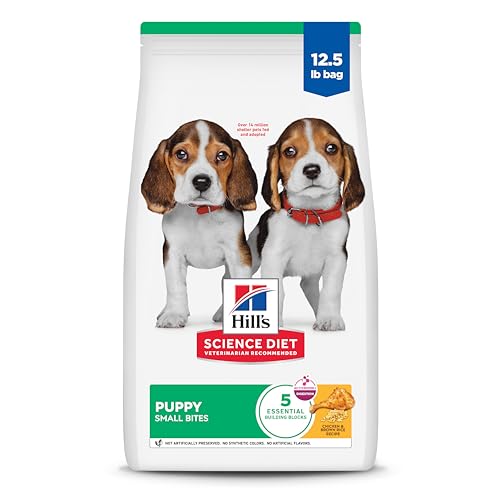
Hill's Science Diet Puppy Small Bites
What We Like
- Balanced minerals for bones and teeth
- DHA and fish oil for brain and eye development
- Antioxidant blend supports immune system
- High-quality protein fuels growing muscles
Trade-offs
- 12.5 lb bag is heavier than many small-breed options
- Not formulated for large-breed puppies
The #1 veterinarian-recommended brand isn’t a marketing slogan, it’s a reflection of the nutritional science packed into this bag. Balanced minerals target growing bones and teeth, DHA from fish oil supports brain and eye development, and an antioxidant blend bolsters the developing immune system. For a puppy owner who wants a formula backed by veterinary consensus rather than flashy packaging, this is the straightforward, research-driven choice. The small-bites kibble size makes it practical for smaller mouths, and the natural ingredients list is exactly what a label skeptic like me wants to see.
The trade-off is weight: at 12.5 pounds, this bag is heavier than many small-breed puppy foods. So if you’re carrying it up stairs or storing it in a tight pantry, it’s less convenient than a 4- or 5-pound bag like Blue Buffalo Baby BLUE Small Breed. But that larger size also means fewer trips to the store, and the ingredient quality, made in the USA with global ingredients you can trust, justifies the bulk. If your puppy thrives on chicken and brown rice and you value a formula that prioritizes developmental needs over trendy add-ons, this bag delivers exactly what it promises.
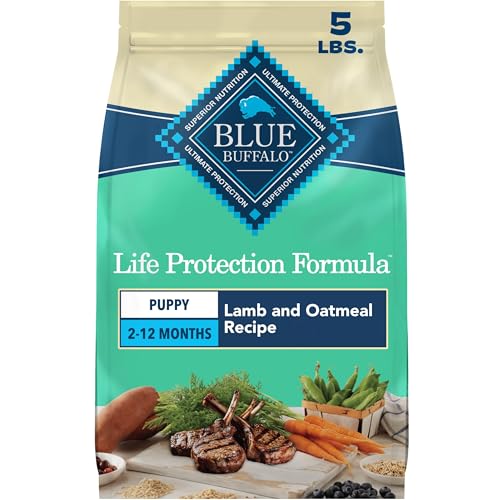
Blue Buffalo Life Protection Puppy Food
What We Like
- Real lamb as first ingredient
- DHA and ARA for brain and eye development
- LifeSource Bits with antioxidants
- Wholesome grains for gentle digestion
Trade-offs
- Lamb protein not suitable for all puppies
- Not ideal for puppies with grain sensitivities
Real lamb is the first ingredient, which gives this puppy food a straightforward protein source for muscle development without relying on meat meals or by-products. That matters because the first ingredient sets the nutritional foundation for a growing puppy, and lamb provides a digestible, high-quality protein. The inclusion of DHA and ARA, fatty acids naturally found in mother’s milk, helps with brain and eye development during the critical first year. LifeSource Bits add a precise antioxidant blend to support immune health, and the whole grains like oatmeal and brown rice offer steady energy without causing digestive upset. This formula is designed for puppies from 2 to 12 months, covering the entire growth stage with balanced nutrition that prioritizes ingredient transparency over marketing fluff.
Compared to the Hill’s Science Diet Large Breed Puppy Food, which offers a 27.5 lb bag for bigger breeds, this Blue Buffalo formula is better suited for owners who want a lamb-first recipe. It also doesn’t require a bulk supply.
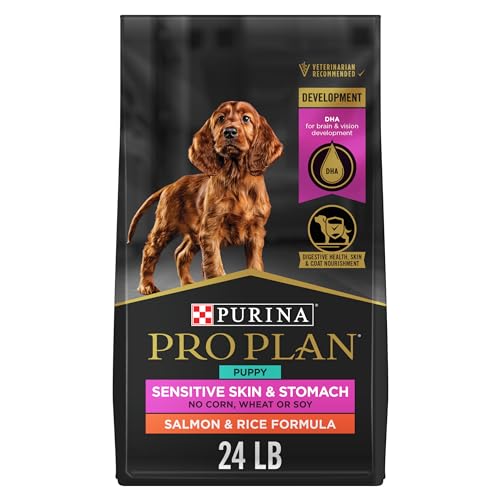
Purina Pro Plan Sensitive Skin Puppy Food
What We Like
- Real salmon is first ingredient
- Contains prebiotic fiber for digestion
- Omega-6 & vitamin A for skin and coat
- DHA supports brain and vision development
Trade-offs
- Rice-based formula not grain-free
- Contains rice, which some puppies cannot digest
Real salmon as the number one ingredient gives this formula a protein-rich start, while the addition of prebiotic fiber targets digestive health directly, a useful combo for a puppy with a touchy stomach. The rice base is easy to digest, and the fish oil supplies DHA for brain and vision development, plus EPA for heart health. This is the kind of ingredient logic that makes sense for sensitive pups without relying on trendy fillers or marketing fluff.
Real salmon is the first ingredient in this puppy food, which means your pup gets high-quality protein to support healthy growth. The rice in the formula is easily digestible, so it’s gentle on sensitive stomachs and helps maintain good stool quality. With prebiotic fiber to nourish beneficial gut bacteria, this food is designed for puppies that need digestive support.
Hill's Science Diet Large Breed Puppy Food

What We Like
- Balanced minerals for growing bones and teeth
- DHA and fish oil for brain and eye development
- Antioxidant blend supports developing immune system
- High quality proteins fuel growing muscles
Trade-offs
- Large breed formula only, not for small breeds
- Contains grains, not grain-free
A 27.5-pound bag packed with DHA, fish oil, and an antioxidant blend means this food is built around the specific needs of a large breed puppy’s rapid growth phase. The balanced minerals target bone and tooth development, while high-quality proteins support muscle growth without overloading the system. This is the kind of formulation you’d expect from a brand that’s the number one vet-recommended in the US, and it shows in the ingredient priorities.
For large breed puppies, balanced minerals support growing bones and teeth during those critical early months. DHA and fish oil contribute to healthy brain and eye development, while an antioxidant blend helps build a developing immune system. High quality proteins fuel growing muscles, and the formula is made with natural ingredients. Produced in the USA with global ingredients you can trust, this recipe comes from Hill’s Pet Nutrition, the US Veterinarians’ #1 recommended brand. The 27.5-pound bag provides plenty of food for a growing pup, though it’s heavier than smaller options like the 12.5-pound Small Bites variety.
Royal Canin Small Puppy Dry Dog Food

What We Like
- Formulated for small breed puppies
- Antioxidants support immune system
- Prebiotics and proteins promote gut health
Trade-offs
- Only for puppies under 22 lbs adult weight
- Single 4 lb bag size limits bulk buying
A 4-pound bag of kibble designed specifically for puppies expected to weigh 9 to 22 pounds as adults means you’re not guessing portions for a Chihuahua or a Miniature Pinscher. The formula packs antioxidants for immune support plus prebiotics and proteins for digestive health, which is exactly what a growing small breed needs during those first ten months. If you’ve got a toy or small breed pup, this takes the guesswork out of feeding.
This food is laser-focused on small breeds, so if your puppy is a Labrador or Golden Retriever in the making, you’ll need to look elsewhere, like Hill’s Science Diet Large Breed Puppy Food, which is formulated for bigger frames and different growth rates. The 4-pound bag is smaller than the 12.5-pound bag of Hill’s Science Diet Puppy Small Bites, but for a small puppy, the smaller bag may be more convenient. Royal Canin’s precision here is a strength for the right buyer, just not a one-size-fits-all solution.
Product photos
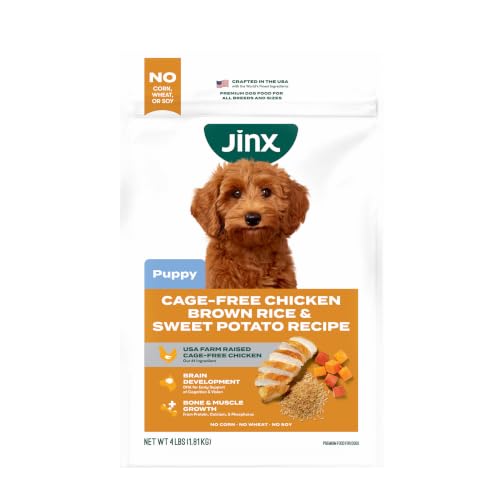
Jinx Puppy Dry Dog Food
What We Like
- Real chicken first ingredient
- Includes DHA for brain development
- Live probiotics for digestive support
- No corn, wheat, soy, or fillers
Trade-offs
- 4 lb bag is small for larger breeds
- Not suitable for grain-free diets
A 4-pound bag means this is a starter size for small or medium puppies, not a bulk buy for a Great Dane. The real chicken first ingredient delivers high-quality protein for lean muscle growth, while DHA aids brain and eye development, a combination that makes sense for early cognitive health. Live probiotics and fiber-rich sweet potato target digestive support and immune function, which is the core reason this formula earns attention for gut health. It also skips corn, wheat, soy, and fillers, so the ingredient list stays clean.
At 4 pounds, this bag matches Royal Canin Small Puppy’s size but is much smaller than Hill’s Science Diet Puppy Small Bites’ 12.5-pound option. For owners of toy or small breeds, that means no stale kibble and easy storage. Larger puppies will need frequent reordering. The recipe focuses on probiotics for digestive and immune support without corn, wheat, or soy, so it’s a clean choice for pups that tolerate grains.
Product photos
Blue Buffalo Baby BLUE Small Breed Puppy Food

What We Like
- Real chicken is first ingredient
- DHA supports cognitive development
- Antioxidant-rich LifeSource Bits included
- No chicken by-product meals, corn, wheat, soy
Trade-offs
- Contains oatmeal, which some owners avoid
Real chicken as the number one ingredient gives this small breed puppy food a protein foundation that supports steady growth and play energy. The addition of DHA for cognitive development and antioxidant-rich LifeSource Bits means you’re getting targeted nutrition in a compact 4-pound bag, ideal for tiny mouths and fast metabolisms. This formula suits owners who want a straightforward, meat-first recipe without corn, wheat, soy, or poultry by-product meals, so the ingredient list aligns with what you’d expect from a focused small breed diet.
The bag size is a consideration: at 4 pounds, you’ll need to buy more frequently than with a larger bag like Hill’s Science Diet Puppy Small Bites, which comes in 12.5 pounds. That’s a minor inconvenience if you value the specific small breed formulation and clean ingredient profile. For a puppy that needs dense nutrition without fillers, this is a practical pick, but if you prefer buying in bulk or want a grain-free option, you’d look elsewhere.
Product photos
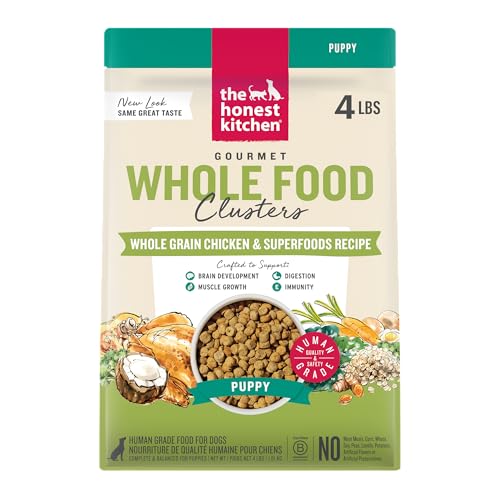
The Honest Kitchen Puppy Whole Grain Clusters
What We Like
- Human grade ingredient standards
- DHA from fish oil for brain development
- Live probiotics for digestive health
- No GMOs, corn, wheat, or soy
Trade-offs
- 4 lb bag offers only ~8 servings for 30 lb dog
- Not suitable for puppies with grain sensitivities
The Honest Kitchen sets itself apart with a human grade label, meaning every ingredient meets the same quality standards as food you’d eat yourself. The #1 ingredient is cage free chicken, not a meat meal or by-product, and the cold-pressed, roasted clusters are made via a process that preserves nutrients and taste. DHA from fish oil supports brain and eye development during your puppy’s most critical growth window, while live probiotics and superfoods like pumpkin and kale aid digestion and immunity. If you want a dry food with a short, pronounceable ingredient list and no mystery fillers, this is a strong candidate for your shortlist.
The 4 lb bag provides roughly eight meals for a 30 lb puppy, so you’ll need to purchase more often than with a 6 lb bag of Purina Pro Plan High Protein Puppy Food. The human grade standard means every ingredient meets the same quality as human food, which appeals to owners who want full ingredient transparency. It’s a straightforward choice for those who prioritize clean, recognizable ingredients over bag size.
Product photos
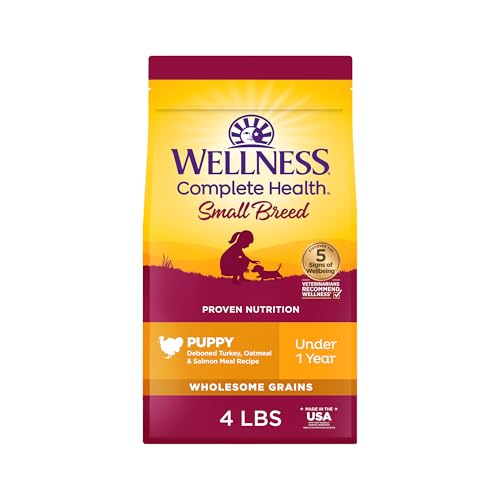
Wellness Complete Health Small Breed Puppy
What We Like
- All natural ingredients with no artificial additives
- Includes probiotics for digestive health
- Omega fatty acids support skin and coat
- No corn, wheat, or soy
Trade-offs
- No explicit DHA mention for brain development
- No added DHA for brain development
This small breed puppy food uses turkey, oatmeal, and salmon as key ingredients, providing a protein-rich recipe without corn, wheat, or soy. That means each bite delivers dense nutrition for a growing small breed puppy. The added probiotics and omega fatty acids target common concerns like digestive sensitivity and coat condition, making it a straightforward, natural formula that focuses on whole-body health.
The 4 lb bag is a modest size, so you will need to reorder more often than with larger bags from some competitors. While the formula covers immune and digestive support well, it does not include added DHA for brain development, which some other puppy foods offer. For a small breed puppy that thrives on a clean, grain-inclusive recipe, this is a solid everyday option.
Product photos
How We Evaluated Healthy Puppy Foods
We started by reviewing the guaranteed analysis and ingredient panels of dozens of puppy formulas. Every food on this list meets AAFCO nutrient profiles for growth. We checked that the first ingredient is a named protein source, chicken, lamb, or salmon, rather than a vague “meat meal” or grain filler. We also looked for DHA from fish oil, which supports brain and eye development in growing puppies.
The four criteria that mattered most were protein quality, calcium-to-phosphorus ratio, inclusion of DHA, and the presence of probiotics or prebiotic fiber for digestion. Large breed puppies have different calcium needs than small breeds, so we separated recommendations by size. For puppies with sensitive stomachs, we prioritized formulas with limited ingredients or gentle protein sources like salmon.
A research-led evaluation has limits. We did not feed these foods to a panel of puppies or measure growth rates. We relied on published nutritional data, ingredient sourcing transparency, and what owners consistently report about stool quality, coat condition, and palatability. We recommend checking the bag’s guaranteed analysis against your veterinarian’s specific advice for your puppy’s breed and age.
What To Look For In Healthy Puppy Foods
Puppy food is not adult dog food with smaller kibble. The nutrient ratios are different, and the wrong balance can cause skeletal problems or nutritional deficiencies. Here is what matters most.
Look for a named protein as the first ingredient, DHA from fish oil, a calcium level appropriate for your puppy’s breed size, and either probiotics or prebiotic fiber for digestive health. Avoid vague “meat meal” or “animal fat” without a species listed.
Protein Source and DHA Content
The first ingredient should be a named protein, chicken, lamb, salmon, or beef. “Poultry meal” or “meat meal” does not tell you what animal it came from. Puppies need about 22 to 28 percent protein on a dry matter basis, depending on breed size. DHA from fish oil is a non-negotiable for brain and vision development. If the bag lists “DHA” without specifying a source, it may come from algae or synthetic additives rather than fish oil, which is more bioavailable.
Calcium, Phosphorus, and Breed Size
Large breed puppies need lower calcium levels (around 1.0 to 1.2 percent on a dry matter basis) to prevent rapid bone growth that can lead to hip dysplasia. Small breed puppies can tolerate higher calcium. The calcium-to-phosphorus ratio should be between 1:1 and 1.4:1. If you own a large breed puppy, look for a formula specifically labeled for large breeds rather than an all-breed food.
Digestive Support and Ingredient Quality
Puppies have sensitive digestive systems. Prebiotic fiber (like chicory root or beet pulp) and live probiotics help maintain regular stool and reduce gas. For puppies with known sensitivities, a limited-ingredient diet with a novel protein like salmon or lamb can reduce the risk of food reactions. Avoid artificial colors, preservatives like BHA/BHT, and unnamed animal fats.
- Check that the food meets AAFCO growth standards, look for the statement on the bag.
- Confirm the first ingredient is a named protein, not a by-product meal.
- Match the formula to your puppy’s expected adult weight (small, medium, large, or giant).
- Look for a guaranteed DHA level if brain development is a priority.
- Choose a bag size you can use within the freshness window, smaller bags for small breeds.
A good rule of thumb: the ingredient list should read like a recipe, not a chemistry lab report.
Healthy Puppy Foods Compared
The table below compares the key nutritional features of each pick so you can see at a glance which formula fits your puppy’s needs.
| Product | Protein Source | Key Nutrients | Weight |
|---|---|---|---|
| Purina Pro Plan High Protein Puppy Food | Chicken | DHA, calcium, phosphorus | 6 lb |
| Hill's Science Diet Puppy Small Bites | Chicken & Brown Rice | DHA, Fish Oil, Antioxidants | 12.5 lb |
| Blue Buffalo Life Protection Puppy Food | Real Lamb | DHA, ARA, Choline | 5 lb |
| Purina Pro Plan Sensitive Skin Puppy Food | Salmon | DHA & Omega-6 | 24 lb |
| Hill's Science Diet Large Breed Puppy Food | Chicken & Brown Rice | DHA, Fish Oil, Antioxidants | 27.5 lb |
| Royal Canin Small Puppy Dry Dog Food | Antioxidants, prebiotics, proteins | Antioxidants, prebiotics, proteins | 4 lb |
| Jinx Puppy Dry Dog Food | Real Chicken | DHA, Probiotics, Taurine | 4 lb |
| Blue Buffalo Baby BLUE Small Breed Puppy Food | Chicken #1 Ingredient | DHA for Cognitive Development | 4 lb |
| The Honest Kitchen Puppy Whole Grain Clusters | Cage Free Chicken | DHA, Probiotics, Antioxidants | 4 lb |
| Wellness Complete Health Small Breed Puppy | Turkey, Oatmeal, Salmon | Antioxidants, Probiotics, Omega Fatty Acids | 4.0 pounds |
Frequently Asked Questions
What is the healthiest food to feed a puppy?
The healthiest puppy food provides complete and balanced nutrition for growth, with a named protein as the first ingredient, DHA from fish oil for brain development, and appropriate calcium levels for your puppy’s breed size. Our best overall pick, Purina Pro Plan High Protein Puppy Food, meets these criteria with real chicken, DHA, and calcium and phosphorus for bone support.
How do I know if a puppy food is high quality?
Look for a named protein as the first ingredient, a guaranteed analysis that meets AAFCO growth standards, and a clear source of DHA. Avoid foods with unnamed meat meals, artificial colors, or preservatives like BHA and BHT. The bag should list a specific species (chicken, lamb, salmon) rather than “poultry” or “meat.”
Can I feed my puppy adult dog food?
No. Puppy food has higher protein, fat, and calcium levels than adult maintenance formulas. Feeding adult food to a growing puppy can lead to nutritional deficiencies and improper bone development. Feed a formula labeled for growth or all life stages until your puppy reaches their expected adult size.
What ingredients should I avoid in puppy food?
Avoid unnamed animal fats, “meat meal” without a species, artificial colors (Red 40, Yellow 5), and preservatives such as BHA, BHT, and ethoxyquin. For puppies with allergies or sensitivities, avoid common triggers like chicken, corn, wheat, and soy. Check for a clear protein source and a short, recognizable ingredient list.
How much should I feed my puppy each day?
Feeding amounts vary by breed size, age, and activity level. Use the feeding guide on the bag as a starting point, but adjust based on your puppy’s body condition. You should be able to feel their ribs without pressing hard. Consult your veterinarian for a feeding plan tailored to your puppy’s specific growth curve.
The Bottom Line
For most puppy owners, Purina Pro Plan High Protein Puppy Food offers the best balance of protein quality, DHA for brain development, and bone-supporting minerals at a reasonable cost per serving. It works well for medium and large breed puppies that do not have sensitive stomachs. If your puppy needs a gentler formula, Purina Pro Plan Sensitive Skin Puppy Food with salmon and prebiotic fiber is our best for sensitive stomachs pick.
Small breed owners should look at Royal Canin Small Puppy Dry Dog Food for its breed-specific kibble shape and prebiotic gut support. Large breed owners are better served by Hill’s Science Diet Large Breed Puppy Food with its carefully calibrated calcium level. Owners who prioritize human-grade ingredients will appreciate The Honest Kitchen Puppy Whole Grain Clusters, though the smaller bag size means more frequent reordering.
The single most important factor is matching the formula to your puppy’s expected adult size. A large breed puppy on a small breed formula risks skeletal problems, while a small breed puppy on a large breed formula may not get enough calories. Read the bag, check the calcium level, and ask your vet before switching foods.
