
9 Best Cichlid Food in 2026
This post contains affiliate links. As an Amazon Associate, we earn from qualifying purchases.
After reviewing the ingredient lists and nutritional profiles of nine leading options, we recommend Xtreme Big Fella 3mm Pellets as the best overall cichlid food. Its marine protein blend supports digestibility and natural color. For keepers with small or juvenile fish, the Xtreme Cichlid Peewee 1.5mm Pellets offer a perfectly sized alternative. The Northfin Cichlid 3mm Sinking Pellets deliver a filler-free formula for those who want maximum ingredient transparency.
Cichlids are not a one-diet-fits-all fish. Some species graze on algae and plant matter, others hunt protein-rich prey, and many fall somewhere in between. Feeding the wrong formulation can lead to poor growth, dull coloration, or digestive issues that cloud your water and stress your fish.
This guide is built on a careful review of manufacturer specifications, ingredient panels, and patterns in owner feedback. We focused on protein content, pellet size, sinking behavior, and additive transparency to help you match the right food to your cichlid’s natural feeding habits.
Top 9 Cichlid Foods in the Market
Certain content that appears on this site comes from Amazon. This content is provided "as is" and is subject to change or removal at any time.
The Best Cichlid Foods, Reviewed
Xtreme Big Fella 3mm Pellets

What We Like
- Marine protein blend for high digestibility
- Natural color enhancement without artificial additives
- Immune and digestive support formula
- Slow-sinking 3mm pellets suit medium to large cichlids
Trade-offs
- 3mm pellet too large for juvenile or small cichlids
The 3mm slow-sinking pellet packs a marine protein blend of krill, shrimp meal, squid meal, and green peas plus spirulina. That delivers digestible protein for medium to large cichlids while supporting color, immune function, and digestive health without artificial enhancers. The ingredient-first approach is exactly what you want for aggressive feeders like silver dollars or angels, making it a straightforward daily staple for cichlid keepers who value nutrition over flashy claims.
Product photos
Xtreme Cichlid Peewee 1.5mm Pellets

What We Like
- Balanced amino acids from krill, shrimp, squid
- Slow-sinking 1.5mm pellets for all sizes
- No added hormones
Trade-offs
- Only available in one pellet size
- Not suitable for large cichlids needing bigger pellets
The 1.5mm pellet size is the single most important feature here, small enough for juvenile and smaller cichlid species to eat comfortably, yet dense enough to sink slowly and encourage natural foraging. This is a formula refined over 35 years on a Florida fish farm feeding half a million fish daily, so the nutritional logic is grounded in real production-scale use, not marketing hype.
The trade-off is that the 1.5mm size limits its usefulness if you keep larger cichlids that need a bigger bite. Compared to the Xtreme Big Fella 3mm Pellets from the same brand, this PeeWee version targets smaller mouths specifically, so if your tank holds a mix of sizes, you might need two foods. That said, for anyone focused on small cichlids, the precision of this pellet size and the ingredient transparency (no hormones, USA-grown spirulina) make it a straightforward, no-nonsense choice.
Product photos
Northfin Cichlid 3mm Sinking Pellets

What We Like
- Filler-free, bi-product-free formula
- No artificial pigments or added hormones
- Made in Canada
Trade-offs
- 3mm size too large for small cichlids
The 3mm pellet size is designed for medium to large cichlids, so smaller fish may not find it suitable. The marine protein focus is aimed at carnivorous and omnivorous species. For herbivorous cichlids, Hikari Sinking Cichlid Excel Mini Pellets is an option formulated for herbivores. For medium to large meat-eaters that need a clean diet, this product offers a simple, high-quality choice.
Omega One Cichlid Flakes

What We Like
- Whole seafoods, no pre-processed proteins
- Omega 3 & 6 for immune support
- Natural beta carotenes enhance color
- Low starch reduces fish waste
Trade-offs
- Not suitable for bottom-feeding cichlids that need sinking pellets
The 34.76% minimum crude protein comes from whole seafoods, ocean kelp, and spirulina, not from meals or digests, which means your cichlids get intact protein sources rather than processed fillers. This formula suits keepers who want a flake that supports immune function through Omega 3 and 6 fatty acids while also pulling color from natural beta carotenes in salmon. The low starch content and natural insolubility help keep the water column cleaner, a practical advantage for tanks where excess waste is a concern.
Because these flakes float and disperse at the surface, they are best suited for cichlids that feed in the mid-to-top water column. For bottom-dwelling or shy species, a sinking pellet would be a more reliable way to deliver food.
Hikari Sinking Cichlid Excel Mini Pellets
What We Like
- Spirulina for natural color enhancement
- Stabilized vitamin C supports immune health
- Wheat-germ kernel for rapid digestion
- Balanced natural ingredients for herbivores
Trade-offs
- Sinking pellets not for top-feeders
- Not suitable for carnivorous cichlids
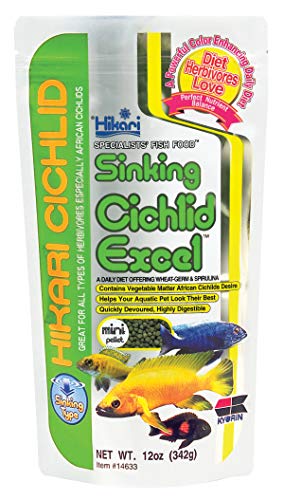
The inclusion of pure-cultured Spirulina gives this formula a natural color-enhancing capacity that herbivorous cichlids can benefit from. Combined with stabilized vitamin C that holds up over time, this formula is built for fish that need plant-based nutrition without fillers. It’s a focused choice for anyone keeping herbivorous cichlids that thrive on spirulina-rich diets.
Because these are sinking mini pellets, they won’t work for cichlids that prefer feeding at the surface. If you keep larger herbivores, the pellet size might also be too small compared to some other options. But for fish that need a digestible plant-based staple, this is a carefully formulated option that prioritizes ingredient function.
Aqueon Cichlid Slow Sinking Pellets
What We Like
- Premium shrimp and squid meal
- Slow-sinking 3mm pellets
- Supports immune system and color
- Does not cloud water
Trade-offs
- Only one pellet size in this container
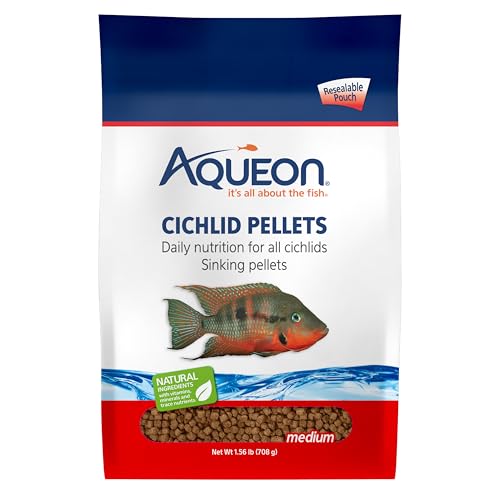
A 25-ounce container of slow-sinking 3mm pellets built around shrimp and squid meal gives you a protein-rich diet that naturally attracts cichlids and supports their immune system, color, and growth. The formula is designed so fish use more of what they eat, producing less waste. This makes it a smart, no-fuss option for anyone keeping South American, West African, or carnivorous Rift Lake cichlids who wants solid nutrition without overcomplicating feeding.
If your tank is all adults in the 4-inch-plus range, these pellets are a straightforward, value-conscious choice that delivers what it promises on the label.
Ultra Fresh Cichlid Sinking Carnivore Pellets
What We Like
- 40% fresh sword prawns for high palatability
- All natural ingredients, no artificial additives
- Rich in calcium, vitamin D, and multiple vitamins
Trade-offs
- Sinking pellets not ideal for top-feeding species
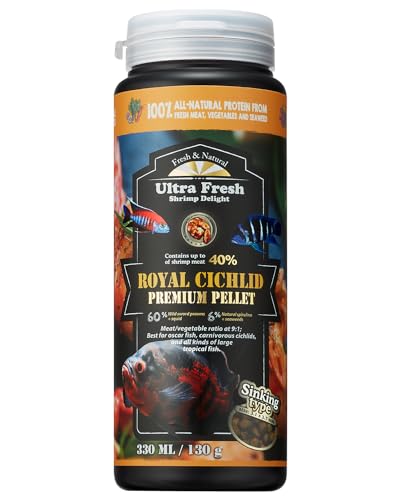
The ingredient list starts with 40% fresh sword prawns, a whole-protein source that explains the high palatability for carnivorous cichlids. Combined with a 9:1 meat-to-vegetable ratio, this formula targets fish that need animal protein to thrive, not fillers. If you keep large carnivorous cichlids and want a food built around transparent, natural ingredients rather than byproducts or artificial coloring, this pellet delivers on that promise without the marketing fluff.
This sinking pellet is designed for bottom and mid-water feeders. If your cichlids are surface-oriented or you mix species with different feeding habits, some food may settle uneaten. Compared to the Xtreme Big Fella 3mm Pellets, which also sink and are formulated for large cichlids and community fish, Ultra Fresh commits more narrowly to carnivores. That focus pays off in ingredient quality, but it means you need to match the food to your fish’s natural feeding zone and dietary needs. For dedicated carnivorous cichlid keepers who read labels first, this is a clean, straightforward option.
Product photos
Tetra Cichlid Crisps Fish Food

What We Like
- Protein-rich flakes for top/mid-water cichlids
- Biotin supports healthy metabolism
- Clear-water formula won't cloud tank
- ProCare formula aids immune system
Trade-offs
- Flakes only suit top/mid-water feeders
- No sinking option for bottom-dwelling cichlids
The clear-water formula means you can feed daily without turning your tank into a cloudy mess, a practical win for anyone who hates extra water changes. These protein-rich flakes are built for top- and mid-water cichlids, so they stay where your fish naturally feed rather than sinking and getting ignored. With biotin to support metabolism and a ProCare immune boost, it’s a straightforward staple that covers the basics without fuss. Best for keepers who want a no-nonsense floating diet that won’t compromise water quality.
Bottom-dwelling cichlids won’t get much from these flakes, they’re designed to float, not sink. If your tank has species that prefer foraging on the substrate, you’d be better off with a sinking pellet like the Xtreme Big Fella 3mm Pellets, which targets medium to large cichlids and sinks slowly. For a dedicated floating crisp that keeps water clear and delivers immune support, this Tetra formula does exactly what it says on the label.
Product photos
Seachem NutriDiet Cichlid Flakes with Probiotics

What We Like
- Includes GarlicGuard and Vitamin C
- Hormone-free color-enhancing formula
Trade-offs
- No pellet option for bottom feeders
- Not suitable for bottom-feeding cichlids
A formula with GarlicGuard, Chlorella Algae, and Vitamin C targets immune support and nutrient uptake directly through the food, so cichlid keepers can skip separate supplements. The hormone-free flakes also promote color enhancement while reducing waste, making them a practical daily staple for hobbyists focused on gut health.
The flake format itself is the main consideration. Unlike the Xtreme Big Fella 3mm Pellets, which are slow-sinking pellets for medium/large cichlids, these flakes are designed for top and mid-water feeding. If your fish are medium-sized and feed at the surface or mid-water, this works well. For larger cichlids that prefer a sinking pellet, a pellet option would be more suitable.
Product photos
How We Evaluated Cichlid Foods
We started by reading the ingredient panel on every product, not the marketing claims on the front of the bag. Each food was evaluated against its stated protein source, the presence of fillers like wheat middlings or corn, and the inclusion of artificial color enhancers versus natural sources like spirulina or krill. We cross-referenced this with manufacturer nutritional data and expert commentary on cichlid digestive physiology.
The four criteria that mattered most were protein source quality, pellet or flake size relative to fish mouth size, sinking behavior (sinking versus floating), and the presence of immune or digestive additives. A food with excellent protein numbers is useless if the pellet is too large for your fish to eat or if it floats when your species feeds at the bottom. We also checked for stabilized vitamins and probiotics that support long-term health.
A research-led evaluation has limits. We did not feed these foods to fish in a controlled setting, so we cannot report growth rates or color change over time. What we can do is tell you exactly what is in the bag, how it matches your cichlid’s biology, and what experienced keepers consistently report about each formula. Our cichlid feeding guide covers the broader schedule and portion strategies that work with any of these foods.
What To Look For In Cichlid Foods
A cichlid’s digestive tract evolved for a specific diet, and the wrong food can cause bloating, poor growth, or water quality problems. Here is what to check before you buy.
Match the protein source to your cichlid species, choose a pellet size your fish can swallow whole, and pick sinking or floating based on where your fish naturally feed. Avoid foods with unnamed “fish meal” or artificial colorants.
Protein Source and Species Match
Herbivorous cichlids like Tropheus and some mbuna need plant-based protein from spirulina, algae, and vegetable matter. Carnivorous species such as Oscars, Jack Dempseys, and Frontosa require animal protein from whole fish, shrimp, krill, or squid. Omnivorous cichlids sit in between and do well on a balanced blend. Feeding a high-protein carnivore pellet to an herbivore can cause fatal bloating, while feeding spirulina flakes to a carnivore leads to poor growth. For specific guidance on larger predators, our oscar food resource covers what works for that species.
Pellet Size and Sinking Behavior
A pellet that is too large will be spit out, break apart, and foul the water. Small cichlids and juveniles need pellets around 1.5mm or a fine flake. Medium to large cichlids handle 3mm pellets or larger. Sinking pellets suit bottom-dwelling species like Geophagus and Frontosa, while floating crisps and flakes work for mid-to-top feeders like angelfish and severums. Slow-sinking pellets offer a middle ground for species that feed throughout the water column. If you keep a mixed community, a tropical fish food with varied particle sizes can help.
Ingredient Transparency and Additives
The best cichlid foods list specific protein sources by name, such as “whole krill meal” or “herring meal,” rather than generic “fish meal.” Avoid foods with artificial color enhancers if you want natural color development. Carotenoids in spirulina, krill, or shrimp provide that effect. Stabilized vitamin C and probiotics are useful additions for immune support and digestion.
A food with no fillers and no artificial pigments costs more but delivers more nutrition per pellet. For a deeper look at what separates premium formulas from the rest, our quality fish food article explains the key differences.
- Check the first three ingredients: they should be named protein sources, not grains or fillers.
- Match the pellet diameter to the mouth size of your largest and smallest cichlid.
- Decide whether your fish feed at the top, middle, or bottom of the tank before choosing flake versus sinking.
- Look for stabilized vitamin C and probiotics if your fish are prone to stress or digestive issues.
A cichlid that eats the right food will show it in its color, activity level, and waste output. If the water gets cloudy or the fish look dull, the food is the first thing to change.
Cichlid Foods Compared
The table below compares each product across the key specs that matter most for cichlid health, including protein source, pellet size, sinking behavior, and additive profile.
| Product | Form | Pellet Size | Protein Source |
|---|---|---|---|
| Xtreme Big Fella 3mm Pellets | Pellet | 3.0 mm | Krill, shrimp, squid, green peas, spirulina |
| Xtreme Cichlid Peewee 1.5mm Pellets | Pellet | 1.5mm | Krill, Shrimp, Squid, Green Peas |
| Northfin Cichlid 3mm Sinking Pellets | Pellet | 3mm | Marine Protein Based |
| Omega One Cichlid Flakes | Flakes | N/A | N/A |
| Hikari Sinking Cichlid Excel Mini Pellets | Pellet | N/A | N/A |
| Aqueon Cichlid Slow Sinking Pellets | Pellet | 3 mm | Shrimp and squid meal |
| Ultra Fresh Cichlid Sinking Carnivore Pellets | Pellet | N/A | 40% fresh sword prawns |
| Tetra Cichlid Crisps Fish Food | Flakes | N/A | N/A |
| Seachem NutriDiet Cichlid Flakes with Probiotics | Flakes | N/A | N/A |
Frequently Asked Questions
What is the best food for cichlids?
The best food depends on your cichlid species. For most medium to large omnivorous or carnivorous cichlids, a high-protein sinking pellet like Xtreme Big Fella 3mm Pellets works well. Herbivorous species need a spirulina-based sinking pellet like Hikari Sinking Cichlid Excel Mini Pellets. Small cichlids and juveniles require smaller pellets, such as Xtreme Cichlid Peewee 1.5mm Pellets.
Should I feed sinking or floating cichlid food?
Choose based on where your fish naturally feed. Bottom-dwelling cichlids like Geophagus and Frontosa need sinking pellets. Mid-to-top feeders like angelfish and severums do well with floating crisps or flakes. Slow-sinking pellets work for species that feed throughout the water column. Feeding the wrong type can leave some fish underfed.
How often should I feed cichlids?
Most adult cichlids do well on one to two small feedings per day. Juveniles may need three to four smaller feedings to support growth. Only offer what the fish can consume in two to three minutes to avoid overfeeding and water quality problems. A consistent cichlid feeding schedule helps maintain stable water parameters.
What ingredients should I avoid in cichlid food?
Avoid foods that list generic “fish meal” or “poultry meal” without naming the species. Artificial color enhancers are unnecessary if the food contains natural carotenoids from spirulina, krill, or shrimp. High levels of fillers like wheat middlings, corn gluten, or soybean meal reduce nutritional value and increase waste output.
Can I feed the same food to all my cichlids?
Only if all your cichlids share the same dietary needs. Mixing herbivores and carnivores in one tank requires separate foods or a balanced omnivore pellet that both can eat. A food for tropical fish with moderate protein and varied ingredients can work for mixed communities, but watch each fish’s condition closely.
The Bottom Line
For most cichlid keepers, the Xtreme Big Fella 3mm Pellets offer the best balance of protein quality, natural color enhancement, and digestive support at a reasonable price. It works well for medium to large omnivorous and carnivorous species and is made in the USA with transparent ingredients.
If you keep small cichlids or juveniles, the Xtreme Cichlid Peewee 1.5mm Pellets provide the same protein philosophy in a size they can actually eat. Budget-minded keepers will find the Aqueon Cichlid Slow Sinking Pellets a solid value, while those who want zero fillers should look at the Northfin Cichlid 3mm Sinking Pellets.
The single most important factor in cichlid nutrition is matching the food to the species. Read the ingredient panel, check the pellet size against your fish’s mouth, and observe how they respond. A good food will show in their color and energy within a few weeks.
