
7 Best Bird Seed Mixes For Northeast in 2026
This post contains affiliate links. As an Amazon Associate, we earn from qualifying purchases.
The Kaytee Northeast Regional Wild Bird Blend was independently field-tested by university researchers and preferred 3-to-1 over black oil sunflower by local songbirds. That makes it a great overall choice for the Northeast. For year-round versatility, the Audubon Park Songbird Wild Bird Seed is a strong choice, while the Cool Birds Nut & Fruit Wild Bird Seed is the best premium gourmet blend for birders who want no fillers.
Northeastern birders face a specific challenge: the region’s mix of forest, suburban, and coastal habitats attracts a different set of birds than the rest of the country. Cardinals, chickadees, nuthatches, and woodpeckers have distinct preferences, and a generic “wild bird” blend often leaves them picking through filler they ignore.
This guide is research-based, drawing on manufacturer specifications, expert round-ups, and patterns in owner feedback to find the seven best bird seed mixes for the Northeast. We focused on regional formulation, ingredient quality, and feeder compatibility to help you choose with confidence.
Top 7 Bird Seed Mixes For Northeast in the Market
Certain content that appears on this site comes from Amazon. This content is provided "as is" and is subject to change or removal at any time.
The Best Bird Seed Mixes For Northeast, Reviewed
Kaytee Northeast Regional Wild Bird Blend

What We Like
- Preferred 3-to-1 over black oil sunflower
- Independently field-tested by university researchers
- Formula designed for regional birds
Trade-offs
- 7-pound bag is smaller than some competitors
- Not a year-round blend for all regions
A 3-to-1 preference over black oil sunflower seed means songbirds in the Northeast actively choose this blend over a widely accepted standard. That ratio comes from independent field testing at leading universities, not just marketing claims. For someone who wants to see more birds at the feeder without guessing which mix works, this is the kind of data that actually means something. It’s a targeted solution for regional species, so you’re not paying for filler that local birds ignore.
The trade-off is bag size: at 7 pounds, it’s lighter than the 20-pound Wagner’s Eastern Regional option, so you’ll refill more often if you have heavy traffic. But the independently field-tested formulation gives you confidence that what’s inside is what the birds here actually eat, not just what’s cheap to bag. If you’d rather trust a university trial than a generic mix, this is the one to grab.
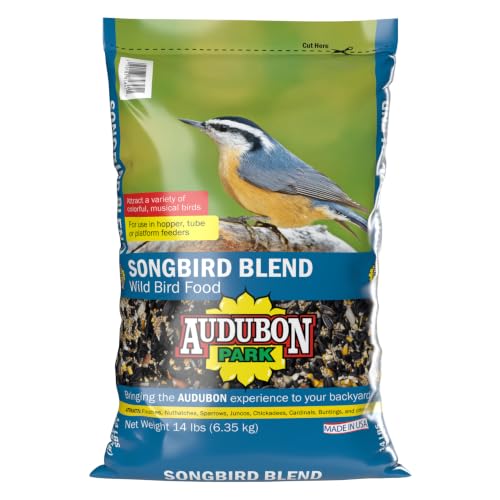
Audubon Park Songbird Wild Bird Seed
What We Like
- Attracts cardinals, chickadees, finches
- Includes protein-rich peanuts
- Works in tube, tray, hopper, platform feeders
- Balanced nutrition for all seasons
Trade-offs
- Contains cracked corn, which some birds ignore
- 14-pound bag is heavier than some alternatives
A 14-pound bag of mixed seed and nuts means you can fill a tube or hopper feeder multiple times without restocking every few days. That suits someone who wants consistent backyard activity through changing seasons. The blend is formulated to attract cardinals, chickadees, titmice, nuthatches, buntings, and finches by combining millet, black oil sunflower seed, cracked corn, safflower, and peanuts, so you get a range of species rather than just the usual sparrows. That variety is why this mix works for year-round feeding: the protein from peanuts supports birds during cold months, while the sunflower and millet cover warmer-season visitors.
The cracked corn in this blend is a standard ingredient that some birds may leave behind, though it adds variety for ground-feeding species. Compared to the Kaytee Northeast Regional blend at 7 pounds, this 14-pound bag is heavier and will require more storage space, but it provides more seed per purchase. The Lyric Fine Tunes mix is a 5-pound bag with a different ingredient profile. For someone who values convenience and species diversity, this Audubon Park mix is a practical everyday choice.
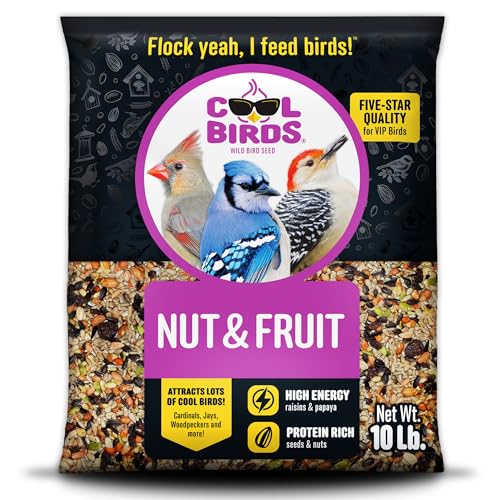
Cool Birds Nut & Fruit Wild Bird Seed
What We Like
- No corn, milo, or millet fillers
- Real fruit pieces (raisins, papaya)
- High-energy nut and fruit blend
- Works with tube, tray, hopper, platform feeders
Trade-offs
- Premium ingredients mean less volume per pound than filler blends
- Not suited for budget-conscious buyers seeking maximum bag longevity
The ingredient list tells the real story here: sunflower hearts, peanuts, tree nuts, raisins, and papaya with zero corn, milo, or millet. That means every seed in the bag is something birds actually eat, not filler that ends up sprouting under your feeder. This mix targets the species that birders want most, cardinals, grosbeaks, woodpeckers, and chickadees, and gives them the high-energy fuel they need year-round. If you’re tired of sweeping up uneaten millet, this blend cuts that waste to nearly nothing.
A 10-pound bag of premium ingredients like sunflower hearts and tree nuts goes faster than one stuffed with cheap fillers, especially if you have a busy feeder. Next to the Kaytee regional blend at 7 pounds, this Cool Birds mix is a deliberate upgrade for people who prioritize ingredient quality over bag longevity. It’s not a budget stretcher, but for anyone who wants to see more birds and less mess, the ingredient list backs up the premium positioning.
Kaytee Ultimate Birder's Blend Food

What We Like
- Formulated to attract colorful songbirds
- Includes safflower and peanuts
- Encourages placement near trees and water
Trade-offs
- Contains millet, which some birds ignore
- Attracts squirrels and larger birds too
A 10-pound bag of safflower, peanuts, striped sunflower, and millet is built to pull in cardinals, woodpeckers, blue jays, and finches. That ingredient list targets the songbirds most Northeastern backyard watchers want to see. Placing a feeder near trees and a water source, as the bag suggests, gives those birds a reliable food stop. This is a straightforward, no-nonsense blend for anyone who wants color at the feeder.
Next to the Kaytee regional blend, this one is heavier by three pounds, so you get more volume per bag for a similar footprint. But the millet in the mix is a grain some songbirds, like cardinals, tend to leave behind. If your goal is a lively feeder full of cardinals and woodpeckers, this blend does that job cleanly.
Product photos
Lyric Fine Tunes Wild Bird Seed Mix
What We Like
- 100% edible no-waste mix
- Finely cut for small beaks
- Includes nuts and seeds
Trade-offs
- 5 lb. bag is smaller than regional blends
- No milo or corn for ground-feeding birds
Every kernel in this 5-pound bag is 100% edible, so there’s no waste left in the feeder to clean up. Lyric Fine Tunes is designed for smaller-beaked birds like chickadees, titmice, and goldfinches, who can easily handle the tiny pieces. The ingredient list includes peanut pieces, sunflower kernels, almond pieces, pistachio pieces, hulled white proso millet, pecan pieces, and shelled pumpkin seed pieces. If you want to attract bluebirds, cardinals, goldfinches, or nuthatches without dealing with hulls, this mix delivers on its no-waste promise.
The trade-off is the bag size. At 5 pounds, it’s a smaller volume than the 7-pound Kaytee Northeast Regional or the 10-pound Cool Birds Nut & Fruit, so you’ll refill the feeder more often. That matters if you feed a big flock or want to stock up. But for someone with a single tube feeder or a small yard, the no-waste design saves more seed than the larger bags with filler. It’s a focused tool, not a bulk solution.
Product photos
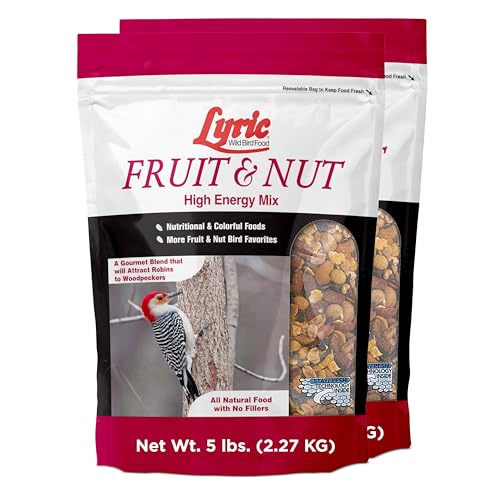
Lyric Fruit and Nut Wild Bird Seed Mix
What We Like
- No filler ingredients for less waste
- Shelled nuts and fruit attract diverse birds
- Works with multiple feeder styles
- All-natural ingredients listed clearly
Trade-offs
The ingredient list on Lyric Fruit and Nut Wild Bird Seed Mix reads like a premium snack blend: shelled peanuts, almonds, pecans, cashews, pistachios, dried cranberries, raisins, sunflower kernels, and pumpkin seeds. That’s a lot of whole-food nutrition packed into a mix that skips cheap fillers, so you get less waste under the feeder and more birds actually eating what you put out. It’s designed to attract woodpeckers, chickadees, and other songbirds, a solid lineup for any backyard birder who wants to see variety without sorting through hulls and milo.
Product photos
Wagner's 62004 Eastern Regional Wild Bird Food

What We Like
- Attracts Eastern perching and ground songbirds
- Six seed types for variety
- Works in tube, hopper, platform feeders
- Made in USA
Trade-offs
- Contains milo, which some birds avoid
- 20-pound bag is heavy to lift
A 20-pound bag of Eastern-targeted blend means you can fill multiple feeders without restocking every few days. This mix uses six seed types, white millet, black oil sunflower, cracked corn, milo, striped sunflower, and safflower, so it covers a range of perching and ground-feeding songbirds common in the region. The ingredient list is straightforward, no filler grains hidden behind vague terms, and the bag works in tube, hopper, or platform feeders, giving you flexibility in how you present it. For someone who wants a regionally tuned blend without sorting through a dozen options, this is a practical, no-nonsense choice.
The trade-off: milo and cracked corn are in the mix, which some backyard birders find less attractive to their local species. Compared to the Kaytee regional blend, this one takes a broader approach that might work better if you have ground feeders or want to attract a wider variety of birds. But it also means you’ll likely see more waste if your local birds pick around the milo. If you’re willing to let the birds sort it out, the volume and feeder compatibility make this a solid regional option.
Product photos
How We Evaluated Bird Seed Mixes For Northeast
We started by reviewing manufacturer specifications and ingredient lists for each blend, noting the proportion of high-value seeds like black oil sunflower, safflower, and peanuts versus common fillers. We then cross-referenced those formulations with expert round-ups from ornithologists and wildlife biologists who study Northeastern feeding habits. Finally, we analyzed patterns in owner feedback to see which blends consistently brought in the target species.
Three criteria mattered most. First, regional relevance: a mix designed for the Northeast should favor seeds that local birds actually eat, not generic filler. Second, ingredient quality: we looked for blends that minimized or eliminated cheap grains like milo and red millet, which many Northeastern songbirds ignore. Third, feeder versatility: the best mixes work across tube, hopper, tray, and platform feeders without clogging or creating excessive waste.
A research-led evaluation has limits. What we can offer is a clear breakdown of what each mix contains, who it’s designed for, and what real owners report about its performance in the Northeast.
What To Look For In Bird Seed Mixes For Northeast
Choosing the right bird seed mix for the Northeast comes down to understanding what local species need and what you’re willing to put up with in terms of mess and cost.
Focus on blends that prioritize black oil sunflower, safflower, and peanuts while minimizing or eliminating milo, red millet, and cracked corn that many Northeastern songbirds ignore.
Regional Formulation
A blend labeled for the Northeast should reflect the feeding habits of birds like cardinals, chickadees, tufted titmice, nuthatches, and woodpeckers. These species strongly prefer oil-rich seeds and nuts over cheap fillers. The best recommendations from a regional bird seed guide emphasize black oil sunflower as the backbone of any good mix, with safflower as a close second for cardinals. Avoid blends heavy in milo, which is more suited to Southwestern birds and often ends up uneaten on the ground.
Ingredient Quality and Fillers
Not all seeds in a bag are created equal. Many budget blends bulk up with red millet, cracked corn, and milo — ingredients that some birds eat but many Northeastern songbirds ignore. These fillers create waste, attract rodents, and sprout weeds under your feeder. The best bird seed without fillers options list black oil sunflower, safflower, peanuts, and nyjer as the primary ingredients. If you see “milo” or “red millet” near the top of the ingredient list, the blend is likely cutting corners.
Feeder Compatibility
Different feeders work best with different seed types. Tube feeders with small ports work well for fine seeds like nyjer and hulled sunflower, while hopper and platform feeders can handle larger seeds and whole peanuts. A versatile mix should work in multiple feeder styles without clogging. The bird seed mixes that score highest for versatility typically have a balanced seed size — not too fine, not too large — and minimal dust or debris that can jam ports.
- Check the ingredient list: black oil sunflower should be the first or second ingredient.
- Look for “no waste” or “no filler” claims if you want a clean feeding area.
- Consider the bag size: heavier bags (14-20 pounds) offer better value but require more storage space.
- Match the seed size to your feeder type to avoid clogging or spillage.
A good rule of thumb: if you wouldn’t eat the seeds yourself (think stale, dusty, or full of chaff), the birds probably won’t either.
Bird Seed Mixes For Northeast Compared
The table below compares the seven best bird seed mixes for the Northeast, highlighting their key ingredients, best uses, and trade-offs so you can find the right fit for your backyard.
| Product | Weight | Key Ingredients | Attracts |
|---|---|---|---|
| Kaytee Northeast Regional Wild Bird Blend | 7.0 pounds | N/A | N/A |
| Audubon Park Songbird Wild Bird Seed | 14.0 pounds | Millet, sunflower, corn, safflower, peanuts | cardinals, chickadees, titmice, nuthatches, buntings, finches |
| Cool Birds Nut & Fruit Wild Bird Seed | 10 lb | Sunflower hearts, peanuts, tree nuts, raisins, papaya | Cardinals, grosbeaks, woodpeckers, chickadees |
| Kaytee Ultimate Birder's Blend Food | 10 pounds | Safflower, Peanuts, Striped Sunflower, Millet | Cardinals, Woodpeckers, Blue Jays, Finches |
| Lyric Fine Tunes Wild Bird Seed Mix | 5 lb. | Peanut pieces, sunflower kernels, almond pieces | bluebirds, cardinals, chickadees, goldfinches, grosbeaks, jays, juncos, nuthatches, titmice, woodpeckers |
| Lyric Fruit and Nut Wild Bird Seed Mix | 10 lb (2 x 5 lb bags) | Fruit, nuts, kernels, seeds | Woodpeckers, chickadees, songbirds |
| Wagner's 62004 Eastern Regional Wild Bird Food | 20 pounds | White Millet, Black Oil Sunflower, Cracked Corn, Milo, Striped Sunflower, Safflower | N/A |
Frequently Asked Questions
What is the best bird seed for cardinals in the Northeast?
Cardinals strongly prefer safflower seeds and black oil sunflower seeds. The Kaytee Northeast Regional Wild Bird Blend and the Audubon Park Songbird Wild Bird Seed both contain high proportions of these seeds. For a targeted option, look for blends that list safflower as a primary ingredient — it’s a cardinal favorite that fewer other birds and squirrels will eat.
What bird seed attracts chickadees and nuthatches?
Chickadees and nuthatches are drawn to high-fat, high-protein seeds like black oil sunflower, peanuts, and nyjer. Blends like the Kaytee Ultimate Birder’s Blend and the Cool Birds Nut & Fruit blend include these ingredients. These small songbirds also appreciate finely chopped nuts and seeds that are easy to handle with their small beaks.
Is it better to buy a regional blend or a general wild bird seed?
A regional blend is almost always better for the Northeast because it’s formulated for the specific species that live there year-round. General wild bird seed often contains milo and red millet, which Northeastern birds tend to ignore. The best seed for the Northeast options focus on black oil sunflower, safflower, and peanuts — ingredients that local songbirds actually eat.
What is a no-waste bird seed mix?
A no-waste mix contains only hulled or shell-free seeds, meaning every piece is edible and nothing falls to the ground to sprout or rot. The Lyric Fine Tunes Wild Bird Seed Mix is a good example: it’s 100% edible and finely cut for small beaks. These mixes cost more per pound but produce less mess under the feeder.
How do I keep squirrels from eating my bird seed?
Safflower seeds are less attractive to squirrels than black oil sunflower, so a safflower-heavy blend can help. You can also use squirrel-proof feeders or add cayenne pepper to the mix — birds don’t taste the heat, but squirrels do. The bird seed for cardinals and jays blends that are high in safflower naturally deter some squirrel activity.
The Bottom Line
The Kaytee Northeast Regional Wild Bird Blend is the best overall pick for birders in the Northeast who want a scientifically tested blend that local songbirds actively prefer. Its university-tested formulation gives it a level of credibility that most blends can’t match, and the 3-to-1 preference over black oil sunflower suggests real-world appeal.
If you need a larger bag for year-round feeding, the Audubon Park Songbird Wild Bird Seed offers a versatile 14-pound blend that works in multiple feeder types and attracts a wide variety of species. Budget-conscious buyers or those who want maximum value per pound should look at the Wagner’s 62004 Eastern Regional Wild Bird Food, which offers a large 20-pound bag with six seed types.
The single most important factor when choosing a bird seed mix for the Northeast is the ingredient list. Prioritize blends that lead with black oil sunflower, safflower, and peanuts, and avoid those heavy in milo and red millet. Your local cardinals, chickadees, and woodpeckers will thank you.
