
10 Best Bird Seed For New England in 2026
This post contains affiliate links. As an Amazon Associate, we earn from qualifying purchases.
The Kaytee Northeast Regional Wild Bird Blend is the best overall bird seed for New England because it was field tested by university researchers and proven to attract more birds than generic non-regional mixes. For backyard songbird lovers, the Kaytee Songbird blend is a top pick, and anyone wanting a large, filler-free supply should look at the Best Large Capacity, the Armstrong Premium Year-Round Blend.
New England’s cold winters and diverse woodland-edge birds demand a seed blend that provides high energy and matches local species. A generic mix from the big-box store often contains fillers like red milo that juncos and chickadees simply kick to the ground.
We built this guide by studying manufacturer specifications, expert ornithology round-ups, and patterns in owner feedback across hundreds of reviews. Our goal is to help you match the right blend to your specific feeder setup and the birds you want to see.
Top 10 Bird Seeds For New England in the Market
Certain content that appears on this site comes from Amazon. This content is provided "as is" and is subject to change or removal at any time.
The Best Bird Seeds For New England, Reviewed
Kaytee Northeast Regional Wild Bird Blend

What We Like
- Preferred 3-to-1 by songbirds nationwide
- Independently field tested by university researchers
- Proven to attract more birds than non-regional blends
Trade-offs
- 7-pound bag is small for multiple feeders
- Northeast-only formula limits use elsewhere
For someone who wants to fill feeders with confidence rather than trial and error, this is a straightforward, science-supported choice that puts the right ingredients in front of the right birds.
The trade-off is the bag size: at 7 pounds, you’ll be refilling more often than with a larger option like Wagner’s Eastern Regional Wild Bird Food, which comes in a 20-pound bag. That’s fine for a single feeder or a smaller yard, but if you’re feeding a crowd, you’ll want to stock up. The regional focus is also a limit, take it outside the Northeast and the formula loses its edge. But for New England, it’s the most targeted pick in the guide.
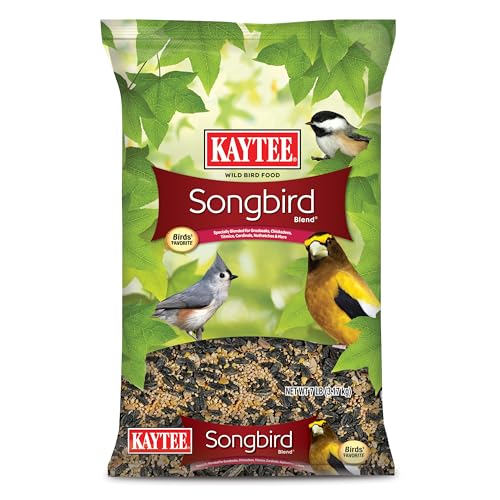
Kaytee Songbird Wild Bird Seed Food
What We Like
- Blended for multiple colorful songbird species
- Includes high-energy sunflower seeds and peanuts
- Formulated by bird enthusiasts with 150+ years of trust
Trade-offs
- 7-pound bag is smaller than many regional blends
- 7-pound bag is smaller than some regional blends like Wagner's 20-pound bag
A blend of two sunflower types, peanuts, and millet means this bag is built to attract the songbirds listed on the label: Cardinals, Chickadees, Nuthatches, and more. That ingredient list is what draws a wide range of colorful visitors. If your backyard is a regular stop for these species, this mix gives them what they need, and the 150-year track record from Kaytee suggests they’ve had time to get the proportions right.
At 7 pounds, this bag is smaller than some other options like the Wagner’s Eastern Regional 20-pound bag. That means you’ll need to refill more often if you feed a big flock or have multiple feeders. It’s fine for a smaller yard or a single feeder setup, but if you’re stocking up for a long winter, you might want a larger option. For the songbird enthusiast who values ingredient quality over bulk, this blend delivers without filler.
Wagner's Eastern Regional Wild Bird Food

What We Like
- Attracts Eastern songbirds
- Six seed types for variety
- Works in tube, hopper, platform feeders
Trade-offs
- Includes milo, which some birds ignore
- 20-pound bag is heavy for some feeders
A 20-pound bag of six seed types, white millet, black oil sunflower, cracked corn, milo, striped sunflower, and safflower, means this blend covers the ground and perches for Eastern songbirds. It’s designed to draw in the species you actually see around New England, not just whatever generic mix fills the tube. That regional focus is why it’s a practical choice: the ingredient list matches what local birds prefer, not a one-size-fits-all formula.
Milo is included in this blend, and many Eastern songbirds (like finches and chickadees) will pick around it, leaving waste under the feeder. Unlike the Kaytee Northeast Regional Wild Bird Blend, which comes in a 7-pound bag, this 20-pound option gives you more volume per bag. If you’re feeding a busy yard with perching and ground feeding birds, this mix works; if you want zero waste, you might sift out the milo yourself.
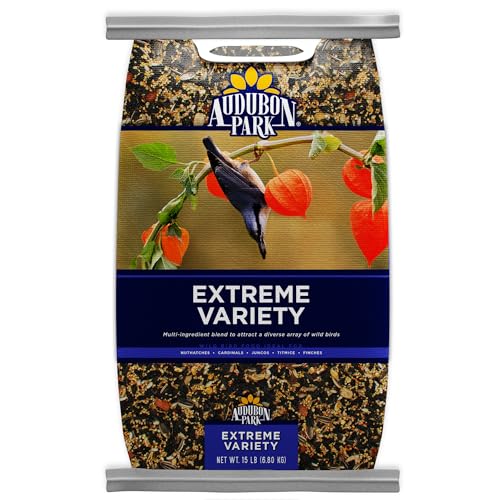
Audubon Park Extreme Variety Wild Bird Seed
What We Like
- Premium blend with black oil sunflower seeds
- Attracts nuthatches, cardinals, juncos, titmice
- Suitable for year-round feeding
- Works in tube, hopper, or platform feeders
Trade-offs
- Raisins and nuts can spoil faster in humid weather
A 15-pound bag of mixed sunflower seeds, peanuts, raisins, and tree nuts draws nuthatches, cardinals, juncos, titmice, and finches without needing to switch blends between seasons. The black oil sunflower seeds and sunflower chips provide a high-energy base, while the fruit and nuts add variety for species with different feeding habits. This mix works in tube, hopper, or platform feeders, so you can use whatever setup you already have. For someone who wants a single, versatile seed blend that covers spring through winter, this is the most diverse option in the guide.
The 15-pound bag is heavier than the 7-pound Kaytee Northeast Regional blend, and the raisins and nuts can absorb moisture and spoil faster in damp conditions if the feeder isn’t kept dry. Unlike the Kaytee Northeast Regional blend, which is formulated specifically for the region’s common birds, the Audubon Park mix casts a wider net with its fruit and nut inclusions. It’s a good fit if you want maximum variety and are willing to monitor the feeder’s contents more closely.
Lyric Fine Tunes Wild Bird Seed Mix

What We Like
- 100% edible, zero waste formula
- Attracts bluebirds, finches, chickadees and more
- Finely cut for smaller-beaked birds
- Includes oxygen scavenger for freshness
Trade-offs
- 15-pound bag is heavy for feeder refills
- Not suitable for ground-feeding birds like doves
The 100% edible, zero waste formula means every bit of this mix gets eaten, no hulls, shells, or filler piling up under your feeder. That’s the whole point of a no-waste blend, and Lyric Fine Tunes delivers it with finely cut nuts, kernels, and seeds that smaller-beaked birds like bluebirds, chickadees, and goldfinches can actually handle. If you’re tired of sweeping up uneaten seed hulls or attracting rodents to fallen scraps, this bag solves that problem neatly. The included oxygen scavenger packet also helps keep the food fresh longer, which matters when you’re buying a 15-pound bag.
The finely cut mix that appeals to small-beaked birds may not be as attractive to species that prefer larger seeds or whole kernels, based on the ingredient list. Compared to the Audubon Park Extreme Variety blend, which includes sunflower seeds, peanuts, raisins, and tree nuts, Lyric Fine Tunes is more specialized for smaller birds. It’s an excellent choice if you’re targeting finches, chickadees, and titmice while keeping your feeding area clean, but less ideal if you want a one-bag-fits-all approach for every bird in your yard.
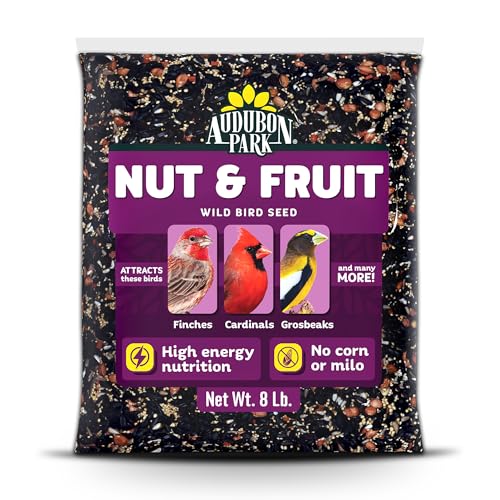
Audubon Park Nut & Fruit Wild Bird Seed
What We Like
- Over 50% sunflower seeds attract many species
- Protein-dense peanuts and safflower for energy
- Dried raisins and papaya draw fruit-loving birds
- Works with tube, tray, hopper, and smart feeders
Trade-offs
- 8-pound bag is smaller than regional blends
- Not a no-mess mix; shells and hulls remain
Over half the bag is sunflower seeds, black oil, striped, and hearts, which is exactly what cardinals, woodpeckers, and grosbeaks naturally seek out. That core ingredient makes this blend a reliable draw for New England backyards. The peanuts and safflower add protein for cold mornings, while the dried raisins and papaya give fruit-eaters like orioles and robins a reason to stop by. It’s a well-rounded mix that fits tube, tray, hopper, platform, and even smart feeders, so you’re not locked into one style of feeder.
At 8 pounds, this bag is smaller than many regional or value blends like Wagner’s Eastern Regional (20 pounds). That means you’ll be making more trips to the bin if you have a busy feeder. But for someone who wants a varied, nutrient-dense blend that pulls in both seed-eaters and fruit-lovers, this is a smart pick.
Product photos
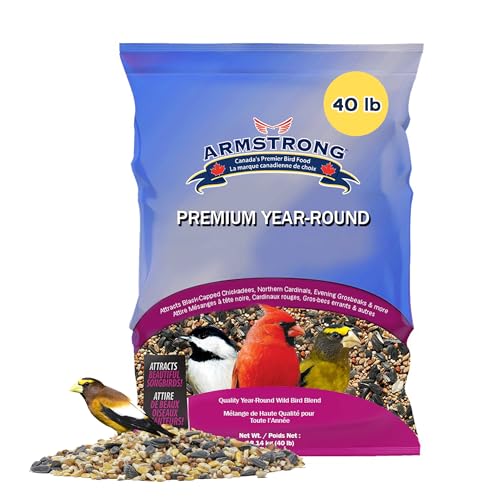
Armstrong Premium Year-Round Blend
What We Like
- 40-pound bag for long-lasting supply
- Wheat-free blend with no fillers
- Attracts cardinals, chickadees, grosbeaks, finches
Trade-offs
- 40-pound bag is heavy to lift and pour
- Contains red milo, which some birds ignore
A 40-pound bag means you’re not restocking every week. For someone feeding a busy backyard flock, that bulk buys you peace of mind. Armstrong skips wheat and fillers entirely, using cut corn, red milo, white millet, and black oil sunflower seeds instead. That lineup pulls in northern cardinals, black-capped chickadees, evening grosbeaks, and finches. If you want a straightforward, no-nonsense blend that keeps the feeder full without constant trips to the store, this is the one.
The 40-pound bag is a serious commitment, you’ll need a sturdy hopper or platform feeder to handle it, and carrying it from the garage to the yard is a real workout. But that weight means you’re refilling far less often, and the ingredient list is refreshingly honest: cut corn, red milo, white millet, and black oil sunflower seeds, with no wheat fillers. For anyone who feeds a crowd of birds year-round, that trade-off is worth it.
Product photos
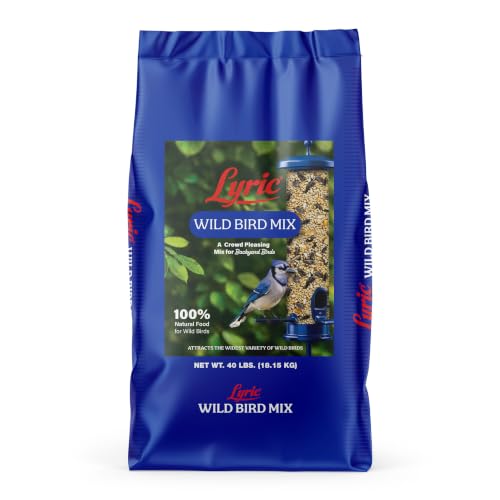
Lyric Wild Bird Mix
What We Like
- 40 lb bag for frequent refills
- All-natural with no fillers
- Over 20% sunflower seeds
- Attracts a wide variety of birds
Trade-offs
- 40 lb bag is heavy to carry
- Contains corn, which some birds ignore
A 40-pound bag means you’re not hauling bird seed every week. That bulk size cuts down on trips to the store and keeps the buffet stocked for anyone filling multiple feeders or hosting a busy backyard flock. The mix leans on corn, nuts, and over 20% sunflower seeds, all natural with no filler grains that just get kicked onto the ground. That ingredient list pulls in cardinals, doves, finches, jays, juncos, and sparrows, a solid cross-section of the birds you actually see at a feeder. It’s a straightforward, no-nonsense blend that gives you volume and variety without paying for fancy packaging or marketing fluff.
Forty pounds is a workout to lift and pour, especially if you’re filling a tube feeder on a pole or a window tray. Compared to the 7-pound Kaytee Northeast Regional Wild Bird Blend, this bag is heavier. But if you have a hopper feeder or a tray that can handle the volume, the per-pound value is hard to beat. The corn content means some birds may pick around it, but the sunflower and nut pieces keep the more desirable species coming back. For a budget-friendly, high-capacity option that covers the basics without fillers, this mix does exactly what it says on the label.
Product photos
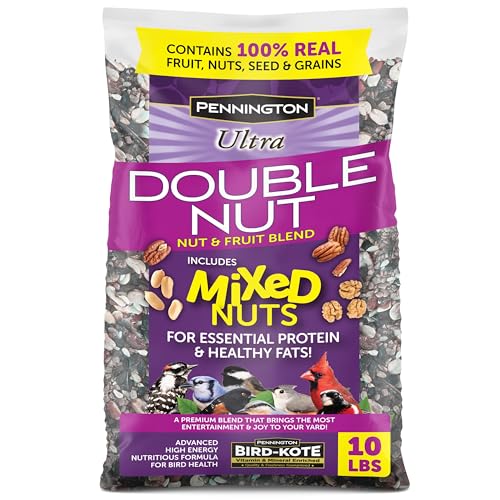
Pennington Ultra Double Nut & Fruit Blend
What We Like
- Contains mixed nuts and real fruit
- Enriched with Bird Kote vitamins & minerals
- Attracts cardinals, chickadees, woodpeckers
- Works with tube, hopper, platform, gazebo feeders
Trade-offs
- No waste-reduction or shell-free claim
- Not suitable for seed-only bird feeders
A 10-pound bag of mixed nuts, real fruit, seeds and grains means this blend packs a lot of energy into each scoop, which can be especially helpful when birds need extra calories. The Bird Kote technology adds vitamins and minerals directly onto the seeds, so you’re not just filling bellies but also covering some nutritional gaps. This makes it a strong alternative for anyone who wants more than basic millet and sunflower, particularly if cardinals, woodpeckers, and nuthatches are the regulars at your feeder.
The ingredient list includes mixed nuts and real fruit, something you won’t find in most regional mixes. So the extra trips to the bin might be worth it if you’re after variety and nutritional value over sheer volume.
Product photos
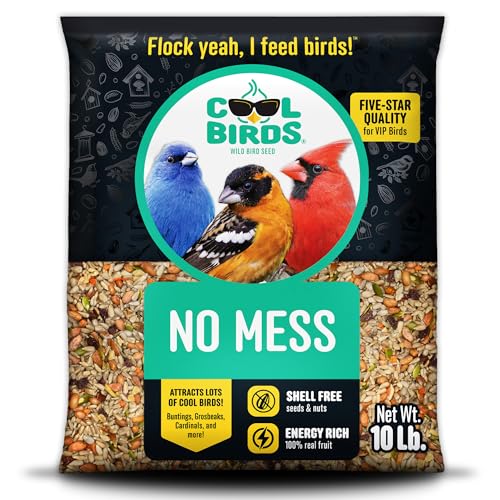
Cool Birds No Mess Wild Bird Seed
What We Like
- 100% edible, no mess blend
- Attracts cardinals, chickadees, grosbeaks, finches
- No corn, milo, or millet filler
- Works with tray, tube, hopper, platform feeders
Trade-offs
- 10-pound bag is smaller than some regional blends
- No shell content means less volume per pound
A 100% edible blend of sunflower hearts, peanuts, tree nuts, pumpkin seeds, raisins, and papaya means zero hulls or weed seeds under your feeder. That makes this the cleanest option for decks, patios, or any tidy feeding area where scattered shells are a problem. It draws cardinals, chickadees, grosbeaks, finches, and woodpeckers, and works with tray, tube, hopper, platform, and even smart camera feeders. For birders who want to attract a wide variety without sweeping up afterward, this is a straightforward choice.
At 10 pounds, this bag is lighter than Wagner’s Eastern Regional blend (20 pounds), so you’ll need to restock more often if you have heavy traffic. The shell-free formula means every bit is edible, so there’s no waste from hulls. But if your priority is a clean feeding area and high-energy nutrition without filler grains like corn, milo, or millet, the convenience of no mess outweighs the smaller bag. This blend is designed for bird lovers who value ingredient quality.
Product photos
How We Evaluated Bird Seeds For New England
We started by looking at the ingredient list on every bag. A seed blend is only as good as its components, so we focused on the ratio of black oil sunflower seeds, safflower, peanuts, and millet versus cheap fillers like milo and cracked corn. We then compared those specs against the feeding habits of common New England birds like chickadees, nuthatches, cardinals, and finches.
Our criteria prioritized regional relevance, nutritional density for cold months, and feeder compatibility. A blend that works well in a tube feeder may fail in a tray, and a mix that attracts cardinals might not interest finches. We also weighed bag size against typical feeder refill frequency.
The honest limit of a research-led evaluation is that we did not set up feeders across New England ourselves. Instead, we cross-referenced manufacturer claims with documented bird preferences and long-term owner reports. If you want to dig deeper into the science, our bird seed guide walks through the major seed types and their nutritional profiles.
What To Look For In Bird Seeds For New England
The right blend for your yard depends on the birds you want to attract and the feeders you already own. Start with the seed list, not the bag art.
Choose a blend with black oil sunflower seeds as the first ingredient, minimal filler grains, and a regional formula if you want to maximize visits from local songbirds.
Seed Composition and Fillers
Black oil sunflower seeds are the single most important ingredient for New England birds. They have thin shells that small-beaked chickadees and goldfinches can crack, and they provide the high fat content birds need in cold weather. Safflower is a close second, especially for cardinals. Avoid blends where milo, red millet, or cracked corn appear in the top three ingredients. Many birds will ignore them, leaving a mess under the feeder.
Regional vs. Generic Blends
A regional blend like the Kaytee Northeast or Wagner’s Eastern formula is formulated for the species that actually live in your area. Generic “wild bird” blends often include seeds that appeal to birds in the Southeast or Plains states. The difference shows up in your feeder: regional blends typically attract more birds per pound because they skip the seeds local species don’t recognize. Our article on regional bird seed blends explains how these formulas are developed.
Bag Size and Storage
New England winters can make frequent trips to the feeder unpleasant. A 20- or 40-pound bag saves you from refilling every few days, but it needs to be stored in a metal or heavy plastic container to keep out mice and moisture. A 7-pound bag is easier to lift and pour but will empty fast if you have multiple feeders or a large flock.
- Check the ingredient list for black oil sunflower as the first seed.
- Look for a regional or Northeast-specific label if you want targeted results.
- Confirm the blend works in your feeder type (tube, hopper, tray).
- Store seed in a rodent-proof container, especially in winter.
A good rule of thumb: if the first three ingredients include two fillers, the birds will sort it out on your lawn.
Bird Seeds For New England Compared
The table below compares the key specs and trade-offs of our top ten blends so you can see at a glance which one fits your feeder and your budget.
| Product | Weight | Key Ingredients | Feeder Compatibility |
|---|---|---|---|
| Kaytee Northeast Regional Wild Bird Blend, 7-Pound Bag | 7.0 pounds | N/A | N/A |
| Kaytee Songbird Wild Bird Seed Food, Blended for Grosbeaks, Chickadees, Titmice, Cardinals, Nuthatches & More, 7 Pounds | 7 pounds | Two sunflower types, peanuts, millet | N/A |
| Wagner's 62004 Eastern Regional Wild Bird Food, 20-Pound Bag | 20 pounds | White Millet, Black Oil Sunflower Seed, Cracked Corn, Milo, Striped Sunflower Seed, Safflower Seed | Tube, hopper, or platform |
| Audubon Park Extreme Variety Wild Bird Seed for Outside Feeders, 15-lb. Bag | 15.0 pounds | Sunflower seeds, peanuts, raisins, nuts | Tube, hopper, platform |
| Lyric Fine Tunes Wild Bird Seed Mix – No Waste Bird Food Mix – Attracts Bluebirds, Finches, Chickadees & More – Seed for Outside Feeders – 15 lb Bag | 15 lb | Peanut pieces, sunflower kernels, almond pieces, pistachio pieces, hulled white proso millet, pecan pieces, shelled pumpkin seed pieces | Tube, tray, platform, hopper |
| Audubon Park Nut & Fruit Wild Bird Seed, 8 lb | 8.0 pounds | Sunflower, Peanuts, Safflower, Dried Fruit | Tube, Tray, Hopper, Platform, Smart Feeders |
| Armstrong Wild Bird Food Premium Year-Round Blend, 40 Pounds – with Cut Corn, Red Milo, White Millet & Black Oil Sunflower Seeds – Backyard Bird Feeding | 40 pounds | Cut corn, red milo, white millet, black oil sunflower | N/A |
| Lyric Wild Bird Mix – Includes Corn, Nuts, and Wild Bird Seed for Outside Feeders, Attracts Doves, Jays and Many More, 40 lb Bag | 40 lb | Corn, Nuts, Sunflower Seeds | Tube, Hopper, Tray, Window |
| Pennington Ultra Double Nut, Nut & Fruit Blend 10lbs | 10.0 pounds | Mixed nuts, 100% real fruits, seeds, grains | Tube, hopper, platform, gazebo |
| Cool Birds No Mess Wild Bird Seed, 10 lb | 10 pounds | Sunflower hearts, peanuts, tree nuts, pumpkin seeds, raisins & papaya | Tray, tube, hopper, platform, smart camera |
Frequently Asked Questions
What is the best bird seed for New England winters?
The Kaytee Northeast Regional Wild Bird Blend is the best choice because it was field tested to attract more birds than non-regional blends. Its high sunflower and safflower content provides the fat and protein birds need to survive cold nights. For a high-fat alternative, look at high-fat blends for cold weather that emphasize peanuts and sunflower.
What seeds attract cardinals and blue jays in New England?
Cardinals and blue jays prefer black oil sunflower seeds, safflower, and peanuts. The Kaytee Songbird blend and the Pennington Ultra Double Nut & Fruit blend both contain these ingredients. Our guide on bird seed for cardinals covers the specific ratios that work best.
What is a no-mess bird seed for patios and decks?
The Cool Birds No Mess Wild Bird Seed is 100 percent edible with no shells, hulls, or filler. The Lyric Fine Tunes mix is another zero-waste option, though it is cut small for finches and chickadees. Both keep your patio clean by eliminating the husks that fall to the ground.
How do I attract finches to a new feeder?
Finches prefer small seeds like nyjer and finely cracked sunflower. The Lyric Fine Tunes blend is specifically cut for smaller-beaked birds. For tips on feeder placement and seed transition, our guide on attracting finches explains how to get them to visit a new feeder.
What is the difference between regional and national bird seed blends?
Regional blends are formulated for the bird species common in a specific geographic area, while national blends use a one-size-fits-all seed mix. A regional blend like the Kaytee Northeast formula includes seeds that New England songbirds recognize and prefer, which typically results in more feeder visits and less waste.
The Bottom Line
The Kaytee Northeast Regional Wild Bird Blend is the best overall pick for New England birders who want a region-specific, university-tested formula that attracts more birds than generic seed. It is ideal for anyone with a single feeder who values quality over bag size.
If you need a large, filler-free blend for heavy winter feeding, the Armstrong Premium Year-Round Blend gives you 40 pounds of wheat-free seed. For a tidy patio setup, the Cool Birds No Mess blend eliminates hulls entirely. Budget-minded buyers with multiple feeders should consider the Lyric Wild Bird Mix.
The single most important factor in choosing bird seed for New England is the ingredient list. Ignore the front of the bag, flip it over, and make sure black oil sunflower is the first thing you see.
