
10 Best Bird Seed For Winter in 2026
This post contains affiliate links. As an Amazon Associate, we earn from qualifying purchases.
For winter bird feeding, Audubon Park Cardinal Blend Wild Bird Food is the best overall because it packs black oil sunflower and safflower for high-energy fat without filler seeds. It naturally deters squirrels and targets cardinals, chickadees, and finches. For those wanting maximum variety, the Audubon Park Extreme Variety blend includes raisins and nuts, while the Kaytee Essentials Blend cuts down on mess by omitting milo.
Winter is the hardest season for birds. Natural food sources dwindle, and the birds that stay need dense calories just to survive a single freezing night. The right seed mix provides fat and protein without the cheap fillers that birds simply kick to the ground.
We built this guide by combing through manufacturer specifications, expert recommendations on winter feeding, and patterns in owner feedback. The result is ten seed options, each chosen for a specific winter feeding need, from high-energy value to no-mess patio feeding.
Top 10 Bird Seeds For Winter in the Market
Certain content that appears on this site comes from Amazon. This content is provided "as is" and is subject to change or removal at any time.
The Best Bird Seeds For Winter, Reviewed
Audubon Park Cardinal Blend Wild Bird Food

What We Like
- No filler seeds, only sunflower and safflower
- Black oil sunflower for high-energy fat
- Safflower deters squirrels naturally
- Attracts cardinals, chickadees, finches, grosbeaks
Trade-offs
- 4-pound bag is small for heavy winter feeding
- No shell-free or no-mess option in this blend
Every kernel in this four-pound bag is edible fuel, not filler, because it contains nothing but sunflower and safflower seed. Black oil sunflower seeds provide wholesome energy, while safflower is rich in oil and disliked by squirrels. That ingredient list attracts cardinals, titmice, chickadees, finches, grosbeaks, and more. For anyone who reads the back of the bag first and trusts ingredients over front-label claims, this blend delivers exactly what it promises.
The trade-off is bag size: four pounds will disappear fast with a busy feeder in January, especially compared to the 15-pound Extreme Variety blend from the same brand. That larger bag adds peanuts, raisins, and tree nuts for more variety. If you prefer a no-filler seed mix and don’t mind restocking more often, this is the simpler option. For those who want to fill a hopper once and forget it for a week, the larger Extreme bag might be worth the swap.
Audubon Park Extreme Variety Wild Bird Seed
What We Like
- Attracts nuthatches, cardinals, juncos, titmice, finches
- Includes raisins and tree nuts for winter energy
- Works in tube, hopper, or platform feeders
- Formulated for year-round feeding
Trade-offs
- Shells and whole nuts create cleanup under feeders
- Not a no-mess or shell-free blend
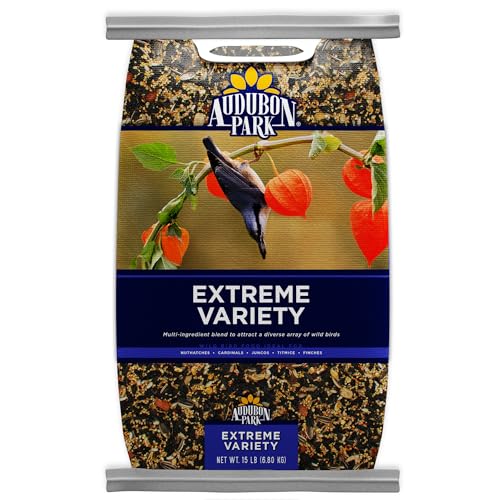
A 15-pound bag packed with black oil sunflower, shelled nuts, dried fruit, and tree nuts means you’re offering a diverse blend for a wide range of birds without having to mix your own. The ingredient list includes black oil sunflower seeds, peanuts, sunflower chips, raisins, nuts, and striped sunflower seed, and the blend is designed to attract nuthatches, cardinals, juncos, titmice, finches, and more. It works in tube, hopper, or platform feeders, so you don’t need specialized gear to put it out, and it’s suitable for year-round feeding.
This mix includes shells and whole nuts, which means more hulls and debris under the feeder compared to a no-waste blend like Cool Birds No Mess. If you’re feeding a large flock, you’ll be sweeping up shells regularly. But for anyone who wants to see as many species as possible, and doesn’t mind the occasional cleanup, this is a diverse menu you can buy off the shelf.
Kaytee Essentials Blend Wild Bird Seed Mix
What We Like
- No milo reduces uneaten seed mess
- Black oil sunflower attracts cardinals, chickadees, sparrows
- Formulated for year-round backyard feeding
Trade-offs
- 9.5-pound bag is smaller than many winter blends
- No shell-free seeds means hulls still accumulate
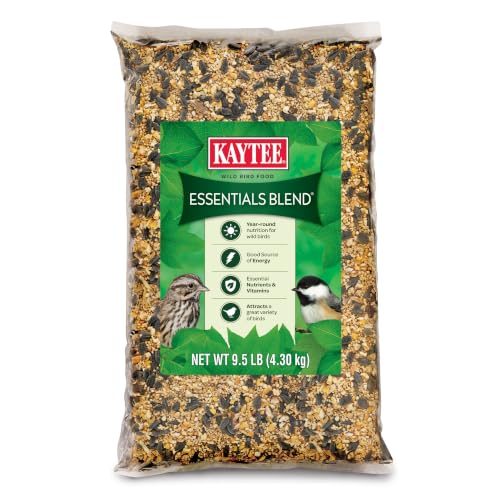
The absence of milo is the single most practical feature here, milo is the cheap filler most birds kick out of the feeder, creating that crust of wasted seed underneath. Kaytee Essentials Blend skips it entirely, so what you put out is what gets eaten. Black oil sunflower seeds are included for attracting cardinals, chickadees, sparrows, and juncos. For someone who wants to feed without sweeping up a mess every week, this bag’s no-milo recipe helps reduce uneaten seed and mess.
Bag size is a factor here. At 9.5 pounds, you will need to restock more often than with a 25-pound bag like Wagner’s Black Oil Sunflower Wild Bird Food, especially if you have a busy feeder. And while there is no milo, the sunflower hulls still drop, so if you want truly zero mess, a shell-free blend like Cool Birds No Mess Wild Bird Seed eliminates hulls entirely. That product offers a different convenience, but Kaytee Essentials Blend is a practical, no-filler seed mix that keeps your feeder stocked and your patio cleaner than a blend with milo.
Wagner's Black Oil Sunflower Wild Bird Food

What We Like
- Thin shelled for small beaked birds
- High energy content for winter
- Attracts widest variety of birds
- Made in the USA
Trade-offs
- 25-pound bag is heavy to lift
- Shells create mess under feeders
Wagner’s Black Oil Sunflower Wild Bird Food is a thin-shelled black oil sunflower seed that attracts the widest variety of birds, making it a straightforward choice for backyard feeders. The thin shell lets small-beaked birds like chickadees and finches crack it open easily, and the high energy content supports their active lifestyle. This 25-pound bag is made in the USA and uses the highest quality grains, so you get a single-ingredient seed that works for many species without fillers. For anyone who wants a simple, energy-rich food that appeals to a broad range of birds, this bag delivers.
The 25-pound bag of black oil sunflower seeds attracts the widest variety of birds, so you can expect finches, cardinals, and chickadees all at your feeder. The thin shells are easy for small-beaked birds to open, meaning even the tiniest visitors can get to the high-energy meat inside. This seed is made in the USA and uses the highest quality grains, which gives birds the energy they need for a healthy lifestyle.
Cool Birds No Mess Wild Bird Seed
What We Like
- 100% edible, no hulls or shells
- Attracts cardinals, chickadees, finches, woodpeckers
- Works with tray, tube, hopper, platform feeders
- No corn, milo, or millet fillers
Trade-offs
- No millet means fewer ground-feeding sparrow species
- 10-pound bag requires more frequent refills than larger options
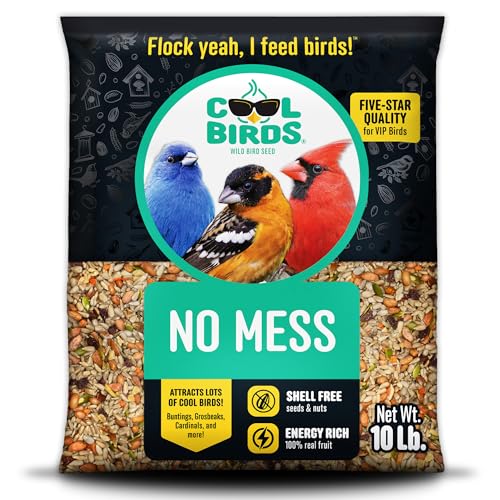
A 100% edible blend with zero shells means every kernel you pour goes into a bird, not onto the ground. The mix of sunflower hearts, peanuts, tree nuts, pumpkin seeds, raisins, and papaya gives a broad energy range. Cardinals, chickadees, grosbeaks, finches, and woodpeckers all find something they want. No corn, milo, or millet means no filler ingredients, so you get full value from the bag.
At 10 pounds, this bag is lighter than the 15-pound Audubon Park Extreme Variety, so you’ll refill it more often. That trade-off pays off if you feed on a deck or patio and hate sweeping up hulls, the shell-free blend leaves zero mess. For a far-off feeder where you want to haul less weight, a bigger bag from another brand might be more practical.
Blue Seal Nature's Choice Wild Bird Seed

What We Like
- High energy blend with sunflower and safflower
- No filler ingredients listed
- Attracts chickadees, nuthatches, titmice
- Peanut hearts add protein and fat
Trade-offs
- No milo or corn for ground-feeding birds
- Shells present create mess under feeder
This 20-pound bag of Blue Seal Nature’s Choice Wild Bird Seed is a high-energy blend with no fillers, which means every seed in the mix delivers fat and protein that birds need to survive cold weather. The ingredients are black oil sunflower seed, white millet, white safflower seed, sunflower chips, and peanut hearts, no cheap starch like milo or cracked corn. That matters when temperatures drop because birds burn calories fast just staying warm, and those seeds pack the energy they need. Blue Seal targets chickadees, nuthatches, and tufted titmice, all species that stick around through winter and rely on reliable feeders. If you want a blend that puts energy density first and doesn’t pad the bag with filler, this is the one to grab.
One thing to consider is that you get shells. Unlike a no-mess blend such as Cool Birds No Mess Wild Bird Seed, this bag contains whole sunflower and safflower seeds, so hulls will accumulate under the feeder. That’s a fair exchange for the higher oil content whole seeds provide, but it does mean sweeping or using a tray. The 20-pound bag is a standard size for a mid-sized hopper feeder. For winter feeding where every calorie counts, the ingredient quality here justifies the extra cleanup.
Product photos
Pennington Songbird Nut & Fruit Blend Wild Bird Seed
What We Like
- Vitamin-enriched Bird-Kote Technology
- Real fruit, nuts, and seeds
- Attracts indigo buntings, chickadees, cardinals
- Compatible with hopper, gazebo, tray feeders
Trade-offs
- Not a no-mess or shell-free blend
- 10-pound bag is heavier than 4-pound Audubon Park Cardinal Blend
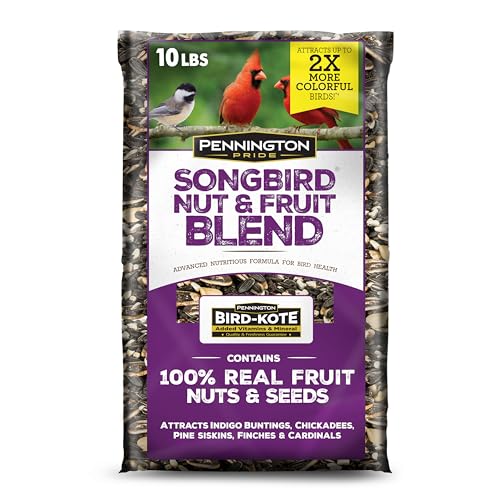
The Bird-Kote vitamin and nutrient enrichment is the single most decisive feature here. Pennington has infused this blend with supplemental nutrition that goes beyond basic seed mixes. That matters in winter, when birds burn more calories just staying warm and need every bit of help from their food. The real fruit, nuts, and seeds provide a high-energy punch, and the ingredient list targets a solid variety of songbirds including chickadees, cardinals, and indigo buntings. If you want to give visiting birds a nutritional edge during the cold months, this blend is built for that purpose.
A ten-pound bag of bird seed is a commitment to frequent refills, but the weight also means you get a substantial supply that won’t run out quickly. Compared to the four-pound Audubon Park Cardinal Blend, this bag holds more than twice the seed, so you’ll make fewer trips to the store. Whole seeds and nuts leave hulls beneath the feeder, unlike shell-free blends, but the ingredients here are real fruit, nuts, and seeds for a high-energy mix that birds love.
Product photos
Kaytee Ultimate Birder's Blend Food

What We Like
- Formulated by bird enthusiasts for songbirds
- Contains safflower and peanuts for high energy
- Attracts cardinals, woodpeckers, blue jays, finches
Trade-offs
- 10-pound bag is smaller than some winter blends
- Includes millet, which some birds ignore in cold months
This blend uses safflower, peanuts, striped sunflower, and millet to attract cardinals, woodpeckers, blue jays, and finches, as stated on the label. The 10-pound bag is light enough to carry to a single feeder placed near trees and a water source, so you are not handling a heavier bag. If you want a mix that targets these songbirds without cheap filler, the ingredient list matches the front-of-bag promise.
At 10 pounds, this bag is smaller than a 15-pound option like Audubon Park Extreme Variety, so you may need to refill more often if you have multiple feeders or a busy flock. Millet is included, which finches eat but cardinals and woodpeckers may ignore. For a focused songbird station, this works; for a high-volume setup, you will refill sooner.
Product photos
Happy Wings Thistle Seed Bird Food

What We Like
- 150,000 seeds per pound lasts long
- No-grow seeds prevent yard weeds
- Oil-rich for high winter energy
- Single grain targets finches precisely
Trade-offs
- 5-pound bag is small for heavy winter feeding
- Single grain limits species variety
- Requires tube or sock feeder specifically
With 150,000 seeds per pound, this bag delivers more visits per refill than many single-grain options of the same size. That seed density, combined with the oil-rich nature of Nyjer seed, makes it a concentrated energy source for small birds burning calories to stay warm. It is a clean, no-grow thistle seed processed in a USDA and BRC-GS approved facility. If your winter feeder is set up for finches, chickadees, or sparrows and you want a single-ingredient option that skips fillers, this fits that job exactly.
A 5-pound bag goes fast when a flock of finches hits a tube feeder daily in January. Compared to the 25-pound Lyric Sunflower Kernels bag, this Happy Wings bag is a smaller, more specialized purchase. It also only attracts birds that eat thistle seed, so if you want cardinals or woodpeckers at the same feeder, you would need a separate blend. For someone who knows their yard is a finch magnet and wants a high-energy, no-mess thistle seed without worrying about sprouts under the feeder, this is a clean, straightforward option.
Product photos
Lyric Sunflower Kernels No Waste Bird Seed
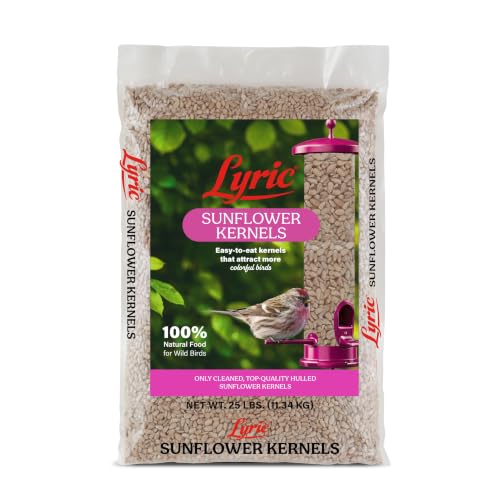
What We Like
- 100% edible, no waste
- High-protein and high-fat content
- Attracts multiple songbird species
- Works with tube, mesh, hopper feeders
Trade-offs
- Single seed type limits bird variety
A 25-pound bag of sunflower kernels means every bit you put out is edible, with no waste to clean up. The high-protein and high-fat content provides energy for songbirds, and the zero-waste formula keeps your feeder area tidy. This bag is for anyone who wants to feed cardinals, chickadees, finches, and grosbeaks without dealing with leftover hulls.
The whole bag is 100% edible, so nothing gets left behind to rot under your feeder. A blend like Audubon Park Extreme Variety adds shelled nuts, dried fruit, and tree nuts, which may attract a different set of birds. If you want a mix that includes those ingredients, you might prefer that option. But if your goal is high-energy, low-mess feeding for the core songbird set, this is a straightforward, efficient choice.
Product photos
How We Evaluated Bird Seeds For Winter
Our research method focused on three sources: manufacturer nutritional data and ingredient lists, expert round-ups on winter bird feeding, and the patterns that emerge from thousands of owner reviews.
The four criteria that mattered most were energy density, ingredient purity, species attraction, and mess management. Winter birds burn fat reserves fast, so black oil sunflower, with its thin shell and high oil content, became a benchmark seed. We weighed each blend’s filler-to-nutritious-seed ratio because milo, millet, and corn often go uneaten in cold months.
Practical limits were also considered: bag size for heavy winter feeding, feeder compatibility, and whether a seed creates hull litter that can attract rodents near a house. A research-led evaluation can tell you exactly what the bag’s ingredient list means for the birds at your feeder.
What To Look For In Bird Seeds For Winter
Choosing a winter bird seed means reading past the front-of-bag photos and looking at what’s actually inside. The best winter bird seed prioritizes fat and protein over volume.
Look for black oil sunflower as the first ingredient, avoid blends heavy on milo or cracked corn, and match the seed type to the feeder you own. A high-fat blend with safflower or peanuts will keep birds coming back all season.
Energy Density and Fat Content
Winter birds need dense calories to maintain body heat through sub-freezing nights. Black oil sunflower seeds are the top choice here: their thin shells make them easy for small beaked birds to crack, and the kernel inside is roughly half fat. Safflower seeds and peanut hearts also deliver high oil content. Avoid blends where milo, millet, or wheat appear early in the ingredient list, those are cheap fillers that birds often ignore in winter, leaving you with a feeder full of uneaten seed.
Ingredient Purity and Filler Seeds
A clean ingredient list matters more in winter than any other season. Birds will sort through a mix to eat what they want, but if half the bag is filler, you’re paying for waste. Many of the best winter mixes omit milo entirely and keep millet to a minimum. Look for blends that lead with sunflower, safflower, or nuts. The phrase “no filler” on the bag is a good sign, but always check the ingredient order on the back.
Mess Management and Feeder Cleanup
Winter feeding creates a unique mess problem: hulls and uneaten seeds can freeze into the ground or attract rodents seeking warmth near your house. No-waste bird seed options, like shelled sunflower hearts or hulled seeds, eliminate this entirely because every piece is edible. If you feed on a deck or patio, a no-mess bird seed is worth the higher per-pound cost. For remote feeders, whole seeds with hulls are fine, but plan to rake or sweep underneath.
- Check the bag weight: a 10-pound bag disappears fast if you have a busy winter feeder.
- Match seed type to feeder: tube feeders work best with sunflower, hopper feeders handle mixes, and tray feeders work for any seed.
- Read the guaranteed analysis on the bag for crude fat and protein percentages.
- Consider a squirrel-proof winter feeder if you have persistent squirrel visitors.
A simple rule: if you wouldn’t eat the seeds yourself, don’t expect the birds to.
Bird Seeds For Winter Compared
The table below compares each of our top ten winter bird seed picks by key specs, including seed type, bag size, and what species you can expect to attract.
| Product | Bag Size | Seed Type | Key Ingredients |
|---|---|---|---|
| Audubon Park Cardinal Blend Wild Bird Food | 4 pounds | 100% sunflower & safflower | Sunflower & safflower |
| Audubon Park Extreme Variety Wild Bird Seed | 15.0 pounds | Premium Blend | Sunflower seeds, peanuts, raisins, tree nuts |
| Kaytee Essentials Blend Wild Bird Seed Mix | 9.5 pounds | Black oil sunflower seeds | Black oil sunflower seeds |
| Wagner's Black Oil Sunflower Wild Bird Food | 25.0 pounds | Black Oil Sunflower | Black Oil Sunflower |
| Cool Birds No Mess Wild Bird Seed | 10 lb | 100% Edible Shell-Free Blend | Sunflower hearts, peanuts, tree nuts, pumpkin seed, real fruit |
| Blue Seal Nature's Choice Wild Bird Seed | 20 pounds | High Energy Blend | Black oil sunflower, white millet, white safflower, sunflower chips, peanut hearts |
| Pennington Songbird Nut & Fruit Blend Wild Bird Seed | 10.0 pounds | Real fruit, nuts & seeds | Real fruit, nuts & seeds |
| Kaytee Ultimate Birder's Blend Food | 10.0 pounds | Safflower, Peanuts, Striped Sunflower, Millet | Safflower, Peanuts, Striped Sunflower, Millet |
| Happy Wings Thistle Seed Bird Food | 5.0 pounds | 100% Nyjer (Thistle) | Nyjer (Thistle) |
| Lyric Sunflower Kernels No Waste Bird Seed | 25 lb | Sunflower kernels | Sunflower kernels |
Frequently Asked Questions
What is the best bird seed for winter feeding?
Black oil sunflower seed is widely considered the best single seed for winter because of its high fat content and thin shell that small birds can crack easily. Blends that combine black oil sunflower with safflower, peanuts, or tree nuts offer a broader species appeal while maintaining energy density.
Should I use a no-mess bird seed in winter?
No-mess bird seed, shelled sunflower hearts or hulled seeds, is ideal for deck and patio feeders where you want zero cleanup. The trade-off is that these seeds spoil faster than whole seeds in wet weather, and they cost more per pound. For remote feeders, whole seeds with hulls last longer and provide more volume for the same price.
How do I keep bird seed from freezing in winter?
Seed itself won’t freeze, but moisture in the feeder can cause clumping. Use a feeder with drainage holes and a weather-proof dome. If you’re using a winter bird feeder with a tray, tilt it slightly so water runs off. For extreme cold, bring feeders inside overnight and put them back out at dawn.
What birds visit feeders in winter?
Common winter feeder visitors include cardinals, chickadees, nuthatches, finches, juncos, titmice, and woodpeckers. Ground-feeding birds like sparrows and doves will visit if you scatter seed on the ground or use a platform feeder. The species you attract depends heavily on your region and the seed mix you choose.
How should I store bird seed for winter?
Store seed in a metal or heavy-duty plastic container with a tight seal to keep out moisture, mice, and insects. Keep the container in a dry, cool place like a garage or shed. Storing bird seed properly prevents mold growth and keeps the seed fresh through the entire winter season.
The Bottom Line
The Audubon Park Cardinal Blend is our best overall pick for winter feeding because it delivers high-energy sunflower and safflower without cheap fillers. It’s ideal for birders who want to attract cardinals and small songbirds while naturally discouraging squirrels. If you need a larger bag or want to draw a wider variety of species, the Audubon Park Extreme Variety blend adds raisins and nuts for extra winter energy.
For budget-conscious buyers, the Wagner’s Black Oil Sunflower seed offers the best value in a 25-pound bag, just be prepared for shell cleanup. Those feeding on a deck or patio should look at the Cool Birds No Mess seed for a completely waste-free experience. No matter which you choose, the single most important factor is energy density: prioritize black oil sunflower and high-fat seeds over filler-heavy blends, and your feeder will stay busy all winter.
