
4 Best Wild Bird Seed For Winter in 2026
This post contains affiliate links. As an Amazon Associate, we earn from qualifying purchases.
The best wild bird seed for winter is Lyric Woodpecker Wild Bird Seed, a no-waste, high-protein blend that gives birds the fat and calories they need when natural food is scarce. For birders who want a mess-free cylinder, the JCs Wildlife All Season Bird Seed Cylinder packs suet and safflower into a shape that holds up in snow. The Wagner’s Classic Blend Wild Bird Food offers an affordable all-season option for casual feeders.
Cold weather means birds burn more energy just to stay warm. A winter blend needs more fat, more protein, and less filler than what you put out in summer. Hulled seeds and shell-free options also mean less frozen debris to clean up when temperatures drop.
We built this guide from manufacturer specifications, expert round-ups on winter bird nutrition, and patterns in owner feedback about what actually gets eaten in cold weather. Each pick is evaluated on energy density, waste level, feeder compatibility, and how well it holds up to snow and rain.
Top 4 Wild Bird Seeds For Winter in the Market
Certain content that appears on this site comes from Amazon. This content is provided "as is" and is subject to change or removal at any time.
The Best Wild Bird Seeds For Winter, Reviewed
Lyric Woodpecker Wild Bird Seed

What We Like
- No-waste blend reduces feeder mess
- High-protein, high-fat for winter energy
- Attracts woodpeckers, jays, chickadees
- Versatile for multiple feeder styles
Trade-offs
- 20-pound bag is heavy to lift and pour
- Not formulated for finches or sparrows
A 20-pound bag of shelled, no-waste seed means every kernel is edible, so you’re not paying for hulls that pile up under the feeder. That high-protein, high-fat mix of seeds, dried fruit, and nuts is exactly what woodpeckers, jays, chickadees, and nuthatches need to stay fueled through cold months. If you want to attract a variety of winter birds without the mess of traditional seed blends, this is the bag to grab.
The dried fruit and nuts add variety, though some birds may focus on the seeds first. Compared to Wagner’s Classic Blend, which is a 6-pound bag, Lyric’s 20-pound bag offers a larger quantity per purchase. For someone who wants a no-waste blend that reduces mess under the feeder, this is a practical option.
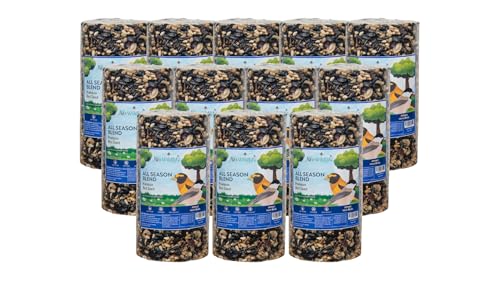
JCs Wildlife All Season Bird Seed Cylinder
What We Like
- High-fat suet for winter energy
- Safflower attracts cardinals, deters squirrels
- Handcrafted in the Midwest
- Holds shape in rain and snow
Trade-offs
- Small 1.75 lb size per cylinder
- Contains tree nuts, not for nut-free yards
A 31% crude fat content means this cylinder packs more energy per bite than most seed blends, which matters when birds need to stay warm through a freezing night. The rendered beef suet and safflower draw cardinals quickly while squirrels tend to leave safflower alone. It’s a smart pick for anyone who wants to pull in woodpeckers, chickadees, nuthatches, and bluebirds from a single feeder without filling the tray with hulls.
Wagner's Classic Blend Wild Bird Food

What We Like
- Includes sunflower for high appeal
- Works in tube, hopper, or platform feeders
- Formulated for all-season feeding
Trade-offs
- 6-pound bag is smaller than many winter blends
- Contains milo, which some birds ignore
With a mix of millet, milo, cracked corn, and sunflower, this 6-pound bag attracts jays, cardinals, doves, juncos, finches, and goosebeaks across all seasons, so you get a lively backyard without paying for premium-only ingredients. It works in tube, hopper, or platform feeders, which keeps setup simple no matter what gear you already own. For someone looking to keep feeders stocked year-round without spending extra, this is a practical starting point.
The trade-off is that 6 pounds goes fast when birds are active, especially compared to the 20-pound bags you get with Lyric Woodpecker Wild Bird Seed or Blue Seal Nature’s Choice High Energy Blend. You will be refilling more often, but the broad bird appeal and all-season versatility make it a sensible choice for casual feeding where you want to see activity without committing to a bulk purchase.
Product photos
Blue Seal Nature's Choice High Energy Blend

What We Like
- No filler ingredients
- High energy blend for winter
- Includes sunflower chips and peanut hearts
- Attracts chickadees, nuthatches, titmice
Trade-offs
- Heavy 20-pound bag for small feeders.
- Does not list woodpeckers or cardinals as targets.
A 20-pound bag of straight high-energy ingredients, black oil sunflower, white safflower, sunflower chips, and peanut hearts, means zero filler taking up space. For winter feeding, that density matters: birds burn more calories staying warm, and every scoop delivers fuel rather than hulls or milo they’ll kick out. This blend targets chickadees, nuthatches, and tufted titmice, species that stick around through cold months and appreciate the extra fat from peanut hearts and sunflower chips. If you want a no-nonsense seed mix that prioritizes nutrition over bag volume, this is the one to grab.
This blend delivers black oil sunflower seed, white millet, white safflower seed, sunflower chips, and peanut hearts with no fillers. That combination provides high energy for birds during cold months when they need extra calories to maintain body heat. Research shows survival rates were 38% higher in areas where bird feeders were present, and birds at those sites experienced less stress than birds without access to feeders. The mix attracts chickadees, nuthatches, and tufted titmice, making it a reliable option for maintaining a consistent feeding station throughout winter.
Product photos
How We Evaluated Wild Bird Seeds For Winter
This guide is research-based. We looked at manufacturer ingredient lists and nutritional data, consulted expert round-ups on winter bird feeding, and analyzed patterns in owner feedback to see which blends birds actually finish in cold months. No product was tested in a lab or fed in our own yards.
Three criteria mattered most. First, energy density: winter birds need high fat and protein to maintain body heat, so we favored blends heavy on sunflower, peanuts, and suet. Second, waste level: hulled or shell-free seeds reduce the frozen mess that accumulates under feeders in winter. Third, weather resistance: seeds that clump or spoil in damp cold are useless, so we prioritized blends that stay free-flowing and dry.
A research-led evaluation has honest limits. We cannot replicate every backyard microclimate or predict which local species will visit your feeder. What we can do is point you toward blends with the right nutritional profile for winter, so you can match the seed to the birds you want to attract.
What To Look For In Wild Bird Seeds For Winter
Choosing a winter blend means reading the ingredient list, not the front of the bag. Look for high-fat seeds like black oil sunflower, peanut hearts, and suet, and watch for cheap fillers that birds will kick onto the ground.
The best winter seed blends prioritize fat and protein over volume. Black oil sunflower, peanut hearts, and sunflower chips deliver more calories per pound than milo, wheat, or cracked corn.
Energy Density
Winter birds need roughly twice the calories they do in summer. A blend with black oil sunflower as the first ingredient provides the fat birds convert to body heat. Peanut hearts and suet pieces push energy density even higher. Avoid blends where milo, millet, or cracked corn appear early in the ingredient list, those are fillers many birds ignore, especially in cold weather.
Waste Level
Frozen seed hulls under a feeder are a winter chore no one enjoys. No-waste or no-mess blends use hulled seeds, sunflower hearts, shell-free peanuts, that leave nothing behind. These blends cost more per pound but every gram is edible, and the lack of hulls means less mold and less cleanup. For more on this category, see our guide to the best no-waste bird seed options.
Feeder Compatibility
A blend that works in a tube feeder may clog a platform feeder in wet snow. Cylinder-style seeds like the JCs Wildlife cylinder hold their shape in rain and fit specialized suet cages. Loose blends with large sunflower seeds may jam small tube ports. Match the seed form to your feeder type, and consider a weather guard or dome to keep snow off the tray. If you are setting up a new station, our guide to choosing a winter bird feeder can help.
- Check the first three ingredients on the bag, they tell you what the blend actually is.
- Look for “no waste” or “hulled” on the label if you want shell-free feeding.
- Match seed size to your feeder ports: small tubes need small seeds or chips.
- Store seed in a metal can with a tight lid to keep out moisture and rodents.
- Buy the smallest bag you can for your first try, birds’ preferences vary by region.
A rule of thumb: if you would not eat the seeds yourself, your birds probably will not either.
Wild Bird Seeds For Winter Compared
The table below compares the four winter blends side by side on energy source, waste level, and target species so you can see at a glance which one fits your feeder setup.
| Product | Weight | Key Ingredients | Bird Species |
|---|---|---|---|
| Lyric Woodpecker Wild Bird Seed | 20 lb | Seeds, dried fruit, nuts | Woodpeckers, Blue Jays, chickadees, nuthatches, titmice |
| JCs Wildlife All Season Bird Seed Cylinder | 1.75 lb, 12 Pack | Suet, safflower, pecans | Cardinals Woodpeckers Chickadees Nuthatches |
| Wagner's Classic Blend Wild Bird Food | 6 pounds | Millet, milo, cracked corn, sunflower | Jays, cardinals, doves, Juncos, finches, goosebeaks |
| Blue Seal Nature's Choice High Energy Blend | 20 pounds | Black oil sunflower seed, white millet, white safflower seed, sunflower chips, peanut hearts | Chickadees, Nuthatches, Tufted Titmice |
Frequently Asked Questions
What is the best bird seed for winter?
The best winter blend is one high in fat and protein with minimal filler. Black oil sunflower, peanut hearts, and suet pieces provide the concentrated energy birds need to stay warm. Hulled or shell-free seeds reduce the frozen mess under feeders. Our top pick, Lyric Woodpecker Wild Bird Seed, combines all three traits in a no-waste formula.
Should I use suet in winter?
Yes. Suet provides dense fat that birds metabolize quickly for body heat. It holds up well in cold weather and attracts woodpeckers, nuthatches, and chickadees. Cylinder blends like the JCs Wildlife All Season Bird Seed Cylinder combine suet with seeds for a two-in-one option. For a deeper look at the trade-offs, our article on suet for birds covers the pros and cons.
How do I keep bird seed from freezing?
Store seed in a dry, sealed metal container inside a shed or garage. Use a feeder with a built-in weather dome or place it under an eave to keep snow off. Hulled seeds absorb less moisture than whole seeds, so no-waste blends freeze less often.
What seeds do cardinals eat in winter?
Cardinals favor black oil sunflower, safflower, and peanut hearts. Safflower is especially useful because squirrels tend to avoid it. The JCs Wildlife cylinder uses safflower as a primary ingredient, making it a strong choice for attracting cardinals through the cold months. Avoid blends heavy on milo or millet, which cardinals typically ignore.
Can I mix different bird seeds together?
Yes, but the blend is only as good as its ingredients. Mixing a high-energy base like black oil sunflower with a no-waste blend of sunflower chips and peanut hearts gives you control over what goes in the feeder. Avoid adding cheap fillers like milo or cracked corn, they just end up on the ground. Our guide to winter seed mixes has more detail on building your own.
The Bottom Line
Lyric Woodpecker Wild Bird Seed is the best overall winter blend for birders who want high energy, low waste, and reliable attraction of woodpeckers, jays, and chickadees. Its no-waste formula keeps your feeding station clean through months of cold weather, and the protein-to-fat ratio matches what wintering birds need most.
If your budget is tight, Wagner’s Classic Blend offers a versatile all-season mix that works in any feeder style, just be aware it contains milo, which some birds will leave behind. For those who want a weather-proof cylinder that deters squirrels while attracting cardinals, the JCs Wildlife cylinder is a smart specialty pick.
The single most important factor in winter bird feeding is energy density. A bag that looks big but is full of milo and wheat will sit untouched while birds search elsewhere. Read the ingredient list, pick a blend built for cold-weather metabolism, and your feeder will stay busy all season.
