
10 Best Cat Food For Cats With Skin Allergies in 2026
This post contains affiliate links. As an Amazon Associate, we earn from qualifying purchases.
For cats with skin allergies, the right food can make the difference between constant scratching and a comfortable coat. The Purina Pro Plan LiveClear Sensitive Skin & Stomach Cat Food earns our best overall spot because it actively reduces the major allergen in cat dander while supporting sensitive skin with real turkey, prebiotic fiber, and live probiotics. For cats needing a stricter approach, the Blue Buffalo Basics Whitefish Grain-Free Dry Food offers a limited ingredient diet. The Hill’s Prescription Diet z/d provides a veterinary-grade hydrolyzed protein option for diagnosed sensitivities.
The challenge with skin allergies in cats is that the culprit is often hiding in plain sight, a common protein like chicken or a grain filler that triggers an immune response over time. Owners frequently mistake seasonal itching for a food problem, or vice versa, which makes choosing the right formula a matter of careful ingredient reading rather than guesswork.
This guide is built on manufacturer specifications, veterinary nutrition guidelines, and patterns found in thousands of owner reports. We break down the ten best options across dry food, wet food, limited ingredient diets, and prescription formulas, so you can match your cat’s specific needs to the right bag or can.
Top 10 Cat Foods For Cats With Skin Allergies in the Market



Certain content that appears on this site comes from Amazon. This content is provided "as is" and is subject to change or removal at any time.
The Best Cat Foods For Cats With Skin Allergies, Reviewed
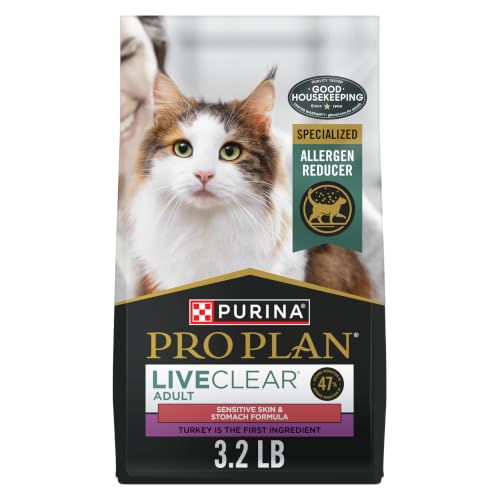
Purina Pro Plan LiveClear Sensitive Skin & Stomach Cat Food
What We Like
- Reduces allergens by 47% on average
- Real turkey as first ingredient
- Contains natural prebiotic fiber
- Fortified with live probiotics
Trade-offs
- Results take until the 3rd feeding week
- Results require waiting until the third feeding week
A 47 percent average reduction in the major allergen Fel D 1 starting in the third feeding week is the headline here. That egg-based protein works by neutralizing the allergen in cat hair and dander, which is a different approach than just avoiding ingredients that trigger skin reactions. Real turkey leads the ingredient list, and the added prebiotic fiber plus guaranteed live probiotics support digestive health, which often goes hand-in-hand with skin issues. For a cat with allergies, this tackles the problem at the source rather than just managing symptoms.
The trade-off is patience: you won’t see the allergen reduction until week three, so it’s not an overnight fix. Compared to the Hill’s Prescription Diet z/d, which uses hydrolyzed chicken for immediate food sensitivity control, this Purina formula works more broadly on the allergen itself but requires a longer commitment. It’s also a smaller bag at 3.2 pounds, so if you have multiple cats or a heavy eater, you’ll be buying more frequently. That said, for a single cat with skin allergies, the dual action on allergens and digestion makes it a practical starting point.
Blue Buffalo Basics Whitefish Grain-Free Dry Cat Food
What We Like
- Real whitefish is first ingredient
- Omega 3 & 6 for skin and coat
- No chicken by-products, corn, wheat, soy
- Includes antioxidant-rich LifeSource Bits
Trade-offs
- Grain-free not necessary for all cats
- Not suitable for cats needing hydrolyzed protein
A single protein source, real whitefish listed first, cuts out common triggers like chicken or poultry by-products, which is the whole point for a cat with skin allergies. The addition of omega 3 and 6 fatty acids directly supports skin health, and the grain-free formula avoids corn, wheat, and soy that sometimes cause reactions. This is a straightforward, no-nonsense dry food for owners who want to simplify their cat’s diet without guessing what’s inside.
Real whitefish is the first ingredient, so your cat gets a single animal protein source that’s easy on sensitive stomachs. The 5-pound bag is a standard size for this type of food, and the grain-free recipe with LifeSource Bits supports immune health. If your cat needs a hydrolyzed protein diet, this won’t be the right fit, but for a limited-ingredient dry option, it delivers exactly what it promises.
Hill's Prescription Diet z/d Skin/Food Sensitivities Dry Cat Food
What We Like
- Hydrolyzed proteins avoid immune detection
- Reduces scratching and digestive issues
- Omega-6 & 3 support skin regeneration
- ActivBiome+ prebiotics boost gut microbiome
Trade-offs
- Single protein source limits rotation options
- Prescription only, requiring vet approval
A hydrolyzed protein source broken down into fragments too small for the immune system to recognize means this diet targets the root cause of food sensitivities rather than just masking symptoms. That makes it the go-to choice for cats with confirmed adverse food reactions, especially when scratching and loose stools are the main complaints. The inclusion of Omega-6 and 3 fatty acids supports skin barrier repair, while ActivBiome+ prebiotics work on digestive health from the inside out. It’s a targeted, veterinary-formulated solution for cats that need a clean slate from common protein triggers.
The most decisive fact about this food is that it’s made with highly hydrolyzed proteins broken down to avoid detection by the immune system, which means it’s designed for cats with diagnosed food sensitivities. That specialization helps reduce scratching, itching, and digestive issues caused by adverse food reactions. It also promotes a healthy skin barrier and helps eliminate food-related causes of skin irritation. For owners whose cats have confirmed food allergies, this precision is exactly what makes it effective.
Blue Buffalo Basics Duck Grain-Free Wet Cat Food
What We Like
- Real duck is first ingredient
- Omega fatty acids support skin health
- Limited ingredient diet for allergies
- No chicken by-products, corn, wheat, soy
Trade-offs
- Only available in 3 oz cans
- Paté texture not preferred by all cats
Real duck is the first ingredient, which means your cat gets a single, novel protein source instead of a blend that might trigger sensitivities. The limited ingredient formula strips away common allergens like chicken by-products, corn, wheat, and soy, while essential fatty acids directly target skin and coat health. This makes it a sensible starting point for cats with food-related skin issues, especially if you want to isolate what’s causing the reaction without guessing from a long list of ingredients.
Each can is only 3 ounces, so for a larger cat or a multi-cat household you’ll be opening several cans per meal. If your cat tolerates dry food and you need convenience, a dry kibble option might be simpler. But if you want a clean, grain-free wet option with a single animal protein, this Blue Buffalo Basics recipe delivers exactly that.
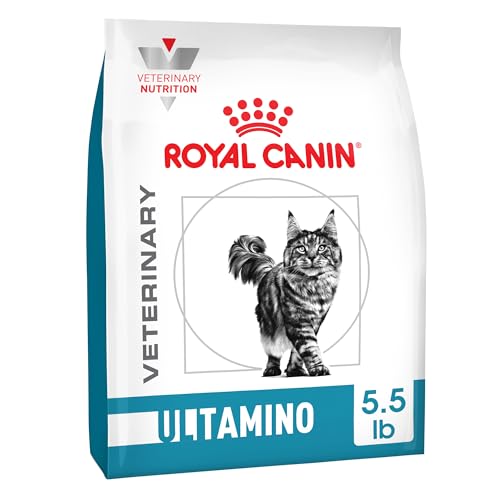
Royal Canin Veterinary Ultamino Adult Dry Cat Food
What We Like
- Extensively hydrolyzed soy protein reduces allergy risk
- Specialized production avoids cross-contamination
- Formulated to support skin barrier health
- Fiber blend supports digestive health
Trade-offs
- Requires veterinary authorization to purchase
- Designed for elimination diets, not long-term variety
An extensively hydrolyzed soy protein broken down into oligopeptides and pure amino acids means this food is about as low-risk as it gets for triggering food sensitivities. That single-source protein, combined with a production process designed to avoid cross-contamination, makes it a go-to for short-term elimination diets or long-term feeding when you need to rule out ingredients one by one. The skin barrier support and fiber blend for digestion are nice bonuses, but the real point is the protein: if your cat reacts to everything else, this is where you start.
Because it’s a veterinary-exclusive formula, you can’t just grab it off the shelf. You’ll need a vet’s okay, which adds a step and a cost. If your cat’s allergies are mild, an over-the-counter option like Purina Pro Plan LiveClear Sensitive Skin & Stomach might work fine, but for cats with confirmed sensitivities requiring a strict elimination diet, the hydrolyzed protein and controlled manufacturing here are worth the extra hassle.
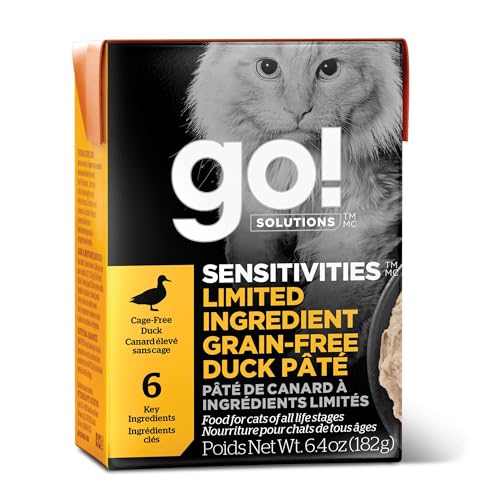
Go! Solutions Sensitivities Limited Ingredient Duck Pâté
What We Like
- Single novel duck protein source
- Limited ingredients for food sensitivities
- Grain-free and gluten-free recipe
- Cranberries support urinary tract health
Trade-offs
- Wet food has shorter shelf life after opening
- Not suitable for cats needing a dry food diet
A single novel animal protein as the first ingredient, duck in this case, means you’re limiting the number of potential allergens your cat encounters in each meal. That’s the core idea behind limited-ingredient diets, and Go! Solutions executes it cleanly here: no chicken, no grains, no gluten, and added pumpkin for gentle fiber. This makes it a straightforward option if you’re trying to isolate what triggers your cat’s skin issues without guessing which ingredient is the problem.
Wet food like this pâté doesn’t keep once opened, so you’re committing to smaller, more frequent purchases compared to a dry food like Blue Buffalo Basics Whitefish Grain-Free. That said, for a cat with confirmed or suspected duck tolerance, the simplicity of the formula, backed by cranberries for urinary health, makes it a sensible starting point. It’s not a magic bullet, but it’s a clean slate.
Product photos
Natural Balance Limited Ingredient Salmon & Green Pea Dry Cat Food
What We Like
- Single animal protein for limited ingredient diet
- Grain-free recipe supports sensitive stomachs
- Promotes healthy skin and shiny coat
Trade-offs
- Only one protein source limits variety for some cats
- Lacks prescription-level hydrolyzed proteins for severe allergies
A single animal protein, salmon, means this food cuts out the common allergens that come from mixing multiple meat sources. That’s exactly what you want when your cat’s skin flares up from something in their bowl. That limited ingredient approach, paired with green peas as a fiber source and a grain-free recipe, targets the digestive sensitivities that often go hand-in-hand with skin issues. It delivers balanced daily nourishment without the filler ingredients that can trigger reactions, making it a practical starting point for cats with dietary sensitivities.
If your cat’s skin issues stem from grains or multiple proteins, this salmon-and-green-pea formula offers a straightforward solution. It’s a single-animal-protein dry food that provides balanced nutrition for adult cats, but for cats with severe, confirmed protein allergies, a veterinary diet like Hill’s Prescription Diet z/d would be more appropriate.
Product photos
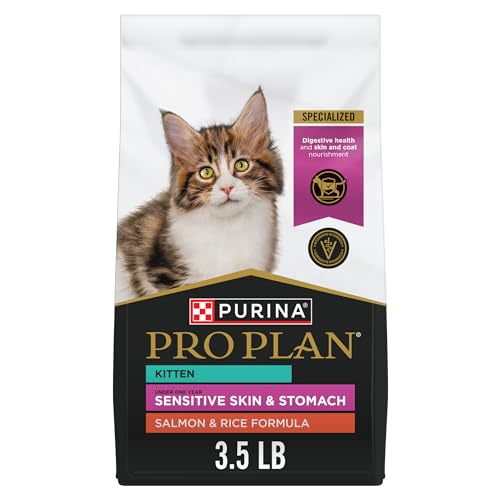
Purina Pro Plan Sensitive Skin and Stomach Kitten Food
What We Like
- Real salmon as first ingredient
- Rice and oatmeal for easy digestion
- DHA and omega-3 for brain development
- Prebiotic fiber for digestive health
Trade-offs
- 3.5 lb bag is smaller than many alternatives
- Contains grains, not grain-free
A 3.5-pound bag of dry kibble with real salmon as the first ingredient gives this kitten food a clear protein foundation that supports skin and coat health directly. The rice and oatmeal formula is gentle on young digestive systems, which matters when you’re dealing with a kitten that may have sensitivities showing up as skin issues. Prebiotic fiber and DHA round out the recipe for both gut health and brain development, so you’re not sacrificing overall nutrition while managing allergies. This is a practical starting point for kittens whose skin problems seem tied to their diet, without jumping straight to a prescription or limited-ingredient formula.
At 3.5 pounds, this bag will disappear faster than the 5-pound Blue Buffalo Basics or 10-pound Natural Balance options. So if you have multiple kittens or a growing one, you’ll be reordering more often. Compared to the Royal Canin Ultamino, which uses extensively hydrolyzed protein for extreme sensitivities, this Purina formula relies on a simpler but less specialized approach, real salmon and oatmeal rather than broken-down proteins. For a kitten with mild to moderate skin allergies, that balance of ingredient quality and digestibility makes sense, but for severe cases, you might need to step up to a veterinary diet.
Product photos
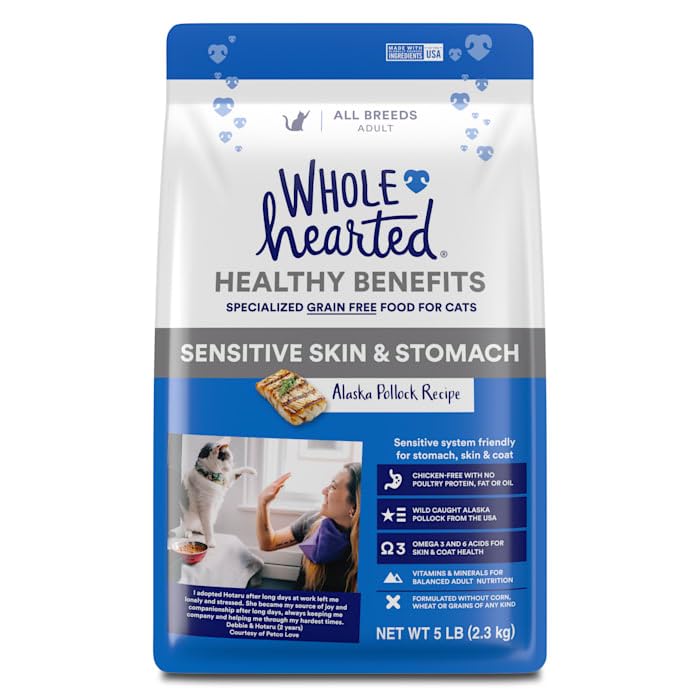
WholeHearted Sensitive Skin and Stomach Alaskan Pollock Dry Cat Food
What We Like
- Grain-free formula with no corn or wheat
- Omega 3 and 6 for skin and coat
- Chicken-free, no poultry protein
- Prebiotic fiber for digestive health
Trade-offs
- Dry food only, no moisture content
- Not suitable for cats with fish allergies
A grain-free, chicken-free dry food built around high-quality salmon as its sole animal protein means this formula sidesteps two common triggers for cats with skin allergies. The addition of essential fatty acids directly targets skin health and coat condition, while prebiotic fiber supports digestion. That’s a useful combo when dietary sensitivities often go hand in hand with a finicky gut. WholeHearted keeps the ingredient list clean: no corn, wheat, grains, or poultry byproducts, which is exactly what a label-reading owner wants to see for a sensitive cat.
The WholeHearted Sensitive Skin and Stomach Alaskan Pollock Dry Cat Food is a chicken-free, grain-free formula that relies on a single animal protein, salmon, to support lean muscle maintenance. That makes it a straightforward choice for cats with poultry sensitivities. The carefully selected, easy-to-digest ingredients help reduce digestive discomfort, while omega fatty acids promote healthy skin and a soft coat. Prebiotic fiber supports balanced gut health, and the food is made in the USA without corn, wheat, or grains.
Product photos
Royal Canin Hair & Skin Care Dry Cat Food

What We Like
- Formulated for sensitive skin and coat
- Improves coat shine after 21 days
- Supports skin barrier with balanced nutrients
- Pairs with matching wet food
Trade-offs
- Results require 21 days of exclusive use
- Dry kibble only, no moisture content
A 21-day timeline for visible coat shine is the headline here, and it’s backed by a precise nutrient profile aimed at protecting the skin barrier. This makes Royal Canin Hair & Skin Care a straightforward choice for owners who want a dry food that directly targets dull coats and dandruff without guesswork. The kibble is designed for adult cats with dry or sensitive skin, and the fact it’s developed by veterinarians adds a layer of formulation credibility. If your cat’s main issue is a lackluster coat and you’re willing to commit to exclusive feeding for three weeks, the product is formulated to support that goal.
You’re locked into a single dry food for 21 days to see the shine improvement, which may not suit cats who need variety or have other sensitivities. Compared to Purina Pro Plan LiveClear, which also targets sensitive skin but adds allergen reduction, Royal Canin focuses more narrowly on coat quality and skin barrier support. For cats with food-triggered allergies, this isn’t a limited-ingredient or hydrolyzed formula, so if you suspect a specific protein intolerance, you’d be better off with Hill’s Prescription Diet z/d or Blue Buffalo Basics. But for general skin dryness and a shinier coat, this is a well-targeted option.
Product photos
How We Evaluated Cat Foods For Cats With Skin Allergies
Our evaluation started with the ingredient panel, not the marketing claims on the front of the bag. We examined each formula’s protein source, fat profile, fiber content, and any added skin-supporting nutrients like omega-3 and omega-6 fatty acids. For cats with skin allergies, the protein is the most likely trigger. So we prioritized foods with single or novel protein sources and flagged anything containing chicken, beef, dairy, or wheat, which are among the most common food allergens in cats.
We then cross-referenced each formula against veterinary dermatology recommendations and patterns in owner feedback. A food that looks perfect on paper but causes frequent owner reports of continued scratching or digestive upset didn’t make the cut. We also considered the practical realities of feeding, availability without a prescription, kibble size for picky eaters, and whether a wet or dry format better suits a cat’s hydration needs.
A research-led evaluation has limits: we didn’t feed these foods to a panel of cats, and individual results vary widely. What works for one cat may trigger another. The goal here is to narrow your options to the formulas most likely to succeed, not to promise a cure.
What To Look For In Cat Foods For Cats With Skin Allergies
Choosing a food for a cat with skin allergies means reading past the front of the bag and focusing on three core factors: protein source, ingredient count, and fatty acid profile. The right formula eliminates common triggers while actively supporting skin barrier health.
Look for a single or novel protein source (duck, salmon, whitefish, or venison), a short ingredient list with no chicken or beef by-products, and guaranteed levels of omega-3 and omega-6 fatty acids. Avoid foods with corn, wheat, soy, and artificial colors or preservatives.
Protein Source and Novelty
The single most important decision is the protein source. Most commercial cat foods use chicken as the primary protein, and chicken is the most common food allergen in cats. If your cat has been eating chicken-based food and developing itchy skin, switching to a novel protein like duck, salmon, whitefish, or rabbit can eliminate the trigger. For cats with severe sensitivities, a hypoallergenic cat food with hydrolyzed proteins, where the protein molecules are broken down so small that the immune system doesn’t recognize them, may be necessary.
Ingredient Count and Limited Ingredient Diets
A limited ingredient diet (LID) contains a single protein source and a single carbohydrate source, with minimal additional ingredients. This simplicity makes it easier to identify what’s causing the reaction. If you’re spotting allergies in your cat for the first time, starting with an LID formula gives you a clean baseline. Avoid foods with vague terms like “meat meal” or “poultry by-products”, these can contain multiple animal species and make it impossible to know what your cat is actually eating.
Omega Fatty Acids and Skin Barrier Support
Omega-3 and omega-6 fatty acids are essential for maintaining a healthy skin barrier and reducing inflammation associated with allergies. Look for foods that list fish oil, flaxseed, or canola oil as a source of these fatty acids. The balance matters more than the total amount, too much omega-6 relative to omega-3 can actually promote inflammation. A food that specifically mentions “skin and coat support” on the guaranteed analysis panel is a good starting point.
- Check the first five ingredients: the protein source should be first, and there should be no more than two protein sources total.
- Look for a statement of “single animal protein” or “limited ingredient” on the front of the bag.
- Confirm the food contains no chicken, beef, dairy, egg, or soy if your cat has known sensitivities.
- Verify the omega-6-to-omega-3 ratio is balanced (aim for roughly 5:1 or lower).
- Choose a formula appropriate for your cat’s life stage, kitten, adult, or senior.
A 21-day elimination diet using a single novel protein source is the gold standard for identifying food allergies in cats.
Cat Foods For Cats With Skin Allergies Compared
The table below compares the ten foods across protein source, format, and key features so you can quickly see which formula fits your cat’s needs.
| Product | Protein Source | Key Feature | Weight |
|---|---|---|---|
| Purina Pro Plan LiveClear Sensitive Skin & Stomach Cat Food | Real turkey | Reduces major allergen Fel D 1 by 47% | 3.2 lb |
| Blue Buffalo Basics Whitefish Grain-Free Dry Cat Food | Whitefish #1 Ingredient | Skin & Stomach Care | 5 lb |
| Hill's Prescription Diet z/d Skin/Food Sensitivities Dry Cat Food | Hydrolyzed Chicken | Hydrolyzed Chicken Recipe | 4.0 pounds |
| Blue Buffalo Basics Duck Grain-Free Wet Cat Food | Real Duck #1 | Skin & Stomach Care | N/A |
| Royal Canin Veterinary Ultamino Adult Dry Cat Food | Extensively hydrolyzed soy protein | Extensively Hydrolyzed Protein | 5.5 lb |
| Go! Solutions Sensitivities Limited Ingredient Duck Pâté | Duck | Limited Ingredient | N/A |
| Natural Balance Limited Ingredient Salmon & Green Pea Dry Cat Food | Salmon | Single Animal Protein | 10 lb |
| Purina Pro Plan Sensitive Skin and Stomach Kitten Food | Real Salmon | Salmon and Rice Formula | 3.5 lb |
| WholeHearted Sensitive Skin and Stomach Alaskan Pollock Dry Cat Food | N/A | Sensitive Skin and Stomach | 5 lb |
| Royal Canin Hair & Skin Care Dry Cat Food | N/A | Tailored For Sensitive Skin | 6 lb |
Frequently Asked Questions
What is the best cat food for cats with skin allergies?
The Purina Pro Plan LiveClear Sensitive Skin & Stomach Cat Food is our top pick because it combines a real turkey protein base with a patented ingredient that reduces allergens in cat dander by an average of 47%. It also contains prebiotic fiber and live probiotics to support both skin and digestive health.
How do I know if my cat has a food allergy or environmental allergies?
Food allergies typically cause year-round itching, especially around the face, neck, and ears, and often accompany digestive issues like vomiting or diarrhea. Environmental allergies tend to be seasonal and cause itching on the paws and belly. The only way to confirm a food allergy is through an elimination diet using a novel protein or hydrolyzed diet.
Can wet food help with cat skin allergies?
Yes, wet food can be beneficial because it provides hydration and often contains fewer fillers than dry kibble. Our top wet pick, the Blue Buffalo Basics Duck Grain-Free Wet Cat Food, uses a single novel protein and includes omega fatty acids for skin health. For more options, see our guide to wet food for allergies.
Is grain-free cat food better for cats with skin allergies?
Not necessarily. True grain allergies in cats are rare, most food allergies are caused by animal proteins like chicken, beef, or dairy. Grain-free formulas can still contain common allergens. However, some cats do have sensitivities to corn or wheat, so a grain-free limited ingredient diet can be worth trying as part of an elimination diet.
How long does it take for a new food to improve my cat’s skin?
Most cats show noticeable improvement in skin condition within 3 to 8 weeks of switching to an appropriate diet. The Purina Pro Plan LiveClear takes about three weeks to reach full allergen-reducing effect. For prescription hydrolyzed diets like Hill’s z/d, improvements in scratching and coat quality are typically seen within 4 to 6 weeks.
The Bottom Line
For most cat owners dealing with skin allergies, the Purina Pro Plan LiveClear Sensitive Skin & Stomach Cat Food offers the best balance of active allergen reduction and everyday nutrition. It works for cats with mild to moderate sensitivities and doesn’t require a prescription. If your cat needs a simpler approach, the Blue Buffalo Basics Whitefish Grain-Free Dry Food provides a clean limited ingredient diet at a mid-range price point.
For cats with diagnosed or suspected severe food allergies, the Hill’s Prescription Diet z/d or Royal Canin Ultamino are the right choices, but you’ll need a veterinarian’s approval to purchase them. The Natural Balance Limited Ingredient Salmon & Green Pea Dry Cat Food is a solid budget-friendly option for cats that tolerate fish protein.
The single most important factor in managing skin allergies through diet is identifying and eliminating the trigger protein. Everything else, grain-free, wet versus dry, added probiotics, is secondary to that one decision. Start with a single novel protein, stick with it for at least eight weeks, and let your cat’s skin tell you if you’ve found the right food.
