
10 Best Puppy Food in 2026
This post contains affiliate links. As an Amazon Associate, we earn from qualifying purchases.
The Purina Pro Plan High Protein Puppy Food wins as Best Overall because it puts chicken first for lean muscle. It adds DHA from fish oil for brain and vision development, and includes calcium and phosphorus for strong bones. The Blue Buffalo Life Protection Formula Puppy Food earns Best Real Chicken First, while the Purina ONE Plus Healthy Puppy Food takes Best Value.
Picking the right puppy food means balancing protein for growth, DHA for cognitive development, and the right kibble size for your pup’s breed. Too many formulas rely on marketing claims rather than ingredient transparency, which is where reading the label matters.
We built this guide by reviewing manufacturer specifications, ingredient lists, guaranteed analyses, and patterns in owner feedback. Our goal is to help you match a food to your puppy’s specific needs without the hype.
Top 10 Puppy Foods in the Market
Certain content that appears on this site comes from Amazon. This content is provided "as is" and is subject to change or removal at any time.
The Best Puppy Foods, Reviewed
Purina Pro Plan High Protein Puppy Food

What We Like
- Chicken is first ingredient for lean muscle
- DHA from fish oil supports brain and vision
- Calcium and phosphorus build strong bones
- Antioxidants help developing immune system
Trade-offs
- 6 lb bag is small for large breeds or multi-pup homes
- Chicken-based formula not suitable for poultry allergies
Chicken is the first ingredient here, which means the protein base is real meat rather than a rendered meal or plant concentrate. That matters for a growing puppy because high-quality amino acids go directly into building lean muscle tissue, not just filling the kibble. The DHA from omega-rich fish oil is another concrete advantage, it nourishes brain and vision development during the critical early months when those systems are wiring up fast. Calcium, phosphorus and other minerals round out the skeletal support, so you’re covering both structural growth and neurological development in one bag. This is the kind of formulation that makes sense for someone who wants a straightforward, nutritionally complete start for their pup without chasing trendy ingredients.
The trade-off is bag size: at 6 pounds, this bag won’t last long if you have a large-breed puppy or multiple dogs. You’ll be reordering more often than with a larger bag like Purina ONE Plus Healthy Puppy Food. That’s a logistics inconvenience, not a nutritional one, the formula itself is solid. If you’re feeding a single small-to-medium breed pup, the size is manageable and the freshness stays higher. Just plan your subscription or store run accordingly. For the core nutrition, real chicken first, DHA, calcium, this covers the essentials without filler or fuss.
Blue Buffalo Life Protection Formula Puppy Food
What We Like
- Real chicken is first ingredient
- Includes DHA and ARA for brain development
- LifeSource Bits for immune support
- Wholesome grains for gentle digestion
Trade-offs
- Contains grains, not grain-free
- Not suitable for grain-free diets
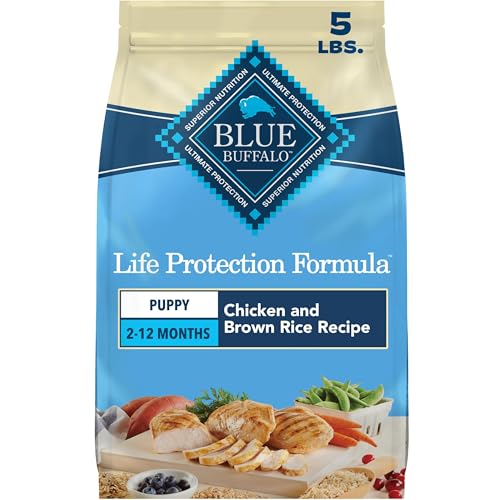
Real chicken listed as the very first ingredient means this formula prioritizes animal protein over fillers, which supports healthy muscle development in growing puppies from 2 to 12 months. That alone makes it a strong pick for owners who want a meat-forward recipe without the usual corn or soy taking top billing. The inclusion of DHA and ARA, fatty acids found in mother’s milk, targets brain and eye development during the critical early growth stage. LifeSource Bits, a blend of antioxidants formed at lower temperatures to preserve potency, add immune support without relying on synthetic shortcuts. This is a straightforward, nutritionally complete option for puppy owners who read ingredient lists and want real chicken leading the way.
At 5 pounds, this bag is a trial-size portion for puppies that eat multiple cups a day, meaning owners of medium or large breeds will need to buy replacements often. Small breed owners or those just starting out will find it convenient, though. The formula includes wholesome grains like brown rice, barley, and oatmeal to support gentle digestion and steady energy, but if you prefer a grain-free diet, this one won’t fit that requirement.
Purina ONE Plus Healthy Puppy Food
What We Like
- Real chicken is first ingredient
- DHA for vision and brain development
- Four antioxidant sources for immune support
- No artificial flavors or preservatives
Trade-offs
- Contains grains, not grain-free
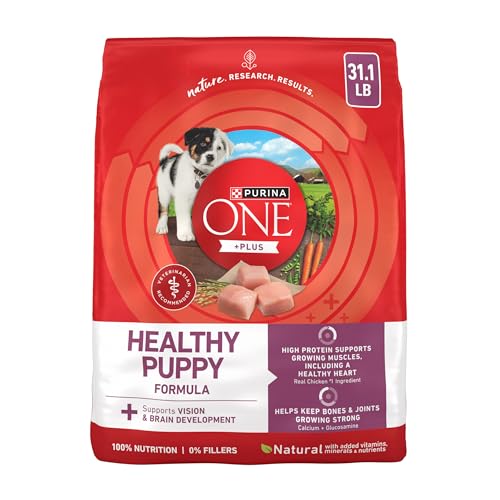
A 31.1-pound bag of dry food with real chicken as the number one ingredient gives you a protein-rich foundation for a growing puppy’s muscles, including a healthy heart. This formula includes DHA, a nutrient found in mothers’ milk, to support vision and brain development, plus four antioxidant sources for immune support. That combination of nutritional density and portion size makes it a practical, everyday choice without the premium price tag.
The crunchy bites and tender morsels add texture variety, and the absence of artificial flavors or preservatives keeps the ingredient list clean. It’s a straightforward, no-nonsense formula that prioritizes what matters most for puppy development.
Hill's Science Diet Puppy Small Bites
What We Like
- Balanced minerals for growing bones and teeth
- DHA and fish oil for brain and eye development
- Antioxidant blend supports developing immune system
- High quality proteins fuel growing muscles
Trade-offs
- Small 4.5 lb bag requires frequent repurchasing for larger breeds
- Not suitable for puppies with grain sensitivities
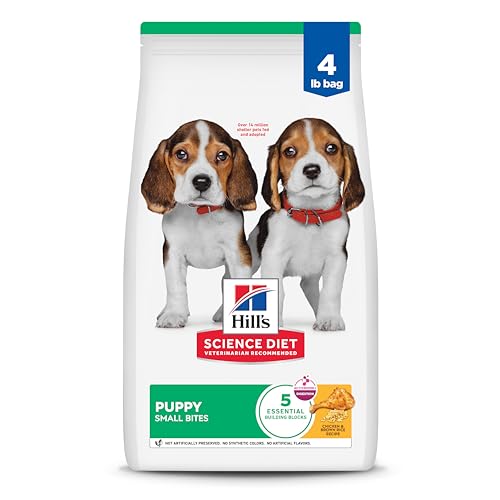
The #1 Veterinarian Recommended brand status means this formula is backed by balanced minerals for growing bones and teeth. DHA from fish oil supports brain and eye development, and an antioxidant blend helps a developing immune system. It targets the core nutritional needs of a puppy without extra bells and whistles, just the essentials that vets trust. For a new puppy owner who wants a safe, well-rounded diet recommended by professionals, this is a straightforward choice.
The 4.5 lb bag size is fine for small breeds but means frequent repurchasing if you have a medium or large breed puppy. Compared to Purina Pro Plan’s 6 lb bag, you get less volume per bag. That said, the Small Bites name indicates a smaller kibble, which can be easier for tiny mouths to chew. Just plan on buying more often if your pup eats more than a cup a day.
Purina Pro Plan Sensitive Skin & Stomach Puppy Food
What We Like
- Real salmon as first ingredient
- Prebiotic fiber for digestive health
- Omega-6 and vitamin A for coat
- DHA for brain and vision development
Trade-offs
- Rice-based, not grain-free
- Not suitable for adult dogs
Real salmon is the number one ingredient here, which means your puppy gets a high-quality protein source that’s also gentle on a sensitive stomach. The formula includes prebiotic fiber to support intestinal bacteria and maintain stool quality, plus fish oil provides EPA and DHA for heart, brain, and vision development. This is a well-targeted option for pups that struggle with digestive upset or skin issues, without relying on exotic proteins or grain-free marketing.
Because this food uses rice as its carbohydrate base, it won’t appeal to owners who want a grain-free diet. Unlike Purina Pro Plan’s chicken-based, higher-protein recipe, this salmon-based formula is designed for digestive and skin sensitivity. If your puppy tolerates grains and needs a formula that’s easy on the gut, this is a practical, ingredient-driven choice.
Royal Canin Small Puppy Dry Dog Food

What We Like
- Supports brain development during growth
- Antioxidants for immune support
- Prebiotics and proteins for digestive health
- Crunchy kibble texture for mixed feeding
Trade-offs
- Only for small breeds up to 22 lbs
- Limited to puppies 2-10 months old
A 4-pound bag of kibble formulated for puppies with an expected adult weight of 9 to 22 pounds means this is a targeted option for small breeds. The crunchy texture is straightforward to serve and pairs with the brand’s canned puppy food for mixed meals. Antioxidants support the immune system, while prebiotics and proteins promote gut health, and the formula addresses brain development and energy needs during growth. This makes it a sensible pick for someone raising a small-breed puppy who wants a veterinarian-developed recipe that covers the basics without flashy claims.
This food is strictly for small breeds and only for puppies aged 2 to 10 months, so it won’t work for larger breeds or older dogs. Unlike Purina Pro Plan, which offers a broader weight range and a larger 6-pound bag, Royal Canin’s narrower focus means you’ll need to switch formulas as your puppy grows. If you have a toy or small breed, the tailored nutrition here is worth considering; if your puppy is likely to exceed 22 pounds, look at the other options in this guide.
Product photos
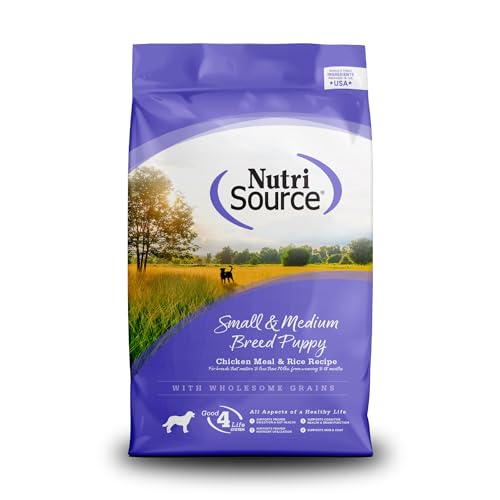
NutriSource Small & Medium Breed Puppy Food
What We Like
- Chicken meal as first ingredient
- Includes prebiotics and probiotics
- Omega-3 and Omega-6 fatty acids
- L-Carnitine and taurine for heart health
Trade-offs
- Grain-inclusive formula not for grain-free diets
- Small 4-pound bag requires frequent reordering
Chicken meal is the first ingredient, supplying essential amino acids for healthy muscle growth. The formula includes prebiotics and probiotics to foster a healthy digestive system. Brown rice, oatmeal, and barley provide easily digestible carbohydrates for sustained energy. Omega-3 and Omega-6 fatty acids support skin and coat health, while L-Carnitine, taurine, choline chloride, and DL Methionine support cardiovascular development. This combination makes it a balanced option for small and medium breed puppies.
The 4-pound bag is a smaller portion than some alternatives, such as Purina Pro Plan’s 6-pound bag. The grain-inclusive formula contains brown rice, oatmeal, and barley, so it is not suitable for owners who avoid grains. For someone looking for a straightforward start with a focus on digestive and heart health, this recipe provides those benefits without extra frills.
Product photos
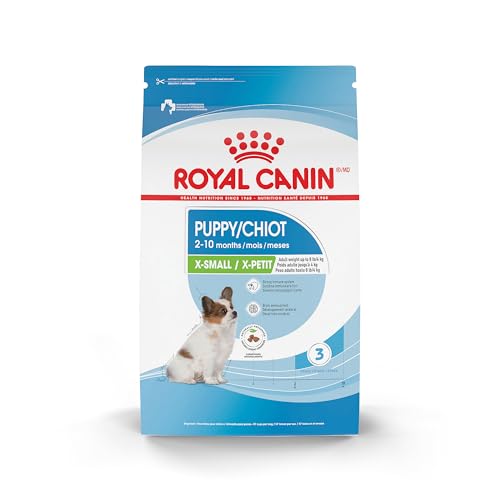
Royal Canin X-Small Puppy Dry Dog Food
What We Like
- Formulated for toy breeds under 8 lbs
- Supports brain development and energy needs
- Antioxidants and prebiotics for immunity and digestion
- Crunchy kibble pairs with wet food
Trade-offs
- Only for puppies with adult weight under 8 lbs
- No breed size flexibility for larger pups
A 3-pound bag of kibble designed specifically for puppies that will top out at 8 pounds as adults. That narrow weight target means the calorie density, kibble size, and nutrient balance are dialed in for the tiniest breeds, where even a small mismatch can throw off growth or energy. The formula includes antioxidants for immune support and prebiotics for digestive health, both critical when a puppy’s gut is still figuring things out. If you have a toy breed under 10 months old, this takes the guesswork out of portioning and nutrition.
The obvious limitation is that this food only works for the smallest of the small. If your puppy is a mix that might hit 10 or 12 pounds, you’d be better off with the Small formula. The 3 lb bag also means more frequent trips to the store or reorder clicks, but for a 3-pound puppy, that bag lasts a reasonable stretch.
Product photos
Hill's Science Diet Puppy Large Breed Food

What We Like
- Balanced minerals for growing bones and teeth
- DHA and fish oil for brain and eye development
- Antioxidant blend supports developing immune system
- High quality proteins fuel growing muscles
Trade-offs
- Large breed formula only, not for small breeds
- Contains grains, not for grain-free diets
Hill’s Pet Nutrition is the #1 veterinarian-recommended brand in the US, so this food comes with a trusted reputation. Balanced minerals support growing bones and teeth, while DHA and fish oil target brain and eye development, critical for large breeds that need steady, controlled growth. The antioxidant blend gives the immune system a hand during those early months, and high-quality proteins fuel muscle development without overloading calories. It’s made with natural ingredients and produced in the USA with global ingredients you can trust, so you know what’s going into the bag. This is a straightforward choice for owners who want a vet-backed formula designed for large breed puppies.
This food is formulated for large breeds, so small or medium puppies will need a different option. In contrast to Purina Pro Plan’s chicken and DHA formula in a 6 lb bag, Hill’s comes in a 27.5 lb bag, a size that makes sense for a big breed puppy that goes through food quickly. The recipe includes chicken and brown rice, so it won’t suit owners committed to a grain-free diet, but for most large breed puppies, this is a straightforward, veterinarian-recommended option that covers the essentials.
Product photos
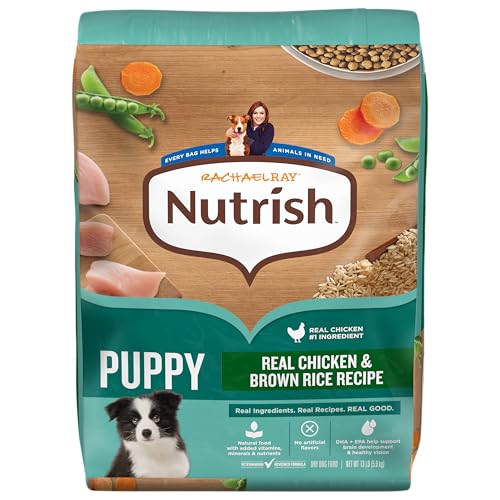
Rachael Ray Nutrish Puppy Chicken & Brown Rice
What We Like
- Real chicken is first ingredient
- DHA + EPA for brain and vision
- Veterinarian reviewed formula
- No artificial flavors
Trade-offs
- Not suitable for grain-free diets
- Not for grain-free diet dogs
Real chicken as the #1 ingredient is the kind of straightforward protein sourcing that tells you this bag isn’t hiding fillers. Combined with added DHA and EPA, it directly targets the two things every puppy owner cares about: brain development and healthy vision. That makes it a strong pick for someone who wants a natural, no-nonsense recipe that prioritizes nutritional basics over marketing fluff. The veterinarian-reviewed formula adds a layer of credibility, so you’re not just guessing what’s inside.
The 13 lb bag is a practical size for a single small-to-medium breed puppy, keeping the food fresh before it’s finished. For comparison, Purina ONE Plus Healthy Puppy Food comes in a 31.1 lb bag, which may be more convenient for owners with multiple dogs or large breeds. This recipe is made with no artificial flavors and includes DHA and EPA for brain and vision development, making it a straightforward option for balanced early nutrition.
Product photos
How We Evaluated Puppy Foods
Our research began with the ingredient list, not the front of the bag. We examined each formula’s first five ingredients, protein source, fat content, and the presence of DHA from fish oil, which supports brain and vision development in growing puppies. We also checked for added calcium and phosphorus levels, since proper mineral balance is critical for bone growth, especially in large and giant breeds.
The criteria that mattered most were protein quality and source, DHA content, kibble size appropriateness, and the presence of unnecessary fillers or artificial additives. For example, a chicken-first recipe with named meat meal scores higher than one with ambiguous “poultry by-product” or corn as the first ingredient. We also considered whether a formula is breed-specific, since small and toy breeds need smaller kibble and different calorie density than large breeds.
A research-led evaluation has limits: we did not feed these foods to our own dogs or run lab analyses. What we can do is show you what the label actually says and how that compares to expert recommendations for puppy nutrition. We also looked at patterns in owner feedback, particularly around stool quality, coat condition, and whether puppies were eager to eat the food consistently.
What To Look For In Puppy Foods
Choosing a puppy food comes down to reading past the marketing and understanding what the guaranteed analysis and ingredient list actually tell you. Here are the three most important criteria.
Look for a named animal protein as the first ingredient, DHA from fish oil for brain development, and calcium and phosphorus levels appropriate for your puppy’s expected adult size. Ignore front-of-bag claims and flip the bag over.
Protein Source and Quality
The first ingredient should be a named meat like chicken, salmon, or lamb, not a vague “poultry meal” or “meat by-product.” Whole meat is mostly water, so a named meat meal (like chicken meal) as the second or third ingredient is also a strong sign of concentrated protein. For puppies, crude protein should be around a certain percentage on a dry matter basis. Large breed puppies may benefit from slightly lower protein to support controlled growth.
Puppies build muscle and tissue rapidly, and a high-quality puppy food provides the amino acid profile they need without relying on plant protein concentrates. Chicken is the most common first ingredient in our top picks, but salmon and lamb are excellent alternatives for puppies with poultry sensitivities.
DHA and Brain Development
Docosahexaenoic acid (DHA) is an omega-3 fatty acid found in fish oil that supports cognitive development, vision, and trainability in puppies. Most veterinary nutritionists recommend DHA-fortified foods for the first year of life. Look for “DHA” or “fish oil” on the ingredient list, not just “omega-3 fatty acids,” which can come from less bioavailable plant sources like flaxseed.
The best puppy food brands typically include DHA from salmon oil or menhaden fish meal. Our top picks all contain a named DHA source, which correlates with better owner reports of alertness and responsiveness during training.
Kibble Size and Breed-Specific Formulas
Kibble size matters more than most owners realize. Small and toy breed puppies have tiny mouths and may choke on or refuse to chew large kibble. Large breed puppies need larger kibble that encourages chewing and slows eating, which can reduce the risk of bloat. Breed-specific formulas also adjust calcium and phosphorus levels to match growth rates.
For puppies expected to weigh under 22 pounds as adults, a small breed puppy food with smaller kibble and higher calorie density is usually the right choice. For large and giant breeds, a large breed puppy food with controlled calcium and moderate protein helps prevent skeletal issues.
- Check that the kibble size matches your puppy’s mouth and jaw strength.
- Confirm calcium levels are appropriate for your puppy’s expected adult size.
- Look for breed-specific or size-specific labeling on the bag.
- Choose a food with named animal fat (like chicken fat) for palatability and coat health.
A puppy food that fits your dog’s size and growth rate is more important than any single ingredient.
Puppy Foods Compared
The table below compares our top 10 picks across key criteria, including protein source, DHA content, and breed suitability, to help you narrow your choice.
| Product | Protein Source | Key Nutrients | Weight |
|---|---|---|---|
| Purina Pro Plan High Protein Puppy Food | Chicken | DHA, calcium, phosphorus | 6 lb |
| Blue Buffalo Life Protection Formula Puppy Food | Chicken | DHA, ARA, Choline | 5.0 lb |
| Purina ONE Plus Healthy Puppy Food | Real chicken | DHA, antioxidants | 31.1 lb |
| Hill's Science Diet Puppy Small Bites | Chicken & Brown Rice | DHA, Fish Oil, Antioxidants | 4.5 lb |
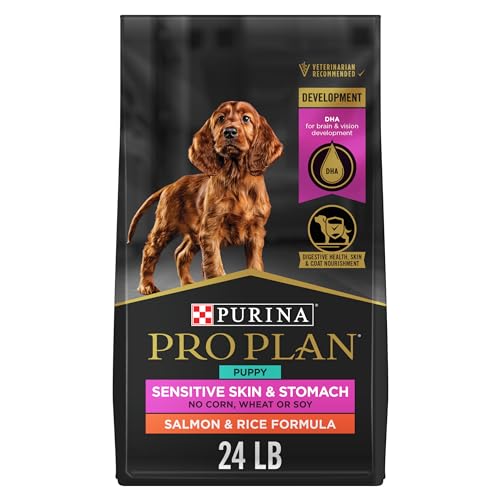
| Purina Pro Plan Sensitive Skin & Stomach Puppy Food | Salmon | Prebiotic Fiber, Fish Oil (EPA/DHA) | 24 lb |
| Royal Canin Small Puppy Dry Dog Food | N/A | Antioxidants, prebiotics, proteins | N/A |
| NutriSource Small & Medium Breed Puppy Food | Chicken meal | Prebiotics and probiotics | 4.0 lb |
| Royal Canin X-Small Puppy Dry Dog Food | N/A | Brain, immune, digestive | 3 lb |
| Hill's Science Diet Puppy Large Breed Food | Chicken & Brown Rice | DHA and Fish Oil, antioxidant blend | 27.5 lb |
| Rachael Ray Nutrish Puppy Chicken & Brown Rice | Real Chicken #1 | DHA & EPA | 13 lb |
Frequently Asked Questions
When should I switch my puppy from puppy food to adult food?
Most puppies should transition to adult food between 12 and 24 months of age, depending on breed size. Small breeds mature faster and can switch around 12 months, while large and giant breeds may need puppy food until later to support proper bone development.
How much should I feed my puppy each day?
Feeding amounts vary by brand, calorie density, and your puppy’s age, weight, and activity level. Start with the feeding guide on the bag, which is based on expected adult weight, then adjust based on your puppy’s body condition. Your veterinarian can help you determine the right portion size.
Is grain-free puppy food better for my dog?
Grain-free puppy food is not necessarily better and may be linked to dilated cardiomyopathy in some dogs, according to FDA research. Most puppies do well with wholesome grains like brown rice or oatmeal, which provide fiber and energy. Only choose grain-free if your veterinarian recommends it for a diagnosed allergy.
Can I mix wet and dry puppy food?
Yes, mixing wet and dry puppy food can increase palatability and add moisture to your puppy’s diet. If you choose to mix, adjust portions to avoid overfeeding. A healthy puppy food routine that combines textures can also help picky eaters stay interested in meals.
What ingredients should I avoid in puppy food?
Avoid ambiguous fats like “animal fat” or “poultry fat” without a named source, artificial colors, and excessive fillers like corn gluten meal. Also watch for generic “meat meal” or “by-product meal” that doesn’t specify the animal source. A nutritious puppy food lists every ingredient clearly.
The Bottom Line
The Purina Pro Plan High Protein Puppy Food is our Best Overall pick because it delivers a chicken-first formula with DHA from fish oil. It also includes balanced minerals for bone growth and antioxidants for immune support in a straightforward bag with no gimmicks. It works best for owners who want a reliable option for a puppy without poultry allergies.
If you are on a tighter budget, the Purina ONE Plus Healthy Puppy Food offers real chicken as the first ingredient and DHA at a more accessible price point. For puppies with sensitive stomachs, the Purina Pro Plan Sensitive Skin & Stomach Puppy Food uses salmon and prebiotic fiber for gentle digestion.
The single most important factor in choosing puppy food is reading the ingredient list and guaranteed analysis on the back of the bag, not the marketing claims on the front. Match the formula to your puppy’s breed size, life stage, and any known sensitivities, and you will set them up for healthy growth.
