
5 Best Food For Glofish in 2026
This post contains affiliate links. As an Amazon Associate, we earn from qualifying purchases.
The GloFish Special Flake Food earns our Best Overall pick because it provides a nutritionally complete blend that supports healthy growth while actively enhancing those signature fluorescent colors. For owners prioritizing immune support, the GloFish Microcrisp Fish Food adds vitamin C, and Tetra GloFish Wafers deliver a complete diet for bottom-feeding species like Sharks and Cory Catfish.
Keeping GloFish vibrant comes down to more than tank lighting, the right diet directly affects color intensity, growth rates, and long-term health. Many owners wonder whether any flake works for these fluorescent fish or if specialized formulas actually make a difference.
This guide compares five GloFish-specific foods based on manufacturer specifications, expert nutrition round-ups, and patterns in owner feedback. We break down what each formula does best so you can match food to your tank’s specific mix of species and feeding habits.
Top 5 Foods For GloFish in the Market
Certain content that appears on this site comes from Amazon. This content is provided "as is" and is subject to change or removal at any time.
The Best Foods For GloFish, Reviewed
GloFish Special Flake Food

What We Like
- Nutritionally complete blend for healthy growth
- Optimized to enhance fluorescent colors
- Suitable for multiple GloFish species
- Feeding guide included for portion control
Trade-offs
- Only one size container available (3.17 oz)
- No Vitamin C for immune support
A 3.17-ounce container of flake food that’s formulated specifically to support healthy growth and enhance fluorescent colors in GloFish and other small to mid-sized tropical freshwater fish. This means you get a single blend that works across tetras, danios, barbs, sharks, and cory catfish without needing separate foods. The nutritionally complete formula saves you from guessing which flakes provide the right balance, and the feeding guide, small amounts within a minute, two to three times daily, keeps overfeeding in check. For someone keeping a mixed GloFish tank, this is the straightforward option that covers the basics without extra fuss.
The trade-off is that you’re locked into a single 3.17-ounce container size, so if you have a larger tank or multiple tanks, you’ll be reordering more often than with a bigger bulk bag. Compared to the GloFish Microcrisp option, which adds vitamin C for immune support, this flake formula focuses on complete nutrition and color boosting without that extra ingredient. The daily feeding routine is standard for flake foods, but if you prefer a less frequent schedule, you’d need to adjust portions carefully. For most GloFish keepers, though, this flake food does exactly what the label says.
Product photos
GloFish Microcrisp Fish Food
What We Like
- Vitamin C for immune support
- Nutritionally complete daily blend
- Includes fish meal and shrimp meal
- Designed to enhance fluorescent colors
Trade-offs
- No clear ingredient percentages on label
- Not formulated for bottom feeders
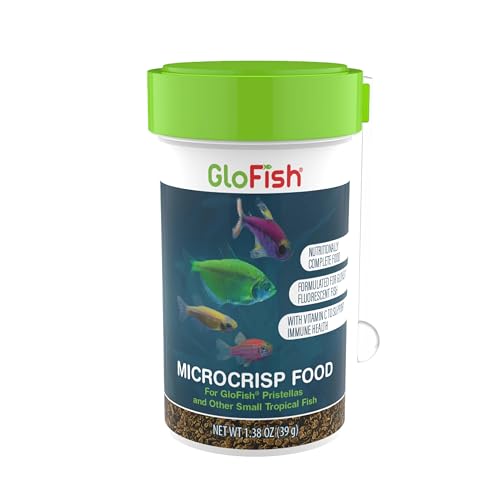
Vitamin C for immune support is a feature that sets this food apart from many basic blends. The formula includes fish meal and shrimp meal as protein sources, so it provides a nutritionally complete daily diet for GloFish fluorescent fish. It is designed to enhance their fluorescent colors, making it a practical choice for keepers who want both health and color benefits in one food.
The bag holds 1.38 ounces, which is smaller than the 3.17-ounce GloFish Special Flake Food. If you have a community tank, you may go through it faster. For bottom-feeding GloFish sharks, the Tetra GloFish Wafers are formulated to sink and target those fish directly. For top- or mid-water GloFish where immune support is a priority, this food offers a specific benefit that other options may not provide.
Product photos
Tetra GloFish Wafers Fish Food

What We Like
- Nutritionally complete for bottom feeders
- Contains shrimp proteins for growth
- Optimized for GloFish Sharks and Cory Catfish
- Sinking wafer format targets bottom fish
Trade-offs
- Only suitable for bottom-feeding species
- Requires daily feeding with portion control
- Not a treat or supplement, it's a full diet
A sinking wafer is the only practical way to get food to GloFish Sharks and Cory Catfish that spend their time scouring the tank floor. Tetra GloFish Wafers contain shrimp proteins, which support healthy growth in these bottom dwellers. The nutritionally complete formula means you don’t need to supplement with other foods for daily feeding. You do need to watch how much you drop in, feed only what they can finish in a few minutes, once or twice a day. If your GloFish community includes mid-water swimmers like tetras or danios, this wafer won’t do much for them; it’s built specifically for the fish that stick to the substrate.
This wafer is a specialist tool, not a general-purpose food. Compared to the GloFish Special Flake Food, which is designed for small to mid-sized tropical fish throughout the tank, these wafers are optimized for bottom feeders. That’s great if you have bottom feeders, but you’ll need a separate food for any surface or mid-water fish in the same aquarium. For a tank stocked exclusively with GloFish Sharks and Cory Catfish, this is the most direct way to meet their nutritional needs without clouding the water with uneaten flakes.
Product photos
GloFish Colorful 4 Flake Blend

What We Like
- Four-flake blend for variety
- Brand-specific formulation for GloFish
- Lightweight 0.1-pound package
Trade-offs
- Flake format not for bottom feeders
- Not suitable for larger fish species
At just 0.1 pounds, this is a compact starter supply for a single tank. The four-flake blend is marketed under the GloFish brand, so it pairs naturally with the fish’s feeding routine as a daily staple. It avoids vague claims and sticks to a straightforward flake formula.
The small size is a limiting factor: at 0.1 pounds, you’ll reorder sooner than with the 3.17-ounce GloFish Special Flake Food. Because it’s a flake, it floats and drifts, so bottom-dwelling GloFish like sharks or cory catfish won’t get their share; for those, the Tetra GloFish Wafers are a better match. This blend works best as a primary surface-feeding food for a small community of GloFish, not as a one-size-fits-all solution.
Product photos
GloFish Daphnia Treat
What We Like
- Good source of protein for GloFish
- Sun-dried daphnia treat helps support digestion
- Great for all GloFish fluorescent fish
Trade-offs
- Only a treat, not a complete daily diet
- Limited to 4 feedings per week
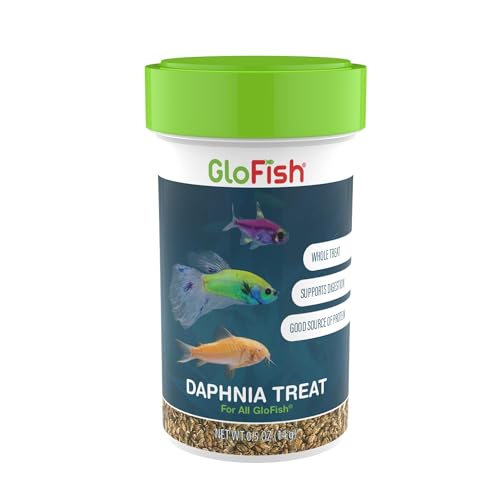
A 0.5-ounce bag of sun-dried daphnia means this is a treat, not a daily staple. That is exactly what the feeding directions say: up to four times per week, and only what your fish can finish in three minutes.
You cannot rely on this as a complete meal; it lacks the balanced nutrition a daily food like GloFish Special Flake Food provides. For owners who already feed a nutritionally complete base diet and just want something different a few times a week, that’s fine. But if you are looking for a single food to cover all your fish’s needs, this is not it, stick with the flake or microcrisp options for everyday feeding.
Product photos
How We Evaluated Foods For GloFish
We evaluated these foods by reviewing manufacturer nutritional data, ingredient lists, and feeding guidelines, then cross-referencing those details with expert recommendations on balanced diets for small tropical freshwater fish. Owner feedback patterns helped us understand real-world results with color enhancement and fish acceptance.
Three criteria mattered most for this category: nutritional completeness (whether the food works as a sole daily diet or needs supplementation), species suitability (which fish in a GloFish tank actually eat the format), and color enhancement claims (whether the formula includes ingredients known to support pigment expression). We also weighed practical factors like portion control guidance and bag size.
A research-led evaluation has limits, we don’t test foods in tanks, and individual results vary with water quality, tank mates, and feeding consistency. What we offer is a clear framework for reading labels and matching food format to your specific fish, informed by the same nutritional principles used for any tropical fish diet.
What To Look For In Foods For GloFish
The right GloFish food balances complete nutrition with a format your fish will actually eat. Here’s what to check before you buy.
Look for a nutritionally complete formula designed as a sole daily diet, a format matching your fish’s feeding zone (surface, mid-water, or bottom), and ingredients like shrimp meal or spirulina that support color. Avoid foods marketed only as treats for staple use.
Nutritional Completeness
A food labeled as “complete and balanced” can serve as the sole daily diet without supplementation. Treat-only foods like daphnia or bloodworms lack the full vitamin and mineral profile fish need long-term. Check that the first ingredients include quality protein sources, fish meal, shrimp meal, or whole fish, rather than fillers.
Feeding Zone and Fish Size
GloFish tanks often mix surface feeders (Danios), mid-water swimmers (Tetras), and bottom dwellers (Sharks, Cory Catfish). Flakes float and suit surface and mid-water fish; sinking wafers reach bottom feeders. Match the food to the freshwater fish species eating it, or plan to offer two formats if your tank has mixed feeding zones.
Color Enhancement Ingredients
Ingredients like natural carotenoids, spirulina, and shrimp meal can help GloFish maintain brighter fluorescent colors. A dedicated color-enhancing food isn’t always necessary if your staple food already contains these ingredients, check the label rather than relying on packaging claims.
- Does the label say “complete and balanced” or “treat only”?
- Will every fish in the tank reach the food before it sinks or gets eaten by faster swimmers?
- Does the ingredient list include a named protein source (fish meal, shrimp meal) in the top three ingredients?
- Is the pellet or flake size appropriate for your fish’s mouth size?
- How many feedings per day does the manufacturer recommend for your tank temperature and stocking level?
A single “all-in-one” flake works for mixed tanks only if all fish eat at the surface or mid-water, bottom feeders need a sinking wafer to thrive.
Foods For GloFish Compared
The table below compares the five foods side by side, highlighting their best use case, format, and key trade-offs so you can match one to your tank’s specific needs.
| Product | Type | Target Fish | Container Size |
|---|---|---|---|
| GloFish Special Flake Food | Flake | Small to mid-sized tropical freshwater | 3.17 ounces |
| GloFish Microcrisp Fish Food | Microcrisp | GloFish fluorescent fish | 1.38 oz |
| Tetra GloFish Wafers Fish Food | Wafer | GloFish Sharks & Cory Catfish | 1.58 oz |
| GloFish Colorful 4 Flake Blend | Flake blend | GloFish fish | N/A |
| GloFish Daphnia Treat | Whole treat | All GloFish fluorescent fish | 0.5 oz |
Frequently Asked Questions
What is the best food for GloFish to enhance their color?
GloFish Special Flake Food is formulated specifically to enhance fluorescent colors while providing complete daily nutrition. It contains ingredients that support pigment expression, and owners consistently report brighter fish when using it as a staple diet.
Can GloFish eat regular tropical fish food?
Yes, GloFish can eat standard high-quality flake fish food formulated for small tropical fish. However, general tropical foods may not contain the specific ingredients that help maintain the intense fluorescent colors GloFish are known for. A GloFish-specific formula offers the best color results.
How often should I feed my GloFish?
Most GloFish foods recommend feeding two to three times daily, giving only what fish can consume in two to three minutes per feeding. Overfeeding leads to water quality issues. Adjust portions based on tank temperature and fish activity levels.
What is the difference between GloFish flakes and wafers?
Flakes float at the surface and suit Danios, Tetras, and other mid-water swimmers. Wafers sink to the bottom and are designed for bottom-feeding species like GloFish Sharks and Cory Catfish. Your choice depends on which species live in your tank.
Is GloFish Daphnia Treat a complete diet?
No, GloFish Daphnia Treat is a supplement meant for up to four feedings per week. It provides protein and supports digestion but lacks the full vitamin and mineral profile needed for long-term health. Use it alongside a nutritionally complete daily staple food.
The Bottom Line
For most GloFish owners, the GloFish Special Flake Food is the straightforward choice, it’s nutritionally complete, enhances color, and works across multiple small-to-mid-sized species in a single tank. If your setup includes bottom feeders like Sharks or Cory Catfish, add the Tetra GloFish Wafers to ensure those fish get a diet they can actually reach.
Budget-minded keepers or those with simple tetra-and-danio tanks can rely on the Special Flake as a sole food. Anyone wanting extra immune support should look at the GloFish Microcrisp Fish Food for its vitamin C content. The single most important buying factor remains matching the food format to your fish’s natural feeding zone, flakes for surface eaters, wafers for bottom dwellers, and treats only as supplements.
