
How to Keep Dog Treats Fresh: The Bag Beats the Bin
This post contains affiliate links. As an Amazon Associate, we earn from qualifying purchases.
To keep dog treats fresh, the FDA advises leaving them in the original bag so the lot number and best-by date stay with the food (or taping that information to a decanted container), while Virginia Tech alternatively suggests photographing the UPC, label and lot number; store dry treats below 80 F. Opened-treat shelf life varies by source, from 1 to 2 weeks to three months, and moisture is the variable that sets the clock.
That label is the part that disappears first. Pour treats into a decorative bin and the lot number, the UPC, and the best-by date go out to the recycling with the bag, which is the how to keep dog treats fresh question in miniature.
What follows covers the bag-versus-bin argument, the temperatures that matter, the shelf-life numbers three sources disagree about, and the raw category most storage guides skip.
Key Takeaways
- Keep the original bag and drop the whole thing inside the bin. The lot number is what makes a recall traceable to your kitchen.
- Below 80 F and dry for dry food and unopened cans. 40 F or colder for anything opened and moist.
- Homemade dehydrated treats run about two weeks (UCANR). One commercial vendor claims 2 years sealed and 3 months opened for its own product.
- Freeze-dried treats and rawhide count as raw under Canadian guidance, which does not recommend feeding raw at all.
- Never re-freeze thawed raw treats. Thaw on the bottom shelf, in a sealed container, and only what the dog will eat today.
Why the Original Bag Beats the Decorative Bin
The FDA treats the original bag as the storage container, while Virginia Tech alternatively suggests photographing the UPC, label and lot number if you decant.
Dry pet food and treats kept in the original bag retain the UPC code, lot number, product name, manufacturer, and best-by date attached to the food itself. Decanting into a bin separates that information from the product. Taping the same details to the outside of a bin restores traceability, provided the label is replaced each time a new bag is opened.
The proper storage of pet treats guidance from the FDA says exactly that: original container or bag, because the label is the record. Lauren Carey, a veterinarian at the FDA, explains why the lot number and best-by date matter. They are the fields a consumer needs when filing a complaint about a pet food.
This is not fussiness. In December 2020, a recall of dog and cat food containing an aflatoxin-contaminated ingredient led to more than 110 dogs dead and more than 210 sick, according to the consumer guide to pet food safety from Virginia Cooperative Extension. In December 2020, a recall of dog and cat food containing an aflatoxin-contaminated ingredient led to more than 110 dogs dead and more than 210 sick. The FDA states those figures are approximate.
Aflatoxin is a toxin produced by mould on grain. It does not announce itself in the bowl.
If you insist on decanting, the FDA sets three conditions: the container must be clean, dry, and fitted with a snug lid; Virginia Tech alternatively suggests photographing the UPC, label and lot number for your records. Virginia Tech offers an alternative to taping, which is to photograph the UPC code, label and lot number and keep the picture on your phone.
Before you start: Raw and frozen treat juices drip onto whatever sits below them, so thaw on the bottom shelf in a sealed container. A damp bin plus old fat residue forms a tacky film that transfers straight onto fresh food. Wash hands for at least 20 seconds before and after handling any pet food or treat.
What to Write on the Bin
- Empty the bin completely and wash it with hot soapy water, then let it dry all the way. Damp plastic against fat residue is the pairing that turns fresh kibble tacky.
- Write the product name, manufacturer, lot number, UPC and best-by date on a card, and tape it to the outside.
- Drop the whole bag in, folded shut, rather than pouring loose. The original label stays intact and the bag does the work.
- Update the card the moment a new bag goes in, because an old label is worse than no label.
The same traceability rules govern how you store dry dog food for the main diet. Treats just get forgotten more often.
Where this goes sideways: Pouring a fresh bag over the last inch of an old one. The old fat at the bottom has already oxidized, and the new food picks up that smell within days.
How to Keep Dog Treats Fresh in a Warm Kitchen
Below 80 F is the number to hold in your head.
Virginia Tech’s extension publication puts it plainly: store dry pet food and unopened canned wet food in a cool, dry place below 80 F. Anything canned or moist that has been opened gets tightly covered and refrigerated at 40 F or colder.
Warm air speeds up fat oxidation, and oxidized fat is what rancid actually means. That is the whole mechanism. The treat does not need to be wet to go off; the fat in it just needs time and heat.
I keep a cheap thermometer on the pantry shelf, not on the wall. A cupboard beside the oven or on top of the fridge runs hotter than the room around it, and that is where the first bag goes stale.
Humidity matters as much as temperature. The basics of how to store pet treats barely change between a bag of biscuits and a bag of kibble, and the same logic covers how to keep pet food fresh across the whole shelf.
The 10% Rule, and Why Treats Still Count
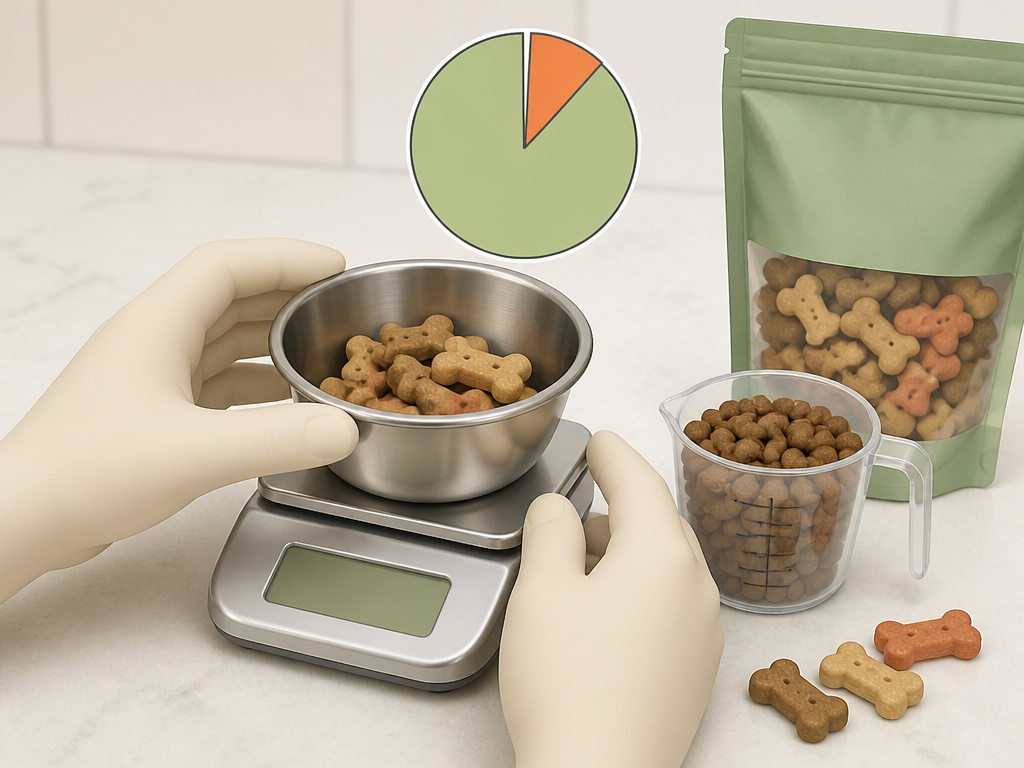
A cat came in for a weight check and the scale had crept up over four months. The main diet was measured to the gram. The treats were not on my list of questions.
I ask about treats first now. The calories in a handful of chews are easy to miss because nobody weighs them, and they stack up quietly.
Fishtastic’s own feeding guidance puts treats at no more than 10% of a dog’s daily calories, with a feeding guide printed on the back of each pack. That is a vendor figure rather than a regulatory one, but it is a reasonable ceiling to work from.
Treats as Toppers, Not Meals
Most homemade treat recipes I get asked about are fine as treats and a disaster as meals. Keep the complete kibble or canned food as the base and use the homemade batch as a topper. Boring, and it works every time.
If you are making your own, the storage rules for homemade dog treats are stricter than anything printed on a commercial bag, because nothing in your kitchen is doing the preserving.
How Long Do Dehydrated Dog Treats Actually Last?
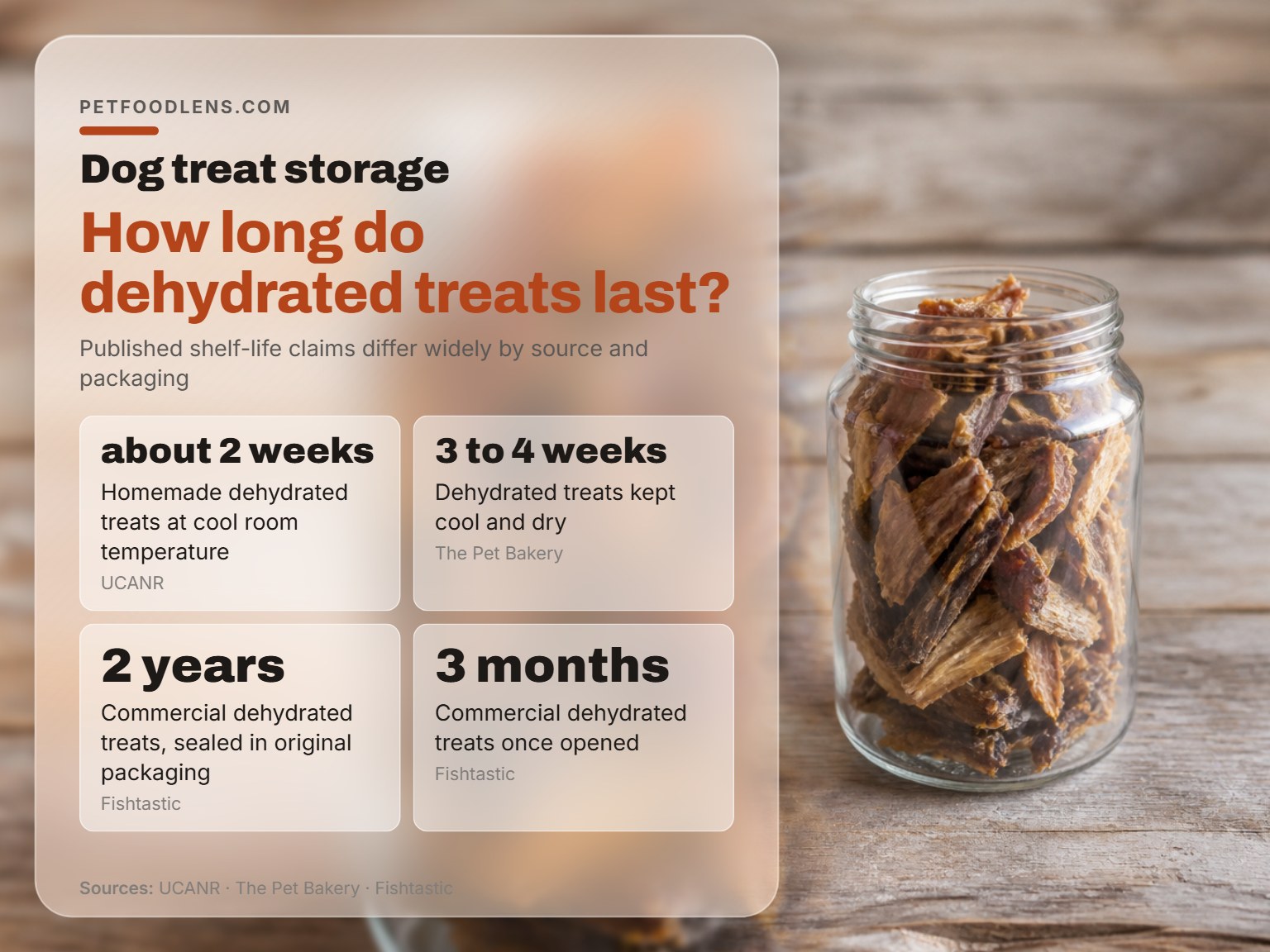
Water activity is the number that decides shelf life, and it runs on a scale from 0 to 1. The lower the figure, the slower bacteria, yeasts and moulds can multiply. A dry biscuit and a soft bake from the same recipe can differ in shelf life by weeks on that basis alone.
Here is where the sources part company. The numbers below are as published, not reconciled.
| Source | Treat type | Claimed shelf life |
|---|---|---|
| UCANR (University of California) | Homemade dehydrated | About two weeks |
| The Pet Bakery (vendor blog) | Dehydrated, kept cool and dry | 3 to 4 weeks |
| The Pet Bakery (vendor blog) | Opened artisan treats, room temperature | 1 to 2 weeks |
| The Pet Bakery (vendor blog) | Fresh-baked, refrigerated | 5 to 7 days |
| Fishtastic (vendor) | Commercial dehydrated, sealed | 2 years |
| Fishtastic (vendor) | Commercial dehydrated, opened | 3 months |
The gap between two weeks and two years is water activity and packaging, not the recipe. A home dehydrator and a sealed commercial pouch are doing different jobs.
The two vendors also disagree on refrigeration. Fishtastic says its treats stay airtight at room temperature in a cool, dry place and need no fridge. The Pet Bakery puts meat and fish treats at 0 to 5 C, used within one to two weeks. Both are commercial positions, and I would follow the colder one for anything meat-based you opened yourself.
If you want the process side rather than the storage side, the dehydrated chicken jerky dog treats document from UCANR is the most useful single page I have found.
Freeze-Dried, Rawhide, and Bully Sticks: The Raw Category
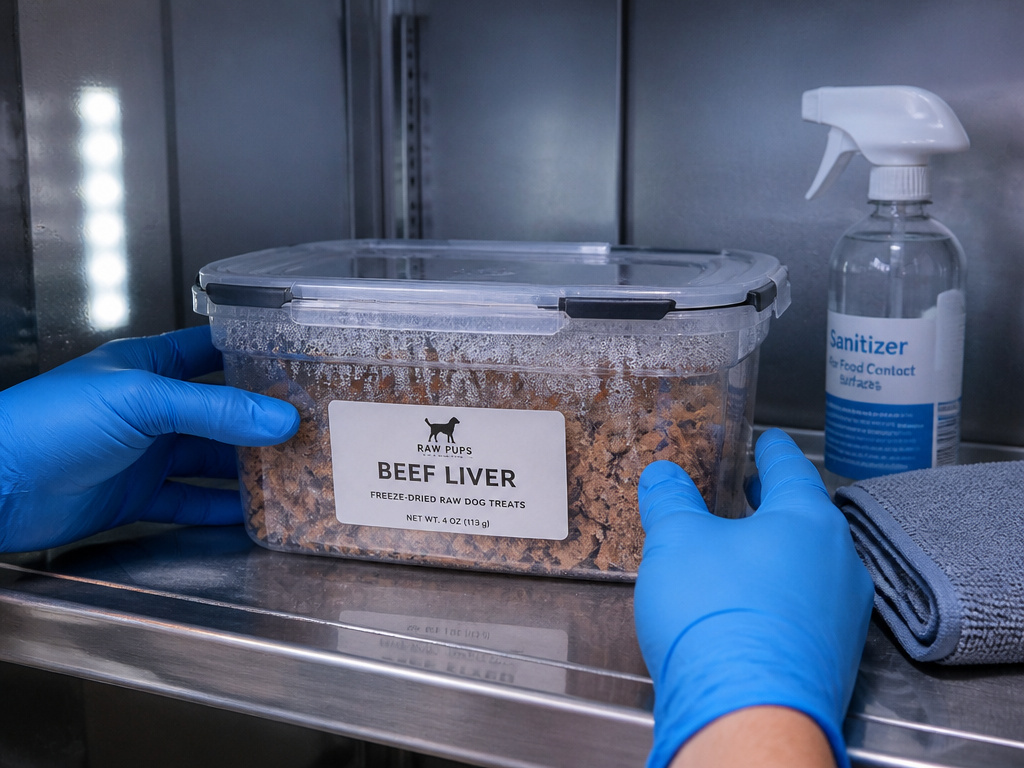
Freeze-dried treats are raw treats.
The Public Health Agency of Canada classifies freeze-dried treats and rawhide chews as raw products, and notes they may carry a higher risk of germs without additional processing steps to kill bacteria. The same page lists dehydrated treats such as rawhide, pig ears and bully sticks among raw pet treats.
That surprises most owners, because a bully stick feels about as raw as a piece of chalk.
The agencies also disagree, and it is worth naming both positions. The Public Health Agency of Canada does not recommend feeding raw pet food or treats to pets at all. The FDA issues no blanket raw prohibition and concentrates on safe handling and storage instead.
My own work is mostly cat food, so I will say this plainly: a raw feeding decision belongs with your veterinarian, not with a storage article. What I can tell you is how to handle the package once it is in your kitchen.
Thawing Raw Treats Without Cross-Contaminating the Fridge
Thaw on the bottom shelf of the fridge in a sealed container so juices cannot drip onto anything below. Thaw only what is needed, and never re-freeze after thawing.
Then clean and sanitize every surface the package touched, including the microwave interior and the fridge shelf. That last part is the step people skip.
Thaw only what the dog will eat today. Once a raw treat has thawed, re-freezing means the surface has been warm twice, and the second warm spell is where the bacteria count climbs.
The same handling rules apply to natural dog chews, which sit in the raw category whether they look like it or not.
Skip this if: You feed only shelf-stable baked or extruded treats. The raw handling steps add nothing to a sealed bag of biscuits, and the label rules in the first section are all you need.
Which Container Actually Keeps Treats Fresh?
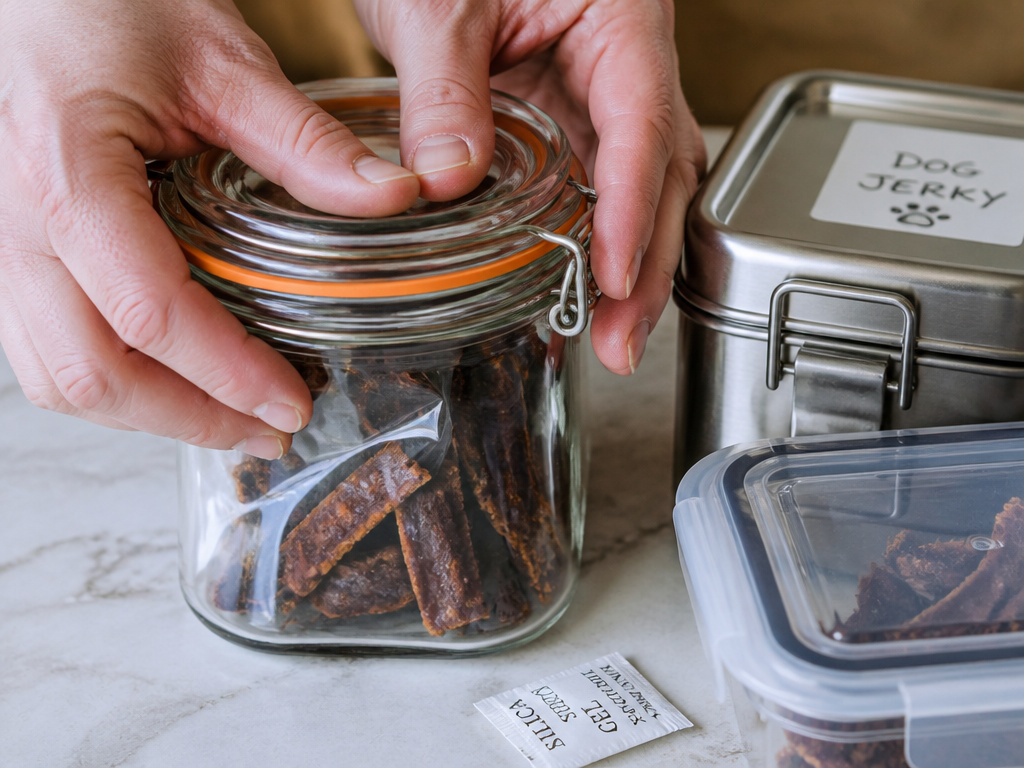
Three things matter in a container: the seal, the material, and whether light gets in.
The Pet Bakery’s guidance is airtight, food-grade and opaque, and it makes a point I agree with. The seal matters more than the material. Glass jars with rubber seals, metal tins and food-grade plastic tubs all work.
A glass jar with a rubber-sealed lid handles a small bag of jerky. For a bigger bag, a food-grade plastic tub with a gasketed lid gives you a body you can tape a label to. If yours is clear, keep it in a cupboard rather than on the counter.
UCANR’s homemade-treat guidance is less fussy and lists resealable bags, screw-top jars and plastic or glass containers, with one condition: the container must be airtight.
| Setup | What it protects | What it risks |
|---|---|---|
| Whole bag inside a bin | Lot number, UPC, best-by date | Nothing, if the bin is clean and dry |
| Bag opened and clipped shut | The label stays on the bag | Ants and pantry moths get in through the fold |
| Poured loose into a bin | Nothing on the label survives | Recall traceability, plus old fat residue |
| Poured loose, label taped on | Traceability, if you redo the label | A stale label when you refill |
Glass, Metal, or Plastic?
The Pet Bakery adds one maintenance step I had not seen elsewhere: a small food-grade silica packet in each jar, replaced every few weeks. It absorbs stray moisture and keeps hard treats crisp.
I have also seen what happens when a bin goes unwashed. I emptied one at the bottom of a pantry once and found a yellowish, tacky film on the walls and a sharp crayon-and-paint smell. Months of fresh kibble had been poured over that residue, so every new batch met old oxidized fat on day one.
Empty the bin completely between bags and wash it with hot soapy water. Dry it fully, which takes longer than people expect, because damp plastic and fat residue is a bad pairing. The full rundown on dog food storage containers covers sizes and lid types.
A sealed bin also solves the second problem, which is pantry moths finding the fold in an open bag.
How to Tell a Treat Has Gone Bad
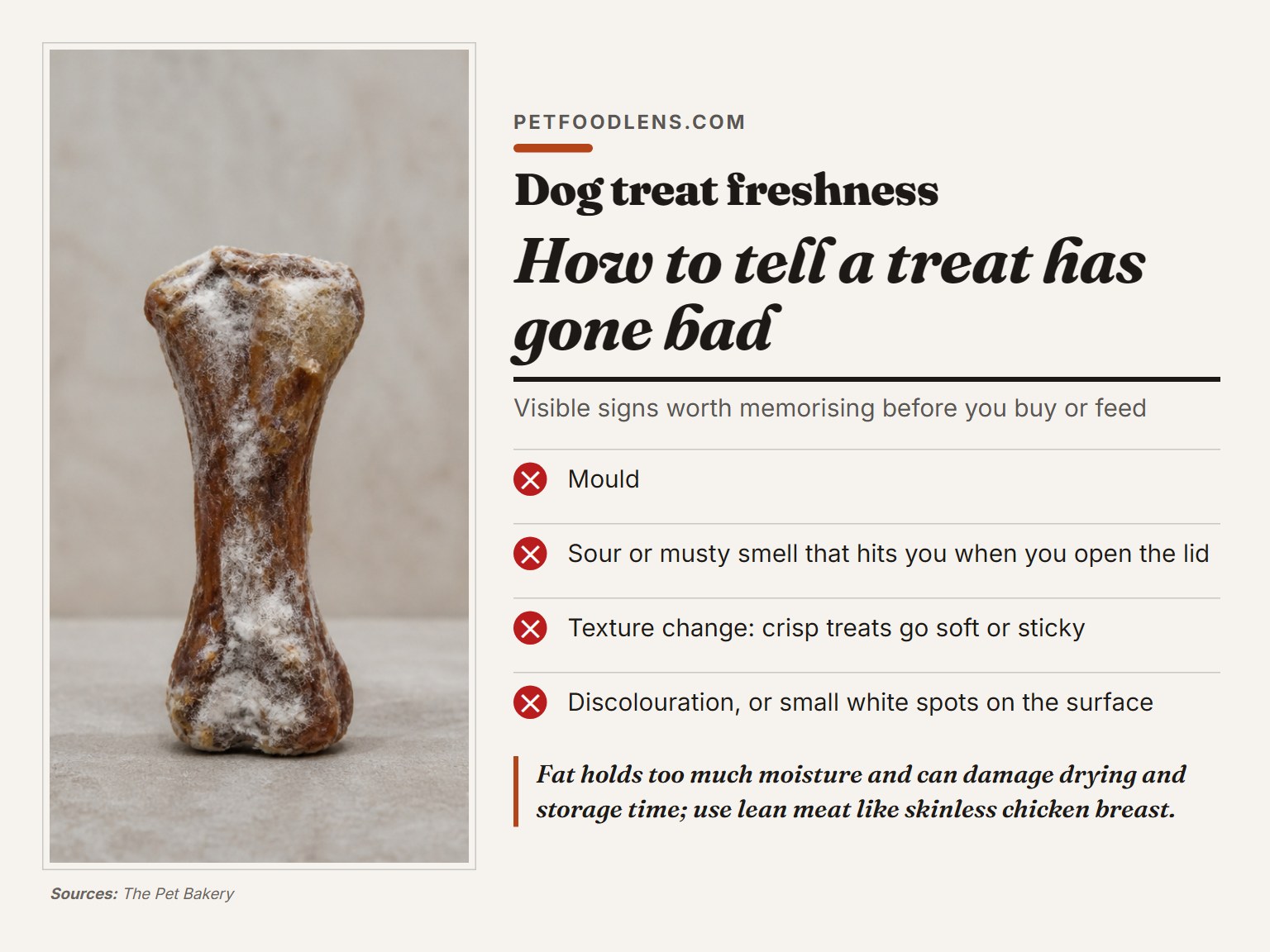
What does a spoiled treat actually look like?
The Pet Bakery lists the visible signs, and they are worth memorising:
- Mould, including the fuzzy kind you find only after the bag has been open a while
- A sour or musty smell that hits you when you open the lid
- A texture change, where treats that were crisp go soft or sticky
- Discolouration, or small white spots on the surface
- A dog who suddenly refuses a treat he used to take
When in doubt, throw it out. That is the whole rule.
Packaging is the other check, and it happens before you buy. Virginia Tech advises buying only products in good condition and looking for dents, tears, punctures and discolouration on the pack. A damaged bag has lost the seal that was keeping moisture out.
The part nobody mentions: Fat is the enemy of drying. UCANR notes that fat holds too much moisture and can damage both the drying process and the storage time, which is why it recommends skinless chicken breast. A high-fat batch of homemade jerky can fail well before the two-week mark.
Frequently Asked Questions
Should I keep dog treats in the fridge?
For meat-based, soft-baked or freshly opened treats, often yes. The Pet Bakery puts meat and fish treats at 0 to 5 C and recommends using them within one to two weeks, while Fishtastic says its treats stay airtight at room temperature and need no fridge. Dry biscuits and sealed commercial jerky are fine in a cupboard below 80 F.
How long do opened dog treats last?
It depends on moisture. The Pet Bakery gives opened artisan treats 1 to 2 weeks at room temperature and fresh-baked treats 5 to 7 days refrigerated. Fishtastic claims 3 months for its own opened product. Follow the shorter figure when you are unsure.
Can I freeze treats to make them last longer?
Freezing slows spoilage in moist and meat-based treats, and it is a reasonable option for a large batch you cannot finish. Thaw them in the fridge rather than on the counter, and do not re-freeze anything that has already thawed.
Are freeze-dried treats raw?
Under Public Health Agency of Canada guidance, yes. Freeze-dried treats and rawhide chews are classified as raw products because they have not been through a kill step for bacteria. That agency does not recommend feeding raw pet food or treats at all.
Why does the original bag matter so much?
Because the lot number lives on it. The FDA notes that the lot number and best-by date, along with the full product name, are what a consumer needs when filing a complaint. Without them, a recall notice cannot be matched to the bag in your cupboard.
Do silica packets actually help?
They help with moisture, which is the main spoilage driver for dry treats. The Pet Bakery recommends a small food-grade silica packet in each jar, replaced every few weeks. Skip the sachets that come with non-food products.
The Bottom Line
Write the open date on the bag with a marker before it goes into the cupboard. That single line turns every later judgment into a comparison instead of a guess.
Then apply one threshold. If a treat has been open longer than the shortest published claim for its type, treat it as expired. For homemade dehydrated treats UCANR says about two weeks, while The Pet Bakery says 3 to 4 weeks if kept cool and dry and Fishtastic claims 2 years sealed and 3 months opened. For a soft-baked treat left at room temperature, it is days.
The mechanics of how to keep dog treats fresh are boring: a label, a date, a seal, a cool shelf. None of it is interesting, and all of it is what lets you answer a recall notice in ten seconds instead of guessing.
One concession worth stating. If the bag is already gone and you cannot name the lot number, the honest move is to finish that batch and start the next one with the label intact. A tidy row of matching bins looks like organization. A bag with a date written on it is organization.
