
9 Best Wet Cat Food For Kidney Problems in 2026
This post contains affiliate links. As an Amazon Associate, we earn from qualifying purchases.
For cats with kidney disease, the right diet is essential. Our Best Overall pick, Hill’s Prescription Diet k/d Kidney Care Wet Cat Food, leads with clinically proven kidney support and a prebiotic blend. Royal Canin Veterinary Diet Feline Renal Support E is our choice for appetite stimulation. Weruva Wx Phos Focused Pate Formulas offers a strong non-prescription low-phosphorus option.
Kidney problems in cats demand careful management of phosphorus, protein, and hydration. Choosing the wrong food can accelerate disease progression, but the right formula supports kidney function and quality of life.
This guide evaluates nine wet cat foods through research on ingredient profiles, phosphorus levels, and expert consensus on renal diets. We break down what matters most so you can match a food to your cat’s specific needs.
Top 9 Wet Cat Foods For Kidney Problems in the Market
Certain content that appears on this site comes from Amazon. This content is provided "as is" and is subject to change or removal at any time.
The Best Wet Cat Foods For Kidney Problems, Reviewed
Hill's Prescription Diet k/d Kidney Care Wet Cat Food

What We Like
- Clinically proven to improve kidney function
- ActivBiome+ Kidney Defense prebiotic blend
- Reduced phosphorus and sodium for kidney protection
- Bite-sized chunks in gravy for picky eaters
Trade-offs
- Requires veterinary prescription to purchase
- Only available in 2.9 oz cans, not larger sizes
The most important feature here is the reduced phosphorus and sodium, which are the minerals you need to control when a cat’s kidneys are compromised. Hill’s has packed this stew with bite-sized chunks in gravy, and the ActivBiome+ Kidney Defense prebiotic blend is designed to activate the gut microbiome to help protect kidney function. This wet food is clinically proven to improve and lengthen quality of life, and it contains more essential amino acids than daily requirements to support lean muscle. If your cat needs a renal diet and prefers chunks in gravy over pates or loaves, this is a strong option backed by veterinary recommendation.
The trade-off is the prescription requirement: you can’t just grab this off a shelf. A vet visit and a script are needed before you can even try it. Compared to the Weruva Wx Phos Focused Pate Formulas, which is non-prescription and also low phosphorus, the Hill’s has the backing of clinical proof and a specific prebiotic mechanism, but you lose the convenience of ordering without a vet’s sign-off. The 2.9 oz can size is what it is; if you have a larger cat or multiple cats on the same diet, you’ll be opening several cans per day. For a cat with diagnosed kidney disease where you want a clinically proven, vet-recommended option, this is the one.
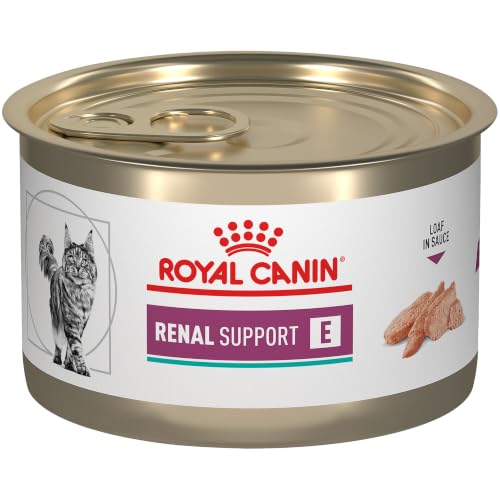
Royal Canin Veterinary Diet Feline Renal Support E Wet Cat Food
What We Like
- Veterinary-exclusive kidney support formula
- Enticing loaf-in-sauce texture for picky eaters
- Energy-dense to reduce meal volume
- Precise antioxidant complex and fish oil
Trade-offs
- Requires veterinary authorization to purchase
- Only available in one texture (loaf in sauce)
This is a veterinary-exclusive wet food with a loaf-in-sauce texture, designed to help stimulate appetite in cats. The energy-dense formula means cats with decreased appetite can eat a smaller volume and still get the calories they need. Low phosphorus, targeted protein, and an antioxidant complex from fish oil all help promote kidney function. For owners whose cat needs appetite support, the formulation is designed to encourage eating.
You will need a vet’s okay before you can buy this prescription diet. That is a real hurdle if you are looking for something off the shelf. Compared to the Weruva Wx Phos Focused Pate, which is a different product, the Royal Canin offers a veterinary-exclusive approach but locks you into a veterinary channel. If your cat is already under a vet’s care and eating is the main struggle, this is a logical choice. If you want more flexibility or a different texture, other options might be easier to grab.
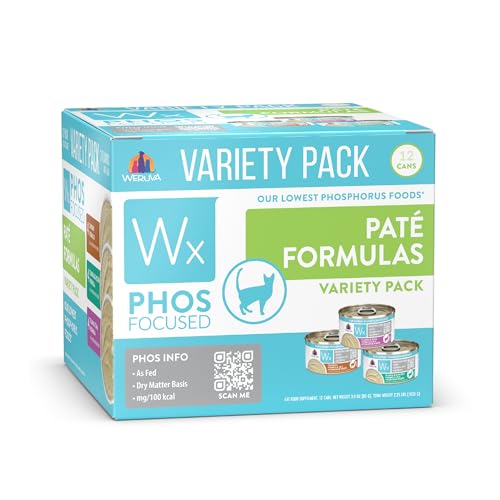
Weruva Wx Phos Focused Pate Formulas Variety Pack
What We Like
- Up to 50% less phosphorus than AAFCO minimum
- Highly bioavailable proteins for muscle maintenance
- No powdered cellulose or fillers
- Hydration from bone-free proteins
Trade-offs
- Only available in 3 oz cans
- Not suitable for cats requiring a prescription renal diet
A phosphorus level up to 50% below AAFCO’s minimum is the standout number here, that’s a meaningful reduction for a cat with kidney concerns, without slashing protein quality. The highly bioavailable proteins help maintain muscle mass, which is often a challenge in renal diets. This pack suits owners who want a low-phosphorus, all-natural pate without fillers or cellulose, and who prefer a non-prescription option that still targets kidney support.
The 3 oz can size means you’ll be opening more cans per feeding compared to larger formats, and the pate texture might not win over every cat. For early-stage management or maintenance, this variety pack is a practical, ingredient-focused choice.
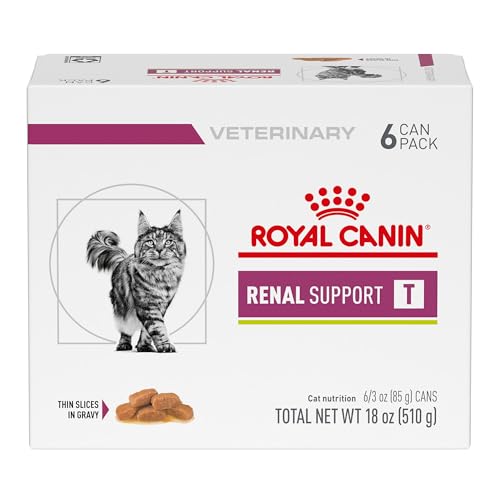
Royal Canin Veterinary Renal Support T Wet Cat Food
What We Like
- Soft texture stimulates appetite
- Low phosphorus supports kidney function
- Energy-dense formula reduces meal volume
- Antioxidant complex and fish oil fatty acids
Trade-offs
- Veterinary-exclusive, requires vet authorization
- Designed only for adult cats with kidney issues
A precise antioxidant complex, fatty acids from fish oil, low phosphorus, and targeted protein levels are the concrete features that make this wet food a targeted tool for kidney care. The soft, highly palatable texture is specifically designed to stimulate appetite in cats that may be reluctant to eat, a common issue with kidney problems. This energy-dense formula also reduces meal volume, so your cat gets the nutrition it needs without being overwhelmed by a large portion. It’s a practical choice for owners who need a food that addresses both kidney health and the picky eating that often comes with it.
The main catch is the veterinary-exclusive requirement, so you’ll need a vet’s okay to buy it. That’s a small hurdle for a formula built around specific therapeutic goals, but it does limit convenience compared to non-prescription options like Dave’s Pet Food Non-Prescription Renal Cat Food, which you can grab off the shelf. If your cat’s kidney issues are diagnosed and your vet is on board, this food’s targeted nutrition and appetite-friendly texture make it a solid fit for daily management.
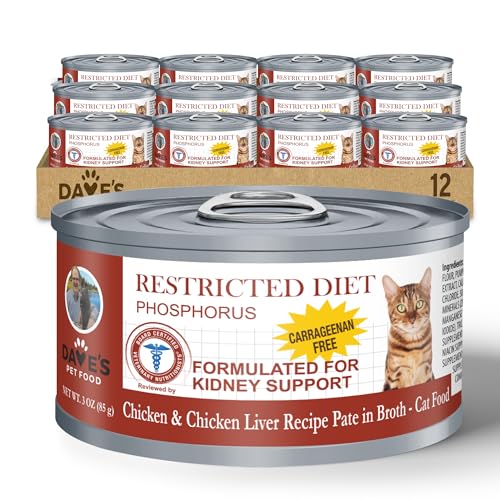
Dave's Pet Food Non-Prescription Renal Cat Food
What We Like
- Low phosphorus (max 0.3%)
- Low protein (min 5%)
- No carrageenan, artificial colors or flavors
- Fortified with 22 essential vitamins and minerals
Trade-offs
- Contains brown rice, not grain-free
- Only 3 oz cans, smaller than some competitors
A phosphorus cap of 0.3% is the number that matters most for a cat with kidney issues, because keeping phosphorus low is one of the few dietary levers that can slow disease progression. Dave’s Pet Food Non-Prescription Renal Cat Food hits that target while also keeping protein at a modest 5% minimum, which reduces the workload on the kidneys. It’s a wet stew with added broth to encourage hydration, and the ingredient list skips carrageenan, artificial colors, and artificial flavors. For a budget-friendly option, this is a straightforward, no-nonsense formula that covers the basics without requiring a prescription.
The low protein level (5% min) may not provide enough for a cat that still has decent kidney function or needs more muscle maintenance. The inclusion of brown rice and pumpkin makes it gentle on digestion, but if your cat needs a grain-free or higher-protein renal diet, you’ll want to look elsewhere. For a budget pick that keeps phosphorus in check and adds hydration, this does the job without the prescription price tag.
Product photos
Forza10 Renal Wet Cat Food for Kidney Support
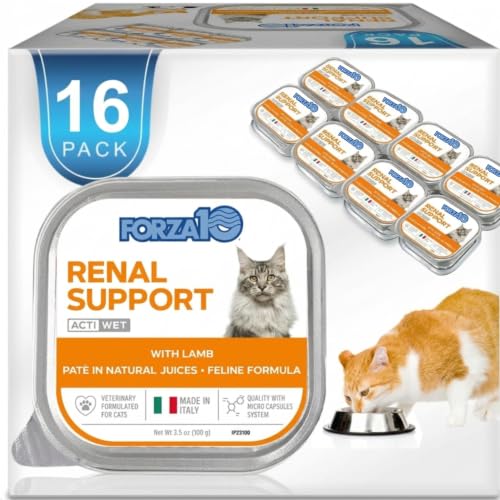
What We Like
- Hydrolyzed protein for controlled phosphorus
- Cranberries, dandelion, clover for kidney support
- Non-GMO, no by-products or artificial additives
- Lamb flavor in moist pate texture
Trade-offs
- Only one flavor option available
- No explicit phosphorus or protein percentages listed
Hydrolyzed protein and potato protein give this wet food a controlled phosphorus and adapted protein profile, which is exactly what you want when managing kidney function. The addition of cranberries, dandelion, and clover extract targets renal support directly, and the absence of GMOs, by-products, wheat, soy, and artificial anything means the ingredient list is refreshingly clean. This is a non-prescription renal diet with a European pedigree and a transparent formula, especially if your cat enjoys lamb and prefers a moist, easy-to-serve pate.
The biggest limitation here is flavor variety: you get lamb or nothing, which can be a problem if your cat is picky or gets bored. Forza10 uses hydrolyzed protein and botanical extracts like cranberry and dandelion to support kidney function, rather than relying on a tightly restricted phosphorus number. If your cat tolerates lamb and you want an Italian-made renal food with straightforward ingredients, this is a clean, no-nonsense option.
Product photos
Tiki Cat Silver Wet Cat Food for Seniors

What We Like
- Low phosphorus for kidney support
- High protein maintains muscle mass
- Variety pack with three recipes
- Antioxidants for immune system support
Trade-offs
- Only available in variety pack, not single recipes
- Not suitable for cats under 11 years old
Low phosphorus is listed on the label, which is a key feature for senior cats. Tiki Cat Silver uses real shredded chicken and flaked salmon, tuna, and mackerel in broth, and the high protein content helps maintain healthy weight and muscle mass. The formula also includes optimal antioxidants for immune system support. It is designed specifically for cats age 11 and up.
The shreds-in-broth texture may not appeal to every cat. Compared to Weruva Wx Phos Focused Pate Formulas Variety Pack, which is also low phosphorus, Tiki Cat Silver offers a shredded meat format. The variety pack includes three recipes in one box, which can be convenient for picky eaters, but single flavors are not sold separately. For a senior cat that enjoys shredded meat textures, this is a suitable option.
Product photos
Blue Buffalo K+M Wet Cat Food

What We Like
- Real chicken as first ingredient
- Contains glucosamine and chondroitin for joints
- No corn, wheat, or soy
- No artificial flavors or preservatives
Trade-offs
- Requires veterinarian authorization to purchase
- Not suitable for cats without kidney issues
Controlled protein levels help manage kidney workload, and the inclusion of glucosamine and chondroitin targets joint health alongside renal function. This dual-purpose approach suits cats whose kidney issues coincide with mobility concerns, giving you one food instead of two separate regimens. The real chicken first ingredient and the absence of corn, wheat, soy, and artificial additives align with a cleaner ingredient philosophy that many label-checkers appreciate.
You will need a vet’s authorization before ordering this prescription diet. That extra step is a barrier compared to non-prescription options like Dave’s Pet Food Renal, which you can grab without a vet visit. If you prefer to bypass the prescription process and your cat’s kidney needs are moderate, a non-prescription formula might be more convenient. But for cats that need both kidney support and joint care, this combo in one can is hard to beat.
Product photos
Kidney Restore Renal Cat Food Wet
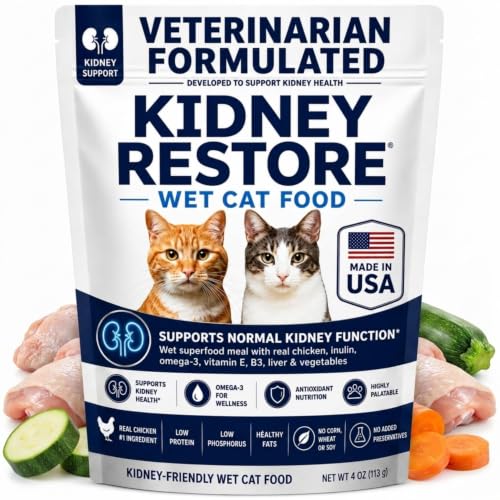
What We Like
- Non-prescription renal support formula
- Low phosphorus and low sodium levels
Trade-offs
- Not suitable for cats needing a prescription diet
A low-phosphorus, low-sodium wet food that skips the prescription requirement is the main draw here. For cat owners who want a renal diet without a vet visit, this hits the mark, especially if you value transparent sourcing and avoid added junk like dyes or preservatives.
The lower protein level is common in kidney diets but worth noting if your cat is a high-activity or young adult that needs more muscle support. Compared to a prescription option like Hill’s Prescription Diet k/d, this non-prescription formula gives you more control over ingredients but may not be as tightly regulated for advanced kidney stages. It’s a solid middle ground for maintenance or early-stage care.
Product photos
How We Evaluated Wet Cat Foods For Kidney Problems
This guide is based on manufacturer specifications, veterinary nutrition guidelines, and patterns in owner feedback. We analyzed ingredient lists, guaranteed analyses, and clinical study data where available. We also consulted published veterinary resources on renal cat food to understand what makes a diet truly kidney-friendly.
Three criteria drove our rankings. First, phosphorus restriction: the single most important dietary change for kidney disease, as excess phosphorus accelerates renal decline. Second, protein quality and quantity: cats need highly digestible protein to maintain muscle without overworking the kidneys. Third, moisture content and palatability: wet food supports hydration, and a food a cat won’t eat provides no benefit at all.
A research-led approach has limits. Individual cats respond differently to diets, and we cannot account for every stage of kidney disease or concurrent health condition. We recommend working with your veterinarian to interpret these options for your cat’s specific lab values.
What To Look For In Wet Cat Foods For Kidney Problems
Choosing a kidney-supportive wet food means looking beyond the front label. The key factors are phosphorus levels, protein sources, and moisture content, all tailored to your cat’s disease stage.
Prioritize foods with low phosphorus, highly digestible animal proteins, and high moisture content to support hydration and reduce kidney workload.
Phosphorus Restriction
Phosphorus is the primary dietary concern for cats with kidney disease. Damaged kidneys cannot filter excess phosphorus from the blood, leading to further renal damage and mineral imbalances. Look for foods with low phosphorus levels. Prescription diets like Hill’s and Royal Canin achieve the lowest levels, but non-prescription options such as low phosphorus cat food from Weruva and Dave’s also restrict phosphorus significantly.
Protein Quality and Quantity
Cats with kidney disease need protein, but the type matters more than the amount. Highly bioavailable animal proteins (chicken, fish, egg) produce fewer nitrogenous waste products than lower-quality proteins. Some renal diets reduce total protein to ease kidney workload, while others maintain moderate protein with premium sources. The goal is to preserve muscle mass without creating excess waste. For cats that need a middle ground, options like kidney-friendly food balance protein restriction with high digestibility.
Hydration and Moisture Content
Wet food is inherently better than dry for kidney cats because it provides water alongside nutrients. Adequate hydration helps flush toxins from the bloodstream and reduces the concentration of waste products the kidneys must process. Look for foods with high moisture content. This is one area where hydrating wet food clearly outperforms dry kibble, and it’s a key reason we recommend wet food over dry for any cat with kidney concerns.
- Check the guaranteed analysis for phosphorus percentage (dry matter basis preferred).
- Confirm the first ingredient is a named animal protein, not a by-product or plant protein.
- Look for added omega-3 fatty acids from fish oil, which support kidney blood flow.
- Avoid foods with excessive sodium, artificial preservatives, or carrageenan.
A simple rule: the lower the phosphorus and the higher the moisture, the better the food for a kidney-compromised cat.
Wet Cat Foods For Kidney Problems Compared
The table below compares all nine picks across phosphorus level, protein source, and prescription status so you can quickly see which food fits your cat’s needs.
| Product | Form | Phosphorus Level | Key Nutrients/Additives | Can Size |
|---|---|---|---|---|
| Hill's Prescription Diet k/d Kidney Care Wet Cat Food | Chicken & Vegetable Stew | Reduced phosphorus & sodium | Reduced phosphorus & sodium | 2.9 oz |
| Royal Canin Veterinary Diet Feline Renal Support E Wet Cat Food | Loaf in sauce | Low | Antioxidant complex, fish oil | 5.1 oz |
| Weruva Wx Phos Focused Pate Formulas Variety Pack | Pate | Up to 50% less than AAFCO minimum | No powdered cellulose, fillers, or carbs | 3 oz |
| Royal Canin Veterinary Renal Support T Wet Cat Food | Wet cat food | Low phosphorus | Antioxidant complex, fish oil | 3 oz |
| Dave's Pet Food Non-Prescription Renal Cat Food | Wet stew in broth | 0.3% | Low protein (min 5%) | 3 oz |
| Forza10 Renal Wet Cat Food for Kidney Support | Wet cat food | Controlled phosphorus | Hydrolyzed & potato protein | 3.5 oz |
| Tiki Cat Silver Wet Cat Food for Seniors | Shreds in broth | Low phosphorus | Optimal antioxidants | 2.4 oz |
| Blue Buffalo K+M Wet Cat Food | Wet cat food | Controlled levels of protein | Glucosamine, chondroitin | 5.5 oz |
| Kidney Restore Renal Cat Food Wet | Wet cat food | Low phosphorus | Low phosphorus, low sodium, low protein | 4 oz |
Frequently Asked Questions
Can I feed my cat regular wet food if they have kidney problems?
No. Regular wet food typically contains phosphorus levels two to three times higher than what is safe for a cat with kidney disease. Even non-prescription renal diets restrict phosphorus significantly, while standard maintenance foods do not. Always choose a food specifically formulated for kidney support.
Do I need a prescription to buy kidney support cat food?
Some of the most effective renal diets, including Hill’s Prescription Diet k/d and Royal Canin Veterinary Renal Support, require veterinary authorization. However, non-prescription options like Weruva Wx Phos Focused and Dave’s Pet Food Renal Formula are available without a prescription and still offer meaningful phosphorus restriction.
What phosphorus level should I look for in cat food for kidney disease?
Aim for low phosphorus on a dry matter basis. Prescription renal diets often achieve very low levels, while non-prescription low-phosphorus foods may be slightly higher. Your veterinarian can tell you the exact target based on your cat’s bloodwork and disease stage.
Is wet or dry food better for cats with kidney disease?
Wet food is strongly preferred. Its high moisture content helps maintain hydration, which supports kidney function and dilutes waste products in the blood. Dry food contains very little moisture and can contribute to dehydration, a serious concern for kidney cats.
How do I transition my cat to a new kidney diet?
Transition slowly over several days by mixing increasing amounts of the new food with the old. Cats with kidney disease may be picky due to nausea, so warming the food slightly or adding a small amount of water can help. For stubborn eaters, Royal Canin Renal Support E is formulated specifically to stimulate appetite.
The Bottom Line
For cats with diagnosed kidney disease, Hill’s Prescription Diet k/d Kidney Care Wet Cat Food is the best overall choice. Its clinically proven formula, ActivBiome+ prebiotic blend, and reduced phosphorus make it the standard of care for renal diets. It requires a prescription, but the research backing is unmatched.
If your cat refuses prescription food or you prefer a non-prescription approach, Weruva Wx Phos Focused Pate Formulas offers excellent low-phosphorus nutrition with clean ingredients. For budget-conscious owners, Dave’s Pet Food Renal Formula provides effective phosphorus restriction at a lower cost.
The single most important factor in any kidney diet is phosphorus restriction. Whether you choose prescription or non-prescription, check the phosphorus level first, confirm with your veterinarian, and prioritize hydration through wet food. That combination gives your cat the best chance at a longer, more comfortable life.
