
How to Bake Dog Treats: Times and Storage Rules
This post contains affiliate links. As an Amazon Associate, we earn from qualifying purchases.
Skip xylitol, chocolate, onion, garlic, and grapes. Homemade treats should stay under 10% of daily intake.
That 10% ceiling comes from Hill’s Pet, and it’s the one number most homemade-treat recipes leave out. The how to bake dog treats process is less settled. Bake times across four published sources run from 10 minutes to 40, and storage advice ranges from “refrigerate and discard after 5-7 days” to “airtight at room temperature for a couple of weeks.”
What follows is what each source actually says, where they conflict, and the two safety checks that matter more than any single recipe: xylitol in the peanut butter and raw dough on the counter.
Key Takeaways
- 10% of daily intake is the ceiling Hill’s Pet puts on homemade treats; the complete food does the nutritional work.
- Xylitol in peanut butter turns a safe biscuit toxic. Check the label before you scoop.
- Storage rules conflict: Hill’s says refrigerate 5-7 days; King Arthur says airtight at room temp for a couple of weeks.
- 350°F is the common bake temp but times range from 10 to 40 minutes depending on thickness and recipe.
What Temperature and Bake Time Actually Work for Dog Biscuits?
Every published dog-biscuit recipe I’ve checked lands on 350°F. The bake times do not agree.
Dog biscuits bake at 350°F across every extension and manufacturer source reviewed. Bake time depends on thickness and moisture: 10 minutes for a three-ingredient banana dough, 25 to 35 minutes for a rolled oat-flour biscuit, and up to 40 minutes for a thick rolled treat. The biscuit is done when it snaps clean and feels bone dry.
Here’s the spread, in one place:
| Source | Temp | Time | Doneness Cue |
|---|---|---|---|
| Hill’s Pet (dry food) | 350°F | ~30 min | Until crispy |
| King Arthur Baking | 350°F | 30-35 min | Until bone dry |
| Oklahoma State Wellness | 350°F | 25 min | Until light brown |
| Oregon Humane Society | 350°F | 30 min | Lightly greased sheet |
| Colorado State Extension | 350°F | 10 min | Three-ingredient dough |
The 10-minute outlier is the Colorado State recipe: bananas, peanut butter, and oats. Thin dough, fast bake. The 35-to-40-minute end belongs to Oklahoma State’s rolled biscuits at 1/4-inch thickness.
For a standard rolled biscuit, the honest answer is 25 to 35 minutes at 350°F, and you check at 25. A properly dried biscuit snaps clean in half. A soft one bends and leaves a smear on your thumb, which means it needs more time in the oven. If you’re just starting with homemade dog treats, pick one source and follow it exactly the first time. Mixing bake times across recipes before you’ve seen the dough is how you end up with a tray of pale, bendy biscuits.
Extension services publish their own recipes too, including the Oklahoma 4-H dog treat baking PDF, which is worth a look if you want a project-style recipe with kids.
Two Bananas, Half a Cup of Peanut Butter, and One Toxic Risk
Two ripe bananas, half a cup of peanut butter, and one and a half cups of uncooked oats. That’s the entire recipe from the Colorado State Extension dog biscuits page, and it’s the one I hand to first-time bakers.
Before you start: Check the peanut butter jar for xylitol before it goes in the bowl. Dogs that eat raw yeast dough can bloat and absorb alcohol as the dough ferments in the stomach. Keep the baking sheet on a rack, not the counter edge, because a dog’s tail at counter height will find it.
The 3-ingredient method, step by step
- Mash the bananas in a bowl until smooth, then stir in the peanut butter. If the peanut butter is cold, microwave it first; the Oregon Humane Society notes this makes it easier to work into the dough.
- Add the oats and mix until a stiff dough forms. If it’s too sticky to handle, add oat flour a spoonful at a time.
- Roll and cut with a cookie cutter, or use the opening of a water glass or coffee mug if you don’t have one. A bottle cap works as a small cutter for toy breeds.
- Bake at 350°F for 10 minutes on an ungreased sheet. Cool completely before serving.
That’s the whole how to bake dog treats recipe. No egg, no water, no kneading.
The reason this recipe works for beginners is the dough tells you what it needs. Too wet, add oats. Too dry, add banana. There’s no raw egg to worry about, and no rolling thickness to argue about. If you want to branch out from here, peanut butter dog treats are the natural next step, and the same xylitol rule applies to every one of them.
Why Xylitol in Peanut Butter Turns a Safe Recipe Toxic
Xylitol is a sugar alcohol used in sugar-free gum and some peanut butters. Both Colorado State Extension and the Oregon Humane Society flag it as toxic to dogs, and both tell bakers to check the jar before it goes into the dough.
Check the label. That’s the entire how to bake dog treats safety protocol, and it takes five seconds.
The full list of forbidden ingredients, per King Arthur Baking, is short enough to memorize:
- Alcohol of any kind, including in vanilla extract if you’re generous with it
- Chocolate, coffee, or caffeine products
- Garlic, onions, leeks, or chives
- Macadamia nuts
- Grapes and raisins
- Xylitol, the one that hides in peanut butter
Raw yeast dough is a separate hazard. The dough rises in the stomach and produces alcohol as it ferments, which is why raw dough toxicity is a bigger deal than most bakers realize. Don’t leave dough on the counter to rise where a dog can reach it, and don’t hand out raw scraps “as a treat.”
How Long Do Homemade Dog Treats Last?
| Source | Storage | Shelf Life | Freeze? |
|---|---|---|---|
| Hill’s Pet | Refrigerator | 5-7 days | No |
| King Arthur Baking | Airtight, room temp | Up to a couple of weeks | Not stated |
| Oklahoma State Wellness | Refrigerator | 1 week | Yes |
| Oregon Humane Society | Fridge or freezer | Not stated | Yes |
Oklahoma State splits the difference, and the Oklahoma State homemade dog treat recipes keep biscuits in the refrigerator for one week or freeze them for later.
I’ve come around on the stricter end. The reason is moisture. A biscuit that’s bone dry at room temperature is shelf-stable in the same way a cracker is. A biscuit that’s still soft in the middle is a different food.
I won’t store soft-baked treats at room temperature, even though King Arthur says you can. Their biscuits are baked to bone dry, which is a different product from what most home bakers pull out of the oven. If your biscuit bends instead of snapping, refrigerate it.
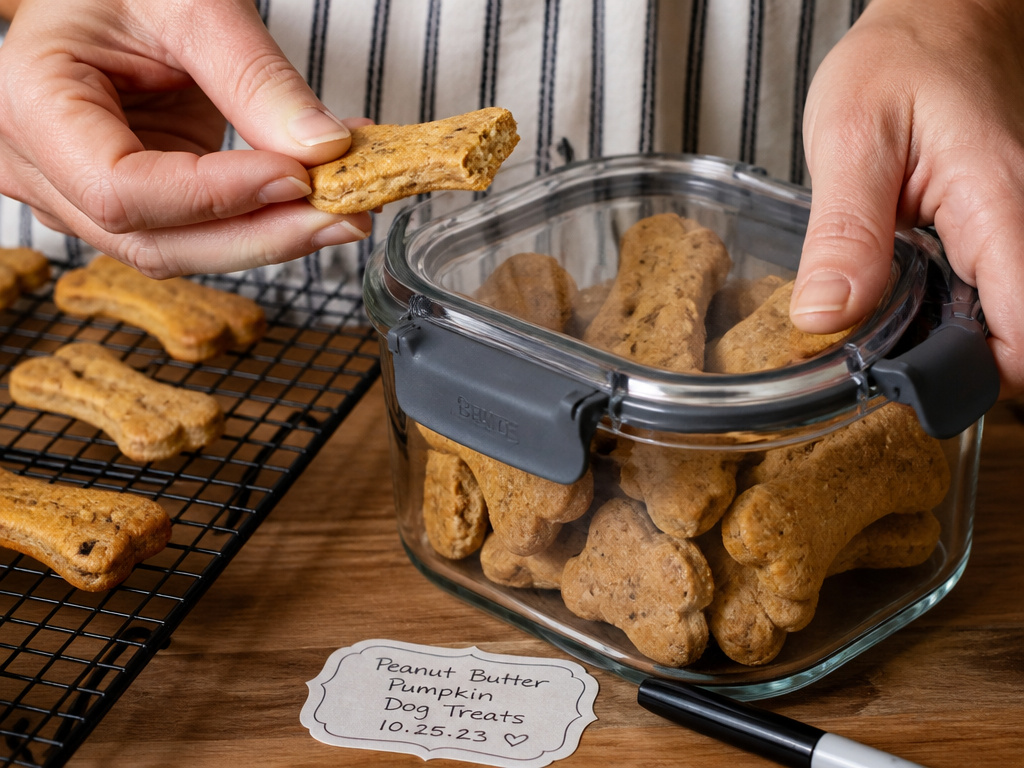
If you want the full breakdown, store homemade dog treats the way the source you followed tells you to, and label the container with the date. The Oregon Humane Society is right about this one: mark what’s inside and when it was made, because a freezer bag of brown discs is anonymous by week two.
Trust your nose.
Where this goes sideways: Freezing a still-warm biscuit traps condensation inside the bag. Freezing a still-warm biscuit traps condensation inside the bag, so cool completely on a rack before they go in the freezer. Cool completely on a rack before they go in the freezer.
Canned Loaf vs Dry Food: Which Treat Method Wins?
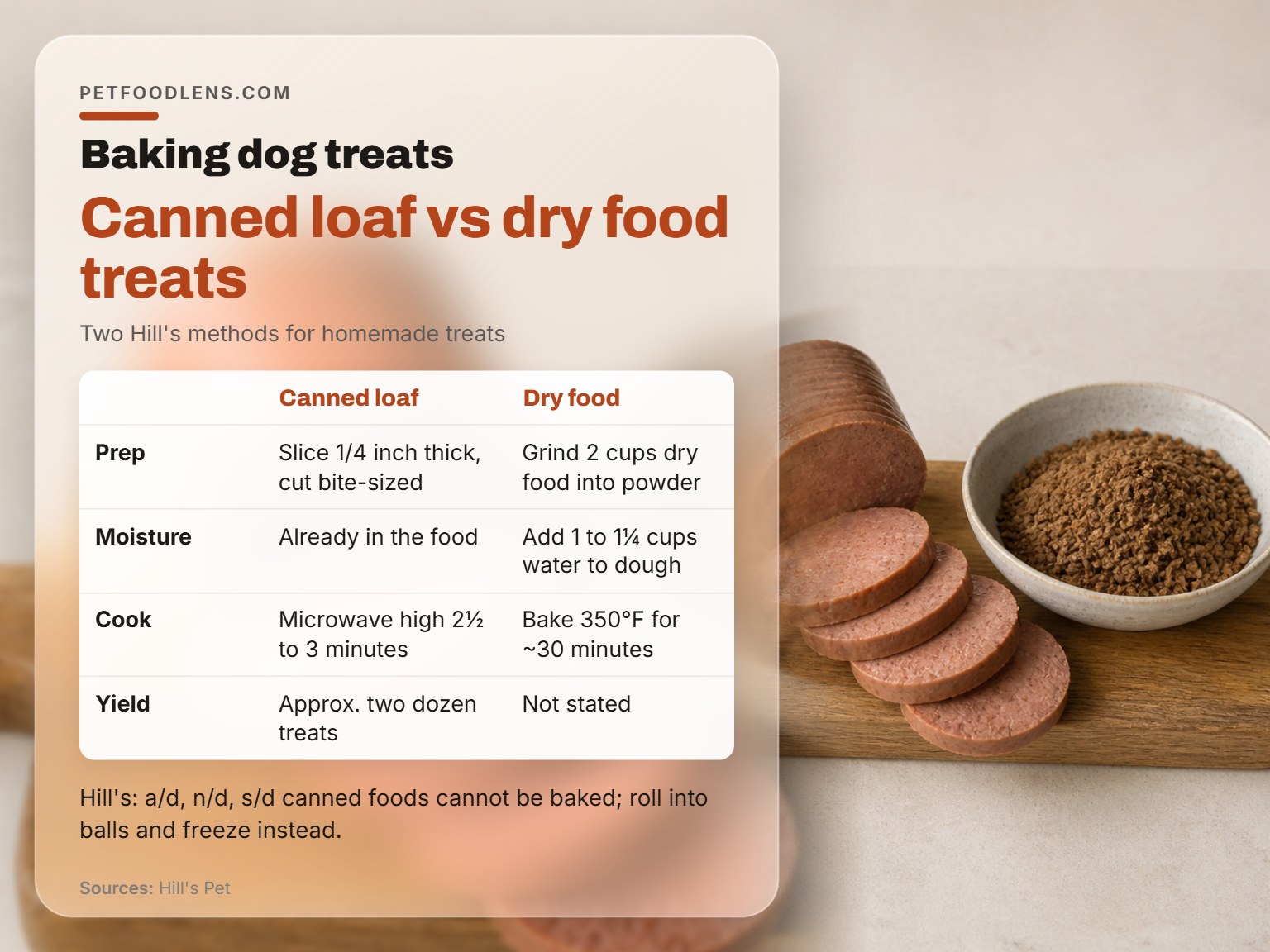
Hill’s publishes two treat methods, and they produce completely different textures from the same can. Pick based on what you actually want.
When the canned loaf method wins
Open a can of Hill’s Prescription Diet a/d, shake the loaf out, slice it 1/4 inch thick, and cut into bite-sized pieces. Microwave on high for 2½ to 3 minutes. That’s it. The whole batch yields about two dozen treats.
This is the method for anyone who needs treats tonight and doesn’t want to bake. It’s also a method that works for pumpkin dog treats made from a canned base, since the moisture is already in the food.
When the dry food method wins
Grind 2 cups of dry food into a powder in a blender, add about 1 to 1¼ cups of water until it forms a dough, shape into treats, and bake at 350°F for about 30 minutes until crispy.
This one produces a harder, crunchier biscuit that keeps longer and travels better. It’s also the method to use if your dog is already on a prescription dry food and you want the treats to match.
One warning from Hill’s: Prescription Diet a/d, n/d, and s/d canned foods cannot be baked into treats. Hill’s says Prescription Diet a/d, n/d, and s/d canned foods cannot be baked into treats; instead roll the canned food into little balls and freeze them. That’s a rare case where the freeze rule and the no-bake rule line up.
Rolling Thickness and Salt: Where the Sources Split
Oklahoma State rolls to 1/4 inch. Oregon Humane rolls to 1/2 inch. That’s a 2x difference in thickness from two sources describing the same biscuit.
The thickness matters because it changes the bake time. A 1/4-inch biscuit bakes through in about 25 to 35 minutes at 350°F, depending on the recipe. Oregon Humane’s basic biscuit recipe bakes 30 minutes at 350 degrees at 1/2 inch thickness.
My take: roll to 1/4 inch unless the recipe specifically says otherwise. Thinner biscuits dry faster, keep longer, and are less likely to be soft in the center. If you’re making treats for a small dog, 1/4 inch is also easier to break into portions.
The salt question is the sharper disagreement. Oregon Humane’s basic biscuit recipe includes 1 tsp of salt. King Arthur advises no salt or spices at all, on the grounds that salt can raise blood pressure and irritate a dog’s sensitive nose.
If a recipe calls for salt and you’re not sure, leave it out. A biscuit without salt still tastes like peanut butter or chicken to a dog. A biscuit with too much salt is a problem you can’t undo.
Compare the facts side by side and the pattern is clear: the sources that add salt are older shelter and extension recipes, and the sources that skip it are the ones thinking about long-term feeding. For an occasional treat, either is fine. For a dog on a low-sodium prescription diet, skip the salt.
Flour choice splits the same way. Oregon Humane says some dogs are allergic to wheat or corn and recommends oat, rice, or coconut flour instead. Oklahoma State uses wheat and oat flour freely. If your dog has a sensitive stomach, start with flour for dog treats that isn’t wheat, and see how the first batch lands.
Why Treats Should Never Replace the Bowl
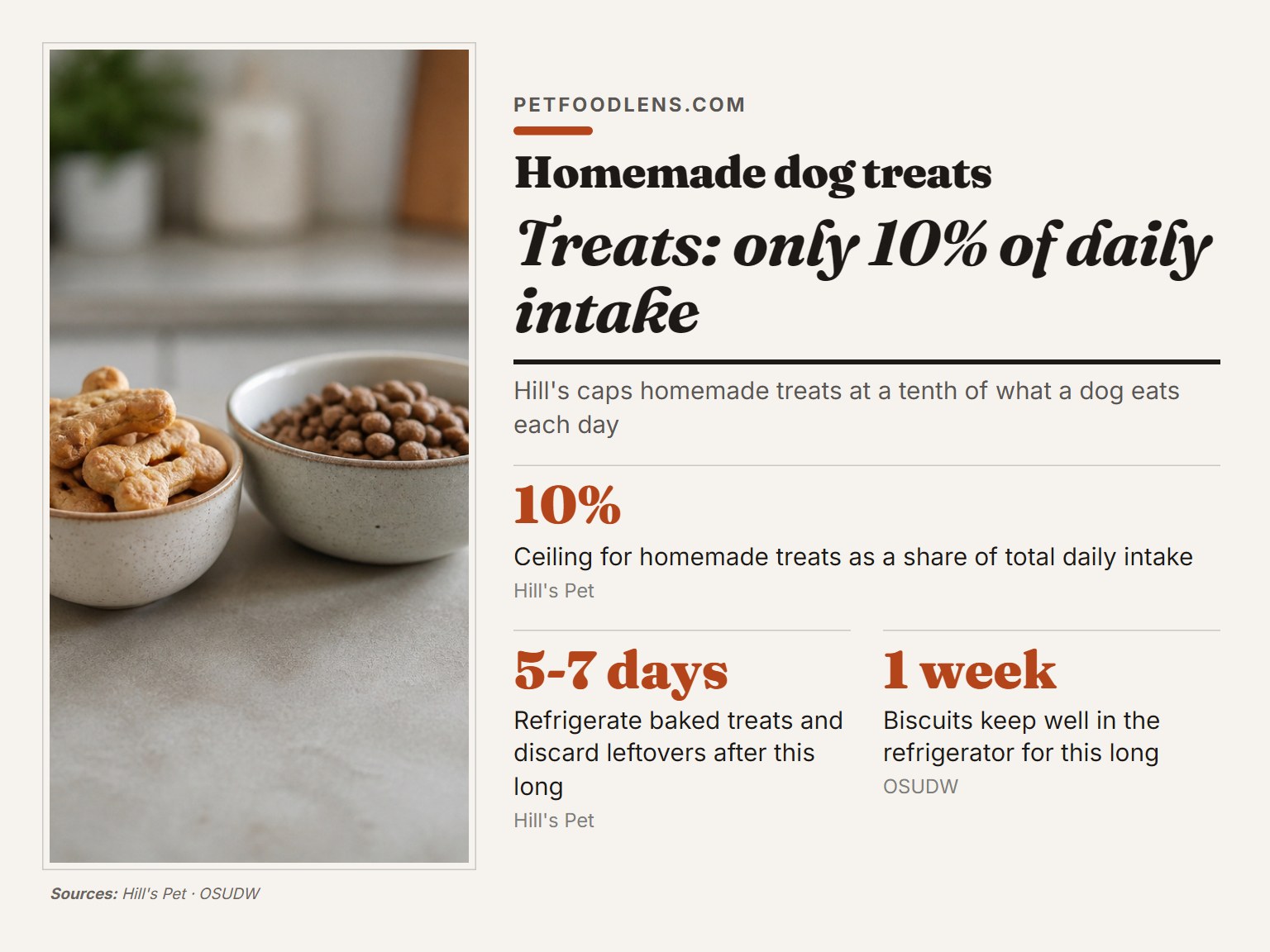
10% is the ceiling Hill’s puts on homemade treats as a share of daily intake. The complete food does the rest.
Most of the recipes I get asked about are fine as treats and a disaster as meals. The pattern is always the same: someone starts baking chicken-and-rice biscuits, the dog loves them, and within a month the biscuits are half the bowl. That’s when the deficiencies start. Homemade treats aren’t formulated to be complete, and even a recipe made from good ingredients doesn’t carry the micronutrient profile a commercial diet does.
King Arthur says the same thing in different words: treats are special treats, not regular handouts. I’d go further. Treats are toppers, not replacements.
The 10% rule in practice
Hill’s caps homemade treats at 10% of total daily intake, so the treats should make up no more than a tenth of what the dog eats each day.
The move I recommend: keep the complete kibble or canned food as the base and use the homemade treats as toppers. Boring, and it works every time. The dog still gets the ritual of a treat, the base diet stays complete, and you don’t have to balance a recipe to make it work.
If your dog has a sensitive stomach or a diagnosed allergy, hypoallergenic dog treats built around a single novel protein are a better starting point than a multi-ingredient biscuit. And if you’re switching flours, oat flour dog treats are the gentlest place to begin.
What most people get wrong: Treats get counted as “extras” instead of as part of the daily intake. Treats get counted as “extras” instead of as part of the daily intake, so a dog getting biscuits plus a full bowl of kibble can take in more calories than it needs.
Frequently Asked Questions
Can I use regular all-purpose flour for dog treats?
Yes, if your dog doesn’t have a wheat sensitivity. Oklahoma State’s recipes use wheat and oat flour freely. If your dog has a sensitive stomach, swap to oat, rice, or coconut flour, which the Oregon Humane Society recommends for dogs with wheat or corn allergies.
How do I know when dog treats are fully baked?
The biscuit should snap clean in half and feel bone dry. If it bends or leaves a smear on your thumb, it needs more time at 350°F. King Arthur’s test is “until bone dry,” which is the right standard.
Can I freeze homemade dog treats?
Hill’s says no. Oklahoma State and Oregon Humane both say yes. The disagreement likely comes down to what’s in the treat: a bone-dry biscuit freezes well, and a soft-baked treat with a lot of moisture doesn’t. If you’re following Hill’s canned loaf method, don’t freeze. If you’re baking dry biscuits, freeze in an airtight bag.
Is peanut butter safe for dogs?
Plain peanut butter is safe. Peanut butter containing xylitol is toxic. Check the ingredient label every time, even on brands you’ve bought before, because formulations change.
How many treats can I give my dog per day?
Hill’s caps homemade treats at 10% of total daily intake. For a 30-pound dog eating about 1,000 calories, that’s roughly 100 calories of treats per day. The complete food should make up the other 90%.
Can I bake treats for a dog on a prescription diet?
Not always. Hill’s specifically says Prescription Diet a/d, n/d, and s/d canned foods cannot be baked into treats. For those, roll the canned food into small balls and freeze. For other prescription diets, ask your vet before swapping the base ingredient.
The Bottom Line
The single number to remember is 10%. Everything else here is a detail on top of that ceiling. If your dog is getting more than 10% of daily calories from homemade treats, the recipe quality stops mattering, because the diet is out of balance regardless of what’s in the biscuit.
The second rule: check the peanut butter label every single time. Xylitol is the one ingredient that turns a safe recipe into an emergency, and it hides in “no sugar added” and “natural” jars as often as it does in the obvious ones.
If you’re starting this week, pick one recipe and bake it once. The Colorado State three-ingredient method is the lowest-risk entry point: no egg, no rolling thickness to argue about, and a 10-minute bake. Get one batch right before you start swapping flours and adjusting times. The rest of the process is easier once you’ve seen what a properly dried biscuit actually looks like on your own counter.
