
Wet Food vs Dry Food for Cat Hydration: What Labels Say
This post contains affiliate links. As an Amazon Associate, we earn from qualifying purchases.
In the wet food vs dry food for cat hydration comparison, moisture decides it: AAFCO caps dry product at 12 percent moisture and classes canned product above 65 percent. A dry-fed cat must drink the difference, which puts the whole burden on a water bowl.
That 12 percent ceiling is a legal line. It sorts products into labeling buckets and says nothing about whether the food inside is any good. What it does tell you is how much water your cat has to find somewhere else, and that number is larger than most owners expect when they weigh the wet food vs dry food for cat hydration question.
What follows is the label math, the published water figures (including the ones that contradict each other), the transition schedule that holds up, and where a fountain actually fits in the ranking.
Key Takeaways
- AAFCO caps dry product at 12 percent moisture and classes canned food above 65 percent, so the moisture content settles most of the water question before ingredients enter it.
- One measured wet meal a day raises total intake more reliably than any fountain, and it costs a fraction of a full switch.
- Published moisture ranges don’t agree (70 to 80, 70 to 82, 75 to 80), which is exactly why the can in your hand beats the guide on your screen.
- A cat that refuses food needs a vet call. Patience stops being the answer at that point.
What the Moisture Numbers on the Label Actually Mean
Eight years of comparing cat foods and I still flip the can over before I read a word on the front. Moisture 78 percent max, protein 10 percent min, and neither number means what the shopper beside me assumes.
Under AAFCO Pet Food Regulations, a product labeled dry carries a maximum of 12 percent moisture, semi-moist runs above 12 percent up to 65 percent, and canned or wet product typically exceeds 65 percent. The classification is legal, based on guaranteed analysis, and independent of ingredient quality or cost.
Those thresholds come from the AAFCO Pet Food Regulations, and they’re the only hard numbers in this entire comparison. The EU publishes its own moisture-declaration framework through the FEDIAF Nutritional Guidelines, so the labeling rules shift by market.
Now find the guaranteed analysis on your can. That moisture figure is water, and water is the cheapest thing in the can.
It’s water.
Those percentages are measured as-fed, with all the water still in the product. A canned food at 78 percent moisture packs its protein and fat into the remaining 22 percent, so the raw numbers understate what the food delivers.
Reading Moisture on a Dry Matter Basis
Dry matter basis means you strip the water out first, then compare what’s left. Take the nutrient percentage, divide by the dry matter fraction, and multiply by 100.
That conversion is the one habit I’ve kept from day one. Every guaranteed analysis I compare goes through it before two foods sit side by side, and it takes about two minutes on the back of a can.
Most pates I check land between 70 and 82 percent moisture. A lower moisture figure in a stew or a chunks-in-gravy formula usually means thickener is doing work the meat should be doing.
The published ranges don’t line up either. Yourcatstory.com puts wet food at 70 to 80 percent, mochipawbydico.com says 70 to 82, and zakkthecat.com says 75 to 80. Dry kibble gets the same spread: 6 to 10, 8 to 10, and about 10.
Three guides, three ranges, and not one of them measuring the can in your kitchen. That’s the argument for reading wet food moisture content off the label instead.
Does a Cat on Dry Food Really Drink Enough to Close the Gap?
Ever watched a cat take two laps at the bowl and walk off? That’s the entire drinking session, and it’s normal behavior.
Cats drink small amounts frequently rather than in one long go, so you may never witness a real session. That’s fine. The question is whether the total adds up.
There’s no single amount every cat must drink, and petadvisorpro.com says so directly. Two other sources publish figures anyway, and they’re worth seeing side by side.
| Source | Published figure | What it covers |
|---|---|---|
| mochipawbydico.com | 7 to 9 oz total daily water for a 10-pound cat | Total intake, food plus bowl |
| zakkthecat.com | About 60 ml per kg of body weight daily | Total intake, food plus bowl |
| petadvisorpro.com | No single amount applies to every cat | Argues against a fixed number |
The two figures aren’t as far apart as they look. One is written per kilogram and the other is written for a 10-pound cat, so they’re measuring the same thing from different angles. The third source argues the number doesn’t exist.
What every source agrees on is direction. Cats eating primarily dry food need to drink more than cats on wet food, because almost none of their water arrives with the meal.
Owners on forums report their dry-fed cats barely touch the bowl. Treat that as anecdote rather than data, but it lines up with the arithmetic.
The signs of dehydration in cats show up late, which is the real problem with waiting to see them. A bowl level that drops slowly enough could be evaporation as easily as drinking.
How much water a cat needs depends on diet, activity, and room temperature, so the food format matters more than the bowl.
Wet Food vs Dry Food for Cat Hydration: The Head-to-Head
Wet wins on water. Every other column is closer than the marketing on either side suggests.
| Format | Label moisture | Where the water comes from | Best fit |
|---|---|---|---|
| Wet | Above 65% under AAFCO | The food itself | Cats that ignore the bowl |
| Dry | 12% max under AAFCO | The bowl, mostly | Multi-cat homes and feeders |
| Hybrid | Mixed | One meal plus the bowl | Budget and picky eaters |
For a cat with any urinary history, or any cat past seven, wet food is the stronger lever, though yourcatstory.com and mochipawbydico.com both treat a hybrid plan as a sensible middle ground. For a healthy young cat with good drinking habits and a fountain it actually uses, a complete dry diet can hold up, provided total intake meets the need.
This is where the sources split. Mochipawbydico.com calls dry feeding a risk factor consistently identified in FLUTD research. Yourcatstory.com and petadvisorpro.com both say a healthy cat on dry food can stay properly hydrated if its intake meets its needs.
Both positions can be true at once. Dry feeding raises the burden, and some cats carry it.
The teeth argument deserves its own paragraph. Ordinary kibble doesn’t scrub anything. The pieces break apart on contact, so they shatter against the tooth rather than wipe along the gumline, and a cat on kibble still develops tartar and gum disease.
For the wider trade-offs, the wet vs dry food breakdown covers both sides, and the wet food pros and cons list is worth reading before you commit. If you already know you’re going wet, start with high-moisture wet food rather than whatever is on sale.
When Dry Food Is the Right Call
- Multi-cat households where one cat needs a measured portion and free-feeding is the only routine that survives.
- Timed feeders and travel. Kibble sits out without spoiling. Wet food cannot.
- A cat that refuses wet food after a genuine multi-week attempt. A cat that won’t eat is worse off than a cat eating kibble.
- Prescription dry diets your vet picked for a specific condition. That’s a clinical decision, and I’m not the one to overrule it.
What most people get wrong: assuming a full water bowl means a hydrated cat. A bowl can stay full because the cat drinks elsewhere, and it can empty because the cat is pawing at it.
Judge hydration by the litter box and the scruff. The water bowl tells you almost nothing on its own.
Why Water Dilution Beats Mineral Counting for Urinary Health
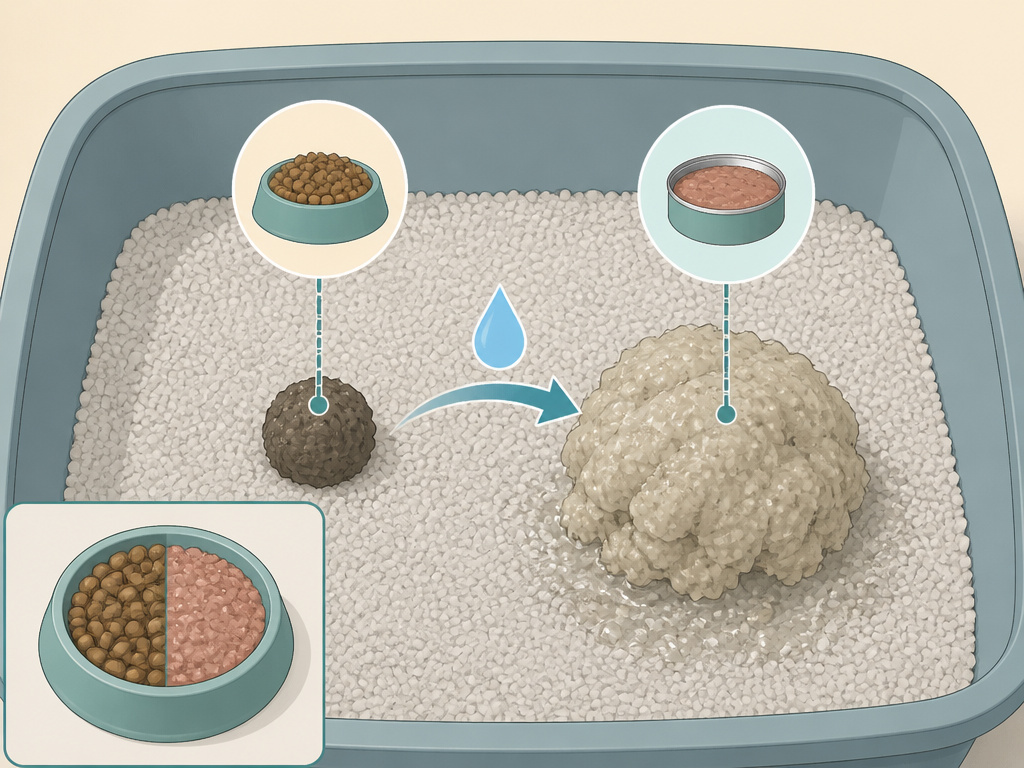
Chronic kidney disease affects an estimated 30 to 40 percent of cats over age 10. That number is why the water conversation keeps circling back to the same lever.
Dilute urine carries a lower concentration of the minerals that form crystals. Veterinary research measures this as relative supersaturation, which is simply how close the urine sits to crystallizing. More water in, more dilute urine out, lower supersaturation.
Dilution does the work.
That mechanism is why IRIS staging guidelines and veterinary nephrology consensus put increased water intake first for chronic kidney disease, with wet food as the standard dietary lever.
Urethral obstruction in male cats is strongly associated with dry-only feeding and low total water intake. The urethra is narrower, so a crystal that passes in a female cat can plug a male.
Why Male Cats Get Hit Harder
A narrower urethra turns a small crystal into an emergency. That’s the whole mechanism, and it’s why the hydration question carries more weight for toms than for queens.
Compare labels and the gap gets stark. Wet versions of urinary formulas typically run about 75 to 80 percent moisture while dry versions sit near 10 percent. A cat on the dry version would need to drink a startling amount to match, and most don’t.
Owners fixate on the mineral numbers and skip the water. The water is doing a good share of the work, which is why I rank wet therapeutic urinary formulas higher than their dry counterparts.
Skip this if: your cat is already on a prescription urinary or renal diet. Changing moisture around a therapeutic formula can shift the mineral balance it was built to control, so that’s a conversation with your vet first.
Dilute urine shows up in the litter box as larger, paler clumps. That’s the visual you’re aiming for.
I’m not a clinician. Prescription urinary diets exist for cats with real urinary disease, and choosing between them is a vet’s call rather than a label-reader’s.
How Do You Switch a Dry-Fed Cat to Wet Food Without a Standoff?
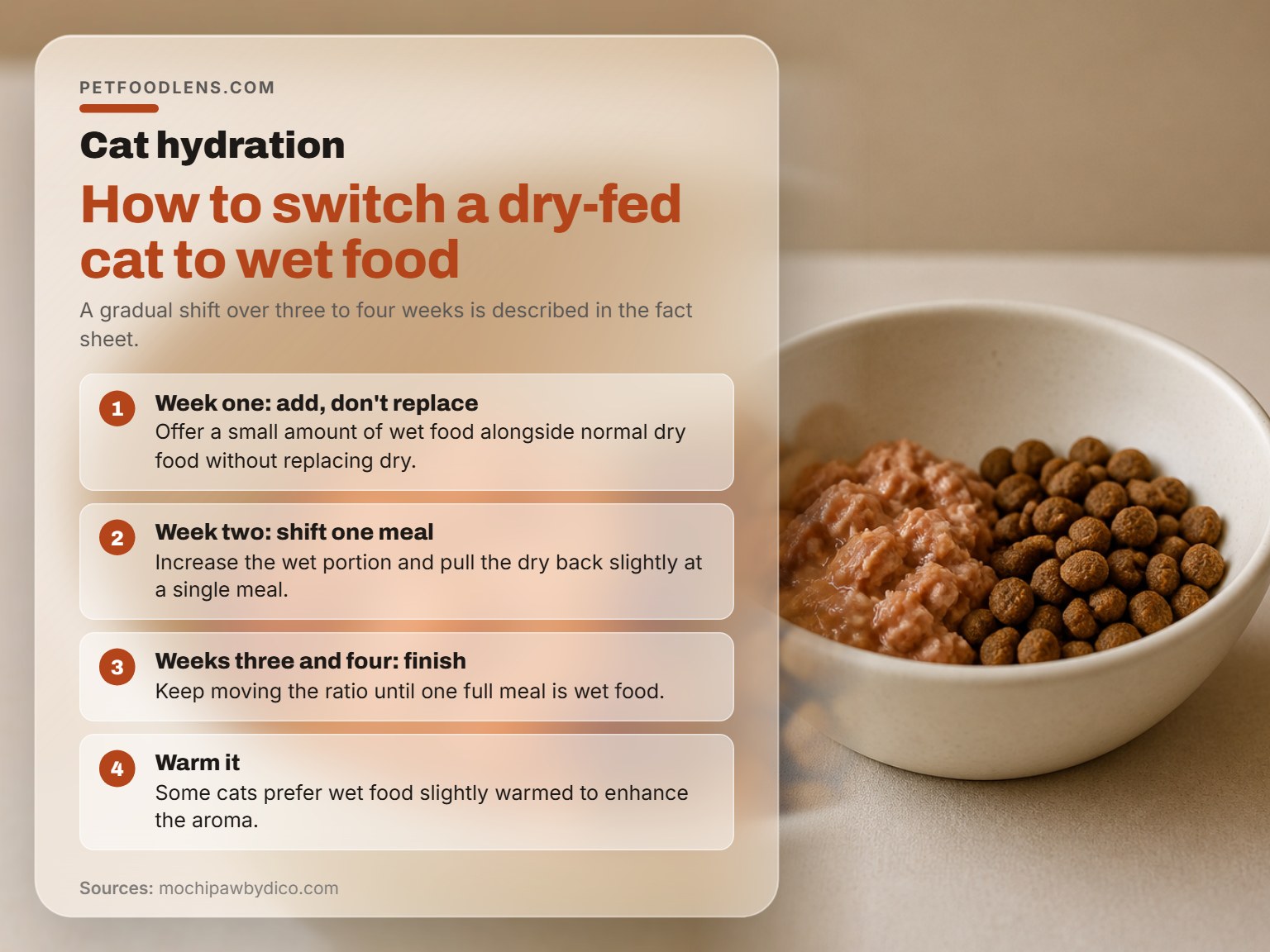
A gradual shift over three to four weeks beats a bowl swap every time, and the cats that fail are usually the ones whose owners moved fast.
Before you start: a cat that stops eating for more than a day or two can develop hepatic lipidosis, a liver condition that overweight cats are especially prone to. Weigh the cat before you begin and once a week after, and call the vet if the bowl stays full for 48 hours.
- Week one: add, don’t replace. Put a teaspoon of wet food beside the normal dry portion. Replacing the dry outright in week one is what starts the standoff, and a cat that refuses for two days is a vet problem, not a training problem.
- Week two: shift one meal. Increase the wet portion and pull the dry back slightly at a single meal. Changing two meals at once doubles the refusal risk and muddies which one the cat rejected.
- Weeks three and four: finish the shift. Keep moving the ratio until one full meal is wet food. Stopping at a teaspoon forever leaves you with a garnish, not a moisture source.
- Warm it. Wet food straight from the fridge smells like almost nothing, and aroma is what sells the switch. Warm the portion gently and the whole kitchen knows dinner is coming.
- Add water if the cat allows it. A spoonful or two of plain water stirred into a wet meal raises intake further, as long as the cat still eats it. Don’t leave the bowl sitting out afterward.
Pace beats persuasion.
One published schedule moves faster and hits roughly 75 percent wet by days 7 to 9. The four-week version above is slower, and the fast switches are the ones that fail.
I won’t push a full switch on a cat that’s already doing well on a prescription dry diet. The refusal risk is real, and a cat that stops eating is worse off than a cat eating kibble. Fix the water access first.
Most transition to wet food failures I see are pace problems rather than preference problems. You can also add water to cat food without changing the recipe, and it costs nothing.
The Mixed Plan, With the Math Done For You
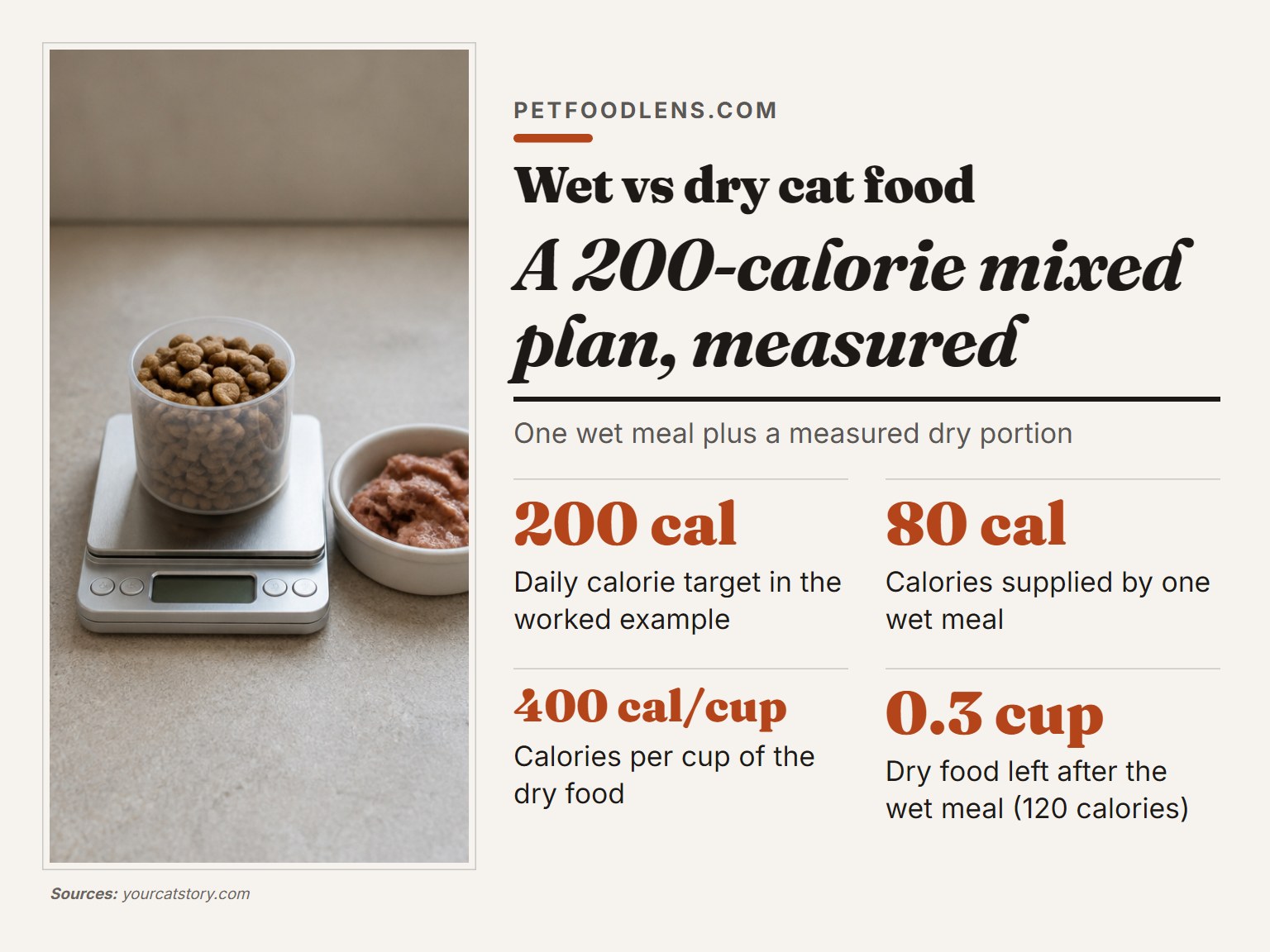
Three numbers decide a mixed plan: the daily calorie target, the calories in the wet meal, and the calories per cup of dry food.
Here is the math.
Take a 200-calorie daily target. One wet meal supplies 80 calories. The dry food runs 400 calories per cup, so the remaining 120 calories works out to 0.3 cup of dry.
Measure it. Guessing by volume is where the extra calories creep in.
What the hybrid plan does well, and what it doesn’t:
- It raises total moisture intake without asking the cat to give up kibble entirely.
- It keeps free-feeding possible for the dry portion, which matters in a busy house.
- It does nothing for a cat that won’t touch wet food at all.
- It still needs a measured dry portion, and that’s the step most people skip.
Wet food typically runs two to four times more per calorie than dry. A hybrid plan of one wet meal plus dry for the rest roughly halves that difference, which is the compromise most households land on.
The number that actually compares two foods is cost per 100 kilocalories. Bag weight is packaging.
Where a Fountain Helps and Where It Doesn’t
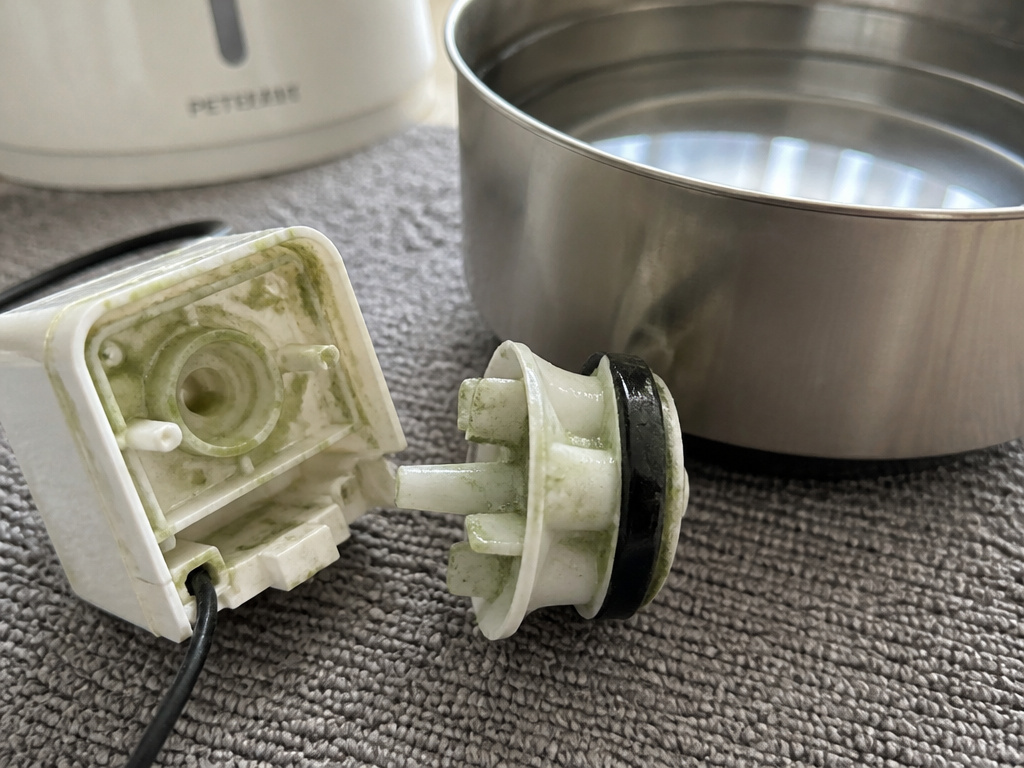
A fountain is the weakest tool here, and it’s the one most owners buy first.
Fountains earn their place. Moving water stays cooler, gets filtered, and pulls in cats that ignore a still bowl. It just can’t close the moisture gap on its own.
For most homes a mid-range fountain is where I’d start. It sits in the mid-range where pumps stay quiet and parts come apart for cleaning, which is the whole test.
A cheap fountain announces itself from the next room with a rattle and a hum you can hear over the television. That noise is a pump on its way out.
Move the water away from the food. Cats avoid water sitting next to a food source, and the instinct is old enough that a clean bowl in the wrong corner still gets ignored.
Keep it out of direct sunlight. Warm water grows algae faster, and a cat can smell a stale bowl long before you spot the green.
That’s the whole test.
The part nobody mentions: a fountain you don’t clean is a bowl with a pump. The housing collects a slimy film that smells like a pond, and the cat notices before you do.
Some cats need subcutaneous fluids under the skin, at home or at the vet’s office. That’s a clinical decision and it sits outside anything a food label can fix.
For a cat staying on dry food, a fountain plus one wet meal beats either one alone.
Frequently Asked Questions
Is wet food always better than dry food for hydration?
For water intake, yes, though petadvisorpro.com notes a healthy cat on a complete dry diet can stay properly hydrated if total intake meets its needs. Canned food carries far more moisture than kibble, so a wet-fed cat gets most of its water with the meal. That doesn’t make dry food harmful in every household, and a healthy cat on a complete dry diet can stay properly hydrated if its total intake meets its needs.
How much water should I add to my cat’s food?
Spoonful or two of plain water stirred into a wet meal is the usual starting point, provided the cat still eats it. Don’t leave the bowl sitting out afterward, because opened wet food spoils within a few hours at room temperature.
Can I just add warm water to dry kibble instead of switching?
It helps, and many cats accept it. Warm water on kibble raises moisture intake and softens the food, but it doesn’t reach the 70 percent plus moisture of canned food, because kibble only absorbs so much.
How do I know if my cat is dehydrated?
You may never see it at the bowl, since cats drink in small amounts throughout the day. Watch the litter box and the skin at the scruff instead, and treat any sudden change in drinking or urinating as a reason to call the vet.
Does a water fountain fix a cat that won’t drink?
It helps some cats and does nothing for others. Moving water draws in cats that ignore a still bowl, but a fountain can’t replace the moisture a wet meal delivers. Use it as a supplement, not a solution.
The Bottom Line
Here’s the trigger I’d use. If your cat is seven or older, or has ever had a crystal, a stone, or a blocked bladder, stop treating wet food as optional. Start with one measured meal a day this week.
The concession: none of this overrules a prescription diet. If your vet has your cat on a therapeutic dry formula for a specific condition, the moisture argument belongs in that conversation, not at the bowl.
And the part I’ll defend. I’d rather see a cat eating a plain chicken pate from a mainstream brand than a boutique recipe built around an exotic protein, because water does more for most cats than novelty ever will.
If you want one answer: one measured wet meal a day, dry for the remainder, and a mid-range fountain in a room that isn’t the kitchen.
